Abrasive Blasting Surface Treatment for Medical Devices: The Complete Manufacturing Guide
Surface quality in medical device manufacturing is a functional and regulatory requirement, not a cosmetic one. A titanium hip stem that does not achieve the right surface roughness will not osseointegrate. A surgical instrument with the wrong surface finish will create dangerous glare under surgical lighting. A device housing that is not properly prepared will fail its protective coating in the field. Abrasive blasting is the most versatile and precisely controllable process for engineering all three critical surface properties — topography, cleanliness, and substrate condition — simultaneously. This guide covers every major application in medical device manufacturing, the media and process parameters that qualify for regulated use, and the compliance framework that governs these operations.
application categories
blasting media types
in this series
covered in full
1. The Three Surface Properties That Abrasive Blasting Engineers
Every medical device that contacts the human body — whether it is implanted for decades or used in a single procedure — has a surface specification. That specification exists because the surface is the interface between the device and the body, and the properties of that surface directly determine biological response, functional performance, and clinical outcome. Abrasive blasting is one of the few manufacturing processes capable of engineering all three critical surface properties in a single controlled operation.
Surface Topography
Topography describes the micro-scale and macro-scale geometry of a surface — its peaks, valleys, and texture. For osseointegrating implants, surface topography is a primary biological determinant: osteoblasts (bone-forming cells) attach, proliferate, and differentiate more effectively on surfaces with specific roughness characteristics. For surgical instruments, topography controls optical reflectivity: a rough, diffuse surface eliminates the specular reflection that creates dangerous glare under high-intensity surgical lighting. For device housings, topography controls the mechanical adhesion of protective coatings. Abrasive blasting creates surface topography by controlled erosion and peening — the specific texture produced is determined by media type, particle size, pressure, angle, and dwell time.
Surface Cleanliness
Medical device components emerge from machining operations carrying lubricants, metallic fines, and embedded tool material. These contaminants are incompatible with the body and with downstream processes including passivation, anodizing, and coating. Abrasive blasting mechanically disrupts and partially removes these contamination layers, and the subsequent cleaning sequence that follows blasting removes them completely. The cleanability of the post-blast surface is itself a function of blasting — the controlled micro-texture created by blasting responds better to ultrasonic cleaning than either polished or as-machined surfaces because the cavitation energy has more mechanical contact with the surface.
Substrate Surface Condition
Machining and grinding operations introduce residual stresses, a deformed surface layer, and a disturbed oxide layer that affects corrosion resistance, coating adhesion, and fatigue performance. Abrasive blasting — particularly shot and bead blasting — introduces beneficial compressive residual stresses that oppose fatigue crack initiation, extend service life of cyclic-load components, and improve resistance to stress corrosion cracking in autoclave environments. For titanium implants, blasting also controls the thickness and morphology of the native TiO₂ oxide layer that ultimately interfaces with bone tissue.
2. Where Abrasive Blasting Fits in the Medical Device Manufacturing Sequence
Unlike industrial finishing where blasting often appears as a single step before coating, medical device manufacturing typically integrates abrasive blasting at multiple defined points in the production sequence. Understanding where blasting occurs — and what comes before and after it — is essential for process planning and validation.
In some processes — most notably the SLA dental and orthopedic implant process — blasting occurs after an initial cleaning step and before acid etching, with acid etching effectively serving as an intermediate cleaning and surface modification step. In other applications such as surgical instrument finishing, blasting is the final surface treatment before passivation. For device housings, blasting is performed before anodizing or powder coating. The exact position in sequence is specific to the device type, material, and functional requirement, and must be defined and fixed as part of the validated process.
A critical distinction in the medical device context is that abrasive blasting is classified as a special process under ISO 13485 — a process whose conformance cannot be fully verified by subsequent product inspection alone without destructive testing. This classification means the process itself must be validated, not just the output measured after the fact.
3. Applications by Device Category
3.1 Orthopedic Implants
Orthopedic implants — particularly cementless hip stems, acetabular cups, tibial trays, and spinal fusion cages — rely on direct bone-to-implant contact for long-term fixation. This contact, known as osseointegration, is profoundly influenced by the surface topography of the bone-contact zones. Abrasive blasting is the primary process for engineering that topography on titanium alloy (Ti-6Al-4V) implants, the dominant material in this category.
The process begins with aluminum oxide blasting using particles in the 250–750 μm range at pressures of 3–5 bar, creating a macro-rough surface with Ra values typically targeting 2–4 μm. For implants designed to maximize bone ingrowth, this blasted surface is frequently followed by acid etching in hydrochloric and sulfuric acid solutions, creating an additional micro-rough texture at the sub-micron scale. This dual-scale roughness — macro from blasting, micro from etching — has been shown across decades of clinical evidence to support faster, stronger, and more reliable osseointegration than either treatment alone.
An important materials consideration in orthopedic blasting is the alumina contamination problem: aluminum oxide particles from the blasting media can become mechanically embedded in the titanium surface layer and are not fully biocompatible. For this reason, some manufacturers have shifted to titanium dioxide (TiO₂) blasting media, which achieves equivalent surface topography without introducing alumina contamination. Cobalt-chromium alloy components such as femoral heads are blasted for deburring and pre-coating preparation, but their articulating surfaces require mirror polishing rather than roughening.
3.2 Dental Implants
Dental implant surface science represents one of the most extensively studied fields in all of biomaterials engineering, and abrasive blasting sits at the center of it. The SLA (Sandblasted, Large-grit, Acid-etched) surface — developed in the 1990s and refined continuously since — remains the global benchmark for implant surface treatment, used or referenced by virtually every major implant system manufacturer.
Standard SLA processing uses aluminum oxide particles in the 100–500 μm range blasted at 2–4 bar, producing Ra values of 2–4 μm. This is followed by acid etching in a mixture of HCl and H₂SO₄, which removes the work-hardened blasting zone and creates additional micro-roughness at the 0.5–1 μm scale. Clinical trials consistently show that SLA-surface implants achieve higher insertion torque at second-stage surgery, higher bone-to-implant contact ratios on histology, and lower early implant failure rates compared to turned or polished control surfaces.
Zirconia implants — increasingly popular as metal-free alternatives — undergo analogous blasting processes using silicon carbide or corundum media followed by acid etching, adapting the SLA principle to the ceramic substrate. Modified SLA variants such as SLActive (Straumann) and Ossean (Intralock) introduce additional surface chemistry modifications to the blasted-and-etched substrate to further enhance cell response and hydrophilicity.
3.3 Surgical Instruments
The application of abrasive blasting to surgical instruments is functionally different from implant blasting: the goal is not osseointegration but optimized performance in the operating room environment. Glass bead blasting of stainless steel instruments — clamps, retractors, scissors, needle holders, forceps — addresses four simultaneous requirements.
First and most importantly, glass bead blasting produces a uniform, diffuse matte finish that eliminates specular reflection under high-intensity surgical lighting. Modern LED surgical lights produce illuminance levels of 40,000–160,000 lux; a polished instrument surface in this field can create reflective glare that impairs the surgeon’s ability to distinguish tissue planes. The fine, isotropic surface texture created by #10–#13 glass beads scatters reflected light across the hemisphere rather than returning it as a directional beam.
Second, the peening action of glass bead blasting introduces compressive residual stresses in the surface layer of stainless steel, counteracting the tensile stresses introduced by machining and grinding. This extends fatigue life under the cyclic loading that instruments experience in use and extends resistance to stress corrosion cracking in the autoclave environment. Third, bead blasting creates a surface that is easier to inspect for soil and biofilm residue after cleaning, because the diffuse matte finish makes contamination more visually apparent than a mirror-polished surface. Fourth, the blasted surface responds well to passivation, with the increased surface area and activated oxide state improving the density and adhesion of the chromium oxide passive layer built by ASTM A967 or ASTM F86 passivation treatment.
3.4 Cardiovascular Devices
Cardiovascular device components present some of the most demanding surface treatment challenges in medical device manufacturing. Components must be biocompatible, thromboresistant, fatigue-resistant under billions of mechanical cycles, and manufacturable to extremely precise dimensional tolerances. Abrasive blasting appears at different points in the cardiovascular device manufacturing workflow depending on component type and function.
Laser-cut metallic stents — in 316L stainless steel, cobalt-chromium alloys, or nitinol — require removal of the recast layer and burrs left by laser cutting before electropolishing to the mirror finish required for blood contact. Fine plastic media or fine glass bead blasting is used as an intermediate deburring step on complex strut geometries where mechanical deburring would be impractical. The blood-contact surfaces of cardiovascular implants are then electropolished to Ra values below 0.1 μm. Titanium and stainless steel structural components of mechanical heart valves, ventricular assist devices (VADs), and pacemaker enclosures are blasted before anodizing, coating, or welding operations. Pacemaker titanium can surfaces require an extremely clean, well-characterized surface in the laser weld zone, and glass bead blasting is used to ensure consistent oxide condition before hermetic sealing.
3.5 Medical Device Housings and Structural Components
Beyond implants and instruments, abrasive blasting is widely used on the structural and enclosure components of medical capital equipment. Aluminum alloy enclosures for MRI scanners, CT gantry components, patient monitoring systems, and laboratory analyzers are blasted before anodizing (typically to MIL-A-8625 Type II or Type III) to ensure uniform anodize layer adhesion and appearance across complex machined geometries. The blasting step mechanically removes the inconsistent native oxide layer that forms on aluminum during storage and machining, presenting a clean, uniformly activated surface to the anodizing bath that produces a more consistent and defect-free anodize layer than chemical etching alone on complex three-dimensional parts.
Stainless steel structural frames and brackets for diagnostic equipment, surgical robotic systems, and radiation therapy machines are blasted for scale removal, corrosion resistance preparation, and pre-coat adhesion. Drug delivery device components — metal parts of infusion pumps, auto-injectors, and pen injectors — are blasted for deburring and electropolishing preparation. Powered prosthetic and exoskeleton structural frames in titanium and aluminum are blasted before anodizing or painting.
4. Substrate Materials and Blasting Considerations
The choice of blasting media, process parameters, and acceptable outcomes all depend on the substrate material being processed. Medical devices are manufactured from a limited set of biocompatible materials, each with distinct responses to abrasive blasting.
Ti-6Al-4V and Commercially Pure Titanium
The most widely used implant material. Titanium’s low hardness relative to most blasting media means it responds readily to surface roughening, but it is also susceptible to media contamination: aluminum oxide particles can become embedded in the surface and are detectable by XPS or EDS analysis. Process pressures must be controlled to prevent over-blasting and dimensional deviation on thin-walled or precision-tolerance features. TiO₂ and zirconia media are preferred where alumina contamination cannot be tolerated.
304, 316L, 17-4PH, and Higher-Grade Alloys
The dominant material for surgical instruments. Glass beads produce the standard matte instrument finish on 316L and 304 grades. Higher-hardness alloys like 17-4PH require correspondingly harder media or higher pressure to achieve equivalent surface effect. Stainless steel blasted with glass beads or aluminum oxide is always followed by passivation per ASTM A967 or ASTM F86 to restore the passive layer disrupted during blasting. Free iron contamination from stainless steel shot must be completely removed before passivation.
ASTM F75, F799 (Cast and Wrought CoCrMo)
Used for femoral heads, knee femoral components, and some spinal implants. Cobalt-chromium alloys are significantly harder than titanium and require higher blasting pressures or harder media to achieve equivalent surface effect. On articulating surfaces, CoCr requires electropolishing to mirror finish rather than blasting-induced roughness. Blasting on CoCr is primarily used for deburring, pre-coating surface preparation, and non-articulating surface treatment.
6061-T6, 7075, 2024 (Device Housings and Structural Parts)
Soft and easily scratched, aluminum responds quickly to even low-pressure blasting. Glass beads are the standard media for pre-anodize surface preparation, producing the consistent, matte surface that anodizes uniformly. The alloy grade affects anodize response, and the blasting process must be appropriate to the anodize specification. Media contamination in aluminum must be avoided as embedded particles can disrupt anodize quality and adhesion.
5. Abrasive Media Selection for Medical Applications
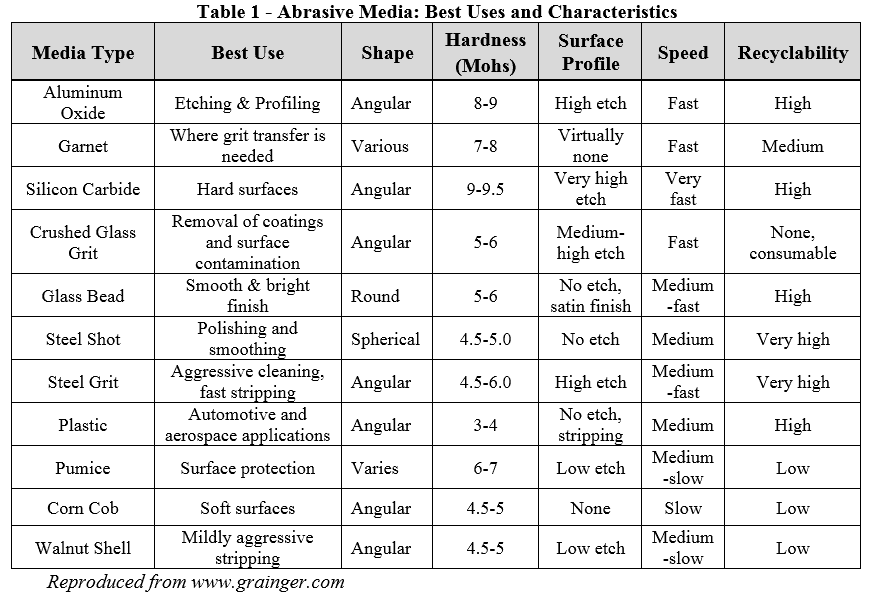
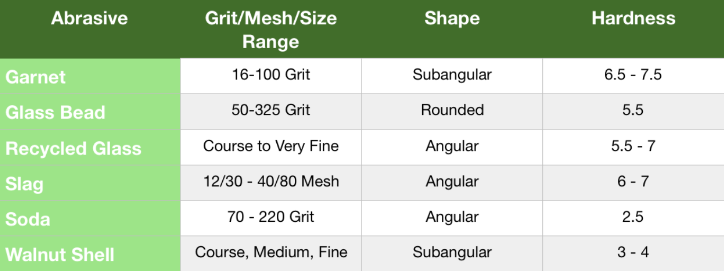
Media selection in medical device blasting is governed by two criteria that do not exist in industrial blasting: biocompatibility of any residue that might remain on the part surface, and the ability of the qualified cleaning process to remove all media fragments and dust to below the specified cleanliness limit. These criteria immediately exclude the most common industrial blasting media — silica sand, coal slag, and copper slag — from medical use entirely.
| Media | Primary Medical Applications | Key Advantage | Key Limitation | Medical Qualification |
|---|---|---|---|---|
| Glass Beads | Surgical instruments, device housings, gentle pre-anodize prep | Clean, consistent matte finish; widely validated; non-contaminating | Limited cut rate; not for implant roughening | MIL-PRF-9954; ISO purity documentation |
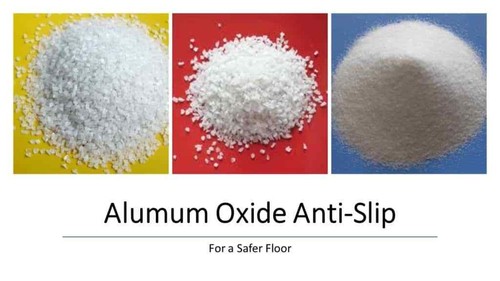
| Aluminum Oxide | Orthopedic and dental implant roughening (SLA process) | High cut rate; controllable Ra; widely available | Embedded alumina particles in Ti surface | Medical-grade purity certificate required |
| Titanium Dioxide (TiO₂) | Ti implants where alumina contamination not acceptable | No alumina contamination; Ti-compatible chemistry | Higher cost; lower cut rate than Al₂O₃ | Documented purity; ISO 10993 compatible |
| Zirconia Beads | Dental implants; alumina-free implant blasting | Biocompatible; no alumina; excellent surface consistency | Higher cost; fragmentation risk at high pressures | Biocompatibility data per ISO 10993 |
| Stainless Steel Shot | Heavy deburring of stainless surgical instruments | High impact energy; aggressive deburring capability | Not for Ti or Al; free-iron contamination risk | Grade 316L media preferred; composition cert |
| Plastic Media | Delicate assemblies, thin-walled parts, polymer housings | No metallic contamination; no dimensional change | Low cut rate; not for surface profile creation | Non-toxic material certification |
| Sodium Bicarbonate | Gentle cleaning; residue removal without dimensional impact | Water-soluble residue; completely removable | No surface roughening capability; very low cut rate | Food/pharma grade; fully soluble residue |
For a side-by-side technical comparison of all qualified media types across property dimensions including hardness, morphology, cut rate, surface finish, and cost, see the dedicated media comparison guide.
6. Surface Roughness Requirements and Measurement
Surface roughness specifications in medical device manufacturing are defined in terms of internationally standardized parameters and verified using calibrated instruments. The most common parameter is Ra — the arithmetic mean roughness height, defined by ISO 4287 from 2D surface profile traces. For implant surfaces where three-dimensional texture characterization is required, ISO 25178 areal surface texture parameters including Sa (areal mean height), Sdr (developed interfacial area ratio), and Ssk (surface skewness) provide a more complete description of the surface that cells and bone tissue actually encounter.
| Application | Ra Target | Blasting Media | Additional Treatment | Reference Standard |
|---|---|---|---|---|
| Cementless orthopedic implant — bone ingrowth zone | 2–4 μm | Al₂O₃ or TiO₂ (250–750 μm) | Acid etching optional | ASTM F1108; manufacturer spec |
| Dental implant — SLA surface | 1–2 μm (post-etch) | Al₂O₃ (250–500 μm) | HCl/H₂SO₄ acid etch required | ISO 14801; manufacturer spec |
| Spinal fusion cage — bone-contact surface | 2–6 μm | Al₂O₃ or TiO₂ | Optional plasma spray | ASTM F2077; manufacturer spec |
| Surgical instrument — matte instrument finish | 0.4–1.6 μm | Glass beads #10–#13 | Passivation (ASTM A967) | Per contract / QMS specification |
| Aluminum device housing — pre-anodize | 0.8–2.0 μm | Glass beads or fine Al₂O₃ | Anodize (MIL-A-8625) | Per anodize specification |
| Cardiovascular device housing — titanium | 0.8–2.0 μm | Glass beads | Anodize or passivation | Manufacturer spec; ISO 10993 |
Surface roughness measurements must be performed using calibrated contact profilometers (stylus instruments) or non-contact optical profilometers (white light interferometry, confocal microscopy) per the applicable standard. Measurement results are recorded in the device history record. The relationship between blasting process parameters and resulting Ra must be characterized during process validation — typically at the low, nominal, and high end of each controlled process parameter — so that the validated parameter window reliably produces surfaces within the Ra specification.
7. The SLA Process: The Gold Standard for Implant Surfaces
The SLA (Sandblasted, Large-grit, Acid-etched) process occupies a unique position in medical device surface treatment: it is the most extensively studied, most widely used, and most clinically validated implant surface treatment in existence. Understanding SLA in depth is essential for anyone involved in titanium implant manufacturing, specification, or supply chain.
The process was developed in the 1980s and 1990s from the recognition that implant surface roughness — at both the macro-scale (microns) and micro-scale (sub-micron) — significantly affects osseointegration. The SLA concept combined two existing processes — abrasive blasting for macro-roughness and acid etching for micro-roughness — into a sequential treatment that produces a hierarchical surface texture at two length scales simultaneously. This hierarchical texture mimics, at a simplified level, the multi-scale structure of trabecular bone surfaces.
The standard SLA protocol uses aluminum oxide particles in the 250–500 μm size range (what the name calls “large grit” relative to earlier finer blasting practices), blasted at 2–4 bar pressure for a controlled dwell time that creates Ra values of 2–4 μm. The parts are then immersed in a mixture of concentrated HCl and H₂SO₄ at elevated temperature, which simultaneously removes the work-hardened surface layer, dissolves embedded alumina particles, and creates a fine micro-rough texture at the 0.5–1 μm scale by preferential attack of grain boundaries and slip planes in the titanium.
The result is a hierarchical dual-scale surface: macro-rough from blasting (for mechanical interlocking with bone and scaffold for fibrin clot organization) and micro-rough from etching (for individual cell attachment, spreading, and differentiation signaling). Multiple randomized controlled trials and systematic reviews have demonstrated that SLA-surface implants show higher insertion stability at second-stage surgery, higher bone-to-implant contact ratios, and lower marginal bone loss at 1–5 year follow-up compared to turned-surface control implants.
8. Post-Blast Cleaning, Passivation, and Cleanliness Verification
The blasting operation itself creates a surface covered in fragmented media particles, substrate material debris, and compacted oxides — all of which must be completely removed before the part can proceed to the next manufacturing step or be used in or on the body. Post-blast cleaning in medical device manufacturing is a validated, multi-stage process, not a casual rinse.
Ultrasonic Cleaning
Ultrasonic cleaning is the standard post-blast cleaning method for medical device components. Parts are submerged in aqueous detergent solution in an ultrasonic tank operating at 20–80 kHz. Acoustic cavitation — the implosive collapse of millions of microscopic bubbles per second — generates intense local mechanical forces that dislodge embedded media particles and organic residues from the blasted surface texture. Medical-grade cleaning protocols typically use multiple ultrasonic tanks with fresh detergent, followed by sequential deionized water rinse stages and a final high-purity DI water rinse (resistivity ≥ 1 MΩ·cm). Parts are dried in a clean, filtered-air oven or cleanroom environment.
Passivation for Stainless Steel
Stainless steel components — surgical instruments, housings, structural parts — undergo passivation after cleaning per ASTM A967 or ASTM F86. Passivation dissolves free iron from the surface layer using nitric acid or citric acid solution, restoring the chromium oxide passive layer that provides stainless steel’s corrosion resistance. Blasting disrupts the passive layer and introduces free iron from the blasting process; passivation must follow within a controlled time window to prevent recontamination. The quality of the passive layer is verified by copper sulfate test, ferroxyl test, or electrochemical methods per ASTM A967.
Cleanliness Verification
Component cleanliness after blasting and cleaning is verified by methods defined in ISO 16232 (road vehicles cleanliness standard, widely adopted in medical device supply chains) or VDA 19. Gravimetric analysis measures the mass of particulate residue collected on a membrane filter after the component is rinsed with a controlled volume of extraction solvent. Particle counting provides size distribution data on the collected particulate. Cleanliness limits are set by the device manufacturer in the device specification or quality plan, based on risk assessment of the particle contamination’s potential effect on device function and biocompatibility.
9. Regulatory and Quality Compliance Framework
Abrasive blasting for medical device manufacturing operates within a well-defined multi-layer regulatory and standards framework. Understanding where each standard applies and how they interact is essential for both device manufacturers and their surface treatment suppliers.
ISO 13485 — Medical Device Quality Management Systems
ISO 13485 is the foundation quality management system standard for medical device manufacturing worldwide. It requires that surface treatment processes whose conformance cannot be fully verified by subsequent product inspection — i.e., special processes — be validated before use in production. Validation must demonstrate that the process consistently produces a surface meeting specification when operated within the defined parameter window. Equipment must be qualified (IQ/OQ/PQ), operators must be trained and qualified, process records must be retained, and the process must be periodically re-validated when significant changes occur. Contract blasting service providers are considered critical suppliers under ISO 13485 and are subject to supplier qualification, approval, and periodic auditing by the device manufacturer.
FDA 21 CFR Part 820 / QMSR
The U.S. FDA’s Quality System Regulation, updated as the Quality Management System Regulation (QMSR) effective February 2026 and harmonized with ISO 13485, applies to all Class II and Class III medical device manufacturers selling in the U.S. market. It imposes equivalent requirements for special process validation and supplier control. FDA inspections of device manufacturers include review of process validation records and supplier qualification documentation for surface treatment operations.
ASTM F86 — Surface Preparation and Marking of Metallic Surgical Implants
ASTM F86 is the key U.S. standard governing surface preparation of metallic surgical implants. It specifies passivation procedures for stainless steel, titanium, cobalt alloy, and other metallic implant materials, and addresses requirements for surface cleanliness and freedom from deleterious contamination. Blasting is recognized as a surface preparation step that must be followed by appropriate cleaning and passivation per the standard’s requirements.
ISO 10993 — Biological Evaluation of Medical Devices
ISO 10993 governs the biocompatibility evaluation framework for medical devices. The surface treatment process — including blasting media selection and post-blast cleaning — must not introduce materials onto the device surface that would cause the device to fail biocompatibility testing. Blasting media must be characterized for chemical composition and purity, and the cleaning process must be validated to remove all media residue below biocompatibility-relevant levels. Biocompatibility testing per ISO 10993 is performed on finished-surface devices (post-blasting, post-cleaning, post-passivation), so all surface treatment steps affect the test outcome.
10. Quick-Reference: Selecting the Right Process for Your Device
Use the matrix below to identify the appropriate blasting approach for the most common medical device surface treatment requirements. For applications not covered here, the principle is: identify the required surface property outcome, select the minimum-intervention media that achieves it, verify with a qualified cleaning process, and validate the full sequence.
Medical Device Blasting Process Selector
For further reference on industrial abrasive media selection and surface profile standards across all applications, see our abrasive blast media selection chart by material and application and our abrasive blasting surface profile and anchor pattern guide.
12. Frequently Asked Questions
Abrasive blasting is used at multiple stages of medical device manufacturing to engineer three critical surface properties: topography (the micro-scale roughness that controls cell adhesion and bone ingrowth on implants), cleanliness (removal of machining residues, lubricants, and contaminants), and substrate condition (surface stress state, oxide layer quality, and coating adhesion characteristics). Key applications include roughening titanium orthopedic and dental implants for osseointegration via the SLA process, producing anti-glare matte finishes on surgical instruments, preparing aluminum and stainless steel housings for anodizing or coating, and deburring complex cardiovascular device components before electropolishing.
Aluminum oxide (corundum) is the most widely used media for titanium implant roughening and is the basis of the SLA process. However, alumina particles can become embedded in the titanium surface and are not fully biocompatible. Manufacturers increasingly use titanium dioxide (TiO₂) or zirconia media as alumina-free alternatives that achieve equivalent surface topography without contamination risk. Glass beads are used on titanium housings and non-implant titanium components where a smoother, matte finish is required rather than implant-grade roughening.
Cementless orthopedic implants designed for bone ingrowth typically target Ra values in the 2–4 μm range on their bone-contact surfaces. This range has been shown in multiple studies to support osteoblast attachment and proliferation. Rougher surfaces (Ra above 4 μm) are used on some porous-coated implants. Dental implants target Ra 1–2 μm post-etch, which supports faster osseointegration without the marginal bone loss associated with very rough surfaces. These specifications are set by each device manufacturer within their quality management system and verified by calibrated surface profilometry per ISO 4287 or ISO 25178.
Glass bead blasting of surgical instruments achieves four simultaneous objectives: it produces a uniform matte finish that eliminates specular reflection under high-intensity surgical lighting; it introduces beneficial compressive residual stresses that extend fatigue life; it creates a surface that is easier to inspect for cleanliness after autoclave sterilization; and it prepares the surface for passivation treatment. Following bead blasting, stainless steel instruments are passivated per ASTM A967 or ASTM F86 to restore the chromium oxide passive layer and maximize corrosion resistance in the autoclave environment.
SLA stands for Sandblasted, Large-grit, Acid-etched. It is the most widely used and clinically validated surface treatment for titanium dental implants. The process uses aluminum oxide particles in the 250–500 μm range blasted at 2–4 bar pressure to create macro-roughness (Ra 2–4 μm), followed by acid etching in hydrochloric and sulfuric acid to create an additional micro-roughness layer (Ra 0.5–1 μm). The resulting hierarchical dual-scale roughness promotes significantly faster and stronger osseointegration compared to turned or polished implant surfaces. Modified SLA processes include SLActive (hydrophilic SLA) and various proprietary variants from different implant manufacturers.
Yes. ISO 13485 classifies surface treatment processes — including abrasive blasting — as special processes, because the output cannot be fully verified by subsequent inspection alone without destructive testing. Special processes must be validated before production use, with process parameters fixed within validated ranges, equipment calibrated and maintained, operators qualified, and all process records retained as part of the device history record. Contract blasting suppliers performing work on medical device components are considered suppliers under ISO 13485 and are subject to supplier qualification, audit, and approved supplier list requirements by the device manufacturer.
Post-blast cleaning for medical device components typically follows a multi-step sequence: dry compressed-air blow-off to remove loose debris; ultrasonic cleaning in aqueous alkaline detergent solution; multiple deionized water rinse stages; drying in a clean environment; and cleanliness verification by gravimetric analysis or particle counting per ISO 16232 or VDA 19. Stainless steel components then undergo passivation per ASTM A967 or ASTM F86. Titanium implant components may undergo acid etching as part of the SLA process or proceed directly to anodizing. All cleaning parameters must be documented and validated under the quality management system.
Silica sand (crystalline quartz) is categorically prohibited due to the serious occupational inhalation hazard posed by crystalline silica dust and the risk of silicon particle contamination on component surfaces. Coal slag, copper slag, and any industrial abrasive containing heavy metal impurities (lead, cadmium, arsenic, chromium VI) that cannot be fully characterized and removed must not be used. Any media that cannot withstand the biocompatibility requirements of ISO 10993 if residues remain on the device surface is excluded. Qualification of blasting media for medical use requires full chemical composition certification and a validated cleaning process capable of removing all media residues to below specified cleanliness limits.
Source Medical-Grade Abrasive Media with Full Documentation
Jiangsu Henglihong Technology supplies glass beads, aluminum oxide, and specialty blasting media to medical device manufacturers and their contract processors worldwide. Material certifications, purity data, and size distribution documentation are available to support your ISO 13485 supplier qualification and process validation requirements.
Request Technical Data Sheet & QuoteFilters