Blasting Media: Types, Selection, Safety & Cost — Everything Buyers Need to Know
A comprehensive technical reference covering every major abrasive blasting media type, how to match media to your substrate and application, OSHA-compliant safety practices, and proven cost-reduction strategies — from the technical team at Jiangsu Henglihong Technology.
1. What Is Blasting Media?
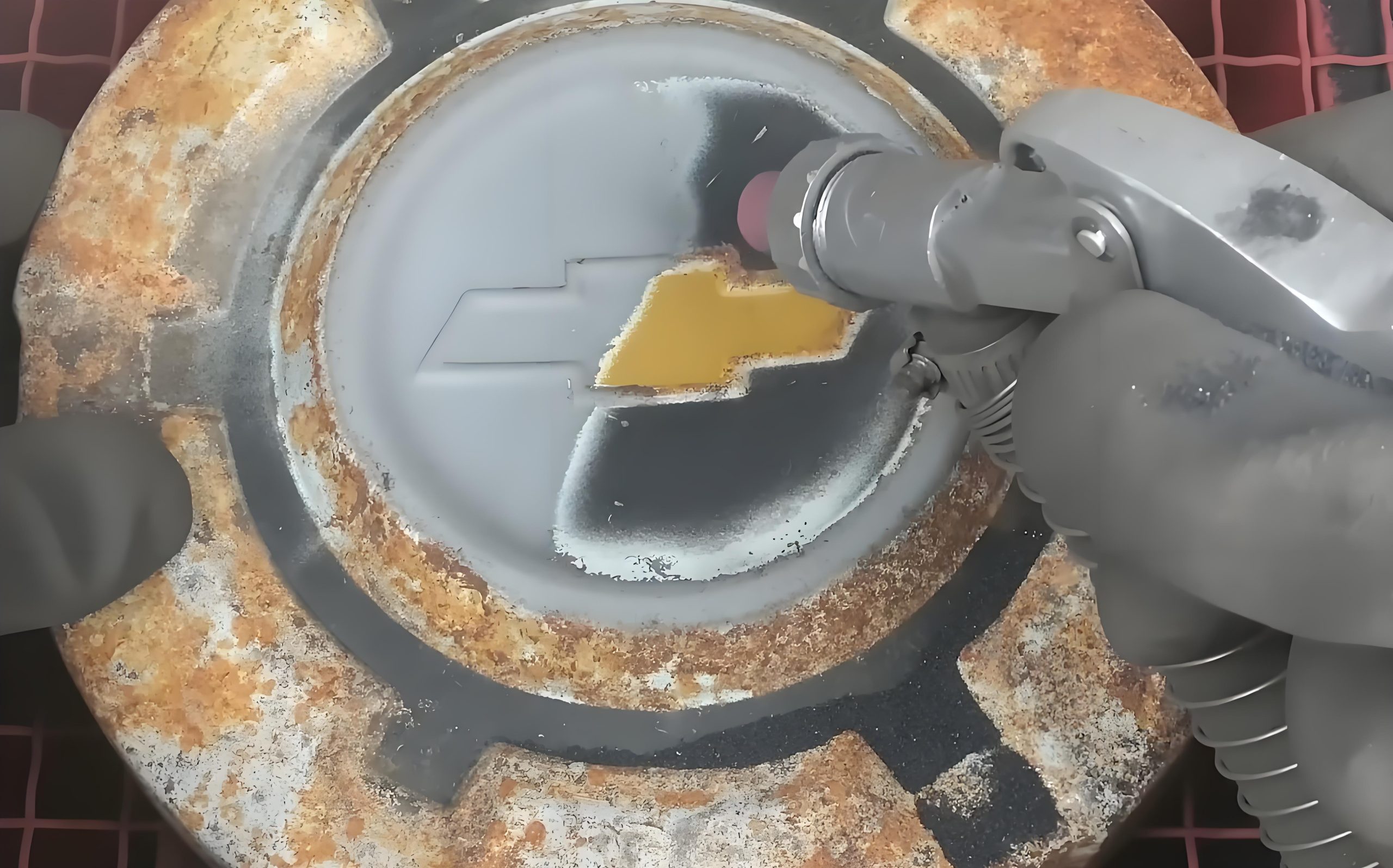
Blasting media — also called abrasive blasting media, abrasive grit, or simply blast abrasive — is any granular material propelled at high velocity against a surface to achieve a specific result: removing rust, mill scale, old coatings, or contaminants; creating a surface anchor profile for paint or thermal spray adhesion; deburring precision components; or producing a desired aesthetic finish on metal, stone, glass, or composite parts.
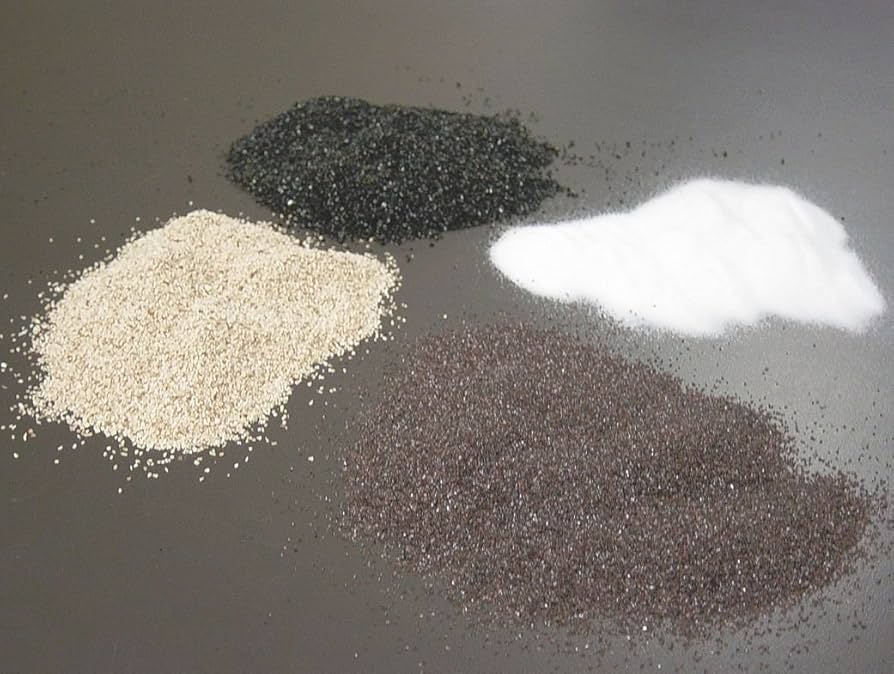
The term covers an enormous range of materials — from naturally mined minerals like garnet and flint, to manufactured ceramics like aluminum oxide and silicon carbide, to metal abrasives like steel shot and steel grit, to specialty media like glass beads, plastic pellets, and even agricultural shells. Each material has a different hardness, particle shape, density, and recyclability profile, which is why selecting the right blasting media is one of the most consequential decisions in any surface treatment operation.
Abrasive blasting is used across nearly every heavy manufacturing sector: shipbuilding, automotive OEM and restoration, oil and gas infrastructure, aerospace component finishing, structural steel fabrication, general metalworking, and even architectural stone and glass treatment. The global abrasive blasting media market was valued at over USD 6 billion in 2024, reflecting how central this material category is to industrial production worldwide.
2. How Abrasive Blasting Works
Abrasive blasting works by accelerating abrasive particles and directing them against a work surface. There are three primary propulsion methods:
- Compressed air blasting (pressure blast or suction blast): The most common method. A blast pot pressurizes the abrasive, and a nozzle directs a focused, high-velocity stream at the surface. Ideal for outdoor work, large structures, and heavy rust or coating removal.
- Centrifugal wheel blasting: A turbine wheel spins at high RPM and flings abrasive at the target surface. Used in automated cabinet blasters and large industrial shot blast machines for high-throughput production — common in foundries and automotive plants.
- Wet blasting (dustless blasting): Abrasive is mixed with water and propelled together, dramatically reducing airborne dust. Preferred in urban environments, near food-processing facilities, or wherever silica dust regulations are strict.
Regardless of propulsion method, the blasting process produces three critical surface outcomes that determine coating performance: cleanliness (removal of all contaminants and loose material, measured against standards such as ISO 8501 or SSPC), anchor profile (the peak-to-valley roughness in microns or mils that creates mechanical adhesion for primers and coatings), and surface chemistry (absence of chloride salts, oils, or chemical residues).
3. Types of Blasting Media — Full Overview
Understanding the characteristics of each media type is the foundation of correct selection. Below is a structured overview of all major categories. Each media type has its own in-depth guide linked from this page.
Aluminum Oxide
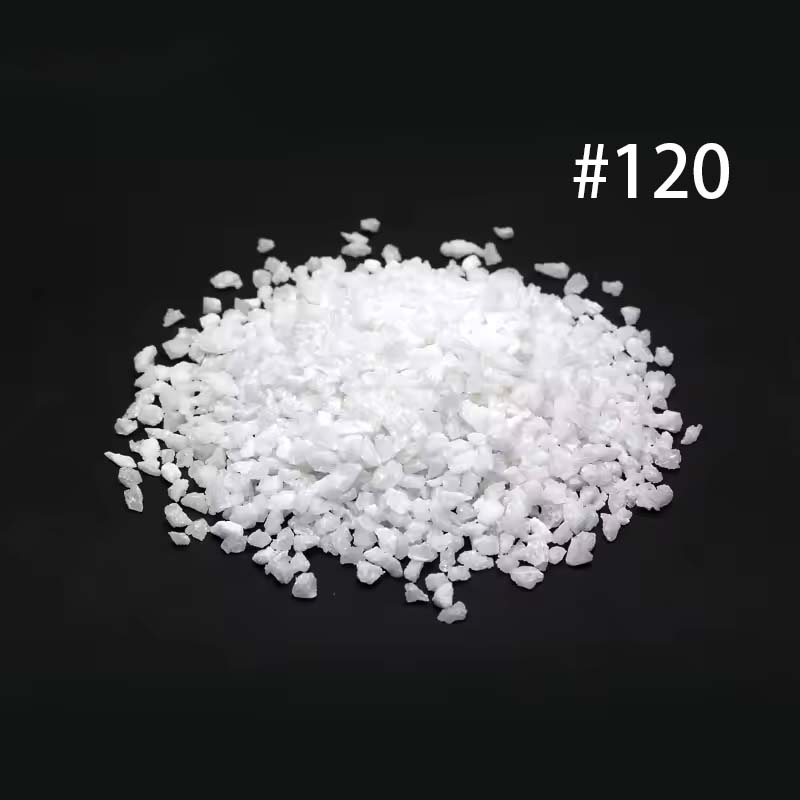
The industrial standard. Extremely hard (Mohs 9), angular particles that cut aggressively and produce a sharp anchor profile. Highly recyclable, chemically inert, and available in a wide grit range (16–220+). Suitable for steel, stainless, titanium, ceramics, and composites.
Full Aluminum Oxide GuideGlass Bead
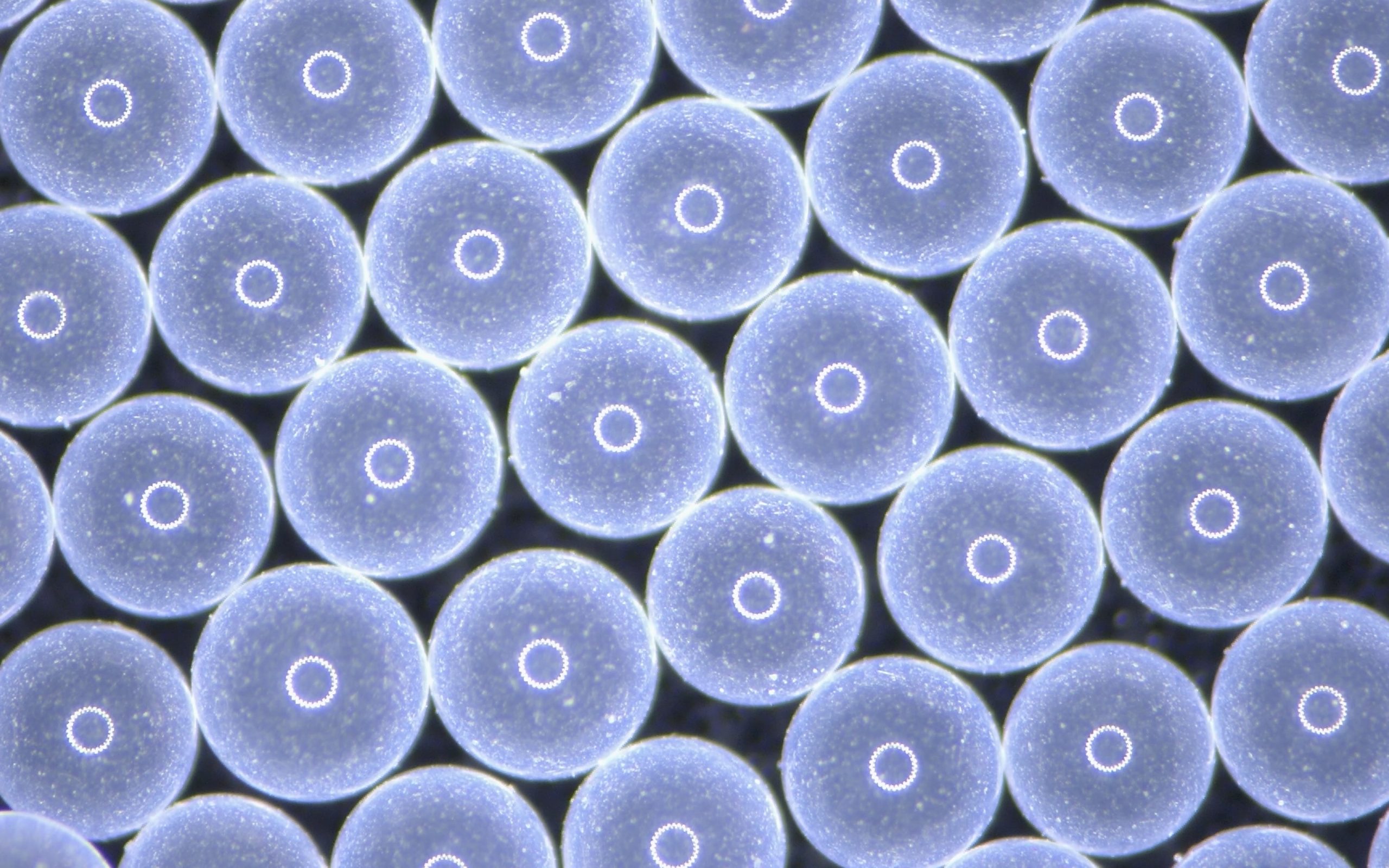
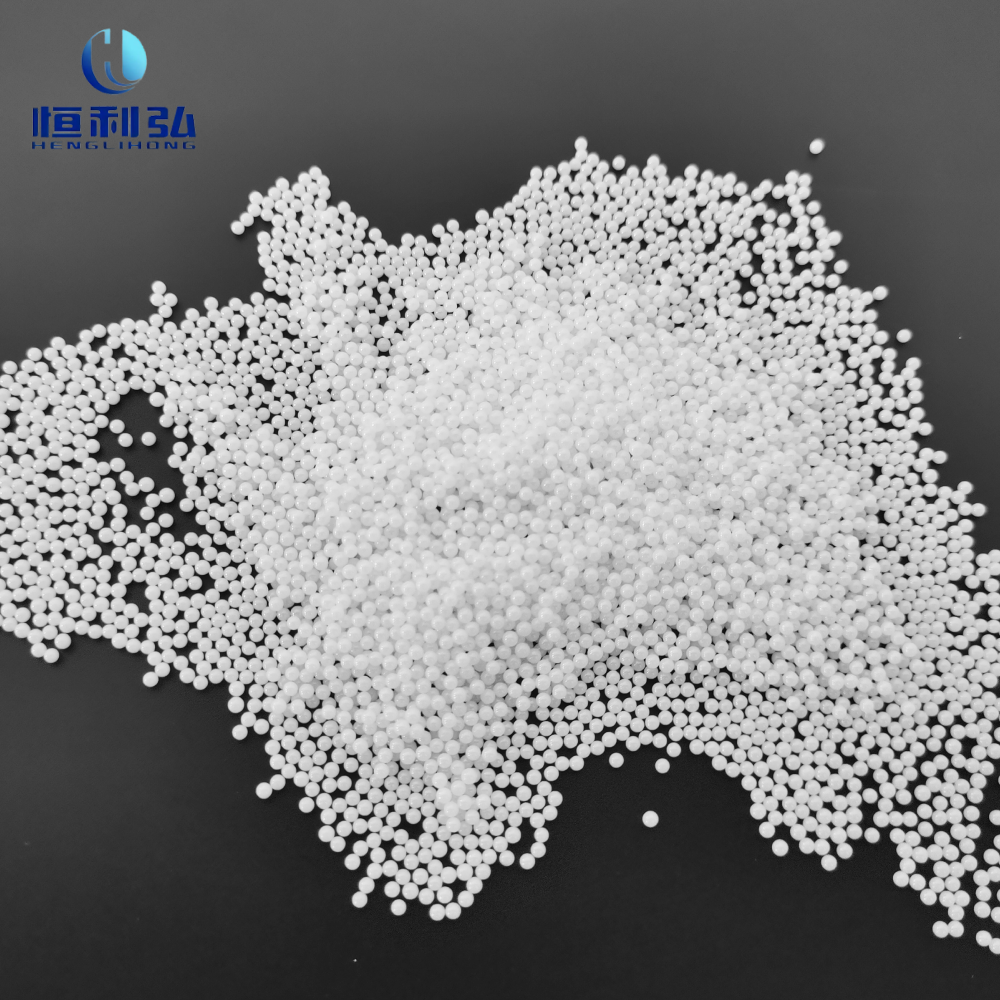
Spherical soda-lime glass particles that produce a smooth, satin finish without embedding in the substrate. Lower aggression than aluminum oxide — ideal for stainless steel, aluminum, and decorative metalwork where a bright, non-directional finish is required.
Full Glass Bead GuideGarnet
A naturally occurring iron-aluminum silicate mineral mined primarily in Australia, India, and China. Garnet offers an excellent balance of hardness (Mohs 7–8), low dust, chemical inertness, and superior anchor profile quality. Widely used in waterjet cutting and for environmental applications where silica-free blasting is mandated.
Full Garnet GuideSteel Grit & Steel Shot
Metallic abrasives manufactured from high-carbon steel. Steel grit (angular) etches an aggressive profile; steel shot (spherical) peens the surface, inducing compressive stress and improving fatigue life. The highest-volume abrasives in automated blast rooms, foundries, and structural steel fabrication.
Steel Grit vs Steel Shot GuideSilicon Carbide
The hardest blasting media in commercial use (Mohs 9.5). Angular, extremely fast-cutting, ideal for etching glass, stone carving, and cleaning the hardest ceramic and carbide substrates where aluminum oxide is too slow. Higher cost, but unmatched in hardness-critical applications.
Full Silicon Carbide GuidePlastic Blast Media
Urea, melamine, or acrylic particles with low hardness (Mohs 3–4). The only media that can strip paint and coatings from thin aluminum aircraft skins, fiberglass composites, and carbon fiber components without dimensional distortion. Mandated in many aerospace and automotive refinishing specifications.
Full Plastic Media GuideCopper Slag & Coal Slag
Industrial by-products with good hardness and low cost per ton. Commonly used for outdoor structural steel preparation (bridges, tanks, ship hulls). Single-use media — not recyclable — but the low purchase price makes them economical for open blasting in shipyards and infrastructure projects.
Industrial Metal Surface Prep GuideAgricultural & Organic Media
Walnut shell, corn cob, and peach pit media offer very low hardness and are used for delicate cleaning applications: stripping grease and carbon from engine parts, cleaning stone monuments, or decontaminating surfaces where no substrate damage is acceptable. Biodegradable and safe to handle.
Eco-Friendly & Silica-Free Media GuideFor a side-by-side ranking of all these types across the most important selection criteria, see our dedicated Blasting Media Comparison Chart, which presents hardness, profile, recyclability, and cost in a single reference table.
4. How to Choose the Right Blasting Media
Choosing blasting media is a multi-variable decision. The wrong choice costs money through substrate damage, poor coating adhesion, excessive media consumption, or health and environmental liability. The right choice delivers consistent surface quality at the lowest total cost per square meter treated. Work through the following four-step framework to arrive at the correct specification.
Step 1 — Define Your Substrate and Its Sensitivity
The hardness and thickness of the substrate sets an upper bound on media aggression. A general rule: never use media harder than the substrate material when surface geometry or dimensional tolerance is critical.
- Structural carbon steel (bridges, tanks, ship hulls): Steel grit, aluminum oxide, garnet, or copper/coal slag. Aggressive profiles tolerated.
- Aluminum and thin-gauge sheet metal: Glass bead, fine aluminum oxide (150+ grit), or plastic media. Heavy-duty angular abrasives will cause warping.
- Stainless steel: Aluminum oxide or glass bead only — avoid iron-containing media (steel grit, copper slag) that will contaminate the surface and promote corrosion.
- Composites, fiberglass, carbon fiber: Plastic blast media only. Any mineral abrasive will cut fibers and cause delamination.
- Glass, stone, ceramics: Silicon carbide for etching; aluminum oxide for general surface prep; glass bead for frosting effects.
- Titanium and nickel superalloys: Aluminum oxide (virgin, low-iron) or garnet. Metallic contamination from steel grit can cause intergranular corrosion.
Step 2 — Specify the Required Surface Profile
Every coating system specifies a minimum and maximum surface profile (anchor depth), typically measured in µm or mils using a Testex Press-O-Film tape or a profilometer. The blasting media’s particle size and shape are the primary controls on profile depth:
- Angular media (aluminum oxide, steel grit, garnet) — produces a jagged, high-Rz profile excellent for mechanical adhesion of heavy-duty coatings.
- Spherical media (glass bead, steel shot) — produces a dimpled, lower-Rz peened profile better suited for thin coatings, shot peening fatigue improvement, or decorative finishes.
- Coarser grit = deeper profile; finer grit = smoother, shallower profile. Always cross-reference media grit size against your coating manufacturer’s surface profile requirement before ordering.
Step 3 — Account for Environmental and Regulatory Requirements
Silica sand — once the most common blasting abrasive — is now banned or severely restricted in most industrialized countries due to the silicosis risk from respirable crystalline silica (RCS) dust. The European Union, United Kingdom, United States (OSHA), Canada, and Australia all enforce strict limits on RCS exposure. Safer alternatives — garnet, aluminum oxide, glass bead — should be the default specification for any professional operation.
For environmental reasons, consider whether spent media will be classified as hazardous waste. Media blasted onto lead-painted or chromate-coated surfaces becomes contaminated and requires licensed disposal. Recyclable media (aluminum oxide, steel grit) minimizes waste volume and disposal cost. For more details, see our eco-friendly and silica-free blasting media guide.
Step 4 — Calculate Total Cost Per Square Meter
Do not evaluate blasting media on purchase price per kilogram alone. The correct metric is total cost per m² of surface treated, which accounts for: media purchase price, number of recycles before the abrasive degrades, dust volume (lost material), and labor/machine time. Recyclable media like aluminum oxide can achieve 200+ cycles in a controlled cabinet blast environment, often delivering a cost-per-m² that is 40–70% lower than single-use alternatives over a production run.
Quick-Reference: Media Selection by Substrate
5. Industry Applications
Abrasive blasting media is used across virtually every sector that fabricates, maintains, or refurbishes metal, stone, glass, or composite structures. Understanding your industry’s specific requirements helps narrow the media selection immediately.
Automotive
Frame restoration, chassis prep, engine component cleaning, paint stripping on classic and vintage vehicles. Glass bead for cosmetic finishes; plastic media for composite panels. See our automotive guide.
Aerospace
Paint stripping, shot peening of turbine blades and landing gear, surface prep of aluminum and titanium airframes. Plastic media and aluminum oxide dominate. Full details in our aerospace media guide.
Structural Steel
Bridge, building, and tank fabrication. Heavy coating systems require Sa 2.5 clean steel and 50–100 µm profiles. Steel grit and garnet are primary. Our industrial surface prep guide covers this fully.
Marine & Shipbuilding
Anti-fouling paint prep on ship hulls, corrosion removal on offshore platforms, ballast tank lining. Copper slag and garnet widely used outdoors; aluminum oxide in enclosed blast rooms.
Oil & Gas
Pipeline internal and external coating prep, valve and pump refurbishment, storage tank interior lining. Garnet and steel grit dominate due to profile consistency requirements.
General Manufacturing
Deburring castings and forgings, cleaning heat-treat scale, preparing surfaces for electroplating, powder coating, and thermal spray. Aluminum oxide and steel grit are the workhorses.
6. Blasting Media Comparison Chart
The table below summarizes the most important technical and commercial parameters for the major blasting media types. For a more detailed interactive version with application-specific columns, visit our full Blasting Media Comparison Chart.
| Media Type | Mohs Hardness | Particle Shape | Surface Profile | Recyclability | Silica-Free? | Typical Applications |
|---|---|---|---|---|---|---|
| Aluminum Oxide | 9.0 | Angular | High (50–120 µm) | High (100–200×) | ✓ Yes | Steel, stainless, ceramics, composites |
| Silicon Carbide | 9.5 | Angular | Very High | Medium | ✓ Yes | Glass etching, hard ceramics, carbide |
| Garnet | 7.5–8.0 | Sub-angular | High (40–90 µm) | Medium (3–5×) | ✓ Yes | Steel, pipeline, waterjet, eco applications |
| Steel Grit | 8.0 | Angular | Very High (75–150 µm) | Very High (500+×) | ✗ No (iron) | Heavy steel, foundry, automotive body |
| Steel Shot | 8.0 | Spherical | Low–Med (dimpled) | Very High (500+×) | ✗ No (iron) | Shot peening, scale removal, castings |
| Glass Bead | 5.5–6.0 | Spherical | Low–Med (smooth) | Medium (30–50×) | ✓ Yes | Stainless, aluminum, decorative finish |
| Plastic Media | 3.0–4.0 | Angular/blocky | Very Low | Medium | ✓ Yes | Composites, aircraft, thin sheet metal |
| Copper Slag | 7.0 | Angular | High | None (single-use) | ✓ Yes | Outdoor steel, ship hulls, large structures |
| Walnut Shell | 3.5 | Irregular | Very Low | Low | ✓ Yes | Delicate cleaning, carbon removal, wood |
7. Cost Guide & ROI Analysis
The sticker price of blasting media is the least reliable indicator of its true value. What matters is cost per m² of acceptable surface achieved — a figure that incorporates media purchase price, consumption rate per m², recycle life, machine downtime, dust generation (lost material), and waste disposal.
Indicative Price Ranges (2026, FOB China)
| Media Type | Approx. Price (USD/MT) | Recycle Life | Relative Cost/m² | Best ROI Scenario |
|---|---|---|---|---|
| Aluminum Oxide (Brown) | $600–$900 | 100–200 cycles | Cabinet blast rooms, recirculating systems | |
| Garnet | $400–$700 | 3–5 cycles | Open blasting, eco-sensitive sites | |
| Steel Grit/Shot | $700–$1,100 | 500+ cycles | Automated blast rooms, high-volume production | |
| Glass Bead | $500–$900 | 30–50 cycles | Precision finishing, decorative metalwork | |
| Silicon Carbide | $1,400–$2,200 | 10–30 cycles | Hard ceramics, glass etching — no substitute | |
| Copper / Coal Slag | $80–$200 | 1 cycle only | Large-scale open blasting where disposal is cheap |
For a full breakdown of cost-per-cycle calculations, media degradation rates, and a downloadable cost calculator, see our detailed Blasting Media Cost Guide & ROI Analysis.
8. Safety Requirements, Regulations & Best Practices
Abrasive blasting is one of the most hazardous industrial operations in terms of both acute injury risk (high-pressure abrasive stream, rebound particles, noise) and chronic occupational illness risk (silicosis, heavy metal toxicity). Compliance with the following requirements is non-negotiable in any professional operation.
Regulatory Framework
- OSHA (USA): 29 CFR 1910.94 (ventilation); 29 CFR 1926.57 (construction); PEL for respirable crystalline silica: 50 µg/m³ (8-hour TWA) under OSHA’s 2016 Silica Standard.
- EU / EH40 (UK): WEL for respirable silica: 0.1 mg/m³; EU Directive 2017/2398 governs occupational exposure to carcinogens including crystalline silica.
- ISO / EN Standards: ISO 11126 series (metallic abrasives), ISO 11127 (non-metallic abrasives), ISO 8501–8504 (surface cleanliness and preparation).
Essential PPE and Controls
- Supplied-air respirator (Type CE blast hood or SCBA) — never rely on half-mask respirators in abrasive blasting operations.
- Blast suit or heavy-duty coverall with neck protection; leather or reinforced gloves rated for abrasive impact.
- Hearing protection: blast nozzle noise typically exceeds 110 dB — double protection (earplugs + muffs) is recommended.
- Safety boots (steel-toed) and shin guards if working in high-rebound environments.
- Engineering controls: ventilated blast rooms with dust collection, outdoor blasting downwind of workers, wet blasting where RCS limits are strict.
- Silica-free media specification: eliminate crystalline silica sand from all blasting specifications and replace with aluminum oxide, garnet, glass bead, or steel abrasives.
- Pre-blast inspection of hoses, couplings, and blast pot for wear, cracking, or loose fittings — hose failures cause fatalities.
- Worker health surveillance: baseline and periodic chest X-rays and pulmonary function tests for all regularly exposed workers.
Choosing silica-free blasting media is the single most impactful step an operation can take to reduce occupational health liability. Our dedicated Blasting Media Safety Guide covers regulatory compliance, medical surveillance requirements, and PPE selection in full detail.
9. Frequently Asked Questions
10. Sourcing Blasting Media: What to Look for in a Supplier
Selecting the right supplier is as important as selecting the right media. Inconsistent grit sizing, high contaminant levels, or poor batch-to-batch quality will show up as variable surface profiles, unexpected substrate damage, or coating adhesion failures on the production floor. When evaluating a blasting media supplier, apply the following criteria:
Quality Standards and Testing
Ask for material test reports (MTRs) on every shipment, covering: particle size distribution (sieve analysis to ISO 11126/11127 or FEPA standards), hardness, free silica content (particularly for garnet and crushed glass), conductivity/chloride content, and oil contamination. Suppliers who cannot provide batch-level test certificates should not be trusted for precision applications.
Consistency Across Batches
The biggest hidden cost in blasting operations is variability. If your aluminum oxide 80 grit produces a 55 µm profile in one delivery and a 75 µm profile in the next, your coating system may fail — and the rework cost will dwarf the cost of the media itself. Establish an approved supplier list with clear incoming inspection criteria before approving any new source.
Packaging, Labeling, and Logistics
Standard industry packaging for dry blasting abrasives is 25 kg multi-ply paper bags or 1,000 kg big bags (super sacks). Confirm that moisture barriers are adequate for sea freight — wet aluminum oxide or garnet can clump and cause feed problems in blast pots. Ensure country-of-origin documentation and any required material safety data sheets (SDS/MSDS) are included with every shipment for customs clearance and EHS compliance.
Technical Support
A capable supplier should be able to recommend specific grades for your application, provide technical data on surface profile and consumption rate per m², and assist with troubleshooting if quality issues arise. Transactional-only suppliers who cannot engage on applications engineering are a risk for any operation where blasting is a critical process step.
Related In-Depth Resources
This pillar page is the hub of a comprehensive technical library on blasting media. Explore the full topic cluster below to go deeper on any specific area:
- Types of Blasting Media — Complete Guide — all 12+ media types with detailed technical specs
- How to Choose the Right Blasting Media — decision framework, substrate matrix, grit selection tables
- Aluminum Oxide Blast Media: Uses & Grit Guide
- Glass Bead Blasting Media: Finish & Applications
- Garnet Blasting Media — Eco-Friendly & High Performance
- Steel Grit vs Steel Shot: Which Should You Use?
- Plastic Blast Media for Aerospace & Automotive
- Silicon Carbide Blast Media: Hardest Abrasive Explained
- Blasting Media for Automotive Restoration
- Industrial Surface Prep: Best Blasting Media for Metal
- Eco-Friendly Blasting Media: Low-Dust & Silica-Free Options
- Blasting Media Cost Guide: Price per Pound & ROI
- Blasting Media Comparison Chart (All Types)
- Blasting Media Safety Guide: Silica Risks & PPE
Ready to Source the Right Blasting Media?
Our technical team helps industrial buyers select the correct abrasive grade, grit size, and packaging for their specific application — with competitive pricing, full QC documentation, and reliable export logistics.
Request a Quote or SampleFilters