Jiangsu Henglihong Technology Co., Ltd.
How to Choose Sandblasting Material: Step-by-Step Selection Guide
A structured, decision-driven guide for buyers and engineers to select the correct sandblasting media for any application — covering the five key decision variables, common selection mistakes, worked examples for major industry scenarios, and direct links to the media type you need.
Why Media Selection Matters More Than You Think
The abrasive media used in sandblasting is not a commodity purchase — it is a process variable that directly determines the quality, speed, and cost of your surface preparation operation. The wrong media choice can:
- Warp or distort thin-walled substrates (using media too heavy or too aggressive)
- Produce insufficient anchor profile for coating adhesion (using media too soft or too fine)
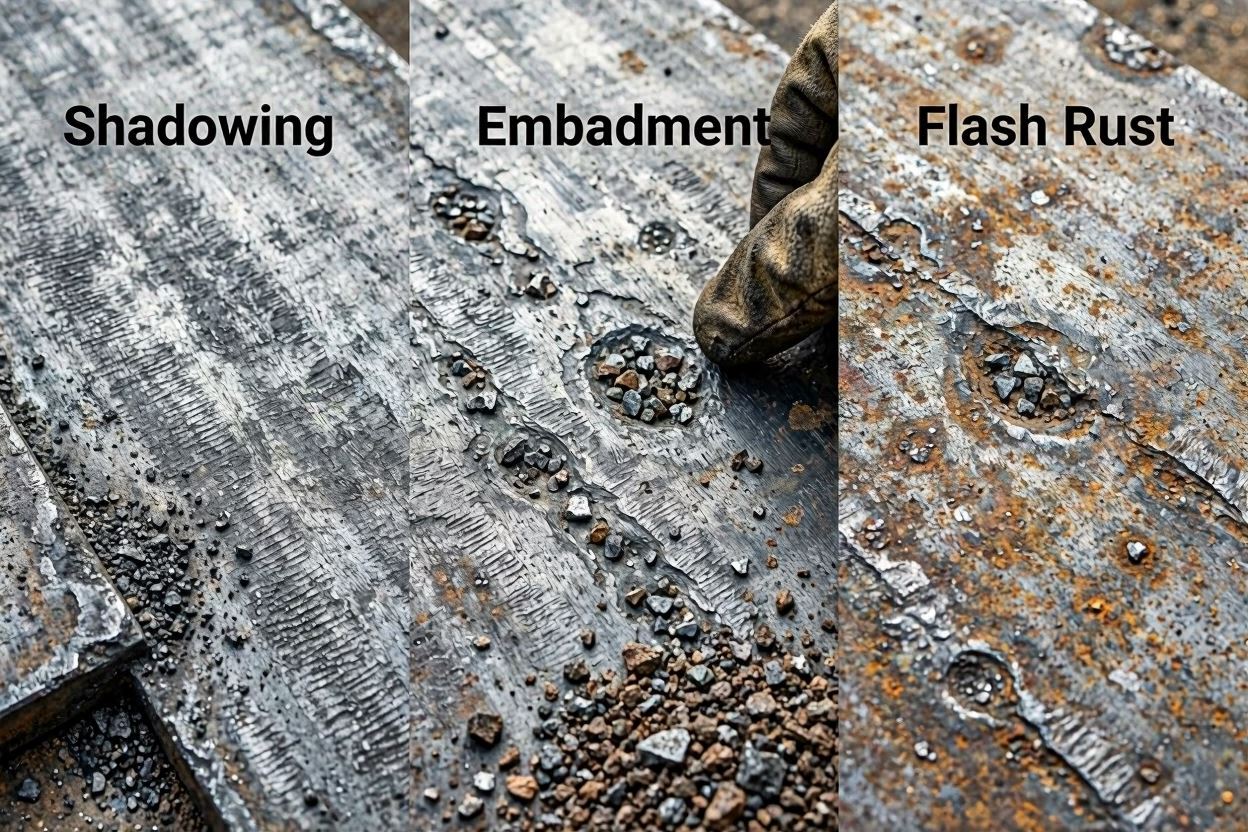
- Embed iron contamination in stainless steel surfaces (using steel abrasives on non-ferrous metals)
- Generate excessive dust and silica exposure for operators (using silica sand or high-silica slags)
- Triple the per-square-meter cost (using single-use media where recyclable media would be appropriate)
- Fail to clean the substrate at all (using media too soft for the contaminant hardness)
This guide provides a structured five-step decision process that eliminates these risks by ensuring your media selection is driven by technical requirements, not habit, availability, or price per bag.
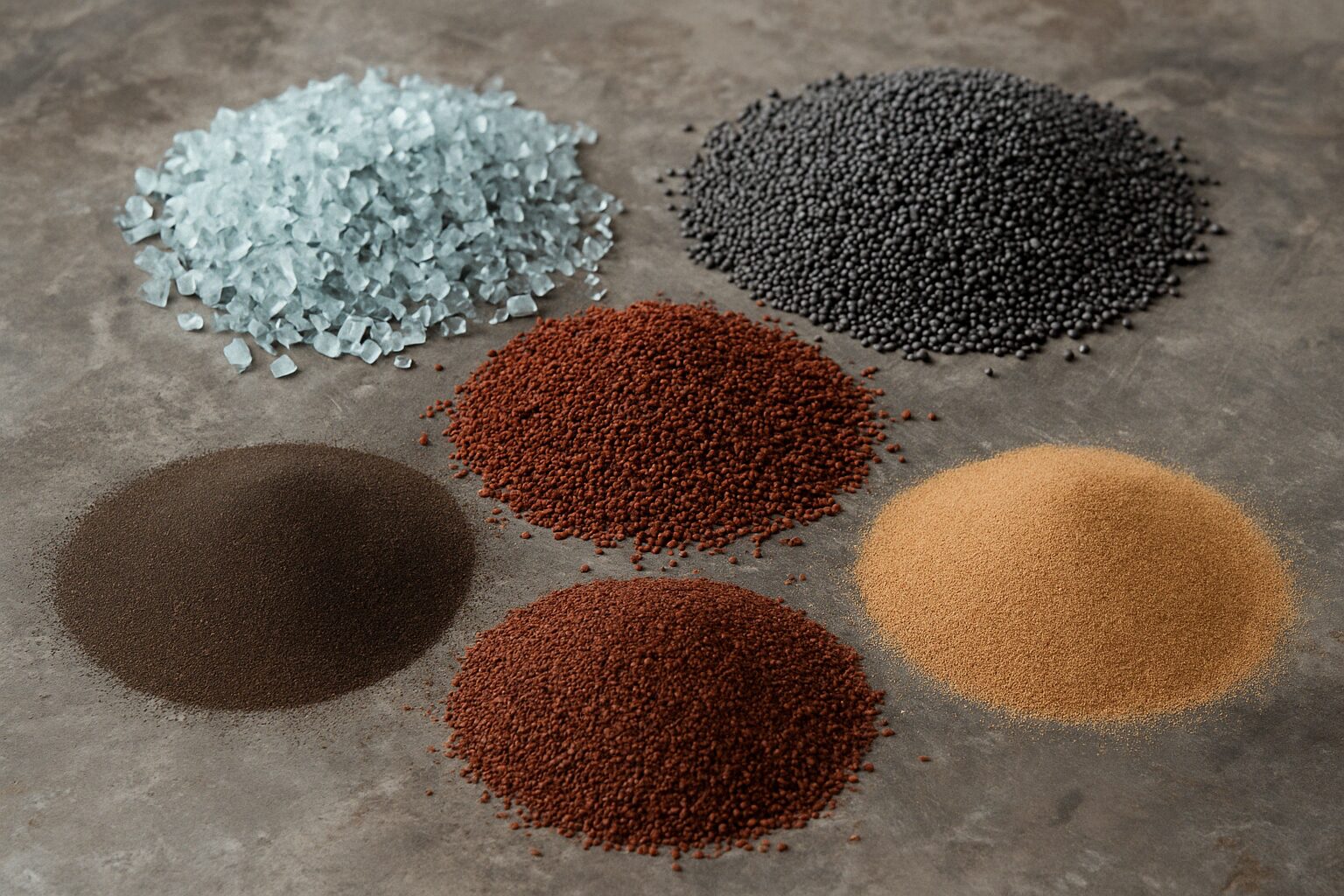
For the complete overview of all available media types, see our complete guide to sandblasting material types and selection. For the side-by-side technical comparison across all media, see the sandblasting media comparison chart.
The correct sandblasting media is the one that removes the target contaminant at the required cleanliness level, produces the required surface profile for the subsequent process step, does not damage the substrate, meets safety and environmental constraints, and delivers the lowest total cost per square meter processed. All five criteria must be met simultaneously — optimizing for any one at the expense of the others creates problems elsewhere.
Step 1 — Identify Your Substrate and Its Sensitivity
Determine substrate material and hardness
The substrate material determines the upper limit of media hardness you can safely use. Using media significantly harder than the substrate will remove base material as well as the contamination — particularly critical on thin-walled components, precision-machined parts, and soft metals.
- Carbon steel (Mohs 4–5): Can tolerate hard angular abrasives (Al₂O₃, garnet, steel grit) at industrial pressures.
- Stainless steel (Mohs 5.5–6.5): Requires non-ferrous abrasives only — steel media embeds iron and destroys the passive layer.
- Aluminum, thin sheet metal: Requires gentle media at low pressure to avoid warping and dimensional change — glass beads, fine garnet, walnut shell.
- Fiberglass, composites, plastics: Only organic media (walnut shell, corn cob) or soda blast — all mineral abrasives will cut the substrate structure.
- Technical ceramics, tungsten carbide: Only silicon carbide — insufficient hardness from other abrasives means no effective cleaning or profiling.
- Wood: Fine garnet or walnut shell at very low pressure.
Check for iron contamination sensitivity
If the substrate is stainless steel, titanium, or any non-ferrous metal destined for plating, anodizing, passivation, or use in food/pharmaceutical environments, eliminate all ferrous (steel) abrasives immediately. Steel media embeds microscopic iron particles that will corrode and stain the surface. Use white aluminum oxide, glass beads, or garnet — all non-ferrous and confirmed iron-free.
Step 2 — Define the Contamination and Required Cleanliness Standard
Identify what you are removing
The type and severity of surface contamination determines the minimum media hardness and grit coarseness required.
- Loose rust and old paint (light contamination): Medium-hardness angular media at medium grit — garnet G50, crushed glass medium grade, or Al₂O₃ F60–F80.
- Tight mill scale (newly rolled steel): Hard angular media at coarse grit — Al₂O₃ F24–F36, steel grit G25, or garnet G16–G25.
- Heavy multi-layer coatings: Hard, coarse angular media — Al₂O₃ F16–F36, steel grit G25–G40.
- Carbon deposits (turbine components): Walnut shell — soft enough to remove carbon without touching the metal.
- Oil and grease contamination: Corn cob — its absorbency makes it uniquely effective for oily surface cleaning.
Specify the required cleanliness standard
Industrial surface preparation standards define the minimum acceptable cleanliness level. Common reference standards:
- ISO 8501-1 / SSPC Visual Standards: Sa 1 (Light blast), Sa 2 (Thorough), Sa 2.5 (Near-White), Sa 3 (White Metal)
- SSPC-SP standards: SP-6 (Commercial), SP-10 (Near-White), SP-5 (White Metal)
- NACE standards: Equivalent to SSPC but with NACE designations
Higher cleanliness levels require harder, more aggressive media and often finer grit control. Sa 3 (White Metal) demands that all contamination is removed — achievable with hard angular abrasives at adequate pressure, but not with soft media on heavily rusted surfaces.
Step 3 — Specify the Required Surface Finish and Anchor Profile
Determine if an anchor profile is required
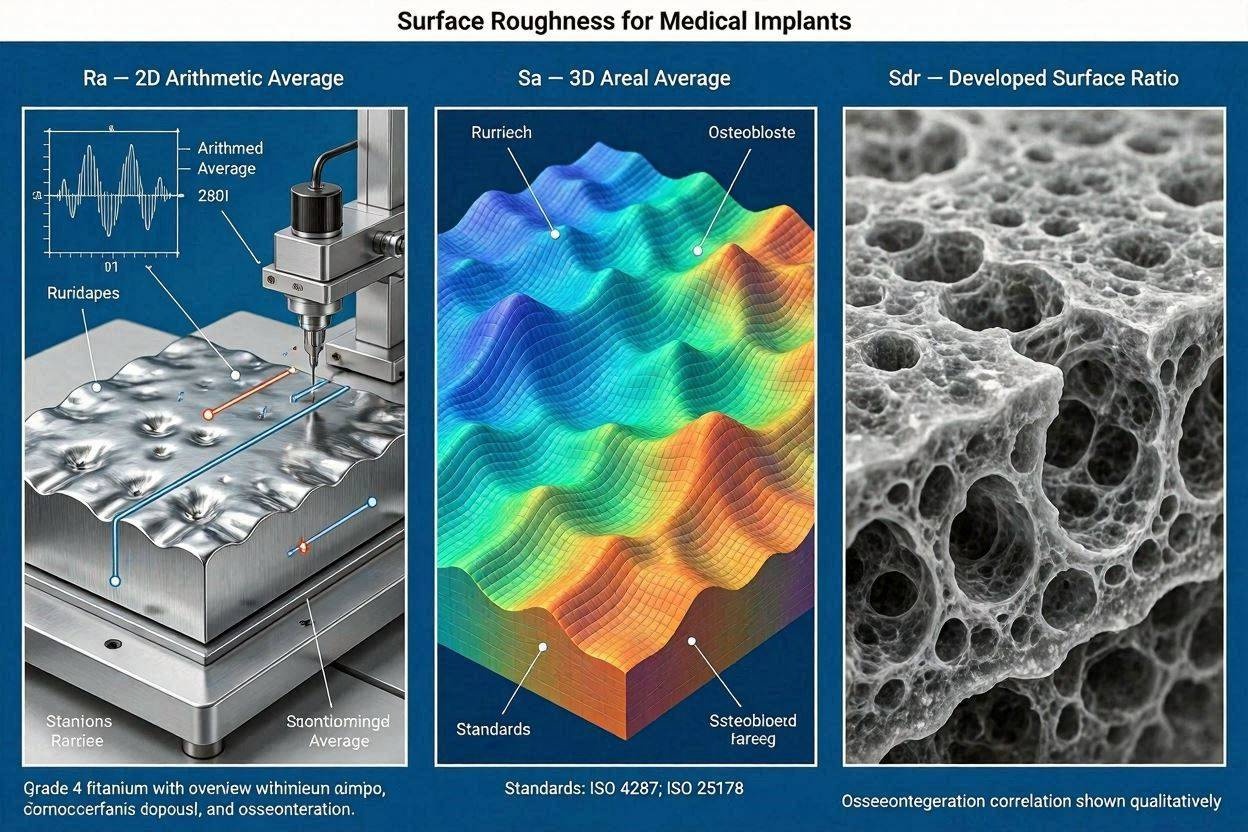
If a protective coating will be applied after blasting, the coating manufacturer’s Technical Data Sheet (TDS) specifies the required anchor profile range (Ra in µm or Rz in µm). This is the most important starting point for grit selection. Match the grit size and media type to the profile range specified in the TDS — not to habit or to what media is available in the store room. Using the grit size chart for reference, see our sandblasting grit size chart.
Determine if a smooth or peened finish is needed
If the application is peening (improving fatigue life), polishing (aesthetic finish on stainless or aluminum), or deburring (precision parts), an anchor profile is not the goal — surface smoothness and compressive stress are. In these cases, specify round media: glass beads for metals, or corn cob for very delicate materials. Angular abrasives produce rough profiles that cannot be polished into the smooth finish these applications require.
Step 4 — Assess Your Operating Environment and Equipment
Open blast vs. closed-loop reclaim system
Open blast (no reclaim): Media cannot be recovered — single-use economics apply. Select based on purchase price, dust profile, and environmental compliance. Garnet, crushed glass, and aluminum oxide are all suitable. Avoid steel media in open-blast due to ground contamination and collection difficulty.
Closed-loop blast room/cabinet with reclaim: Recyclability becomes the dominant economic factor. Steel abrasives and aluminum oxide justify their higher unit cost through their superior reuse cycles. Investment in a classifier to remove fines is essential.
Environmental regulations and dust control
Outdoor blasting in proximity to waterways, storm drains, or populated areas may require media with specific environmental profiles: no heavy metals (eliminates copper slag), no free silica (eliminates natural sand), low dust generation (favors garnet or steel media over crushed glass or slag). Always check the applicable environmental permit conditions for your site before specifying media. For full regulatory guidance, see our sandblasting media safety and OSHA compliance guide.
Equipment compatibility
Verify that the selected media type and grit size are compatible with your blast equipment. Check your equipment manual for: minimum and maximum particle size, recommended nozzle bore diameter for the selected grit, media density compatibility with your metering valve, and any media-type restrictions (e.g., some suction-feed cabinets cannot handle very dense steel media without modified media valve settings).
Step 5 — Calculate True Cost Per Square Meter
Never make the final media selection based on price per kilogram alone. True cost per square meter integrates four factors:
- Purchase price per kg × media consumption rate (kg/m²) ÷ number of reuse cycles = media cost per m²
- Labor cost: Faster-cleaning media reduces blast hours needed per m². A media that cleans 50% faster at 30% higher price may be substantially cheaper in total project cost.
- Disposal cost: Single-use media generates disposal costs that recyclable media avoids entirely. In high-volume operations, disposal can represent 20–40% of total media cost.
- Equipment wear: Hard, angular media wears nozzles faster. Factor in nozzle replacement frequency when comparing very hard abrasives to moderate-hardness alternatives.
Scenario: 1,000 m² of carbon steel surface preparation in a blast room with reclaim.
Option A — Crushed Glass (single-use): $0.70/kg × 0.4 kg/m² × 1 cycle = $0.28/m². Disposal: $0.08/m². Total: ~$0.36/m².
Option B — Aluminum Oxide (20 cycles): $1.20/kg × 0.3 kg/m² ÷ 20 cycles = $0.018/m² media cost. Disposal near-zero (residual fines only). Total: ~$0.02–0.04/m².
Result: Al₂O₃ in reclaim system is approximately 10× cheaper per m² despite the 70% higher purchase price. This is why media selection based on price per bag leads to the wrong conclusion.
Worked Selection Scenarios
Common Selection Mistakes — and How to Avoid Them
The cheapest media per kilogram is almost never the cheapest per square meter processed. Always calculate total cost using the five-factor model in Step 5 before making a procurement decision.
Steel shot or grit embeds iron particles in stainless steel surfaces, causing rust staining and destroying the passivation layer. This is irreversible without re-passivation treatment. Use white aluminum oxide, garnet, or glass beads on any stainless steel substrate.
The anchor profile must match the coating TDS specification range — not just be “as rough as possible.” Profiles too deep can expose peaks above the coating film, creating rust initiation sites. Always start with the coating TDS and work backwards to grit selection.
Aluminum oxide, steel grit, garnet, and crushed glass will cut through fiberglass laminate and warp thin aluminum sheet. For these substrates, the selection is walnut shell, corn cob, glass beads (at very low pressure), or soda blast — nothing harder.
A reclaim system without a functioning size classifier does not separate effective-size media from fines. All the media — including broken, ineffective particles — recirculates. The result is inconsistent surface profiles, progressive surface profile loss, and wasted media costs that eliminate the economic benefit of the reclaim system.
Quick Selection Reference Table
| Substrate + Application | Primary Recommendation | Alternative | Avoid |
|---|---|---|---|
| Carbon steel, heavy rust removal (outdoor) | Garnet G25–G30 | Crushed Glass Medium | Natural silica sand |
| Carbon steel, blast room, high volume | Steel Grit GL G40 | Al₂O₃ F36–F46 | Single-use media |
| Stainless steel, satin finish | Glass Beads Size 35–60 | White Al₂O₃ F80 | Any steel abrasive |
| Aluminum (thin panels, automotive) | Glass Beads Size 35 | Walnut Shell Fine | Steel grit, coarse Al₂O₃ |
| Fiberglass / GRP panels | Walnut Shell Medium | Plastic grit | All mineral abrasives |
| Technical ceramics / WC tooling | Silicon Carbide F46–F220 | — | All softer abrasives |
| Concrete floor preparation | Crushed Glass Medium | Garnet G50 | Silica sand |
| Jet engine turbine blades | Walnut Shell Medium | Glass Beads (peening) | Any hard abrasive |
| Automotive restoration (paint strip) | See auto guide | — | Heavy media on thin panels |
Request a Quote
Have your substrate, cleanliness target, and coating spec ready? Tell us your requirements and we’ll recommend the right grade and provide a competitive price within 24 hours.
Get a Free Quote →Talk to a Technical Advisor
Our surface preparation engineers can review your application spec — substrate, contamination type, coating system, and equipment — and recommend the optimal media selection.
Contact Our Team →Filters