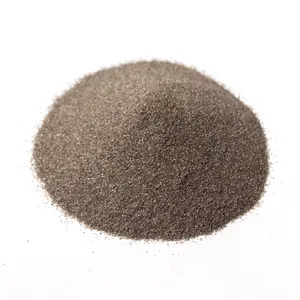
Abrasive Blasting Titanium Medical Implants: Media Selection, Process Parameters, and the Alumina Contamination Problem
Titanium is the dominant material for load-bearing medical implants because of its unique combination of biocompatibility, corrosion resistance, mechanical strength, and low elastic modulus. But titanium’s material excellence does not automatically produce a biologically optimal surface. The surface that machining leaves behind — smooth, contaminated, and covered in a disordered oxide layer — is not the surface that bone wants to heal to. Abrasive blasting transforms that as-machined surface into the controlled, rough, clean topography that drives osseointegration. This guide covers the titanium material science relevant to blasting, the media options and their trade-offs, the alumina contamination problem that has reshaped media selection practice, and the process parameters that reliably deliver target Ra on clinical-grade titanium implants.
1. Titanium Alloys in Medical Implants: Properties Relevant to Blasting
Ti-6Al-4V ELI (ASTM F136)
The workhorse implant alloy. Alpha-beta structure; UTS ~860–930 MPa; Vickers hardness ~300–380 HV. Moderately difficult to blast — harder than pure Ti, responds well to standard Al₂O₃ or TiO₂ media at 3–5 bar. Used for hip stems, tibial trays, spinal cages, pedicle screws.
CP Titanium Grade 4 (ASTM F67)
Commercially pure titanium; UTS ~550 MPa; Vickers hardness ~200–250 HV. Softer than Ti-6Al-4V; requires lower pressure to achieve same Ra to avoid over-blasting. Used for dental implants, some pacemaker components.
Ti-6Al-4V Standard (ASTM F1108, castings)
Cast Ti-6Al-4V with slightly lower fatigue properties than wrought; used for complex geometry components. Surface scale from casting must be removed before blasting for uniform results.
Ti-Zr Alloy (Roxolid, ~15% Zr)
Higher strength than CP-Ti; used for narrow-diameter dental implants. Similar blasting response to CP-Ti with slightly higher hardness. TiO₂ blasting preferred to avoid Al contamination on this premium alloy.
The key material property influencing blasting process design is hardness. Softer titanium alloys (CP-Ti grades) respond to blasting more readily than harder alloys (Ti-6Al-4V ELI) — a given pressure and media combination will produce higher Ra on CP-Ti than on Ti-6Al-4V. This means the process specification must be validated separately for each alloy grade used in production, and the parameter window for CP-Ti implants must be set more conservatively to avoid over-blasting thin-walled features such as dental implant necks or thin pedicle screw shanks.
2. The Native TiO₂ Oxide Layer and How Blasting Affects It
All titanium surfaces in air are covered by a native titanium dioxide (TiO₂) passive layer that forms spontaneously through reaction of titanium with atmospheric oxygen. This native oxide is typically 2–8 nm thick, chemically stable in physiological fluids, and responsible for titanium’s excellent corrosion resistance and baseline biocompatibility. The character of this oxide layer — its thickness, crystallinity, stoichiometry, and surface hydroxylation state — directly influences protein adsorption, cell adhesion, and ultimately osseointegration.
Abrasive blasting disrupts the native oxide in a mechanically complex way. Each particle impact fractures the 2–8 nm oxide film over a local area comparable to the particle contact zone (roughly 1–10 μm²). The fracture exposes bare metallic titanium, which re-oxidizes in air within milliseconds — so fast that the new oxide forms essentially immediately. However, the newly formed oxide in each impact crater has different characteristics from the surrounding intact native oxide:
- The new oxide is thinner and less crystalline initially, then grows over time to resemble the original native layer.
- The fracture and deformation introduce defect sites in the new oxide that may alter its electrochemical behavior.
- The mechanical deformation of the titanium substrate creates a different subsurface stress state that can influence the oxide growth rate and character.
- For Al₂O₃-blasted surfaces, embedded alumina particles become incorporated in the surface oxide zone.
The practical significance of oxide layer disruption is that freshly blasted titanium surfaces have a chemically active, high-energy state that is favorable for protein adsorption and subsequent cell adhesion — but this activity decays over time as the oxide matures. The concept of “hydrophilicity aging” in implant surface science — where SLActive titanium surfaces are stored in liquid to prevent hydrophobic contamination — directly addresses this oxide maturation process. For orthopedic implants that spend less time between blasting and implantation than dental implants, the oxide aging effect is less clinically significant, but it remains a factor in understanding why surface treatment timing and packaging conditions matter.
3. Work-Hardening Zone Created by Blasting
Each abrasive particle impact on the titanium surface creates a localized plastic deformation zone beneath the impact crater. Because Ti-6Al-4V is a strain-hardening material, the deformed zone is harder than the undeformed substrate — this is the work-hardened layer. At standard orthopedic implant blasting parameters (250–750 μm Al₂O₃, 3–5 bar), the work-hardened zone in Ti-6Al-4V extends approximately 5–30 μm below the surface, with hardness increases of 10–25% relative to the bulk alloy measured by nanoindentation.
This work-hardened layer has two consequences for subsequent processing. First, it introduces biaxial compressive residual stresses at the surface that are generally beneficial — they oppose fatigue crack initiation and improve resistance to stress corrosion cracking. Second, it creates a zone of altered microstructure and elevated dislocation density that responds differently to acid etching than the underlying undeformed material: the worked layer etches faster and produces a different micro-pit morphology than an un-worked surface. This is why the SLA acid etch step — which is designed to remove this work-hardened layer and expose the underlying grain structure for micro-pitting — must be validated for the specific blasting parameters used. Over-blasting (too high pressure or too long dwell time) creates a deeper work-hardened zone that requires a longer or more aggressive acid etch to remove completely, shifting the whole downstream process.
4. Media Selection: Al₂O₃, TiO₂, ZrO₂, and Glass Beads
| Media | Mohs Hardness | Typical Size Range | Ra on Ti-6Al-4V (3 bar) | Alumina Contamination | Cost Relative to Al₂O₃ | Primary Medical Use |
|---|---|---|---|---|---|---|
| Al₂O₃ (corundum) | 9 | 100–750 μm | 1.5–4.5 μm | High — embedded particles detected by XPS/EDS | 1× (baseline) | SLA implant roughening; most orthopedic/dental blasting |
| TiO₂ | 5.5–6.5 | 150–600 μm | 1.0–3.5 μm (at 3–5 bar) | None — Ti-native residues only | 3–5× | Alumina-free implant blasting; Ti-Zr dental implants |
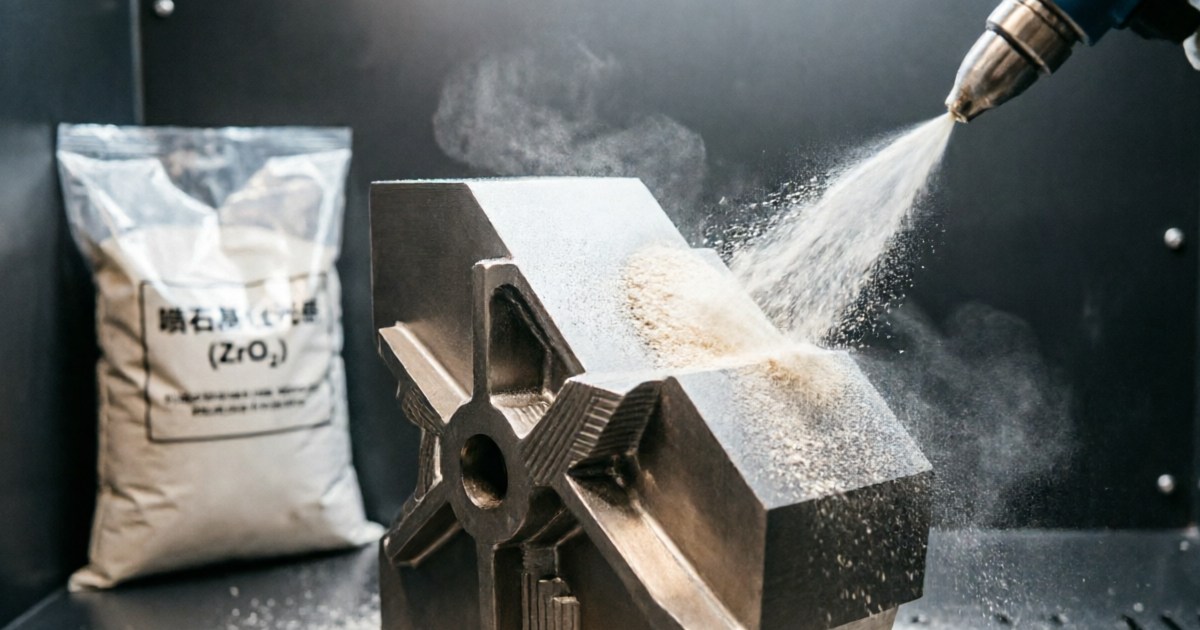
| ZrO₂ (zirconia) | 8–8.5 | 100–500 μm | 1.5–4.0 μm | None — ZrO₂ residues biocompatible | 4–7× | Zirconia dental implants; alumina-free Ti implant blasting |
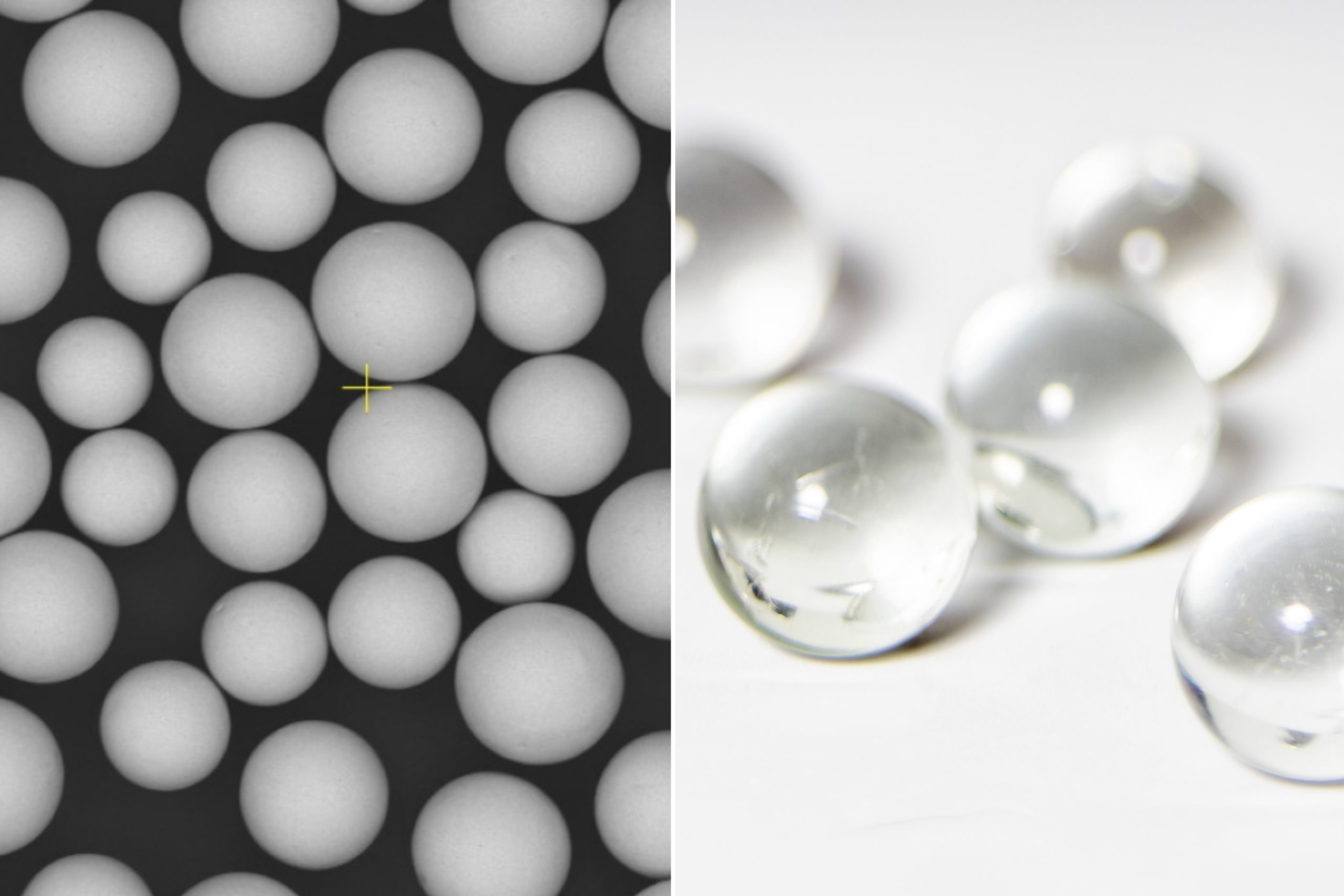
| Glass beads (soda-lime) | 5.5–6 | 50–420 μm | 0.4–1.5 μm | None — Si/Ca/Na residues; generally removable | 0.8–1.2× | Ti device housings; pacemaker cans; non-bone-contact Ti surfaces |
The selection between Al₂O₃ and TiO₂ media for titanium implant roughening is the most consequential media decision in orthopedic and dental implant blasting. Al₂O₃ offers higher cut rate, lower cost, and decades of clinical validation data. TiO₂ offers clean chemistry but requires process re-validation when switching from an Al₂O₃ process. The manufacturing decision depends on whether the device’s ISO 10993 biocompatibility testing and clinical evaluation have been performed on Al₂O₃-blasted or TiO₂-blasted surfaces — a change in media type constitutes a process change that requires formal change control review and may trigger re-testing or re-evaluation under the regulatory framework.
5. Alumina Contamination: Detection by XPS and EDS
The analytical methods used to detect and quantify alumina contamination on blasted titanium surfaces are specific and require sophisticated surface analysis equipment not typically found in device manufacturing facilities. Understanding what these methods measure and what their limits are is essential for anyone responsible for implant surface quality.
X-ray Photoelectron Spectroscopy (XPS)
XPS bombards the sample surface with soft X-rays (typically Al Kα, 1486.6 eV) and measures the kinetic energy of electrons ejected from the top 5–10 nm of the surface. The binding energy of each ejected electron is characteristic of the element and its chemical state. For alumina contamination on titanium, the Al 2p peak at ~74.4 eV (Al³⁺ in oxide environment) is diagnostic. XPS is quantitative: peak area ratios can be converted to atomic % surface composition. Critically, XPS samples only the outermost ~5–10 nm of the surface — the zone most relevant to direct cell contact and biocompatibility. A clean surface shows no Al 2p signal above the noise floor (~0.1 atomic %). Al₂O₃-blasted titanium typically shows 2–8 atomic % Al on the unprocessed surface, falling to 0.5–2 atomic % after standard acid etching, but rarely reaching zero.
Energy-Dispersive X-ray Spectroscopy (EDS/EDX)
EDS is performed inside a scanning electron microscope (SEM) and detects characteristic X-rays emitted from the sample when bombarded by the electron beam. EDS has a much deeper information depth (~1–2 μm) than XPS and provides spatial mapping: compositional maps showing where aluminum-containing particles are located across the implant surface. EDS is valuable for visualizing the distribution of embedded alumina particles in cross-sections of blasted implants, revealing the 3D embedding geometry that XPS cannot show.
Auger Electron Spectroscopy (AES)
AES has the same surface sensitivity as XPS (~5–10 nm) but provides much higher spatial resolution (beam spot ~20–100 nm vs ~1 mm for XPS). AES can determine whether individual identified particles on the surface are alumina or titanium oxide — useful for connecting the SEM-visible surface morphology to the chemical identity of specific features.
6. Process Parameter Windows for Different Ti Grades
| Ti Alloy | Media | Particle Size | Pressure Range | Nozzle Distance | Target Ra | Key Risk |
|---|---|---|---|---|---|---|
| Ti-6Al-4V ELI (wrought) | Al₂O₃ or TiO₂ | 250–500 μm | 3.5–5.0 bar | 60–90 mm | 2.0–4.0 μm | Work-hardened layer may require extended acid etch |
| Ti-6Al-4V (cast) | Al₂O₃ or TiO₂ | 250–500 μm | 3.0–4.5 bar | 60–100 mm | 2.0–4.0 μm | Cast porosity may be exposed by blasting; inspect for pits |
| CP-Ti Grade 4 (dental implants) | Al₂O₃ or TiO₂ | 200–400 μm | 2.0–3.5 bar | 70–100 mm | 1.5–3.0 μm | Over-blast risk on thin implant necks; lower pressure critical |
| Ti-Zr (Roxolid) | TiO₂ preferred | 200–400 μm | 2.5–4.0 bar | 70–100 mm | 1.5–3.0 μm | Premium alloy; alumina-free media preferred for biocompatibility |
| Ti-6Al-4V housing/structural | Glass beads | 75–177 μm (#10–#12) | 1.5–2.5 bar | 100–150 mm | 0.5–1.5 μm | Insufficient Ra for bone ingrowth; appropriate for matte finish only |
7. Post-Blast Anodizing and Surface Chemistry
Titanium anodizing — the electrochemical oxidation of the blasted titanium surface in an acidic electrolyte bath — grows a controlled TiO₂ layer thicker than the native oxide. The thickness is controlled by the applied anodizing voltage (typically 10–100 V for medical applications, producing oxide thicknesses of approximately 10–200 nm), and the optical interference effect of this transparent TiO₂ layer on the underlying metallic titanium produces the characteristic color range of anodized titanium (gold at ~10 nm, purple at ~20 nm, blue at ~30 nm, progressing through the visible spectrum with increasing thickness).
Blasting before anodizing is important for consistent anodize quality on titanium. The as-machined native oxide varies in thickness and character across the surface, producing non-uniform anodize layer growth. Blasting creates a uniform oxide disruption condition — every point on the surface has been impacted and has a freshly formed, similar-thickness oxide — from which the anodize process grows a more consistent layer. This is particularly important for medical implants and device components where color anodize is used as a product identification code, and color non-uniformity is a visible quality defect.
8. Frequently Asked Questions
For bone ingrowth roughening, Al₂O₃ (250–500 μm) is the most widely used due to high cut rate and established SLA clinical validation. Where alumina contamination is a concern, TiO₂ (200–500 μm) is preferred — equivalent topography, no alumina residue. ZrO₂ is a second alumina-free option with higher hardness. Glass beads are used for non-bone-contact titanium surfaces requiring matte finish rather than implant roughness.
XPS and cross-sectional SEM/EDS studies show embedding depths of 1–5 μm at standard blasting parameters (250–500 μm Al₂O₃, 3–5 bar). XPS detects alumina in the outermost 5–10 nm zone; EDS cross-sections reveal larger embedded particles at greater depths. Standard acid etching reduces surface Al concentration but does not eliminate subsurface embedded particles.
The Al 2p photoelectron peak at approximately 74.4 eV binding energy (characteristic of Al³⁺ in oxide) on an XPS spectrum of the blasted titanium surface. Quantitative XPS expresses this as atomic % Al. Al₂O₃-blasted surfaces typically show 2–8 atomic % Al before etching, falling to 0.5–2 atomic % after standard HCl/H₂SO₄ etching. Clean titanium surfaces (TiO₂-blasted) show no Al 2p signal above background.
Yes, with parameter adjustment. TiO₂ has lower hardness (Mohs 5.5–6.5 vs 9 for Al₂O₃), so at equal pressure it produces ~20–30% lower Ra. This is compensated by increasing pressure within the validated range. Published data from TiO₂-blasting processes confirm equivalent Ra, Sa, and Sdr values to Al₂O₃-SLA surfaces at appropriately adjusted parameters. A full process re-validation is required when switching media types under ISO 13485.
The native TiO₂ passive layer (2–8 nm) is disrupted by particle impact, exposing bare metallic titanium that re-oxidizes in milliseconds. The post-blast surface has a newly formed oxide with different morphology, crystallinity, and defect density than the original native oxide. This freshly formed oxide has a higher-energy, more chemically active state favorable for protein adsorption — the basis of the hydrophilic surface advantage of SLActive-type implant treatments that preserve this active state.
Source Al₂O₃ and TiO₂ Blasting Media for Titanium Implant Production
Jiangsu Henglihong Technology supplies medical-grade aluminum oxide and titanium dioxide blasting media with full purity certification, particle size distribution data, and documentation for ISO 13485 process validation support.
Request Technical Data & QuoteFilters