Silicon Carbide vs. Aluminum Oxide Blasting Media: Full Comparison (2026)
The most comprehensive head-to-head comparison of SiC and Al₂O₃ — hardness, cutting speed, surface profiles, recyclability, cost models, and an application-specific decision guide for industrial buyers.
SECTION 01Why This Comparison Matters
Silicon carbide (SiC) and aluminum oxide (Al₂O₃, also called corundum or “alox”) are the two dominant synthetic mineral abrasives used in industrial blasting worldwide. Together they account for the majority of non-metallic abrasive blasting media consumed globally — and choosing between them is one of the most consequential decisions in any surface preparation procurement process. The wrong choice results in either over-specified cost (paying for SiC when Al₂O₃ would suffice) or under-specified performance (using Al₂O₃ on substrates that require SiC’s superior hardness).
Both abrasives are manufactured synthetic ceramics, available in overlapping grit ranges, and used in the same types of blasting equipment. Their similarities make the comparison genuinely nuanced. This guide cuts through the ambiguity with data-driven analysis across every dimension that affects procurement and operational decisions. For broader SiC context, see: Complete Buyer’s Guide to SiC Abrasive Blasting Media.
SECTION 02What Is Aluminum Oxide Blast Media?
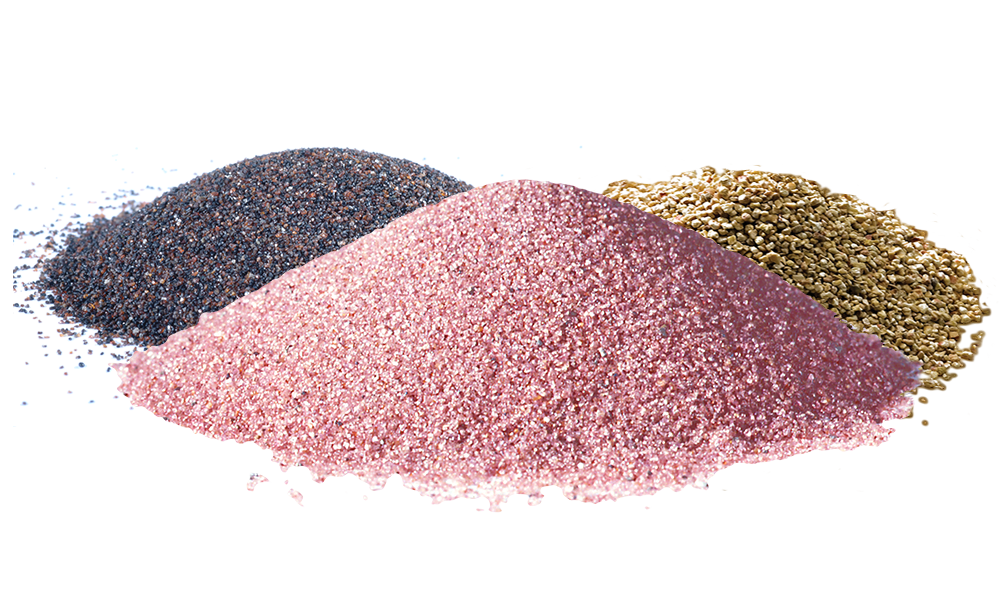
Aluminum oxide abrasive (Al₂O₃) is a synthetic corundum mineral produced by fusing bauxite ore in an electric arc furnace at approximately 2,000°C — a process that creates a crystalline alumina with a Mohs hardness of 8.0–9.0. It is produced in three primary color variants: brown aluminum oxide (standard grade, 94–97% Al₂O₃ purity, most widely used and lowest cost), white aluminum oxide (99%+ Al₂O₃, sharper and more friable than brown, used for precision grinding and wood sanding), and pink aluminum oxide (ruby-doped, intermediate properties). In blasting applications, brown aluminum oxide is the industry standard comparison point against SiC.
Al₂O₃ is angular, hard, and chemically inert — qualities it shares with SiC — but its lower hardness and lower friability give it different performance characteristics in practice. It is the world’s most widely consumed abrasive by volume, valued for its high recyclability, consistent performance, and competitive pricing across the full grit spectrum.
SECTION 03Hardness: SiC’s Decisive Advantage
At Mohs 9.5 vs. 9.0 for aluminum oxide, silicon carbide’s hardness advantage appears modest on the Mohs ordinal scale. In terms of absolute material hardness (measured by Vickers or Knoop indentation methods), however, SiC is approximately 30–50% harder than Al₂O₃. This difference becomes operationally significant when blasting substrates harder than Mohs 7–8, where the lower hardness differential of Al₂O₃ results in premature particle fracture, slower cutting, and progressive wear-out of the abrasive before the substrate is adequately prepared.
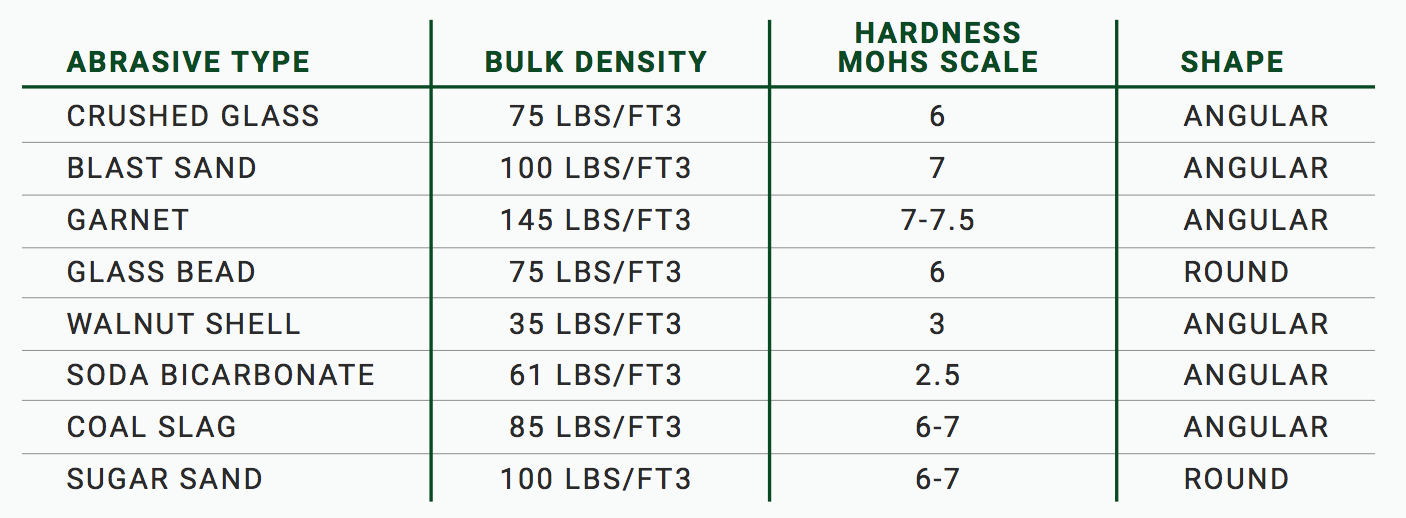
For substrates in the Mohs 4–7 range (most carbon steel, mild steel, painted surfaces, soft stone), both abrasives provide sufficient hardness differential and the practical blasting performance difference is modest. For substrates above Mohs 7.5 (hardened steel, tool steel, ceramics, hard stone, SiC power device substrates), SiC’s hardness advantage becomes critical and Al₂O₃ becomes measurably less effective per dollar of media spend. See the full hardness comparison: SiC Hardness: Mohs 9.5 Explained
SECTION 04Cutting Speed and Production Rate
In direct-pressure blasting of carbon steel at 70 PSI with equivalent grit size (#60) and nozzle configuration, silicon carbide achieves a material removal rate approximately 2–3× higher than aluminum oxide. This speed difference stems from SiC’s greater hardness (deeper per-particle penetration), sharper particle morphology (more acute edge angles), and higher friability (continuous fresh-edge exposure from in-situ fracture).
| Substrate | SiC Production Rate | Al₂O₃ Production Rate | SiC Speed Advantage |
|---|---|---|---|
| Carbon steel (mild, rusty) | ~12 m²/hr | ~5 m²/hr | 2.4× |
| Hardened steel (>HRC 40) | ~8 m²/hr | ~2.5 m²/hr | 3.2× |
| Granite / hard stone | ~6 m²/hr | ~1.5 m²/hr | 4.0× |
| Glass (etching) | ~9 m²/hr | ~4 m²/hr | 2.25× |
| Painted steel (light coating) | ~15 m²/hr | ~9 m²/hr | 1.7× |
Note: Production rates are approximate under standardized test conditions. Actual rates vary by system pressure, nozzle size, standoff, and operator technique. SiC speed advantage grows with substrate hardness.
SECTION 05Surface Profile Comparison
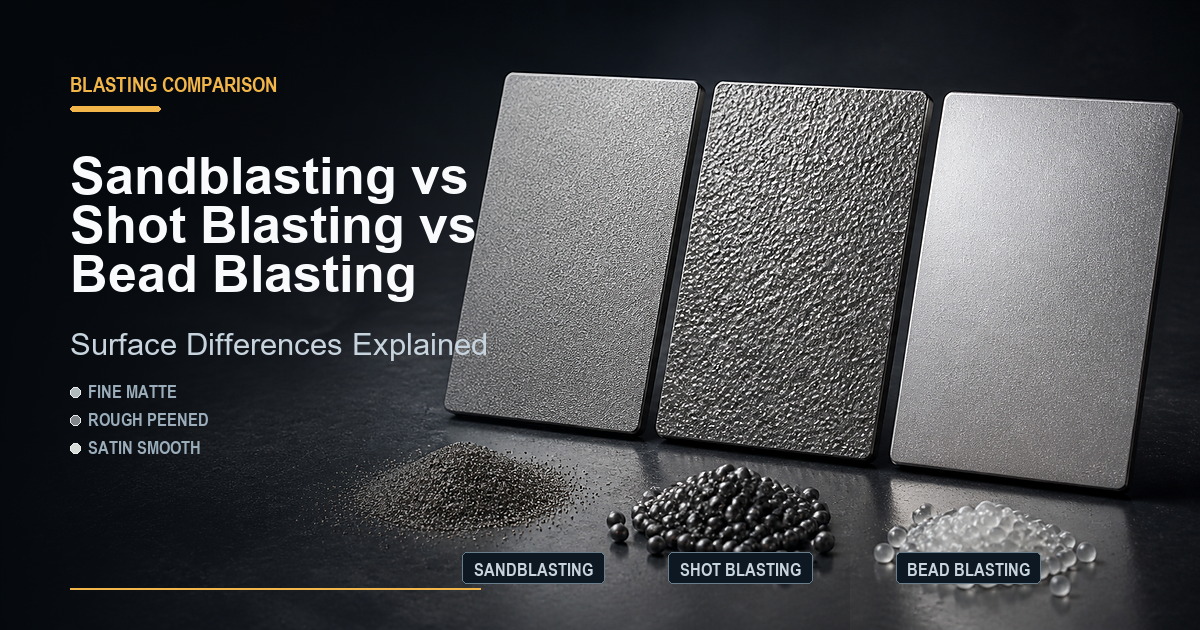
At equivalent grit size and blasting conditions, SiC produces a rougher, deeper surface profile than Al₂O₃ — typically 30–60% higher Ra values. This is advantageous for high-build coating systems requiring maximum mechanical adhesion, but can be a limitation for applications requiring controlled moderate profiles or thin-film coatings. Al₂O₃’s more controlled, consistent profile makes it the preferred choice when surface finish uniformity is as important as coating adhesion.
Aluminum oxide also benefits from a more consistent particle size distribution due to its lower friability — it breaks down more slowly and predictably, maintaining a more stable grit population over multiple reuse cycles. This consistency of profile over time is another reason Al₂O₃ is preferred for precision applications requiring repeatable surface finish.
SECTION 06Recyclability: Al₂O₃ Wins on Cycles
Aluminum oxide’s lower friability means it survives more blasting cycles before the particle size distribution degrades below acceptable limits. In a closed-loop cabinet system with mechanical classification, Al₂O₃ typically achieves 5–10 effective reuse cycles versus 3–5 for SiC. This recyclability advantage partially compensates for SiC’s lower media unit cost per ton and must be factored into any total cost of ownership comparison. For a detailed recyclability analysis: SiC Recyclability & Cost Analysis
SECTION 07Substrate Compatibility: Where Each Excels
| Substrate | SiC Performance | Al₂O₃ Performance | Recommended Choice |
|---|---|---|---|
| Carbon / mild steel | Excellent | Excellent | Al₂O₃ (cost) |
| Hardened steel (> HRC 35) | Excellent | Fair | SiC |
| Stainless steel (304/316) | Very good | Good | SiC (less iron contamination) |
| Titanium alloys | Excellent | Good | SiC |
| Aluminum / soft non-ferrous | Too aggressive | Marginal (low pressure) | Neither — use glass bead |
| Ceramics (alumina, SiC) | Excellent | Poor | SiC (Green grade) |
| Glass (etching) | Excellent | Good | SiC (sharper etch) |
| Stone / granite | Excellent | Good | SiC |
| Wood | Too aggressive | Good | Al₂O₃ |
| Painted surfaces (general) | Good | Excellent | Al₂O₃ (cost + control) |
| Semiconductor substrates | Excellent (Green) | Marginal | Green SiC |
SECTION 08Full Head-to-Head Comparison Table
| Property / Factor | Silicon Carbide (SiC) | Aluminum Oxide (Al₂O₃) | Winner |
|---|---|---|---|
| Mohs Hardness | 9.0–9.5 | 8.0–9.0 | SiC |
| Cutting Speed (hard substrates) | 2–4× faster | Baseline | SiC |
| Surface Profile (Ra, same grit) | 30–60% deeper | More controlled | Context-dependent |
| Recyclability (reuse cycles) | 3–5 | 5–10 | Al₂O₃ |
| Material Cost per Ton | 1.5–2.5× higher | Baseline | Al₂O₃ |
| Labor Cost (hard substrates) | Lowest | Higher | SiC |
| Chemical Purity / Inertness | Excellent | Very Good | SiC |
| Thermal Stability | Up to 1,600°C | Up to 1,000°C | SiC |
| Performance on Hard Ceramics | Excellent | Poor | SiC |
| Performance on Wood / Painted Surfaces | Marginal (too aggressive) | Excellent | Al₂O₃ |
| Profile Consistency Over Cycles | Moderate (higher variation) | Excellent | Al₂O₃ |
| Equipment Wear (nozzle) | High | Medium | Al₂O₃ |
| Global Availability | Very Good | Excellent | Al₂O₃ |
SECTION 09Decision Guide: SiC or Al₂O₃?
Choose Silicon Carbide when: Substrate hardness exceeds Mohs 7.5 → Processing ceramics, glass, stone, or semiconductor substrates → Blasting cycle time is a critical cost driver → Chemical purity and inertness are required → Thermal stability above 1,000°C is needed
Choose Aluminum Oxide when: Substrate is carbon steel, painted surfaces, or wood → Higher recyclability (5–10 cycles) is prioritized → A more controlled, consistent surface profile is needed → Media cost per ton is the primary constraint → Large-volume, high-recycling-rate operations (blasting cabinets, wheelabrators)
SECTION 10FAQ
SECTION 11Related Guides
Source SiC or Al₂O₃ Direct from Manufacturer
Jiangsu Henglihong Technology Co., Ltd. supplies both silicon carbide and aluminum oxide abrasive media — factory-direct, full FEPA/ANSI/JIS grading, complete QC documentation with every shipment.
Request a Quote →Filters