Coal Slag vs Copper Slag Abrasive
Both are angular, glassy, low-cost by-product abrasives for field blasting — but they differ in density, profile depth, dust output, and environmental profile in ways that matter for project specification. Complete comparison for heavy industrial buyers.
Overview: Two Industrial By-Product Abrasives
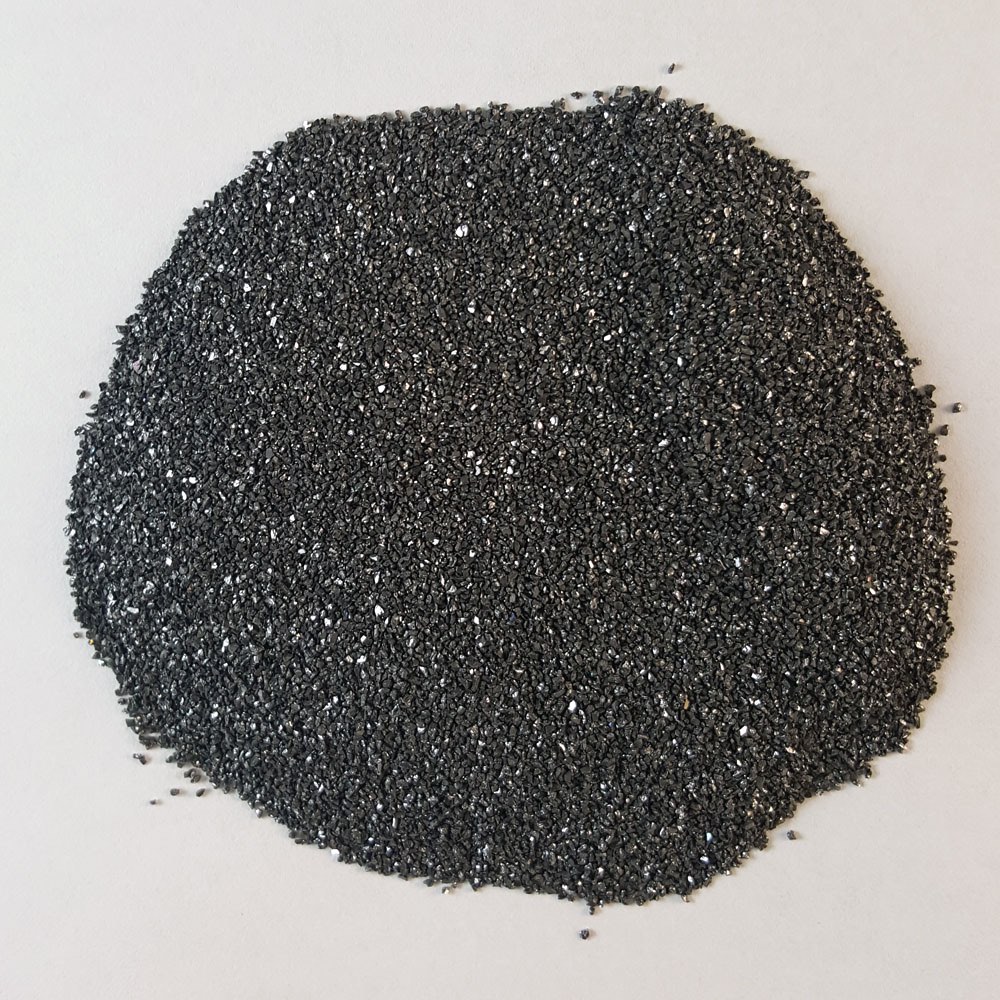
Coal slag and copper slag are both angular, glassy, low-cost abrasives produced as industrial by-products — coal slag from coal-fired power generation, copper slag from copper smelting. Both are widely used for large-scale field blasting on steel infrastructure, storage tanks, and bridges where their low purchase price and single-use economics are commercially attractive.
The differences between them — density, profile depth, free silica content, heavy-metal leachate, and regional availability — determine which is preferable for any given project. In regions where both are available, copper slag is often the technically superior choice; in regions where copper slag is scarce, coal slag remains the default field blasting abrasive.
Full Comparison Table
| Factor | Coal Slag | Copper Slag |
|---|---|---|
| Source | Coal combustion power plants | Copper smelting refining |
| Mohs Hardness | 6–7 | 6–7 |
| Specific Gravity | 2.6–2.8 g/cm³ | 3.3–3.7 g/cm³ |
| Shape | Angular, sub-angular | Angular, sharper-edged |
| Profile Depth | 1.5–3.5 mil | 2.0–4.0 mil |
| Free Silica | 1–2% (variable) | <1% (more consistent) |
| Heavy Metal Leachate | Low–Moderate | Low (variable by source) |
| Recyclability | 1–3 cycles | 1–3 cycles |
| Relative Cost/bag | Very Low | Low |
| Dust Generation | Moderate–High | Moderate |
| Regional Availability | North America, Asia | Asia, Middle East, Australia |
Density & Kinetic Energy: Copper Slag’s Structural Advantage
Copper slag’s higher specific gravity (3.3–3.7 g/cm³ vs coal slag’s 2.6–2.8 g/cm³) is its most significant technical advantage. A denser particle travelling at the same velocity carries more kinetic energy — directly translating to greater impact force per particle, faster contamination removal, and deeper surface profiles. In practice, copper slag at equivalent grit size and blast pressure will clean and profile carbon steel approximately 15–25% faster than coal slag, and will produce a meaningfully deeper anchor profile — 2.0–4.0 mil vs coal slag’s 1.5–3.5 mil.
For heavy industrial applications requiring profiles above 3.0 mil — thick epoxy systems on offshore structures or pipeline coating — copper slag’s density advantage makes it the technically preferred field blasting abrasive of the two.
Surface Profile Performance
Both abrasives produce angular surface profiles suitable for protective coating adhesion. Copper slag’s sharper particle edges and higher density produce profiles that are both deeper and more angular than coal slag at equivalent grit sizes and pressures. For standard marine and industrial protective coating systems requiring 1.5–2.5 mil, either media is adequate. For higher-profile applications, copper slag is preferred. Both achieve Sa 2 and Sa 2.5 cleanliness on carbon steel; Sa 3 is achievable but less consistent with either slag-type abrasive than with steel grit or aluminum oxide.
Dust & Health Considerations
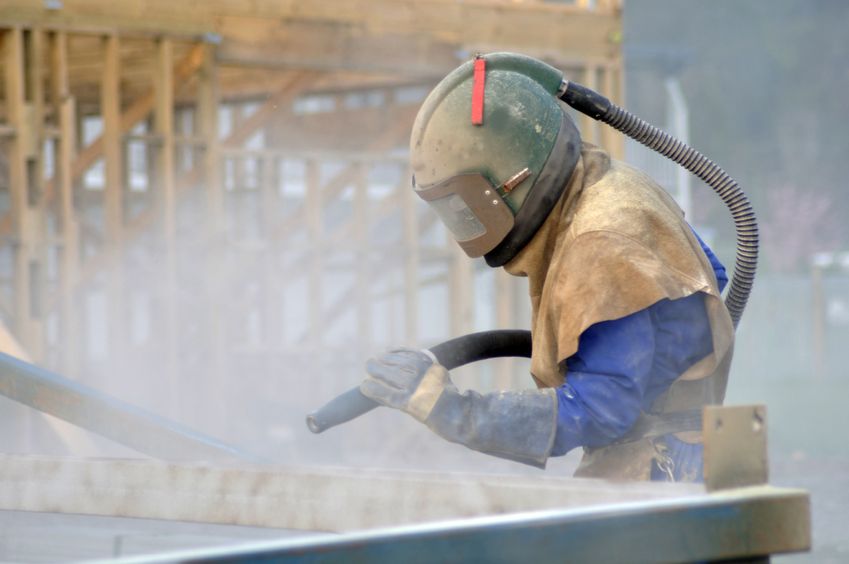
Both coal slag and copper slag generate significant dust volumes relative to garnet or aluminum oxide. Coal slag’s free silica content of 1–2% (variable by source) requires mandatory respiratory protection to OSHA standards even in outdoor operations, and may trigger stricter monitoring in EU jurisdictions. Copper slag’s free silica content is more consistently below 1% and varies less between sources — a meaningful advantage for regulatory compliance and health risk management. Always request and verify a current chemical analysis (SDS) from your supplier for both media types, as composition can vary significantly between plants and production batches. For comprehensive PPE and monitoring guidance, see the OSHA Safety guide.
Environmental & Disposal Comparison
Spent slag media from blasting projects that involved lead-based or chromate-containing coatings will require hazardous waste classification and disposal regardless of which slag type was used. For bare steel blasting, both spent coal slag and copper slag typically pass TCLP as non-hazardous in most jurisdictions — though copper slag’s more consistent chemistry makes non-hazardous classification somewhat more reliable to predict without testing.
Regional environmental regulations increasingly restrict or ban the use of coal slag as blasting abrasive due to concerns about polycyclic aromatic hydrocarbon (PAH) content in some production grades. Copper slag does not carry this concern. Where environmental or permit requirements are a project constraint, copper slag is the lower-risk choice between the two. See our Environmental Compliance guide for regional disposal frameworks.
Cost Analysis
Coal slag’s purchase price is typically 10–20% lower than copper slag per tonne. However, copper slag’s higher density means more usable blasting work per tonne — reducing the effective cost gap. When disposal cost is included, copper slag’s lower and more consistent disposal classification cost can close the remaining gap further, and in some project scenarios result in a lower total cost despite higher purchase price. The analysis is project-specific: large outdoor projects in regions with high coal slag availability and low disposal cost will favour coal slag; projects in Asia-Pacific or the Middle East where copper slag is abundantly available and coal slag must be imported will often favour copper slag on both cost and technical grounds.
Which to Choose
Choose Copper Slag When
- Maximum profile depth and throughput speed are priorities
- Consistent free silica below 1% is a regulatory requirement
- Available locally at competitive price (Asia-Pacific, Middle East)
- PAH contamination from coal slag is a concern in your jurisdiction
Choose Coal Slag When
- Coal slag is locally abundant and freight cost is a dominant factor
- Profile depth requirement is below 3.0 mil (both media perform equivalently)
- Project disposal cost is well-managed and PAH restriction does not apply
For blast room and cabinet operations where recyclability matters, both slag types are poor choices — see aluminum oxide or steel grit instead. For the full field vs. enclosed operation cost model, see Recyclable Media Comparison.
Source Coal Slag or Copper Slag for Your Field Blasting Project
Jiangsu Henglihong Technology Co., Ltd. supplies both coal slag and copper slag abrasives in bulk FCL quantities for B2B export. Request a comparative quotation today.
Filters