Best Alternatives to Blasting Sand: Garnet, Glass Beads, Aluminum Oxide Compared
A thorough performance and cost comparison of the most widely used non-silica abrasive media — so you can replace blasting sand with confidence and choose the right alternative for your specific application.
Why Switch from Silica Sand?
Silica sand was the original blasting abrasive — cheap, widely available, and effective. It is also the most dangerous. Crystalline silica dust generated during blasting causes silicosis, an incurable progressive lung disease that has killed and disabled thousands of blasting workers worldwide. Many countries have banned open silica sandblasting entirely; in the United States, OSHA’s silica standard imposes compliance costs that make silica sand less economical than it appears on sticker price alone.
Beyond safety, the performance case for switching has also strengthened. Modern alternatives — garnet, glass beads, aluminum oxide, coal slag, steel media — match or exceed silica sand’s cutting speed and surface quality while offering the critical advantage of recyclability. A single-use abrasive that is also the most hazardous option is difficult to justify when superior alternatives exist at competitive total cost.
This guide compares every major alternative with the level of specificity you need to make a confident purchasing decision. For guidance on silica health risks in detail, see: Is Blasting Sand Safe? Silicosis Risks & What to Use Instead. For sourcing guidance once you have made your selection, see: Where to Buy Blasting Sand: The Complete Buyer’s Guide.
Coal Slag — Best Budget Alternative
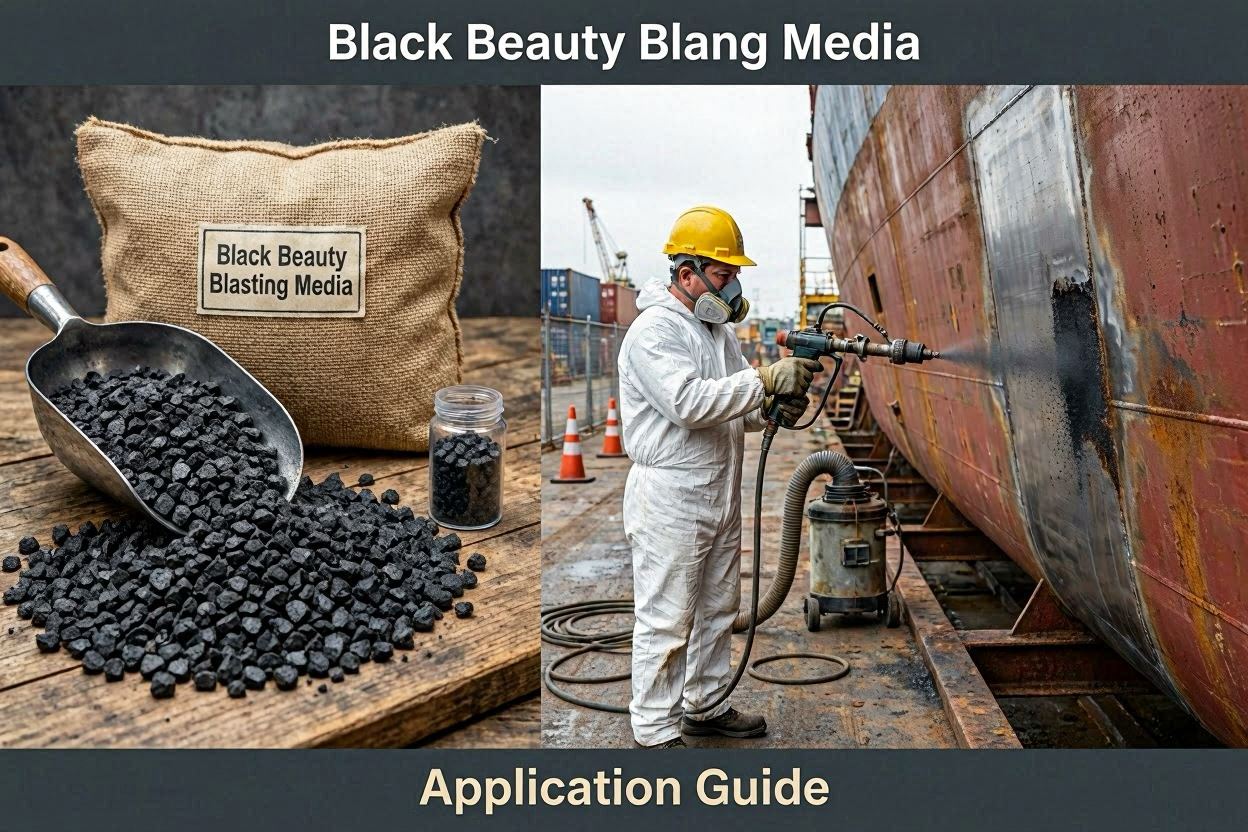
Coal Slag (Black Diamond & Equivalents)
Coal slag is the most practical immediate alternative to silica sand for operators who need an accessible, affordable, low-silica media that works with existing equipment and is available at retail chains today. Black Diamond, the dominant brand, is sold at Tractor Supply and Northern Tool nationwide and performs similarly to silica sand on most steel and masonry applications.
Coal slag is produced as a byproduct of coal-fired power generation. It is processed, crushed, and graded — its angular particle shape produces cutting action comparable to silica sand at similar grit sizes. The critical health difference is silica content: coal slag runs 0.1–0.5% free crystalline silica versus approximately 99% for quartz sand. This dramatically lowers respiratory risk and simplifies compliance with OSHA’s silica standard.
The limitation of coal slag is its single-use profile — it breaks down quickly during blasting and cannot be effectively recycled. For open blasting operations where media recovery is impractical, this is not a disadvantage. For cabinet blasting or operations with media recovery systems, the lack of recyclability makes coal slag uneconomical compared to garnet, aluminum oxide, or glass beads.
Coal slag also contains trace heavy metals (arsenic, barium, chromium) from the power generation process. In most jurisdictions these concentrations are below regulatory thresholds for hazardous waste, but disposal of spent coal slag in sensitive environments (near waterways, on agricultural land) may require testing and documentation. Check local environmental regulations before large-scale disposal.
Garnet — Best Professional Alternative
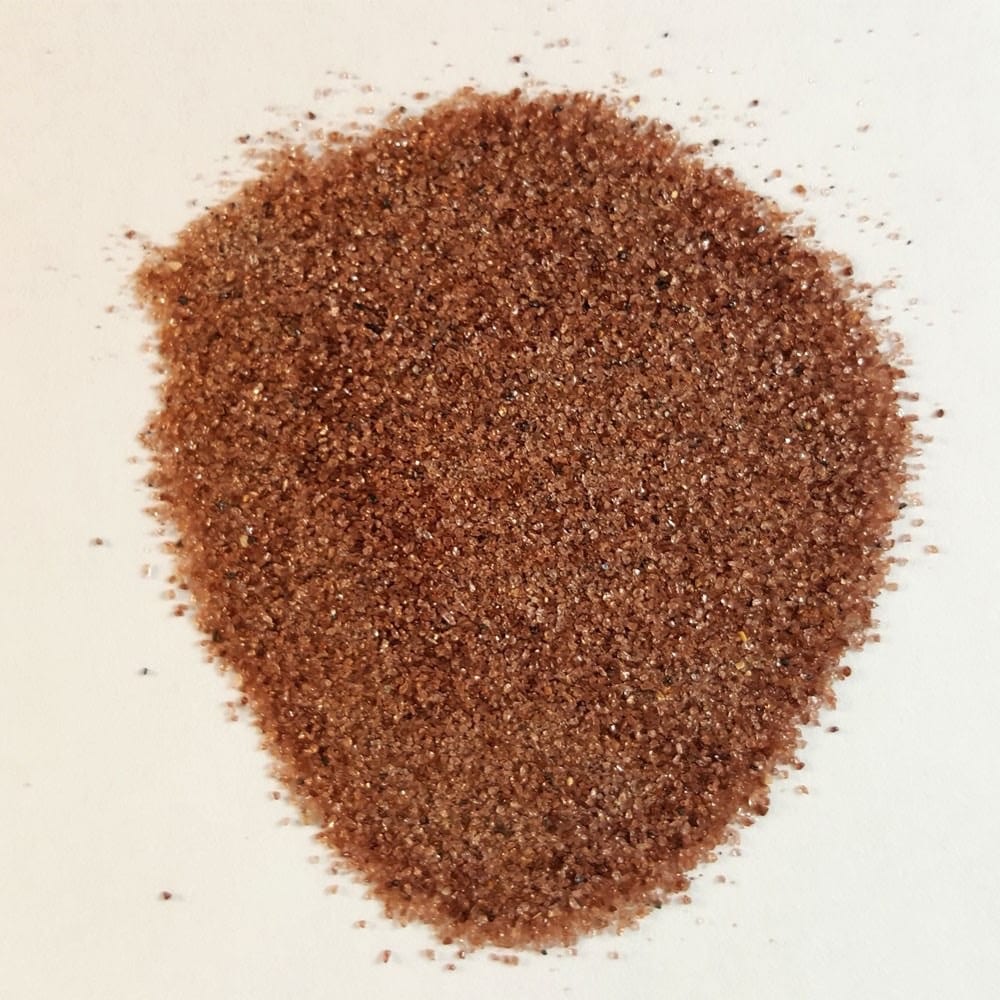
Garnet Abrasive (Almandine & Other Varieties)
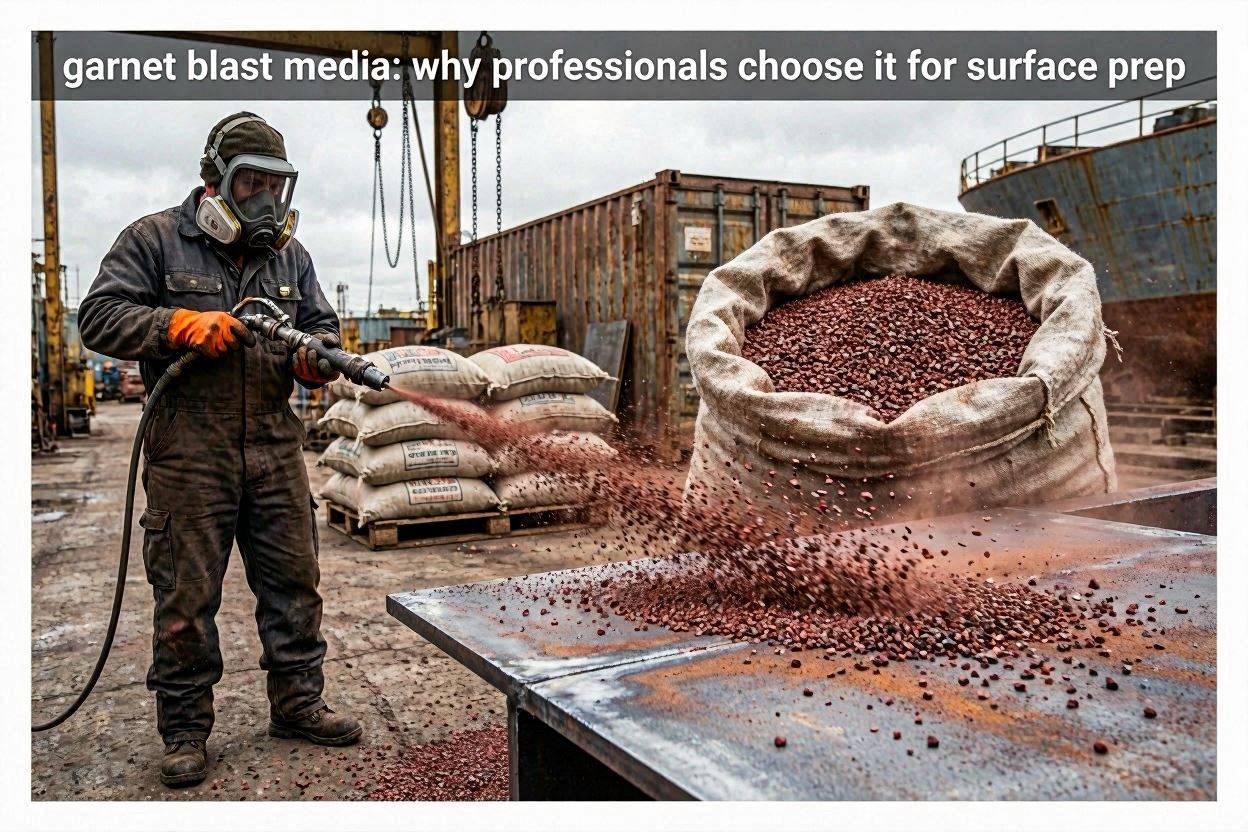
Garnet is the industry-standard replacement for silica sand in professional coating preparation work. It is harder than silica (Mohs 7.5–8 vs 7), generates far less dust, produces a more consistent surface profile, and can be recycled 3–5 times in systems with proper screening. Most marine, infrastructure, and oil and gas surface preparation specifications reference garnet or equivalent low-silica media.
Garnet’s sub-angular particle shape is a meaningful advantage over silica sand’s more random fracture pattern. The consistent shape produces a more uniform anchor profile across the blasted surface — which directly translates to more predictable coating adhesion and fewer coating failures on specification-controlled projects.
The economics of garnet versus coal slag shift decisively at volume. A single pass of 30/60 mesh garnet at 90 PSI removes adherent rust and mill scale and achieves SSPC-SP 10 on clean carbon steel. The spent media can be screened and recharged into the blast pot 3–4 more times before replacement. Over five cycles, the effective cost per 50 lb charge drops from $35 to approximately $7 — competitive with coal slag’s single-use cost of $9, while generating less dust and waste volume.
Jiangsu Henglihong Technology Co., Ltd. manufactures and supplies high-grade garnet blasting media in mesh sizes from 12/20 through 80/100 for abrasive blasting and waterjet cutting. All production is ISO 9001 certified with full batch documentation available on every shipment.
Glass Beads — Best for Finishing
Glass Beads (Borosilicate & Soda Lime)
Glass beads are the professional’s choice when surface finish quality is the primary objective. Their perfectly spherical shape means they peen the surface rather than cut it — producing a bright, smooth, matte finish without deep profiling. In a closed cabinet system with proper air wash separation, glass beads are recyclable 20–30 times, making them by far the most cost-effective option per use despite their higher purchase price.
Glass beads contain amorphous (non-crystalline) silica — chemically distinct from the crystalline silica in quartz sand. Amorphous silica does not carry the same fibrosis risk as crystalline silica; the inflammatory response that causes silicosis is specific to the crystalline structure. This makes glass beads safe to use without the silica-specific PPE requirements that apply to quartz sand.
In automotive restoration, glass beads in the 80–120 mesh range are the preferred media for finishing body panels after initial rust removal. They remove residual surface oxidation and machining marks while leaving a surface profile of 0.5–1 mil — appropriate for direct-to-metal primers in automotive systems without excessive filling required.
For shot peening applications, glass beads must meet Almen intensity specifications under SAE J443. Bead size selection for peening is driven by intensity requirements and the fatigue characteristics of the target material — a different selection methodology from abrasive blasting. Henglihong’s glass beads meet MIL-PRF-9954 and AMS 2431 standards with controlled sphericity and size distribution across all production runs.
Aluminum Oxide — Best for Cabinet Blasting
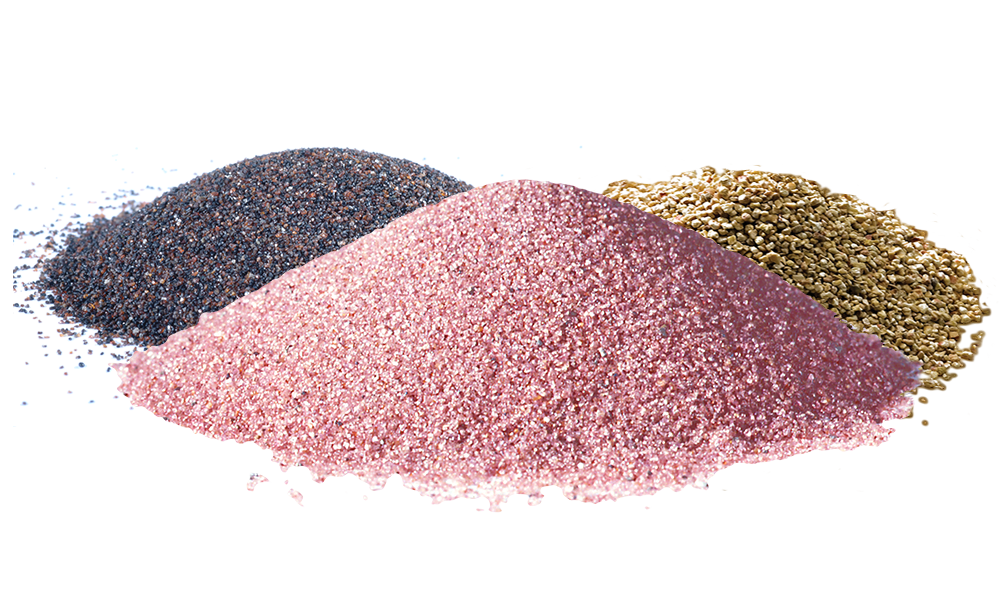
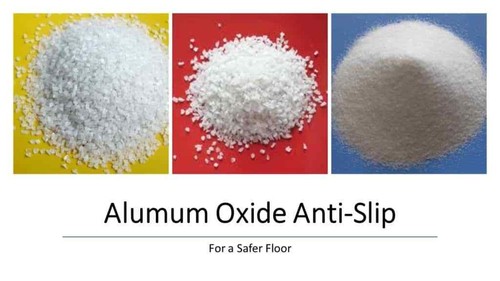
Aluminum Oxide (White, Brown & Pink Fused Alumina)
Aluminum oxide is the hardest commonly used abrasive — Mohs 9, second only to silicon carbide and diamond. This extreme hardness translates to exceptional cutting speed on hardened steels, ceramics, and glass, and very slow breakdown rate in a closed cabinet system. With 10–20 reuse cycles at typical cabinet blasting pressures, aluminum oxide delivers one of the lowest cost-per-use figures of any abrasive media in a recyclable setup.
Brown fused aluminum oxide is the most common grade for abrasive blasting — harder and more aggressive than white alumina, which is purer and used for polishing and precision applications. For general shop blasting, brown aluminum oxide in 80–120 grit range covers the majority of applications effectively.
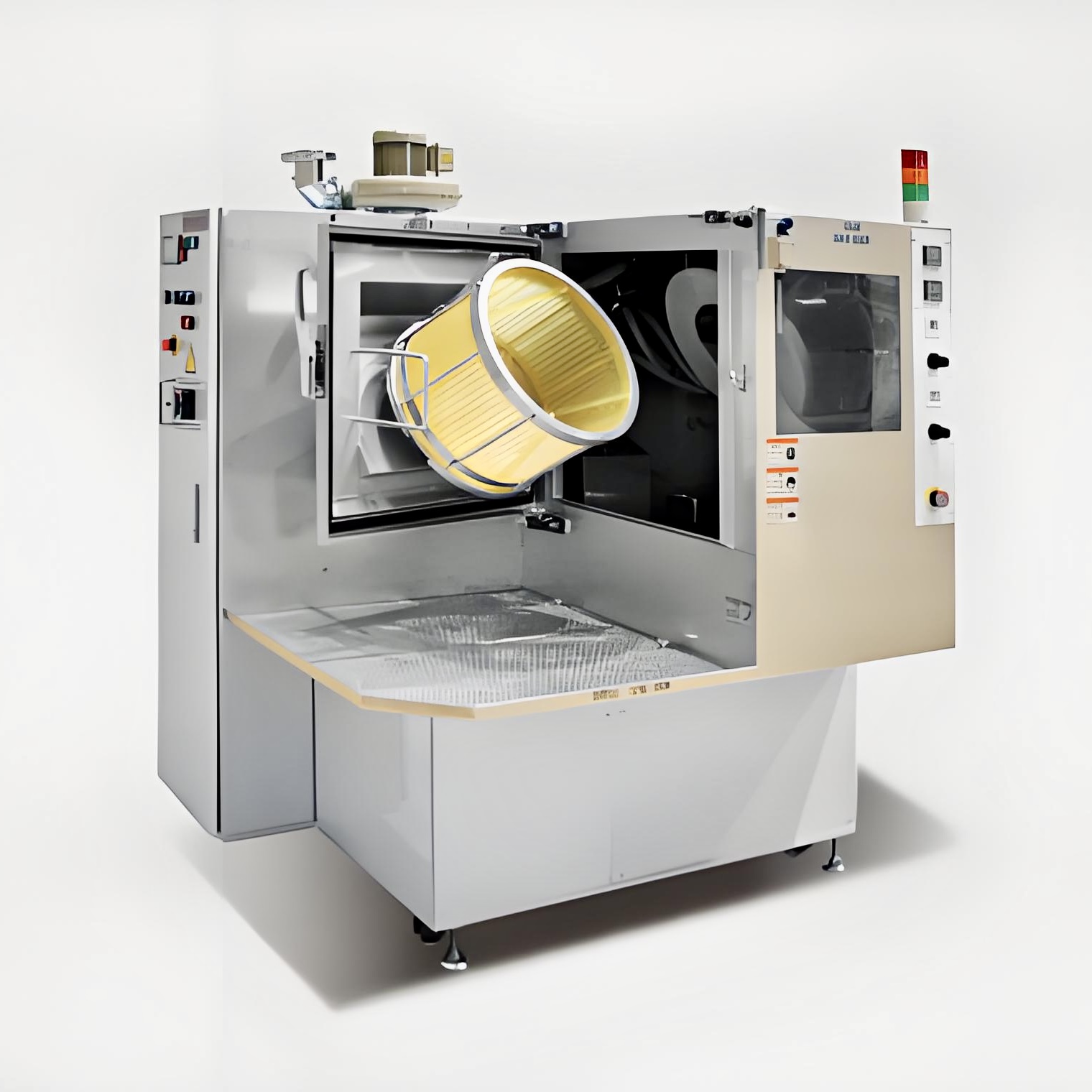
Aluminum oxide is the standard first charge for new blasting cabinets in professional shop environments. Once loaded, a properly maintained blast cabinet running aluminum oxide requires only periodic top-up and fines removal — not full replacement — for months of operation. This operating model makes the high purchase price irrelevant on a per-job basis.
Steel Grit & Shot — Best for Industrial Volume
Steel Grit (Angular) & Steel Shot (Spherical)
Steel media occupies a category of its own for high-volume industrial surface preparation. With reuse cycles exceeding 100 in properly maintained closed-loop systems, steel grit and shot deliver the lowest cost-per-cycle of any abrasive media by a wide margin. Steel grit’s angular shape produces the deep anchor profiles (2–5 mil) required before thermal spray coatings, zinc-rich primers, and heavy-duty epoxy linings on structural steel. Steel shot’s spherical form is used for descaling, peening, and producing a smooth, compressive-stressed surface.
Steel media is only practical in closed-loop blast systems equipped with magnetic separators that recover and clean the media after each pass. In blast rooms and wheel blast machines — the standard equipment for shipyards, steel fabricators, and large coating contractors — this infrastructure is already in place. For these operations, steel grit and shot are economically dominant over every mineral alternative.
Henglihong manufactures cast steel shot and steel grit to SAE J444 standards across GP (general purpose), GL (low hardness), and GH (high hardness) grades. High-hardness grit (GH, 56–65 HRC) produces the most aggressive cutting action and deepest profiles; general purpose grit balances cutting performance with longer service life in mixed blasting applications.
Organic & Specialty Abrasives
Beyond the mainstream alternatives, a range of specialty abrasives serves specific applications where neither mineral nor metallic media is appropriate.
Walnut Shells & Corn Cob Grit
Organic abrasives — walnut shells (Mohs 3–4) and corn cob grit (Mohs 3) — are the correct choice for stripping coatings from soft substrates that cannot withstand aggressive blasting: wood, fibreglass, soft aluminium, historical masonry, and composite aircraft structures. They remove paint and coatings without cutting into the substrate, leave no toxic residue, and are biodegradable. Corn cob grit also acts as a mild degreaser during blasting, absorbing oils from metal parts.
Plastic Media (Urea, Acrylic, Melamine)
Plastic blasting media is the aerospace industry standard for paint stripping from aluminium airframes, helicopter blades, and composite panels. Soft enough to remove coating without metal removal, rigid enough to deliver consistent stripping performance. Plastic media is available in multiple hardness and density grades to match specific stripping requirements without dimensional change to the substrate.
Sodium Bicarbonate
Baking soda abrasive blasting — “soda blasting” — is used for the gentlest possible cleaning applications: food-processing equipment, medical devices, fire damage restoration, and graffiti removal from sensitive surfaces. Sodium bicarbonate is water-soluble (no media residue after rinsing), non-toxic, and soft enough (Mohs 2.5) to clean without profiling. It is not recyclable and generates no anchor pattern — not appropriate before painting.
Full Comparison Table
| Alternative | vs. Silica Sand Performance | Silica Risk | Reuse | Cost / 50 lb | Best Channel |
|---|---|---|---|---|---|
| Coal Slag | Similar (slightly slower) | Very Low | 1–2× | $7–$12 | Tractor Supply, Northern Tool |
| Garnet | Equal or better | None | 3–5× | $25–$45 | Specialist suppliers, Henglihong |
| Glass Beads | Different (peening, not cutting) | None | 20–30× | $30–$55 | Specialist suppliers, Henglihong |
| Aluminum Oxide | Superior (harder, faster) | None | 10–20× | $35–$60 | Specialist suppliers, Amazon |
| Steel Grit | Superior (volume, profile) | None | 100+× | $40–$80 | Industrial suppliers, Henglihong |
| Walnut Shells | Softer (gentle applications) | None | 3–5× | $20–$40 | Specialty abrasive suppliers |
| Sodium Bicarbonate | Softest (delicate surfaces) | None | None | $15–$30 | Specialty blasting suppliers |
Which Alternative Should You Choose?
Replace silica sand for professional coating preparation: Garnet (30/60 mesh). Recyclable, SSPC-compliant, low dust, consistent anchor profile.
Replace silica sand for finishing or peening: Glass beads (80–120 mesh). Bright finish, zero silica, exceptional reusability in a cabinet.
Replace silica sand in a blast cabinet for general shop work: Aluminum oxide (80–120 grit). Hardest widely available abrasive, 10–20 cycles, zero silica.
Replace silica sand in a blast room at industrial volume: Steel grit. 100+ reuse cycles, lowest cost-per-cycle, deepest anchor profile.
Replace silica sand for wood, fibreglass, or soft substrates: Walnut shells or corn cob grit. No substrate damage, biodegradable, no silica.
For detailed guidance on matching your choice to grit size and blast pressure, see: Blasting Sand Grit Size Guide: Coarse vs Medium vs Fine. For cost-per-use analysis across all media types, see: How Much Does Blasting Sand Cost?
Frequently Asked Questions
Bottom Line
Every major blasting application has a non-silica alternative that matches or improves on silica sand’s performance. For most operators, the switch comes down to one simple choice: coal slag for budget-conscious open blasting, garnet for professional specification work. Glass beads and aluminum oxide fill the finishing and cabinet blasting niches respectively, and steel media dominates at industrial volume with a closed-loop system.
For sourcing each of these alternatives — from retail and online channels to bulk industrial procurement — the complete purchasing guide covers all options: Where to Buy Blasting Sand: The Complete Buyer’s Guide.
Filters