How to Choose Abrasive Blast Media: 5-Step Selection Framework
The abrasive media selection decision is made in every blasting operation, often quickly and without a formal process — and when it goes wrong, the consequences range from failed coating inspections to damaged substrates and rework costs that dwarf the cost of the media itself. A structured selection framework eliminates the guesswork, replaces intuition with documented criteria, and ensures that the media chosen for each project is defensible against the specification requirements that the finished surface must meet.
This five-step framework has been designed for procurement managers, project engineers, and blasting contractors who need to specify abrasive media correctly the first time, across a range of substrates, coating systems, equipment types, and project economics. It draws on the full range of abrasive media options available from Jiangsu Henglihong Technology Co., Ltd. For a complete overview of all available media types before using this framework, see the Abrasive Media Supplies Buyer’s Guide.
- Why a Selection Framework Matters
- Step 1: Define the Substrate
- Step 2: Set the Surface Profile and Cleanliness Target
- Step 3: Confirm Equipment Compatibility
- Step 4: Evaluate Recyclability and Environmental Constraints
- Step 5: Calculate Total Cost of Ownership
- Quick Selection Matrix
- Frequently Asked Questions
Why a Selection Framework Matters
The consequences of a wrong media selection fall into three categories:
- Performance failures: Profile too shallow → coating adhesion failure; profile too deep → peak perforation through thin coatings; wrong media on sensitive substrate → warping, embedding, or dimensional change; wrong particle shape for equipment type → rapid machine wear
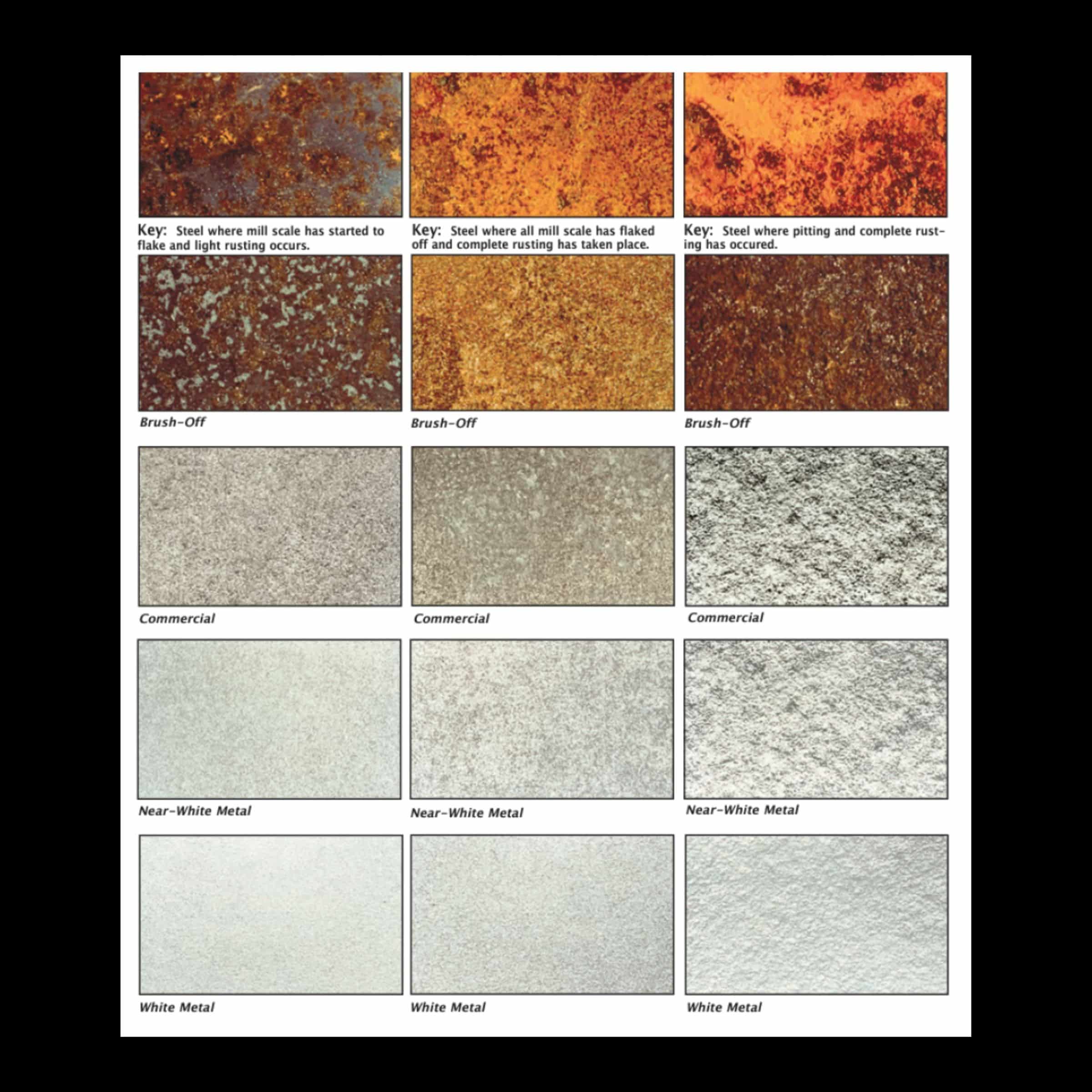
- Compliance failures: Using media with elevated free silica → OSHA violation; using metallic media where contamination is prohibited → specification rejection; blasting to wrong Sa grade → coating inspector rejection
- Economic failures: Choosing single-use media at high volume → 5–10× higher media cost per square meter vs recyclable alternative; choosing over-specified premium media for a basic application → unnecessary cost premium with no performance benefit
None of these outcomes is inevitable if the selection follows a consistent, documented process. The five steps below address each of these failure modes in sequence.
Step 1: Define the Substrate
Identify the substrate material, alloy, hardness, and gauge
The substrate’s hardness determines which abrasives can cut it effectively without excessive media wear, and its sensitivity to deformation determines the maximum impact energy that can be applied safely. A 20 mm thick carbon steel plate is almost infinitely tolerant of aggressive media; a 0.8 mm aluminum aircraft skin panel is not. The hardness differential between abrasive and substrate should be at least 1.5–2 Mohs for productive cutting — an abrasive approaching the same hardness as the substrate grinds rather than cuts, consuming media rapidly and generating excessive dust without productive material removal.
Use the following substrate hardness guide to establish the minimum acceptable media hardness:
| Substrate Material | Approx. Mohs Hardness | Minimum Media Hardness | Soft Media Limit (if applicable) |
|---|---|---|---|
| Mild carbon steel | 4.5–5.5 | 7.0 Mohs minimum | No limit (hard substrate) |
| Stainless steel (austenitic) | 5.5–6.5 | 7.0 Mohs minimum | No iron contamination allowed |
| Aluminum alloys (2xxx/6xxx/7xxx) | 2.5–3.5 | No minimum (but max 5.5 for no distortion) | Max 4.0 for thin gauge (<2 mm) |
| Titanium alloys | 6.0 | 7.0 Mohs minimum | No iron contamination allowed |
| Fiberglass / GFRP composites | 3.5–5.0 | No minimum (but max 4.0 for no fiber damage) | Max 4.0 Mohs |
| CFRP carbon composites | 7.0 (fiber) / 3.5 (matrix) | Below fiber hardness (target matrix only) | Max 4.0 Mohs for matrix prep |
| Glass (standard float) | 5.5 | 7.5 minimum for etching | N/A (etching application) |
| Granite / engineered stone | 6.0–7.0 | 8.5 minimum | N/A |
Step 2: Set the Surface Profile and Cleanliness Target
Read the coating specification and define the required Sa grade and Rz profile window
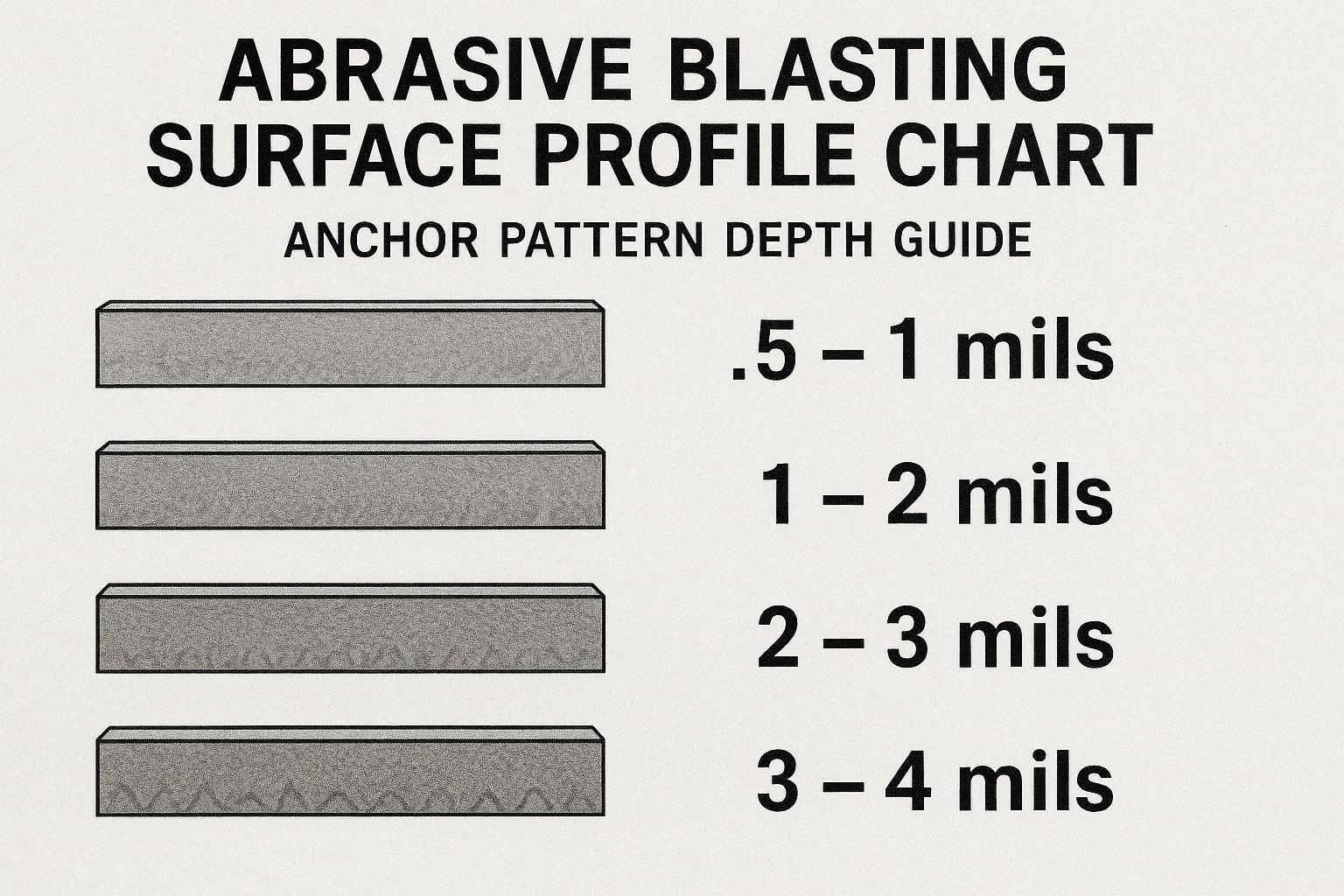
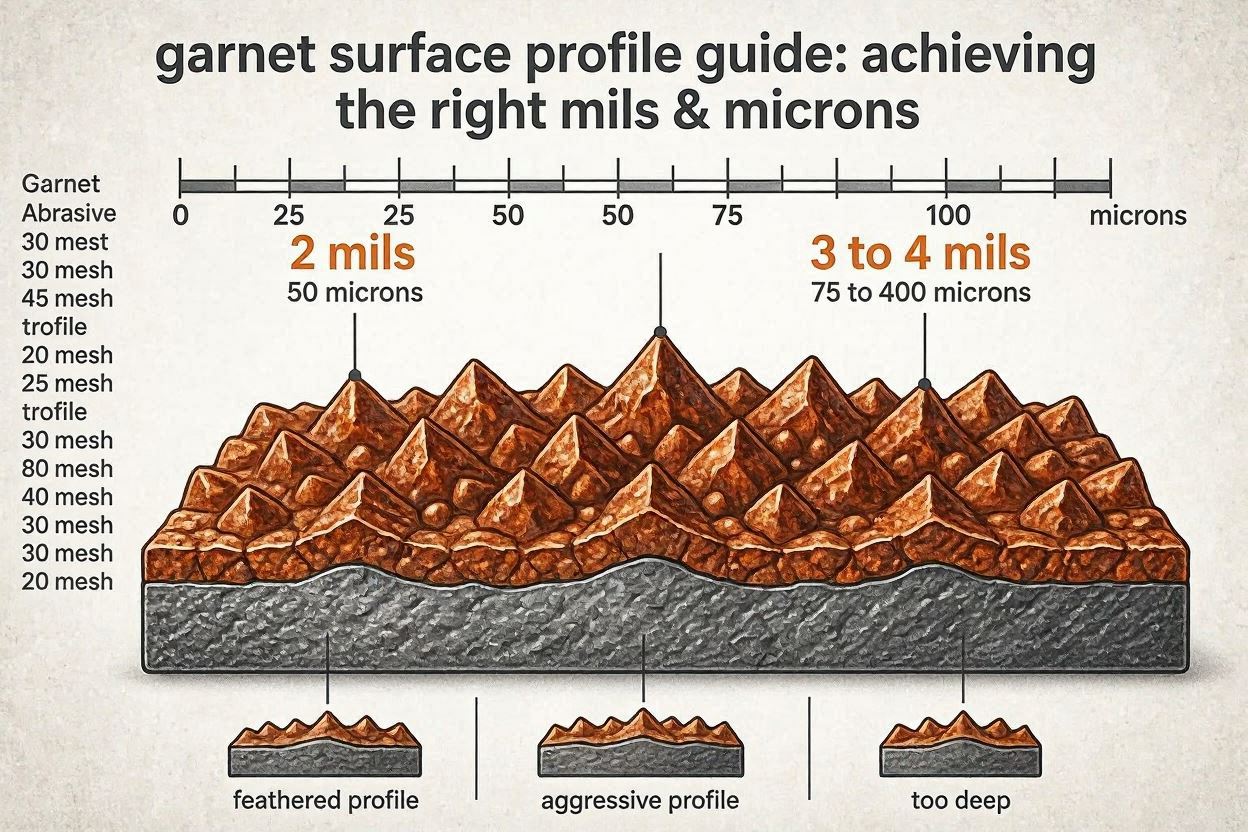
Every industrial coating system has a documented application data sheet (ADS) specifying the required surface cleanliness (ISO Sa or SSPC/NACE grade) and the anchor profile range (minimum and maximum Rz or Ra, typically in µm or mils). These are non-negotiable — they are the coating manufacturer’s performance warranty conditions. Read the ADS before touching any abrasive media specification. If the project involves a choice between coating systems, compare the surface preparation requirements and factor them into the system selection — a coating system with a narrower specification window may require more precise media selection and tighter process control.
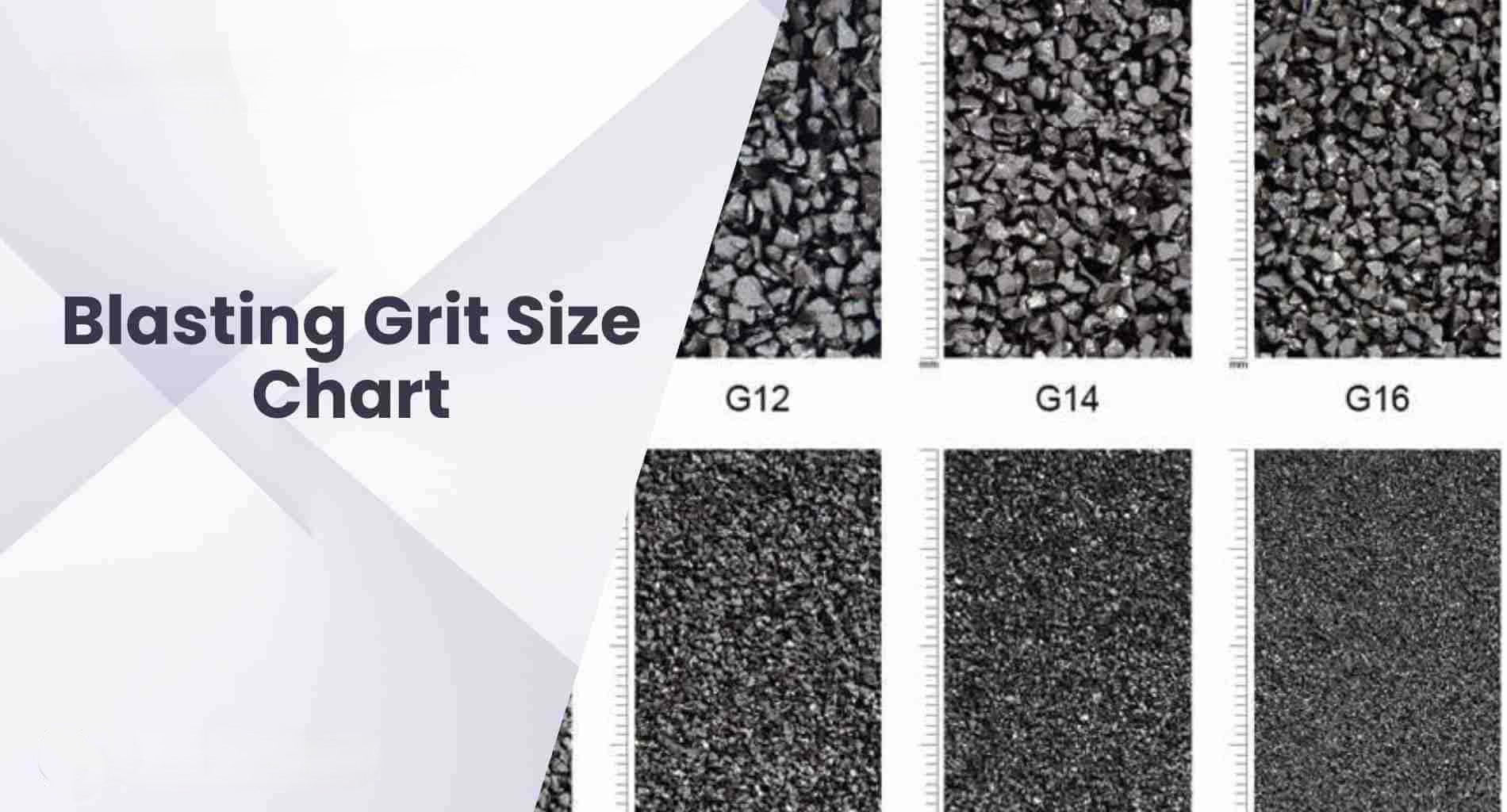
Once the target profile window is established, use the grit size reference tables to identify candidate media in the correct size range for that profile. For a full cross-reference of grit sizes to achievable profiles across all media types, see: Abrasive Media Grit & Mesh Size Chart: Complete Reference Guide.
Step 3: Confirm Equipment Compatibility
Match the candidate media to the blast equipment in use
Blast equipment type is a hard constraint, not a preference. Centrifugal wheel blast machines are designed for metallic media (steel shot and grit) — running lightweight mineral or synthetic abrasives in a wheel machine causes rapid wear of impeller blades, liners, and paddles, and the low-density media does not achieve sufficient velocity for productive blasting. Air-powered pressure blast and suction blast systems are compatible with a wider range of media types, but media density, particle size, and flowability affect nozzle wear rate and optimal pressure settings. Check: (a) is this equipment rated for the media density and type under consideration? (b) what nozzle material is installed — tungsten carbide nozzles handle hard abrasives well; boron carbide nozzles provide better wear life with high-hardness media at sustained production rates?
For a full technical guide to equipment-media compatibility across all three equipment types, see: Blast Media & Equipment Compatibility Guide: Pressure vs Suction vs Wheel.
Step 4: Evaluate Recyclability and Environmental Constraints
Determine reuse requirements and regulatory constraints
Recyclability affects both economics and environmental compliance. High-reuse metallic media (steel shot at 3,000 cycles, aluminum oxide at 50–100 cycles) amortizes its higher unit cost across many cycles, producing a lower cost per square meter at high production volumes. Single-use or low-reuse mineral media (copper slag at 1–2 cycles, garnet at 5–10 cycles) has lower unit cost but generates proportionally more waste per square meter of prepared surface. The regulatory status of spent media — is it classified as non-hazardous solid waste, or does the stripped coating contamination elevate it to hazardous? — determines the disposal cost, which can be significant for lead-paint stripping or chromate-primer removal jobs. On projects subject to environmental permit conditions limiting abrasive waste generation, the reuse cycle count of the selected media may be a regulatory constraint, not just an economic preference.
Step 5: Calculate Total Cost of Ownership
Run the TCO calculation before finalizing the specification
Total cost of ownership per square meter = (media unit cost ÷ reuse cycles) + (media consumption rate kg/m²) + equipment wear cost attributable to media + waste disposal cost per m² + labor efficiency factor (does the media cut faster or slower than the baseline?). Run this calculation for the two or three shortlisted media candidates that have passed Steps 1–4. The TCO result frequently reverses the intuitive ranking based on unit price alone — media priced at 3× the per-bag cost of an alternative but delivering 20× the reuse cycles is almost always the lower-TCO choice on any meaningful production volume. For a detailed worked example: Recyclable vs Single-Use Abrasive Media: Cost-Per-Cycle Analysis.
Quick Selection Matrix
After applying all five steps, use this matrix to confirm your final selection:
| Scenario | First-Choice Media | Alternative | Key Article |
|---|---|---|---|
| Carbon steel, Sa 2.5, Rz 40–75 µm, field blast | Garnet #30/60 | Copper Slag medium | Garnet guide |
| Carbon steel, Sa 3, Rz 60–100 µm, production shop | Steel Grit GL 25–GL 40 | Steel Shot + Grit blend | Metallic media guide |
| Aluminum alloy, no iron contamination, peening | Glass Beads Class A–B | Plastic Grit Urea Type II | Glass bead guide |
| Precision blasting, no iron, Sa 3, thermal spray prep | White Aluminum Oxide F 36–F 60 | — | Al₂O₃ guide |
| Glass etching, sandcarving studio | Black Silicon Carbide F 80 | Brown Al₂O₃ F 80–F 100 | SiC guide |
| Aircraft paint stripping, aluminum airframe | Melamine Grit Type V 20–30 grit | Urea Grit Type II 20–30 grit | Plastic grit guide |
| High-volume continuous production, lowest TCO | Steel Shot (wheel blast) | Steel Grit blend | TCO analysis |
| OSHA compliance, silica-free, field application | Garnet #30/60 | Steel Grit GL 40 | Silica-free guide |
Frequently Asked Questions
When two candidates both satisfy the technical specification, equipment compatibility, and environmental constraints, the decision should be made on TCO and supply reliability. Calculate the TCO per square meter for each option at your expected annual volume, including all cost components (media, disposal, equipment wear, labor efficiency). If the TCO difference is within 5–10%, favor the option with the more reliable supply chain and more consistent quality documentation — specification conformance and batch-to-batch consistency are worth a small premium in any operation where coating inspection failures carry significant rework and delay costs.
For long-running projects or continuous production operations, the media specification should be reviewed when: (a) the coating specification changes; (b) blast equipment is upgraded or changed; (c) media unit pricing shifts significantly (a 20%+ change in media cost often changes the TCO ranking between recyclable and single-use options); (d) regulatory changes affect silica limits or waste disposal requirements; or (e) surface inspection failure rates increase, suggesting the current media is no longer meeting the profile or cleanliness standard. Annual review as part of project or production planning is a reasonable minimum frequency for any significant blasting operation.
Yes. A complete surface preparation specification should document: the required Sa cleanliness grade, the required anchor profile range (min and max Rz), the approved abrasive media type(s) and grade/size designation, any prohibited media (e.g., silica sand, iron-contaminating media on stainless), the maximum time between blasting and coating application, and the required QC checks before coating. Documenting the media specification prevents ad-hoc substitutions by blasting contractors that may satisfy the Sa grade visually while producing a profile outside the coating manufacturer’s specification. This is particularly important on large projects where multiple blasting subcontractors or work shifts are involved.
Need Help Specifying the Right Abrasive Media?
Jiangsu Henglihong Technology Co., Ltd.’s technical team will review your substrate, coating specification, and equipment setup and recommend the correct media and grit size — at no cost, before you order.
Request a Free ConsultationFilters