Jiangsu Henglihong Technology Co., Ltd.
Sandblasting Material for Automotive Restoration: Remove Paint Without Warping
A complete substrate-by-substrate guide to sandblasting media selection for automotive restoration — covering steel body panels, aluminum panels, fiberglass, engine components, wheels, and frames, with specific media, grit, and pressure recommendations for each to strip paint safely without warping or substrate damage.
Why Automotive Blasting Is Different from Industrial Blasting
Automotive restoration blasting occupies a unique space between industrial surface preparation and precision component finishing. Unlike structural steel blasting, where the primary goals are aggressive rust removal, maximum anchor profile, and throughput, automotive restoration blasting must simultaneously achieve paint stripping while preserving substrate integrity — often on thin-gauge sheet metal (0.8–1.2 mm), complex curved surfaces, and a mixture of materials (steel, aluminum, fiberglass, and plastic) that may appear side by side on the same vehicle.
The central risk in automotive blasting is warping. Thin metal panels can be permanently deformed by the combination of abrasive impact and heat generated during blasting if the media is too heavy, the pressure too high, or the dwell time per spot too long. A warped panel that requires straightening adds hours of bodywork time — far more expensive than the time saved by blasting aggressively. The cardinal rule in automotive blasting is: use the minimum force that achieves the desired result.
This page is part of Henglihong’s complete blasting media resource hub. For the full media type overview, see our complete guide to sandblasting material types and selection.
Work from soft to hard. Start with the gentlest media that might work (walnut shell, soda, glass beads) and only step up to harder alternatives if the gentler option is insufficient. You can always increase aggressiveness; you cannot un-warp a panel, un-etch fiberglass, or un-strip a galvanized coating once it is damaged. When in doubt, test on a scrap piece of the same material and thickness before blasting the actual component.
Substrate-by-Substrate Media Guide: Quick Reference
Steel Body Panels (Thin Gauge)
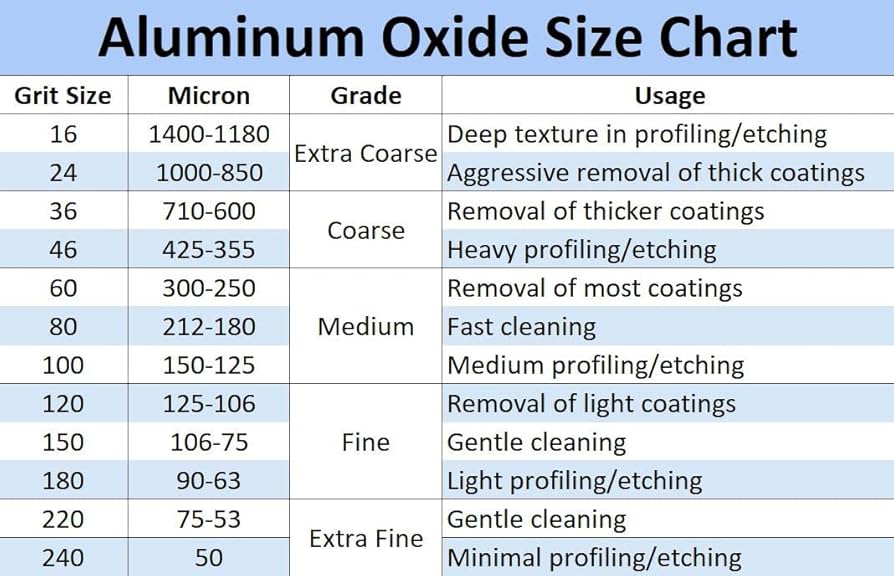
▷ Glass Beads or Crushed Glass Fine / Al₂O₃ F80–F120 (low pressure)Remove paint and surface rust without warping 0.8–1.2 mm sheet. Keep pressure at 40–60 PSI. Work in overlapping passes; never dwell on one spot.
Avoid: Steel grit, coarse angular media, high pressureAluminum Body Panels
▷ Glass Beads Size 35–60 (30–50 PSI max)Softer than steel — warps even more easily. Glass beads at low pressure strip paint without surface damage. Never use steel media or heavy angular abrasives.
Avoid: Steel media (iron contamination), coarse angular abrasivesFiberglass / GRP Bodies
▷ Walnut Shell Medium or Plastic GritMineral abrasives will cut into glass fiber laminate. Only walnut shell or plastic grit removes paint without cutting below the gelcoat layer. Test on scrap first.
Avoid: All mineral and metallic abrasivesAluminum Engine Components
▷ Walnut Shell Fine or Glass Beads FinePrecision-machined surfaces and blind oil passages require gentle media. Walnut shell removes carbon and grime; glass beads clean and peen without dimensional change.
Avoid: Angular mineral abrasives, steel mediaSteel Body Panels: Removing Paint Without Warping
Steel body panels on classic car restorations are typically 18–20 gauge (0.8–1.2 mm thick). At this thickness, the panels have very limited resistance to thermally or mechanically induced deformation. Heavy media at high velocity generates impact forces and localized frictional heat that can exceed the panel’s yield strength — permanently warping or “oil-canning” the panel in a way that requires extensive metalwork to correct.
Recommended Approach
For steel body panels up to approximately 1.5 mm thickness:
- Media: Fine-grade crushed glass (medium-fine) or glass beads (Size 35–60), or aluminum oxide F80–F120.
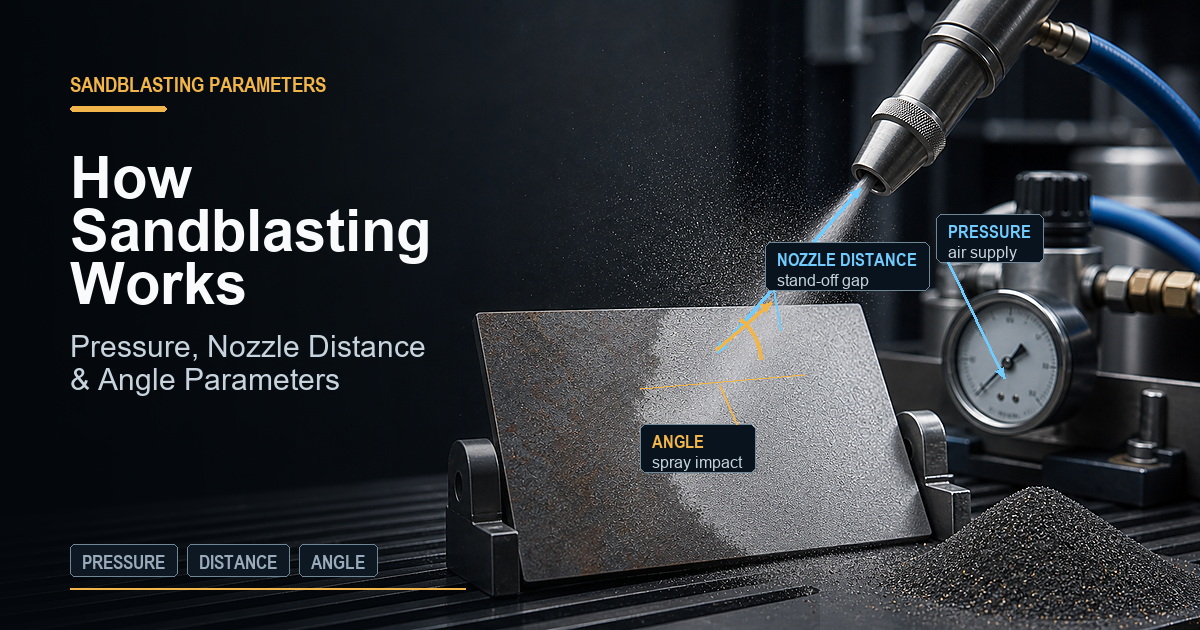
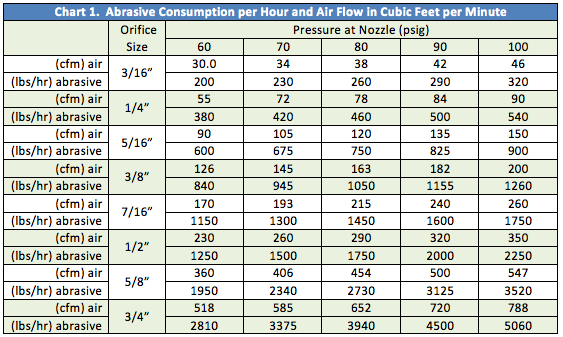
- Pressure: 40–60 PSI. Never exceed 70 PSI on thin sheet metal panels regardless of media type.
- Nozzle distance: 8–12 inches from the surface. Closer distance concentrates impact energy and increases warping risk.
- Blast angle: 45° to the surface (not perpendicular). Angled blasting reduces impact force per unit area, reducing warp risk.
- Movement: Keep the nozzle moving in overlapping sweeping passes. Never stop moving — a stationary nozzle over-concentrates energy on one spot within seconds.
- Temperature: Do not blast in direct sunlight on hot days. Panels expand with heat and are more susceptible to warping when hot. Work in the morning or in a shaded area when possible.
Two-Stage Approach for Heavily Corroded Panels
For panels with significant rust pitting or multiple layers of paint: first apply a coarse pass with medium crushed glass or Al₂O₃ F60–F80 to break through the paint layers, then follow with a fine pass at lower pressure (Al₂O₃ F120 or glass beads) to clean the bare metal surface and create the appropriate primer adhesion profile. This two-stage approach removes material more effectively without subjecting the panel to sustained high-energy blasting.
Severe rust pitting removes metal thickness from the panel face. Aggressive blasting of heavily pitted panels does not restore them — it removes more metal, making the remaining panel thickness even thinner and more vulnerable to perforation. If rust pits are deeper than approximately one-third of the original panel thickness, consider whether the panel should be replaced rather than restored.
Aluminum Panels & Components
Aluminum is significantly softer than steel (Mohs 2.5–3 vs. Mohs 4–5) and has a lower elastic modulus, making aluminum panels even more susceptible to warping from blasting than steel panels of equivalent thickness. Additionally, aluminum is sensitive to iron contamination — steel media embeds iron particles that cause galvanic corrosion in the aluminum matrix, particularly in humid or corrosive environments.
Recommended Media: Glass Beads
Glass beads (Size 35–60) at 30–50 PSI are the standard recommendation for paint stripping from aluminum body panels, bumpers, trim pieces, and structural aluminum components. The round particle geometry means each impact delivers a peening action rather than a cutting action — paint layers are progressively lifted and displaced without removing aluminum substrate material or creating sharp surface marks. The result is a clean, bright aluminum surface with a uniform matte-to-satin appearance that is ideal for subsequent primer application.
Alternative: Soda Blast
Sodium bicarbonate (soda blast) at 30–40 PSI is even gentler than glass beads and is used for the most delicate aluminum restoration work — vintage aircraft components, concours-quality show car aluminum, and aluminum with electroplated or anodized surfaces that must not be disturbed. Soda is water-soluble (easy cleanup with water rinse), non-toxic, leaves no embedded media particles, and cannot warp even the thinnest aluminum panels at low pressure. Its limitation is lower cleaning efficiency — it works slowly on thick or firmly adherent paint layers.
Anodized aluminum has a hard oxide surface layer (Mohs 9) that is extremely difficult to blast through without removing the underlying aluminum substrate simultaneously. For anodized components that need to be refinished, chemical stripping is generally preferable to abrasive blasting — consult with an anodizing specialist before blasting any anodized part.
Fiberglass & GRP Bodies: The Case for Organic Media
Fiberglass-reinforced plastic (GRP or FRP) body panels — standard on kit cars, sports cars, and many classic American vehicles — present the most challenging blasting substrate in automotive restoration. The glass fiber laminate beneath the gelcoat layer has virtually no tolerance for mineral abrasive impact. Even glass beads at moderate pressure will cut through the thin gelcoat and begin fracturing individual glass fibers within the laminate, creating structural damage that is difficult and expensive to repair.
Recommended Media: Walnut Shell
Walnut shell (medium grade) at 30–50 PSI is the recommended media for fiberglass body panels. Its Mohs hardness of 3.5–4.0 is sufficient to break the adhesion of paint layers and lift them from the gelcoat surface, but too soft to cut through the gelcoat or fracture the underlying glass fiber structure. The result is a clean gelcoat surface ready for primer application, with the laminate integrity fully preserved.
Critical Operating Notes for Fiberglass
- Always test on a concealed area or scrap panel section first — gelcoat thickness and laminate quality vary between manufacturers and age of the vehicle.
- Keep pressure at 30–50 PSI maximum. Even walnut shell at 70–80 PSI can damage thin or degraded fiberglass.
- Work at a shallow blast angle (30–45°) to reduce the normal impact force component.
- Inspect the gelcoat surface regularly during blasting. Stop immediately if you see the chalky white color of fiberglass laminate appearing — you have blasted through the gelcoat.
- Never use mineral abrasives (aluminum oxide, garnet, crushed glass, steel media) on fiberglass regardless of grit size or pressure.
Engine Components & Mechanical Parts
Engine restoration blasting covers a wide range of components: cast iron blocks and heads, aluminum cylinder heads and intake manifolds, steel valve covers, connecting rods, crankshafts, and small precision components. Each has distinct requirements.
| Component | Material | Media | Grit/Size | Pressure | Goal |
|---|---|---|---|---|---|
| Cast iron block exterior | Cast iron | Aluminum Oxide | F60–F80 | 70–90 PSI | Remove paint, rust, scale |
| Aluminum cylinder head | Aluminum | Glass Beads | Size 35–60 | 40–60 PSI | Clean, no dimensional change |
| Intake/exhaust manifolds | Cast iron / Aluminum | Aluminum Oxide | F80–F120 | 50–70 PSI | Remove carbon, oxidation |
| Crankshaft (journal cleaning) | Steel | Glass Beads | Size 60 | 40–50 PSI | Clean without changing journal dimensions |
| Valve covers (aluminum) | Aluminum | Walnut Shell or Glass Beads | Medium / Size 35 | 30–50 PSI | Strip paint, no warp |
| Connecting rods (steel) | Steel | Glass Beads | Size 35–60 | 50–70 PSI | Clean, peen, stress-relieve |
| Carburetors (zinc/aluminum) | Zinc alloy / Al | Walnut Shell Fine or Corn Cob | Fine / Very Fine | 20–40 PSI | Remove deposits without damage |
Never blast engine components without first plugging all oil galleries, coolant passages, and threaded holes with appropriate plugs or tape. Abrasive media entering engine internals causes catastrophic bearing and cylinder wall damage on first start-up. After blasting, thoroughly blow out all passages with clean, dry compressed air and verify all media has been removed before assembly.
Chassis, Frame & Suspension Components
Vehicle frames, subframes, control arms, and suspension components are typically constructed from heavier-gauge carbon steel (2–6 mm wall thickness) that can tolerate more aggressive blasting than thin body panels without warping risk. The goal here is thorough rust removal and a well-profiled surface for chassis paint or rust-preventive coating — a genuine industrial surface preparation job rather than the gentle panel-finishing approach required above.
Recommended Media and Approach
- Media: Aluminum oxide F36–F60 is the standard for frame and chassis work — hard, angular, and aggressive enough to remove heavy rust pits and multiple coating layers on robust steel sections. Garnet G25–G30 is a good outdoor alternative where low dust is preferred.
- Pressure: 70–90 PSI on heavy sections (3+ mm wall thickness). Reduce to 50–70 PSI for thinner suspension stampings.
- Target cleanliness: Aim for Sa 2.5 on frame sections to be painted with chassis epoxy or zinc-rich primer. Sa 2 is acceptable for structural sections that will be encapsulated in rubberized underbody coating.
- Rust pits: Deep corrosion pits in frame members may indicate structural compromise. Have the frame inspected by a qualified restorer or structural engineer before sandblasting reveals the full extent of corrosion.
Wheels & Rims
Wheel restoration blasting is a specialized niche with distinct requirements depending on wheel material and intended finish.
Cast Aluminum Alloy Wheels
The most common restoration scenario. Paint, clearcoat, and brake dust accumulation on aluminum alloy wheels should be removed with glass beads (Size 35–60) at 50–70 PSI. This removes coatings efficiently while leaving the aluminum surface with a uniform matte finish ready for re-polishing, powder coating, or liquid paint. Avoid angular abrasives on cast aluminum wheels — surface scratching and profile marks from angular media are very difficult to polish out of the complex wheel face geometry.
Steel Wheels (Pressed Steel)
Pressed steel wheels (common on classic trucks, pre-1970s cars, and current entry-level vehicles) can be blasted with aluminum oxide F60–F80 at 60–80 PSI without warping concerns. The goal is to remove rust and old paint and create a surface profile suitable for direct-to-metal primer application.
Magnesium Wheels (Classic/Racing)
Magnesium alloy is extremely reactive — it will burn if sufficiently heated, and it corrodes aggressively. Blasting magnesium wheels requires non-sparking media (walnut shell or glass beads — never steel media, which creates sparks on impact) at very low pressure. This is a specialized process best carried out by restorers with specific experience in magnesium wheel restoration.
Step-by-Step Automotive Restoration Blasting Process
Assess and document the vehicle condition
Before any blasting, photograph the vehicle comprehensively and identify all substrate types (steel, aluminum, fiberglass, plastic trim). Note areas of existing rust perforation, prior bodywork, filler, and panel replacements. Plug all apertures that must not receive media — door drains, body cavity access holes, threaded inserts.
Degrease all surfaces
Wash the vehicle with a strong degreaser to remove all wax, oils, and road grime before blasting. Blasting over contaminated surfaces embeds the contamination under the blast profile, causing adhesion failure when primer is applied. A clean start produces a reliable result.
Select and set up media for each substrate type
You will likely need different media and pressure settings for different areas of the vehicle. Set up separate media loads for the body panels (gentle media) and the chassis/frame (harder media). Label hoses and ensure they are not cross-contaminated between setups.
Blast from interior surfaces outward
Start with interior surfaces (floor pan, trunk, firewall) before exterior panels. This sequence reveals hidden rust in enclosed areas and prevents re-contamination of blasted exterior panels with media kicked up from unblasted interior surfaces.
Inspect and address rust immediately after blasting
Carbon steel begins to flash rust within 30–90 minutes of blasting in humid air. After each blasting session, inspect the freshly blasted metal immediately and apply a rust-inhibiting primer or conversion coating within 2–4 hours. Do not leave bare blasted metal overnight without protection.
Apply primer within the specified overcoat window
Two-part epoxy primer applied directly over the blasted metal provides the best corrosion protection and adhesion for subsequent bodywork layers. Follow the primer manufacturer’s TDS for surface condition requirements, mixing ratio, application thickness, and overcoat timing.
Common Mistakes in Automotive Blasting
Steel grit’s high density and angular geometry make it extremely effective on structural steel — and extremely damaging on thin body panels. The kinetic energy delivered by steel grit at standard industrial pressures will warp, stretch, and oil-can thin sheet metal irreversibly. Never use steel grit or steel shot for automotive body panel blasting, regardless of how quickly you want to remove the paint.
The most common and most expensive mistake in fiberglass restoration. Garnet, crushed glass, and aluminum oxide are all harder than the gelcoat and glass fiber composite structure. Even at low pressures, they will cut through the gelcoat within seconds and begin fracturing the glass fibers beneath. The resulting damage requires extensive laminate repair. If you are unsure what substrate you are blasting, use walnut shell at minimum pressure as the default safe choice.
Freshly blasted carbon steel is more reactive than unprepared steel — the abrasive impact has broken the surface oxide layer and exposed virgin metal with high surface energy. In humid conditions, flash rust appears within 30–90 minutes. A car that is beautifully blasted on a Friday afternoon and left unprimed over a wet weekend can have visible surface rust by Monday morning, requiring re-blasting before primer can be applied.
Abrasive media entering door cavities, body seams, sill sections, and mechanical assemblies is extremely difficult to remove and causes accelerated corrosion in enclosed spaces (trapped moisture + abrasive particles + metal = galvanic and abrasive corrosion). Before blasting, systematically plug all drain holes, access holes, and seam gaps with foam backer rod, rubber plugs, or tape appropriate for the blast pressure being used.
Frequently Asked Questions
The answer depends on the body material. For steel body panels: fine crushed glass, glass beads (Size 35–60), or aluminum oxide F80–F120 at 40–60 PSI. For aluminum panels: glass beads Size 35–60 at 30–50 PSI exclusively — never steel media. For fiberglass: walnut shell (medium grade) at 30–50 PSI — the only mineral-free option that won’t damage the laminate. The consistent theme across all automotive substrates: use the gentlest media that removes the paint, at the lowest pressure that achieves the result, and keep the nozzle moving at all times.
Warping is a real risk with thin door panels (typically 0.9–1.1 mm gauge) if the wrong media or excessive pressure is used. Heavy media (steel shot/grit, coarse aluminum oxide), high pressure (above 70 PSI), or stationary nozzle technique can all cause permanent warping. With the correct media (glass beads or fine crushed glass), appropriate pressure (40–60 PSI), and proper moving nozzle technique, door panels can be blasted clean without warping. Some highly skilled restorers prefer soda blasting for the most critical visible panels precisely because soda is so gentle that warping is virtually impossible at any reasonable pressure.
On carbon steel, the window between blasting completion and primer application is 2–4 hours in dry conditions (below 60% relative humidity) and potentially as short as 30 minutes in humid or coastal environments. Visible flash rust (orange-brown discoloration) means re-blasting is required before primer can be applied. Plan your blasting sessions to ensure primer application follows within the same work session. If you must wait longer, apply a thin coat of epoxy primer within the first hour and then recoat within the primer’s overcoat window. For aluminum and fiberglass, flash rust is not a concern — these materials can be left unprimed overnight after blasting without contamination risk.
In-car engine blasting is strongly discouraged. Abrasive media inevitably migrates into areas that are extremely difficult to clean — valve covers, oil pan, timing chain cavity, intake manifold — and even a small amount of abrasive media in the oil or intake system will cause rapid engine failure on first start-up. For any serious engine restoration, the engine should be removed from the vehicle, fully disassembled, all passages blocked, and individual components cleaned separately. This approach allows thorough post-blast cleaning of every part and eliminates the risk of media contamination causing catastrophic engine damage.
Request a Quote
Need glass beads, walnut shell, or aluminum oxide for your restoration project? Tell us your grit size, quantity, and packaging format — we’ll respond with competitive pricing within 24 hours.
Get a Free Quote →Talk to a Technical Advisor
Not sure which media is right for your restoration substrate? Our team can advise on the correct media, grit size, and operating parameters for every automotive blasting application.
Contact Our Team →Filters