Zirconia Beads for Deburring & Edge Finishing: The Complete Process Guide
How YSZ zirconia beads remove burrs, blend edges, and achieve consistent surface quality on precision aerospace, medical, and industrial components — across vibratory, centrifugal barrel, and pneumatic blasting processes.
1. What Is Deburring and Why Does It Matter?
Deburring is the removal of burrs — unwanted projections of excess material — from machined, stamped, cast, or sintered components. It is one of the most universally required post-processing operations in precision manufacturing, yet it is frequently underestimated in its contribution to final part quality, assembly reliability, and component service life.
The consequences of inadequate deburring are well-documented. Burrs cause assembly interference in close-tolerance assemblies, generate metal debris that contaminates lubricating oil and hydraulic fluid systems, create stress concentrations that initiate fatigue cracks under cyclic loading, and produce handling injuries for operators. In hydraulic and pneumatic systems, even a small fragment of a broken burr can jam a valve seat or score a cylinder bore — leading to system failure at the worst possible moment.
Edge finishing is the broader category that encompasses not only burr removal but also edge radius control — replacing sharp, potentially stress-concentrating edges with a controlled, consistent radius (typically 0.05–0.5 mm depending on the application). This is particularly important for fatigue-critical components: a controlled edge radius reduces the stress concentration factor at machined edges, extending fatigue life independently of any subsequent shot peening treatment.
2. Types of Burrs and Their Formation
Not all burrs are the same. Understanding the type and root mechanism of a burr is the first step to selecting the right deburring media and process. YSZ zirconia beads are particularly effective against the following burr categories:
3. Why YSZ Zirconia Beads Excel at Deburring
The properties that make YSZ beads outstanding for shot peening translate directly into deburring advantages — but through a different mechanism. In deburring, the objective is selective material removal: aggressively enough to remove the burr, gently enough to preserve dimensional tolerances and surface finish on the parent part geometry.
Maximum impact per bead
Achievable consistency
Critical for Ti & SS parts
Post-deburring achievable
Selective Aggression — The Key Advantage
Burrs, by their nature, are thin, unsupported projections. A sphere impacting a burr at an oblique angle applies a bending moment that exceeds the burr’s yield strength, folding and fracturing it away from the parent edge. The same sphere impacting the flat parent surface distributes its load over a much larger contact area, producing only cosmetic plasticity — not measurable dimensional change. This is the fundamental mechanism by which spherical media removes burrs without removing bulk material from the workpiece.
YSZ beads amplify this selectivity through their high density. Greater density means more kinetic energy per bead at equal velocity — sufficient to break even harder, more adherent burrs like EDM re-cast layers — while the spherical geometry ensures that the energy is applied as a distributed contact load rather than a cutting force. The result is faster burr removal rates and lower dimensional loss per cycle than glass bead or alumina alternatives.
Contamination-Free Processing
In aerospace and medical manufacturing, the material contamination introduced by iron-bearing media (steel shot, cast iron media) is a qualification-level defect. Titanium alloy components showing iron contamination must be re-cleaned or scrapped; stainless steel medical implants with iron contamination fail corrosion testing. YSZ beads — composed solely of ZrO₂ and Y₂O₃ — introduce no metallic contaminants, and their chemical inertness means they do not react with any common workpiece alloy.
Geometry Preservation
Tight-tolerance features — bearing bores, O-ring grooves, thread roots, spline flanks — must survive the deburring process undamaged. Because YSZ beads deform burrs rather than cut substrate material, dimensional loss on critical surfaces is typically below 2 µm per cycle in vibratory processes — well within the tolerance bands of even the most demanding precision components. Angular abrasive media, by contrast, cuts wherever it contacts, removing material from flat surfaces and bore walls as aggressively as from burr tips.
4. Process Methods: Vibratory, Centrifugal & Blasting
YSZ zirconia beads are compatible with all major mass finishing and blasting process types. The choice of process depends on component size, geometry complexity, required throughput, and target edge radius and surface finish.
Cycle Time: 30 min – 4 hours
Best For: Jewellery, watch parts, medical implants, small aerospace castings
Edge Radius Achievable: 0.02 – 0.15 mm
Cycle Time: 10 – 30 min
Best For: Gears, aerospace fasteners, medical bone screws, precision castings
Edge Radius Achievable: 0.05 – 0.30 mm
Cycle Time: 1 – 6 hours
Best For: General engineering components, castings, forgings
Edge Radius Achievable: 0.05 – 0.40 mm
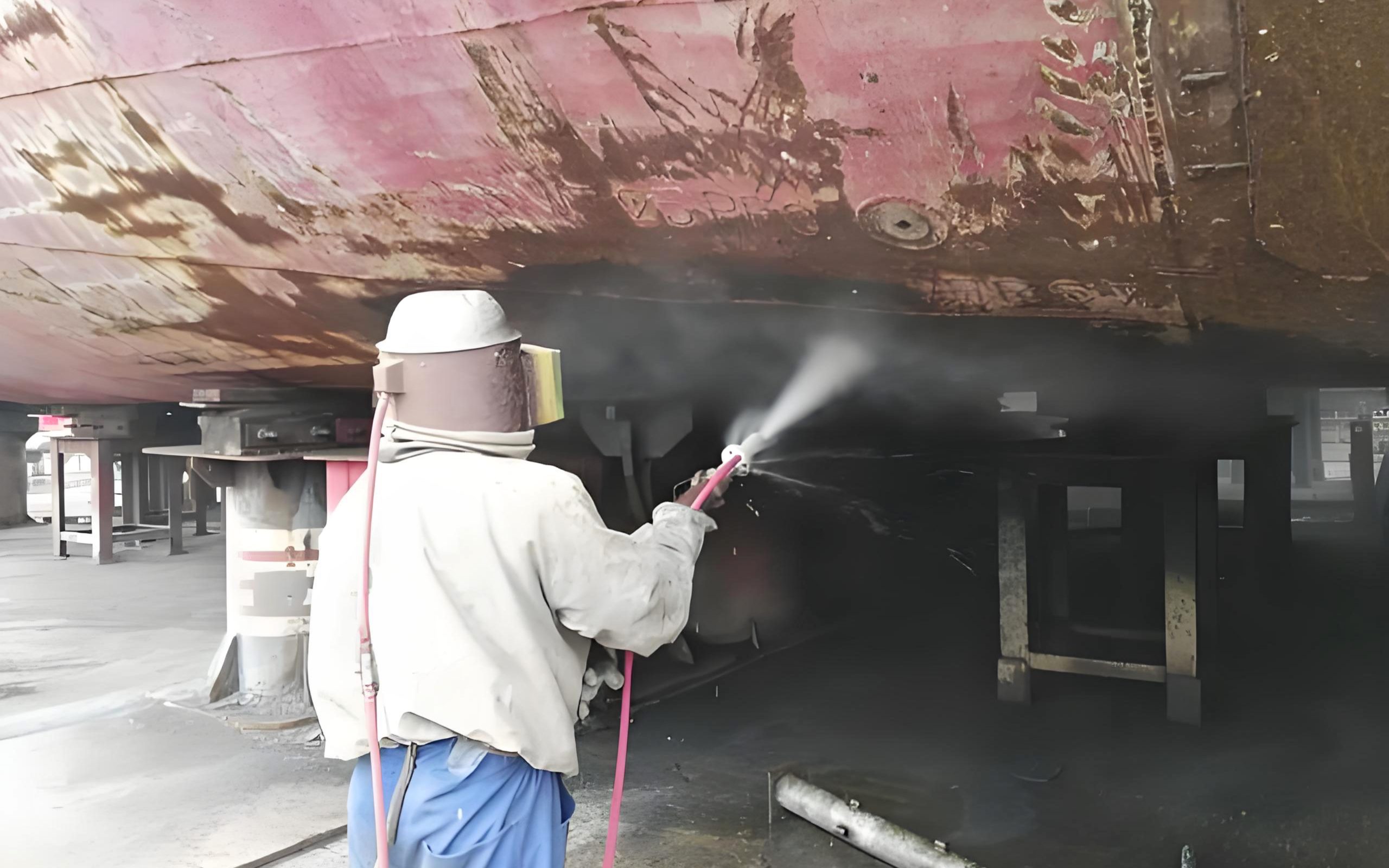
Blast Pressure: 1.5 – 3.5 bar
Best For: Hydraulic manifolds, turbine blades, complex aerospace assemblies
Edge Radius Achievable: 0.02 – 0.20 mm
5. Key Process Parameters
Regardless of the process method chosen, the following parameters govern the deburring outcome and must be controlled and documented for repeatable production results.
| Parameter | Vibratory | Centrifugal Barrel | Pneumatic Blasting | Effect if Incorrect |
|---|---|---|---|---|
| Bead size | 0.5 – 3.0 mm | 0.3 – 2.0 mm | 0.1 – 1.0 mm | Too large: misses small features; too small: slow removal rate |
| Media-to-part ratio | 4:1 – 8:1 (vol) | 3:1 – 6:1 (vol) | N/A | Too low: part-to-part impacts; too high: inefficient energy transfer |
| Cycle time | 30 min – 4 hr | 10 – 30 min | 30 sec – 15 min | Under-cycle: incomplete burr removal; over-cycle: edge over-radius |
| Compound type / pH | pH 7 – 9 (neutral-alkaline) | pH 7 – 9 | N/A (dry) or pH 7–9 (wet) | Acidic compounds (<pH 3) degrade YSZ stabiliser layer over time |
| Equipment speed / frequency | 20 – 50 Hz vibration | 100 – 300 RPM turret | 1.5 – 3.5 bar nozzle pressure | Under-speed: slow; over-speed: accelerated media wear, part damage |
| Water flow (wet processes) | Continuous flood | Pre-wet charge | N/A | Insufficient water: media and part heating, compound burnout |
6. Bead Size Selection Guide
The optimal YSZ bead size for deburring is determined by three factors: the size and accessibility of the burr, the complexity of the workpiece geometry (particularly the minimum feature size that must be accessible), and the target edge radius. Use the guide below as a starting point — final size selection should always be validated with trial processing.
| Bead Size | Minimum Feature Access | Burr Type Suited To | Edge Radius Range | Typical Application |
|---|---|---|---|---|
| 0.05 – 0.15 mm | >0.5 mm slots / holes | Micro-burrs, EDM wire edges, AM support remnants | 0.01 – 0.05 mm | Watch components, micro-gears, dental implants |
| 0.15 – 0.40 mm | >1.5 mm bores | Drilling burrs, light stamping burrs, tapping exit burrs | 0.02 – 0.10 mm | Medical bone screws, precision aerospace fasteners, hydraulic spools |
| 0.40 – 0.80 mm | >3 mm bores | Medium machining burrs, milling exit burrs, cross-hole burrs | 0.05 – 0.20 mm | Aerospace castings, hydraulic valves, gear tooth edges |
| 0.80 – 2.0 mm | >6 mm bores | Heavy machining burrs, stamping burrs, casting flash | 0.10 – 0.40 mm | Automotive components, structural brackets, pump housings |
| 2.0 – 5.0 mm | Open surfaces only | Heavy casting flash, forging parting-line fins | 0.20 – 0.60 mm | Large castings, forgings, structural weldments |
7. Compound & Media Mix Selection
In wet mass finishing processes, the aqueous compound serves four functions simultaneously: it lubricates the media-part interface to control cut rate, suspends and removes the swarf generated by deburring, prevents re-deposition of removed material onto the workpiece, and protects freshly exposed metal from oxidation during processing.
Compound Types for YSZ Bead Processes
| Compound Type | pH Range | Cut Rate | Finish Effect | Best For |
|---|---|---|---|---|
| Neutral burnishing | 7.0 – 7.5 | Low | Bright, smooth | Post-deburring polishing stage, decorative finishes, soft alloys |
| Alkaline deburring | 8.0 – 9.5 | Medium–High | Satin, uniform | Primary deburring of steel, aluminium, titanium; general engineering |
| Acidic brightener | 4.0 – 6.0 | Medium | Very bright | Copper, brass, bronze, stainless steel. Note: use cautiously with YSZ — limit exposure to <2 hr per session |
| Dry (no compound) | N/A | Medium | Matte, textured | Final stage burnishing of non-ferrous metals; components sensitive to water |
For most YSZ deburring applications, an alkaline deburring compound at pH 8–9 is the recommended starting point. It provides sufficient cut rate for efficient burr removal, is compatible with all common engineering alloys, and poses no risk to the yttria stabiliser layer of the ZrO₂ beads over normal operating durations.
Mixed Media Charges
In some applications, YSZ beads are used alongside plastic, ceramic, or stainless steel media in a mixed charge. The YSZ component provides the primary deburring action while the larger or softer media elements act as gap fillers that improve coverage uniformity on complex geometries, or as burnishing media that improve surface finish simultaneously. Henglihong’s application engineers can advise on media mix ratios for specific part geometries.
8. Industry Applications
YSZ bead deburring and edge finishing is specified across a wide range of industries wherever precision, contamination control, and consistent edge quality are requirements rather than preferences.
Aerospace
Turbine blade trailing edge deburring, compressor disk cross-hole deburring, landing gear component edge finishing, and aluminium structural bracket edge blending are the primary aerospace deburring applications for YSZ beads. NADCAP-compliant facilities specify YSZ beads specifically to avoid the iron contamination risk of steel media on titanium and nickel alloy components. The ability to achieve a consistent 0.05–0.15 mm edge radius on compressor airfoil edges — reducing leading-edge stress concentration without affecting aerodynamic profile — is a key capability.
Medical Devices
Orthopaedic implants (hip stems, tibial trays, spinal fusion cages) require burr-free surfaces before coating or implantation, with zero contamination tolerance. Surgical instruments — scalpel handles, clamps, retractors — require deburring and edge finishing for both safety and sterilisability. YSZ beads achieve both requirements, and their chemical composition is compatible with ISO 10993 biocompatibility requirements. Additive-manufactured titanium implants increasingly use YSZ bead finishing to remove support-structure remnants and improve surface quality.
Hydraulics & Pneumatics
Hydraulic valve bodies contain multiple intersecting drillings where cross-hole burrs are an inevitable machining byproduct. These burrs, if not removed, break free during system operation and can cause valve seat damage, metering orifice blockage, or pump erosion. Pneumatic YSZ bead blasting into the ports — with fine beads (0.1–0.3 mm) at controlled pressure — is one of the few practical methods for removing cross-hole burrs in complex manifolds without disassembly.
9. Quality Standards & Inspection
Verifying that deburring is complete and that the target edge radius has been achieved requires a defined inspection protocol. The following steps represent current best practice for precision deburring quality control.
Related Guides in This Series
10. Frequently Asked Questions
Find the Right YSZ Bead Size for Your Deburring Process
Describe your component material, geometry, and burr type — our application engineers will recommend the optimal bead size, process method, and compound for your specific application.
Request Application Support View YSZ Product RangeFilters