Yttria Stabilized Zirconia Beads (YSZ): Structure, Toughening Mechanism, and Industrial Performance
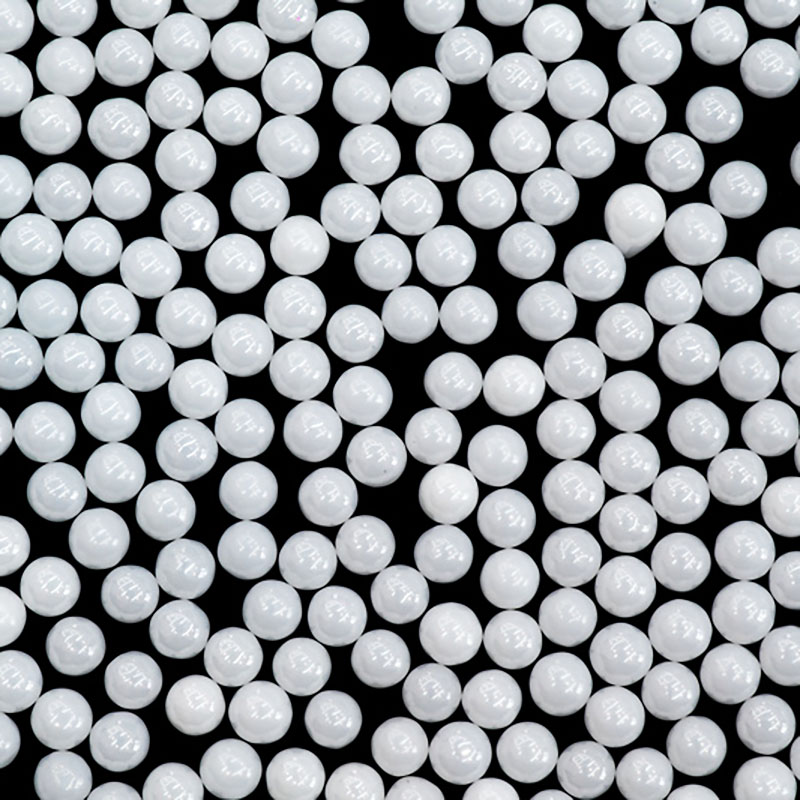
Yttria stabilized zirconia beads (YSZ beads) are the most widely used high-performance zirconia grinding media across industrial milling, dispersion, and material processing applications. By stabilizing zirconium dioxide (ZrO₂) with yttrium oxide (Y₂O₃), YSZ beads achieve an optimal balance between mechanical strength, fracture toughness, impact resistance, and cost efficiency.
Compared with ceria stabilized zirconia beads (Ce-TZP), YSZ beads are engineered for higher impact loads and broader industrial compatibility. Compared with fully stabilized cubic zirconia beads, YSZ retains transformation toughening capability, making it significantly more resistant to crack propagation and catastrophic failure during high-energy milling.
This page functions as a core cluster supporting the Zirconia Beads pillar, providing a comprehensive engineering analysis of YSZ beads, from stabilization chemistry and microstructural design to wear behavior and application-driven selection logic.
Table of Contents
- 1. What Are Yttria Stabilized Zirconia Beads?
- 2. Yttria Stabilization and Phase Control
- 3. Transformation Toughening Mechanism
- 4. Microstructure and Grain Size Engineering
- 5. Mechanical and Physical Properties
- 6. Wear Behavior and Service Life
- 7. Industrial Applications of YSZ Beads
- 8. YSZ vs Ce-TZP vs Cubic Zirconia Beads
- 9. When YSZ Beads Are the Best Choice
- 10. Conclusion
1. What Are Yttria Stabilized Zirconia Beads?
Yttria stabilized zirconia beads are ceramic milling media produced by partially stabilizing zirconium dioxide with yttrium oxide (Y₂O₃), typically in the range of 3–5 mol%. This composition results in a metastable tetragonal zirconia polycrystal (TZP) structure at room temperature.
The retained tetragonal phase is the defining feature of YSZ beads. Under applied mechanical stress, this phase can locally transform into the monoclinic structure, absorbing energy and generating compressive stresses that inhibit crack growth. This phenomenon underpins the exceptional toughness and impact resistance of YSZ beads.
Because of this balance between strength, toughness, and manufacturability, YSZ beads have become the industry-standard zirconia media for general-purpose high-energy milling.
2. Yttria Stabilization and Phase Control
Yttria stabilization works by introducing Y³⁺ ions into the ZrO₂ lattice, replacing Zr⁴⁺ ions and creating oxygen vacancies to maintain charge neutrality. These defects suppress the complete monoclinic transformation that would otherwise occur during cooling.
In YSZ beads, the yttria content is carefully controlled to achieve:
- Stable tetragonal phase at room temperature
- Sufficient metastability to enable stress-induced transformation
- Avoidance of excessive cubic phase formation
If yttria content is too low, spontaneous transformation leads to cracking. If too high, the material becomes overly stable and loses transformation toughening. Industrial YSZ beads are therefore engineered within a narrow compositional window to maximize mechanical performance.
3. Transformation Toughening Mechanism
Transformation toughening is the core mechanical advantage of YSZ beads. When a crack initiates under impact or shear, stress concentration at the crack tip triggers a localized tetragonal-to-monoclinic phase transformation.
This transformation is accompanied by a volumetric expansion of approximately 3–5%, generating compressive stresses around the crack tip that counteract crack opening forces.
As a result:
- Crack propagation is slowed or arrested
- Impact resistance is significantly improved
- Bead fracture probability is reduced
This mechanism makes YSZ beads particularly suitable for high-energy mills where repeated bead-to-bead collisions dominate wear and failure modes.
4. Microstructure and Grain Size Engineering
The durability of yttria stabilized zirconia beads depends strongly on microstructural uniformity. Advanced manufacturing processes ensure a fine-grained, fully dense ceramic body with minimal defects.
Key microstructural parameters include:
- Average grain size: 0.3–0.6 µm
- Sintered density: ≥ 99.5%
- Uniform yttria distribution
- Minimal intergranular porosity
Controlled grain size is critical: grains that are too large promote uncontrolled transformation, while excessively small grains suppress toughening. Optimized YSZ beads sit precisely within this engineering window.
5. Mechanical and Physical Properties
| Property | YSZ Beads | Ce-TZP Beads | Cubic Zirconia Beads |
|---|---|---|---|
| Density (g/cm³) | ~6.0 | ~6.1 | ~5.8–5.9 |
| Vickers Hardness (HV) | 1100–1300 | 1100–1250 | 1000–1200 |
| Fracture Toughness (MPa·m¹ᐟ²) | 7–10 | 8–11 | 5–7 |
| Impact Resistance | Very High | High | Medium |
6. Wear Behavior and Service Life
YSZ beads exhibit a low and stable wear rate under most industrial milling conditions. Wear mechanisms are dominated by micro-abrasion and controlled surface microcracking rather than catastrophic fracture.
Compared with Ce-TZP beads, YSZ beads may generate slightly higher wear debris; however, their superior impact resistance allows them to operate reliably in aggressive milling environments where Ce-TZP may be over-engineered.
In applications where absolute contamination control is not the primary constraint, YSZ beads offer the best balance between durability, performance, and cost.
7. Industrial Applications of YSZ Beads
Yttria stabilized zirconia beads are used across a wide range of industries, including:
- Paints, coatings, and pigment dispersions
- Inks and printing materials
- Minerals and advanced ceramics
- Battery materials and electronic pastes
- General-purpose wet and dry milling
YSZ beads are commonly supplied in sizes ranging from sub-millimeter to several millimeters. For fine grinding applications, sizes such as 0.5 mm zirconia beads are widely adopted.
8. YSZ vs Ce-TZP vs Cubic Zirconia Beads
| Criterion | YSZ | Ce-TZP | Cubic Zirconia |
|---|---|---|---|
| Main Strength | Impact resistance | Ultra-low wear | Phase stability |
| Typical Wear Level | Low | Very Low | Low–Medium |
| Cost Efficiency | High | Medium–Low | Medium |
| Recommended Use | General industry | CMP / Nano | Thermal stability |
9. When YSZ Beads Are the Best Choice
Yttria stabilized zirconia beads should be selected when:
- High impact resistance is required
- Grinding energy levels are high
- Cost-performance balance is critical
- Applications tolerate low but non-zero wear debris
For contamination-critical nano-scale processes, ceria stabilized zirconia beads (Ce-TZP) remain the preferred solution.
10. Conclusion
Yttria stabilized zirconia beads (YSZ) form the industrial backbone of zirconia grinding media technology. Through carefully controlled yttria stabilization and transformation toughening, YSZ beads deliver outstanding toughness, impact resistance, and cost efficiency.
Within the broader zirconia beads portfolio, YSZ beads occupy the optimal middle ground, bridging high-performance engineering ceramics and large-scale industrial practicality.
Filters