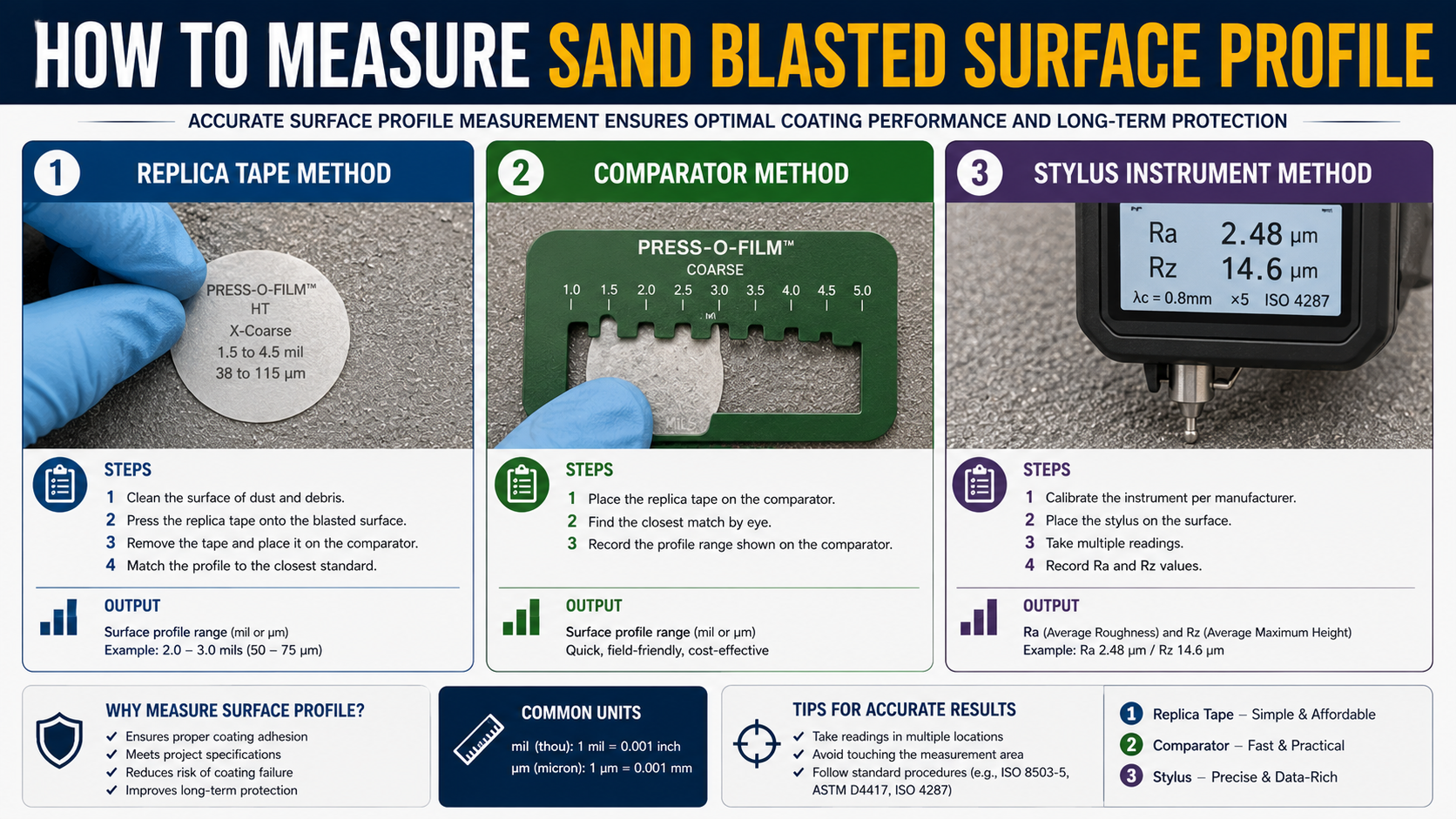
Aluminum Oxide vs Glass Beads vs Zirconia for Abrasive Finishing Titanium SLM Parts
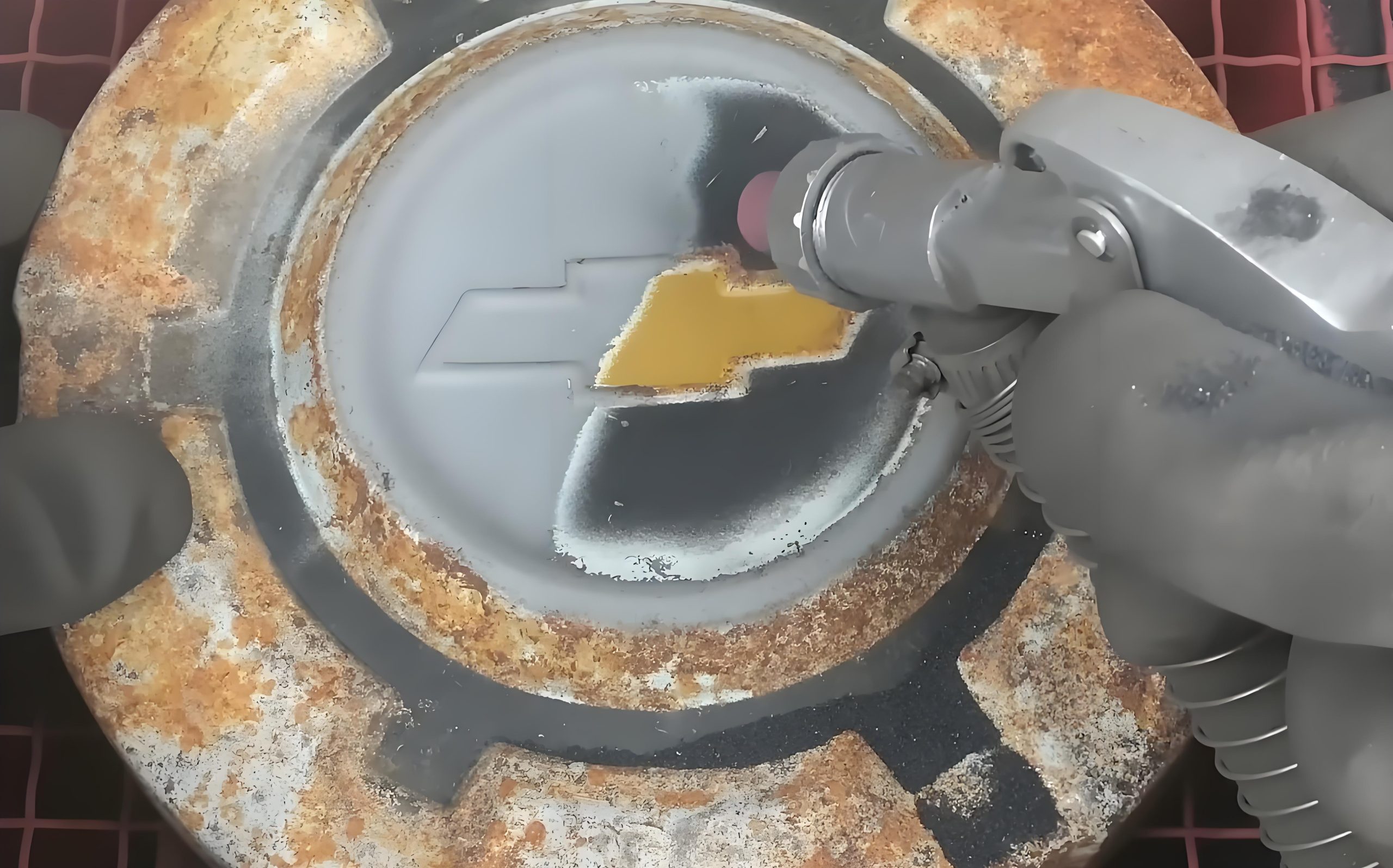
Selecting the wrong abrasive media for titanium SLM finishing can mean contamination failures, out-of-specification Ra, or unnecessary cost. Aluminum oxide, glass beads, and zirconia beads each serve different roles in the titanium SLM finishing workflow — their hardness, morphology, recycling life, and contamination risk profiles are not interchangeable. This guide provides the technical data and decision logic needed to select the right media for each application, from heavy staircase reduction to medical-grade implant finishing.
1. Why Media Choice Has Greater Impact on Titanium Than Other Metals
In abrasive blasting operations that process steel, stainless steel, or aluminum, media selection is primarily a performance decision: harder media cuts faster, finer media produces smoother Ra, and the choice between them is driven by throughput and surface quality targets. Contamination is rarely a primary concern because the metallic substrate and the blasting media are chemically compatible, and any trace media residue on steel is inconsequential in most industrial applications.
On titanium, the contamination dimension is added as a co-equal constraint alongside performance. Titanium is electrochemically noble — it forms a stable, self-regenerating TiO₂ passive layer that gives it its corrosion resistance. But when ferrous particles from blasting media or blast cabinet deposits contact the titanium surface, they create galvanic micro-cells that undermine this passivity and initiate corrosion. For medical implants, ISO 10993 biocompatibility requirements prohibit metallic contamination on implant surfaces entirely. For aerospace components, trace contamination must be controlled under AMS 2700 passivation specifications. For any titanium SLM application, choosing media that transfers iron, chrome, or other incompatible metals creates a problem that must be addressed by additional processing — or may be discovered as a non-conformance in customer or regulatory inspection.
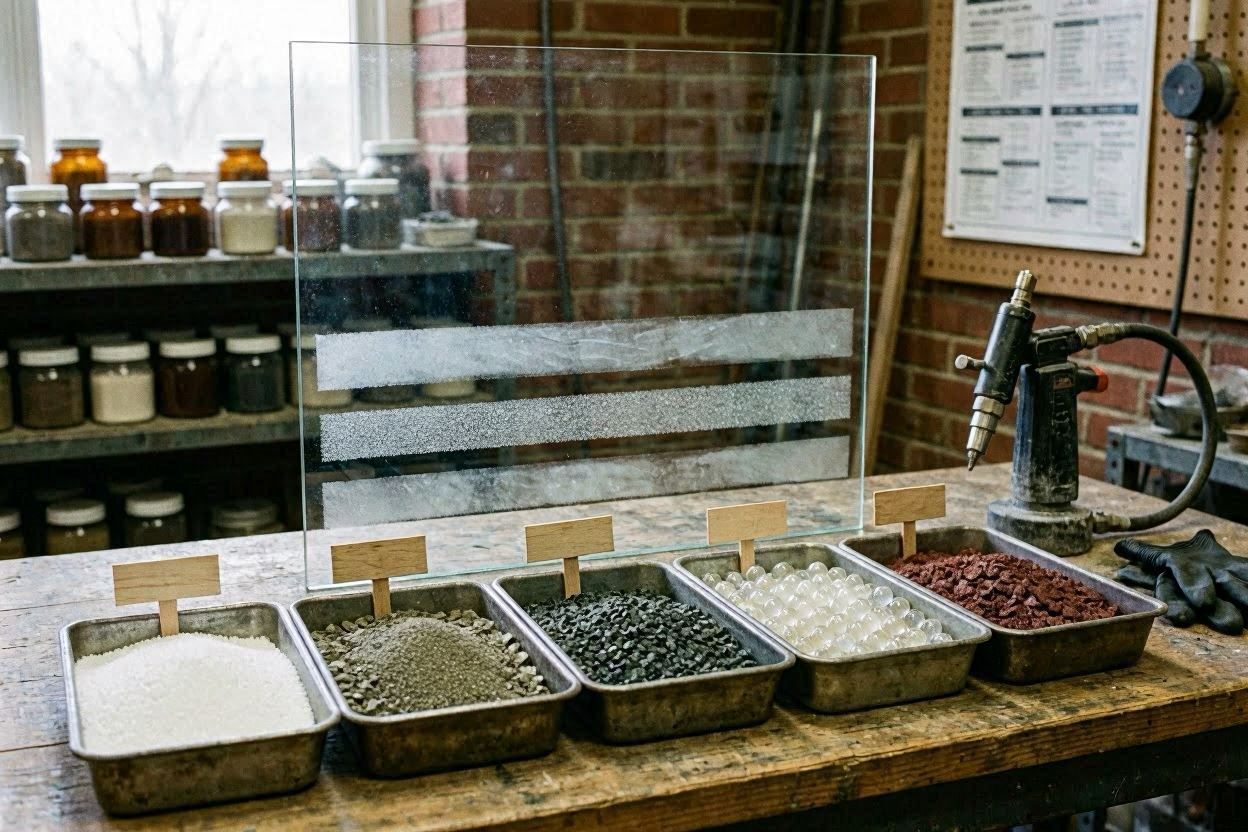
This is why media selection for titanium SLM finishing is a three-axis decision: performance (cutting rate, Ra achievable), contamination risk (what the media transfers to the titanium surface), and cost (media price × recycling life = cost per part). This article, part of the series on abrasive finishing for titanium SLM parts, covers each media type on all three axes.
2. Aluminum Oxide: The Cutting Agent
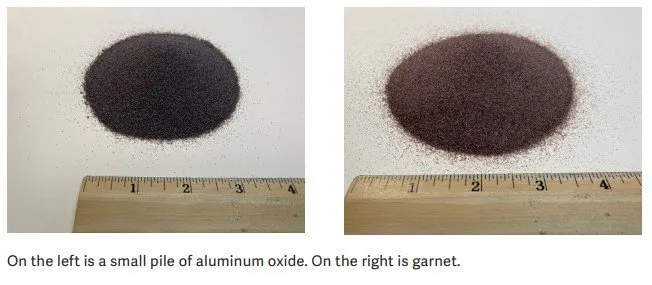
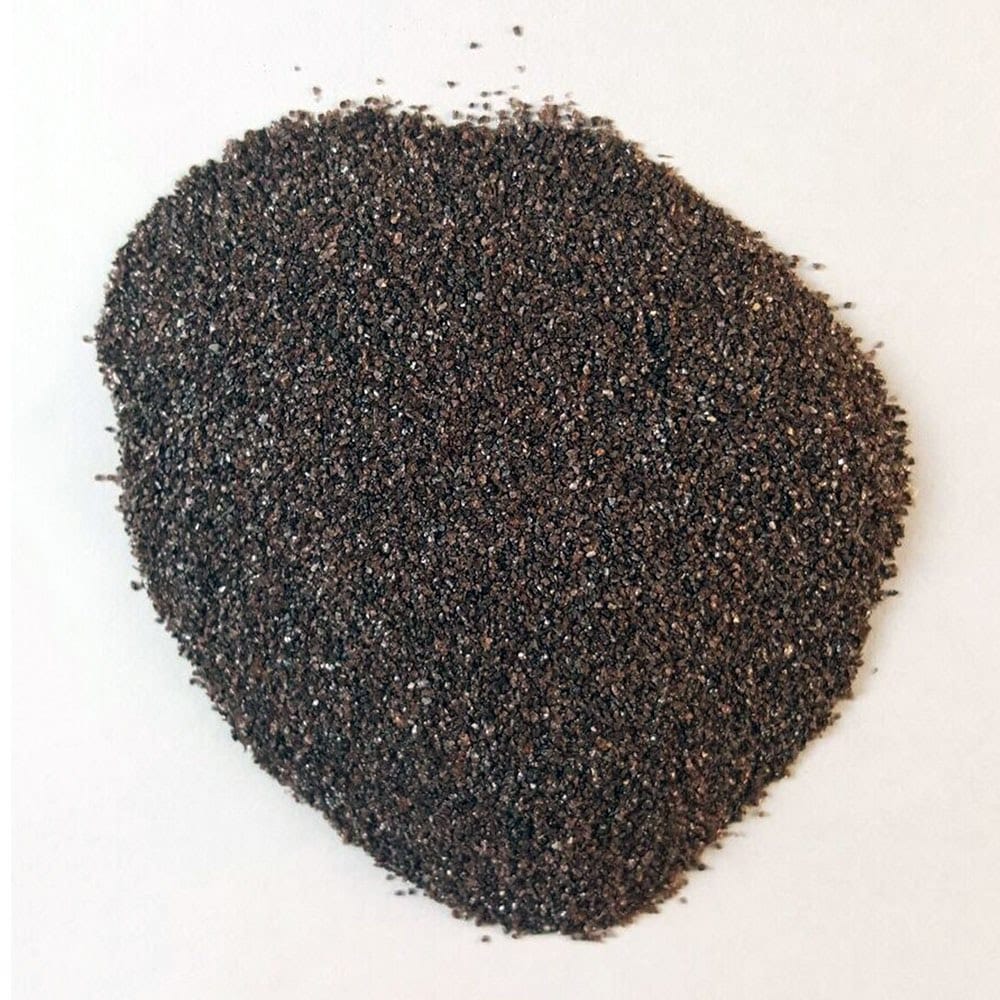
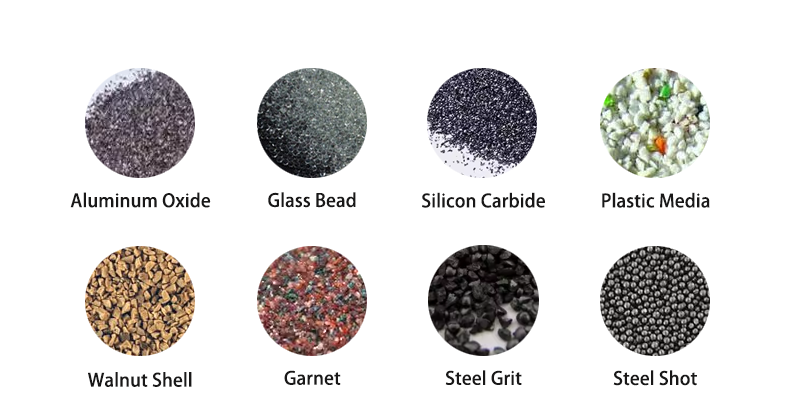
Aluminum oxide (Al₂O₃, also known as alumina or corundum) is the dominant industrial abrasive blasting media by volume. Its Mohs hardness of approximately 9.0 — just below diamond at 10 — combined with an angular, blocky particle morphology that presents sharp cutting edges at impact makes it the most aggressive available media for material removal from titanium surfaces. For the aggressive stock removal required in alpha-case elimination, staircase roughness reduction on downskin surfaces, and HVOF thermal spray anchor profile creation, Al₂OΆ has no practical substitute at equivalent cost.
The contamination risk of Al₂OΆ on titanium is alumina embedment, not iron transfer. Angular Al₂OΆ particles can fracture on impact and drive sub-micron fragments into the relatively soft titanium surface (Ti-6Al-4V surface hardness approximately 350 HV vs. Al₂OΆ at 2,000 HV), producing alumina inclusions detectable by SEM-EDS or XRF analysis. For industrial applications without surface purity requirements, embedded alumina is generally acceptable. For medical implants, ISO 10993 testing may flag alumina inclusions as a biocompatibility concern, and some regulatory submissions have been challenged on this basis. For medical-grade titanium, Al₂OΆ should be reserved for the initial rough-out stages only, with zirconia or glass beads used for final finishing.
Iron contamination from Al₂OΆ is a secondary risk that arises from equipment, not from the media itself. A blast cabinet or pot that has previously processed ferrous parts retains iron contamination in the media charge, on the cabinet walls, and in the blast nozzle. When this contaminated equipment is subsequently used to blast titanium, it transfers iron to the titanium surface. The only reliable prevention is dedicated equipment: blast cabinets, pots, nozzles, and media charges reserved exclusively for titanium and non-ferrous alloys, never shared with ferrous parts. Where this level of separation is impractical, zirconia beads in a separately maintained cabinet represent the preferred alternative.
3. Glass Beads: The Peening Option
Spherical glass beads are manufactured primarily from soda-lime glass (occasionally borosilicate for higher temperature or chemical resistance) and rely on their spherical morphology rather than cutting action to finish surfaces. On impact, a spherical glass bead deforms and rebounds rather than cutting — it delivers kinetic energy as a compressive impulse that plastically deforms the surface locally, introducing compressive residual stress (peening effect) and smoothing existing surface peaks by plastic deformation rather than material removal.
For titanium SLM finishing where the objective is Ra improvement in the 1.5–4 μm range and the as-built roughness is already below 10 μm (e.g., upskin surfaces, near-vertical walls, or parts already processed through a Stage 1 Al₂OΆ blast), glass beads are an effective and economical choice. Their lower hardness (Mohs 5.5–6.0) means material removal is slow — ideal for fine finishing stages where precision Ra control matters more than throughput.
The contamination risk of glass beads on titanium is iron from the glass formulation and from blast equipment. Soda-lime glass contains trace iron oxide (Fe₂O₃) as a natural impurity in the silica feedstock, typically 0.05–0.15% by weight. While this is a low concentration, repeated impact and progressive glass bead breakdown releases iron-bearing glass fragments that can deposit on the titanium surface. For medical-grade titanium, glass beads must be sourced with XRF certification confirming iron content below a defined maximum (typically <0.05% Fe₂OΆ total, or equivalent parts-per-million). For equipment, the same dedicated equipment principle applies as for Al₂OΆ — shared cabinets transfer iron from prior ferrous runs.
4. Zirconia Beads: The Premium Solution
Yttria-stabilized zirconia (YSZ) beads represent the premium abrasive media for titanium SLM finishing in regulated industries. Yttria stabilization converts zirconia from a monoclinic to a tetragonal or cubic crystal structure, greatly improving toughness and resistance to fracture — this is what gives zirconia beads their exceptional recycling life. With a Mohs hardness of approximately 8.5 and a spherical morphology similar to glass beads, zirconia provides effective material removal and compressive stress induction at a rate between glass beads and Al₂OΆ.
The defining advantage of zirconia for titanium is its contamination profile. Zirconia is biocompatible (ZrO₂ is used as a dental ceramic and orthopedic bearing material), chemically inert, and produces no iron, silica, or reactive metal contamination on the titanium surface. Even after thousands of blast cycles, the media breakdown products are zirconia fragments, which are biologically inert. This makes zirconia the only media that can be used on medical-grade titanium without requiring separate contamination-prevention protocols at the equipment level — though dedicated equipment still represents best practice.
The cost structure of zirconia is initially discouraging (raw media cost typically 3–5× higher per kilogram than Al₂OΆ or glass beads), but the recycling life of 2,000–4,000 cycles vs. 400–800 cycles for glass beads substantially reduces the cost-per-part differential. A simple cost model: if glass beads cost $3/kg and last 600 cycles, while zirconia costs $12/kg and lasts 3,000 cycles, the media cost per blast cycle is $3/600 = $0.005 vs. $12/3000 = $0.004 — zirconia is actually cheaper per cycle, with no contamination risk and superior surface quality.
5. Side-by-Side Comparison: Performance, Recycling, and Cost
| Property | Aluminum Oxide | Glass Beads | Zirconia Beads |
|---|---|---|---|
| Mohs hardness | ~9.0 | ~5.5–6.0 | ~8.5 |
| Morphology | Angular, blocky | Spherical | Spherical |
| Material removal rate | High | Low | Medium |
| Compressive stress (peening) | Low (cutting dominant) | Medium | Medium–High |
| Min. achievable Ra (Ti) | ~0.8 μm | ~0.4 μm | ~0.5 μm |
| Embedding risk on titanium | Medium–High | Low | Very low |
| Fe contamination risk | Medium (equipment) | Low–Medium | Very low |
| Recycling cycles | 300–600 | 400–800 | 2,000–4,000 |
| Relative media cost ($/kg) | 1× | 0.9× | 3–5× |
| Approximate cost per cycle | 1× | 0.7× | 0.5–0.8× |
| Medical implant use | Stage 1 only | With Fe certification | Preferred |
| Aerospace structural | Yes (dedicated equipment) | Yes (Fe certified) | Preferred |
| HVOF anchor profile | Yes (primary choice) | No | No |
6. Application Decision Guide
Use aluminum oxide when: you need to remove alpha-case (>30 μm depth), reduce heavy staircase roughness on downskin surfaces (as-built Ra >12 μm), or create an anchor profile for HVOF thermal spray coating. Al₂OΆ is the only cost-effective option for aggressive material removal. Always use dedicated equipment and confirm iron-free operation by ferroxyl test before switching to titanium runs.
Use glass beads when: the surface already has Ra below 8 μm (after a prior Al₂OΆ stage or on cleaner as-built surfaces), the application is industrial or aerospace without the strictest contamination requirements, and cost is a constraint. Source from suppliers who provide Fe content certification, and use dedicated equipment.
Use zirconia beads when: the part is a medical implant, the application requires ISO 10993 biocompatibility compliance, the part is an aerospace component going through NADCAP or AMS-audited processing, or contamination-free processing is required without the operational overhead of dedicated equipment management. Zirconia is the de facto standard for these applications in August 2026 and represents the lowest total-cost option across the lifecycle when contamination rework costs and equipment management overhead are included.
Media selection alone does not prevent contamination — equipment management is equally critical. See our detailed guide on preventing iron and foreign material contamination when abrasive blasting titanium SLM parts for the complete prevention protocol.
Frequently Asked Questions
Technically possible but not recommended. Shared equipment between steel and titanium creates a persistent iron contamination risk because iron particles from steel parts accumulate in the media charge, on cabinet walls, in hoses, and in the blast nozzle. Even after blowing out the cabinet and loading fresh Al₂O₃, residual iron from the previous steel run will transfer to the titanium surface during the first several cycles. For non-critical industrial titanium parts where contamination is not a controlled requirement, shared equipment is sometimes accepted. For aerospace and all medical applications, dedicated equipment is required. If dedicated equipment is not feasible, zirconia beads in a cabinet that has never contacted ferrous parts is the only alternative that eliminates equipment-source contamination.
Yes, in nearly every aerospace titanium application. The total cost calculation must include media purchase price, recycling lifespan, contamination-related rework costs, and equipment management overhead. When all factors are included, zirconia typically delivers a lower cost-per-part than glass beads or Al₂O₃ in a dedicated system for aerospace titanium. Additionally, the risk cost of a contamination non-conformance — 100% re-inspection, passivation rework, potential part rejection, and customer notification — is substantial and largely eliminated by zirconia. For high-value aerospace titanium SLM components where a single contamination failure can cost more than a year’s supply of zirconia media, the calculation strongly favors zirconia.
Start with mesh 120–150 (approximate mean particle size 100–125 μm) for surfaces with as-built Ra in the 5–10 μm range, after any coarse Al₂O₃ stage has been completed. This size range achieves Ra 1.5–3.0 μm on most upskin and near-vertical SLM titanium surfaces in 2–3 passes at 40–50 PSI. For a final precision finish (Ra target 0.8–1.5 μm), step down to mesh 180–220. Avoid using mesh sizes coarser than 80 with glass beads on titanium — at this size, spherical beads generate sufficient impact energy to cause dimpling on the relatively soft titanium surface without achieving proportionally better Ra reduction.
It is operationally possible but not recommended as a controlled production process. Mixed-media blasts produce unpredictable surface profiles because the two media types act differently on impact — Al₂O₃ cuts while glass beads peen — and the relative proportion changes as the media charge ages at different rates. The resulting Ra and surface texture are difficult to characterize or replicate between batches. For development work or exploratory testing, mixed media can be useful for identifying the right blend, but for qualified production processes, keep media types separate and in defined sequences. The only common exception is using a small proportion of Al₂O₃ (10–20%) in a glass bead charge to increase cutting action on surfaces with moderate staircase roughness without committing to a full coarse Al₂O₃ stage.
Need Specialist Abrasive Media for Titanium SLM Finishing?
Jiangsu Henglihong Technology Co., Ltd. supplies aluminum oxide, glass beads, and zirconia beads in the full range of mesh sizes required for titanium SLM finishing — from grit 60 angular Al₂O₃ for aggressive removal through mesh 280 zirconia beads for precision medical-grade finishing. Contact our technical team for grade selection, supply specification, and cost-per-part analysis for your application.
Contact Our Technical TeamFilters