Aluminum Oxide Abrasive for Sandblasting
The industry’s most versatile blasting abrasive — sharp, fast-cutting, and recyclable. Everything B2B buyers need to know about aluminum oxide grades, grit sizes, applications, and cost-per-cycle performance. Supplied by Jiangsu Henglihong Technology Co., Ltd.
What Is Aluminum Oxide Abrasive?
Aluminum oxide (Al₂O₃), also known as alumina or brown corundum, is a synthetic mineral abrasive produced by fusing bauxite in an electric arc furnace at temperatures above 2,000 °C. The result is an extremely hard, blocky, angular material that combines fast cutting speed with exceptional recyclability — making it the benchmark abrasive for industrial surface preparation worldwide.
With a Mohs hardness of 9 — just below diamond (10) and silicon carbide (9–9.5) — aluminum oxide is hard enough to aggressively profile carbon steel, stainless steel, aluminium alloys, titanium, and glass, yet it fractures in a controlled manner that continually exposes fresh cutting edges rather than rounding off. This self-sharpening behavior is one of the primary reasons aluminum oxide maintains consistent surface profile performance across 20–30 blasting cycles, far exceeding single-use slag media.
Jiangsu Henglihong Technology Co., Ltd. produces and exports aluminum oxide abrasive in both brown (BFA) and white (WFA) grades, available in the full commercial grit range from 12 to 320, in 25 kg bags, 1,000 kg jumbo bags, and full container loads for international B2B buyers.
Key distinction: Aluminum oxide abrasive for blasting is a different product from aluminum oxide bonded to sandpaper or grinding wheels. Loose grain abrasive for blasting is sized by mesh (grit number), supplied loose in bags or super sacks, and used in pressure pots, blast cabinets, or centrifugal wheel machines — not as a fixed abrasive.
Technical Specifications
| Property | Brown Aluminum Oxide (BFA) | White Aluminum Oxide (WFA) |
|---|---|---|
| Al₂O₃ Content | 95–97% | 99%+ |
| Mohs Hardness | 9 | 9 |
| Specific Gravity | 3.90–3.98 g/cm³ | 3.93–3.98 g/cm³ |
| Bulk Density | 1.53–1.99 g/cm³ | 1.50–1.95 g/cm³ |
| Melting Point | 2,050 °C | 2,040 °C |
| Free Silica | < 1% | < 0.5% |
| Particle Shape | Angular, blocky | Angular, slightly sharper |
| Color | Brown/dark tan | White |
| Recyclability | 20–25 cycles | 25–30 cycles |
Brown vs White Aluminum Oxide: Which Grade Do You Need?
The two primary grades of aluminum oxide abrasive for blasting are brown fused alumina (BFA) and white fused alumina (WFA). Both share the same Mohs hardness of 9, but differ in purity, cost, and optimal application range.
Brown Aluminum Oxide (BFA) is produced from bauxite and contains 95–97% Al₂O₃ with small amounts of TiO₂, SiO₂, and iron oxides, which give it its characteristic brown color and contribute to its slightly tougher fracture behavior. BFA is the workhorse of industrial blasting — aggressive, highly recyclable, and significantly lower in cost than WFA. It is the correct choice for structural steel preparation, coating adhesion profiling, and general surface cleaning where the substrate is not sensitive to trace iron contamination.
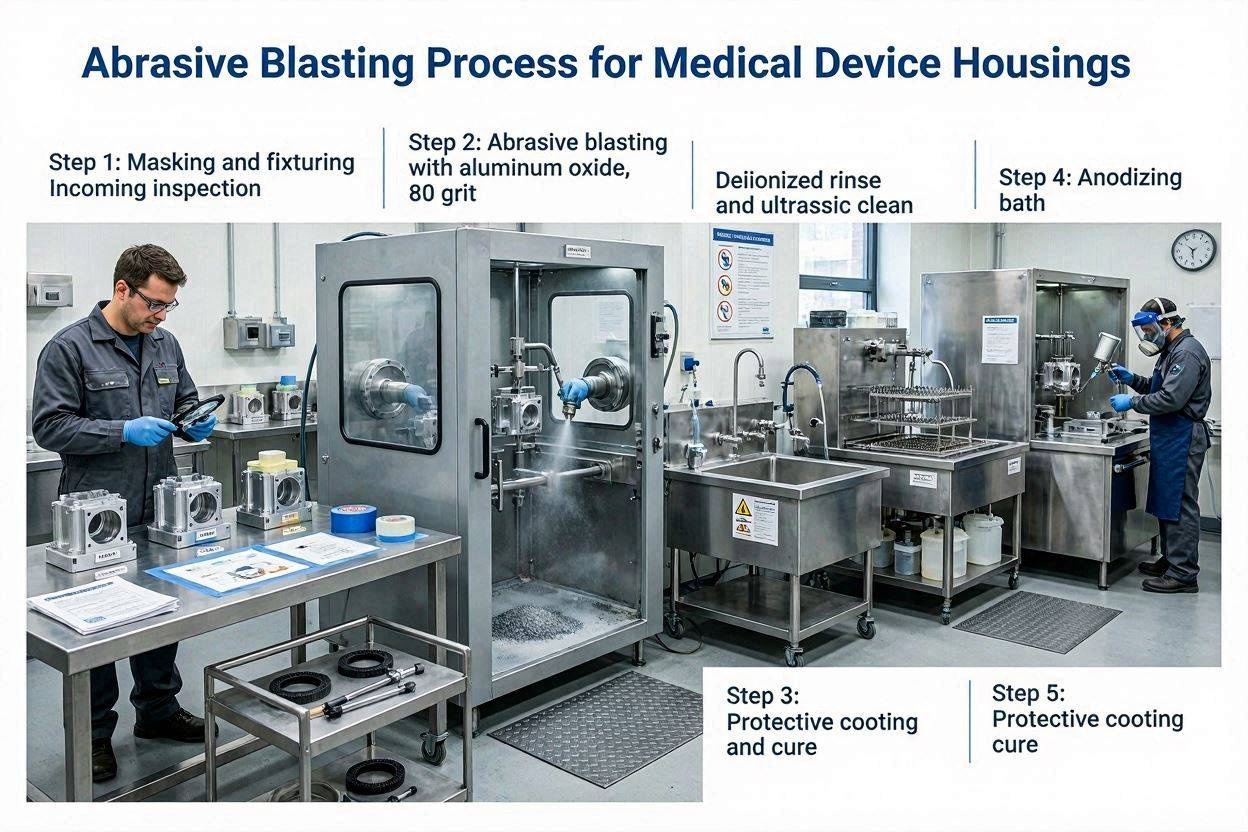
White Aluminum Oxide (WFA) is produced from Bayer-process alumina and achieves 99%+ purity. The absence of iron-bearing impurities makes it chemically inert and completely non-contaminating — critical for blasting stainless steel (where iron contamination causes rust staining), titanium alloys, aluminium before anodising, and semiconductor or medical device components. WFA is also the preferred media for glass engraving and fine decorative blasting where the brown color of BFA media could affect substrate appearance.
Rule of thumb: Use BFA for everything that is carbon steel or where contamination is not a concern. Use WFA when blasting stainless, aluminium, titanium, or any substrate where iron contamination, discoloration, or chemical inertness is a specification requirement.
Aluminum Oxide Grit Size Selection
Grit size determines surface profile depth, finish appearance, and blasting speed. The following table maps grit sizes to typical applications and expected anchor profile depth ranges when blasting carbon steel at 90–100 psi.
| Grit Size | Particle Size (µm) | Profile Depth (mil) | Best Application |
|---|---|---|---|
| 12–16 | 1,680–1,190 | 3.5–5.0 | Heavy mill scale, very thick coatings, deep profiling |
| 20–24 | 850–710 | 2.5–4.0 | Structural steel, heavy rust, offshore pre-treatment |
| 36–46 | 500–355 | 1.5–3.0 | General industrial coating prep, most protective systems |
| 60–80 | 250–180 | 1.0–2.0 | Aluminium, thinner steel, powder coat prep |
| 100–120 | 150–125 | 0.5–1.2 | Non-ferrous finishing, delicate steel, final prep stage |
| 180–220 | 90–63 | 0.3–0.7 | Glass etching, decorative blasting, fine finishing |
| 240–320 | 53–40 | Minimal | Ultra-fine etching, optical glass, precision components |
For a complete cross-media grit reference including mesh-to-micron conversions for garnet, glass bead, and steel grit, see the Sandblasting Abrasives Grit Size Chart.
Key Applications of Aluminum Oxide Blasting Abrasive
Structural Steel & Infrastructure
Sa 2.5 and Sa 3 surface prep before protective epoxy, polyurethane, or zinc-rich primer systems. BFA 36–46 grit delivers 1.5–3.0 mil profiles consistently within most coating TDS specifications.
Aluminium & Non-Ferrous Metals
WFA 60–120 grit removes anodising, oxide layers, and coatings from aluminium without iron contamination. Essential for aerospace components before re-anodising or bonding.
Glass Etching & Engraving
WFA 120–220 grit creates precise frosted designs on flat glass, glassware, and optical components. The controlled fracture behavior produces clean etch lines without excessive chipping.
Thermal Spray Substrate Prep
Aluminum oxide profiling is specified for HVOF and plasma spray bond coat adhesion. The angular profile increases mechanical interlocking for thermal barrier coatings in turbine applications.
Automotive Restoration
BFA 60–120 grit removes rust, paint, and scale from chassis, frames, and panels. Preferred over steel shot for cabinet blasting of automotive parts where dimensional precision matters. See the full automotive restoration guide.
Blast Cabinets & Blast Rooms
High recyclability makes aluminum oxide the preferred media for indoor recycling systems. A properly maintained blast cabinet with good separation can extract 20–25 usable cycles before media size distribution drops below specification.
Aluminum Oxide Abrasive: Pros & Cons
Advantages
- Extremely high hardness (Mohs 9) — cuts fast on virtually any substrate
- Angular particle shape produces consistent, deep anchor profiles
- Recyclable 20–30 cycles — lowest cost per blasted square foot among mineral abrasives
- Available in wide grit range (12–320) for versatile applications
- Free silica content below 1% — OSHA and EU regulation compliant
- WFA grade is chemically inert and iron-free for sensitive substrates
- Compatible with air blast pots, cabinets, and most recycling systems
Limitations
- Not suitable for centrifugal wheel blast machines (requires steel media)
- BFA grade contains trace iron — unsuitable for stainless before passivation
- Higher initial cost per bag than coal slag or copper slag
- Not ideal for very soft substrates (fibreglass, wood) — use walnut shell or plastic media
- Generates more dust than garnet at equivalent pressure settings
Cost Analysis & Recyclability
Aluminum oxide’s cost advantage over cheaper single-use abrasives becomes clear when calculated on a per-cycle basis. At a typical BFA price of $0.30–0.45/lb and 22 average usable cycles, the effective cost per cycle is approximately $0.014–0.020/lb — a fraction of coal slag’s apparent cheapness once its single-use disposal cost is factored in.
For a detailed side-by-side recyclability and true cost-per-square-foot analysis across all major media types, see the Recyclable Sandblasting Media Comparison guide.
Bulk pricing note: Jiangsu Henglihong Technology supplies aluminum oxide in 25 kg paper bags and 1,000 kg jumbo bags. FCL pricing for BFA 36 grit typically runs 15–25% below LCL rates. Contact our export team for a formal quotation at hlh-js.com/contact.
How Aluminum Oxide Compares to Other Abrasives
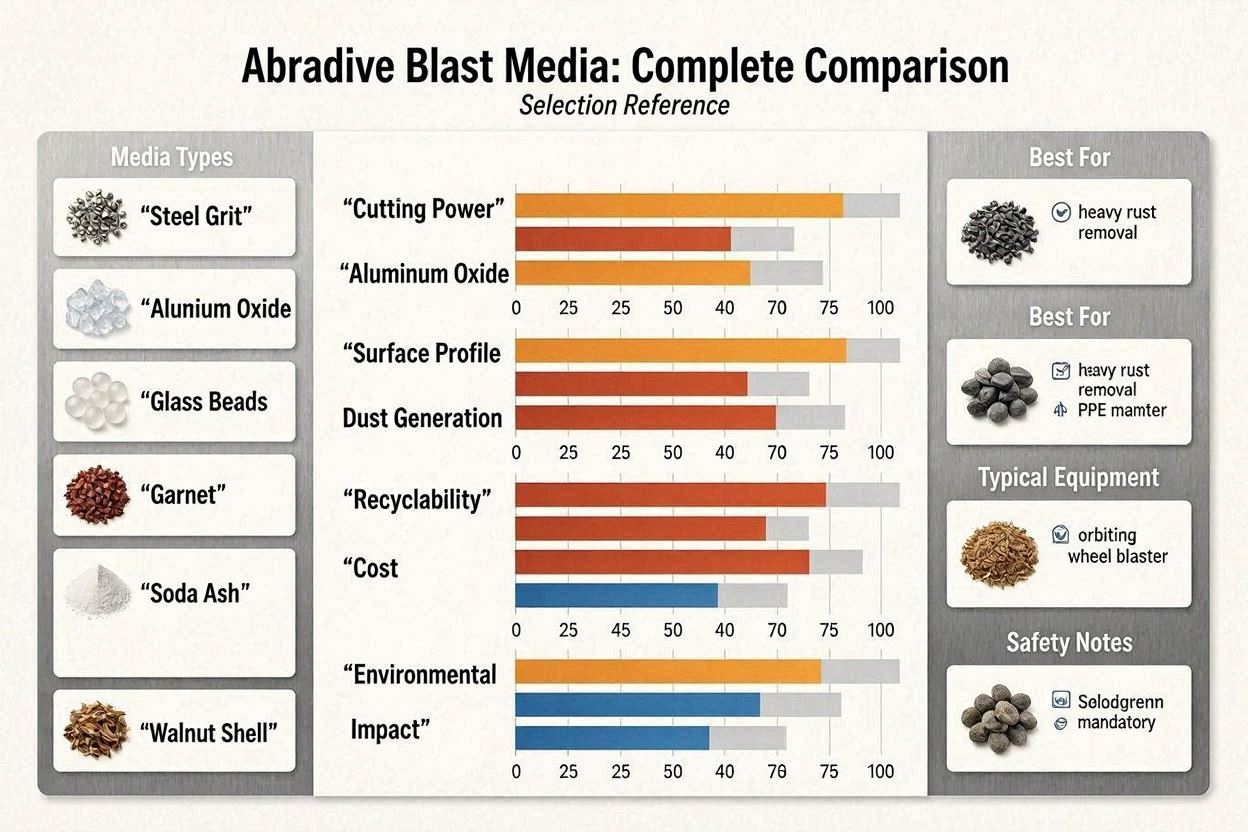
The most common selection decision buyers face is choosing between aluminum oxide and an alternative media. The key comparisons are:
- Aluminum oxide vs steel grit: Steel grit produces deeper profiles and lasts 100+ cycles in wheel-blast machines, but requires dedicated equipment. Aluminum oxide works in any air-blast system and is better for non-ferrous substrates. Full analysis: Aluminum Oxide vs Steel Grit.
- Aluminum oxide vs garnet: Garnet generates less dust and is preferred in environmentally sensitive locations, but is less recyclable and costs more per usable cycle. Full analysis: Garnet vs Aluminum Oxide.
- Aluminum oxide vs silicon carbide: Silicon carbide is harder (Mohs 9.5) and faster-cutting, justified only for ceramics, carbide tooling, or glass engraving where Al₂O₃ cannot achieve the required result. See the Silicon Carbide guide.
Frequently Asked Questions
Yes. Aluminum oxide, alumina, corundum, and Al₂O₃ all refer to the same compound. In the abrasives industry, “brown fused alumina” (BFA) and “white fused alumina” (WFA) are the standard commercial designations. “Corundum” is the naturally occurring mineral form; synthetic fused alumina is produced for consistent purity and controlled particle geometry.
Yes — aluminum oxide is fully compatible with pressure pot (direct pressure) blast systems, siphon (suction) blast systems, and blast cabinets. It is not suitable for centrifugal wheel blast machines, which require steel shot or steel grit due to the wheel’s sensitivity to hard mineral abrasive wear.
Brown aluminum oxide achieves 20–25 usable cycles in a properly maintained blast cabinet with an effective media reclaimer and separator. White aluminum oxide can reach 25–30 cycles due to its higher purity and slightly different fracture behavior. Recyclability depends heavily on the efficiency of your dust separator — without adequate fines removal, degraded media accumulates and reduces effective grit size faster than particle fracture alone would suggest.
Jiangsu Henglihong Technology Co., Ltd. accepts orders from a single pallet (approximately 1,000 kg / 40 × 25 kg bags) for LCL shipments. Full container load (FCL) orders typically start at 18–22 metric tonnes for a 20-foot container, depending on packaging format. Contact our export team at hlh-js.com/contact for a quotation based on your specific grit, grade, and packaging requirements.
Source Aluminum Oxide Abrasive Directly from the Manufacturer
Jiangsu Henglihong Technology Co., Ltd. — BFA and WFA abrasive blasting media, exported worldwide in full container loads. Request a specification sheet and quotation today.
Filters