What Blasting Media Does in Surface Treatment
Choosing the right blasting media is one of the most important decisions in any surface treatment process. The abrasive material affects cleaning speed, surface roughness, coating adhesion, part appearance, media consumption, and total processing cost.
For manufacturers, repair shops, and surface finishing teams, the best blasting media is not simply the hardest or the cheapest option. It should match the base material, target surface profile, production method, and final quality requirement.
Main Factors to Consider Before Selecting Blasting Media
Before comparing different abrasives, define the purpose of the treatment. A surface prepared for heavy-duty coating needs a different profile from a precision component that requires a smooth satin finish. Important factors include the workpiece material, desired roughness, blasting pressure, equipment type, recyclability, contamination risk, and whether the process is dry blasting or wet blasting.
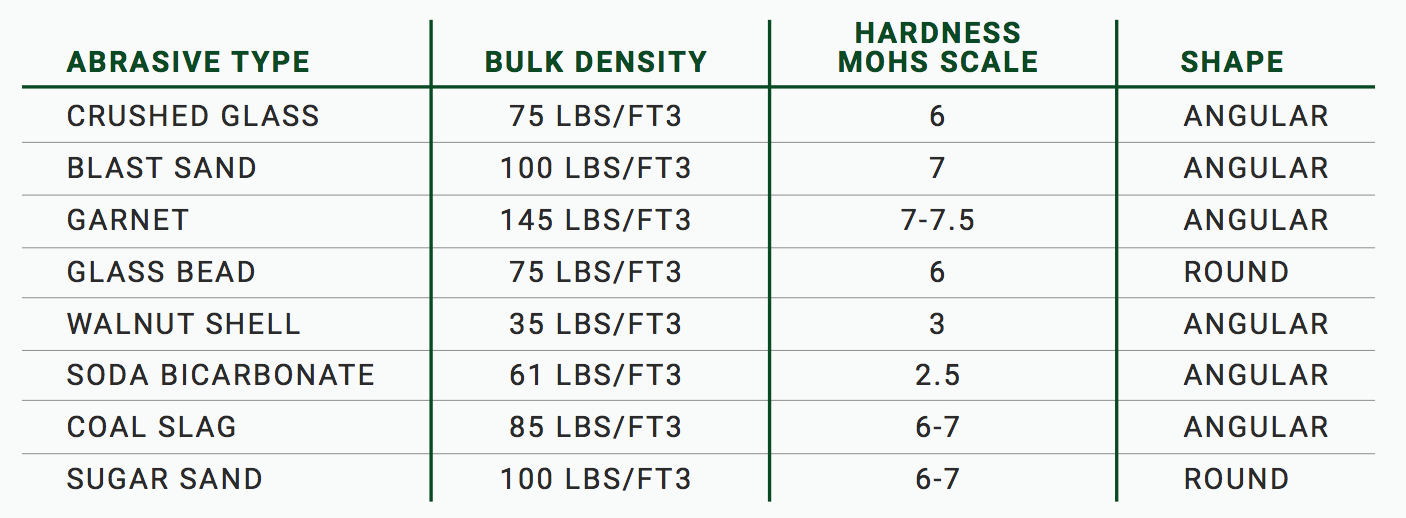
Harder media usually removes rust, scale, and old coating faster, but it may also create a deeper anchor profile or damage softer substrates. Softer or rounder media is often better for cosmetic finishing, light cleaning, and peening applications.
Common Blasting Media Options
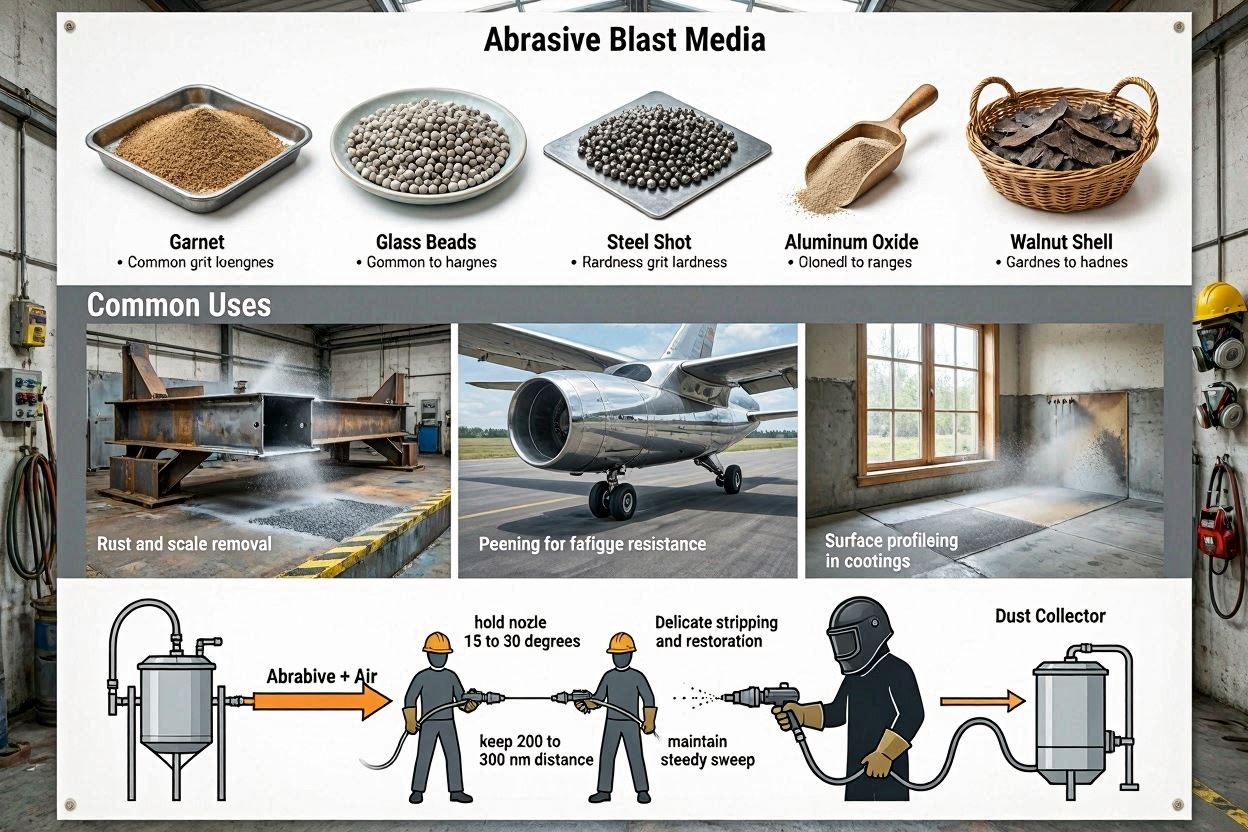
Aluminum Oxide
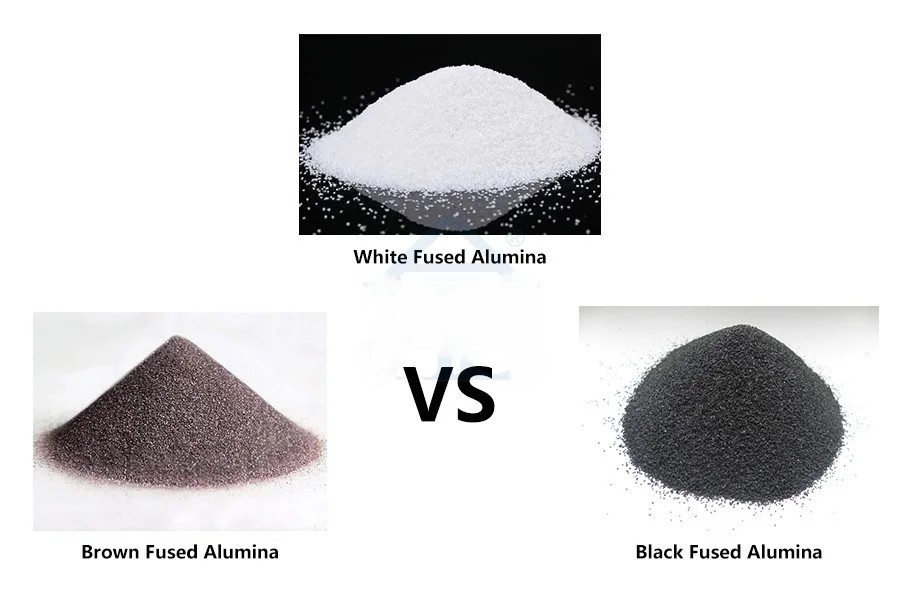
Aluminum oxide is a sharp, hard, and durable abrasive widely used for aggressive cleaning, surface preparation, and coating removal. It is suitable for steel, stainless steel, castings, and many industrial parts that need a consistent surface profile. Because it can be recycled many times, aluminum oxide is often a cost-effective choice for blast rooms and cabinet blasting systems.
Ceramic Blasting Media
Ceramic blasting media is known for high durability, stable particle shape, and low dust generation. It is commonly used when users need consistent finishing results over repeated cycles. Ceramic media can be a strong choice for precision components, aerospace parts, automotive parts, molds, and applications where process stability matters.
Glass Beads
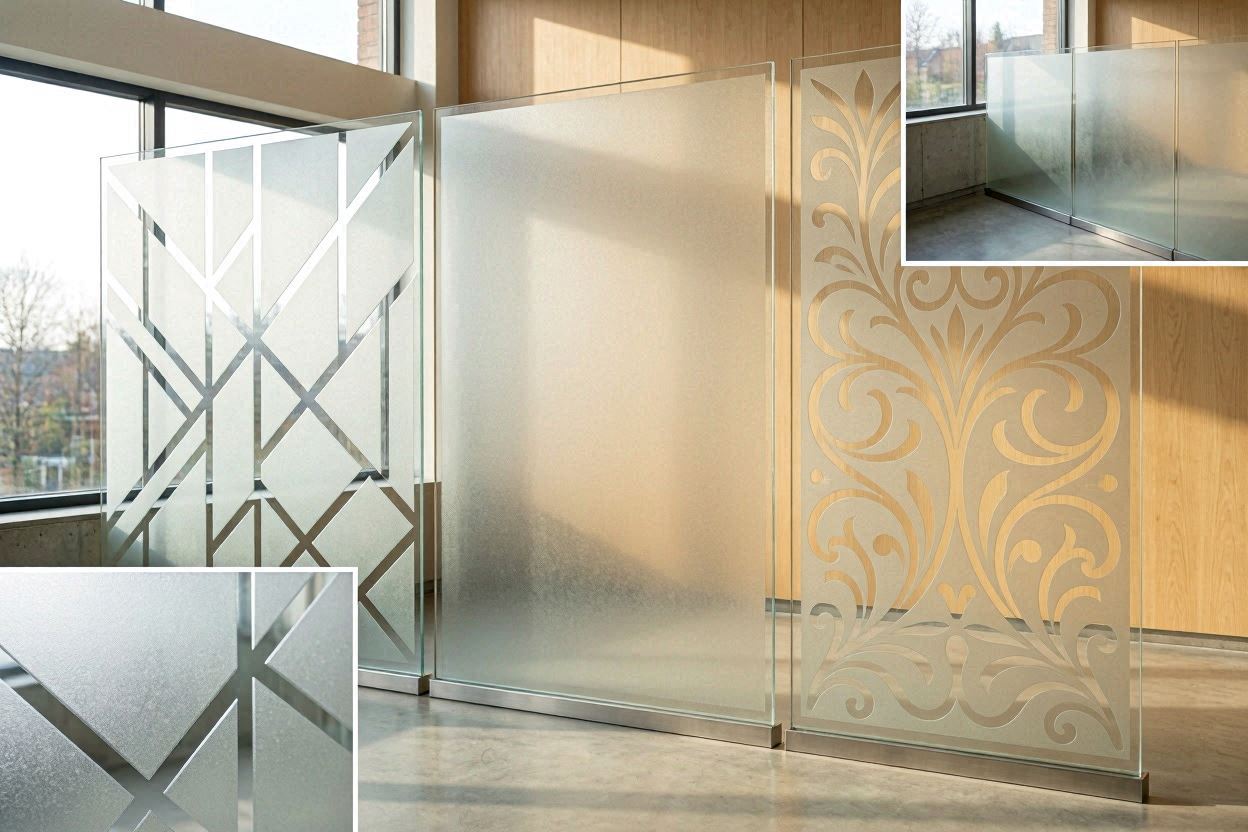
Glass beads are round media used for cleaning, deburring, and producing a bright satin finish without aggressive material removal. They are often selected for stainless steel, aluminum parts, decorative surfaces, and components that require a smoother appearance. Glass beads are less aggressive than angular abrasives and are useful when dimensional change should be minimized.
Steel Shot and Steel Grit
Steel shot and steel grit are commonly used in wheel blasting, shot peening, descaling, and heavy-duty surface preparation. Steel shot creates a peened surface and can improve fatigue resistance, while steel grit cuts more aggressively and creates a stronger anchor profile for coatings. These media types are highly recyclable, but they are generally used in systems designed for metallic abrasives.
Match the Media to the Application
For rust removal and coating preparation on steel, angular abrasives such as aluminum oxide or steel grit are usually effective. For cosmetic finishing on stainless steel or aluminum, glass beads or ceramic beads may provide a cleaner, more uniform appearance. For shot peening and fatigue life improvement, round media such as steel shot or ceramic shot is normally preferred.
If the goal is to reduce dust, improve media life, and keep surface finish stable, ceramic blasting media can be worth evaluating. If the goal is fast cutting and strong coating adhesion, aluminum oxide remains one of the most practical choices.
How to Avoid Common Blasting Media Mistakes
One common mistake is choosing media based only on unit price. A cheaper abrasive may break down faster, create more dust, reduce visibility, slow production, or increase disposal cost. Another mistake is using media that is too aggressive for the substrate, which can cause warping, excessive roughness, or unnecessary material loss.
It is also important to control particle size. Coarser media creates a stronger surface profile, while finer media gives a smoother finish. Testing a small batch before full production is the safest way to confirm cleaning speed, finish quality, and media consumption.
Final Recommendation
The right blasting media should balance cutting ability, surface finish, durability, cleanliness, and overall cost. For industrial surface preparation, aluminum oxide, ceramic blasting media, glass beads, steel shot, and steel grit each have their own advantages. By matching the media to the material and treatment goal, companies can improve surface quality, reduce waste, and make blasting operations more reliable.
If you are not sure which abrasive is best for your application, compare the substrate, required surface profile, and production equipment first. A properly selected blasting media can make the difference between an average surface treatment result and a stable, repeatable finishing process.
Filters