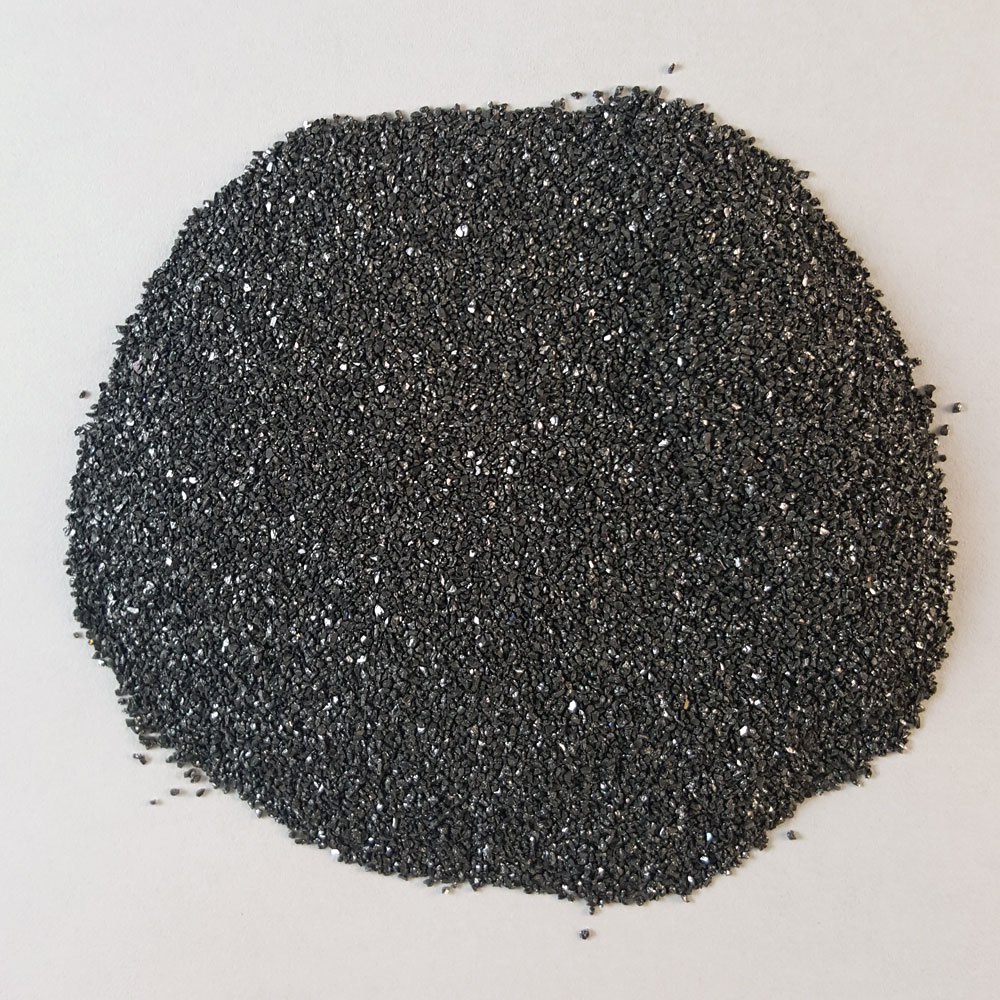
How to Buy Silicon Carbide Blasting Media from China: MOQ, Specs & Supplier Checklist
A complete buyer’s framework for international procurement of SiC abrasive blasting media from Chinese manufacturers — quality specifications, supplier evaluation, MOQ structures, packaging options, logistics timelines, and red flags to avoid.
SECTION 01Why Source Silicon Carbide Blasting Media from China?
China produces more than 80% of the world’s silicon carbide — a market dominance that is structural rather than simply a function of low labor cost. Three factors make China the natural global production center for SiC abrasives:
Raw Material Abundance
China’s Gansu, Ningxia, Qinghai, and Xinjiang provinces contain the world’s largest combined reserves of high-purity silica sand and accessible petroleum coke — the two primary feedstocks for the Acheson SiC synthesis process. Proximity of raw materials to production facilities eliminates a major cost and supply chain risk factor that affects non-Chinese producers.
Low-Cost Industrial Electricity
The Acheson process is extraordinarily energy-intensive — producing 1 metric ton of SiC requires approximately 6,000–8,000 kWh of electricity. China’s northwestern provinces (where most SiC production is concentrated) benefit from abundant hydroelectric and coal-fired power at industrial electricity rates significantly below European, North American, or Japanese rates — a cost advantage that cannot be replicated by production in higher-cost energy markets.
Accumulated Manufacturing Expertise
Decades of scale production have created a deep ecosystem of SiC smelters, downstream processors, quality testing infrastructure, and logistics networks that enable cost-competitive production across the full grit range — from macro grits for industrial blasting to ultra-fine micro grits for semiconductor lapping. No other country has replicated this integrated ecosystem at comparable scale.
For international buyers, sourcing SiC directly from a verified Chinese manufacturer — rather than through European or North American distributors who import and resell Chinese SiC — typically reduces total landed cost by 30–50% while maintaining equivalent or higher product quality from reputable suppliers.
SECTION 02Key Specifications to Define Before Ordering
A complete SiC purchase specification should define the following parameters. Purchasing without specifying all relevant parameters leaves the supplier free to supply to their own default specifications, which may not match your process requirements.
- SiC Grade: Black (standard) or Green (high-purity). State explicitly — never assume default.
- Grit Size: Specific grit number AND the standard (FEPA, ANSI, or JIS). Example: “FEPA F120” not just “#120”.
- SiC Content Minimum: Typical ≥97.0% for Black, ≥99.0% for Green. State the minimum acceptable value.
- Fe₂O₃ Maximum: Specify max allowable iron oxide content. Standard Black SiC: ≤0.3%. Green SiC: ≤0.08%.
- Free SiO₂ Maximum: ≤0.3% for standard blasting grades; ≤0.15% for Green SiC.
- Free Carbon Maximum: ≤0.3% standard; ≤0.1% for precision applications.
- Moisture Content Maximum: ≤0.5% LOD at 110°C.
- Magnetic Content Maximum: Specify for titanium and semiconductor applications (typically ≤0.1%).
- Packaging: 25 kg bags, 50 kg bags, or 1,000 kg FIBCs. State inner liner requirement (PE liner for moisture protection).
- QC Documentation: Specify required documents — CoC, Chemical Analysis Report, Sieve Analysis, Lot Traceability Number.
- Quantity: Total volume in metric tons. State if quantity is estimated and whether partial shipment is acceptable.
SECTION 03Purity Standards Reference Table
| Parameter | Black SiC (Standard) | Black SiC (Premium) | Green SiC (Standard) | Green SiC (Semiconductor) |
|---|---|---|---|---|
| SiC Content (%) | ≥ 97.0 | ≥ 98.0 | ≥ 99.0 | ≥ 99.5 |
| Fe₂O₃ (%) | ≤ 0.50 | ≤ 0.30 | ≤ 0.10 | ≤ 0.05 |
| Free SiO₂ (%) | ≤ 0.40 | ≤ 0.30 | ≤ 0.20 | ≤ 0.10 |
| Free Carbon (%) | ≤ 0.40 | ≤ 0.30 | ≤ 0.15 | ≤ 0.05 |
| Moisture (%) | ≤ 0.50 | ≤ 0.50 | ≤ 0.30 | ≤ 0.20 |
| Typical Applications | General industrial blasting, stone, glass etching | Marine, structural steel, general precision prep | Aerospace (non-Ti), ceramics, glass precision | Semiconductor, SiC power devices, optical |
SECTION 04Specifying Grit Standard: FEPA, ANSI, or JIS
This is the most commonly overlooked specification in international SiC procurement. The same grit number (#60, #120, etc.) means a different physical particle size under FEPA, ANSI, and JIS standards — particularly in the fine and micro grit ranges. Ordering “#180 SiC” without specifying the standard may result in receiving a particle size up to 15–20% different from your process requirement.
| Standard | Common In | When to Specify |
|---|---|---|
| FEPA | Europe, China (export default), most of Asia | Default for most international orders from China |
| ANSI B74.12 | USA, Canada | Orders destined for North American end-use or North American-specified processes |
| JIS R6001 | Japan, South Korea | Orders for Japanese or Korean customers or JIS-specified processes |
When in doubt, specify FEPA — it is the dominant export standard used by Chinese SiC manufacturers and is accepted as the reference standard in most international process specifications outside North America and Japan. Jiangsu Henglihong Technology Co., Ltd. supplies to all three standards; specify your requirement clearly in the purchase inquiry.
SECTION 05Minimum Order Quantities and Volume Tiers
| Order Type | Typical MOQ | Pricing | Lead Time | Best For |
|---|---|---|---|---|
| Sample | 0.5–5 kg | At cost + freight | 3–7 days (air) | Quality evaluation before commercial order |
| Trial order | 1–2 MT | Above standard pricing | 15–25 days (sea) | First commercial order; establishing supplier relationship |
| Standard order | 5–10 MT | Standard pricing | 15–30 days (sea) | Regular replenishment, one grit size / grade |
| Full FCL (20ft) | ~18–20 MT (bags) | Best unit pricing | 15–25 days (sea) | High-volume single SKU; most cost-efficient |
| Full FCL (40ft) | ~22–25 MT (bags) | Best unit pricing | 15–25 days (sea) | Highest volume; mixed grits possible in one container |
Multi-grit consolidation: If you require multiple grit sizes (e.g., #60, #120, and #220), these can often be consolidated into a single container shipment, reducing per-unit freight cost significantly compared to individual shipments. Specify all required grits and quantities in your initial inquiry — consolidation availability depends on current stock levels.
SECTION 06Packaging Options
| Package Type | Net Weight | Inner Liner | Palletization | Best For |
|---|---|---|---|---|
| 25 kg multi-layer paper bag | 25 kg | PE inner liner (standard) | 40 bags/pallet (1 MT) | Most applications; easy handling; industry standard |
| 50 kg woven PP bag | 50 kg | PE inner liner available | 20 bags/pallet (1 MT) | Reduced bag count for high-volume handling |
| 500 kg FIBC (super sack) | 500 kg | PE inner liner standard | Single unit + pallet | Forklift-equipped facilities; reduced packaging waste |
| 1,000 kg FIBC (super sack) | 1,000 kg | PE inner liner standard | Single unit + pallet | Maximum volume efficiency; requires forklift |
| Bulk container (loose) | Container capacity | N/A | N/A (tipping unload) | Very large volume; requires tip-discharge infrastructure |
Packaging recommendation for moisture-sensitive applications: Always specify PE inner liner for 25 kg and 50 kg bags when shipping SiC to humid destinations (Southeast Asia, South America, coastal regions). SiC that absorbs moisture during transit will clump in hoppers and cause inconsistent media flow. FIBC bags inherently include a PE liner as standard — confirm with supplier if in doubt.
SECTION 07Logistics and Lead Times
| Destination | Port | Transit Time (Sea) | Shipping Mode Notes |
|---|---|---|---|
| Western Europe | Rotterdam, Antwerp, Hamburg | 18–25 days | Via Suez Canal; direct services from Shanghai/Ningbo |
| UK | Felixstowe, Southampton | 20–28 days | Via Suez; transshipment from major EU hub possible |
| US East Coast | New York, Savannah, Charleston | 22–30 days | Via Panama Canal; direct or via transshipment |
| US West Coast | Los Angeles, Long Beach, Seattle | 14–20 days | Direct transpacific; fastest US option |
| Canada (East) | Montreal, Halifax | 24–32 days | Via Panama; may route through US East Coast |
| Southeast Asia | Singapore, Bangkok, Jakarta | 7–14 days | Short-haul; frequent sailings |
| Australia | Melbourne, Sydney, Brisbane | 15–22 days | Direct services or via Singapore hub |
| Middle East | Jebel Ali (Dubai), Dammam | 14–22 days | Via Suez; direct and feeder services available |
| South America (East) | Santos, Buenos Aires | 30–40 days | Via Panama or Cape of Good Hope routing |
Production lead time (from purchase order confirmation to container loading) is typically 7–14 days for in-stock grit sizes. For custom or less common grit sizes requiring production scheduling, allow 3–4 additional weeks. Total procurement lead time from PO to delivery at destination port: allow 35–55 days for most destinations, plus local customs clearance and inland transport time.
SECTION 08Supplier Evaluation Framework
The quality of silicon carbide blasting media from Chinese suppliers varies significantly. The following checklist helps evaluate whether a potential supplier has genuine manufacturing capability and quality management infrastructure versus acting as a trading company reselling third-party material without quality control.
- Factory verification: Can the supplier provide factory address, business license, and production capacity documentation? A genuine manufacturer will freely provide these; a trading company may be evasive.
- QC lab capability: Does the supplier have an in-house QC laboratory with XRF chemical analysis equipment and sieve analysis capability? Request a photo of the lab and ask which tests are performed in-house vs. outsourced.
- Lot traceability: Can the supplier trace any shipment lot back to a specific production batch and furnace run? Ask them to demonstrate their lot numbering system.
- Historical test data: Request 3–5 recent Chemical Analysis Reports and Sieve Analysis Reports for the specific grit and grade you need. Review the data for consistency and conformance to specification.
- Reference customers: Can the supplier provide contact references from international customers (outside China) who have purchased the same product? A reputable export manufacturer will have established international customer relationships.
- Sample process: Is the supplier willing to provide a calibrated, representative sample at cost before commercial order? Suppliers who refuse samples or require large minimum sample purchases warrant additional scrutiny.
- Communication responsiveness: Does the supplier respond within 24–48 hours with substantive technical answers? Poor communication pre-contract often predicts poor issue resolution post-shipment.
SECTION 09Red Flags to Avoid
- No lot-level QC documentation: Suppliers offering only generic, undated product specification sheets (not lot-specific test reports) cannot demonstrate that the product you receive was actually tested.
- Price significantly below market: SiC production costs are dominated by electricity. A price more than 20–25% below established market benchmarks typically indicates lower-grade raw materials, inadequate classification, or adulteration (mixing SiC with slag or lower-grade abrasive).
- Unable to confirm grit standard: Suppliers who cannot clearly state whether their product conforms to FEPA, ANSI, or JIS grit classification are likely classifying product to their own internal standards — which may not match your process requirements.
- No physical factory or production evidence: Trading companies reselling SiC from multiple unverified sources cannot guarantee batch-to-batch consistency. Insist on factory verification.
- Resistance to sample requests: Legitimate manufacturers of quality SiC are confident in their product and willing to provide samples. Resistance to sampling often indicates product quality uncertainty.
- Vague responses to specific technical questions: A genuine SiC manufacturer’s technical team can answer specific questions about Acheson furnace parameters, crystal zone origin of black vs. green SiC, or specific test methods used for chemical analysis. Trading companies typically cannot.
SECTION 10Payment Terms
Standard payment terms in Chinese SiC export trade include:
| Payment Term | Structure | Risk Level | Common Scenario |
|---|---|---|---|
| T/T (Telegraphic Transfer) | 30–50% deposit + balance before shipment or against B/L copy | Medium (buyer risk on deposit) | Most common for established relationships |
| L/C (Letter of Credit) | Sight L/C or usance L/C via international bank | Low (bank guarantee) | New relationships; large orders; buyer preference for security |
| D/P (Documents Against Payment) | Shipping documents released against payment | Medium | Established trade relationships |
| 100% T/T in advance | Full payment before production | Highest buyer risk | Small trial/sample orders only — never for large commercial orders |
For first-time orders with a new supplier, Letter of Credit (L/C) provides the best payment security — the bank releases funds only against compliant shipping documents (Bill of Lading, Certificate of Origin, Commercial Invoice, Packing List, QC documents). For established supplier relationships, T/T with 30% deposit and 70% balance against B/L copy is the most common and efficient structure.
SECTION 11Requesting Samples Effectively
A well-structured sample request saves time and prevents misalignment between sample and production quality. When requesting a SiC sample from Jiangsu Henglihong Technology Co., Ltd. or any Chinese supplier, specify:
- Exact grit size and standard (e.g., “Green SiC FEPA F150”)
- Required quantity (typically 0.5–2 kg for blasting trials; 50–200 g for chemical/sieve analysis)
- Documents to accompany sample: Chemical Analysis Report and Sieve Analysis are minimum; request from the same production lot as the sample
- Whether the sample is representative of current production stock or a specially prepared quality lot — the former is preferred for genuine evaluation
- Your evaluation criteria: what tests you will perform and what acceptance thresholds apply
- Your intended commercial volume if the sample passes — helps the supplier understand the business context and prioritize sample processing accordingly
SECTION 12FAQ
SECTION 13Related Guides
Ready to Source SiC from Jiangsu Henglihong?
We offer factory-direct pricing, full lot-level QC documentation, flexible packaging, and competitive ocean freight from Jiangsu/Shanghai ports to all major global destinations. Contact us with your grit, grade, volume, and destination — we respond within 24 hours with a detailed quotation.
Request a Quotation →Filters