Abrasive Blasting 316L Stainless Steel 3D Printed Parts: Finishing for Passivation and Quality Inspection
316L stainless steel is one of the most widely used alloys in metal AM, found in medical devices, surgical instruments, fluid handling components, food-processing equipment, and chemical plant hardware. Its combination of high corrosion resistance, good mechanical properties, and regulatory acceptance (ASTM F139 for surgical implants, FDA 21 CFR for food contact) makes it the material of choice where both structural performance and chemical resistance are required. Abrasive blasting is a mandatory step in the 316L AM post-processing workflow — essential for removing the non-uniform as-built oxide layer, improving surface roughness, and preparing the surface for passivation that restores and enhances the passive chromium oxide layer that gives 316L its corrosion resistance. This guide covers the complete glass bead blasting protocol for 316L AM parts, including integration with passivation, application-specific requirements, and quality inspection.
1. 316L Stainless Steel in Metal AM
316L stainless steel (UNS S31603, 1.4404) is an austenitic chromium-nickel-molybdenum alloy containing approximately 16–18% Cr, 10–14% Ni, 2–3% Mo, and ≤0.03% carbon. The molybdenum content significantly improves resistance to chloride pitting and crevice corrosion compared to 304/304L stainless — critical for applications in marine, medical, and chemical environments. The “L” (low carbon) designation prevents chromium carbide precipitation at grain boundaries during welding or thermal processing, maintaining corrosion resistance in heat-affected zones.
In SLM/DMLS, 316L is processed from gas-atomised powder with 15–45 µm particle size. As-built parts achieve relative density >99.5% and mechanical properties comparable to wrought annealed 316L (UTS 580–670 MPa, yield strength 440–530 MPa, elongation 25–45%). The fine columnar microstructure from rapid solidification gives SLM 316L somewhat higher strength than annealed wrought at the cost of reduced ductility, which can be restored by post-build solution annealing at 1050–1150°C.
2. As-Built Surface Condition of SLM 316L
The as-built SLM 316L surface reflects the layer-by-layer scanning process. Typical as-built Ra values:
- Up-skin (top) surfaces: Ra 8–14 µm — best as-built surface; laser passes directly over
- Vertical side walls: Ra 10–18 µm — layer stepping creates periodic ridges; spatter particles adhere
- Down-skin surfaces: Ra 18–30 µm — highest roughness; partially melted powder bridging
The as-built surface also carries specific chemical features that complicate corrosion resistance and surface treatment:
- Non-uniform surface oxide: The laser process at temperatures above 1400°C in the presence of residual atmospheric oxygen creates a thin (5–50 nm) but non-uniform oxide layer enriched in iron and chromium oxides. This layer is not the controlled passive Cr₂O₃ film that provides 316L’s corrosion resistance — it is an uncontrolled mixed oxide that must be removed and replaced with a properly formed passive layer through the blast-then-passivate sequence.
- Spatter and balling: Laser-induced spatter deposits onto the part surface during scanning, creating metallic droplets of 50–200 µm diameter on side walls and down-skin surfaces. These spatter particles are iron-rich (depleted in chromium compared to the bulk) and represent preferential corrosion initiation sites if not removed.
- Residual powder: Partially melted and adherent powder particles must be removed before passivation, as they present a poorly bonded surface layer that traps passivating acid and reduces the uniformity of the passive layer.
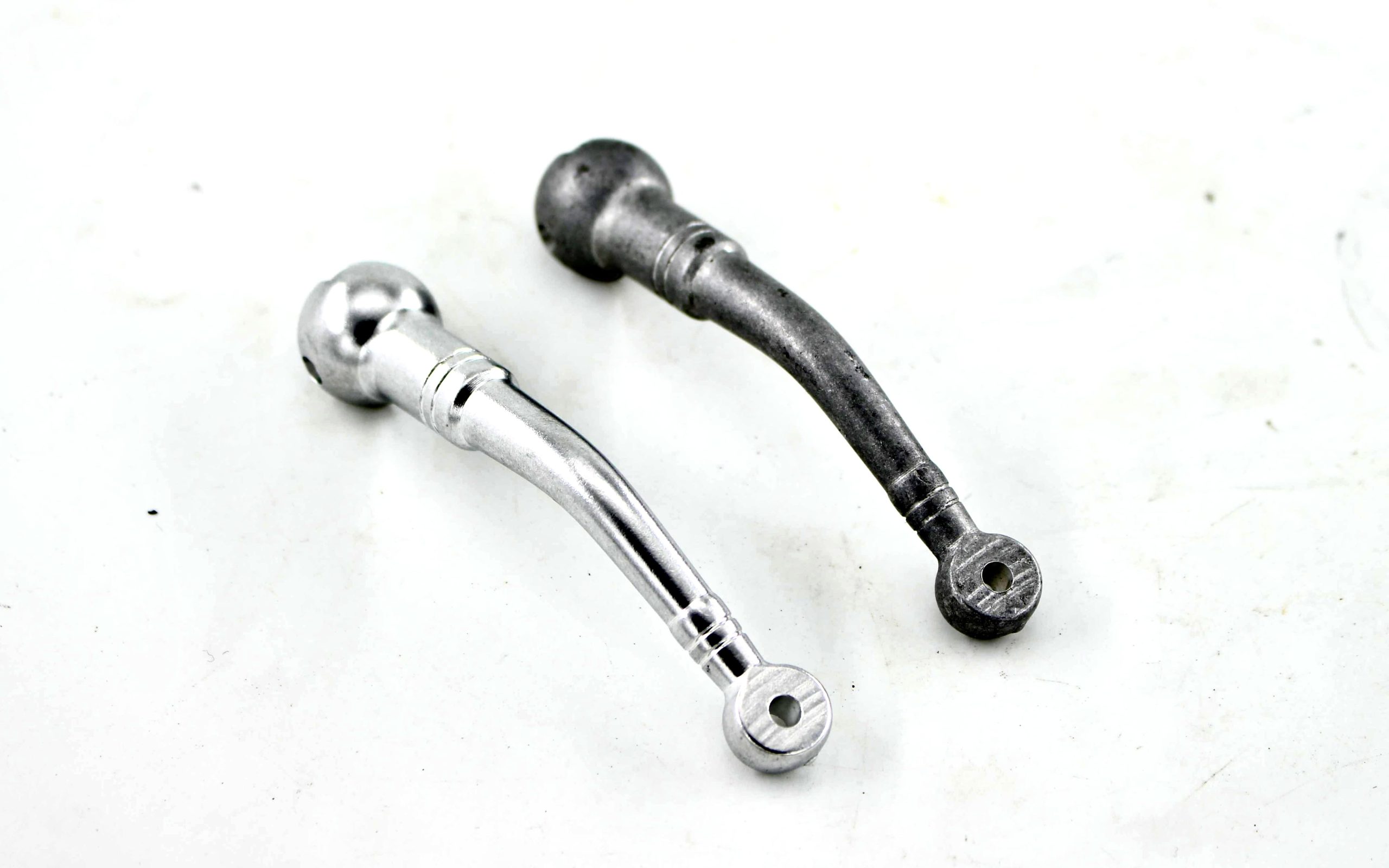
All three of these as-built surface features — non-uniform oxide, spatter, and adherent powder — are effectively removed by glass bead blasting, making blasting an essential prerequisite for proper passivation of SLM 316L parts.
3. The Iron Contamination Risk — Glass Beads Only
The passive layer of stainless steel — the thin (1–3 nm) chromium oxide film that prevents corrosion — is disrupted by embedded iron particles from steel blasting media. When iron-contaminated stainless steel is exposed to a corrosive environment, the iron particles oxidise (rust) preferentially, creating orange-brown surface discolouration and initiating pitting corrosion sites in the surrounding stainless matrix. This is detectable on bright blasted surfaces even in normal ambient humidity.
For medical-grade 316L parts, iron contamination detected by ferroxyl test (any blue coloration) is a mandatory non-conformance requiring the part to be re-cleaned, re-blasted with confirmed iron-free glass beads, and re-tested. For food-contact 316L parts, iron contamination creates hygiene and regulatory compliance concerns. For chemical equipment 316L, iron contamination compromises the corrosion resistance in aggressive environments.
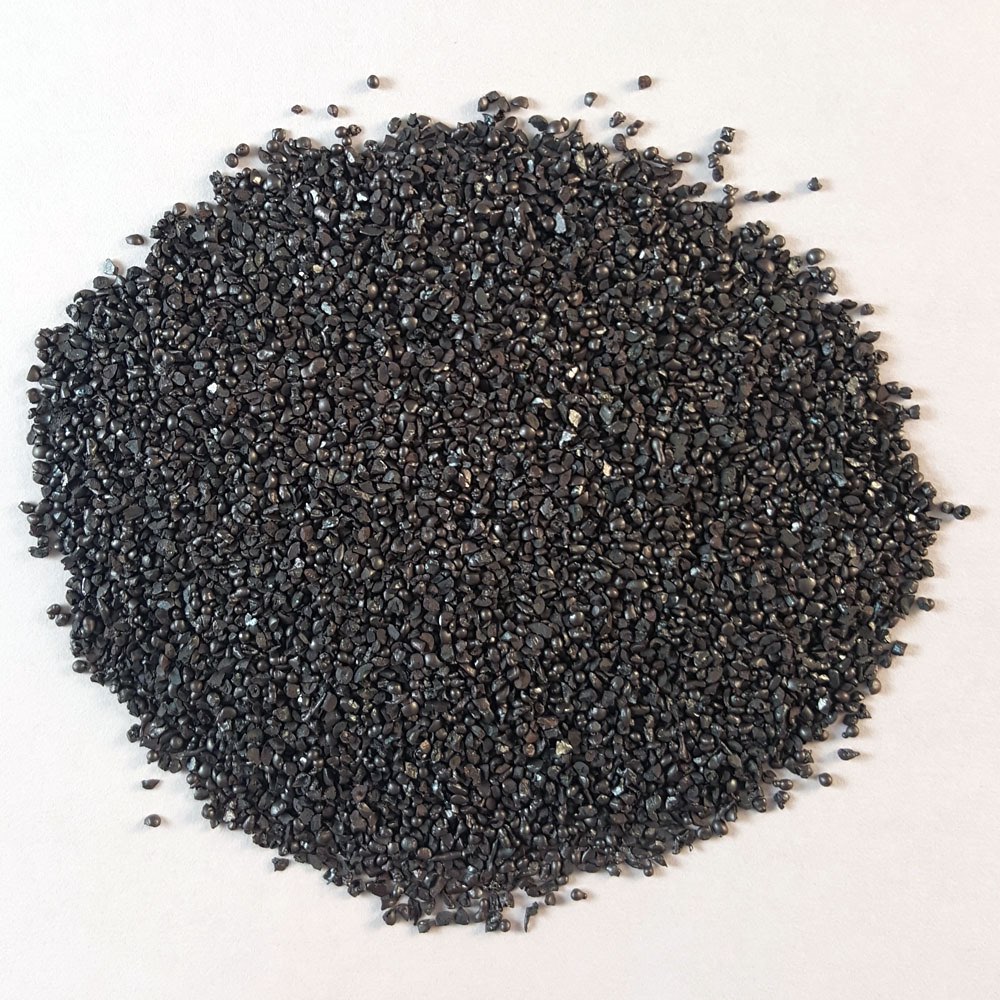
The only acceptable blasting media for 316L stainless AM parts are glass beads and, where required, fine aluminum oxide grit (which is iron-free). Steel shot and steel grit are categorically excluded. Document the glass bead batch number and supplier certificate in the part processing record for regulated applications.
4. Glass Bead Blasting Protocol for 316L
- Confirm media. Verify glass beads are from a certified clean batch. Check for any steel media contamination in the blast cabinet — particularly if the cabinet has been used for steel or carbon steel parts. Flush the cabinet and media circuit before loading glass beads for stainless steel operations.
- Set parameters. Glass beads 100–200 mesh; pressure 50–70 psi; standoff 8–12 inches; angle 45–75°. Stiffer 316L (HV ~200) tolerates higher blast pressure than aluminum — parameters are less restrictive than for AlSi10Mg.
- Full coverage blast. Multi-axis coverage: up-skin, side walls, down-skin, and support-attachment zones. Side walls and down-skin surfaces require additional dwell time to reach equivalent Ra to up-skin surfaces. Spatter particles on side walls may require multiple passes to fully remove.
- Inspect spatter zones. After the initial blast, visually inspect side walls under raking light for residual spatter particles (appear as shiny raised spots against the matte blast surface). Re-blast at the same parameters until all spatter is removed.
- Blow off with clean dry air. Remove all media thoroughly. For medical parts, follow with ultrasonic cleaning in DI water before passivation.
- Transfer to passivation within 2 hours. The freshly blasted 316L surface is chemically active. Passivation should follow within 2 hours (1 hour in high humidity environments) to ensure the controlled passive layer forms on a clean surface rather than on an adventitiously re-oxidised surface.
5. Integration with Passivation
Passivation of stainless steel parts involves immersion in a controlled acid solution (citric or nitric) that removes free iron from the surface and promotes the formation of a dense, chromium-enriched passive oxide layer. For SLM 316L, the passivation workflow after blasting is:
- Alkaline degreaser clean: 60°C alkaline solution, 5–10 minutes, removes oils and blast media residue. DI water rinse.
- Passivation: ASTM A967 Method A (citric acid 4–10%, 21–49°C, 10–30 minutes) or Method C1 (HNO₃ 20–25%, 49–60°C, 20–30 minutes). DI water rinse after.
- Inspection: Ferroxyl test and water-break test (for cleanliness). Dry with clean air or nitrogen.
The key advantage of passivating blasted SLM 316L over as-built SLM 316L is the starting surface quality: the blasted surface is free of the non-uniform as-built oxide, spatter, and adherent powder, allowing the passivating acid to act uniformly across the entire surface. Salt spray test results (ASTM B117) consistently show better corrosion resistance for passivated-blasted SLM 316L than for passivated-unblasted SLM 316L.
6. Medical Device Applications
316L stainless steel AM parts in medical device manufacturing are governed by ISO 13485 (quality management for medical devices) and ASTM F139 (316L stainless steel for surgical implants). Key surface finishing requirements for 316L medical AM parts:
- Ferroxyl test mandatory: Every batch of blasted 316L medical parts must be ferroxyl-tested and test results documented in the Device History Record (DHR).
- Traceability: Glass bead batch number, blast cabinet ID, operator qualification, blast parameters, and inspection dates are all required in the DHR.
- Surface roughness for surgical instruments: Typically Ra ≤ 0.8 µm for cutting surfaces, Ra ≤ 3.2 µm for non-contact surfaces. For AM surgical instruments, blasting followed by electropolishing achieves Ra ≤ 0.8 µm.
- Endoscopic instruments: Ra ≤ 0.4 µm on product-contact surfaces; requires multiple post-blast finishing steps.
7. Food and Pharma Applications
316L AM parts for food processing equipment (mixing blades, distribution valves, fill heads) and pharmaceutical manufacturing (vessel internals, filter housings, connectors) require:
- 3-A sanitary standards: Ra ≤ 0.8 µm on product-contact surfaces; no crevices or pits that can harbour bacteria
- EHEDG compliance (EU): Similar Ra requirements; third-party cleanability testing for complex AM geometries
- Surface cleanliness: No residual blast media, no iron contamination, no lubricants or processing aids
For food-contact SLM 316L: blast with glass beads 100–200 mesh at 50–70 psi, then electropolish to Ra ≤ 0.8 µm, then passivate. This three-step sequence (blast + electropolish + passivate) is the standard workflow for food-grade SLM 316L production parts in 2026.
8. Process Parameters and Reference Table
| Application | Media | Mesh | Pressure (psi) | Post-Blast Step | Ra Target |
|---|---|---|---|---|---|
| General industrial 316L | Glass beads | 100–200 | 50–70 | Passivate | 1–4 µm |
| Medical device (non-contact) | Glass beads | 150–200 | 50–65 | Passivate (citric acid) | 1–3.2 µm |
| Medical device (contact) | Glass beads then EP | 150–200 | 50–65 | Electropolish + passivate | ≤0.8 µm |
| Food-contact (3-A) | Glass beads then EP | 150–200 | 50–65 | Electropolish + passivate | ≤0.8 µm |
| Pre-painting / powder coat | Glass beads or fine Al₂O₃ | 100–150 | 55–70 | Conversion coat then coat | 2–5 µm |
| Support zone cleaning | Glass beads (targeted) | 80–120 | 60–70 | Followed by full-part pass | Match surrounding area |
9. Quality Control and Inspection
- Visual uniformity: Uniform matte silver surface across all faces. No shiny patches (unblasted), no orange-brown discolouration (iron contamination or rust), no remaining spatter particles.
- Ferroxyl test: Apply ferroxyl reagent to a representative surface sample. No blue coloration acceptable for medical or food-contact parts. Document result with part serial number, date, and operator.
- Ra measurement: Contact profilometer per ISO 4287, minimum three measurement locations per surface type. For medical and food-contact applications, compare to specification Ra tolerance.
- Water-break test: After passivation, a water drop should sheet uniformly across the surface (hydrophilic) rather than bead up (hydrophobic = contamination present). A water break test confirms the passivated surface is clean and the passive layer has formed correctly.
- Dimensional check: Blasting removes 0.01–0.03 mm per pass on 316L AM surfaces. For precision fits, verify critical dimensions comply with specification after blasting.
For the broader metal AM blasting overview, see: Shot Blasting Metal 3D Printed Parts: SLM, DMLS, and EBM Post-Processing Protocol. For shot peening 316L AM parts for fatigue improvement, see: Shot Peening 3D Printed Metal Parts: Improving Fatigue Life with Compressive Residual Stress.
Frequently Asked Questions
Why is glass-bead blasting preferred over steel media for 316L stainless steel AM parts?
316L stainless steel’s corrosion resistance depends on a passive chromium oxide (Cr₂O₃) surface layer, typically 1–3 nm thick, that reforms spontaneously in air. Steel shot or grit embeds iron particles in the stainless steel surface, creating iron-rich spots that preferentially corrode in the presence of moisture and chlorides, producing visible rust spots and pitting corrosion. The corrosion initiates at the embedded iron particle and spreads laterally under the stainless passive layer. This contamination is detectable by the ferroxyl test (blue stain = iron present) and is a specification failure for medical and food-contact parts. Glass beads are chemically inert and iron-free, producing no contamination of the passive layer. They are the mandatory media for all stainless steel AM blasting operations.
What passivation process is recommended after blasting 316L AM parts?
The two most widely used passivation processes for blasted 316L AM parts are: (1) Citric acid passivation (ASTM A967 Method A): 4–10% citric acid solution at 21–49°C for 10–30 minutes. Preferred for medical devices (no nitric acid, lower hazard, equivalent passivation effectiveness). (2) Nitric acid passivation (ASTM A967 Method C1): 20–25% HNO₃ at 49–60°C for 20–30 minutes. Traditional method, well-characterised for all stainless grades. Both methods are effective on blasted 316L AM surfaces. The blasted surface, free of as-built oxide and contamination, responds uniformly to the passivating acid, forming a thicker and more homogeneous Cr₂O₃ passive layer than the as-built surface. Perform passivation within 2 hours of blasting completion and after the DI water rinse for best results.
Can 316L stainless steel AM parts be electropolished instead of blasted?
Electropolishing (EP) is an electrochemical process that dissolves surface asperities, producing a very smooth, bright surface (Ra 0.1–0.5 µm from a machined starting surface, or Ra 1–4 µm from a blasted SLM starting surface). For 316L AM parts, electropolishing is used for applications requiring Ra below 0.8 µm (pharma product-contact surfaces, medical implants requiring smooth surfaces, precision fluid control components). Blasting typically precedes electropolishing for SLM 316L parts: the blast removes the non-uniform as-built oxide and partially melted powder, bringing the surface to Ra 2–5 µm, which is a better starting condition for EP than the as-built Ra 8–18 µm. Without pre-blast treatment, electropolishing of as-built SLM 316L produces uneven results because the as-built surface has areas of very different current density (smooth top surfaces vs rough side walls with adherent powder).
How does the as-built SLM 316L surface differ from wrought 316L?
As-built SLM 316L differs from wrought 316L in several important ways that affect blasting response: (1) Microstructure: SLM 316L has a fine, elongated columnar grain structure from the rapid solidification, different from the equiaxed grain structure of wrought 316L. This produces higher hardness (approximately 200 HV) than annealed wrought (approximately 180 HV). (2) Surface chemistry: The SLM surface has a non-uniform oxide layer enriched in iron oxides from the laser process atmosphere, distinct from the uniform passive Cr₂O₃ layer on wrought 316L. This oxide must be removed by blasting before passivation. (3) Residual stress: SLM 316L has tensile residual stresses in the surface layer from the thermal cycling of the build process. Bead blasting partially compresses these tensile stresses, which is beneficial for corrosion resistance. (4) Porosity: SLM 316L may contain micro-porosity (0.1–1% by volume) that can be exposed at the surface. Blasting opens these pores, which must be thoroughly cleaned before passivation to prevent acid entrapment in subsequent treatments.
What surface finish is required for food-contact 316L stainless AM parts?
Food-contact stainless steel surfaces are regulated by 3-A Sanitary Standards (US dairy), EHEDG (European hygienic engineering), and FDA 21 CFR 177.2600. The general surface finish requirement for food-contact stainless is Ra ≤ 0.8 µm (sometimes stated as 32 µin Ra) on product-contact surfaces, with no crevices, gaps, or surface features that can harbour bacteria. Bead blasting of SLM 316L achieves Ra 1–4 µm, which is not sufficient to meet the Ra ≤ 0.8 µm food-contact standard on its own. For food-contact AM parts, blasting should be followed by electropolishing, vibratory superfinishing, or mechanical polishing to achieve the required Ra. Blasting serves as the essential intermediate step that normalises the SLM surface for subsequent finishing.
Does the 316L SLM as-built surface need acid etching before passivation?
Acid etching (pickling) removes the surface oxide and heat-tinted layer from stainless steel. For SLM 316L, blasting effectively serves the surface preparation function of acid pickling — it removes the non-uniform as-built oxide and provides a clean metallic surface. Following blasting with passivation (without intermediate acid pickling) is the standard approach for most SLM 316L applications and produces good results. Acid pickling after blasting is an additional step sometimes specified for very heavily oxidised surfaces (parts that went through heat treatment in air, or EBM-produced parts with thicker scale). For standard SLM 316L in argon atmosphere builds, blasting + passivation without intermediate pickling is the accepted workflow per ASTM A380 and ASTM A967.
Source Glass Beads for 316L Stainless Steel AM Blasting
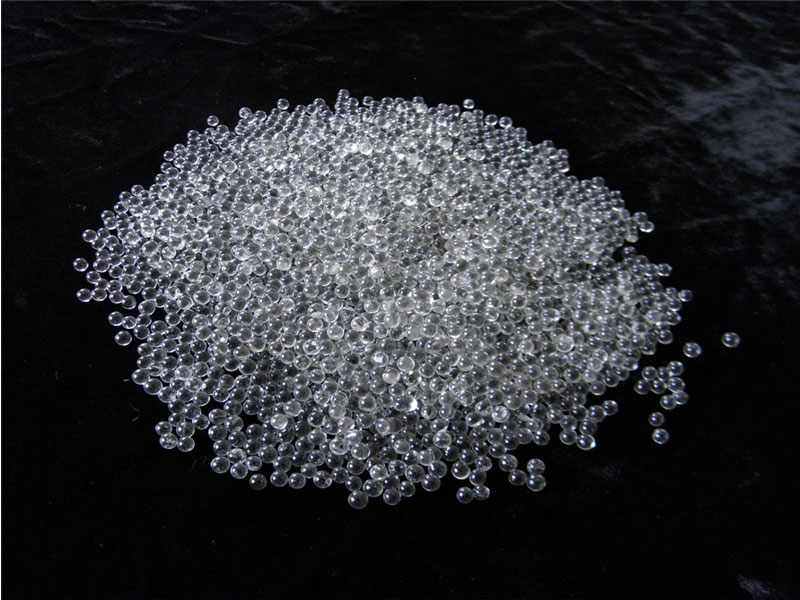
Jiangsu Henglihong Technology Co., Ltd. manufactures glass beads certified iron-free for 316L stainless steel AM post-processing — available with batch certification suitable for ISO 13485 medical device manufacturing records and food-contact processing documentation. Contact our technical team for media specifications.
Contact Our Technical TeamPublished July 2026 by Jiangsu Henglihong Technology Co., Ltd. — Specialists in industrial abrasive blasting media for additive manufacturing post-processing.
Filters