Sand Blasted Concrete: Surface Preparation for Coating & Decorative Exposure
Sand blasting concrete removes laitance, exposes aggregate, and opens the surface for sealers, epoxy coatings, and decorative resin floors. This guide covers exposure levels, equipment, and the surface preparation specifications used in industrial and decorative concrete work.
Why Blast Concrete?
Concrete sandblasting serves two distinct purposes: surface preparation for coatings and resin systems, and decorative aggregate exposure for architectural effect. The process mechanics are the same; the depth and intent differ.
For surface preparation, the goal is removing the weak laitance layer at the concrete surface and opening porosity so coatings can mechanically interlock. For decorative work, the goal is removing enough cement paste to expose the aggregate in a controlled aesthetic pattern.
For the general process framework, see the pillar guide on sand blasted surface.
Three Exposure Levels
Light Blast
Removes only the cement paste and laitance. Surface reads as uniform matte concrete with no aggregate visible. ICRI CSP 3–4. Used for coating prep, epoxy floors.
Medium Blast
Exposes fine aggregate (sand). Surface has visible texture with mineral grain showing. ICRI CSP 5–6. Used for heavy industrial coatings, decorative sandblast.
Heavy Blast
Exposes coarse aggregate (gravel, stone). Architectural decorative effect with full 3D texture. ICRI CSP 7+. Used for decorative architectural panels, exposed aggregate walls.
ICRI CSP Profile Standards
The International Concrete Repair Institute (ICRI) publishes Technical Guideline 310.2R, which defines Concrete Surface Profile (CSP) numbers from CSP 1 (smooth, sealed) through CSP 10 (very rough, hand-chipped). Sandblasting typically produces:
| CSP | Profile | Sandblasting Process |
|---|---|---|
| CSP 3 | Light shotblast | Light sandblast with fine media |
| CSP 4 | Light scarification | Standard light sandblast |
| CSP 5 | Medium shotblast | Medium sandblast, aggregate visible |
| CSP 6 | Medium scarification | Deeper sandblast |
| CSP 7 | Heavy abrasive blast | Heavy sandblast, coarse aggregate exposed |
The required CSP is specified by the coating manufacturer’s data sheet. For example, thin epoxy floor coatings typically require CSP 3–4, high-build polyurethane requires CSP 4–5, and methyl methacrylate (MMA) overlays require CSP 5–6.
Equipment for Concrete Blasting
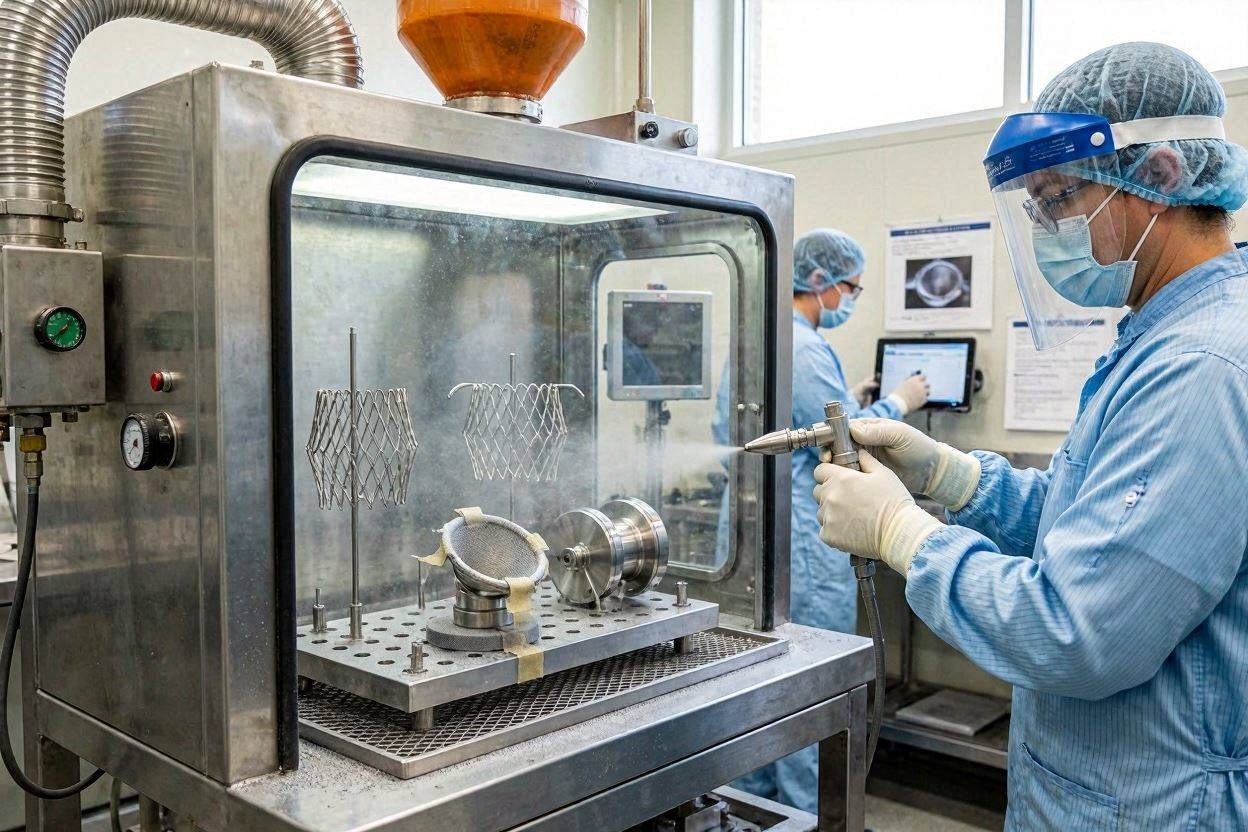
- Dry blasting cabinets — small areas, repair work; require dust collection.
- Open-nozzle dry blasting — outdoor large-area work; high dust output.
- Wet abrasive blasting — water injection suppresses dust; mandatory in many indoor and urban environments.
- Vapor abrasive blasting — fine water mist with abrasive; combines dust suppression with controlled wetness.
- Vacuum blast units — closed-loop systems for indoor work; expensive but eliminate containment.
- Centrifugal wheel walk-behind units — for floor preparation; high productivity on flat surfaces.
Wet methods are increasingly mandated where indoor or urban work creates silica dust hazards. The regulatory context is covered in our reference on the OSHA silica rule — particularly relevant because concrete dust itself contains respirable crystalline silica from the cement and aggregate.
Concrete Coating Preparation Workflow
Decorative Aggregate Exposure
Architectural decorative blasting is a distinct discipline. Common applications:
- Exposed aggregate walls — heavy blasting reveals decorative aggregate (granite, marble, river stone) embedded in the concrete mix.
- Sandblasted concrete countertops — light to medium blasting produces a soft tactile matte finish.
- Architectural facade panels — patterned masking with selective blasting creates relief designs.
- Memorial and signage work — deep stencil-masked blasting produces lettering and imagery on monumental concrete.
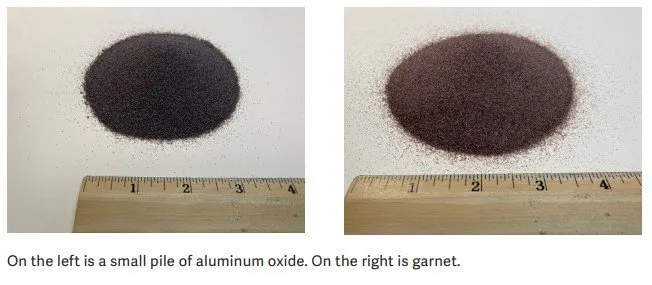
Decorative work typically uses finer media (#36–#80 aluminum oxide) for controlled aesthetic effect, versus the coarser media used for coating prep.
Frequently Asked Questions
Can you sandblast concrete?
Yes. Concrete sandblasting is widely used for surface preparation before coating and for decorative aggregate exposure. The process is similar to steel sandblasting but uses different media and produces different profile characteristics.
What is ICRI CSP?
The Concrete Surface Profile (CSP) numbering system from the International Concrete Repair Institute, ranging from CSP 1 (smooth) to CSP 10 (very rough). Sandblasting typically produces CSP 3–7 depending on aggression.
Do I need to seal sandblasted concrete?
For decorative aesthetic exposure, sealing protects against staining and absorption. For coating preparation, the blasted surface is typically coated within hours and no sealer is used.
Is dust from sandblasting concrete dangerous?
Yes. Concrete dust contains respirable crystalline silica from cement and aggregate, posing a silicosis hazard even when non-silica media is used. Wet blasting or vacuum recovery systems are commonly mandated. Operators require supplied-air respirators.
How long does sandblasted concrete take to cure before coating?
Concrete must be fully cured (28 days minimum) before blasting and coating. The blasted surface should be coated within 24 hours to avoid contamination and carbonation that would reduce coating adhesion.
Request an Abrasive Blasting Media Sample
Jiangsu Henglihong Technology Co., Ltd. supplies certified aluminum oxide, garnet, glass bead, steel grit, and steel shot to global industrial buyers. Request a sample with full batch documentation for technical evaluation.
Request a Sample →Filters