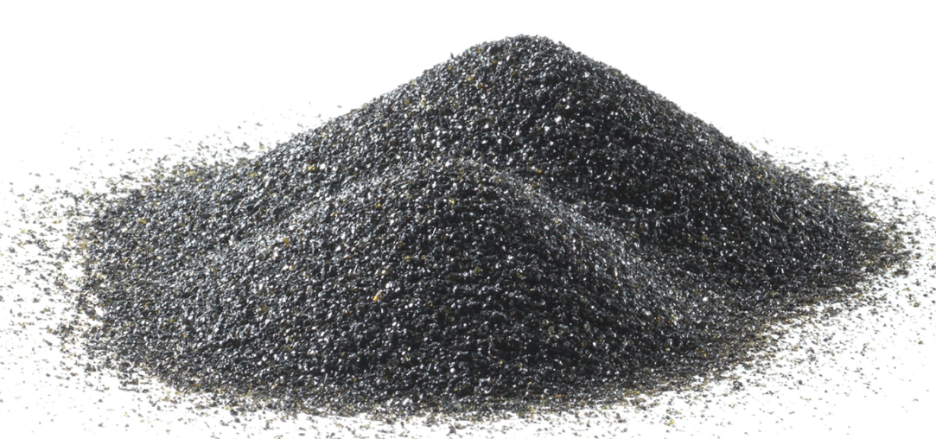
Custom Blasting Media Specifications: Working with Manufacturers on Grit & Grade
How to define, communicate, and qualify custom abrasive blasting media specifications — from initial requirements analysis through RFQ, production trials, qualification testing, and ongoing batch verification for non-standard grit sizes, blended grades, and specialty chemistry.
- When to Request Custom Specifications
- Types of Custom Specifications
- How to Define a Custom Specification
- Writing a PSD Specification
- From RFQ to Production Approval: The Full Process
- Qualification Testing Protocol
- Ongoing Batch Quality Control
- Custom Spec Pricing Considerations
- Working with Jiangsu Henglihong Technology
- Frequently Asked Questions
When to Request Custom Specifications
Standard catalog abrasive blasting media covers the vast majority of industrial applications. But a significant minority of precision engineering operations, specialty process industries, and high-value manufacturing applications have requirements that standard grades cannot satisfy — either because the required particle size falls between standard grades, because a blend of sizes is needed for a specific surface character, or because purity or chemistry requirements exceed standard production specifications.
Custom media specifications become economically justifiable when one or more of the following conditions apply:
- Surface profile specification gap: The standard grit sizes nearest to the requirement consistently produce profiles either marginally too deep or too shallow for the coating or bonding specification. A custom intermediate grit size fills the gap without requiring process parameter workarounds.
- Blend specification: A specific combination of coarse and fine particles achieves a unique surface character — controlled peak height with defined valley depth — that neither component alone can produce.
- Purity requirement: A process specification (e.g., medical device substrate preparation, semiconductor-grade surface treatment) requires purity levels — minimum Al₂O₃ 99.5%, maximum Fe₂O₃ 0.05% — that exceed what standard grades provide.
- OEM or project-specific PSD: A customer or project specification defines the acceptable particle size distribution with tighter tolerance bands than the applicable FEPA or ANSI standard allows.
- Regulatory or certification requirement: A specific industry certification (aerospace OEM approval, military specification) defines media requirements that cannot be met by standard commercially-available grades.
Custom specification production requires dedicated production runs with additional sieving, quality testing, and documentation. This typically increases per-tonne cost by 15–40% compared to standard grades, depending on how different the custom spec is from the manufacturer’s normal production. Custom specs are generally economically justified at annual volumes above 10–20 tonnes for mineral abrasives (aluminum oxide, silicon carbide) and 20–50 tonnes for steel media. Below these thresholds, the premium for custom production often exceeds the value of the specification advantage.
Types of Custom Specifications
| Custom Spec Type | Description | Example Application | Typical Lead Time Premium |
|---|---|---|---|
| Non-standard grit size | Particle size distribution between or outside standard FEPA/ANSI grades | FEPA F54 (between F46 and F60) for a specific profile range | +1–2 weeks |
| Tighter PSD tolerance | Standard grade size range but with narrower ±tolerance on D50 and D90 | Precision optical component surface preparation requiring ±5% PSD control | +1–3 weeks |
| Grit size blend | Controlled mix of two or more standard grades to achieve a defined bimodal or broad PSD | Shot/grit blend for structural steel — 60% G-50 grit + 40% S-330 shot | +0–1 weeks (mixing only) |
| Elevated purity chemistry | Higher minimum purity or lower maximum contaminant than standard grade | White aluminum oxide, min Al₂O₃ 99.8%, max Fe₂O₃ 0.05% for medical device prep | +2–4 weeks |
| Custom packaging configuration | Non-standard packaging size, labeling, or identification marking | Custom 15 kg bags with customer product code and barcode for automated inventory | +1–2 weeks |
| Proprietary specification | Full OEM/project-defined specification with customer-controlled test methods | Aerospace OEM-approved media per customer’s internal material spec number | +4–8 weeks (full qualification) |
How to Define a Custom Specification
A well-defined custom specification document contains five elements: chemistry requirements, particle size distribution requirements, physical property requirements, quality testing requirements, and approval/traceability requirements. Each element must be specified with both a nominal target value and acceptance tolerance limits — without tolerance limits, a specification is not enforceable.
Chemistry Specification
For aluminum oxide: minimum Al₂O₃ content (%), maximum Fe₂O₃ content (%), maximum SiO₂ content (%), maximum moisture (%), and any other specific elemental limits. For silicon carbide: minimum SiC (%), maximum free silicon, maximum free carbon. For glass beads: confirm lead-free status and any regulated element limits (e.g., no added heavy metals). For steel media: carbon content range, manganese range, hardness (HRC), and any alloying element requirements.
Physical Property Requirements
Hardness (Mohs or Vickers/Knoop), bulk density (g/cm³ or kg/m³), shape (sphericity for glass beads — e.g., minimum 90% intact spheres per MIL-G-9954A), and any friability index requirements if media durability under repeated cycling is specified.
Writing a Particle Size Distribution (PSD) Specification
The PSD specification is the most technically complex element of a custom media specification. It defines the acceptable range of particle sizes in the product and must be expressed in a form that a manufacturer can test against using calibrated sieves per the applicable standard.
A complete PSD specification for custom media should include:
- Applicable sieve series: Specify the national or international standard governing the sieve sizes used (ISO 3310-1 / ASTM E11 / JIS Z8801).
- Sieve sizes and retention limits: For each sieve in the test series, specify the minimum and maximum % retained (by mass). This defines the shape and width of the particle size distribution curve.
- D50 (median particle size): The particle size at which 50% of the sample (by mass) passes through. Usually specified as a target value ± tolerance (e.g., 300 µm ± 25 µm).
- D10 and D90: The particle sizes at which 10% and 90% of the sample passes, defining the distribution width. Tighter D10/D90 tolerances produce more consistent blasting results but require more precise production control.
- Maximum oversize: The maximum particle size permitted in the product — anything above this is rejected. Critical for preventing damage to precision surfaces by occasional oversized particles.
- Maximum fines: The maximum percentage of particles below a defined fine-end cutoff — excessive fines reduce blasting efficiency and increase dust generation.
Chemistry: Al₂O₃ ≥ 95.0%, Fe₂O₃ ≤ 1.5%, SiO₂ ≤ 1.0%, moisture ≤ 0.1%
Sieve analysis (ISO 3310-1):
— 600 µm sieve: 0% retained (no oversize)
— 500 µm sieve: max 5% retained
— 425 µm sieve: 10–25% retained
— 355 µm sieve: 40–60% retained (D50 target zone)
— 300 µm sieve: 25–45% retained
— 250 µm sieve: max 10% retained
— Pan (<250 µm): max 5% (fines limit)
D50 target: 340 µm ± 20 µm
Hardness: Mohs 9.0 min (confirm by Knoop test if critical)
From RFQ to Production Approval: The Full Process
Submit Custom Specification RFQ
Provide the manufacturer with your full written specification document, annual volume estimate, delivery schedule, packaging requirement, and required documentation package. Request: technical feasibility confirmation, lead time estimate, unit price indication, and minimum order quantity for custom spec production.
Technical Feasibility Review
The manufacturer evaluates whether the specification is achievable within their production equipment capability. Critical gating points: Is the target PSD achievable with their sieving equipment precision? Does the chemistry specification require raw material selection beyond standard supply? Can the required documentation be generated from their existing testing capability?
Pre-Production Sample Lot
The manufacturer produces a small trial batch (typically 100–500 kg) to the target specification. This lot is tested internally against the specification and a CoA generated. The sample lot is shipped to the customer for independent qualification testing.
Customer Qualification Testing
Customer conducts physical verification: independent sieve analysis, chemical analysis (if required), and most importantly — production blast trials under actual process conditions. Surface profiles, cleanliness grades, and any downstream process metrics (coating adhesion, bond strength) are measured and compared to specification.
Specification Revision (if required)
If qualification testing reveals that the specification needs adjustment — profile too shallow, chemistry marginal, PSD needs recentering — the specification document is revised and a second pre-production sample may be required. This iteration cycle is normal; budget 1–2 iterations for complex specifications.
Production Approval and First Commercial Order
Once the pre-production sample has been qualified, a formal approval document is issued — either a customer-signed approval form or a written purchase order referencing the approved specification document. The manufacturer records the approved specification as a controlled production standard with the customer’s reference number.
Ongoing Batch Verification
For each production batch shipped against the custom specification, the manufacturer generates a batch CoA confirming conformance to all specification parameters. The customer should conduct periodic incoming inspection (frequency depends on criticality and supplier track record) to verify ongoing conformance.
Qualification Testing Protocol
A robust qualification test for custom abrasive blasting media should verify four dimensions of specification conformance:
1. Chemical / Compositional Verification
Independent chemical analysis of the sample lot using XRF (X-ray fluorescence) or wet chemical analysis to confirm major element composition and contaminant levels against specification. For free silica content, XRD (X-ray diffraction) analysis is required for quantitative crystalline silica determination.
2. Particle Size Distribution Verification
Sieve analysis using calibrated test sieves per the applicable standard. Calculate D10, D50, and D90 from the sieve analysis data. Compare against specification limits. This is the most frequently non-conforming parameter in custom media supply — always verify PSD independently rather than relying solely on the manufacturer’s CoA.
3. Blasting Performance Verification
Blast a series of test panels (minimum 3 panels per test condition) using the custom media under production-representative conditions. Measure: surface cleanliness grade (visual assessment per ISO 8501-1), surface profile Ra and Rz (contact profilometer or replica tape), and profile character (visual assessment of peak morphology). Compare against the surface profile target that motivated the custom specification request.
4. Downstream Process Verification
For applications where the blasted surface feeds directly into a critical downstream process (coating application, thermal spray, adhesive bonding), verify that the custom media’s surface preparation outcome meets the downstream process requirement. For coating applications: apply the coating system to qualified test panels and conduct pull-off adhesion testing (ASTM D4541) after the required cure period. For bonding applications: prepare and test bonded joint specimens.
Ongoing Batch Quality Control
Once a custom specification is qualified and in production, maintaining ongoing batch conformance requires a systematic approach. Key elements:
- Batch CoA review: Review the manufacturer’s batch CoA for every delivery against the specification limits. Flag any out-of-specification values immediately — do not use non-conforming media in production without investigation and disposition.
- Periodic independent incoming inspection: Conduct independent sieve analysis and chemical analysis on a frequency basis (e.g., every 5th batch, or every 6 months for low-volume operations). Frequency can be reduced as the supplier’s conformance track record builds.
- Process output monitoring: Monitor surface profile measurements from production blasting as an ongoing indicator of media condition. A shift in profile depth without process parameter changes indicates either media degradation (reclaim circuit issue) or batch-to-batch variation in the incoming media.
Custom Specification Pricing Considerations
Custom specifications command price premiums over standard grades for legitimate reasons: dedicated production runs require manufacturing setup time; tighter PSD control requires more frequent sieve changes and higher material rejection rates; enhanced documentation requires additional testing time. Typical custom spec premiums:
- Non-standard grit size (between standard grades): 10–25% premium over nearest standard grade
- Tighter PSD tolerance (±5% vs standard ±10–15%): 15–35% premium
- Elevated purity chemistry: 20–50% premium depending on purity level required
- Full OEM qualification with third-party testing: 30–60% premium plus qualification cost
These premiums are economically justified when the custom specification delivers measurable downstream value: reduced reject rate, improved coating adhesion performance, eliminated rework costs, or compliance with mandatory project specifications. When evaluating whether to pursue a custom spec, calculate the value of the downstream improvement against the total incremental cost of the custom specification including qualification investment.
Working with Jiangsu Henglihong Technology
Jiangsu Henglihong Technology has developed custom specifications for customers in aerospace MRO, precision engineering, semiconductor manufacturing, and offshore coating projects across more than 30 countries. Our custom specification capabilities cover all four of our product lines — aluminum oxide, silicon carbide, glass beads, and steel shot/grit — with in-house XRF analysis, calibrated sieve analysis lab, and dedicated production scheduling for custom spec orders.
Our standard custom specification development process includes: technical feasibility review within 5 business days of receiving a specification document; pre-production sample lot within 3–5 weeks of feasibility confirmation; and full batch CoA and PSD documentation for every production order against approved custom specifications.
For qualification samples, quality documentation requirements, and volume pricing for custom specifications, contact our technical sales team. For standard bulk ordering information: Bulk Abrasive Blasting Media: Packaging Options, MOQ & Logistics. For supplier evaluation criteria: How to Evaluate & Source Abrasive Blasting Media Suppliers.
Discuss Your Custom Specification with Our Technical Team
Jiangsu Henglihong Technology welcomes custom specification inquiries for aluminum oxide, silicon carbide, glass beads, and steel shot/grit. Provide your target particle size range, chemistry requirements, and application details — our engineers will confirm feasibility and timeline within 5 business days.
Submit a Custom Specification InquiryFrequently Asked Questions
Filters