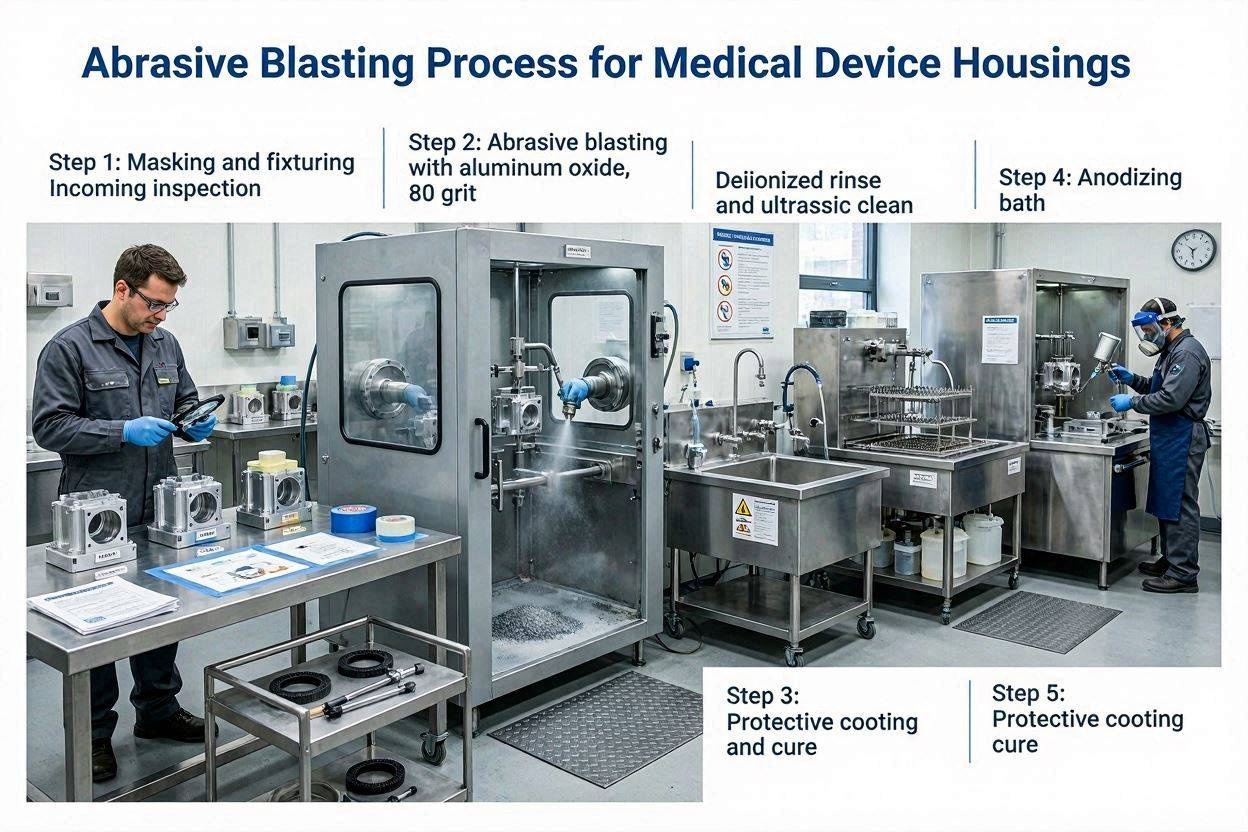
Aluminum Oxide Blast Media Grit Size Guide: Selection, Surface Finish, and Engineering Control
Selecting the correct grit size for aluminum oxide blast media is one of the most critical decisions in any blasting process. Grit size directly determines cutting aggressiveness, surface roughness, coating adhesion performance, substrate damage risk, blasting efficiency, and even long-term operating cost.
This guide is written as an engineering-level reference, not a simplified overview. It is intended for professionals who need to understand not only which grit to choose, but why that choice affects blasting outcomes, surface integrity, and downstream processes such as coating, bonding, or thermal spraying.
Rather than treating grit selection as a rule-of-thumb decision, this article breaks aluminum oxide grit sizing down into measurable variables including particle size distribution, surface roughness (Ra), anchor profile formation, equipment compatibility, and failure modes caused by incorrect grit selection.
1. The Role of Grit Size in Aluminum Oxide Blasting
Grit size defines the average particle size of aluminum oxide blast media. Because aluminum oxide is an angular, high-hardness abrasive, even small changes in grit size can produce significant differences in surface condition and material removal behavior.
At a fundamental level, grit size controls:
- Impact energy concentration per particle
- Cutting edge penetration depth
- Surface profile height and sharpness
- Rate of material removal
- Risk of substrate deformation or erosion
In aluminum oxide blasting, grit size often has a greater influence on surface outcome than blasting pressure alone. Increasing pressure without changing grit typically increases cutting rate, while changing grit size fundamentally alters the surface morphology.
2. Grit Size Standards and Classification Systems
Aluminum oxide grit sizes are classified according to international standards. The most commonly encountered systems include:
- ANSI (American National Standards Institute)
- FEPA (Federation of European Producers of Abrasives)
- JIS (Japanese Industrial Standards)
Although grit numbers may appear similar across systems, particle size ranges are not always identical. For industrial blasting applications, FEPA and ANSI standards are most commonly referenced.
It is important to note that grit size represents a range, not a single particle size. High-quality aluminum oxide blast media is tightly screened to ensure a narrow distribution within that range.
3. Grit Size to Micron and Particle Distribution
Understanding the relationship between grit size and actual particle size (microns) is essential for predicting blasting results.
| Grit Size | Approx. Particle Size (Microns) | Typical Use Case |
|---|---|---|
| 16 | 1000–1400 | Heavy scale and coating removal |
| 24 | 600–850 | Aggressive cleaning of steel |
| 46 | 300–425 | General industrial surface prep |
| 60 | 250–300 | Balanced cutting and control |
| 80 | 180–212 | Coating adhesion preparation |
| 120 | 90–125 | Fine surface finishing |
| 220 | 50–65 | Precision blasting |
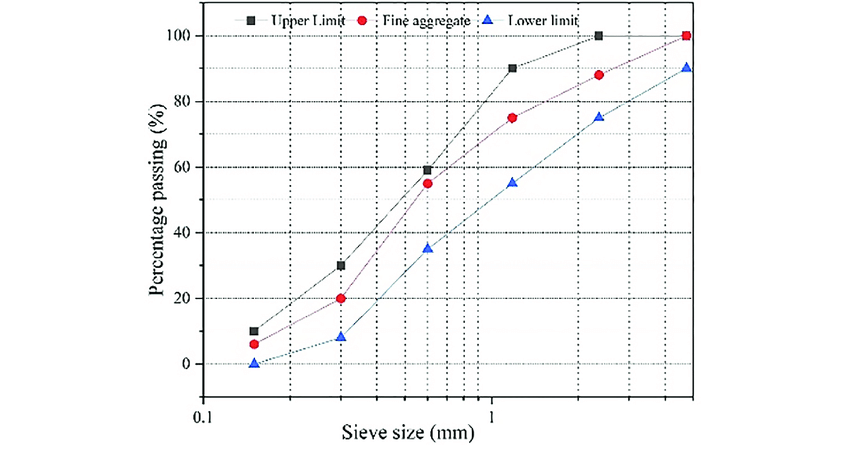
Particle size distribution affects not only surface finish but also dust generation. As aluminum oxide is reused, fracture events gradually shift the effective particle size downward.
4. Grit Size and Surface Roughness (Ra) Control
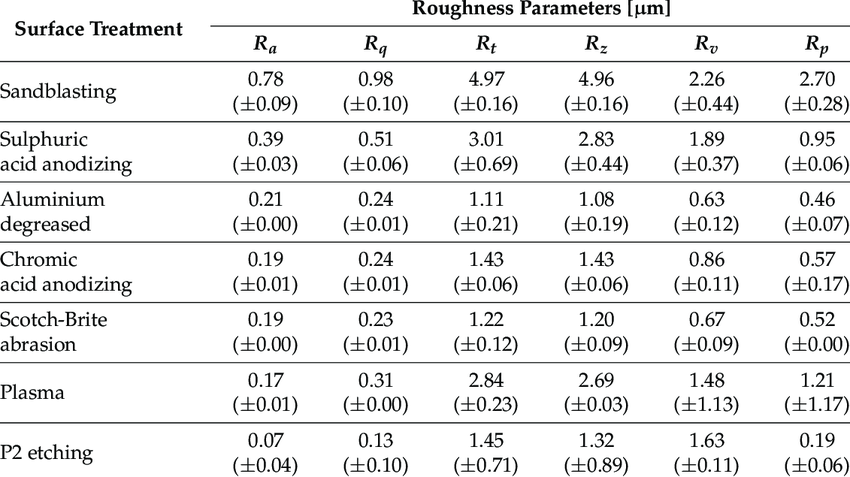
Surface roughness (Ra) is a critical performance parameter for many blasting applications, especially when blasting is used as a surface preparation step prior to coating or bonding.
Aluminum oxide grit size is directly correlated with achievable Ra values:
| Grit Size | Typical Ra Range (µm) | Surface Character |
|---|---|---|
| 24 | 8–12 | Very rough, deep anchor profile |
| 46 | 5–8 | Aggressive industrial profile |
| 80 | 3–5 | Optimal for many coatings |
| 120 | 1.5–3 | Smooth but still mechanically active |
| 220+ | <1.5 | Cosmetic or precision surfaces |
Excessive roughness can lead to coating defects, while insufficient roughness may reduce adhesion strength. Selecting grit size must therefore align with coating manufacturer specifications.
5. Coarse Grit Aluminum Oxide (16–36 Grit)
Coarse grit aluminum oxide is used for maximum material removal. The large particle size and high impact energy create deep penetration and rapid cleaning.
Typical Applications
- Heavy rust and mill scale removal
- Thick coating stripping
- Structural steel surface preparation
Engineering Considerations
While coarse grit delivers high productivity, it also carries significant risk:
- Substrate deformation on thin sections
- Excessive anchor profiles incompatible with fine coatings
- High media consumption
6. Medium Grit Aluminum Oxide (46–80 Grit)
Medium grit aluminum oxide represents the most widely used range in industrial blasting. It offers a balance between cutting power and surface control.
Why 60–80 Grit Is So Common
This range is often specified because it:
- Creates reliable anchor profiles
- Maintains manageable surface roughness
- Works across many substrate types
For most coating preparation tasks, 60 or 80 grit aluminum oxide is considered the default starting point.
7. Fine Grit Aluminum Oxide (100–220 Grit)
Fine grit aluminum oxide is used when surface integrity and appearance are critical.
Applications
- Stainless steel finishing
- Aluminum and non-ferrous metals
- Precision mechanical components
Fine grit reduces the risk of embedding abrasive particles and minimizes surface damage while still providing controlled texturing.
8. Micro Grit Aluminum Oxide (240 Grit and Finer)
Micro grit aluminum oxide is used in specialized applications such as micro-blasting, engraving, and surface activation for micro-bonding.
These grits require precise equipment control and are typically used at lower pressures to prevent over-processing.
9. Grit Selection by Substrate Material
Different materials respond differently to aluminum oxide blasting. Grit size must be matched to substrate hardness and thickness.
- Carbon steel: 46–80 grit
- Stainless steel: 80–120 grit
- Aluminum: 100–220 grit (low pressure)
- Glass: 120+ grit
10. Equipment and Process Effects on Grit Performance
Grit size selection must consider equipment constraints. Coarse grit increases nozzle wear, while fine grit may clog poorly designed systems.
Pressure, angle, and stand-off distance interact with grit size and must be optimized together.
11. Common Grit Selection Mistakes and Failure Modes
- Using coarse grit for thin materials
- Over-blasting instead of optimizing grit
- Ignoring coating adhesion requirements
Most blasting defects are not caused by aluminum oxide itself, but by incorrect grit selection combined with excessive pressure.
12. Practical Grit Selection Workflow
A practical approach to grit selection involves:
- Define substrate material and thickness
- Define required surface roughness or anchor profile
- Select initial grit range
- Adjust pressure and angle
- Validate surface condition
This workflow minimizes trial-and-error and ensures consistent blasting outcomes.
This page is part of our complete technical guide:
Aluminum Oxide Blast Media – Complete Technical Guide.
Filters