Ceramic vs. Plastic vs. Steel Media: Which Mass Finishing Media Is Right for Your Application?
A definitive head-to-head comparison of the three principal mass finishing media types — covering cut rate, workpiece compatibility, surface finish capability, cost of ownership, and the exact scenarios where each media wins.
1. The Three Media Types at a Glance
Mass finishing media falls into three principal families, each with a distinct mechanism of action, a different cost profile, and a set of applications where it performs best. Understanding these three families — and crucially, recognizing that they are not always competitors but often collaborators in multi-stage processes — is the foundation of any effective surface finishing strategy.
The right framing: These three media types are not always competing alternatives — in many production environments, all three are used sequentially on the same part, each performing the stage it is uniquely suited for. Ceramic removes the bulk burrs, plastic refines the surface, and steel burnishes to the final cosmetic finish. Understanding when to use each, and when to combine them, is what separates efficient finishing operations from ones that fight the process.
2. Ceramic Media — The Cut-Rate Leader
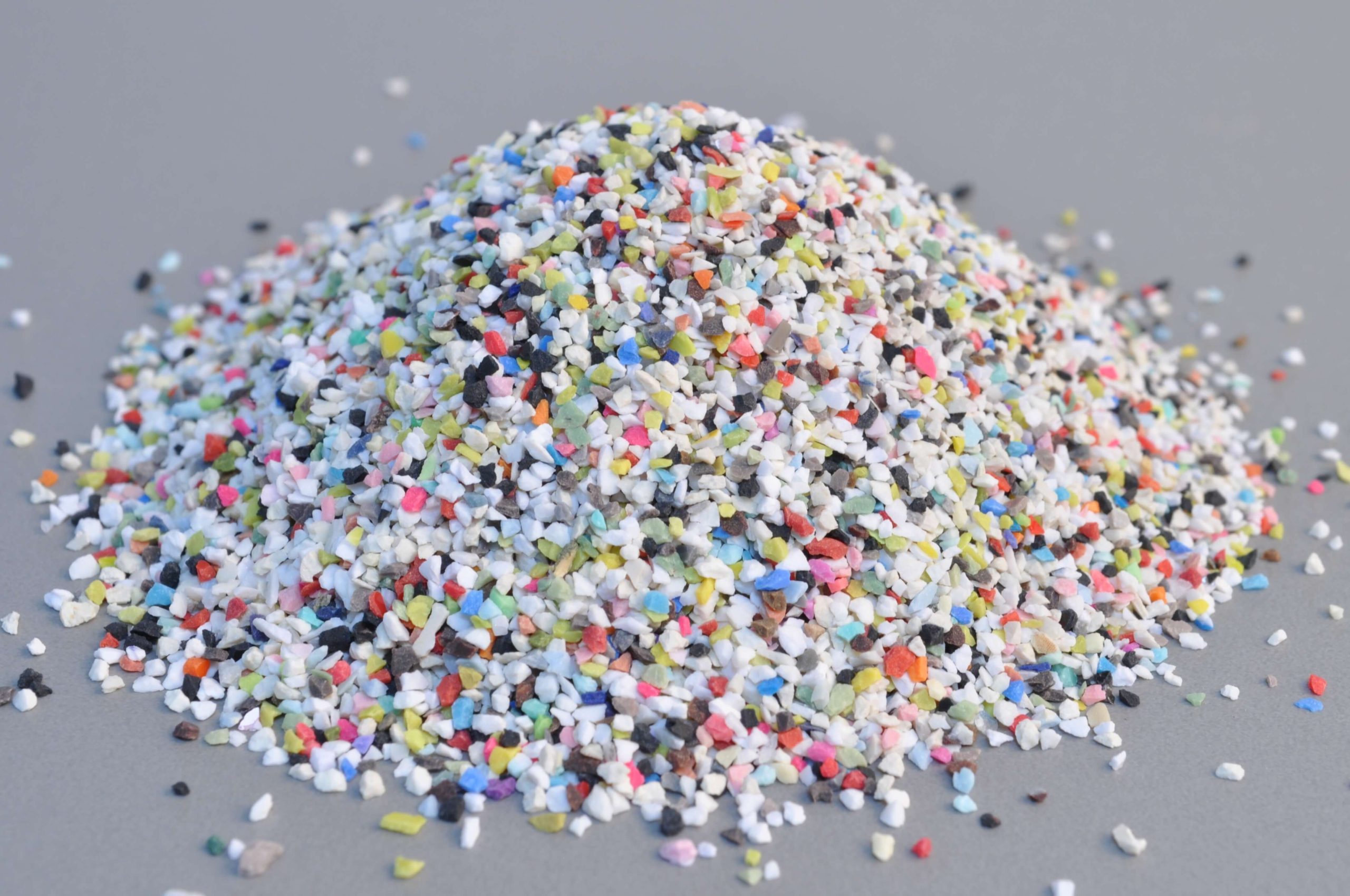
Ceramic mass finishing media consists of abrasive grain — typically aluminum oxide, silicon carbide, or a mixture — bonded within a fired ceramic matrix. The ceramic bond is formulated to wear at a controlled rate, continuously exposing fresh abrasive grain as the outer surface abrades. This self-sharpening mechanism maintains a relatively consistent cut rate throughout the media’s service life, unlike coated abrasives that lose cutting efficiency as the surface layer becomes glazed.
Ceramic media is the dominant choice for deburring because it delivers the highest stock removal rate of any mass finishing media type. Its hardness (Mohs 8.5–9.5 depending on abrasive type) allows it to cut efficiently against steels, stainless steels, titanium alloys, and hardened materials that plastic media cannot effectively abrade. The fired ceramic bond also survives the high pH compounds (pH 8–11) used in steel deburring without significant degradation — an operating condition that would rapidly dissolve a resin-bonded plastic media chip.
The primary limitation of ceramic media against soft non-ferrous metals (aluminum, copper, brass) is surface imprinting: the hard ceramic chip can create micro-impressions or imprint patterns on soft surfaces under high contact pressure. This is mitigated by selecting fine-grit, low-abrasive-content ceramic formulations and reducing machine amplitude. For very soft or cosmetically critical non-ferrous parts, plastic media is the better first choice. For detailed ceramic media selection guidance, see our systematic How to Choose Ceramic Media guide.
📄 Deep Dive: Ceramic Tumbling Media — Shapes, Cut Rates & Machine Compatibility Full technical guide to ceramic finishing chips including machine type comparison and process setup3. Plastic Media — The Gentle Specialist
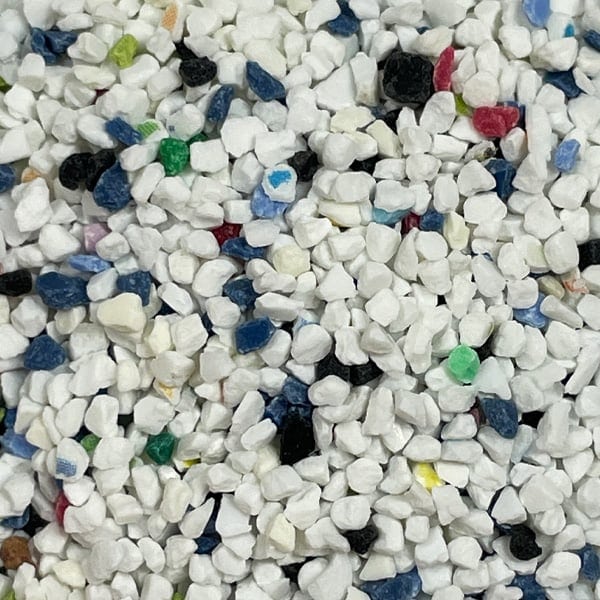
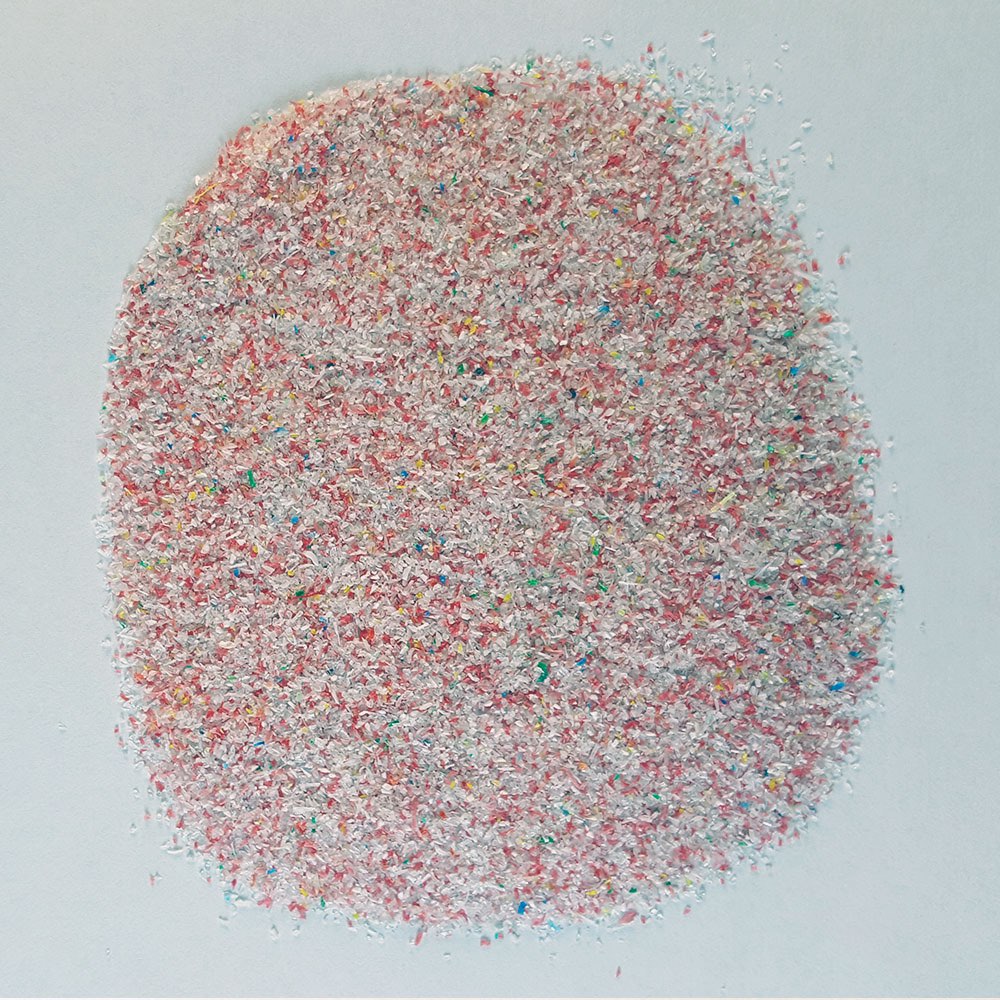
Plastic mass finishing media — also called resin-bonded media or synthetic media — embeds abrasive grain in a polyester, urea-formaldehyde, or melamine resin matrix. Compared to ceramic media, the resin bond is significantly softer and the overall chip density is lower (typically 1.5–2.0 g/cm³ vs. 2.5–3.5 g/cm³ for ceramic finishing chips). This lower density and softer bond translate directly into lower contact pressure per media-workpiece collision — which is both the defining advantage and the defining limitation of plastic media.
The low contact pressure makes plastic media the media of choice for soft metals and cosmetically sensitive surfaces. Aluminum die-castings, zinc pressure castings, copper and brass components, and soft wrought aluminum parts can be finished with plastic media without the imprinting, galling, or micro-fracture damage that harder ceramic chips can cause at the same machine energy level. Plastic media is also the correct choice for plastics and composite workpieces — where any ceramic chip contact would cause surface tearing or fiber pullout.
The trade-off for this gentleness is lower cut rate and shorter media life. Plastic media cannot efficiently remove heavy burrs, casting flash, or laser dross from steel or stainless steel workpieces — the abrasive grain loading and contact force are simply insufficient. Using plastic media for heavy deburring of hard metals results in extremely long cycle times and premature media wear without achieving the required surface outcome.
Plastic Media Grades and Their Applications
Like ceramic media, plastic media is available in multiple abrasive grades from coarse-cut to non-abrasive (plastic burnishing media). The non-abrasive variety — solid resin chips with no abrasive grain — acts similarly to ceramic porcelain media, providing burnishing action on soft metals where the surface is already smooth and only cosmetic brightening is needed.
Plastic media pH sensitivity: Most resin-bonded plastic media is rated for pH 5–9. Operating above pH 9 causes progressive hydrolysis of the resin bond, dramatically accelerating chip wear and producing resin fines that contaminate the workpiece surface. Always verify your compound pH is within the plastic media manufacturer’s rating before using plastic in an alkaline process.
4. Steel Media — The Burnishing Expert
Steel mass finishing media — hardened carbon steel balls, cones, pins, and satellite shapes — contains no abrasive grain whatsoever. Its mechanism is burnishing: the smooth, hard steel surface cold-works the workpiece surface under the contact pressure generated by the machine, plastically deforming the microscopic peaks of surface roughness (asperities) without removing material by cutting. The result is a surface with lower Ra, higher reflectivity, and a layer of compressive residual stress in the near-surface material.
Steel media excels at producing bright, mirror-like cosmetic finishes on metal parts that have already been deburred and pre-finished by ceramic or plastic media. The compressive residual stress it introduces is a significant engineering benefit for fatigue-critical components: compressed surfaces resist crack initiation under cyclic loading, extending fatigue life by 20–50% in some documented cases for spring components and bearing surfaces. This is one reason steel burnishing is specified for springs, fasteners, gears, and other cyclic-load components beyond purely cosmetic motivations.
The critical limitation of steel media is its inability to remove burrs or reduce surface roughness from a rough starting condition. Steel media can reduce an Ra from 0.4 µm to 0.05 µm (a polish), but it cannot reduce an Ra from 1.6 µm to 0.4 µm — that step requires abrasive cutting that only ceramic or plastic media provides. Steel burnishing must always follow an abrasive finishing stage.
A secondary concern with steel media is iron contamination on non-ferrous workpieces. When steel media contacts aluminum, copper, or brass parts, microscopic steel particles transfer to the workpiece surface. These iron particles cause flash rusting or galvanic staining on the non-ferrous surface — visible as brown spots or gray discoloration — that is difficult to remove post-process. For non-ferrous workpieces requiring a burnished finish, use stainless steel media (more expensive) or non-abrasive porcelain ceramic media instead.
5. Master Comparison Table (18 Dimensions)
| Dimension | △ Ceramic | ▱ Plastic | ● Steel |
|---|---|---|---|
| Operating mechanism | Abrasive micro-cutting (grain in ceramic bond) | Gentle abrasive cutting (grain in resin bond) | Cold-work burnishing (no abrasive) |
| Density (g/cm³) | 2.5 – 3.5 (chip) | 1.5 – 2.0 (chip) | 7.5 – 7.8 (steel) |
| Stock removal rate | High | Low – Medium | Zero |
| Ra range achievable (µm) | 0.1 – 3.2 | 0.4 – 1.6 | < 0.1 (bright polish) |
| Can remove heavy burrs? | ✓ Yes — primary strength | ✓ Light burrs only | ✗ No — burnishing only |
| Safe on soft metals (Al, Cu, Zn)? | With care — non-ferrous-safe grade needed; risk of imprinting at high energy | ✓ Yes — preferred choice for soft metals | ✗ Iron transfer causes staining; use SS media |
| Safe on hardened steel (>HRC 45)? | ✓ Yes — with CBF machine | ✗ Insufficient cut rate | ✓ Yes (burnishing only) |
| Safe on plastic / composite parts? | ✗ Typically too aggressive | ✓ Fine grades appropriate | ✗ Impact damage risk |
| Compound pH operating range | 4 – 11 | 5 – 9 (resin-limited) | 7 – 12 |
| Rust inhibition required? | For ferrous parts: yes | For ferrous parts: yes | For ferrous parts: critical (high iron content) |
| Media wear rate | Low – Medium | Medium – High | Very Low (5,000–10,000+ hrs) |
| Contamination introduced | Al or Zr (trace); Fe if standard grade on non-ferrous | Resin residue (minimal) | Fe (significant on non-ferrous); negligible on ferrous |
| Lodging risk in features? | Medium – High (shape-dependent) | Medium (softer — easier extraction if lodged) | Medium (balls: low; pins: higher) |
| Introduces compressive residual stress? | Minimal | Minimal | ✓ Yes — significant benefit for fatigue-critical parts |
| Suitable for barrel tumbler? | ✓ Yes (large sizes) | ✓ Yes | ✓ Yes (balls) |
| Suitable for centrifugal barrel? | ✓ Yes | ✗ Low density — reduced efficiency | ✓ Yes (very efficient — high density) |
| Relative unit cost | Medium (1.0×) | Low – Medium (0.8–1.2×) | Low (0.5–0.8×) — but very long life |
| Cost per part processed | Low – Medium | Medium (higher wear) | Very Low (excellent life) |
6. Selection by Workpiece Material
Workpiece material is the most reliable first filter for narrowing media type selection. The combination of hardness, chemical reactivity, and contamination sensitivity of each material class points clearly toward one media family as the primary choice.
| Workpiece Material | Recommended Primary Media | Acceptable Secondary | Avoid | Key Reason |
|---|---|---|---|---|
| Carbon / alloy steel | Ceramic | Steel (burnishing stage) | Standard ceramic on non-ferrous parts in same batch | Adequate hardness; alkaline compound compatibility |
| Stainless steel (304, 316) | Ceramic | Steel (final burnish) | Plastic (insufficient cut rate for work-hardened SS) | SS work-hardens — only ceramic provides adequate cut |
| Hardened steel (>HRC 45) | Ceramic (CBF) | Steel (burnishing) | Plastic; vibratory ceramic alone | High hardness requires centrifugal barrel G-force |
| Titanium alloys | Ceramic (CBF) | — | Plastic; standard vibratory | High strength; CBF required for efficient cut |
| Aluminum (wrought & die-cast) | Plastic | Non-ferrous-safe ceramic | Standard ceramic (iron staining); steel (iron transfer) | Soft; risk of imprinting with ceramic; iron contamination |
| Copper / brass / bronze | Plastic | Non-ferrous-safe ceramic (fine grade) | Standard ceramic; carbon steel media | Ductile — burrs roll; iron causes galvanic staining |
| Zinc die-cast | Plastic | Non-ferrous-safe ceramic (fine) | Standard ceramic; steel | Very soft and sensitive to imprinting; iron contamination |
| Plastic / composite parts | Plastic (fine grade) | Non-abrasive plastic | Ceramic; steel | Ceramic causes tearing; steel causes impact deformation |
7. Selection by Finishing Objective
When the workpiece material alone does not determine the media choice — for example, when both ceramic and plastic are technically compatible with the workpiece — the finishing objective breaks the tie.
- Heavy burrs or casting flash must be removed rapidly
- Laser-cut dross or oxide scale must be fractured off
- Workpiece is steel, stainless, titanium, or hardened metal
- Target Ra requires significant stock removal (Ra > 0.8 µm incoming → < 0.8 µm target)
- Centrifugal barrel process at high G-force
- High production volume with short cycle time requirement
- Workpiece is aluminum, copper, brass, zinc, or plastic
- Cosmetic surface quality is critical and imprint risk must be minimized
- Thin-wall or delicate parts that cannot withstand ceramic contact pressure
- Light deburring only — no heavy burrs present
- Parts proceed directly to anodizing or plating with strict cleanliness specs
- Previous ceramic stage has removed burrs; refinement of finish is the goal
- Bright, mirror-like cosmetic finish is specified
- Part has already been deburred and pre-finished to Ra ≤ 0.4 µm
- Compressive residual stress is required (fatigue-critical springs, fasteners, gears)
- Long media service life is a priority (minimal ongoing replacement cost)
- Workpiece is ferrous (no iron transfer concern)
- Final stage of a multi-stage process after abrasive media
- Part requires both heavy deburring AND a bright cosmetic finish
- Tight Ra specification that a single media type cannot reach from the incoming condition
- Aerospace or medical parts requiring multi-stage validated finishing sequence
- Surface must meet both dimensional (Ra, edge radius) and visual (bright, uniform) criteria
8. Multi-Stage Processes: Using All Three Together
The highest-quality surface finishing results in industrial manufacturing almost always involve multiple sequential media stages. Each stage is independently optimized for its specific objective, and the combination achieves a surface quality that no single media type could deliver alone. Three common multi-stage process architectures illustrate this:
Architecture 1: Steel Fastener (High-Volume, Fatigue-Critical)
Architecture 2: Aerospace Titanium Component (Precision, Multi-Spec)
Architecture 3: Aluminum Die-Cast Housing (Non-Ferrous, Anodize-Prep)
9. Cost of Ownership Comparison
Unit price comparisons between ceramic, plastic, and steel media mislead more often than they inform, because the three media types wear at dramatically different rates and require different volumes per unit of work accomplished. The relevant metric is always cost per part processed to specification.
| Cost Factor | Ceramic | Plastic | Steel |
|---|---|---|---|
| Typical service life (hours) | 800 – 2,000 | 300 – 800 | 5,000 – 10,000+ |
| Replacement frequency (relative) | Medium | High | Very Low |
| Fines generation | Moderate — screen monthly | High — screen weekly | Very Low — screen quarterly |
| Disposal considerations | Inert ceramic — landfill or recycle | Resin binder — check local regs | Metal recycling value offsets cost |
| Optimal cost scenario | High-volume steel/SS deburring; any heavy burr removal application | Soft metal finishing where imprint risk is the primary concern | Final burnishing stage, any volume; fatigue-critical ferrous parts |
| Worst cost scenario | Over-specified for light finishing where plastic would work; under-specified causing repeated cycles | Used for heavy deburring (extremely long cycles, high wear, poor outcome) | Used as sole media without prior abrasive stage (impossible to remove burrs) |
Steel media’s hidden economics: The combination of very low wear rate, high density (excellent energy efficiency in vibratory machines), and steel scrap recovery value means that steel burnishing media often has the lowest cost per part processed of any media type in high-volume production — despite the fact that it can only be used as the last stage of a process that already includes an abrasive stage. The abrasive stage cost is real; the burnishing stage cost is minimal over the media’s long service life.
10. Frequently Asked Questions
Technically possible but generally not recommended. The density difference between ceramic chips (2.5–3.5 g/cm³) and plastic chips (1.5–2.0 g/cm³) causes them to segregate under vibratory action — the heavier ceramic chips concentrate at the bowl bottom while the lighter plastic chips float toward the surface. This segregation produces inconsistent contact frequency across the part surface. If you need the gentleness of plastic with slightly higher cut rate, specify a higher-abrasive-content plastic grade rather than mixing media types. The mixed approach tends to give you the disadvantages of both rather than the advantages of either.
Hardened carbon steel media contains iron, which transfers to the aluminum surface as microscopic steel particles during the burnishing process. These iron particles form galvanic couples with the aluminum in the presence of moisture, producing rapid localized corrosion visible as brown or rust-colored spots. The phenomenon is particularly visible after the part is rinsed and begins to dry. For aluminum burnishing, specify stainless steel media (which has significantly lower iron transfer due to its chromium passivation layer) or non-abrasive ceramic porcelain media, which introduces no iron contamination at all.
For light burrs on annealed stainless steel, plastic media can achieve acceptable results given adequate cycle time. However, work-hardened stainless steel — which develops at the cut surface during machining — has a surface hardness significantly higher than the annealed base material, and plastic media lacks the contact pressure to efficiently cut through this hardened layer. The practical result is very long cycle times with incomplete burr removal. For stainless steel deburring, ceramic media with a medium to hard bond and pH-neutral to mildly alkaline compound is the reliable choice.
Gear finishing typically requires a two-stage approach. Stage 1 uses ceramic cone-shaped or tri-star media to reach the gear tooth root — the critical stress concentration area where burrs must be completely removed and the edge radius tightly controlled. The cone geometry allows the media to penetrate the tooth valley without lodging between adjacent teeth. Stage 2 uses steel media (balls or satellites) to burnish the tooth flanks to a bright finish and introduce compressive residual stress in the tooth surface, improving contact fatigue resistance. The steel burnishing stage also removes any micro-scoring introduced by the ceramic stage. This ceramic + steel two-stage sequence is standard practice in automotive transmission gear manufacturing.
Jiangsu Henglihong Technology Co., Ltd. specializes in ceramic media — both grinding beads and mass finishing chips — across all material grades, shapes, and sizes, including non-ferrous-safe formulations, non-abrasive porcelain, and specialty silicon carbide. For applications requiring plastic or steel media as part of a multi-stage process, our engineering team can advise on appropriate specifications for those stages as well, even when sourced from other suppliers. Contact us to discuss your complete multi-stage finishing requirement.
Need Help Selecting the Right Media for Your Process?
Whether you need ceramic, a multi-stage strategy, or just want to validate your current specification, the team at Jiangsu Henglihong Technology Co., Ltd. can help — with free samples and process engineering support.
Get a Free Process Recommendation →Filters