Ceramic Grinding Media: Alumina, Zirconia & SiC Beads — Complete Specification & Selection Guide
Technical reference for engineers and procurement teams selecting ceramic grinding beads for ball mills, bead mills, attritors, and sand mills — covering density, wear rate, mill compatibility, and application-specific recommendations.
1. What Is Ceramic Grinding Media?
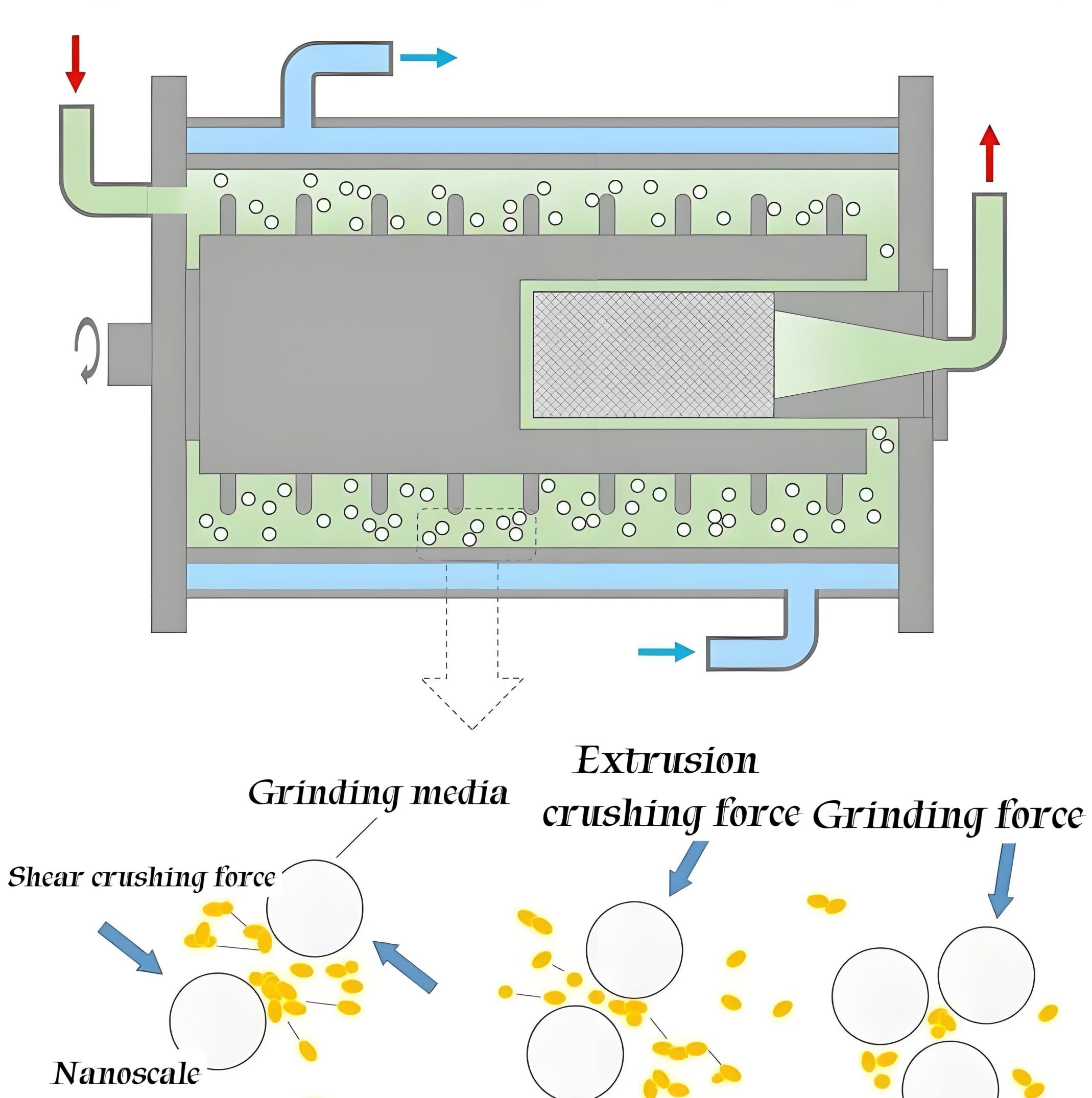
Ceramic grinding media are precisely manufactured, high-density bodies — typically spherical beads or cylinders — made from advanced inorganic ceramic compounds and used inside grinding mills to reduce solid materials to fine or ultra-fine particle sizes. They operate through a combination of impact, compression, and shear forces generated as the media cascade, tumble, or agitate within the mill chamber.
The defining characteristic that separates ceramic grinding media from conventional steel or flint grinding media is its chemical inertness combined with controllable physical properties. Because ceramic beads do not corrode, oxidize, or react with most process chemicals, they can be used in applications where metallic contamination of even a few parts per million would render the final product unusable — pharmaceutical APIs, battery cathode materials, electronic-grade pigments, and food-grade colorants are prime examples.
From standard alumina to high-density yttria-stabilized zirconia — matched to mill energy input.
Harder than most materials being ground, ensuring that the media wears far slower than the feedstock.
Zirconia media delivers sub-3 ppm Zr contamination in validated pharmaceutical and battery applications.
With 0.1 mm zirconia beads in a high-energy bead mill, sub-micron and even nanoscale dispersion is achievable.
If you are new to the broader category and want to understand how grinding media fits into the overall world of ceramic media — including mass finishing media for surface treatment — our complete Ceramic Media guide provides a thorough overview of both product families.
2. How Ceramic Grinding Media Works
The physics of ceramic bead milling is straightforward: the grinding chamber contains a slurry of the material to be processed (suspended in water or solvent) along with a large volumetric charge of ceramic beads. As the mill agitates — whether through rotation, vibration, or a high-speed agitator shaft — the beads are constantly colliding with each other and with the mill wall. Solid particles caught between colliding beads are subjected to compressive and shear stress that exceeds their fracture strength, breaking them into smaller fragments.
Three distinct force mechanisms act simultaneously in bead milling:
- Impact: Direct collision between two beads or between a bead and the mill wall. Dominant in lower-speed mills and with larger bead sizes. Effective for coarse-to-medium grinding.
- Attrition / Shear: Sliding motion between adjacent beads. The primary mechanism in high-speed agitator bead mills. Critical for fine and ultra-fine grinding below 10 µm.
- Compression: Squeeze forces on particles trapped between slowly moving beads. Significant in planetary ball mills and attritors. Important for mechanochemical reactions.
The relative contribution of each mechanism is governed by mill type, bead size, bead density, and rotational speed (expressed as tip speed in m/s for agitator mills). Optimizing this balance for a specific product is the core challenge of grinding media selection.
The filling degree matters: Most bead mills operate optimally at 70–85% bead fill (by mill chamber volume). Too low, and grinding efficiency drops because bead-bead collision frequency falls. Too high, and viscous slurry flow is restricted, causing temperature rise and mechanical overload. Always follow the mill manufacturer’s recommended fill range for your specific equipment.
3. Material Grades: Alumina, Zirconia & Silicon Carbide
The base ceramic material is the primary variable governing grinding efficiency, contamination profile, and total cost of ownership. Three families cover the vast majority of industrial applications. For a broader comparison that also includes vitrified finishing media, refer to our Ceramic Media Materials comparison guide.
3a. Aluminum Oxide (Al₂O₃) Grinding Media
Aluminum oxide — commonly called alumina — is the most widely used ceramic grinding media globally, accounting for an estimated 60–65% of total industrial consumption by volume. It is manufactured in several purity grades, each with meaningfully different performance characteristics:
| Grade | Al₂O₃ Content | Density (g/cm³) | Hardness (HV) | Wear Rate | Typical Use |
|---|---|---|---|---|---|
| Standard Alumina | 92–95% | 3.60–3.68 | 1,100–1,200 | Medium | General industrial milling, ceramics, minerals |
| Medium-High Alumina | 95–99% | 3.68–3.78 | 1,200–1,400 | Low–Medium | Coatings, inks, chemical processing |
| High-Purity Alumina | 99%+ | 3.78–3.90 | 1,400–1,600 | Low | Pharma, food, electronics, low-iron applications |
The key impurity in standard-grade alumina is silica (SiO₂) and minor flux compounds used as sintering aids. At 92–95% purity, these impurities constitute 5–8% of the bead mass and contribute measurably to process contamination over long milling campaigns. For iron-sensitive applications, 99%+ alumina dramatically reduces both total contamination volume and the introduction of any iron-bearing silicate phases.
Alumina grinding media is available in bead diameters from 0.5 mm to 70 mm and as cylinders, satellites (beads with a smaller satellite bead for improved packing and circulation), and irregular shapes for specific mill types. Its moderate density (3.6–3.9 g/cm³) makes it well-matched to standard ball mills and lower-energy bead mills.
3b. Zirconia (ZrO₂) Grinding Beads
Yttria-stabilized zirconia (Y-TZP) represents the performance pinnacle of commercial ceramic grinding media. Its exceptional combination of high density, toughness, and extremely low wear rate makes it the first choice for any application where product purity, narrow particle size distribution, or sub-micron particle fineness is required.
Why density matters so much in bead milling: Grinding efficiency in agitator bead mills scales approximately with the product of bead density and the square of tip speed (E ∝ ρ × v²). Switching from 3.65 g/cm³ alumina to 6.0 g/cm³ zirconia at the same tip speed effectively increases the energy input per bead-bead collision by 64% — allowing either faster throughput or a finer final particle size with no change in mill hardware.
| Property | Standard ZrO₂ | Y-TZP (3 mol% Y₂O₃) | Ce-TZP |
|---|---|---|---|
| Density (g/cm³) | 5.40–5.60 | 5.95–6.10 | 5.80–6.00 |
| Flexural Strength (MPa) | 500–700 | 900–1,200 | 700–900 |
| Fracture Toughness (MPa·m½) | 3–5 | 8–12 | 10–15 |
| Wear Rate (mg/kg processed) | 3–8 | 0.5–2.5 | 1.0–3.5 |
| Cost Index | Medium | High | High |
| Best For | General high-energy milling | Battery, pharma, nanomaterials | Toughness-critical applications |
Y-TZP’s superior fracture toughness — up to 12 MPa·m½, compared to 3–5 for standard alumina — means it resists the chipping and fragmentation that produces large contamination particles in impact-dominated mills. This is particularly critical in lithium battery cathode material processing, where even a single large ceramic fragment embedded in an electrode can cause a short circuit and cell failure.
Zirconia beads are available in diameters from 0.05 mm (for nano-grinding in high-speed horizontal bead mills) to 25 mm for larger attritors. The smallest bead sizes — 0.05 to 0.3 mm — are exclusively zirconia, because alumina beads at this size would be too fragile to withstand the forces in high-energy mills.
3c. Silicon Carbide (SiC) Grinding Media
Silicon carbide is the hardest commercial ceramic grinding media available, sitting at Mohs 9.5 — harder than both alumina (9.0) and zirconia (8.5). However, its lower density (3.1–3.2 g/cm³, actually lighter than alumina) and higher brittleness limit its application scope. SiC media is the right choice when the material being ground is itself very hard (e.g., tungsten carbide, boron nitride, other technical ceramics) and the contamination profile — silicon and carbon — is acceptable in or even beneficial to the final product.
SiC media also shows excellent performance in dry grinding applications and in processes involving aggressive acids, because silicon carbide is resistant to all common acids except hot phosphoric acid and strong alkalis. This chemical resistance profile makes it valuable in chemical processing and specialty ceramics production.
4. Key Performance Parameters Explained
When evaluating ceramic grinding media datasheets, five parameters determine whether a given media grade will deliver the results you need. Understanding what each parameter means — and what it does not tell you — prevents the most common specification errors.
| Parameter | What It Measures | Why It Matters | Typical Test Method |
|---|---|---|---|
| Specific Gravity (density) | Mass per unit volume (g/cm³) | Directly determines grinding energy per collision; higher = more efficient in energy-limited mills | Archimedes displacement (ISO 18754) |
| Vickers Hardness (HV) | Resistance to plastic deformation under load | Predicts wear resistance against abrasive feedstocks; harder media wears slower when processing hard materials | ISO 6507 / ASTM E92 |
| Wear Rate (mg/kg) | Media mass lost per kg of material processed | The single most practical indicator of contamination risk and total operating cost over a milling campaign | In-house ball mill wear test, typically 24–72 h |
| Roundness / Sphericity | Deviation from perfect sphere geometry | Out-of-round beads wear unevenly, fragment more readily, and can block screens; high sphericity extends service life | Dynamic image analysis or manual gauge |
| Compressive Strength | Load at fracture under static compression (N) | Indicator of resistance to catastrophic fracture in high-impact mills; low compressive strength = chip generation | Single-particle compression test |
Hardness alone does not predict wear rate. It is common to assume that the hardest media will always last longest, but wear in bead milling is a tribological system property — it depends on the hardness ratio between media and feedstock, the contact stress, the slurry chemistry, and the mill’s agitation mechanism. Zirconia (Mohs 8.5) consistently outperforms silicon carbide (Mohs 9.5) in wear rate in most wet milling applications because of its superior fracture toughness, not its hardness. Always request wear rate data measured under conditions representative of your actual process.
5. Bead Size Selection & Particle Size Reduction
Bead size is the variable with the most direct control over achievable particle size. The relationship is empirical but well-established: smaller beads produce smaller final particles, because smaller beads create narrower gap widths between colliding surfaces, allowing only smaller particles to pass through without being crushed further. The practical guidelines below apply to agitator bead mills (horizontal and vertical) operating in continuous or batch mode:
| Bead Diameter | Typical Feed D50 | Achievable Product D50 | Notes |
|---|---|---|---|
| 10 – 25 mm | 500 µm – 5 mm | 50 – 200 µm | Ball mill regime; impact-dominated |
| 3 – 10 mm | 100 – 500 µm | 10 – 50 µm | Attritor / coarse bead mill range |
| 1 – 3 mm | 20 – 100 µm | 2 – 15 µm | Standard bead mill; most common industrial range |
| 0.3 – 1 mm | 5 – 30 µm | 0.5 – 5 µm | Fine milling; zirconia preferred for durability |
| 0.05 – 0.3 mm | 1 – 10 µm | 0.05 – 1 µm (nano range) | Nano-grinding; Y-TZP only; high-speed horizontal mills |
A critical practical constraint is the separator screen size on the outlet of the mill. The screen openings must be smaller than the bead diameter to retain beads inside the chamber, while large enough to allow processed slurry to exit freely. As a rule of thumb, the separator gap should be 30–40% of the smallest bead diameter. If you switch to a smaller bead size, verify that your existing separator can accommodate it — or budget for a separator replacement.
For multi-stage grinding campaigns where you need to progress from coarse input (e.g., 50 µm) to fine output (e.g., 0.5 µm), a two- or three-stage approach using progressively smaller beads in separate mills — or in a single mill with media changes between passes — typically yields better energy efficiency and narrower PSD than attempting single-stage nano-grinding from coarse feed.
6. Mill Type Compatibility
Not all ceramic grinding media works in all mills. Each mill type imposes specific constraints on bead size range, acceptable bead density, and minimum bead strength requirements. Selecting media outside these constraints risks poor grinding performance, premature media fracture, separator clogging, or equipment damage.
| Mill Type | Bead Size Range | Preferred Material | Filling Degree | Key Consideration |
|---|---|---|---|---|
| Horizontal Agitator Bead Mill | 0.05 – 3 mm | Y-TZP Zirconia | 75 – 85% | High centrifugal force — requires high-density, high-toughness beads |
| Vertical Agitator Bead Mill | 0.3 – 5 mm | Zirconia or High-Purity Alumina | 70 – 80% | Gravity assists circulation; wider bead size range usable |
| Planetary Ball Mill | 3 – 25 mm | Alumina or Zirconia | 30 – 50% (of jar) | High impact forces; avoid beads with low compressive strength |
| Attritor (stirred ball mill) | 1 – 8 mm | Alumina (standard or HP) | 60 – 75% | Moderate energy; cost-effective alumina performs well |
| Rotary Ball Mill (tumbling) | 10 – 80 mm | Alumina cylinders/balls | 30 – 45% | Low energy density; large beads required for adequate impact |
| Vibration Mill | 3 – 20 mm | Alumina or ZrO₂ | 60 – 80% | High wear on media due to continuous vibration; specify low wear rate |
7. Industry Applications & Product Recommendations
Ceramic grinding media requirements differ significantly across industries. What follows are the specific performance priorities and recommended media grades for the seven most common industrial application areas served by Jiangsu Henglihong Technology Co., Ltd.
Paints, Coatings & Inks
The primary requirement is narrow particle size distribution of pigment particles (target D50 typically 0.5–5 µm) combined with low iron contamination to prevent color shift, particularly in white and light-colored formulations where even 5 ppm of iron can cause perceptible yellowing. High-purity alumina (99%+) beads in the 1–2 mm range provide an excellent cost-efficiency balance for most coating applications. For very fine dispersion targets (<1 µm D50) or color-critical high-transparency applications, 0.3–0.8 mm Y-TZP zirconia is recommended.
Lithium Battery Cathode Materials (LFP, NMC, NCA)
Battery cathode material milling demands the most stringent contamination control of any application: iron contamination above 0.5 ppm causes irreversible capacity fade in lithium cells, and zirconium above 5 ppm can alter the crystal structure of NMC cathode materials. Y-TZP zirconia beads (0.3–1.0 mm) are the only commercially viable choice. Critically, the zirconia bead itself must be characterized for metal impurity release — not just media wear rate — through a standardized 48-hour slurry extraction test before qualification in a battery production line.
Pharmaceuticals & Active Pharmaceutical Ingredients
GMP-compliant pharmaceutical milling requires media with documented material traceability, lot-specific certificates of analysis, and validated cleaning procedures. High-purity alumina (99.5%+) or Y-TZP zirconia beads are used, depending on the API’s compatibility with each material. Zirconia is preferred where API solubility studies confirm no interaction with Zr⁴⁺ ions at the expected contamination levels. All media must be supplied with material composition certificates, lot traceability records, and compliance documentation compatible with FDA 21 CFR Part 11 and EU GMP Annex 11 requirements.
Electronic Materials & Ferrites
Ferrite core and electronic ceramic milling requires grinding media that introduces no magnetically active metallic contamination. Even nanogram quantities of iron per gram of ferrite powder can alter its magnetic permeability, making product performance unpredictable. High-purity alumina beads (99%+, iron oxide content <0.05%) are the standard. Bead size selection depends on target ferrite particle size: most soft ferrite powders are ground to D50 of 0.5–2 µm using 0.5–1.5 mm alumina beads.
📄 Related: Ceramic Media Materials — Full Comparison of Alumina, Zirconia, SiC & Porcelain Includes chemical resistance tables, temperature limits, and cost-of-ownership analysis8. Managing Wear & Contamination
Ceramic grinding media wear is inevitable — the question is how to measure it, predict it, and manage it so that product quality is maintained and media replacement costs are controlled. Understanding the wear mechanism is the starting point for intelligent media management.
Wear Mechanisms in Bead Milling
Ceramic beads wear through three primary mechanisms: abrasive wear (surface material removed by hard particles in the feedstock scratching the bead surface), erosive wear (small-particle impingement at high velocity, particularly significant in low-viscosity, high-speed processes), and fatigue fracture (sub-surface crack propagation under repeated Hertzian contact stress, leading to chipping or catastrophic bead fracture). High-toughness materials like Y-TZP resist fatigue fracture far more effectively than brittle materials, which is why toughness — not just hardness — is a critical selection criterion.
Monitoring Wear in Operation
-
1Regular Bead Size Screening
Pull a representative sample of 500 g from the mill charge every 200–500 operating hours. Screen through a sieve at 70% of the original nominal bead diameter. The fraction passing through the sieve is worn-out “fines” that must be removed and replaced. A fines fraction above 10% by weight indicates accelerated wear — investigate the cause before replacing the full charge.
-
2Product Contamination Sampling
For contamination-sensitive applications, test the product slurry for the key marker element of your media type (Al for alumina, Zr for zirconia, Si for SiC) at regular intervals using ICP-OES. A sudden increase in contamination level often precedes visible media degradation and provides early warning of a failing bead batch.
-
3Mill Power Draw Monitoring
As beads wear smaller, the total mass of the bead charge decreases (assuming no top-up), and the mill motor current drops below the design operating point. Tracking motor power draw over time provides a non-invasive, continuous indicator of bead charge condition. Establish baseline power values at known fill levels and set alert thresholds for proactive media replenishment.
Process chemistry affects wear rate significantly. Slurry pH has a strong influence on ceramic bead wear: for alumina media, wear rate increases sharply below pH 4 and above pH 10, where chemical dissolution becomes significant. For zirconia, the stable range is broader (pH 3–12) but acidic fluoride-containing slurries will attack ZrO₂. Always verify compound compatibility with media material before running a new formulation. For detailed compound and pH guidance, see our complete ceramic media guide.
9. Frequently Asked Questions
Alumina beads (3.6–3.9 g/cm³) are lighter, less expensive, and suitable for standard-energy milling where moderate contamination levels are acceptable. Zirconia beads (Y-TZP, 5.9–6.1 g/cm³) are 60–65% denser, providing significantly more grinding energy per bead at equivalent mill speed, and have a wear rate typically 5–10× lower than alumina. Zirconia is the preferred choice when product purity is critical, nano-scale particle sizes are required, or when operating in high-energy horizontal bead mills.
Yes, ceramic grinding beads can be cleaned between product campaigns using water washing, solvent rinsing, or acid/base treatment appropriate for the media material and the previous product. In GMP pharmaceutical environments, cleaning validation must demonstrate that the media surface is free of product residue below defined limits. However, cleaning does not restore worn beads to their original size or surface quality — only size screening to remove undersized beads can maintain the milling performance of a partially worn charge.
The required media mass = Mill chamber volume (L) × Filling degree (typically 0.75–0.85) × Bulk density of the media (kg/L). The bulk density of ceramic beads is approximately 55–65% of their true density due to inter-bead void space — for example, 6.0 g/cm³ Y-TZP zirconia has a bulk density of approximately 3.3–3.6 kg/L. For a 10 L chamber at 80% fill with Y-TZP: 10 × 0.80 × 3.4 ≈ 27.2 kg of media. Always cross-reference with the mill manufacturer’s design load specification to avoid overloading bearings or agitator shafts.
Jiangsu Henglihong Technology Co., Ltd. provides standard documentation including material composition certificates (XRF-based elemental analysis), physical property test reports (density, hardness, wear rate), lot traceability records, and safety data sheets (SDS). For pharmaceutical and battery customers, additional documentation packages are available including ICP-OES trace metal analysis, sterility and endotoxin reports for GMP applications, and custom test protocols matched to specific regulatory requirements. Contact our technical team to discuss documentation requirements before ordering.
Yes, ceramic grinding media is used in both wet and dry milling. However, dry milling generates significantly higher frictional heat and higher media wear rates than wet milling for the same energy input, because the liquid phase in wet milling acts as a lubricant and coolant. In dry milling applications, alumina or silicon carbide media — which have good thermal stability — are preferred over zirconia, which can undergo phase transformation under thermal cycling stress. Air classification or sieving after dry milling is needed to separate the ground product from the media.
Need Help Selecting the Right Ceramic Grinding Media?
Our technical team at Jiangsu Henglihong Technology Co., Ltd. can recommend the optimal bead material, size, and grade for your specific mill type and product requirements — including sample provision for trial evaluation.
Request Technical Support & Samples →Filters