Wet Blasting vs Dry Blasting Media: Which Method Is Right for You?
A comprehensive process comparison covering dust reduction, surface finish quality, media performance, equipment investment, and application suitability for wet (vapor) blasting versus conventional dry abrasive blasting.
What Is Wet Blasting (Vapor Blasting)?
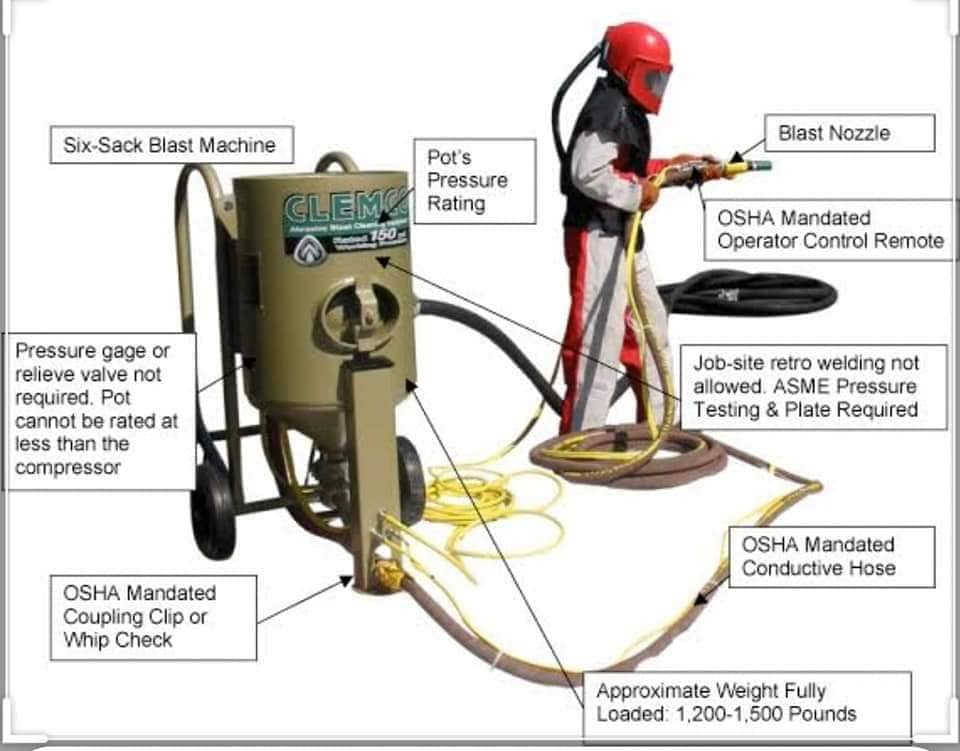
Wet blasting — also known as vapor blasting, slurry blasting, dustless blasting, and wet abrasive blasting — is a surface preparation process in which abrasive media is mixed with water to form a slurry, which is then propelled at the workpiece surface by compressed air. The water component fundamentally changes the blasting mechanism compared to conventional dry blasting, producing different surface finish characteristics, dramatically reduced airborne dust, and different media consumption patterns.
The process was originally developed in the 1950s as a solution to the silica dust problem in blasting operations — adding water suppressed the fine dust generated by silica sand fracture. Today, wet blasting has evolved far beyond its origins as a dust suppression measure. Dedicated vapor blasting machines — with recirculating pump systems, slurry mixing tanks, and specialized nozzles — are used for precision engine component finishing, motorcycle and automotive restoration, and any application where the combination of fine surface finish and near-zero dust is the primary objective.
For context on how media performance changes between wet and dry systems, the Abrasive Blasting Media Complete Guide provides the foundational media properties framework.
How the Water Changes the Blasting Mechanism
In dry blasting, each abrasive particle impacts the surface at full velocity and delivers its kinetic energy in a concentrated impact event — cutting, fracturing, or deforming the surface. The particle then rebounds away, carrying no follow-through cushioning.
In wet blasting, the water film surrounding each particle provides a hydraulic cushion that modifies the impact event in several measurable ways:
- Impact cushioning: The water layer slows the final approach of the particle to the surface, reducing peak impact force while extending impact duration. The net effect is a more gentle, less aggressive interaction with the substrate.
- Flushing action: The water carries dislodged contamination, debris, and fines away from the blasted surface immediately on impact — preventing re-embedment of removed material that can occur in dry blasting.
- Dust suppression: Fine particles that would become airborne in dry blasting are immediately captured by the water and remain in the slurry — eliminating the fine dust cloud that characterizes dry blasting operations.
- Reduced particle fracture: The cushioned impact reduces the impact forces that cause abrasive particle fracture, extending media life per pass compared to the same media in dry blasting.
- Temperature reduction: Water absorbs heat generated at the impact point, preventing the localized heat generation that can stress certain substrates in high-intensity dry blasting.
Head-to-Head Comparison
| Paramètres | Sablage humide | Sablage à sec |
|---|---|---|
| Airborne dust | Near-zero (95–99% reduction) | Significant — requires dust collection |
| Surface profile depth (same media size) | Shallower — water cushioning reduces peak impact | Deeper — full impact energy delivered |
| Surface finish quality | Smoother, more uniform — preferred for precision | Standard profile texture |
| Media consumption per m² | Lower — reduced particle fracture | Higher — more fracture per pass |
| Throughput rate | Lower — water management reduces speed | Higher — no water management overhead |
| Equipment cost | Higher — dedicated slurry system required | Lower — standard pneumatic equipment |
| Flash rust risk (carbon steel) | Yes — surface must be dried/primed promptly | No immediate flash rust risk |
| Enclosed space suitability | Excellent — near-zero dust | Requires heavy ventilation |
| Water waste management | Required — slurry disposal or filtration | Not applicable |
| Applicable media types | Glass bead, garnet, Al₂O₃, SiC, crushed glass | All media types including steel |
| Cold weather operation | Problematic — water freezes below 0°C | No temperature limitations from water |
Surface Finish Differences
The most significant practical difference between wet and dry blasting with the same media type and grit size is surface finish: wet blasting consistently produces a smoother, finer surface texture than dry blasting at equivalent conditions.
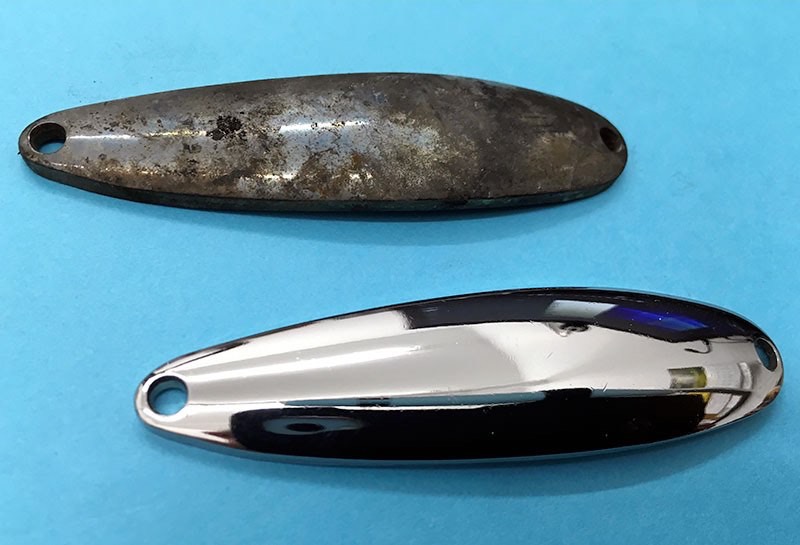
A glass bead US 150 mesh dry blasted at 60 PSI produces a surface Ra of approximately 0.8–1.4 µm on aluminum. The same media in a wet blasting system at equivalent slurry velocity produces Ra of approximately 0.3–0.6 µm — a 40–60% reduction in surface roughness. This difference is mechanically consistent: the water cushion reduces the depth of each bead impact, producing shallower, more uniform dimples across the surface.
This finish advantage makes wet blasting the preferred method for:
- Precision engine components where extremely fine satin finishes are required (motorcycle carburetors, cylinder heads, engine casings)
- Aluminum alloy aerospace and automotive parts requiring dimension-controlled finishing
- Stainless steel decorative surfaces where the finest possible uniform satin is specified
- Any application where achieving Ra values below 0.5 µm from blasting alone is the goal
Dust Reduction in Wet Blasting
Wet blasting eliminates 95–99% of the airborne dust generated by an equivalent dry blasting operation. This dust suppression is the result of the water immediately capturing fine particles as they are generated — there is no mechanism for sub-10 µm particles to become airborne and remain suspended when they are encased in water droplets that fall to the ground.
This dust suppression is critically important in several contexts:
- Silica-containing media: While wet blasting with silica sand is still subject to OSHA’s crystalline silica standard (because dried slurry can re-suspend), the dramatically lower airborne concentrations during active blasting may bring some previously non-compliant operations into compliance with appropriate engineering controls. However, silica sand in any blasting operation remains heavily regulated or banned.
- Confined space operations: Wet blasting enables blasting in spaces where ventilation is inadequate for dry blasting dust levels — such as ballast tank maintenance, vessel interior work, and confined industrial vessel inspection access.
- Environmentally sensitive locations: Near waterways, in populated areas, or at sites with strict ambient dust regulations, wet blasting’s near-zero dust output eliminates a significant compliance burden.
Best Media for Wet Blasting
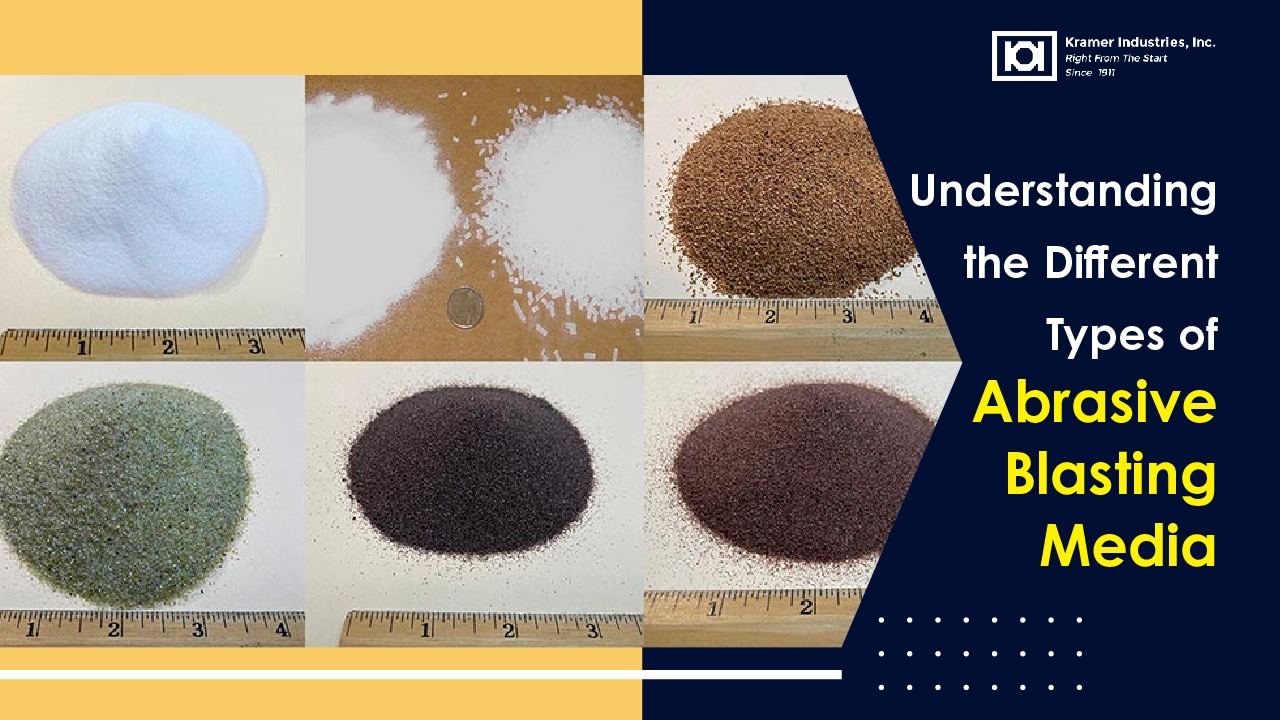
Not all blasting media is suitable for wet blasting. Media must be water-stable, must not corrode in the slurry circuit, and must not carry water-soluble contaminants that would contaminate the slurry over time.
| Media | Wet Blasting Suitability | Notes |
|---|---|---|
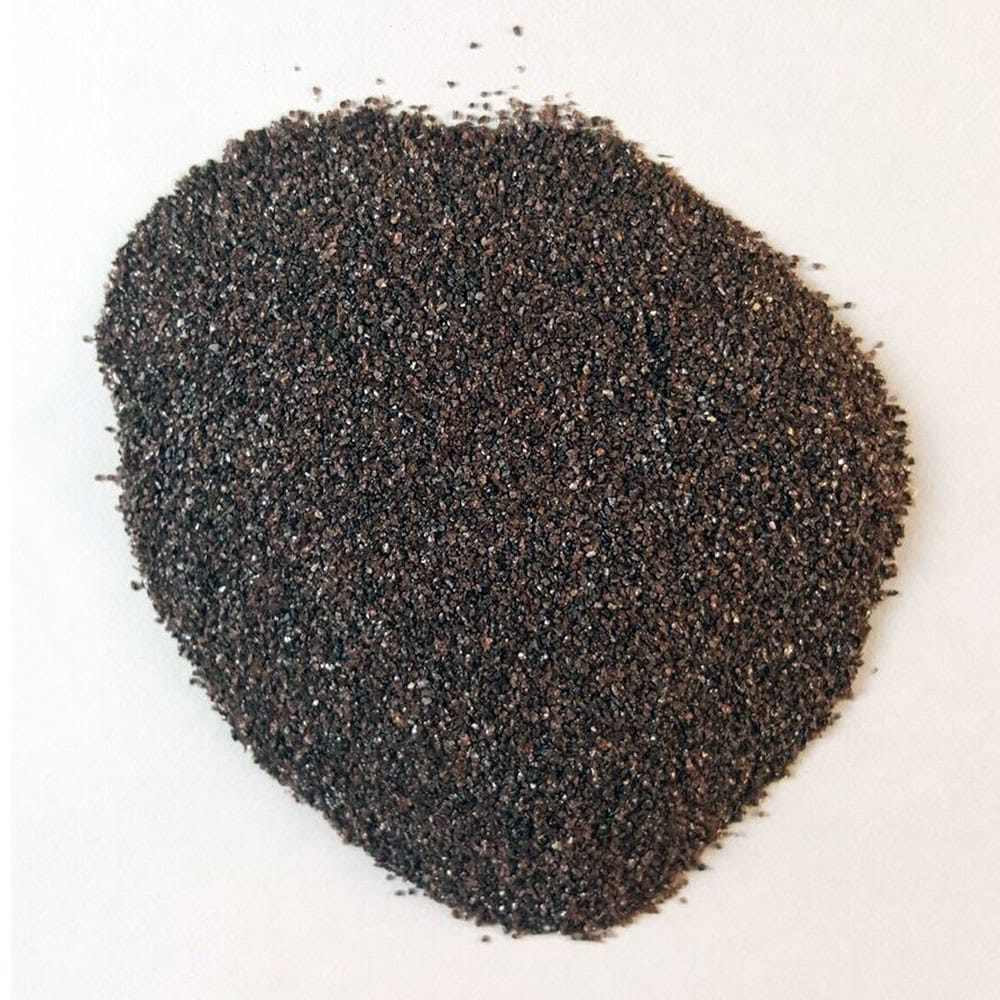
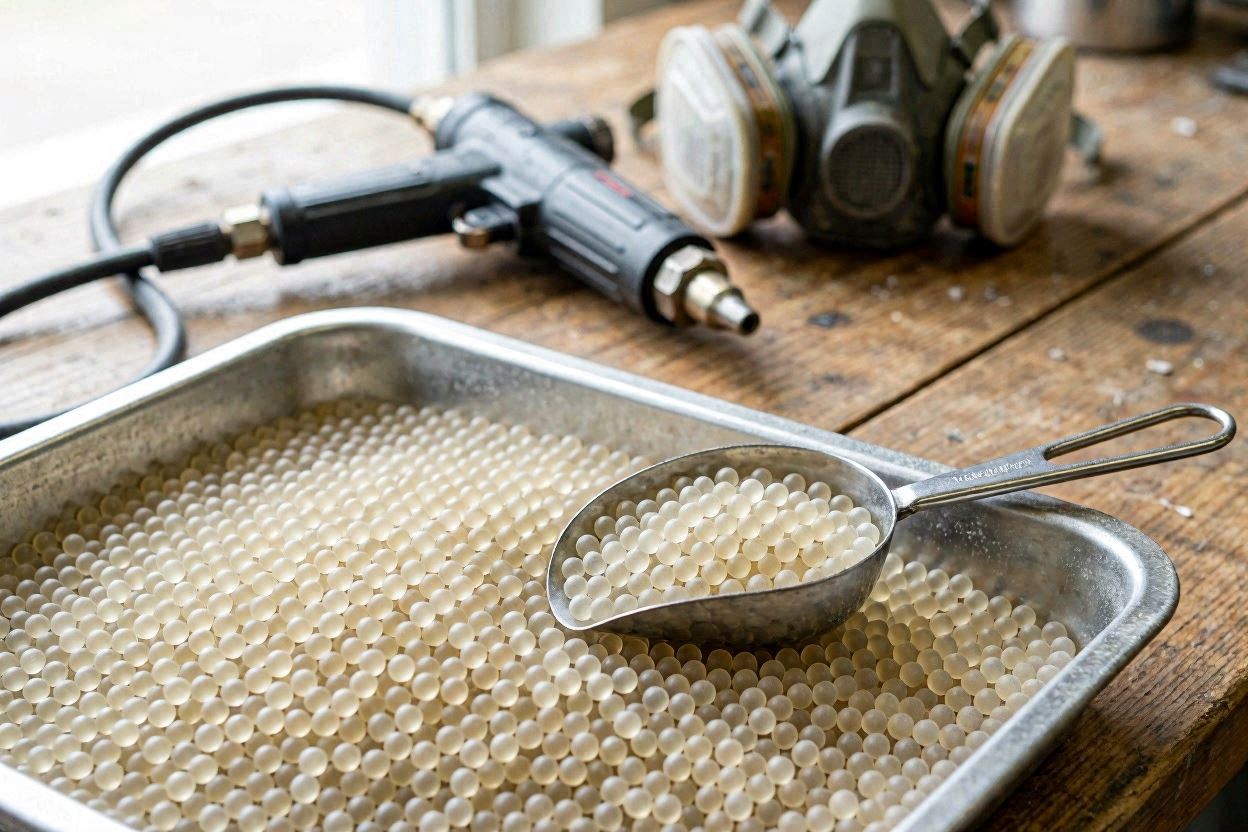
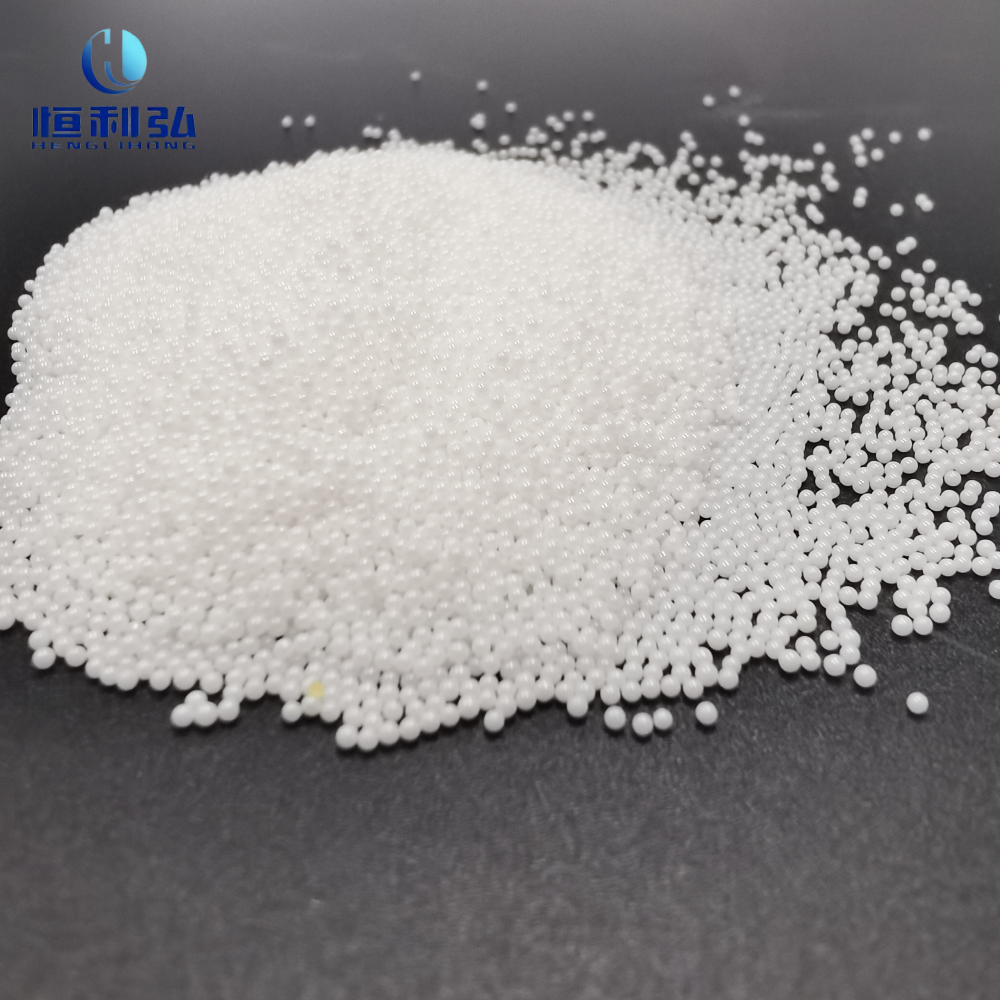
| Glass Bead | Excellent | The most common wet blasting media — chemically inert, water-stable, produces finest finishes |
| Grenat | Excellent | Preferred for marine wet blasting; dense, angular, effective in slurry |
| Oxyde d'aluminium | Bon | Water-stable; slightly higher slurry viscosity than glass bead at same loading |
| Carbure de silicium | Bon | Water-stable; used in wet lapping and precision cleaning |
| Crushed Glass | Bon | Cost-effective alternative to glass bead for less demanding wet blast applications |
| Steel Grit / Steel Shot | Not Recommended | Corrodes in water slurry; contaminates circuit; causes staining on non-ferrous substrates |
| Walnut Shell / Corn Cob | Not Suitable | Absorbs water, swells, and disintegrates in slurry — not usable |
| Bicarbonate de sodium | Not Suitable | Dissolves in water — cannot be used in wet blasting systems |
| Plastic Grit | Limited | Low density causes media stratification in slurry; special equipment required for slurry management |
For glass bead technical specifications in wet blasting applications, see: Glass Bead Blasting Media: Finish Quality, Mesh Sizes & Equipment Compatibility. For garnet wet blasting guidance: Garnet Blasting Media: Eco-Friendly Performance for Wet & Dry Blasting.
When to Choose Wet Blasting
- Precision engine components and automotive restoration: Wet blasting with glass beads produces the fine, uniform satin finish on aluminum and steel engine parts that is the signature of professional engine building work. The water flushing action cleans oil passages and recesses more thoroughly than dry blasting.
- Stainless steel and non-ferrous decorative finishing: The finer finishes achievable with wet glass bead blasting suit the demanding aesthetic requirements of stainless steel architectural components, medical instruments, and consumer goods.
- Enclosed or poorly ventilated environments: Where dry blasting would create unacceptable dust exposure and ventilation cannot be adequately provided — confined maintenance spaces, historical building interiors, food processing facilities.
- Environmentally sensitive sites: Near water, in populated areas, or where ambient dust discharge is strictly limited by permit.
When to Choose Dry Blasting
- High-volume structural steel preparation: Wheel blast and pneumatic dry blasting with steel grit or garnet achieves Sa 2.5 with 40–75 µm Rz at throughput rates and costs that wet blasting systems cannot match for large-scale structural work.
- Deep profile requirements: When anchor profiles above 50 µm Ra are required for heavy coating systems, dry blasting with coarse angular media achieves the profile depth more efficiently than wet blasting.
- Cold weather operations: Wet blasting is impractical below approximately 5°C due to water freezing in lines and equipment. Dry blasting has no such temperature limitation.
- Media recycling with steel media: Steel grit’s 200–300 cycle advantage can only be realized in a dry blasting reclaim system — wet blasting with steel media causes corrosion that degrades the slurry circuit and produces contamination.
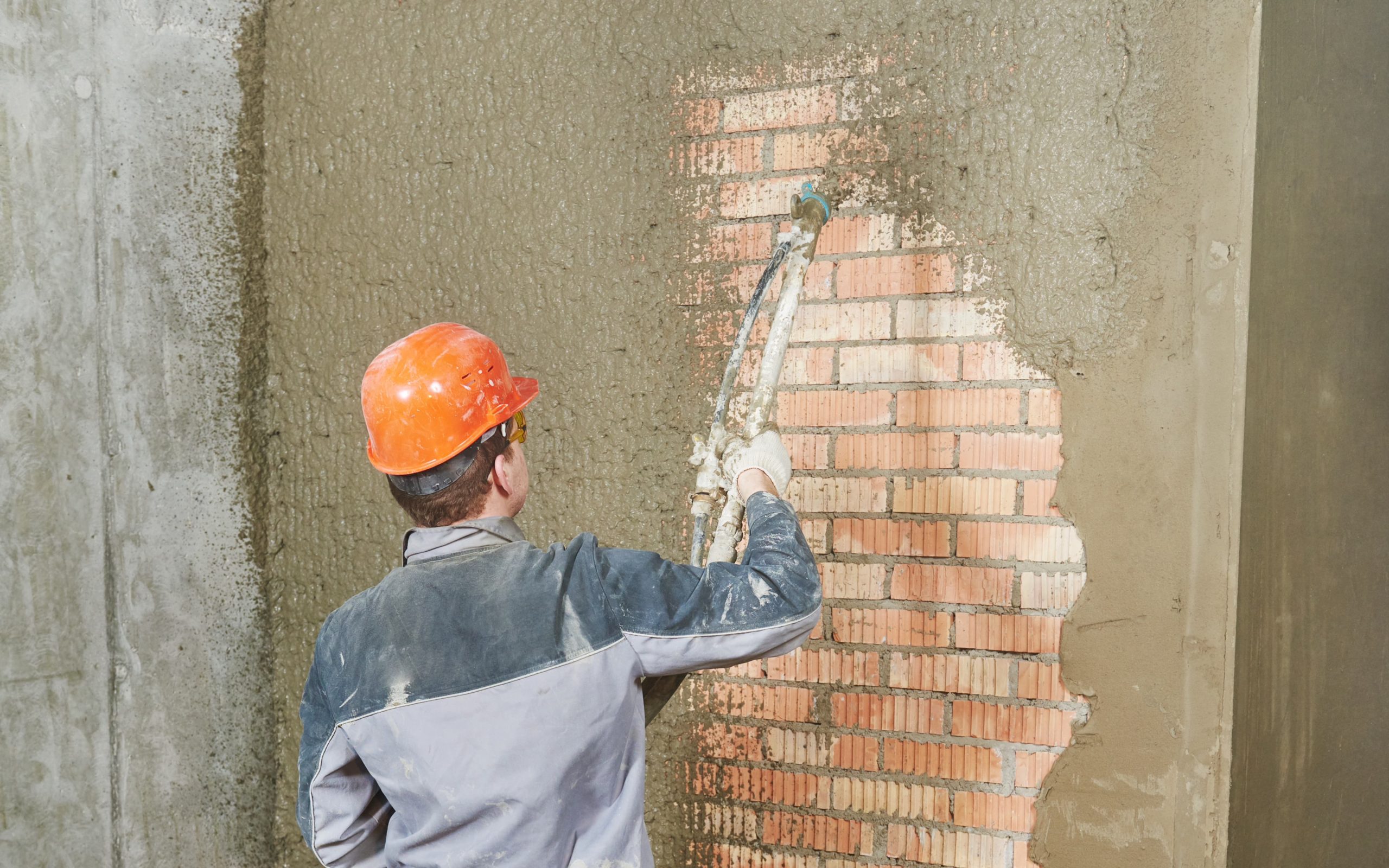
- Large outdoor areas: Wet blasting’s water management requirements (slurry collection, filtration or disposal) become impractical for large open-area blasting operations.
Choose the Right Media for Your Blasting Method
Jiangsu Henglihong Technology supplies glass beads, aluminum oxide, garnet (suitable for wet blasting), and steel shot/grit (for dry blasting) — the complete range of media for both wet and dry blasting applications. Contact us for recommendations matched to your process and equipment.
Request Product RecommendationsQuestions fréquemment posées
Filtres