Grenat Sandblasting Abrasive
The preferred low-dust, environmentally compliant abrasive for marine, waterjet, and sensitive-site blasting operations. Natural garnet combines sharp sub-angular cutting with minimal silica content and low heavy-metal leaching — the responsible choice for projects where environmental performance is non-negotiable.
What Is Garnet Sandblasting Abrasive?
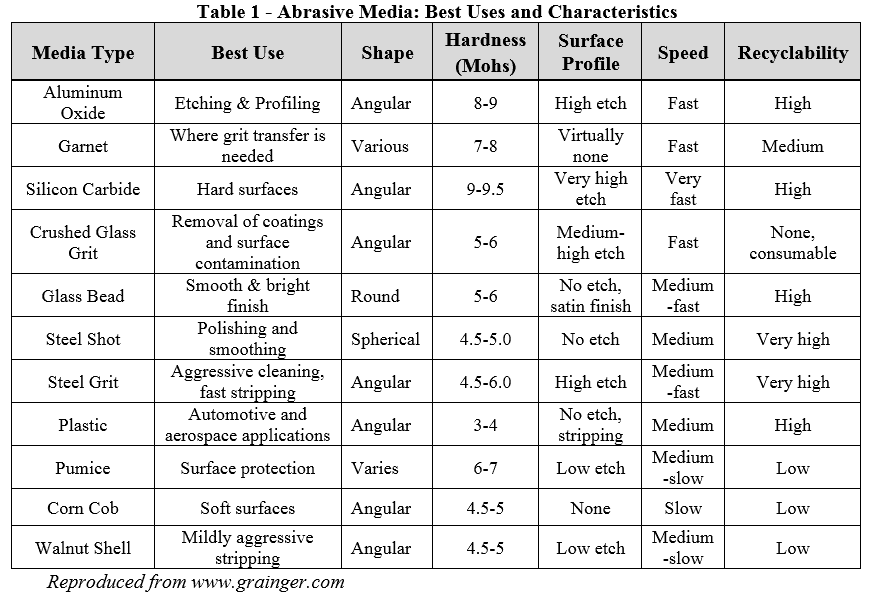
Garnet is a naturally occurring semi-precious mineral from the nesosilicate group, mined primarily in Australia, India, and South Africa. In its abrasive grade, garnet is crushed, classified, and screened to tight grit ranges for use in abrasive blasting, waterjet cutting, and filtration media applications. Its sub-angular particle shape, moderate-to-high hardness (Mohs 7.5–8), and extremely low free silica content make it one of the most balanced abrasives available — fast-cutting enough for professional surface preparation, yet environmentally compliant enough for the most sensitive operating environments.
Garnet occupies a distinctive niche in the abrasive blasting market: it is the go-to media when the job demands OSHA-compliant dust levels, minimal heavy-metal contamination of spent waste, and consistent surface profiles suitable for premium marine and protective coating systems — but where the recyclability of steel grit (which requires fixed wheel-blast equipment) is not practical.
Technical Specifications
| Property | GMA Garnet | Hard Rock Garnet |
|---|---|---|
| Dureté | Mohs 7.5 | Mohs 8.0–8.5 |
| Gravité spécifique | 3.8–4.0 g/cm³ | 4.0–4.2 g/cm³ |
| Free Silica | <1% | <1% |
| Shape | Sub-angular | Sub-angular to angular |
| Profile Depth | 1.5–2.5 mil | 2.0–3.5 mil |
| Recyclabilité | 3–5 cycles | 4–6 cycles |
| Dust Level | Very low | Faible |
GMA Garnet vs Hard Rock Garnet
The two main commercial grades of blasting garnet differ in their mineralogy, hardness, and performance characteristics:
GMA (Almandite) Garnet — mined from alluvial deposits, primarily in Western Australia. The most widely traded blasting garnet globally. Moderately hard (Mohs 7.5), very consistent particle shape, extremely low dust, and low heavy-metal content. The standard choice for marine, offshore, and waterjet applications.
Hard Rock (Andradite/Almandite) Garnet — mined from hard rock deposits in India (Rajasthan) and South Africa. Slightly harder (Mohs 8.0–8.5), more angular, and produces deeper profiles and higher blasting throughput than GMA. Higher silica content variation between sources requires supplier verification. Preferred in applications requiring more aggressive cutting or deeper profiles where GMA is insufficient.
Waterjet compatibility: Both GMA and hard rock garnet are used in waterjet cutting — GMA is the dominant choice for precision cutting of metals and composites due to its consistent particle shape and low contaminant content. When evaluating garnet for dual-use (blasting and waterjet), confirm the chloride content specification with your supplier, as waterjet applications typically require chlorides below 25 ppm.
Garnet Grit Size Selection
| Grit Size | Profile Depth | Best Application |
|---|---|---|
| 12–16 mesh | 2.5–3.5 mil | Heavy structural steel, mill scale removal, sa 2.5 prep |
| 20–30 mesh | 1.5–2.5 mil | Ship hull prep, tank lining, most marine coating systems |
| 36–60 mesh | 1.0–2.0 mil | General industrial prep, thinner coating systems |
| 80 mesh | 0.5–1.0 mil | Light surface activation, fine finishing before thin-film coatings |
Key Applications
Marine & Offshore
Garnet is widely specified for ship hull blasting in enclosed drydock environments where dust control is critical for worker health and neighbouring vessel protection. Its low dust profile and silica-free composition make it compliant with the most stringent occupational health regulations. See the marine blasting guide.
Waterjet Cutting
GMA garnet mesh 80 is the global standard for waterjet cutting of aluminium, stainless steel, stone, and composites. Its consistent particle shape enables precise cut quality without excessive kerf width or workpiece damage.
Sensitive-Site Field Blasting
Bridges, petrochemical plant maintenance, and occupied-area infrastructure work benefit from garnet’s minimal dust cloud and low environmental impact. Spent garnet has lower heavy-metal leaching than most metallic abrasives, simplifying waste disposal compliance.
Pipeline & Tank Coating
Internal tank lining preparation — especially for potable water tanks and food storage vessels — often specifies garnet for its chemical inertness and freedom from heavy-metal contamination. See the pipeline coating guide.
Environmental Advantages of Garnet
Garnet’s environmental profile is one of its strongest commercial selling points, particularly for projects subject to environmental permitting or contractor prequalification requirements:
- Free silica below 1% — eliminates silicosis risk when used with appropriate respiratory protection; compliant with EU, US, and Australian occupational health regulations
- Low heavy-metal leachate — spent garnet typically passes TCLP (Toxicity Characteristic Leaching Procedure) tests, classifying as non-hazardous waste in most jurisdictions and significantly reducing disposal costs
- Minimal dust generation — garnet’s fracture characteristics produce far less respirable dust per unit of blasting than coal slag or aluminum oxide, reducing airborne particulate exposure even in partially enclosed environments
- Naturally occurring material — no synthetic chemical manufacturing, lower embodied energy than fused abrasives
For full environmental compliance guidance including waste classification, RCRA testing, and disposal pathways by region, see our Abrasive Disposal & Environmental Compliance guide.
Pros & Cons
Avantages
- Very low dust generation — best for enclosed and health-sensitive environments
- Silica-free, low heavy-metal content — simplified waste disposal
- Sub-angular shape produces consistent, clean surface profiles
- Dual-use potential: blasting and waterjet cutting from same media
- Chemically inert — suitable for food, water, and pharmaceutical equipment
Limites
- Lower recyclability (3–6 cycles) vs aluminum oxide (20–30 cycles)
- Higher cost per bag than coal slag; higher cost per usable cycle than aluminum oxide
- Less aggressive than aluminum oxide at same grit size — slower blasting throughput
- Profile depth limited to 3.5 mil — insufficient for maximum-profile applications
FAQ
Garnet abrasive is the same mineral family as the gemstone but is industrial grade — not gem quality. Abrasive garnet is mined from large deposits where the crystal size, color, and clarity are unsuitable for jewellery but the hardness and chemical composition are ideal for cutting and blasting applications. The mineral species used in abrasives is primarily almandite (iron-aluminium garnet) and andradite.
Yes — garnet performs well in wet blasting systems. It does not dissolve in water, does not react chemically with the water-detergent mix, and produces excellent surface quality in wet blast mode. Wet blasting with garnet is particularly effective in enclosed drydock environments where even garnet’s already-low dry-blast dust levels must be further suppressed for enclosed-space working.
Source Premium Garnet Blasting Abrasive
GMA and hard rock garnet in mesh 12 to 80, available in 25 kg bags and bulk super sacks for B2B export from Jiangsu Henglihong Technology Co., Ltd.
Filtres