Jiangsu Henglihong Technology Co. Ltd.
Garnet Sandblasting Media: Low Dust, High Efficiency for Metal & Wood
A complete technical guide to garnet abrasive — covering mineral types, hardness, grit sizes, dust generation advantages, waterjet applications, environmental credentials, and when garnet is the optimal choice over competing media types.
What Is Garnet Abrasive?
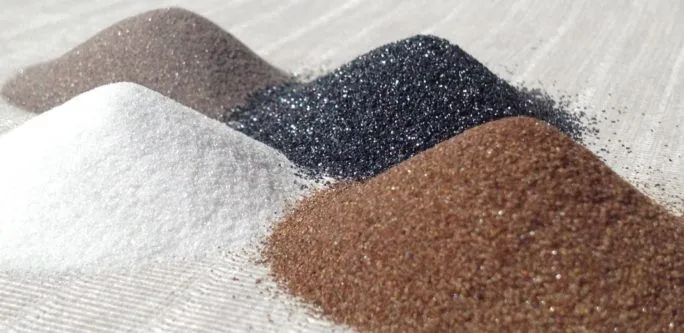
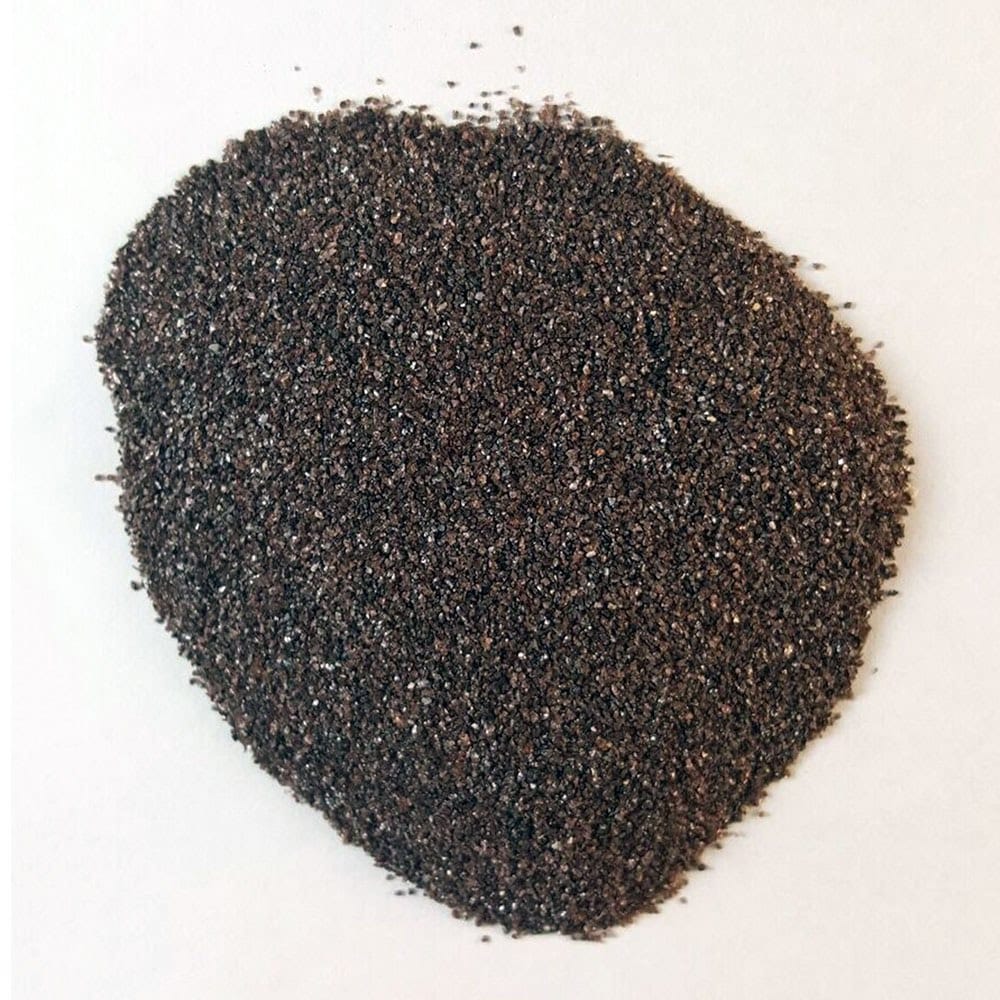
Garnet is a naturally occurring silicate mineral belonging to a family of related crystalline compounds. In abrasive blasting, garnet sand is mined primarily from alluvial or beach deposits, crushed, processed, and screened to controlled grit sizes. The world’s leading production sources are Australia (Western Australia is the dominant global supplier), India, and the United States. Australian almandine garnet — the most widely used type in abrasive blasting — has a Mohs hardness of approximately 7.5–8.0 and a distinctive red-brown color.
Garnet gained mainstream industrial adoption in the 1980s and 1990s as health and environmental regulations drove the industry away from silica sand and siliceous slag abrasives toward lower-dust alternatives with better safety profiles. Today it is established as the preferred abrasive for confined-space and outdoor blasting projects where dust control is a primary concern, and as the dominant media in waterjet cutting systems worldwide.
For a full overview of all sandblasting material types and how to select between them, see our complete guide to sandblasting material.
Garnet is the preferred abrasive for open-air blasting in environmentally sensitive settings, confined-space operations where low dust is a safety imperative, and waterjet cutting. Its moderate hardness, low free silica, low dust generation, and limited recyclability (3–5 cycles) position it as a strong middle-ground choice between cheap single-use slag media and the higher-performance, more recyclable aluminum oxide.
Garnet Mineral Types Used in Blasting
Almandine Garnet
Iron-aluminum garnet (Fe₃Al₂(SiO₄)₃) is the dominant type in global abrasive production. Almandine garnet has a Mohs hardness of 7.5–8.0, low free silica content (under 1%), negligible heavy metal levels, and a dense crystal structure that fractures into consistently sharp-edged particles. Western Australian almandine garnet is particularly valued for its consistent purity and tight size distributions. It is the reference specification for garnet in SSPC and ISO surface preparation standards.
Other Garnet Types
Andradite (calcium-iron garnet) and spessartite (manganese-aluminum garnet) are harder to process consistently and appear less frequently in international markets. Almandine remains the industry benchmark for blasting and waterjet cutting applications.
Key Properties & Performance Advantages
Self-Sharpening Crystal Fracture
When garnet particles fracture under blasting impact, they cleave along natural crystallographic planes and expose fresh, sharp-edged cutting surfaces. This self-sharpening behavior maintains abrasive cutting efficiency through several blast cycles better than many friable slag alternatives. Even single-use garnet on an open-blast job site delivers consistent surface profiles from the beginning to the end of each bag.
Low Free Silica — Reduced Silicosis Risk
High-quality almandine garnet contains less than 1% free silica, compared to natural silica sand (nearly 100%) and many siliceous slags (10–25%). This dramatically reduces respirable crystalline silica (RCS) exposure risk for blast operators. For a full regulatory discussion of silica risks and OSHA-compliant media alternatives, see our sandblasting media safety and silica alternatives guide.
Low Dust Generation
Garnet produces significantly less airborne dust per unit of surface treated than coal slag, copper slag, or sand. Its high density (3.9–4.1 g/cm³), tough crystal structure, and low natural friability limit the proportion of particles that fracture into fine, airborne particles during blasting. In confined spaces — tanks, ship holds, pipe sections — lower dust improves operator visibility, reduces respiratory risk, and reduces the frequency of ventilation purge cycles needed to maintain safe working conditions.
Low Iron Contamination
Almandine garnet contains iron within its crystal lattice structure — not as free metallic iron. Unlike steel abrasives, garnet does not embed metallic iron particles in the blasted surface. It is generally acceptable for use on stainless steel surfaces in most industrial specifications, though white aluminum oxide or glass beads remain the safest choice for the most demanding non-ferrous applications.
Grit Sizes & Surface Profiles Produced
| Garnet Grit | US Mesh Approx. | Particle Size (mm) | Approx. Ra (µm) | Application |
|---|---|---|---|---|
| G16 | #14–#18 | 1.0–1.4 | 40–55 | Heavy structural steel, ship hull prep |
| G25 | #20–#30 | 0.6–0.85 | 30–45 | General industrial steel, ISO 8501 Sa 2.5 |
| G30 | #25–#35 | 0.5–0.7 | 25–38 | Bridges, tanks, general fabrication |
| G50 | #40–#60 | 0.25–0.42 | 18–28 | Moderate rust removal, lighter profiling |
| G80 | #60–#100 | 0.15–0.25 | 10–18 | Wood, concrete, light surface finishing |
| G120 | #100–#140 | 0.10–0.15 | 5–10 | Ultra-fine finishing, etching, waterjet cutting |
For a full cross-media grit size and surface profile reference, see our sandblasting grit size chart and surface profile guide.
Applications by Industry & Substrate
Open-air blasting where low dust and low silica exposure meet regulatory requirements for outdoor projects.
Confined-space tank interior blasting. Lower dust improves operator safety and visibility significantly vs. slag alternatives.
Ship hull blasting in drydock. Accepted in most environmental permit conditions for marine blasting sites.
Fine garnet (G80–G120) for cleaning and lightly profiling wood surfaces before staining or painting, preserving grain.
Profiling concrete floors before epoxy coating or overlay without the high silica exposure of quartz sand.
Removing gelcoat, paint, and osmotic blisters from fiberglass hulls without deeply cutting laminate structure.
For specific guidance on blasting metal surfaces before painting, including coating-specification-based media selection, see our guide on best sandblasting material for metal surface prep.
Garnet in Waterjet Cutting
Garnet is the dominant abrasive in waterjet cutting (AWJ) systems worldwide — used to cut metal, stone, glass, ceramics, and composites with high precision and no heat-affected zone. In AWJ cutting, garnet is entrained in an ultra-high-pressure water stream (up to 90,000 PSI) and directed through a focusing nozzle onto the workpiece. The combination of water pressure and abrasive impact cuts cleanly through virtually any material up to several inches thick.
Properties that make garnet ideal for waterjet cutting: Mohs 7.5–8.0 hardness, angular particle shape (sharp fracture planes), very low free silica, consistent particle size distribution (critical for predictable cutting speed and kerf width), and low contaminating elements. Waterjet grades are typically G80 and G120. Unlike dry blasting, waterjet garnet is always single-use — particles are too severely fractured by the high-pressure water impact to be effectively recycled.
Environmental & Regulatory Credentials
- Low free silica (under 1%): dramatically reduces RCS exposure vs. sand and slag-based abrasives.
- No significant heavy metals: high-quality almandine garnet contains no lead, cadmium, arsenic, or chromium at regulated levels — important for spent media disposal classification.
- No sulfur compounds: unlike copper slag, garnet contains no sulfur that can affect surface chemistry or coating adhesion.
- Natural mineral: not an industrial by-product. Production generates no hazardous process wastes in the way some synthetic abrasive manufacturing does.
- Generally non-hazardous spent media: in most jurisdictions, spent garnet classifies as non-hazardous waste (subject to TCLP testing when painted surfaces have been blasted), allowing lower-cost disposal.
When garnet is used to blast surfaces containing lead paint, chromate primers, or other hazardous coatings, the spent media will contain those contaminants and must be tested and disposed of accordingly. This is a contamination issue from the blasted surface — the same applies to all blasting media types when used on hazardous coatings.
Garnet vs. Competing Media
| Comparison | Garnet Advantage | Competing Media Advantage |
|---|---|---|
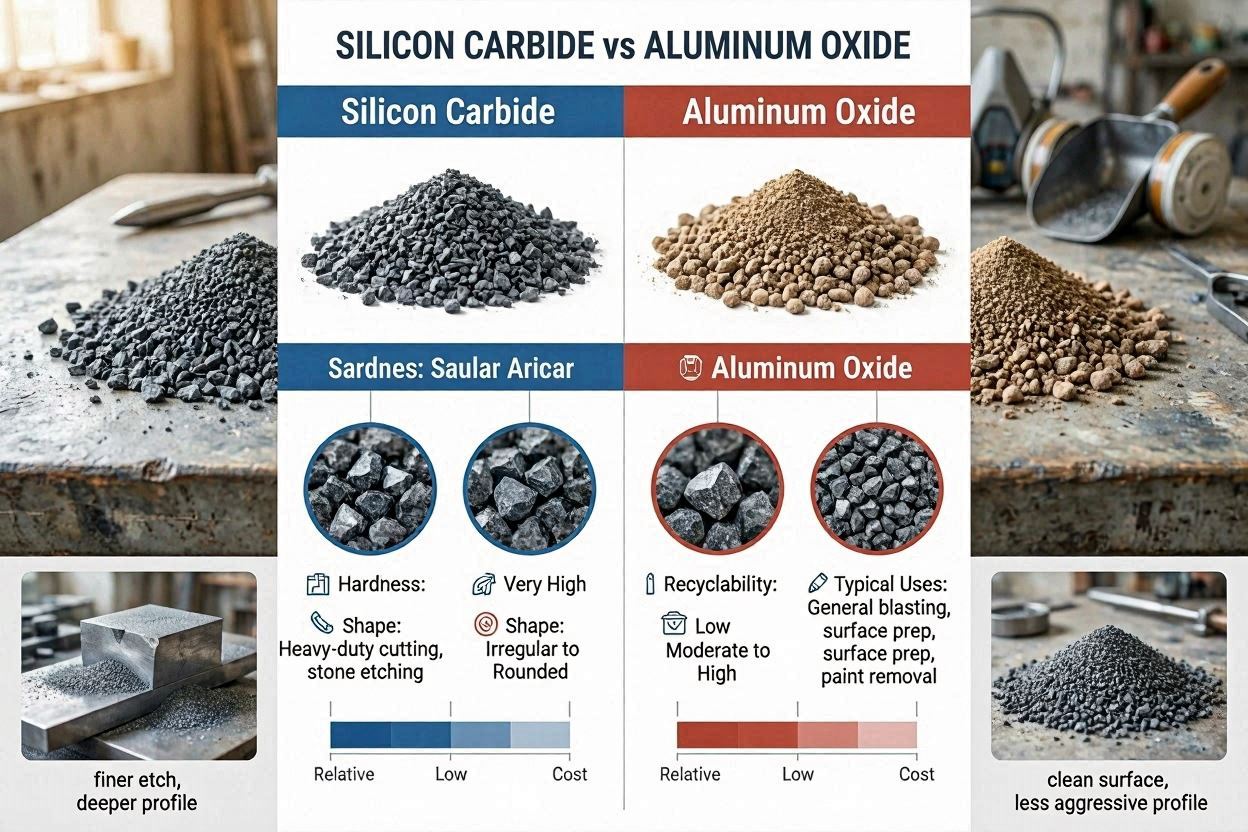
| vs. Aluminum Oxide | Lower dust, better for outdoor/environmentally sensitive sites | Al₂O₃: harder, higher throughput, more recyclable (15–30 cycles), lower cost/cycle in reclaim systems |
| vs. Coal/Copper Slag | Much lower free silica, fewer heavy metals, far better worker health profile | Slag: lower purchase price per kilogram |
| vs. Crushed Glass | Higher hardness, better anchor profiles, more consistent grading | Crushed glass: lower cost, recycled content, adequate for lighter applications |
| vs. Steel Grit | No iron contamination, open-blast compatible, no reclaim system required | Steel: far lower cost/m² in closed-loop operations, deeper profiles on very hard substrates |
For the full multi-media comparison, see our sandblasting media comparison chart.
Questions fréquemment posées
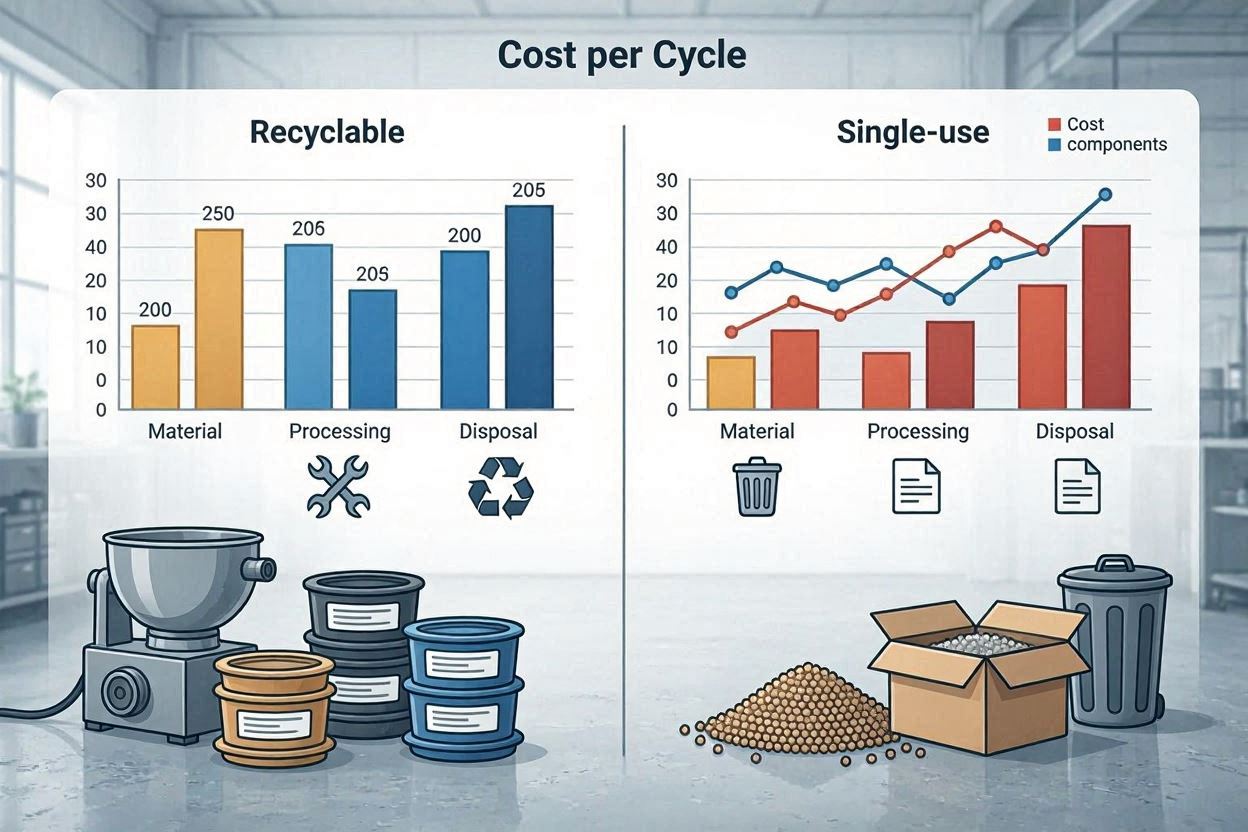
For dry blasting, yes — typically 3 to 5 cycles in a blast cabinet or room with a functioning classifier. This is fewer than aluminum oxide (15–30 cycles) but better than single-use coal or copper slag. Recyclability makes garnet more economical than single-use alternatives in high-volume blast cabinet settings. For waterjet cutting, garnet is always single-use — particles are too severely fractured to reuse.
In most industrial applications, yes — almandine garnet introduces minimal free metallic iron. However, for the most demanding stainless steel applications (food-grade, pharmaceutical, high-purity chemical environments), white aluminum oxide or glass beads are the safest specification. Always verify with the coating or process specification before using any abrasive on stainless steel.
Fine-grade garnet (G80–G120) is one of the better choices for cleaning and lightly profiling hardwood and softwood surfaces. It removes old paint and sealers without excessively tearing wood grain. For very delicate wood surfaces, gentler organic media like walnut shell are a better fit — see our walnut shell and corn cob blasting media guide for comparison.
Request a Quote
Specify grit size, application (blasting or waterjet), and annual volume. Competitive pricing within 24 hours.
Get a Free Quote →Talk to a Technical Advisor
Unsure whether garnet, aluminum oxide, or crushed glass is right for your application? Our engineers provide no-obligation recommendations.
Contact Our Team →Filtres