Steel Grit vs Aluminum Oxide vs Garnet: Which Blast Media Is Right for You?
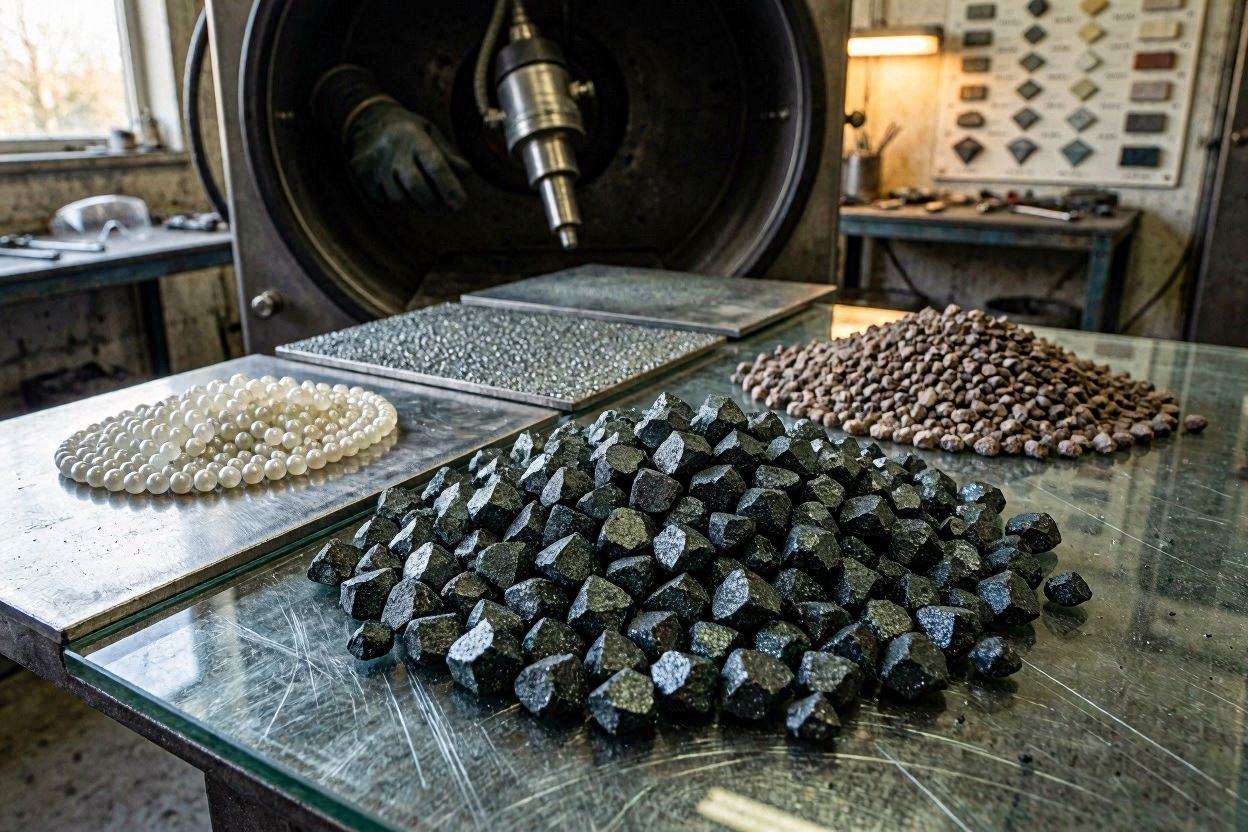
Steel grit, aluminum oxide, and garnet are the three abrasive blasting media most frequently considered by industrial buyers sourcing for general surface preparation. Each is well-established, widely available, OSHA-compliant, and capable of achieving Sa 2.5 on most steel substrates. But their performance profiles, true costs, and optimal use cases differ significantly — and choosing the wrong one for your operation adds unnecessary cost or compromises surface preparation quality.
This comparison guide gives you the complete technical and economic picture for all three media types. It is part of the master resource at Sandblasting Media Suppliers: The Industrial Buyer’s Complete Guide by Jiangsu Henglihong Technology Co., Ltd.
1. Physical Properties Side-by-Side
| Property | Steel Grit G25 (Medium) | Aluminum Oxide BFA #36 | Garnet 30/60 |
|---|---|---|---|
| Material | Hardened carbon steel | Fused aluminum oxide (Al₂O₃) | Natural almandine silicate |
| Shape | Angular / faceted | Sharp angular / blocky | Sub-angular |
| Mohs hardness | 6.5–7.5 (HRC 47–56) | 9.0 | 7.0–8.0 |
| Specific gravity (g/cm³) | 7.4–7.7 | 3.9–4.0 | 3.8–4.1 |
| Free silica content | <0.1% | <0.1% (BFA); <0.05% (WFA) | <1% (typically <0.1%) |
| Iron contamination risk | Yes — metallic iron | No | No |
| Particle size (standard grade) | 1.0 mm nominal | 500–710 µm | 600–250 µm |
| Wiederverwertbarkeit | 500–1,500 cycles | 50–150 cycles | 3–6 cycles |
| Dust generation (relative) | Niedrig | Mäßig | Low–Moderate |
2. Blasting Performance Comparison
| Performance Metric | Steel Grit G25 | Al₂O₃ BFA #36 | Garnet 30/60 |
|---|---|---|---|
| Max cleanliness achievable | Sa 3 (with GH hardness) | Sa 3 | Sa 2.5 reliably; Sa 3 possible with high pressure |
| Typical profile depth | 50–80 µm | 60–90 µm | 40–65 µm |
| Blast productivity (m²/hr) | Very high (heavy, fast cutting) | Hoch | Moderate–High |
| Profile type | Angular, deep valleys | Angular, very sharp peaks | Sub-angular, moderate peaks |
| Performance on heavy mill scale | Ausgezeichnet | Ausgezeichnet | Good (may need multiple passes) |
| Performance on thin plate | Good (use finer grade) | Gut | Very good (less rebound risk) |
| Stainless steel compatibility | No (iron contamination) | Yes (use WFA) | Yes |
3. True Cost Comparison (Enclosed Blast Room, per m²)
| Cost Factor | Steel Grit G25 | Al₂O₃ BFA #36 | Garnet 30/60 |
|---|---|---|---|
| Unit price (FOB, USD/MT) | $480–$580 | $580–$750 | $180–$280 |
| Recycle cycles | 500–1,500 | 50–150 | 3–6 |
| Effective consumption (kg/m²) | 0.3–1.5 | 4–12 | 25–60 |
| True media cost per m² | $0.04–$0.12 | $0.06–$0.18 | $0.15–$0.35 |
| Disposal cost per m² | Very low | Niedrig | Low–Moderate |
| Overall verdict | ✅ Lowest true cost | Mid-range | Higher (use for open-air) |
4. Safety & Regulatory Profile
| Safety Factor | Stahlkies | Aluminium-Oxid | Granat |
|---|---|---|---|
| Free silica (<1% OSHA threshold) | ✅ Yes | ✅ Yes | ✅ Yes |
| Heavy metals | None significant | None significant | None significant |
| Dust hazard (relative) | Niedrig | Moderate (finer particles) | Niedrig |
| Spent abrasive disposal | Non-hazardous (clean substrate) | Non-hazardous | Non-hazardous |
| ISO 11124 certification available | ✅ Yes | ✅ Yes (ISO 11127) | ✅ Yes (ISO 11126-10) |
For full OSHA compliance guidance applicable to all three media types, see: OSHA Sandblasting Safety: Why Silica Sand Is Banned and What to Use Instead.
5. Decision Guide: Which to Use When
6. Frequently Asked Questions
Not Sure Which Media Fits Your Project?
Contact the technical team at Jiangsu Henglihong Technology Co., Ltd. with your substrate, coating spec, and operating setup. We will provide a media recommendation and competitive quotation within 24 hours.
Get a Recommendation →Filter