Industrial Surface Prep: Best Blasting Media for Metal
A complete technical reference for industrial buyers and coating engineers — covering ISO and SSPC cleanliness standards, anchor profile requirements, media selection by metal type, sector-specific recommendations for structural steel, pipeline, shipbuilding, and heavy engineering, and equipment-to-media compatibility.
1. Surface Cleanliness Standards — ISO 8501 & SSPC
Industrial surface preparation for metal is not a subjective process — it is governed by internationally recognized standards that define precisely how clean and how rough the blasted surface must be before any protective coating is applied. The two most widely referenced standard systems are ISO 8501-1 (international) and SSPC/NACE (North America). Understanding these standards is essential because coating warranties, project specifications, and inspection protocols all reference them directly.
| ISO 8501-1 Grade | SSPC Equivalent | Beschreibung | Typical Media | Primary Application |
|---|---|---|---|---|
| Sa 1 | SSPC-SP 7 (Brush-off) | Light blast — loose mill scale, rust, and coatings removed. Tightly adhered material may remain. | Any medium-coarse abrasive | Maintenance recoating over sound existing coating, non-critical applications |
| Sa 2 | SSPC-SP 6 (Commercial) | Thorough blast — most mill scale, rust, and coating removed. Discoloration permitted on up to one-third of surface. | Al₂O₃ 54G, garnet 40M, steel grit G40 | Moderate service environments, shop primers, general fabrication coating |
| Sa 2.5 Most specified | SSPC-SP 10 (Near-white) | Near-white blast — all mill scale, rust, and coating removed. Only slight staining on no more than 5% of surface. | Al₂O₃ 36–54G, garnet 30–60M, steel grit G25–G40 | Heavy-duty protective coatings, offshore, marine, pipeline, structural steel |
| Sa 3 White metal | SSPC-SP 5 (White metal) | White metal blast — completely clean, uniform metallic color. No staining, rust, scale, or coating of any kind. | Al₂O₃ 36G or steel grit G25 (multiple passes) | Immersion service, tank linings, offshore platforms, highest corrosivity environments |
The overwhelming majority of industrial protective coating specifications require Sa 2.5 / SSPC-SP10 as the minimum surface cleanliness standard. This is the baseline for any heavy-duty epoxy, polyurethane, or zinc-rich primer system applied in corrosive environments — marine, offshore, industrial, and infrastructure. Sa 3 / white metal is reserved for the most demanding immersion and high-corrosivity service conditions where any remaining contamination would compromise coating performance unacceptably.
2. Surface Profile — Why Anchor Depth Matters
Surface cleanliness removes contamination; surface profile creates the mechanical key that allows coatings to adhere. Both are necessary — a perfectly clean surface with no profile will have poor coating adhesion, and a well-profiled surface covered in residual contamination will fail even faster. The two are always specified together in any professional coating application.
Profile depth is measured as the peak-to-valley height of the roughness pattern left by the abrasive particles, typically expressed as Rz (ten-point mean roughness) in µm. The controlling parameters are:
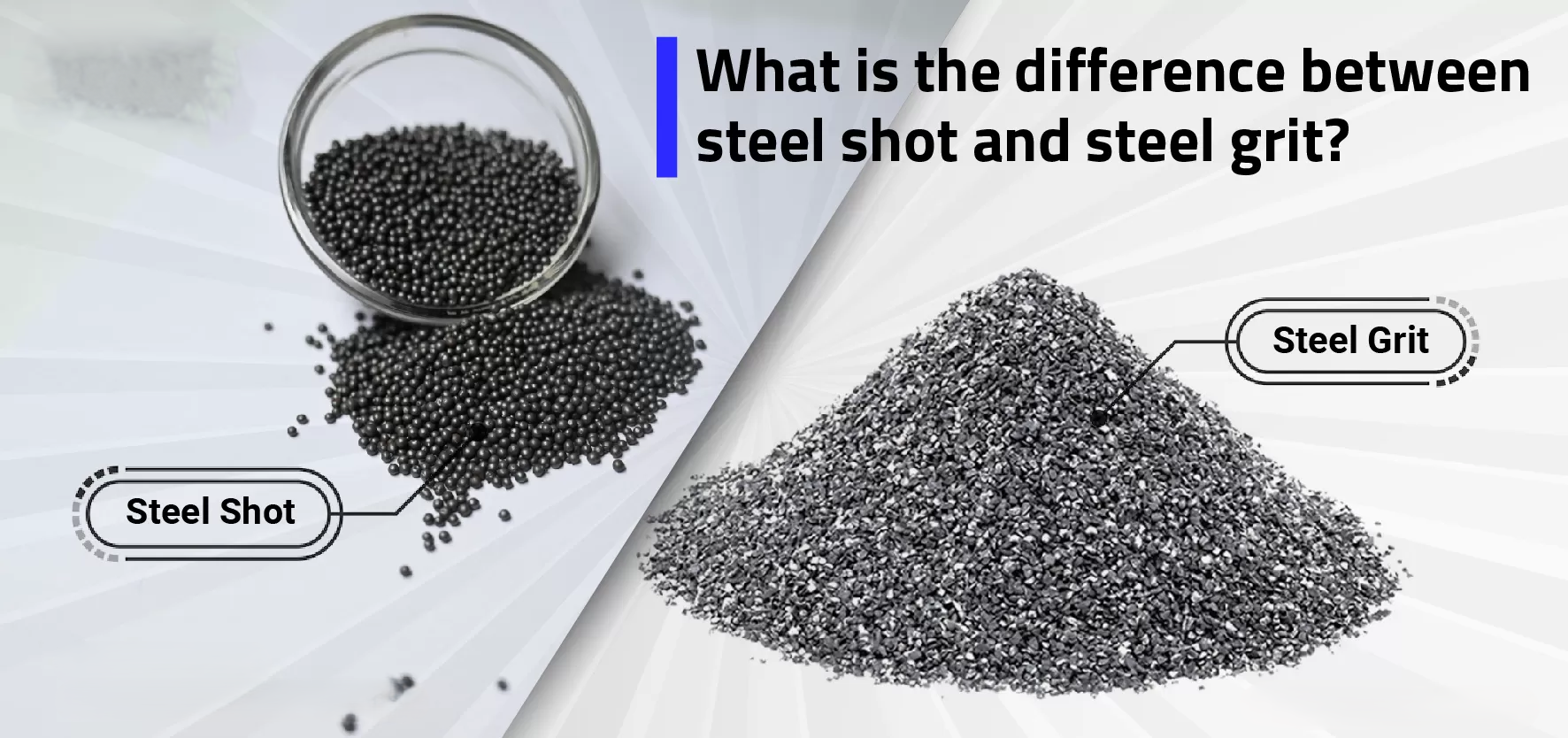
- Media type: Angular media (aluminum oxide, garnet, steel grit) produce a jagged, high-Rz profile. Spherical media (glass bead, steel shot) produce a dimpled, lower-Rz profile.
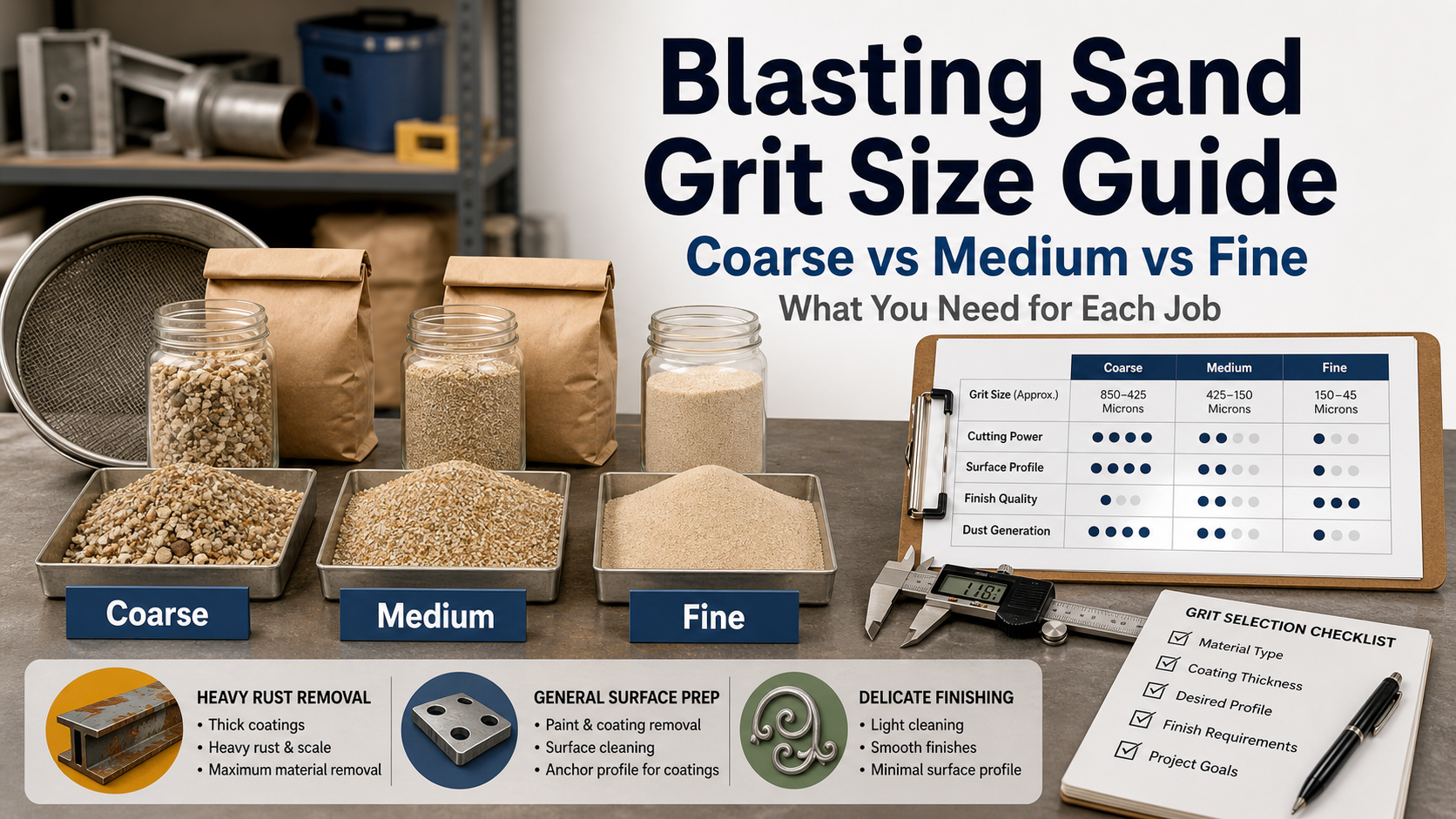
- Grit size: Coarser grit = deeper profile; finer grit = shallower profile. This is the primary tuning parameter once media type is fixed.
- Blast pressure: Higher pressure increases profile depth to a degree, but grit size has a much larger effect — increasing pressure beyond the optimum mostly increases media fracture without proportional profile improvement.
- Substrate hardness: Harder substrates require harder or coarser media to achieve the same profile depth. A G40 steel grit that produces 85 µm on mild steel may only produce 65 µm on a harder alloy steel at the same blast conditions.
The critical constraint is that profile depth must stay within the coating system’s specified minimum and maximum range. Exceeding the maximum profile means peaks protrude through the coating film — creating uncoated spots (“holidays”) that initiate corrosion at the earliest stage of service. Always obtain the minimum and maximum profile specification from the coating manufacturer’s Product Data Sheet before selecting grit size, and validate on a test panel before production blasting.
3. Best Blasting Media by Metal Type
Metal substrate type is the first and most constraining variable in media selection for industrial surface preparation. The four most commonly encountered metal categories each have distinct requirements.
4. Coating System Requirements Map
Different protective coating systems have fundamentally different surface preparation requirements. Specifying the wrong profile depth — even with the correct cleanliness grade — leads to coating adhesion failures that may not manifest until months into service. The following table maps the most common industrial coating systems to their required surface preparation parameters.
| Coating System | Min. Cleanliness | Profile Requirement | Recommended Media | Notes |
|---|---|---|---|---|
| Zinc-rich epoxy primer | Sa 2.5 | 50–100 µm Rz | Al₂O₃ 36–54G or garnet 30–60M | Deep profile critical for zinc-to-steel electrical continuity |
| Epoxy coating (heavy-build) | Sa 2.5 | 40–80 µm Rz | Al₂O₃ 46–60G or garnet 40–60M | Most industrial applications; check PDS for exact profile window |
| Polyurethane topcoat | Sa 2.5 (over primer) | Per primer specification | As per primer layer prep | Profile already established by primer prep; no additional blasting typically required |
| Fusion-bonded epoxy (FBE) | Sa 2.5 | 40–75 µm Rz | Garnet 40–60M or Al₂O₃ 46–60G | Pipeline coating; chloride content in media must be <25 ppm |
| Three-layer PE / PP (3LPE/3LPP) | Sa 2.5 | 50–85 µm Rz | Garnet 30–40M or steel grit G25 | Pipeline external coating; slightly deeper profile for mechanical interlock |
| Thermal spray (HVOF, arc spray) | Sa 3 (white metal) | 60–120 µm Rz | Al₂O₃ 24–36G or steel grit G14–G25 | Maximum profile and cleanliness for thermal spray bond strength |
| Glass flake coating | Sa 2.5–Sa 3 | 60–100 µm Rz | Al₂O₃ 36–46G or steel grit G25 | Tank linings and immersion service; very deep profile needed |
| Powder coating | Sa 2–2.5 | 30–60 µm Rz | Al₂O₃ 54–80G or glass bead #8–#10 | Thin-film system; coarser profile can cause surface texture problems |
| Electroplating (pre-treatment) | Visually clean | 10–30 µm Rz | White Al₂O₃ 100–150G or glass bead #11–#13 | Iron-free media mandatory; profile must be within plating system tolerance |
5. Sector-by-Sector Recommendations
Structural Steel & Infrastructure
Bridges, buildings, transmission towers, and fabricated steelwork. Standard specification: Sa 2.5, 50–85 µm profile. Aluminum oxide 36–54G in cabinet blast rooms; garnet 30–60M for outdoor blasting. Zinc-rich primer within 4 hours of blasting.
Oil, Gas & Pipeline
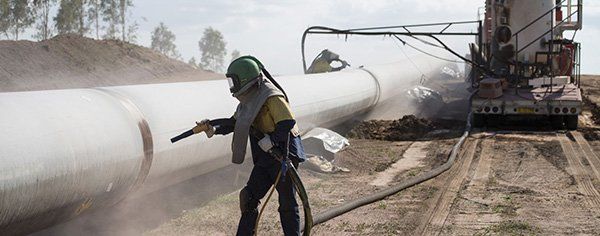
Internal and external pipe coating preparation for FBE, 3LPE, and liquid epoxy systems. Garnet 40–60M (low chloride, certified) is the preferred specification for outdoor pipeline blasting; aluminum oxide for shop-applied coatings. Sa 2.5 mandatory; chloride content in media ≤25 ppm required by most pipeline standards.
Shipbuilding & Marine
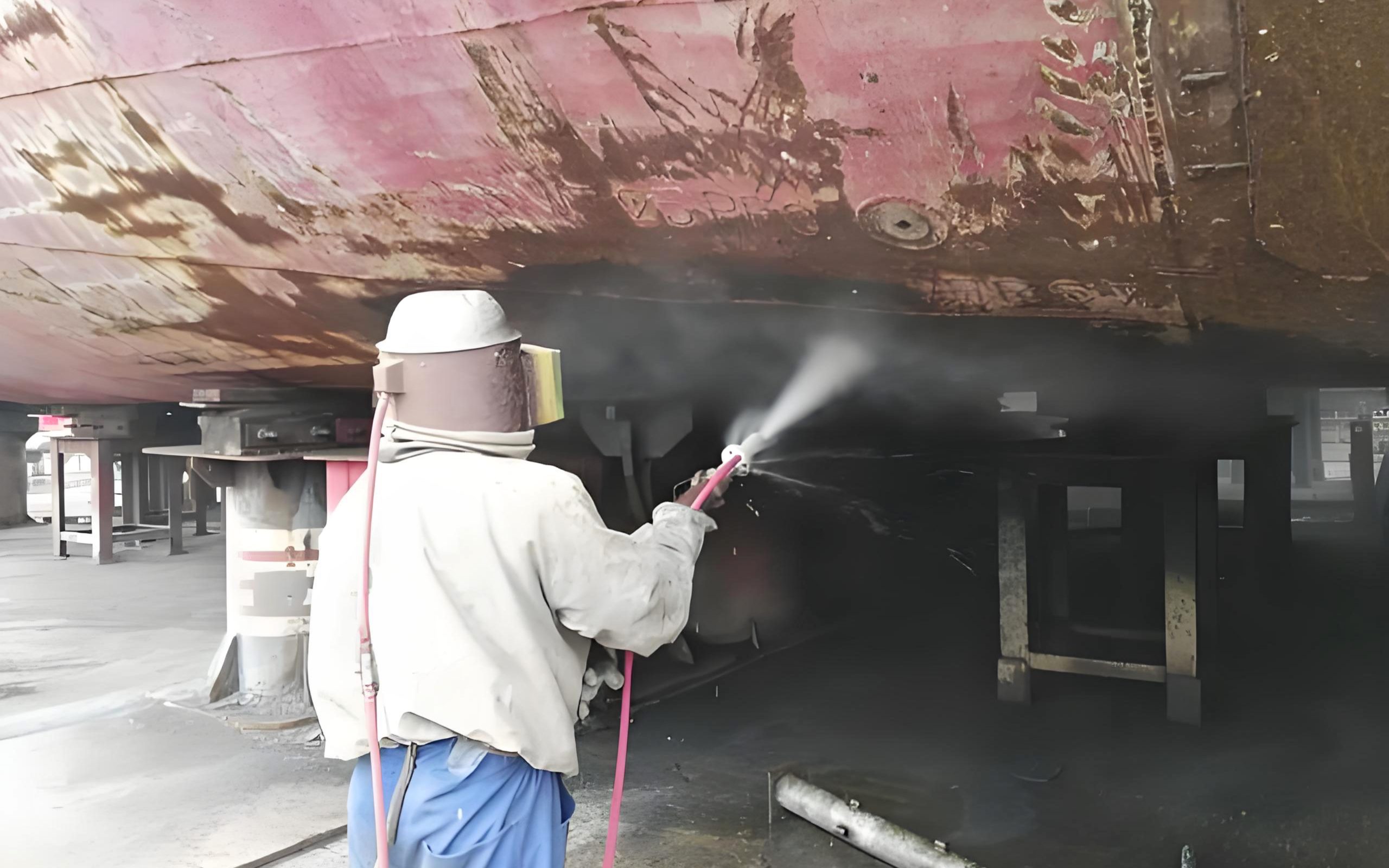
Hull blasting for anti-corrosion coating systems, ballast tank lining preparation. Steel grit G25–G40 in automated blast rooms for new build; garnet or aluminum oxide for repair blasting in drydock. Sa 2.5–Sa 3 for immersion zones.
Power Generation
Pressure vessels, boiler components, turbine casings, and heat exchanger preparation. Heavy-duty coating systems require Sa 2.5–Sa 3 with 60–100 µm profiles. Aluminum oxide 36–54G or steel grit for large components; white aluminum oxide for stainless and alloy steel parts in high-temperature service.
General Manufacturing
Castings, forgings, fabricated assemblies, and machine components prepared for powder coating, liquid paint, or electroplating. Steel grit and steel shot dominate automated blast rooms for high-volume production; aluminum oxide for cabinet blasting of mixed-material batches. Profile requirements vary widely by coating system.
Heavy Engineering & Mining
Mining equipment, agricultural machinery, construction plant, and industrial vehicles. High-build epoxy and polyurethane systems in harsh abrasive environments. Steel grit G25–G40 in automated blast rooms for maximum throughput; aluminum oxide for repair and maintenance blasting. Sa 2.5, 65–100 µm profiles.
6. Equipment-to-Media Compatibility
Industrial surface preparation uses three principal equipment types, each with its own media compatibility profile. Specifying the wrong media for the available equipment wastes material, damages equipment, or produces inconsistent results.
Industrial Blast Equipment — Media Compatibility Guide
7. Quality Control After Blasting
Industrial surface preparation is a controlled process with mandatory inspection checkpoints between blasting and coating application. The following tests and measurements are standard practice in any professional industrial coating project as of March 2026.
Surface Cleanliness Verification
Visual assessment against ISO 8501-1 photographic reference panels (or SSPC comparators for North American projects) confirms the achieved cleanliness grade. Assessment must be performed in adequate light (minimum 500 lux at the surface) and by a qualified inspector (NACE CIP, SSPC PCS, or equivalent qualification).
Surface Profile Measurement
Profile depth is measured per ISO 8503-1/-2 (Testex Press-O-Film replica tape, read with a spring micrometer) or ISO 8503-4 (stylus profilometer for Rz and Ra values). Multiple readings per panel or structure section are required — typically 5–10 readings averaged — to confirm consistent profile within the specified minimum and maximum window. Record all readings and compare against the coating specification before primer application.
Chloride Contamination Testing
Residual soluble salts (primarily chlorides) on blasted steel surfaces cause osmotic blistering beneath coatings in humid or immersion service. Chloride levels must be measured and verified below the threshold specified in the coating system’s data sheet — typically below 20–50 mg/m² depending on the service environment. Testing methods include Bresle patch (ISO 8502-6) and conductivity measurement (ISO 8502-9).
Oil and Grease Contamination
Compressed air used for blasting must be verified oil-free (ISO 8573-1, Class 1 for oil content) before and periodically during blasting operations. Even trace amounts of compressor oil contamination deposited on a blasted surface will prevent coating adhesion and cause immediate coating failure in the affected area.
8. Frequently Asked Questions
Related Resources
Explore the full blasting media resource library from Jiangsu Henglihong Technology for further technical guidance:
- Blasting Media: Complete Industry Guide — full overview of all media types and applications
- How to Choose the Right Blasting Media — step-by-step selection framework and substrate matrix
- Types of Blasting Media: Complete Guide — technical data on all major media types
- Aluminum Oxide Blast Media: Uses & Grit Guide
- Garnet Blasting Media — low-dust mineral abrasive for open-air steel and pipeline blasting
- Steel Grit vs Steel Shot — metallic abrasives for high-volume automated blast rooms
- Glass Bead Blasting Media — for stainless steel, aluminum, and non-ferrous applications
- Blasting Media Comparison Chart — side-by-side data for all major abrasives
- Blasting Media Cost Guide & ROI Analysis — cost-per-m² benchmarks and economics
- Blasting Media Safety Guide — OSHA/EU silica compliance and PPE requirements
- Eco-Friendly Blasting Media — silica-free and low-dust options for regulated sites
- Blasting Media for Automotive Restoration
- Plastic Blast Media for Aerospace & Automotive
- Silicon Carbide Blast Media: Hardest Abrasive Explained
Source Industrial Blasting Media from a Trusted Manufacturer
Jiangsu Henglihong Technology supplies aluminum oxide, garnet, glass bead, steel abrasives, and specialty media to industrial buyers worldwide — with full QC documentation, competitive pricing, and reliable sea freight logistics to North America, Europe, the Middle East, and beyond.
Request a Technical Consultation or QuoteFilter