Ceria Stabilized Zirconia Beads (Ce-TZP): Engineering Properties, Wear Behavior, and Precision Applications
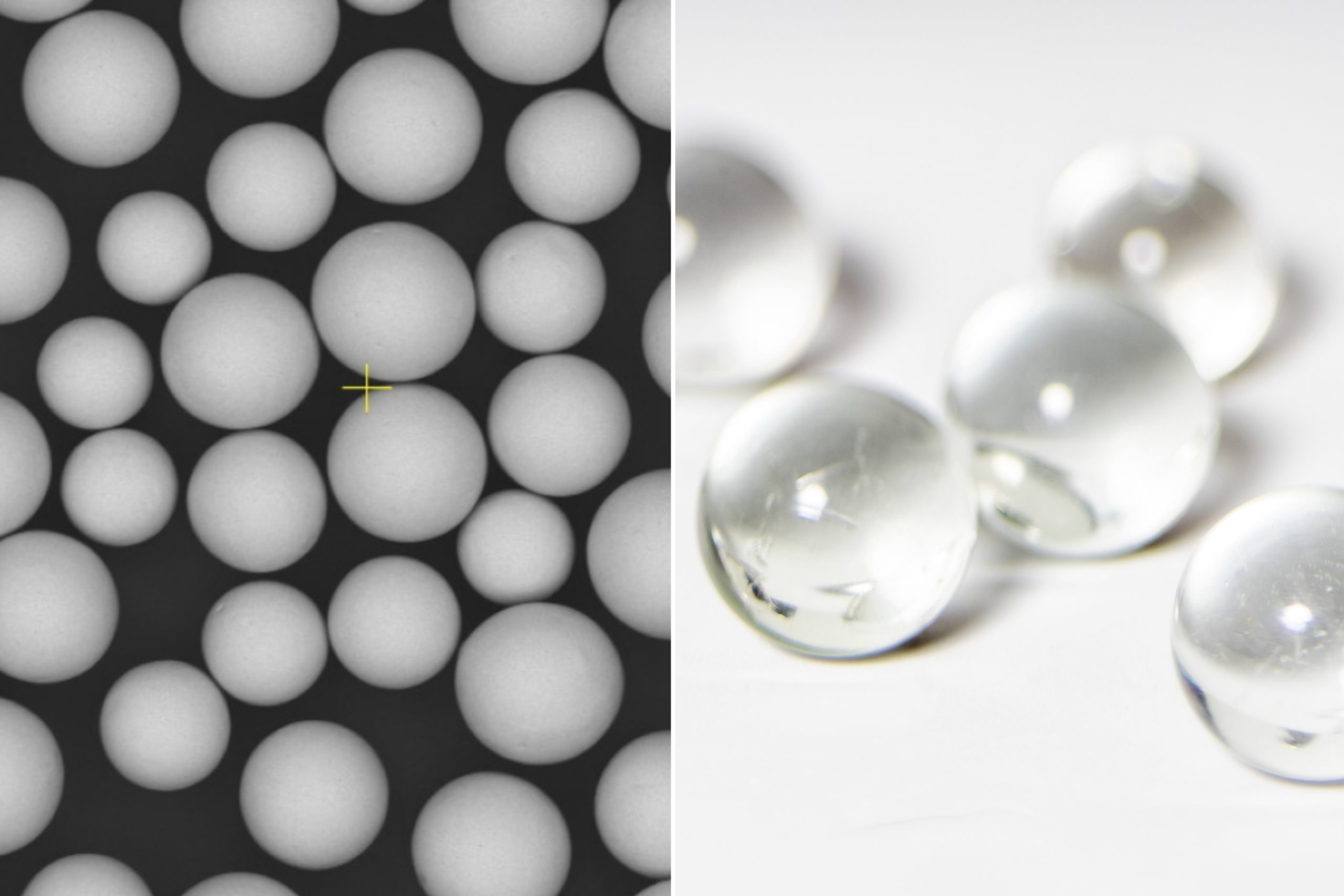
Ceria stabilized zirconia beads, commonly referred to as Ce-TZP beads, represent the highest-performance class of zirconia grinding and dispersion media for contamination-critical and nano-scale processing environments. By stabilizing zirconium dioxide (ZrO₂) with cerium oxide (CeO₂), Ce-TZP beads achieve an exceptional combination of high density, superior fracture toughness, and ultra-low wear rate.
Unlike conventional yttria stabilized zirconia (YSZ) beads or fully stabilized cubic zirconia systems, Ce-TZP beads are engineered specifically for processes where even trace contamination, particle shedding, or unstable wear behavior cannot be tolerated. This makes them the preferred choice for semiconductor CMP slurry preparation, electronic materials, advanced inks, and nano-dispersion systems.
This page serves as a dedicated cluster supporting the Perles en zircone pillar, providing an in-depth engineering analysis of Ce-TZP beads, including stabilization mechanisms, microstructural design, mechanical properties, wear behavior, and application-specific selection guidance.
Table of Contents
- 1. What Are Ceria Stabilized Zirconia Beads?
- 2. Ceria Stabilization Mechanism
- 3. Microstructure and Grain Engineering
- 4. Mechanical and Physical Properties
- 5. Ultra-Low Wear Behavior and Contamination Control
- 6. Precision Industrial Applications
- 7. Ce-TZP vs YSZ vs Cubic Zirconia Beads
- 8. When to Choose Ce-TZP Beads
- 9. Conclusion
1. What Are Ceria Stabilized Zirconia Beads?
Ceria stabilized zirconia beads are ceramic grinding media manufactured from zirconium dioxide that has been partially stabilized using cerium oxide (CeO₂). In typical Ce-TZP systems, ceria content ranges from approximately 8 to 12 mol%, enabling the retention of a tetragonal zirconia phase with exceptional resistance to spontaneous transformation.
The defining characteristic of Ce-TZP beads is their ability to combine very high fracture toughness with exceptionally low wear rates. This combination is rarely achieved in ceramic materials and is a direct result of ceria’s unique interaction with the zirconia lattice.
Ce-TZP beads are therefore positioned at the top end of the zirconia bead performance spectrum, particularly for high-value processes where product purity, process stability, and repeatability are non-negotiable.
2. Ceria Stabilization Mechanism
Ceria stabilization differs fundamentally from yttria stabilization. When CeO₂ is introduced into the zirconia lattice, Ce⁴⁺ ions partially substitute for Zr⁴⁺ ions, creating oxygen vacancies that stabilize the tetragonal phase over a wide temperature and stress range.
Compared with YSZ systems, Ce-TZP exhibits:
- Higher resistance to low-temperature degradation
- Greater tolerance to hydrothermal environments
- Reduced driving force for spontaneous phase transformation
Under mechanical stress, Ce-TZP still benefits from transformation toughening; however, the transformation kinetics are slower and more controlled than in YSZ. This leads to energy dissipation without excessive microcracking or grain pull-out, a key factor behind the ultra-low wear behavior of Ce-TZP beads.
3. Microstructure and Grain Engineering
The performance of ceria stabilized zirconia beads is highly sensitive to microstructural design. Advanced Ce-TZP beads are produced using high-purity powders, controlled spray drying, and precision sintering to achieve a dense, fine-grained microstructure.
Key microstructural features include:
- Average grain size typically below 0.5 µm
- Sintering density exceeding 99.7%
- Uniform ceria distribution without segregation
- Minimal residual porosity
Fine grain size suppresses uncontrolled crack propagation, while high density minimizes grain boundary exposure, both of which are essential for maintaining low wear and low contamination over extended milling cycles.
4. Mechanical and Physical Properties
| Property | Ce-TZP Beads | YSZ Beads | Cubic Zirconia Beads |
|---|---|---|---|
| Densité (g/cm³) | ~6.1 | ~6.0 | ~5.8–5.9 |
| Vickers Hardness (HV) | 1100–1250 | 1100–1300 | 1000–1200 |
| Fracture Toughness (MPa·m¹ᐟ²) | 8–11 | 7–10 | 5–7 |
| Wear Rate | Très faible | Faible | Low–Medium |
The combination of high density and high fracture toughness enables Ce-TZP beads to deliver superior energy transfer while maintaining exceptional durability under high shear and long operating times.
5. Ultra-Low Wear Behavior and Contamination Control
Wear behavior is the defining advantage of ceria stabilized zirconia beads. In contamination-sensitive applications, even sub-ppm levels of media wear can compromise product quality or downstream process stability.
Ce-TZP beads exhibit ultra-low wear due to:
- Controlled transformation toughening without grain pull-out
- High fracture resistance at bead-to-bead contact points
- Superior chemical inertness in acidic and alkaline slurries
As a result, Ce-TZP beads generate significantly fewer fines and exhibit longer service life compared with YSZ or cubic zirconia beads.
6. Precision Industrial Applications
Ceria stabilized zirconia beads are widely adopted in applications where purity, consistency, and reliability outweigh cost considerations.
- Semiconductor CMP slurry preparation and conditioning
- Nano-dispersion of electronic and optical materials
- Inkjet inks and high-purity pigment dispersions
- Advanced battery materials and functional ceramics
For size-critical processes, Ce-TZP beads are commonly used in micro- and sub-micro sizes such as 0.1 mm zirconia beads to enable controlled nano-scale grinding.
7. Ce-TZP vs YSZ vs Cubic Zirconia Beads
| Criterion | Ce-TZP | YSZ | Cubic Zirconia |
|---|---|---|---|
| Primary Advantage | Ultra-low wear | High toughness | Phase stability |
| Contamination Risk | Très faible | Faible | Faible |
| Cost Level | Haut | Medium | Medium |
| Typical Use | CMP / Nano | General milling | Thermal stability |
8. When to Choose Ce-TZP Beads
Ceria stabilized zirconia beads should be selected when:
- Contamination control is the primary requirement
- Ultra-low wear rate is critical to product performance
- Processes involve high shear and long operating cycles
- Semiconductor or electronic material standards apply
For applications where impact resistance is the dominant concern, YSZ beads may offer a more cost-effective alternative.
9. Conclusion
Ceria stabilized zirconia beads (Ce-TZP) represent the pinnacle of zirconia grinding media performance. Through ceria-based stabilization, fine-grained microstructure, and high densification, Ce-TZP beads deliver unmatched wear resistance and contamination control.
For advanced manufacturing environments such as semiconductor CMP, nano-dispersion, and high-purity material processing, Ce-TZP beads are not merely an option but a technical necessity within the broader perles de zircone ecosystem.
Filtres