Sandblasting Abrasive Safety Regulations & OSHA
Abrasive blasting is one of the highest-risk activities in industrial surface preparation. Silicosis, noise-induced hearing loss, blast injury, and toxic metal exposure are all occupational hazards with regulatory frameworks that carry significant enforcement penalties. Complete compliance guide for contractors, facility managers, and HSE professionals — updated April 2026.
Key Hazards in Abrasive Blasting Operations
Abrasive blasting operations generate multiple simultaneous occupational hazards that require concurrent engineering controls, administrative controls, and personal protective equipment. A hazard assessment performed before each blasting operation is not merely best practice — it is a regulatory requirement under OSHA 29 CFR 1910.132 (Personal Protective Equipment) and the General Duty Clause.
| Hazard | Cause | Regulatory Standard | Control Method |
|---|---|---|---|
| Silicosis (lung disease) | Respirable crystalline silica in media or substrate | OSHA 29 CFR 1910.1053 | Silica-free media; supplied-air respirator |
| Noise-induced hearing loss | Blast noise (>110 dB(A)) | OSHA 29 CFR 1910.95 | Hearing protection; engineering controls |
| Blast injury (eye, skin) | Abrasive ricochet; pressure release | OSHA 29 CFR 1910.94 | Blast hood; leather gloves; full body coverage |
| Heavy metal poisoning | Lead, chromium, cadmium in blasted coatings | OSHA 29 CFR 1910.1025 / 1910.1026 | HEPA respiratory protection; blood monitoring |
| Heat stress | PPE thermal burden; hot substrate | OSHA Heat Illness Prevention | Rest cycles; hydration; cool rest areas |
| Confined space hazards | O₂ displacement; fume accumulation in tanks | OSHA 29 CFR 1910.146 | Permit-required confined space procedures |
Silica Dust: The Critical OSHA Standard
OSHA’s Respirable Crystalline Silica Standard (29 CFR 1910.1053 for general industry; 29 CFR 1926.1153 for construction) sets a Permissible Exposure Limit (PEL) of 50 µg/m³ as an 8-hour time-weighted average (TWA), with an Action Level of 25 µg/m³ TWA. Exposure above the Action Level triggers mandatory air monitoring, medical surveillance, training, and exposure control programs. Exposure above the PEL triggers immediate engineering and work practice controls to reduce exposure.
The practical implication for abrasive blasting: crystalline silica abrasives (quartz sand) are effectively banned for industrial blasting in any environment where OSHA or equivalent jurisdiction applies. Any abrasive containing more than 1% crystalline silica requires exposure assessment and likely exceeds the PEL in blasting operations. All abrasives supplied by Jiangsu Henglihong Technology Co., Ltd. contain less than 1% free silica, with the majority well below 0.5%, providing a substantial safety margin and simplified regulatory compliance.
Silicosis is irreversible. Unlike many occupational diseases, silicosis caused by crystalline silica exposure cannot be treated or reversed — only prevented. Preventing silicosis through the use of silica-free abrasives and appropriate respiratory protection is not merely a legal obligation; it is a fundamental moral duty of every employer operating abrasive blasting equipment.
Personal Protective Equipment Requirements
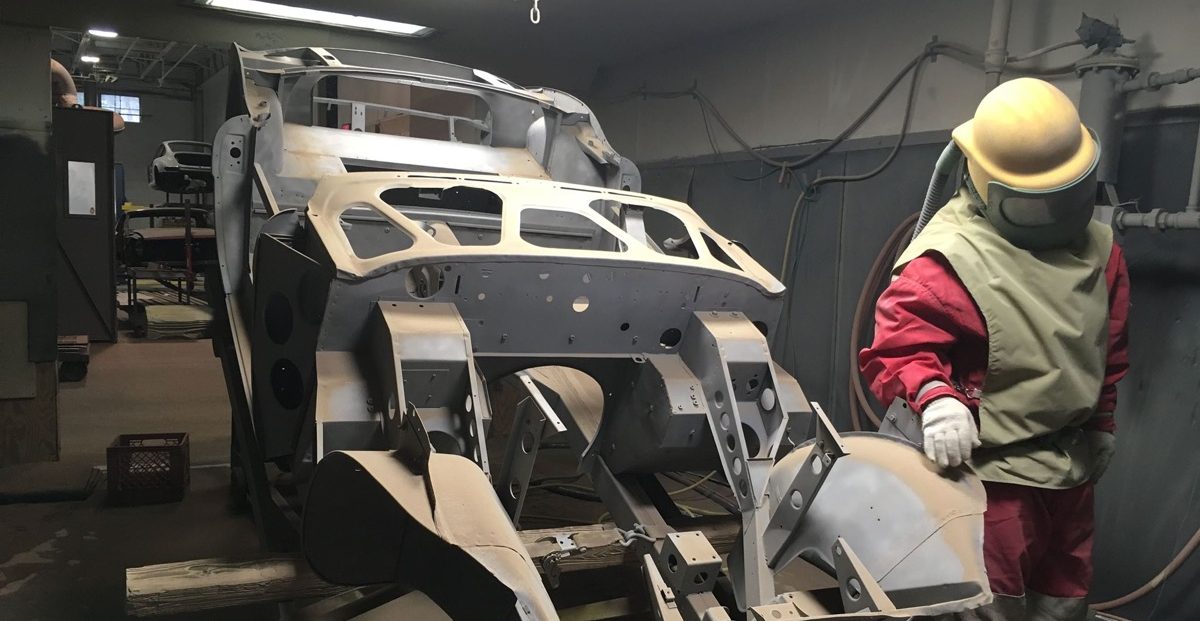
The PPE requirements for abrasive blasting operations are among the most demanding in industrial workplaces. OSHA 29 CFR 1910.94(a) specifies requirements for abrasive blasting respiratory protection, equipment, and protective clothing.
Respiratory Protection
Supplied-air respirators (SARs) — airline respirators — rated for abrasive blasting use (NIOSH-approved Type CE abrasive blasting respirator) are mandatory for operators inside or adjacent to the blast zone. Air-purifying respirators (APF 10–25) are not adequate protection for abrasive blasting regardless of abrasive type. The air supply must be Grade D breathing air per ANSI/CGA G-7.1.
Eye & Face Protection
The blasting helmet provides face and head protection as part of the supplied-air respirator assembly. Bystanders within the visible dust cloud must wear at minimum ANSI Z87.1 safety glasses or goggles. No unprotected personnel should be in the blast zone or within the dust exclusion perimeter.
Hearing Protection
Abrasive blasting operations typically produce 108–115 dB(A) within the blast zone — well above OSHA’s 90 dB(A) PEL. Double hearing protection (earplugs plus earmuffs) is recommended for operators in the blast zone. Duration of unprotected exposure at 115 dB(A) to the OSHA PEL is less than 1 minute.
Body Protection
Heavy-duty leather gloves, leather blast suit or equivalent abrasion-resistant coveralls, and steel-toed safety boots are the minimum body protection for blast operators. Clothing must fully cover all skin — abrasive ricochet at blast pressures causes severe lacerations and abrasion burns on exposed skin within seconds.
EU & International Regulatory Frameworks
European Union: EU Directive 2004/37/EC (Carcinogens and Mutagens at Work) classifies crystalline silica as a Category 1A carcinogen, effectively prohibiting its use as a blasting abrasive in EU member states. The NEPSI (Non-Pneumoconiosis-generating Abrasives) agreement, signed by major European abrasive producers, requires all blasting abrasives to contain less than 1% free silica. EU REACH Regulation (EC 1907/2006) requires SDS documentation for all chemical substances including abrasives.
Australia: Safe Work Australia has banned the use of crystalline silica substances for abrasive blasting since 2020 (WHS Regulations Part 7.2). All abrasives used for blasting must have crystalline silica content below 1% and suppliers must provide SDS documentation.
NACE/AMPP: NACE SP0178 and NACE SP0508 provide consensus standards for abrasive blasting quality and abrasive cleanliness requirements in the corrosion prevention industry, widely referenced in pipeline, marine, and oil and gas coating specifications globally.
Selecting Compliant Abrasive Media
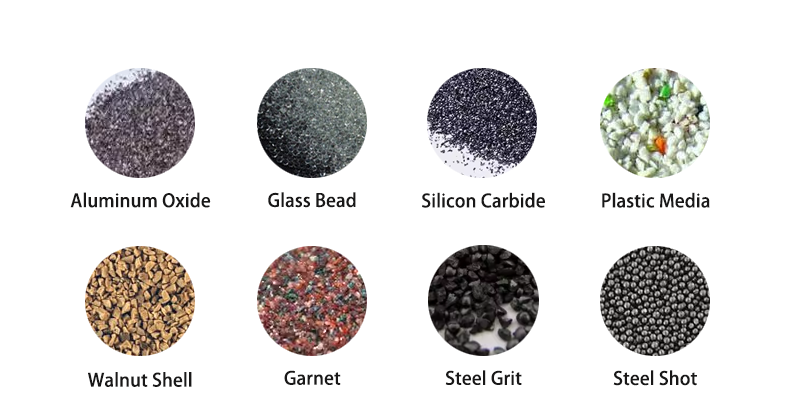
The simplest path to OSHA and international regulatory compliance is using silica-free blasting abrasives with less than 1% free silica content — which eliminates the dominant respiratory hazard and substantially reduces exposure monitoring obligations. All standard blasting abrasives supplied by Jiangsu Henglihong Technology Co., Ltd. meet this requirement:
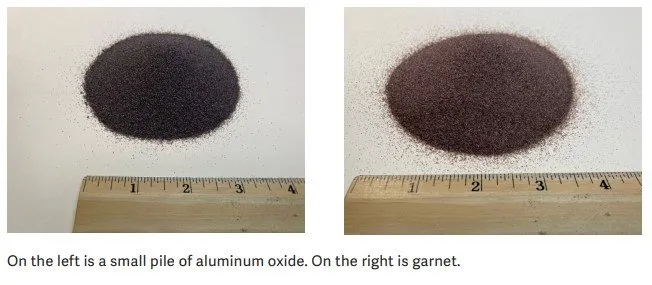
- Óxido de aluminio — <1% free silica (BFA); <0.5% (WFA)
- Granate — <1% free silica; lowest dust generation of mineral abrasives
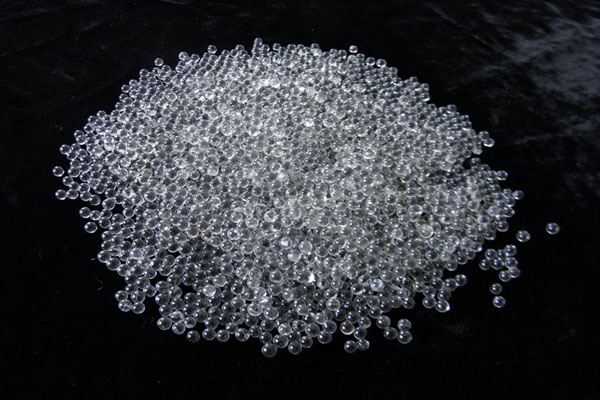
- Cuentas de vidrio — amorphous silica (not crystalline); below regulatory threshold
- Steel grit and shot — no silica; metallic abrasive
- Walnut shell — no silica; organic media
- Plastic blast media — no silica; thermoplastic resin
Note that even with silica-free media, if the substrate being blasted contains silica-based contamination (concrete, masonry, quartz-bearing rust scale), silica dust can still be generated. Always assess the full process — not just the abrasive media — for silica generation potential.
Exposure Monitoring Requirements
Under OSHA 29 CFR 1910.1053, initial air monitoring for respirable crystalline silica is required for all operations where silica exposure at or above the Action Level (25 µg/m³ TWA) is reasonably anticipated. For abrasive blasting with compliant silica-free media on steel substrates (not concrete or masonry), initial monitoring typically confirms exposures well below the Action Level, significantly reducing ongoing monitoring obligations.
When blasting legacy-coated surfaces (lead paint, chromate primer, TBT coatings), OSHA standards for lead (29 CFR 1910.1025) and hexavalent chromium (29 CFR 1910.1026) impose separate, stringent monitoring, medical surveillance, and exposure control requirements. Written compliance programs and documented employee training are mandatory before commencing work on these substrates. Consult a Certified Industrial Hygienist (CIH) for assistance with regulatory compliance programs for complex blasting operations.
PREGUNTAS FRECUENTES
Sandblasting with crystalline silica (quartz sand) is banned or strictly prohibited for abrasive blasting in the European Union, Australia, the UK, Canada, and many other jurisdictions. In the United States, OSHA has not formally banned silica sand for blasting, but its PEL of 50 µg/m³ makes it effectively impractical to use in any blasting operation without exceeding the limit — making compliant silica-free media the only practical option for US operations. Many US states have additional, stricter regulations. The global industry consensus is clear: silica sand should never be used for abrasive blasting.
OSHA requires a Type CE abrasive blasting respirator (supplied-air respirator in combination with a blasting helmet) for all operators inside the blast zone. Type CE is specifically designed for abrasive blasting — it provides both respiratory protection from the air supply and physical protection from abrasive ricochet through the integrated helmet and abrasion-resistant cape. Air-purifying respirators (half-mask, full-face, or powered air-purifying) do not provide adequate protection for abrasive blasting operations and are not OSHA-compliant for this application.
Yes — if employee exposure to respirable crystalline silica at or above the Action Level (25 µg/m³ TWA) is reasonably anticipated, OSHA 29 CFR 1910.1053 requires a written Exposure Control Plan that identifies operations that expose workers, engineering and work practice controls, housekeeping procedures, respiratory protection procedures, and medical surveillance requirements. Using exclusively certified silica-free media (<1% free silica) and confirming through initial air monitoring that exposures are below the Action Level may reduce the extent of the written program required.
Source OSHA-Compliant, Silica-Free Blasting Abrasives
Jiangsu Henglihong Technology Co., Ltd. supplies all blasting abrasives with current SDS documentation, chemical analysis certificates, and free silica content below 1%. Full compliance documentation provided with every shipment.
Filtros