Steel Grit vs Steel Shot: Which Should You Use?
Both are high-carbon steel abrasives with outstanding recyclability — but their particle shapes produce completely different surface results. This guide covers particle mechanics, grade systems, surface profile data, hardness specifications, blending strategies, and a definitive decision framework for every major steel blasting application.
1. Steel Grit vs Steel Shot — The Core Difference
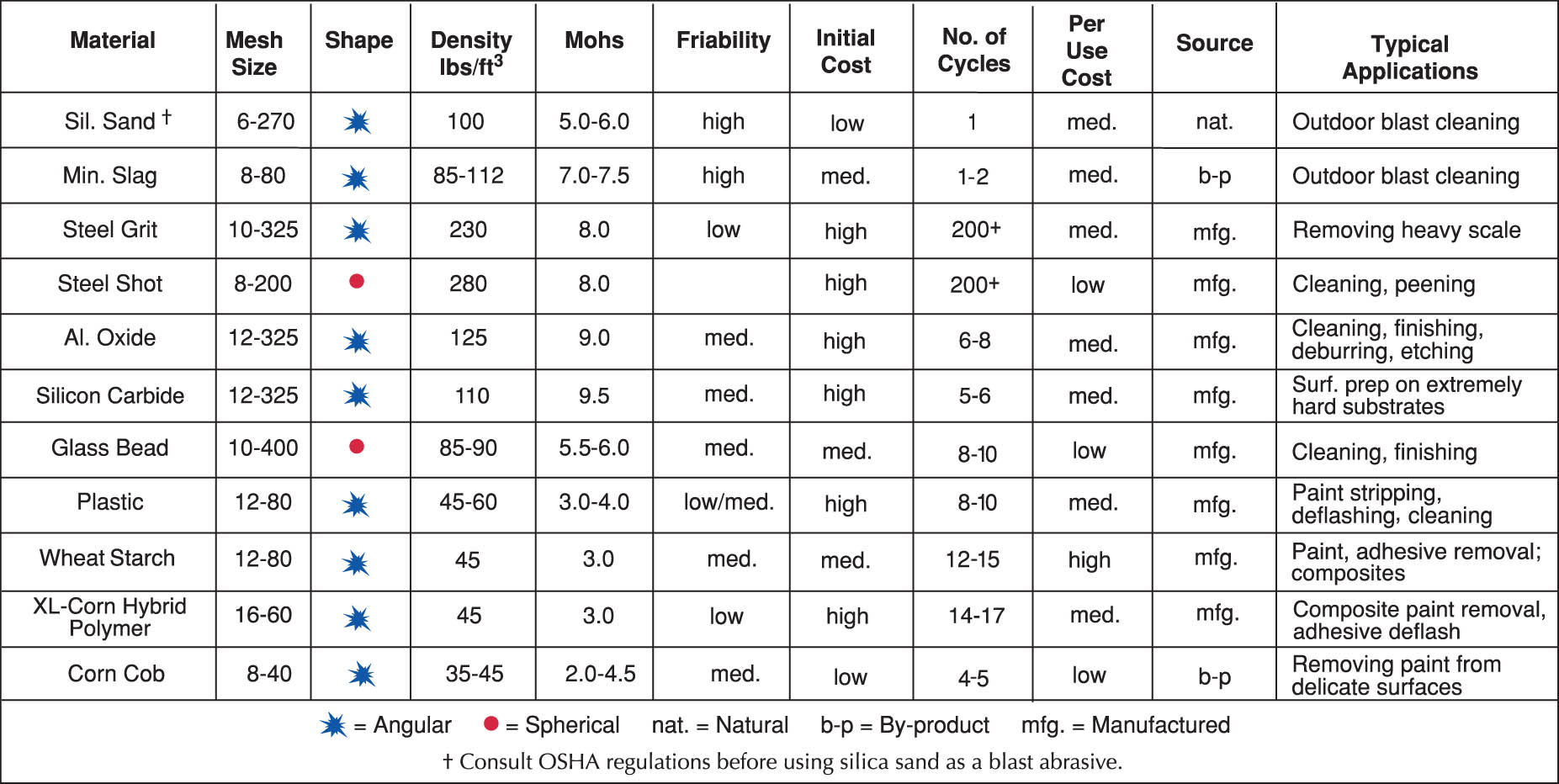
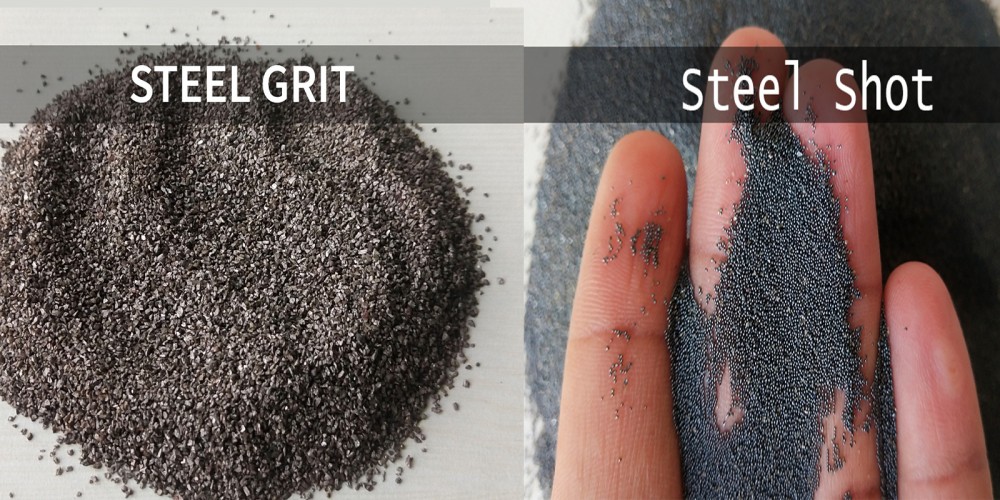
Steel grit and steel shot are both manufactured from high-carbon steel and share a hardness of approximately Mohs 8.0 — but they are fundamentally different abrasive tools. The distinction lies entirely in particle shape, and particle shape determines everything about the surface result.
Both are manufactured under SAE J444 and ISO 11124 standards, and both deliver the outstanding recyclability that makes metallic abrasives the most economical choice per m² in any high-volume automated blast room. The choice between them — or the decision to blend them — comes down entirely to what the surface needs to look like and perform like after blasting.
2. Impact Mechanics and Surface Results
Understanding what happens at the moment of particle impact explains why grit and shot produce such different surfaces despite being made from the same material at similar hardness.
Steel Grit — Cutting Action
An angular grit particle strikes the steel surface with a sharp edge or corner, concentrating the impact force at a point and physically cutting or ploughing into the metal. The displaced metal forms peaks and lips around the cut zone. Millions of these impacts across the surface create the characteristic sharp, jagged profile — high Rz values, excellent mechanical key for adhesion of heavy-build coatings. The surface looks and measures “rough” by any profilometry standard.
Steel Shot — Peening Action
A spherical shot particle strikes the surface and distributes the impact force radially from a central contact point, creating a smooth hemispherical dimple. The metal is plastically deformed downward and outward rather than cut. Importantly, the repeated hammering of the surface induces a layer of compressive residual stress — the mechanism that makes shot peening valuable for fatigue life improvement in springs, gears, and aircraft components. The surface looks and measures relatively smooth.
3. Steel Grit: Grades, Hardness & Profile Data
Steel grit is graded by two independent parameters: particle size (G10 through G120, where lower numbers are coarser) and hardness (GL = low, 40–51 HRC; GM = medium, 54–61 HRC; GH = high, 60–67 HRC). Hardness grade significantly affects both cutting aggression and recycle life — harder grit cuts more aggressively but fractures somewhat more readily under repeated impact.
| Size Grade | Nominal Size (µm) | Profile Depth (Rz) | Hardness Options | Primary Application |
|---|---|---|---|---|
| G10 | 2,000–2,800 | 130–150 µm | GL / GM | Maximum profile, very heavy scale, thick rubber or paint removal |
| G14 | 1,400–2,000 | 110–130 µm | GL / GM | Heavy structural steel, high-build zinc-rich coating systems |
| G25 Most used | 710–1,000 | 90–115 µm | GL / GM / GH | Structural steel fabrication, shipbuilding, bridge maintenance |
| G40 Most used | 425-600 | 70–95 µm | GM / GH | General industrial, automotive components, foundry castings |
| G50 | 355-500 | 55–80 µm | GM / GH | Moderate profile, thinner coating systems, pre-paint steel |
| G80 | 212-300 | 40–60 µm | GH | Fine surface prep, light rust, precision parts, automotive body |
| G120 | 106-150 | 25–40 µm | GH | Fine finishing, thin coatings, pre-plating surface conditioning |
Profile ranges are indicative for GM hardness steel grit in a centrifugal wheel blast room at standard wheel speed. Actual profiles vary with wheel speed, blast angle, part geometry, and substrate condition.
4. Steel Shot: Grades & Applications
Steel shot is graded solely by particle size under SAE J444, with grades from S110 (finest, ~280 µm) to S780 (coarsest, ~2,000 µm). Unlike grit, hardness is not a primary specification variable for shot — most commercial shot is produced to a standard hardness range of 40–51 HRC. For dedicated shot peening, tighter hardness and roundness controls apply under AMS 2431 and related aerospace specifications.
| Size Grade | Nominal Size (µm) | Peening Intensity (Almen) | Primary Application |
|---|---|---|---|
| S110–S170 | 280–425 | Light (4–8A) | Fine peening of thin parts, aluminum components, light scale removal |
| S230 Most used | 580–710 | Medium (8–14A) | Automotive springs, gears, castings descaling, general steel cleaning |
| S330 Most used | 850–1,000 | Medium-high (12–18A) | Structural steel cleaning, foundry castings, heavy descaling |
| S390 | 1,000–1,180 | High (16–22A) | Heavy castings, agricultural equipment, large structural components |
| S460–S550 | 1,180–1,400 | Very high (20–28A) | Heavy steel forgings, railroad components, large castings |
| S660–S780 Peening | 1,700–2,000 | Maximum (24–32A+) | Maximum peening intensity, heavy aerospace and industrial components |
Almen arc height intensity values are indicative ranges for SAE standard test strip conditions. Actual peening intensity depends on wheel speed, distance, and coverage time — must be qualified per applicable specification (SAE AMS 2430, MIL-S-13165) for aerospace and critical applications.
5. Application Guide — When to Use Each
- Structural steel coating preparation — Sa 2.5 / SSPC-SP10 cleanliness with 75–120 µm anchor profile for epoxy, polyurethane, and zinc-rich primer systems
- Shipbuilding and drydock hull blasting — high-profile preparation for anti-corrosion coating systems
- Bridge and infrastructure maintenance — heavy rust, old coating, and mill scale removal from aged structural steel
- Industrial storage tank lining preparation — aggressive surface prep for FBE, glass flake, or rubber lining systems
- Automotive manufacturing — body-in-white and chassis component preparation in automated blast rooms prior to e-coat or powder coating
- Any application where the coating specification requires a defined, measurable anchor profile exceeding 60 µm
- Foundry casting and forging descaling — fast, efficient removal of sand, scale, and oxide from cast iron and steel components in tumble blast or table blast equipment
- Shot peening of automotive springs, transmission gears, connecting rods, and crankshafts for fatigue life improvement
- Aerospace shot peening of landing gear, turbine disks, compressor blades, and aircraft fastener holes per AMS 2430 / MIL-S-13165
- General surface conditioning and cleaning of steel components where a smooth surface is acceptable (light coatings, paint, or no coating)
- Pre-treatment of components before non-destructive testing (NDT) — shot leaves a clean, uniform surface that improves crack detection sensitivity
- Agricultural and construction equipment component cleaning in high-volume automated blast rooms
6. Blending Grit and Shot in Automated Systems
One of the most practical and widely used strategies in automated blast room operation is deliberate blending of steel grit and steel shot in the working media charge. Because both media are metallic and compatible with the same centrifugal wheel blast equipment, they can be run together in any ratio — the shot component provides fast, efficient cleaning and scale removal while the grit component cuts the anchor profile simultaneously. The ratio is adjusted to tune the balance between cleaning speed and profile depth for the specific production requirement.
Common Grit-to-Shot Blend Ratios and Their Effects
In practice, the working media charge in an automated blast room naturally evolves toward a blend over time as grit particles fracture and round, and as fresh media is added to top up consumption losses. Regularly sampling and sieve-analyzing the working charge is essential to confirm that the particle size distribution and grit-to-shot ratio remain within specification — and that accumulated fines are being effectively removed by the separator and classifier.
7. Recyclability and Economics
The primary commercial advantage of both steel grit and steel shot over all mineral and slag abrasives is their exceptional recyclability. In a well-maintained automated blast room with a centrifugal wheel, a separator to remove broken fines, and a classifier to maintain correct particle size in the working charge, metallic abrasives routinely achieve:
- Steel grit: 500–1,500 cycles depending on hardness grade. GH (hard) grit cuts more aggressively but fractures faster than GL or GM grades. For maximum cycle life, specify GL or GM for applications where profile requirements are moderate.
- Stahlschrot: 1,000–2,000+ cycles. Spherical particles fracture less readily than angular grit under repeated impact, and the rounding of sharp fracture points is self-correcting — broken shot fragments gradually become rounded through repeated blasting. Shot typically outlasts grit in cycle life.
The economics are compelling. A blast room operating two shifts per day, 250 days per year will process enormous surface areas. Replacing metallic abrasives with single-use mineral or slag media would multiply annual media cost by a factor of 10–20× at equivalent surface area throughput. For a detailed cost-per-m² breakdown with price benchmarks as of March 2026, see the Blasting Media Cost Guide & ROI Analysis.
8. Substrate Restrictions and Contamination Risk
Steel grit and steel shot are iron-based abrasives. This creates firm substrate compatibility restrictions that must be respected.
- Stainless steel: Never use iron-containing abrasives on stainless steel. Even microscopic steel particles embedded in a stainless surface will initiate rust within days of exposure to humidity — entirely defeating the corrosion resistance the stainless material provides. Use white fused aluminum oxide oder glass bead instead.
- Aluminum and non-ferrous metals: Steel abrasives embed iron particles in aluminum surfaces, which corrode and create cosmetic and structural problems. Use glass bead or fine aluminum oxide for aluminum components.
- Titanium and nickel superalloys: Iron contamination compromises the corrosion resistance and can trigger intergranular attack in these alloys under elevated-temperature service. Iron-free mineral abrasives only for these substrates.
- Composites and CFRP: Steel abrasives will shatter carbon fibers and cause delamination. Plastic blast media is the only appropriate option.
- Carbon steel with subsequent welding: Acceptable — verify that residual abrasive particles are removed from weld preparation areas before welding to avoid weld porosity.
9. Decision Framework — Quick Reference
Answer these questions to determine the right specification:
10. Frequently Asked Questions
Related Resources
Explore the full blasting media resource library from Jiangsu Henglihong Technology for further selection guidance and application-specific recommendations:
- Blasting Media: Complete Industry Guide — full overview of all media types and applications
- Types of Blasting Media: Complete Guide — how metallic abrasives compare to all other types
- How to Choose the Right Blasting Media — step-by-step selection framework and substrate matrix
- Blasting Media Comparison Chart — side-by-side data for all major abrasives
- Blasting Media Cost Guide & ROI Analysis — cost-per-m² benchmarks and economics
- Aluminum Oxide Blast Media — mineral alternative for non-ferrous and stainless substrates
- Garnet Blasting Media — low-dust mineral abrasive for open-air blasting
- Glass Bead Blasting Media — for stainless and aluminum where iron contamination must be avoided
- Plastic Blast Media for Aerospace & Automotive — for composite and thin-gauge aluminum substrates
- Silicon Carbide Blast Media: Hardest Abrasive Explained
- Industrial Surface Prep: Best Blasting Media for Metal
- Blasting Media for Automotive Restoration
- Eco-Friendly Blasting Media: Low-Dust & Silica-Free Options
- Blasting Media Safety Guide: Silica Risks & PPE
Source Steel Grit and Steel Shot from a Trusted Manufacturer
Jiangsu Henglihong Technology supplies steel grit and steel shot in SAE J444 grades, with full hardness certification, sieve analysis documentation, and reliable sea freight export to North America, Europe, the Middle East, and beyond.
Request a Quote or Technical SampleFilter