Pre-HIP Abrasive Surface Preparation for Titanium SLM Parts: Sequence, Requirements, and Quality Gates
Hot isostatic pressing eliminates internal porosity in titanium SLM parts — but it creates a specific risk when surface-connected pores are present. Satellite particles bridging open pore channels can cause those channels to seal prematurely during the HIP cycle, trapping pressurized argon and creating sub-surface voids that expand in subsequent processing. A targeted light blast step before HIP, removing satellite bridges without closing pore openings, prevents this failure mode. This guide provides the protocol, rationale, and quality gate requirements for pre-HIP surface preparation on titanium SLM parts.
1. HIP for Titanium SLM: Purpose and Process
Hot isostatic pressing (HIP) applies simultaneous high temperature and high inert gas pressure to eliminate internal porosity in metal components. For Ti-6Al-4V SLM, standard parameters are 895–955°C at 100–200 MPa argon pressure for 2–4 hours. Under these conditions, internal pore walls deform plastically and bond by solid-state diffusion, eliminating sub-surface voids that would otherwise act as fatigue crack initiation sites. Post-HIP Ti-6Al-4V SLM achieves near-theoretical density (porosity below 0.05%), with fatigue life and fracture toughness approaching the wrought material baseline. HIP is increasingly standard practice for fracture-critical aerospace titanium SLM and is expanding in premium orthopedic implant applications as of August 2026. This article is part of the series on abrasive finishing for titanium SLM parts.
2. The Surface-Connected Pore Problem Explained
Internal pores fully enclosed within the bulk respond to HIP correctly: argon pressure acts uniformly on pore walls, temperature enables plastic deformation and diffusion bonding, and the pore closes to full density. Surface-connected pores — voids with a channel opening to the external surface — present a different behavior. As the HIP temperature rises and titanium softens, narrow surface channels can close by plastic flow before the HIP cycle reaches full densification pressure. Satellite particles or partially sintered powder bridging the channel mouth accelerate this premature closure by providing a mechanical obstruction that the softening titanium surface conforms around.
When a channel seals prematurely, the argon inside the pore is trapped at whatever pressure existed at the time of sealing — often 50–100 MPa rather than the final 150–200 MPa HIP pressure. The trapped argon prevents the pore from closing. The result is an argon-pressurized sub-surface void — a “HIP blister” precursor — that appears as a sub-surface defect on post-HIP CT scanning and can expand into visible surface blistering if the part subsequently experiences any elevated-temperature processing (welding, brazing, heat treatment above the argon equilibrium expansion temperature).
Key insight: Removing satellite particles and partially sintered powder from surface-connected pore openings before HIP is the only reliable preventive intervention. Post-HIP detection and rework of sealed-argon voids is expensive and often impossible without scrapping the part.
3. The Pre-HIP Blast Protocol: Parameters and Rationale
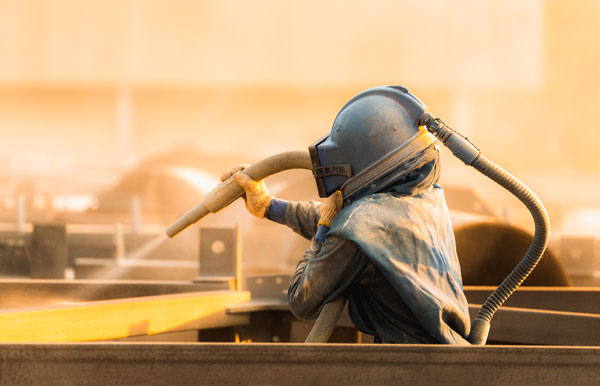
The pre-HIP blast is a clearing operation, not a finishing operation. Its sole objective is to remove material bridging pore openings without plastically deforming or mechanically closing those openings. This sets tighter parameter constraints than general satellite removal (described in our guide on removing satellite particles from titanium SLM parts), because even moderate blast pressure can cold-work the soft titanium surface around a pore mouth enough to reduce its effective diameter.
| Parameter | Pre-HIP Value | Why Not Higher |
|---|---|---|
| Media type | Fine Al₂OΆ mesh 150–220 or fine glass beads mesh 150–200 | Must be smaller than pore opening diameter; no embedment risk at specified pressure |
| Blast pressure | 20–40 PSI | Above 40 PSI begins to cold-work pore mouth geometry, reducing channel diameter |
| Standoff distance | 200–250 mm | Reduces impact velocity; widens beam for gentle, uniform coverage |
| Nozzle angle | 60–75° to surface | Shear component dislodges satellites; avoids perpendicular force that closes pore mouths |
| Number of passes | 1–2 (minimum effective) | Additional passes increase cold-work risk beyond satellite removal benefit |
Critical constraint: if alpha-case removal is required (based on build chamber O₂ records and witness coupon metallography), the alpha-case removal blast sequence must be completed first, because alpha-case removal requires pressures (65–80 PSI) that would over-process the pre-HIP light blast zone. The pre-HIP light blast always follows alpha-case removal, never precedes it.
4. Quality Gates Before and After the Pre-HIP Blast
Before pre-HIP blast: Confirm build record and chamber O₂ log. If alpha-case is a risk, confirm alpha-case removal completion and Ra measurement. Review CT scan or FPI results if surface-connected porosity was previously characterized — confirm open pores are present and that their distribution matches the blasting accessibility (internal pores inaccessible by directional blast require alternative treatment approaches).
After pre-HIP blast: Stereomicroscope inspection at 20–50× to confirm satellite removal from all blasted surface areas. Ra measurement at defined locations: confirm Ra has not changed by more than 20% from the pre-blast value (significant Ra reduction indicates over-blasting with surface cold-work — investigate). For high-value components, repeat FPI or CT to confirm pore mouths are open and visible. Execute full post-blast cleaning sequence (blow-off + ultrasonic clean + DI rinse + dry) before HIP loading — the HIP furnace argon atmosphere must not be contaminated by blast media residue or organic material from part handling.
5. Post-HIP Finishing: The Second Blast Sequence
HIP does not substantially change the external surface topography — the cycle densifies internal structure but leaves the external Ra and Rz approximately unchanged. Post-HIP parts show minor surface oxide color changes from the high-temperature argon exposure but not changes in roughness profile. The post-HIP finishing sequence is therefore the same as it would be without HIP in the production flow: the full application-specific blast, peening, and cleaning protocol appropriate for the component’s end use.
For aerospace titanium SLM brackets: post-HIP proceeds to staircase normalization blast (if not done pre-HIP) followed by shot peening per AMS 2430. For orthopedic implants: post-HIP proceeds to wet blast fine finishing, contamination verification, and acid etch if SLA surface is specified. The pre-HIP light blast does not substitute for or modify the post-HIP finishing sequence in any way — it is an additive step that occurs before HIP in the production routing.
Post-HIP aerospace components proceed to shot peening. See our guide on shot peening titanium SLM aerospace parts: AMS 2430, fatigue life, and NADCAP compliance for the complete peening protocol following HIP.
6. Integrating Pre-HIP Blasting into Production
The pre-HIP blast adds 15–30 minutes of process time per batch plus setup and cleaning. Document it as a defined routing step in the production work order with mandatory sign-off for visual inspection and cleaning completion before HIP loading authorization. This formal routing prevents the step being skipped under schedule pressure — the most common cause of HIP blister problems in production titanium SLM operations. If HIP blister problems are already occurring in your production, investigate pre-HIP surface preparation as the first remediation step before adjusting HIP parameters, which rarely resolve satellite-bridging-caused blistering.
Häufig gestellte Fragen
X-ray computed tomography (micro-CT) at 20–50 μm voxel size is the most reliable method, showing pore location, size, and connectivity to the surface. Fluorescent penetrant inspection (FPI) is faster and lower cost, detecting surface-connected pores with openings above approximately 50 μm. For production-volume operations, a statistical sampling plan using micro-CT on first-article and periodic surveillance builds combined with 100% FPI is a practical quality control approach. Both methods should be performed on parts after depowdering and before the pre-HIP blast, to establish the pre-treatment baseline for the quality gate.
If CT or FPI confirms no surface-connected pores, skipping pre-HIP blasting is acceptable. If surface-connected pores are present (common in SLM), skipping leaves satellite bridges in place that can seal pore channels during HIP, creating argon-filled sub-surface voids instead of fully consolidated material. These voids appear as defects on post-HIP CT scanning and can cause visible HIP blistering during subsequent high-temperature processing. For fracture-critical aerospace components, sealed-argon voids are a rejectable non-conformance. For implants, they represent a patient safety concern. The cost of pre-HIP blasting is insignificant compared to the cost of reworking or scrapping HIP-blistered high-value components.
As of August 2026, no single universal aerospace standard explicitly mandates pre-HIP blasting for titanium SLM. However, aerospace prime OEM process specifications for HIP of additive manufacture titanium often include pre-HIP surface preparation requirements that in practice require a light blast step. First-article HIP qualification under AS9100 requires demonstrating that HIP reliably closes internal porosity without creating new sub-surface defects — which implicitly requires addressing surface-connected pore sealing. Most mature aerospace HIP operations for titanium SLM have incorporated pre-HIP blasting as standard work independently of formal standard mandates.
At the specified low parameters (20–40 PSI, 200–250 mm standoff), blast energy is significantly below standard finishing levels. Walls above 0.8 mm are not at risk of deformation from these parameters. For walls 0.5–0.8 mm, test on a representative coupon and measure wall deflection before production blasting. For walls below 0.5 mm, restrict blasting to thicker-walled accessible areas and address thin-wall satellites through extended pressurized-air depowdering or vibratory agitation of the dry part before HIP, which applies lower-energy mechanical action suitable for thin-wall features.
Need Specialist Abrasive Media for Titanium SLM Finishing?
Jiangsu Henglihong Technology Co., Ltd. supplies fine aluminum oxide (mesh 150–220) and glass beads (mesh 150–200) suitable for pre-HIP satellite removal on titanium SLM parts, with the controlled particle size and low iron content appropriate for pre-HIP process requirements. Contact our team for pre-HIP media specification support.
Contact Our Technical TeamFilter