Best Blasting Sand for Rust Removal: What Professionals Actually Use
A direct, application-focused guide to abrasive media selection for rust removal — from light surface oxidation to heavy mill scale and deep pitting — with professional recommendations for both open blasting and cabinet systems.
Understanding Rust Severity Grades
Not all rust is the same — and the right abrasive media for light surface oxidation is very different from the right media for deeply pitted, heavily scaled structural steel. Before selecting a media, assess your rust condition against SSPC’s rust grade standards, which define four levels of corrosion on steel.
| Rust Grade | Beschreibung | Recommended Blast Standard | Typische Anwendungen |
|---|---|---|---|
| Grade A | Tight mill scale, little or no rust | SSPC-SP 6 (Commercial) | New steel, fresh fabrications |
| Grade B | Some rust, mill scale beginning to fail | SSPC-SP 6 or SP 10 | Lightly weathered structural steel |
| Grade C | Widespread rust, mill scale gone, no pitting | SSPC-SP 10 (Near White) | Moderately corroded steel, equipment |
| Grade D | Deep pitting, heavy corrosion throughout | SSPC-SP 5 (White Metal) | Marine steel, severely corroded structures |
The blast standard you need determines the required surface cleanliness — and the required cleanliness, combined with your coating system’s anchor profile specification, drives the media and grit size selection. For a full breakdown of how grit size affects surface profile depth, see: Blasting Sand Grit Size Guide: Coarse vs Medium vs Fine.
What Professionals Actually Use
The professional surface preparation industry has largely moved away from silica sand for rust removal — driven by OSHA regulations, coating contractor specifications, and the practical economics of recyclable media. The current professional standard, across marine, oil and gas, bridge, and general industrial coating work, is as follows:
Open blasting on structural steel: Garnet (30/60 mesh) at 90–110 PSI, or coal slag (medium grade) for budget-constrained operations. Garnet is specified on SSPC-SP 10 and SP 5 projects; coal slag is acceptable for SP 6 and SP 7 cleanliness levels.
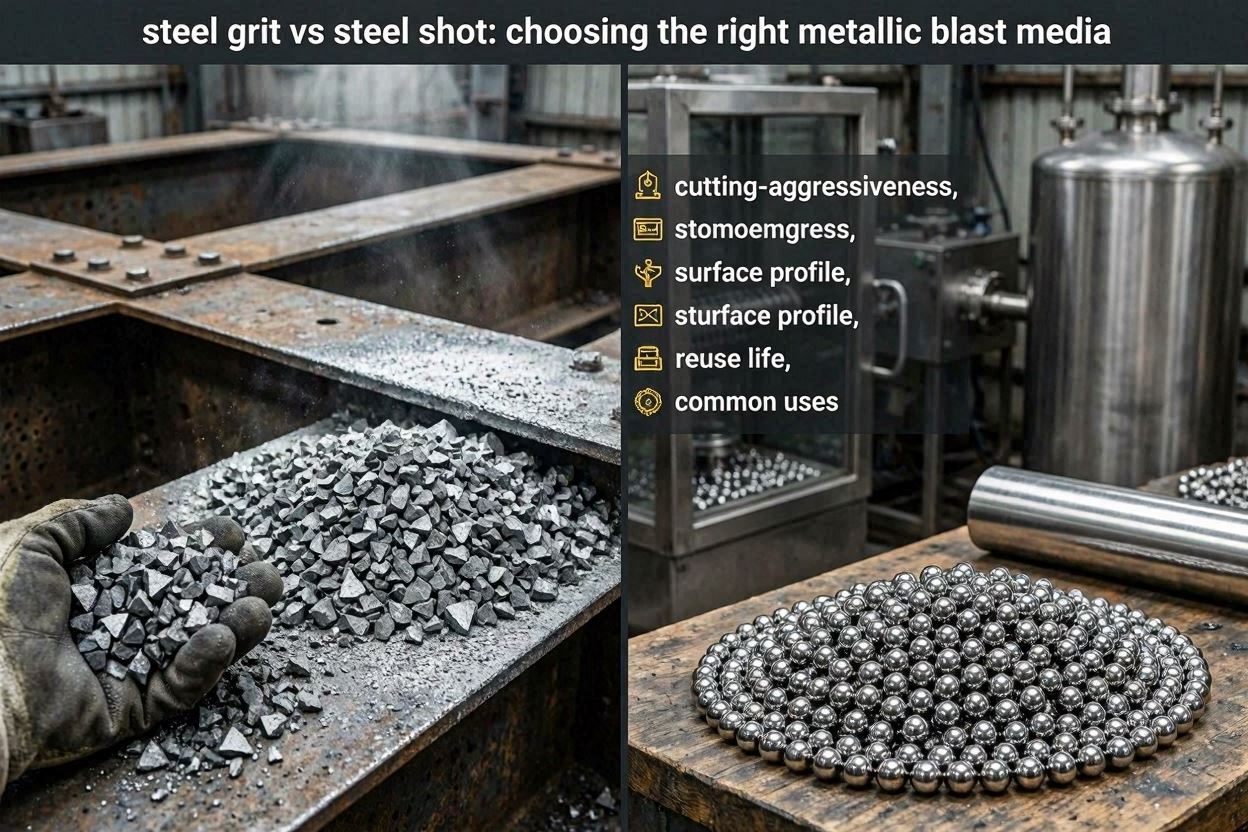
Blast rooms and wheel blast machines: Steel grit (G25–G40 grade) for heavy rust and mill scale removal. Steel shot may be added to the media mix to balance cutting speed and profile depth.
Cabinet blasting (small parts): Aluminum oxide (80–120 grit) for consistent performance and high reusability. Some shops use garnet in cabinets for cost reasons; both perform well.
Silica sand is effectively absent from professional rust removal work in 2026. The combination of regulatory risk, disposal cost, and available alternatives makes it the worst choice on every metric except initial purchase price — and even that advantage disappears once total project cost is calculated.
Garnet for Rust Removal
Garnet — Professional Standard for Open Blasting
Garnet at 30/60 mesh is the go-to specification for professional rust removal on carbon steel. At 90–110 PSI nozzle pressure with a 3/8-inch nozzle, medium garnet consistently achieves SSPC-SP 10 (near-white metal) on Grade B and C corroded steel in a single controlled pass — removing mill scale, adherent rust, and surface contamination while leaving a 1.5–2.5 mil anchor profile for coating adhesion. For Grade D pitting corrosion or heavy mill scale, step up to 20/40 mesh coarse garnet.
Garnet’s sub-angular particle shape is particularly well-suited to rust removal because it combines cutting efficiency (from its angular facets) with consistent particle size distribution (from its natural crystal structure). This produces a more uniform surface profile than silica sand or coal slag, with less variation between passes — critical for specification compliance on high-value coating projects.
Recyclability is the decisive economic advantage. A 50 lb charge of 30/60 garnet covers approximately 25–40 square feet of Grade C steel at SP 10 cleanliness in the first pass. After screening to remove fines, the same charge delivers another 3–4 productive passes before replacement — bringing the effective cost per square foot of properly prepared surface well below coal slag’s single-use cost.
Jiangsu Henglihong supplies professional-grade garnet blasting media in the full range of mesh sizes used for rust removal and coating preparation applications. For bulk procurement guidance, see: How to Buy Blasting Sand in Bulk.
Coal Slag for Rust Removal
Coal Slag (Black Diamond) — Best Budget Option for Open Blasting
Coal slag is the most accessible and affordable media for rust removal in North America. Available at Tractor Supply, Northern Tool, and Menards, Black Diamond medium and coarse grades are effective on Grade B and C corroded steel at SSPC-SP 7 (brush-off) and SP 6 (commercial) cleanliness levels. For SP 10 or SP 5 specifications, garnet or steel grit is more reliable. See local sourcing options at: Where to Buy Blasting Sand Near Me.
Coal slag’s angular particles cut moderately aggressively at standard blast pressures — effective for removing loose and moderately adherent rust from structural steel, farm equipment, fences, and vehicle frames. It generates more fines during blasting than garnet, which increases dust and reduces reusability, but for single-pass open blasting where media recovery is not practical, this is an acceptable tradeoff at its price point.
For DIY operators blasting a vehicle frame, garden tools, or farm equipment outdoors, Black Diamond medium grade at 80–100 PSI is a practical first choice — available today at retail, low-silica, and effective for moderate rust without specialist sourcing or recycling infrastructure.
Steel Grit for Heavy Industrial Rust
Steel Grit — Industrial Standard for Blast Rooms
Steel grit is the industrial standard for rust and mill scale removal in blast room environments. Angular cast steel particles at G25–G40 grade produce surface profiles of 2–4 mil on heavy corroded structural steel — appropriate for the most demanding coating specifications including thermally sprayed zinc and epoxy-phenolic linings. Steel grit’s extreme reusability (100+ cycles in maintained closed-loop systems) makes it the lowest cost-per-square-foot option for high-volume industrial rust removal.
Steel grit is not suitable for open blasting — it requires a magnetic separator to recover, clean, and recycle the media. In blast rooms and wheel blast machines, this infrastructure is standard. The operating model is to charge the system with a working mix of steel grit and shot, maintain that mix by adding replacement media to compensate for breakdown losses, and run continuously — a fundamentally different model from the single-use or limited-cycle approach of mineral abrasives.
Henglihong’s steel shot and grit is cast to SAE J444 standards and available in the full range of grade and hardness specifications for rust removal applications from general structural steel to marine-grade surface preparation.
Glass Beads: Finishing After Rust Removal
Glass beads are not a primary rust removal media — their spherical shape and moderate hardness (Mohs 5.5–6) are insufficient for cutting through adherent rust and mill scale efficiently. However, they have a specific role in a two-stage approach to rust removal and surface finishing.
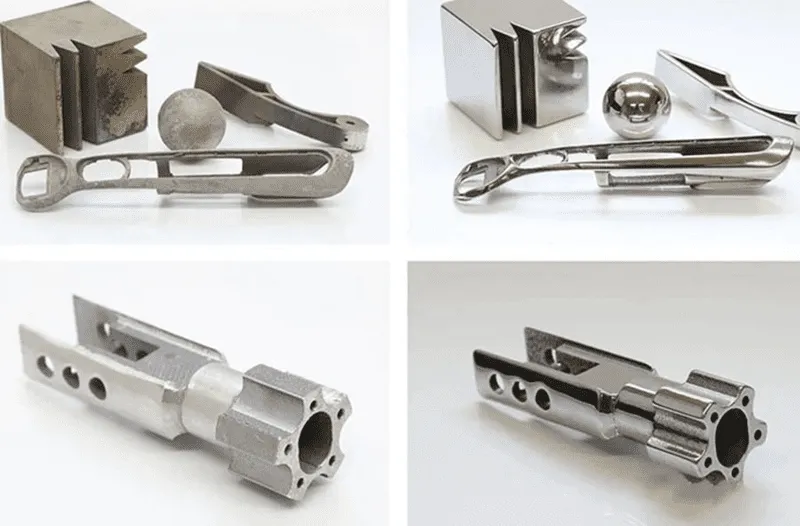
After initial rust removal with garnet or coal slag has achieved bare metal, a secondary pass with fine glass beads (80–120 mesh) achieves three things: it removes residual surface contamination left by the coarser media, peens the surface to reduce stress risers from the anchor pattern, and produces a brighter, more uniform appearance that some coating specifications and quality inspectors prefer. For automotive body panels specifically, this two-stage approach is the professional standard before premium paint systems.
Henglihong’s glass beads for sandblasting are available in a full range of mesh sizes for both finishing and peening applications following primary rust removal.
Blast Pressure & Nozzle Settings for Rust
Media selection is only half the equation for effective rust removal — blast pressure, nozzle size, standoff distance, and blast angle all significantly affect the surface profile and cleanliness achieved.
| Media | Recommended Pressure | Nozzle Size | Standoff Distance | Sprengwinkel |
|---|---|---|---|---|
| Garnet 30/60 mesh | 90–110 PSI | 3/8 inch (#6) | 6–10 inches | 45–90° |
| Garnet 20/40 mesh (coarse) | 100–120 PSI | 3/8–1/2 inch | 8–12 inches | 60–90° |
| Coal Slag (medium) | 80–100 PSI | 3/8 inch (#6) | 6–10 inches | 45–90° |
| Steel Grit G25–G40 | Per wheel blast spec | Wheel blast machine | Machine-controlled | Machine-controlled |
| Aluminum Oxide (cabinet) | 60–90 PSI | Cabinet nozzle | 4–8 inches | 45–75° |
Reducing standoff distance increases profile depth; increasing it reduces profile but covers more area per pass. Reducing blast angle (more oblique) reduces profile depth but can clean surface contamination from recessed areas. For pitted steel, use a 90° angle at close standoff to drive media into the pits and remove embedded rust — then finish with a wider sweep to clean the peaks.
Media Recommendations by Rust Severity
Moderate rust, no pitting (Grade C, SSPC-SP 6/SP 10): Garnet 30/60 mesh at 90–110 PSI. Professional standard. Coal slag medium for budget-constrained open blasting. 1–2 passes for SP 10 on Grade C steel.
Heavy rust, deep pitting (Grade D, SSPC-SP 10/SP 5): Garnet 20/40 mesh (coarse) at 100–120 PSI, or steel grit G25–G40 in a blast room. Multiple passes may be required. Pits may retain some rust staining even at SP 10 — consult coating specifier.
Heavy mill scale on new steel: Steel grit or coarse garnet (12/20 or 20/40 mesh) at maximum pressure. Mill scale is harder than rust and requires aggressive media.
What to Do Immediately After Blasting
Freshly blasted steel is chemically active and begins to re-rust within hours of exposure to moisture. The interval between blasting and primer application is critical — and is specified by most coating systems as a maximum time window (typically 4–8 hours in normal conditions, less in high humidity).
Remove all blast media and dust
Blow down the surface with dry compressed air (oil-free) to remove spent media, fines, and dust from recesses, seams, and pitted areas. Any media contamination left on the surface will blister under the coating.
Verify surface cleanliness and profile
Visually inspect against the required SSPC standard using reference photographs. Measure surface profile with a Testex Press-O-Film tape or equivalent surface comparator. Document both results if working to a formal coating specification.
Apply primer within the specified window
Check the coating manufacturer’s product data sheet for the maximum interval between blast and prime. In humid conditions (>85% relative humidity), this window shortens significantly — surface re-rusting (flash rusting) can occur within 30 minutes in extreme conditions. Do not blast more area than you can prime within the specified window.
Handle blasted surfaces with clean gloves only
Skin oils transferred to a freshly blasted surface contaminate the anchor profile and can cause adhesion failures under the primer. After blasting, handle the work surface only with clean cotton gloves until primer application is complete.
Häufig gestellte Fragen
Bottom Line
For professional rust removal, garnet (30/60 mesh) is the definitive choice — it outperforms every other open-blasting option on surface cleanliness consistency, profile uniformity, dust reduction, and total cost when recyclability is factored in. For DIY and budget-constrained operations, Black Diamond coal slag is the practical alternative available at retail today. For industrial blast rooms, steel grit delivers unmatched productivity and cost-per-cycle economics.
For the complete picture of where to source these media types and how to evaluate suppliers, see: Where to Buy Blasting Sand: The Complete Buyer’s Guide.
Filter