Abrasive Blasting Cobalt-Chrome and Aluminum Alloy Medical Components: Surface Preparation Guide
Cobalt-chromium alloys and aluminum alloys occupy very different roles in medical device manufacturing — CoCr is the material of choice for high-load orthopedic articulating components and cardiovascular structural parts, while aluminum alloys form the structural enclosures and frames of diagnostic and therapeutic equipment. Both materials benefit from abrasive blasting, but in very different ways and with very different constraints. This guide covers the blasting process requirements specific to each material, the critical surface zones that must never be blasted, and the cross-contamination risks that make equipment segregation mandatory in regulated manufacturing environments.
1. CoCr Alloys in Orthopedic Implants: Properties and Surface Requirements
| Alloy | Standard | Condition | UTS (MPa) | Hardness (HRC) | Primary Application |
|---|---|---|---|---|---|
| CoCr28Mo6 (F75) | ASTM F75 | As-cast | 655–820 | 25–35 | Femoral heads, acetabular shells, some knee components |
| CoCrMo (F799) | ASTM F799 | Wrought, hot forged | 1172–1310 | 35–42 | Knee femoral components, tibial stems, spinal rods |
| CoNiCrMo (MP35N) | ASTM F562 | Cold worked + aged | 1790–2068 | 50+ | Highly loaded small components, cardiovascular cables |
CoCr alloys are significantly harder than titanium alloys (CoCr F75 at HRC 25–35 versus Ti-6Al-4V at approximately HRC 30–36, but with different cutting resistance) and wear alloys. Their wear resistance and hardness make them ideal for articulating bearing surfaces in hip and knee replacements. However, this same hardness means blasting CoCr requires higher impact energy than titanium to achieve equivalent surface modification — higher pressure, harder media, or coarser particle size.
The defining surface feature of CoCr orthopedic components is the sharp distinction between articulating and non-articulating surfaces. This distinction is absolute and must never be violated by blasting:
- Articulating surfaces (femoral head spherical surface, femoral condyle bearing surfaces, acetabular liner mating surface): mirror-polished to Ra < 0.05 μm. Any abrasive blasting on these surfaces is a manufacturing non-conformance requiring scrap of the component.
- Non-articulating surfaces (bone-contact chamfers, stem taper, tibial stem, housing areas): may be blasted for bone-contact roughening or pre-coating surface preparation.
2. Blasting CoCr Components: Applications and Exclusions
Abrasive blasting is applied to CoCr orthopedic components in three specific scenarios, each with distinct functional objectives:
Bone-Contact Zone Roughening (Tibial Trays, Femoral Component Chamfers)
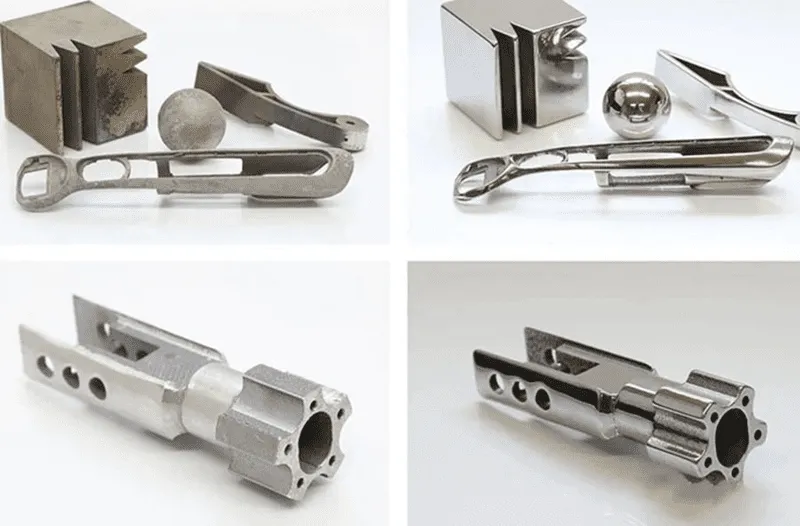
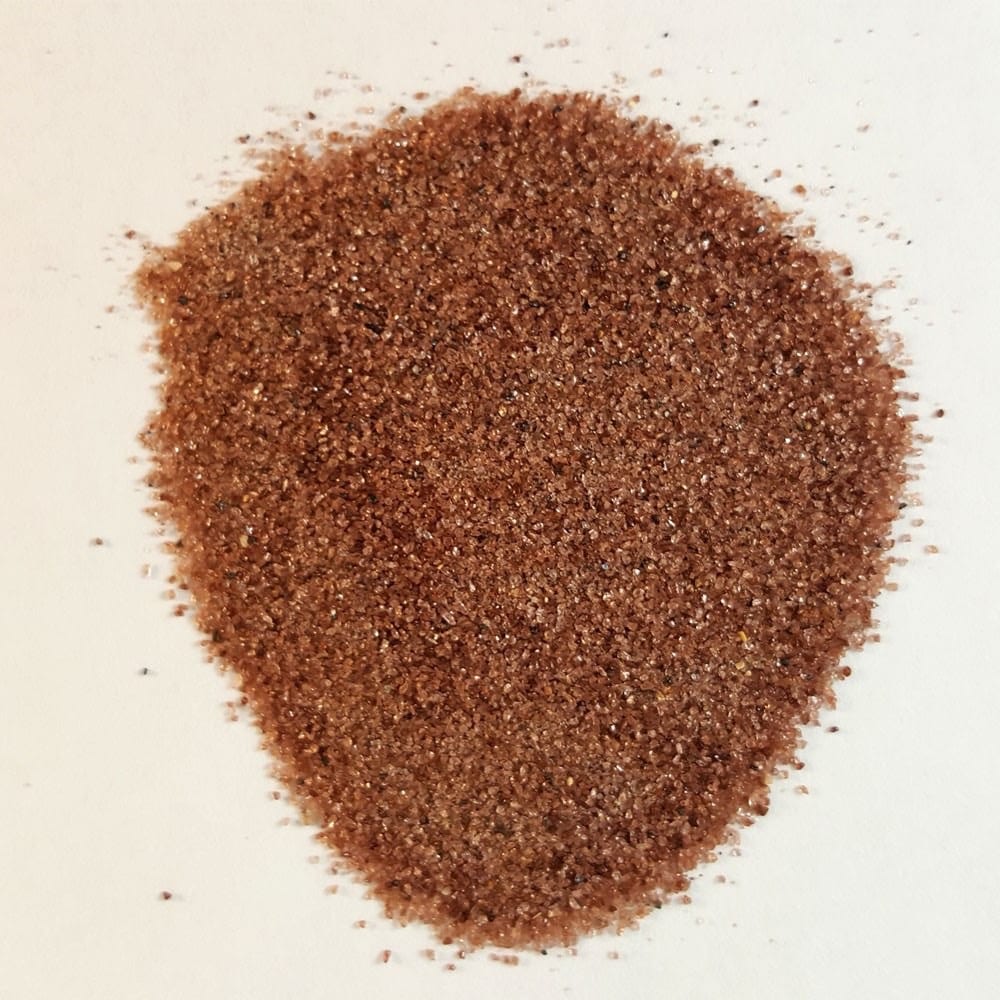
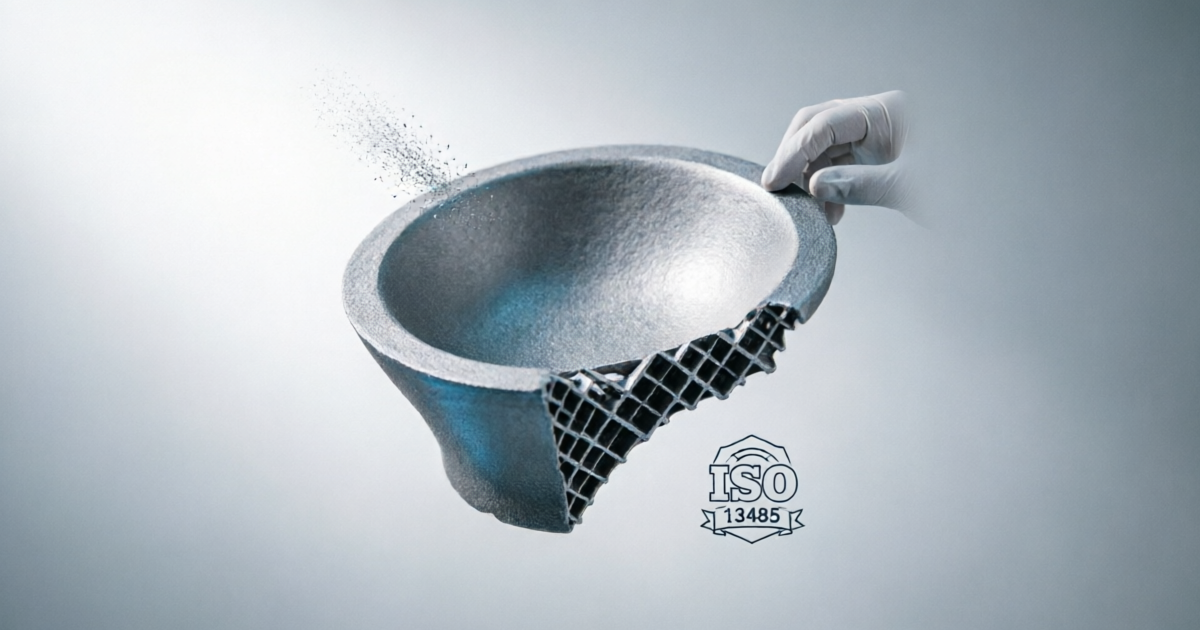
The bone-contact undersurface of CoCr tibial trays and the anterior chamfer and posterior condyle bone-cut surfaces of CoCr femoral components are blasted to create Ra 1.5–3.0 μm to promote cement interlocking or direct bone contact. For cemented designs, the blasted surface creates mechanical keying for bone cement (PMMA acrylic). For cementless designs, the blasted surface is followed by plasma spray coating. Al₂O₃ blasting at 4–6 bar with 250–500 μm particles achieves the required Ra on the harder CoCr substrate.
Deburring After Machining
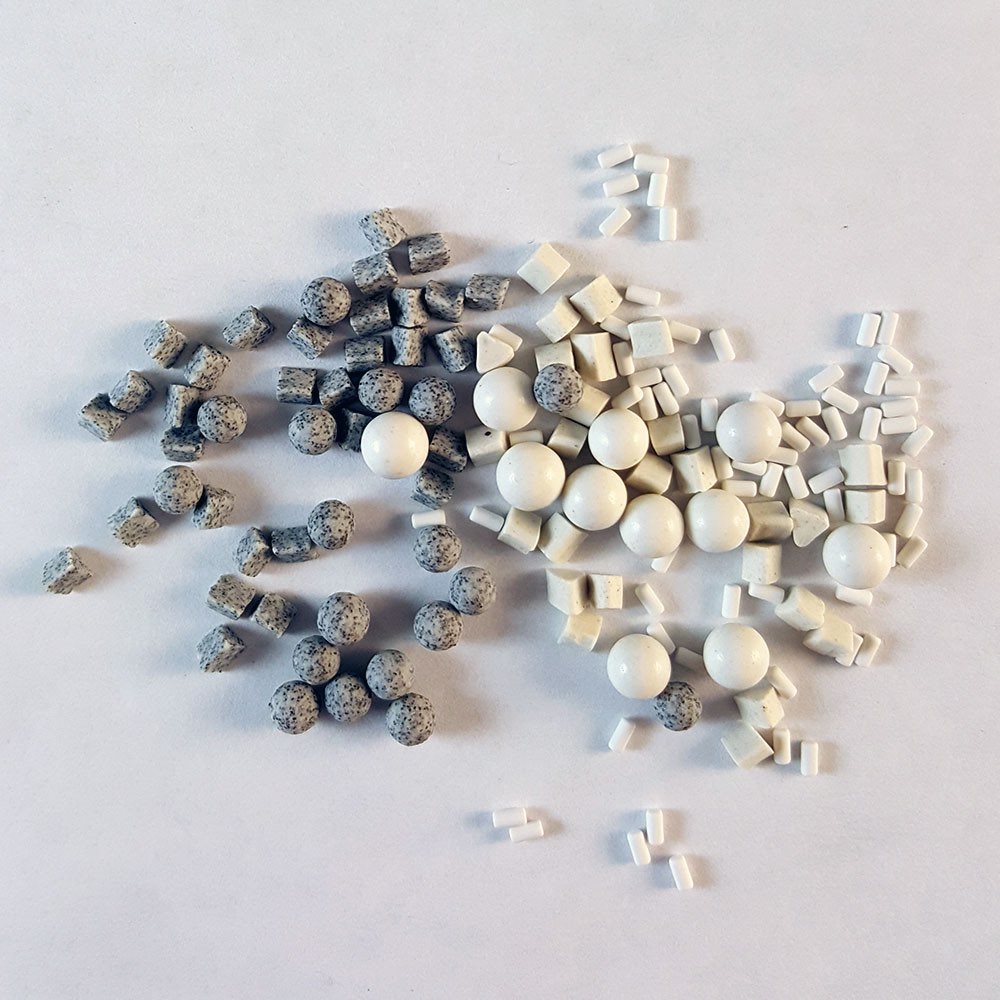
CoCr components require deburring after machining to remove sharp edges and burrs that could cut into adjacent UHMWPE bearing liners, generate metallic wear particles, or present patient safety risks during handling. Glass bead blasting at 2.5–4 bar or fine aluminum oxide at 3–4 bar is used for this purpose on non-articulating surfaces, with masking of all articulating surfaces before any blasting operation.
Pre-Coating Surface Preparation
CoCr femoral stems and acetabular shells that receive plasma spray titanium or hydroxyapatite coating are blasted before coating to create the Ra 3–6 μm substrate roughness required for coating adhesion. This is analogous to the titanium implant pre-HA-coating blasting process but requires higher blast energy due to CoCr’s greater hardness.
3. Process Parameters for CoCr Blasting
| CoCr Application | Media | Partikelgröße | Pressure | Target Ra | Notes |
|---|---|---|---|---|---|
| Bone-contact zone roughening | Al₂O₃ | 250–500 μm | 4–6 bar | 1.5–3.0 μm | Articulating surfaces masked; post-blast cleaning critical |
| Deburring (body/stems) | Al₂O₃ or glass beads #8 | 150–300 μm | 3–4.5 bar | 1.0–2.0 μm | Must not reach articulating surfaces |
| Pre-plasma-spray preparation | Al₂O₃ | 250–600 μm | 4–7 bar | 3–6 μm | Maximum Ra needed for plasma spray adhesion |
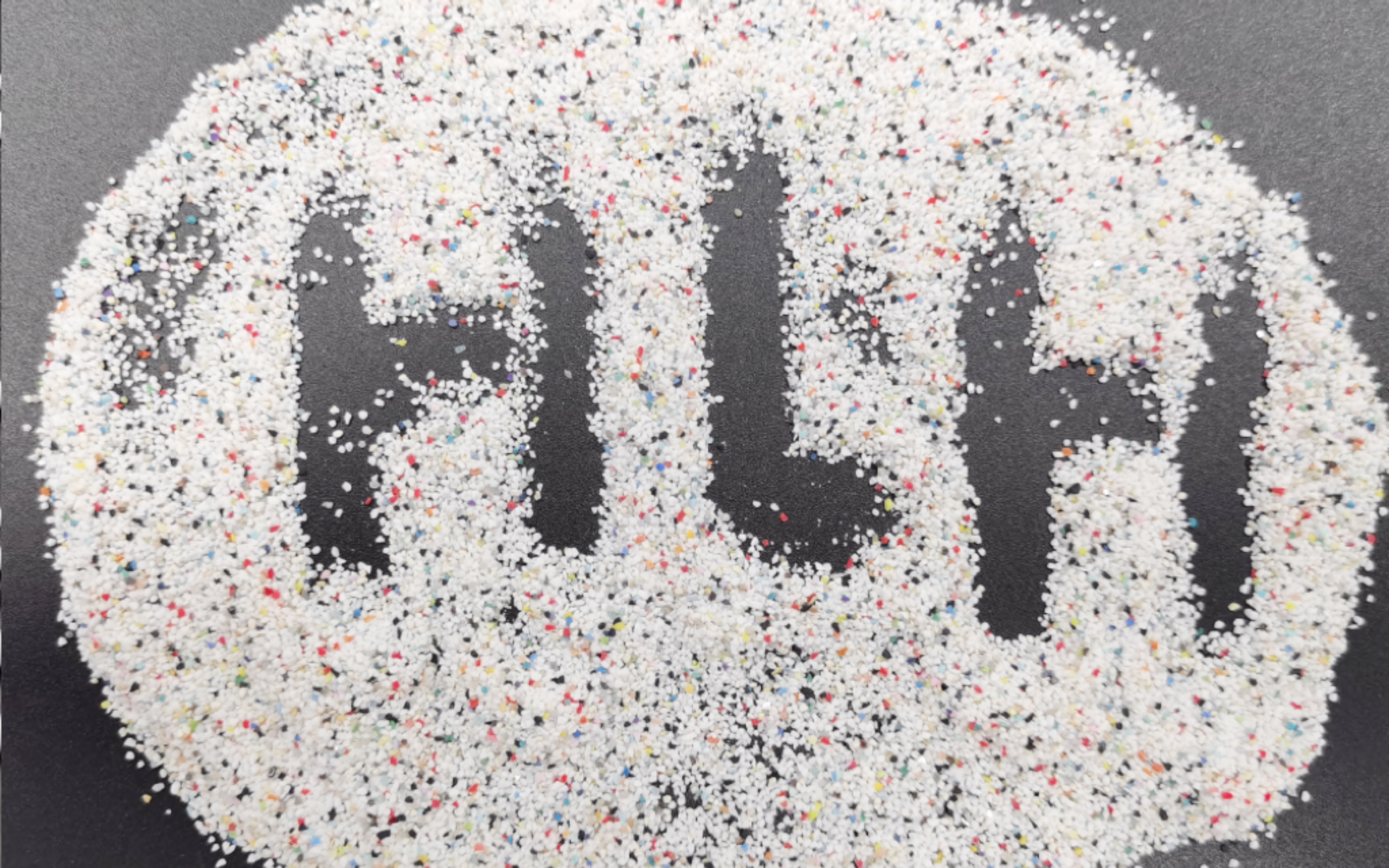
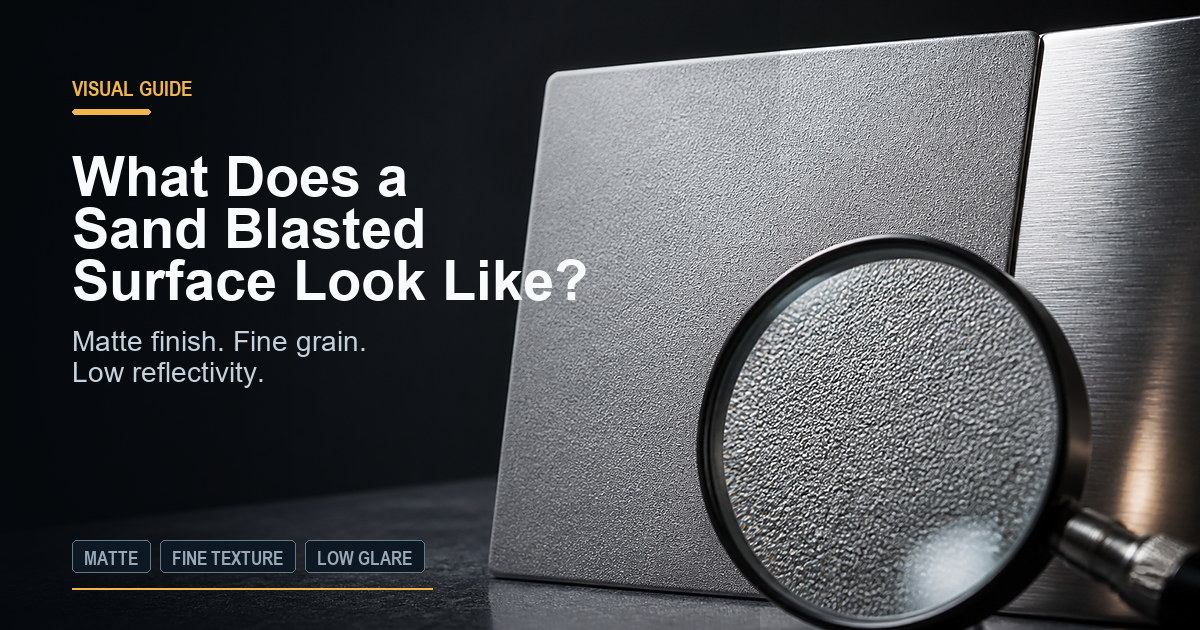
| Matte finish (non-contact areas) | Glass beads #10–#12 | 75–177 μm | 2.5–3.5 bar | 0.6–1.2 μm | External non-bearing surfaces; aesthetic finish |
4. Cross-Contamination Risks: CoCr and Titanium
When CoCr and titanium implant components are processed in the same blast cabinet — even at different times — cross-contamination between the two alloy systems creates serious quality and biocompatibility risks.
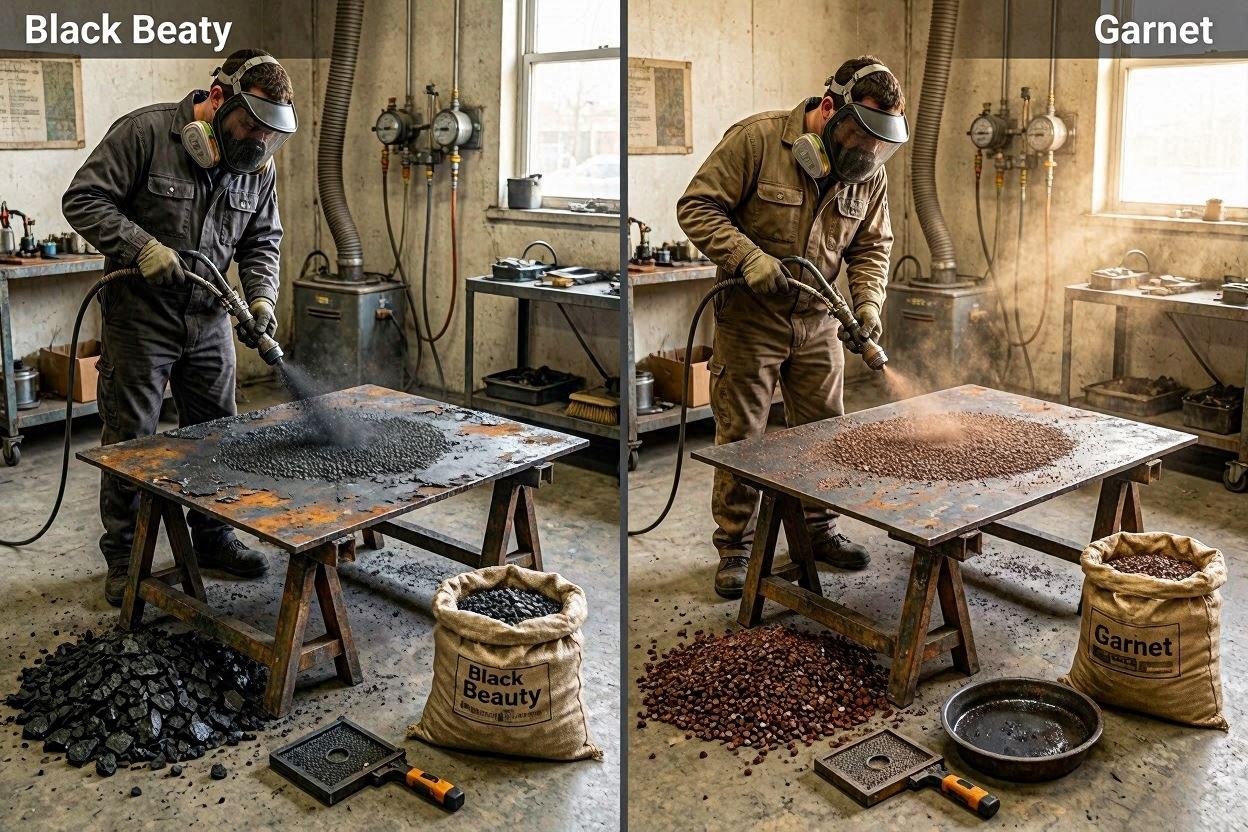
CoCr blasting generates particulate contamination consisting of cobalt, chromium, and molybdenum particles and fragments. These particles deposit on cabinet walls, fixtures, and any subsequent components processed in the same cabinet. Titanium implants processed after CoCr in a contaminated cabinet may have CoCr particles embedded in their blasted surfaces. In the implant environment, these dissimilar metal inclusions create micro-galvanic cells that can accelerate corrosion of the titanium oxide layer at the inclusion sites, and cobalt and chromium ions released from corroding particles are toxic in high concentrations.
5. Aluminum Alloy Medical Components
Aluminum alloys are used extensively in medical device manufacturing for non-implant structural applications: equipment housings, imaging system gantries, surgical table frames, robotic arm structures, and instrument storage systems. The choice of aluminum alloy for a given application depends on the required strength-to-weight ratio, machinability, and anodize behavior.
| Alloy | Temper | UTS (MPa) | Key Properties | Medical Applications | Blasting Note |
|---|---|---|---|---|---|
| 6061 | T6 | 310 | Good machinability, excellent anodize, moderate strength | General housings, brackets, frames, monitor stands | Standard #10–#12 glass beads; most forgiving |
| 7075 | T6 | 572 | Highest strength; more sensitive anodize due to Zn/Cu precipitates | High-strength structural frames, imaging gantry sections | Fine media, lower pressure; Zn/Cu precipitates can cause streaking in anodize if surface prep inadequate |
| 2024 | T3 | 483 | High strength; lower corrosion resistance due to Cu content | Aerospace-derived surgical robotics structural components | Careful pre-anodize prep; copper precipitates affect anodize; Type II preferred over Type III |
| 5052 | H32 | 228 | Excellent corrosion resistance; good formability | Thin-walled enclosures, sheet metal covers | Low pressure required for thin gauge; glass beads #12 |
6. Blasting Parameters and Anodize Considerations for Aluminum Alloys
Aluminum alloys are significantly softer than both CoCr and titanium, requiring much lower blasting pressures to achieve the same Ra. The primary risk with aluminum blasting is over-blasting: excessive pressure or too-coarse media creates a surface too rough for uniform anodize penetration, leading to a porous, non-uniform anodize layer that provides inadequate corrosion protection.
The 7075 and 2024 alloys present specific challenges for anodizing that are influenced by pre-blast surface condition. Both alloys contain second-phase precipitates rich in zinc/magnesium (7075) or copper (2024) that dissolve preferentially during anodizing, creating pits in the anodize layer. Glass bead blasting creates a uniform surface condition that minimizes these effects by mechanically disrupting the precipitate-enriched surface zone and creating a homogeneous starting surface for the anodize bath. However, these alloys typically require Type II rather than Type III anodize for best results — the thick, slow-growing hard anodize layer of Type III is more sensitive to precipitate-related defects than the thinner, faster Type II layer.
7. Frequently Asked Questions
Yes, on non-articulating surfaces only. CoCr components are blasted for bone-contact zone roughening (tibial trays, femoral component bone-cut surfaces), deburring after machining, and pre-coating preparation for plasma spray. Articulating surfaces (femoral heads, condylar bearing surfaces) must be completely masked before any blasting — these require mirror polishing to Ra below 0.05 μm and cannot be re-polished to spec after abrasive contact without significant rework risk.
Aluminum oxide (250–500 μm) at 4–6 bar for roughening and deburring; glass beads (#10–#12) at 2.5–3.5 bar for matte finishing. CoCr’s greater hardness than titanium requires higher pressure. Cross-contamination between CoCr and titanium blast cabinets is a serious biocompatibility concern — dedicated blast equipment for each alloy type is required in regulated manufacturing.
6061-T6 (most common; equipment housings, brackets, frames), 7075-T6 (high-strength structural components; imaging gantries), 2024-T3 (surgical robotics), and 5052-H32 (thin-walled sheet metal enclosures). All are blasted with glass beads (#10–#12, 1.5–2.5 bar) before anodizing. 7075 and 2024 contain precipitates that affect anodize quality and require careful pre-blast surface preparation.
CoCr blasting generates Co, Cr, and Mo particles that deposit in the blast cabinet. Titanium components subsequently processed in the same cabinet may acquire CoCr particle inclusions that create galvanic corrosion sites in the implant environment. Co and Cr ion release from corroding inclusions raises toxicity concerns. Dedicated blast cabinets with separate media stocks for each alloy type are standard practice in regulated orthopedic implant manufacturing.
Mirror polishing to Ra below 0.05 μm (typically 0.01–0.03 μm Ra) is required for CoCr articulating surfaces. This minimizes wear of opposing UHMWPE, ceramic, or CoCr surfaces and reduces third-body wear particle generation. Abrasive blasting is categorically excluded from all articulating surface processing and is used only on non-articulating bone-contact and external housing surfaces of CoCr implant components.
Source Blasting Media for CoCr and Aluminum Medical Component Processing
Jiangsu Henglihong Technology supplies aluminum oxide and glass beads for medical component blasting with full documentation for ISO 13485 process validation and biocompatibility compliance.
Request Technical Data & QuoteFilter