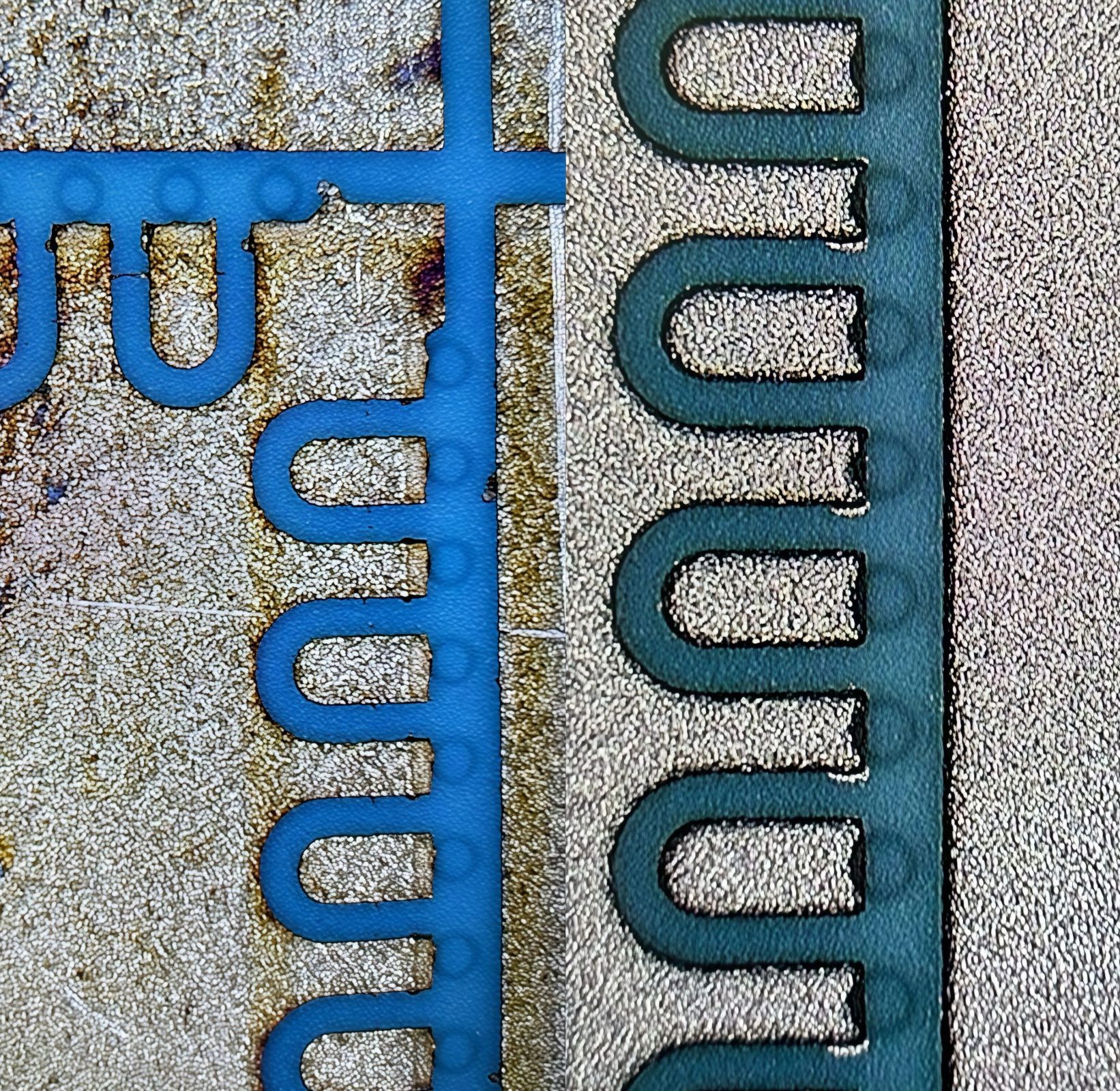
What Does a Sand Blasted Surface Look Like? Visual Guide with Ra Examples
A photographic and descriptive reference to the appearance of a sand blasted surface across media types, grit sizes, and roughness values — written for engineers, sourcing managers, and quality inspectors who need to recognize a good blast at a glance.
Why Visual Recognition Matters
Before any profile gauge or replica tape is applied, the human eye is the first quality inspector on every blast job. A trained inspector can identify failed cleanliness, over-blasting, and embedment in seconds simply by walking past the workpiece. This guide explains exactly what to look for.
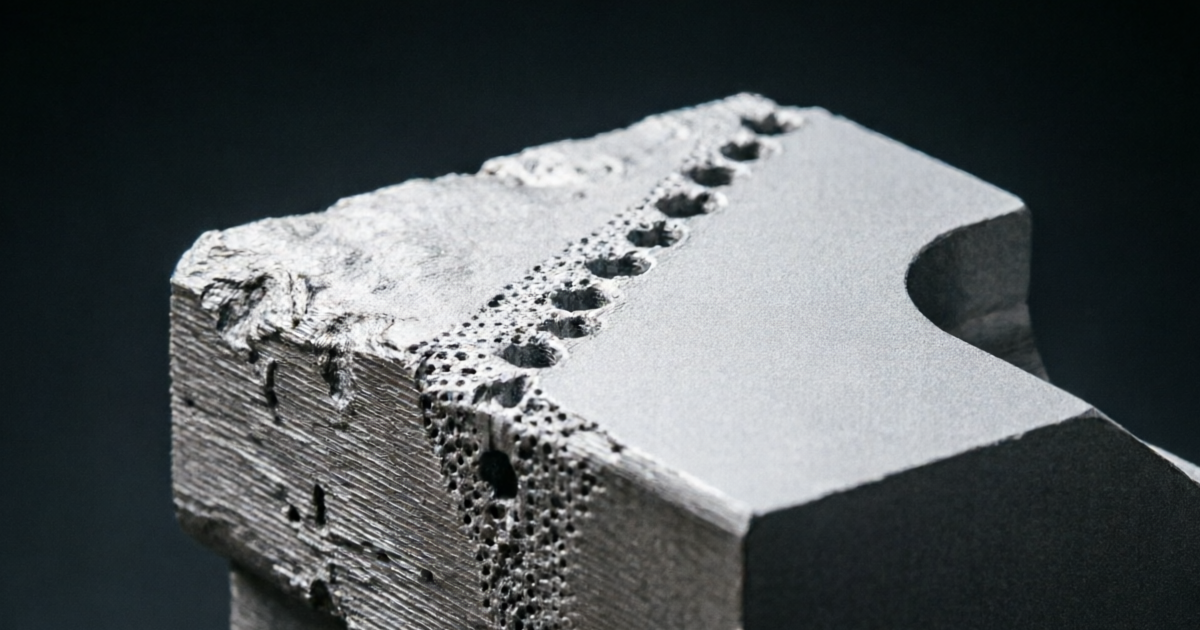
The visual identity of a sand blasted surface comes from three independent variables: the abrasive media itself, the grit size, and the process parameters (pressure, distance, dwell). Each combination produces a distinctive look that experienced operators learn to read instantly. For the underlying process physics, see the pillar guide on sand blasted surface — this article focuses purely on what the finish looks like.
The Universal Visual Signature
Every properly executed sand blasted surface shares four visual characteristics regardless of media or grit choice:
Matte, Non-Reflective
The surface scatters incident light in all directions. There is no glare, no mirror reflection, and no highlight band that moves as you tilt the part.
No Directional Grain
Unlike a brushed or ground finish, there are no parallel lines. The texture is statistically random in every direction.
Uniform Density
The peaks and valleys are distributed evenly. Areas of higher or lower texture density indicate poor operator overlap.
Single Tonal Field
The entire blasted area reads as one consistent color. Dark patches indicate shadowing; bright spots indicate embedded media or polished crater wear.
If any of these four signatures is violated, the surface fails visual inspection before any instrument is touched. The complete inspection workflow is detailed in our guide on sand blasted surface inspection and acceptance.
How Appearance Changes with Grit Size
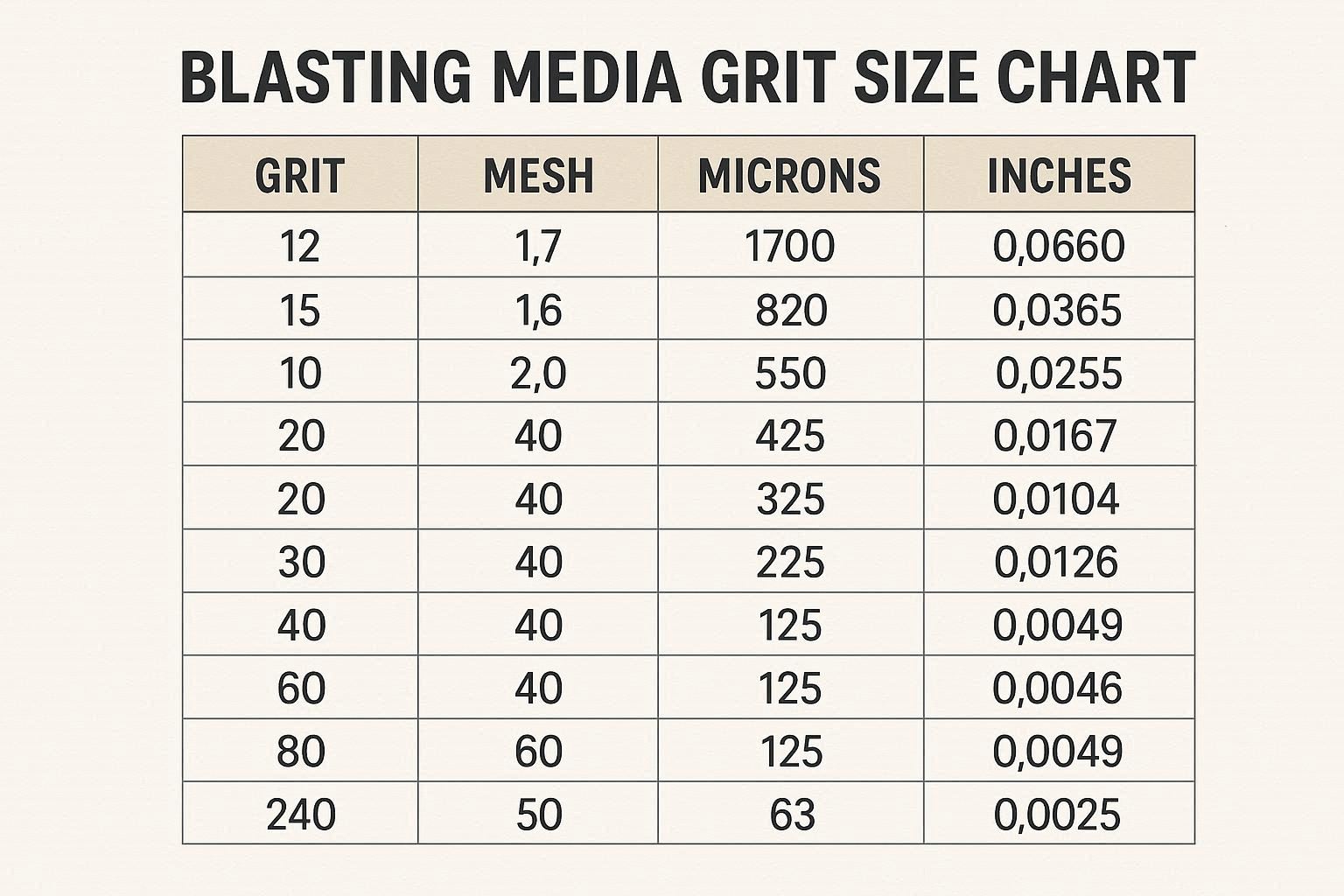
For any given media, the most dramatic visual change comes from grit size. Larger grit produces deeper craters, larger peak-to-valley distances, and a coarser visible texture. The following table maps the appearance across a typical aluminum oxide grit progression:
| Grit | Approx. Ra | Visual Character at Reading Distance |
|---|---|---|
| #220 | 0.8 µm | Silky satin. Texture invisible at arm’s length. Reads as a uniform soft matte surface. |
| #180 | 1.1 µm | Fine matte. Texture barely visible. The surface reads as “frosted glass” smoothness. |
| #120 | 1.3 µm | Light matte. Texture becomes detectable in raking light but remains subtle. |
| #80 | 1.8 µm | Standard industrial matte. Texture clearly visible up close; uniform appearance from one meter away. |
| #60 | 2.3 µm | Visibly textured. Individual craters become discernible at 30 cm. |
| #36 | 3.5 µm | Coarse texture. Reads as obviously “rough” even from 1 meter. |
| #16 | 5.5 µm | Heavy industrial profile. Distinctly bumpy “orange peel” surface. |
For procurement and specification work, the relationship between grit size, media type, and resulting Ra is essential. The complete dataset is available in our sand blasted surface roughness chart with Ra and Rz values by media and grit.
How Appearance Changes with Media Type
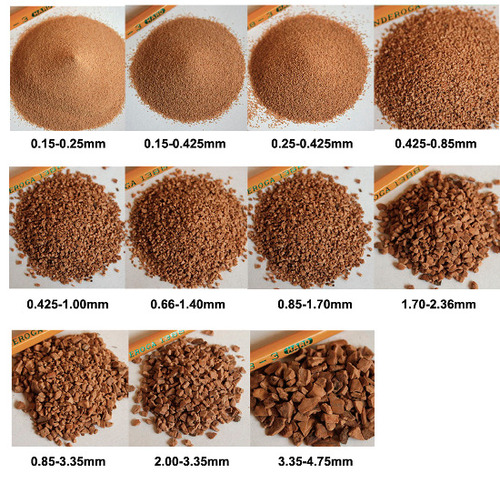
Beyond grit size, the choice of abrasive media changes both the color and the surface character. Three of the most common media produce visually distinguishable surfaces even at identical Ra values:
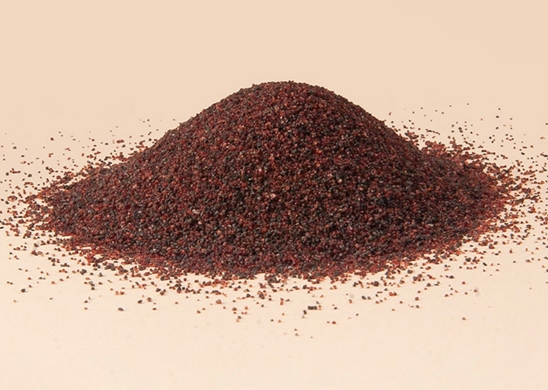
石榴石
Garnet blasting produces a slightly warm gray surface with a faint reddish-brown undertone from trace iron content. The texture is sharp and angular with crisp peaks. Garnet is the preferred media for marine, offshore, and pipeline applications where the slightly aggressive profile aids coating adhesion. Recognizable signature: warm gray, sharp matte, angular texture.
氧化铝
Aluminum oxide leaves a cool gray-white surface with a slight bluish tint. The texture is the most aggressive and consistent of common media — sharp angular peaks with uniform spacing. It is the dominant media for aerospace primer prep and stainless steel work. Recognizable signature: cool gray-white, very uniform sharp matte.
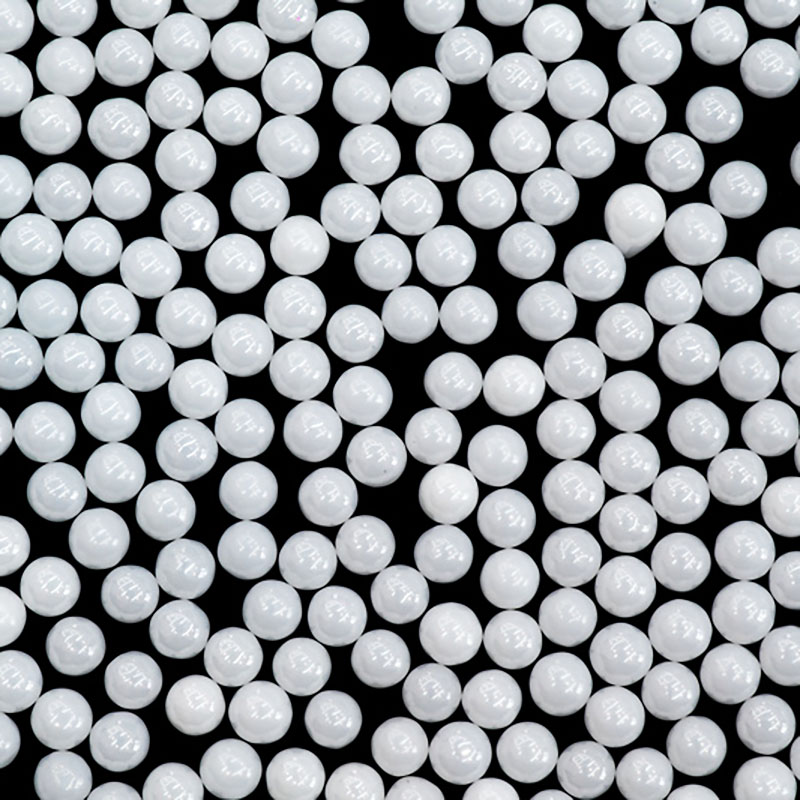
Glass bead
Glass bead produces the smoothest, most cosmetic appearance of any common media. The spherical particles dimple rather than cut the surface, leaving a uniform satin matte without angular peaks. This is the finish seen on consumer electronics enclosures, surgical instruments, and architectural stainless steel. Recognizable signature: silky silver matte, no visible angularity, gentle dimpled texture.
Steel grit and steel shot
Steel media leaves a darker gray surface with mild metallic sheen. Steel grit produces an aggressive angular profile; steel shot produces a softer dimpled appearance similar to glass bead but with a darker tonal value. Used primarily on carbon steel where iron embedment is not a concern. The differences between these processes are explored in our comparison of sandblasting vs shot blasting vs bead blasting.
Recognizing a Quality Blast vs a Failed Blast
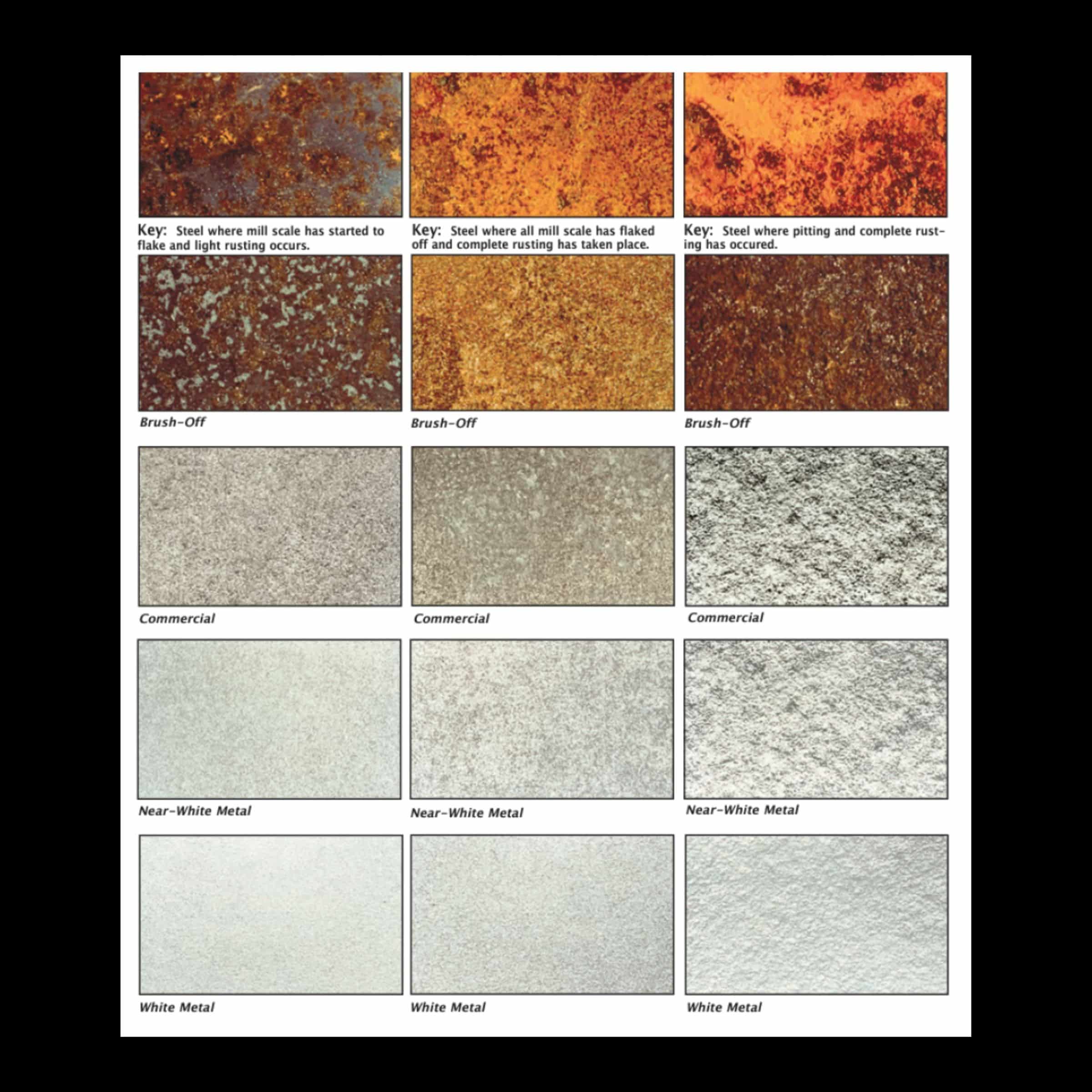
A quality blast presents the four universal characteristics described above. A failed blast usually shows one or more of the following visual defects:
| Visual Symptom | What It Indicates |
|---|---|
| Dark patches in a generally uniform field | Shadowing — residual coating or mill scale not removed. |
| Light or shiny spots scattered across the surface | Embedment of fractured media particles, or over-blasted polished craters. |
| Orange or brown bloom appearing within minutes | Flash rust from atmospheric moisture on bare steel — must be re-blasted. |
| Visible streaks or parallel bands | Operator overlap pattern was uneven — typical of manual blasting at speed. |
| Significant color difference between adjacent areas | Mixed media batches or worn nozzle creating uneven impact pattern. |
Inspect the surface under raking light — light directed almost parallel to the surface from a low angle. Raking light dramatically amplifies texture irregularities, shadowing, and embedment that are invisible under direct overhead lighting.
For systematic defect identification with root causes, see our reference on common sand blasted surface defects: shadowing, embedment, and flash rust.
Frequently Asked Questions
What color is a properly sand blasted steel surface?
Carbon steel blasted to SP 10 / Sa 2.5 cleanliness reads as a uniform pale gray to near-white surface. The exact tone depends on the abrasive media — garnet leaves a slightly warm gray, aluminum oxide a cool gray-white, steel grit a darker industrial gray.
Why does my sand blasted surface look uneven?
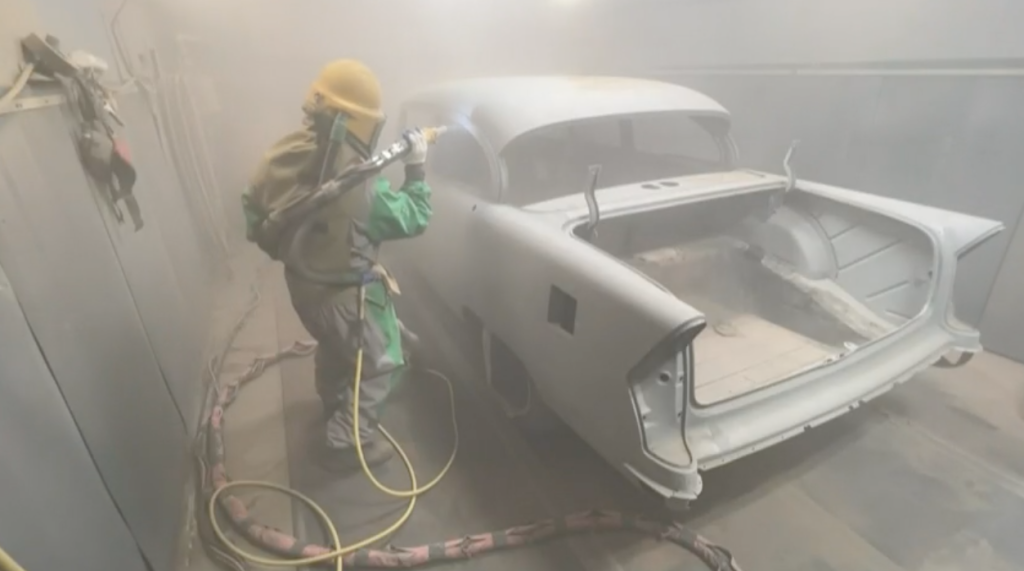
Uneven appearance is almost always an overlap problem. Manual blasting at high speed leaves variable dwell time across the surface, producing visible bands or patches of higher and lower texture density. Slowing the operator’s pass rate or switching to automated blasting eliminates this.
Can you tell Ra value just by looking?
Experienced inspectors can estimate Ra within roughly ±20% from visual inspection alone, particularly when comparing against ISO 8503-1 surface comparator plates. For specification compliance, instrumented measurement using replica tape or a profilometer is required.
What does flash rust look like?
Flash rust appears as a light orange-brown bloom that develops on bare steel within 30 minutes to 4 hours in humid conditions. It is most visible against the otherwise pale gray of a fresh blast. Even very light flash rust violates most coating specifications and requires re-blasting.
Why is a sand blasted aluminum surface darker than steel?
Aluminum oxide blasting on aluminum substrate produces a slightly darker matte gray than the same media on steel, because aluminum’s softer surface accepts deeper crater impressions that absorb more light. Glass bead blasting produces a brighter, more silvery finish on aluminum.
Does a sand blasted finish look the same after coating?
No. The visual texture is largely masked by the topcoat, particularly with high-DFT systems. However, the underlying anchor pattern remains mechanically essential for adhesion. Thin coatings (under 30 µm DFT) may show ‘profile telegraphing’ where peaks remain faintly visible.
Request an Abrasive Blasting Media Sample
Jiangsu Henglihong Technology Co., Ltd. supplies certified aluminum oxide, garnet, glass bead, steel grit, and steel shot to global industrial buyers. Request a sample with full batch documentation for technical evaluation.
Request a Sample →过滤器