Silicon Carbide Hardness: Why Mohs 9.5 Makes It the Hardest Blasting Media
A deep-dive into SiC hardness — what Mohs 9.5 means in practice, how it compares to every major blasting abrasive, and how hardness translates directly into cutting speed, surface profile, and cost-per-hour savings.
SECTION 01The Mohs Hardness Scale Explained
The Mohs hardness scale, developed by German mineralogist Friedrich Mohs in 1812, ranks minerals from 1 (softest — talc) to 10 (hardest — diamond) based on scratch resistance. The scale is ordinal, not linear: a mineral with a higher Mohs number can scratch any mineral with a lower number, and the intervals between numbers are not equal in terms of absolute hardness. The jump from Mohs 9 to Mohs 10 (corundum to diamond) represents an increase in absolute hardness of approximately 4× — far larger than the jump from Mohs 8 to Mohs 9.
In abrasive blasting, Mohs hardness is the single most predictive indicator of how effectively a media will cut through a given substrate. The fundamental rule: an abrasive must be harder than the substrate it is blasting to achieve efficient material removal. The greater the hardness differential, the more aggressive and efficient the cutting action.
Mohs scale reference points: Talc (1) → Gypsum (2) → Calcite (3) → Fluorite (4) → Apatite (5) → Feldspar (6) → Quartz (7) → Topaz (8) → Corundum/Al₂O₃ (9) → Silicon Carbide (9.5) → Diamond (10)
SECTION 02Silicon Carbide’s Position at Mohs 9.5
Silicon carbide sits at Mohs 9.0–9.5 on the hardness scale — harder than every commercially available natural mineral and every synthetic abrasive commonly used in industrial blasting except diamond (which is prohibitively expensive for blasting applications and cubic boron nitride, which is used only in grinding). This position at the top of the practical abrasive hardness range is not an accident of chemistry — it is a consequence of SiC’s strong covalent bonding structure.
In crystalline SiC, each silicon atom is covalently bonded to four carbon atoms in a tetrahedral arrangement, and each carbon atom is bonded to four silicon atoms. This three-dimensional network of strong, directional covalent bonds — with a bond energy of approximately 318 kJ/mol — creates extraordinary resistance to plastic deformation, cleavage, and surface penetration. The result is a material that resists being scratched by virtually any other industrial material, while itself being capable of scratching and cutting everything below it on the hardness scale.
For a comprehensive overview of silicon carbide as a blasting media — beyond hardness alone — see: Complete Buyer’s Guide to SiC Abrasive Blasting Media.
SECTION 03Hardness Comparison: SiC vs. All Major Blast Media
| 喷砂介质 | 莫氏硬度 | 类型 | Max Substrate Hardness | Relative Cost |
|---|---|---|---|---|
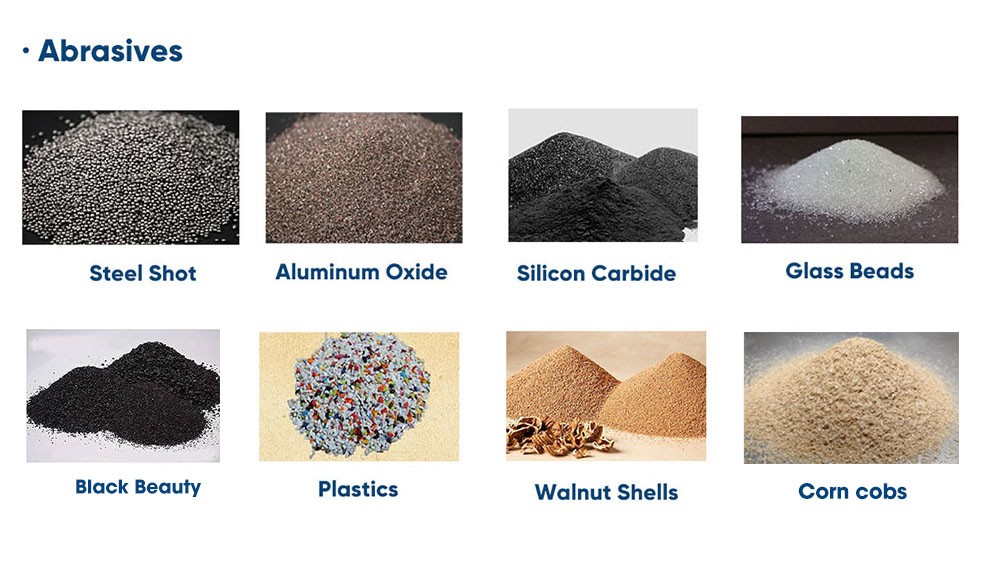
| Silicon Carbide (SiC) | 9.0 – 9.5 | Synthetic mineral | Hardened steel, ceramics, stone | $$ |
| Aluminum Oxide (Al₂O₃) | 8.0 – 9.0 | Synthetic mineral | Most metals, painted surfaces | $ |
| Steel Grit / Shot | 7.0 – 8.0 | Metallic | Carbon steel, alloy steel | $ (high recycle) |
| 石榴石 | 6.5 – 7.5 | Natural mineral | Soft to medium metals, wood | $ |
| Crushed Glass | 5.5 – 6.5 | Recycled mineral | Soft metals, light rust | $ |
| Glass Bead | 5.5 – 6.5 | Synthetic glass | Soft metals (peening / finish) | $ |
| Olivine / Slag | 6.0 – 7.0 | Natural / industrial | Soft to medium metals | $ (low) |
| Plastic Bead | 3.0 – 4.0 | Synthetic polymer | Soft coatings, composites | $$ |
| Walnut Shell | 3.0 – 4.0 | Organic | Paint on soft substrates | $ |
| 碳酸氢钠 | 2.5 | Mineral | Sensitive surfaces, food equipment | $$ |
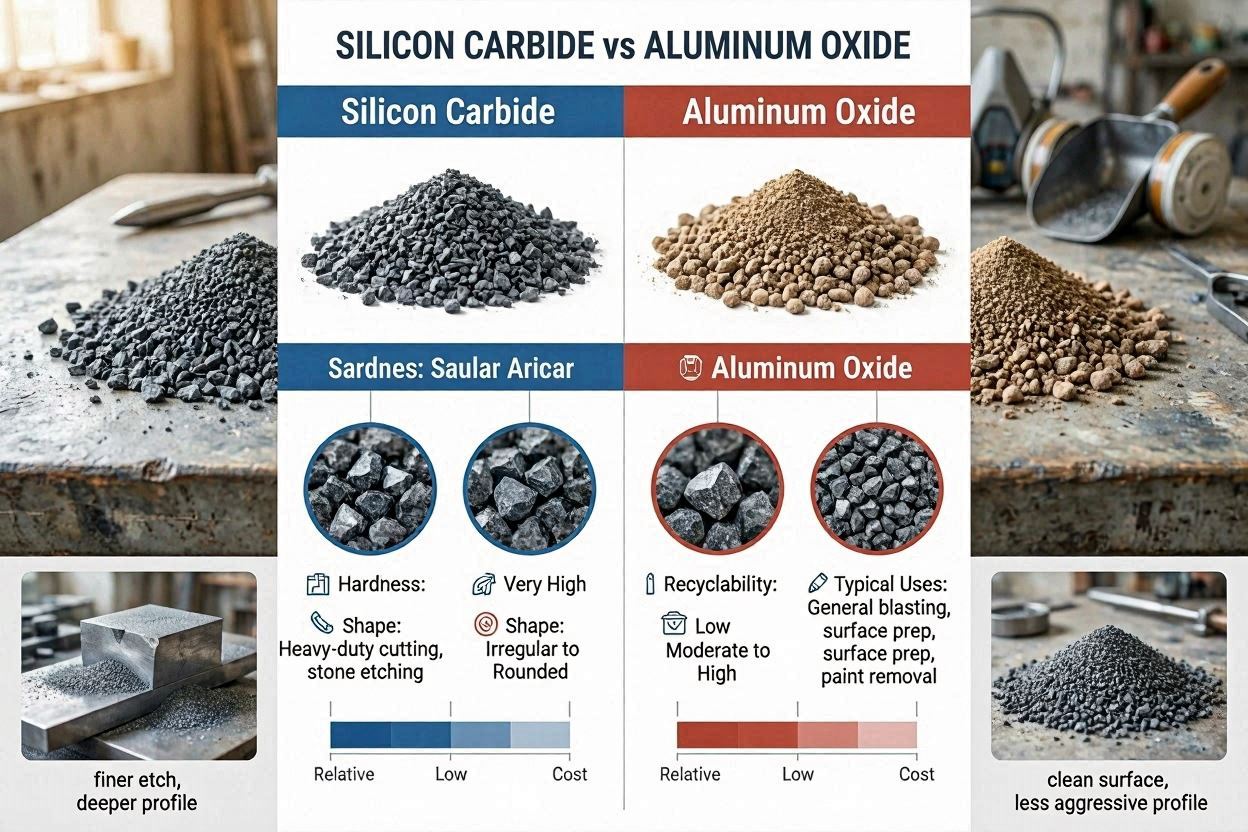
The data is unambiguous: silicon carbide is the hardest blasting abrasive available at industrial production scale. The next hardest common alternative — aluminum oxide — is 0.5 to 1.5 Mohs units softer, which translates to a 40–60% reduction in scratch resistance in absolute terms. For context, this hardness advantage is why SiC can efficiently blast hardened tool steel, silicon carbide ceramics, sapphire, and other substrates that would leave aluminum oxide worn and ineffective within minutes of operation.
SECTION 04How Hardness Translates to Cutting Speed
In abrasive blasting, cutting speed (the rate of material removal per unit area per unit time) is a function of several variables: particle impact velocity, particle mass, particle shape, and — critically — the hardness differential between media and substrate. Silicon carbide’s Mohs 9.5 hardness creates a large positive hardness differential against virtually every industrial substrate, allowing individual SiC particles to penetrate the substrate surface deeply on each impact rather than deflecting or fracturing prematurely.
In controlled blasting trials on carbon steel (Mohs ~7.5) under identical pressure, nozzle, and flow conditions, silicon carbide consistently achieves 2–3× the material removal rate of aluminum oxide, and 3–4× the removal rate of garnet. This speed advantage has direct economic implications: on a project requiring 500 m² of Sa 2.5 surface preparation, substituting SiC for garnet can reduce blasting time from 16 hours to 4–5 hours — saving over 10 operator-hours of labor per shift.
Relative cutting speed index (carbon steel, direct pressure, equal grit size):
Silicon Carbide: 100% (reference) | Aluminum Oxide: 45–55% | Steel Grit: 40–50% | Garnet: 30–40% | Glass Bead: 15–20%
It is important to note that cutting speed is not the only relevant performance metric. For applications requiring controlled surface profiles, specific Ra values, or preservation of substrate dimensional tolerances, a slower-cutting media may be specified to achieve finer surface finish. See the SiC Grit Size & Surface Profile Guide for profile depth selection.
SECTION 05Hardness and Surface Profile Depth
Silicon carbide’s hardness — combined with its angular particle morphology — produces some of the deepest surface anchor profiles of any abrasive at equivalent grit size. This is because harder particles penetrate the substrate surface further before being deflected or fracturing, creating more pronounced peaks and valleys in the surface topography.
| Media | 莫氏硬度 | Typical Ra on Steel (µm) | Typical Rz on Steel (µm) | Coating Adhesion Profile |
|---|---|---|---|---|
| SiC #60 | 9.5 | 8–14 | 45–80 | Excellent |
| Al₂O₃ #60 | 9.0 | 5–9 | 28–52 | Very Good |
| Garnet #60 | 7.0 | 3–6 | 18–35 | Good |
| Steel Grit G25 | 7.5 | 4–8 | 22–44 | Very Good |
| Glass Bead #60 | 6.0 | 0.5–1.5 | 3–9 | Limited |
The deeper profiles created by SiC are particularly valuable for high-build coating systems (epoxy, polyurethane, zinc-rich primers) that require maximum mechanical adhesion. However, the same aggressive profile can be problematic for thin-film applications or substrates with tight dimensional tolerances. Always verify target Ra or Rz values with your coating manufacturer before specifying SiC grit size.
SECTION 06Hardness and Cost-per-Hour Economics
A common procurement error is evaluating abrasive blasting media on media cost per ton alone without accounting for how hardness affects total operational cost. Silicon carbide’s higher unit price per ton is frequently offset — and often overcompensated — by its superior cutting speed when blasting hard substrates.
Consider a simplified example: a contractor needs to blast-clean 200 m² of structural steel to Sa 2.5 cleanliness. Using garnet at $X per ton achieves a production rate of 4 m²/hour. Using SiC at $2X per ton achieves 11 m²/hour. The garnet job requires 50 operator-hours; the SiC job requires 18 operator-hours. At $65/hour labor rate, garnet costs $3,250 in labor; SiC costs $1,170 — a $2,080 labor saving that more than offsets any media price premium. For a full economic analysis, see: SiC Cost Analysis & Recyclability
SECTION 07Equipment Wear Implications of High Hardness
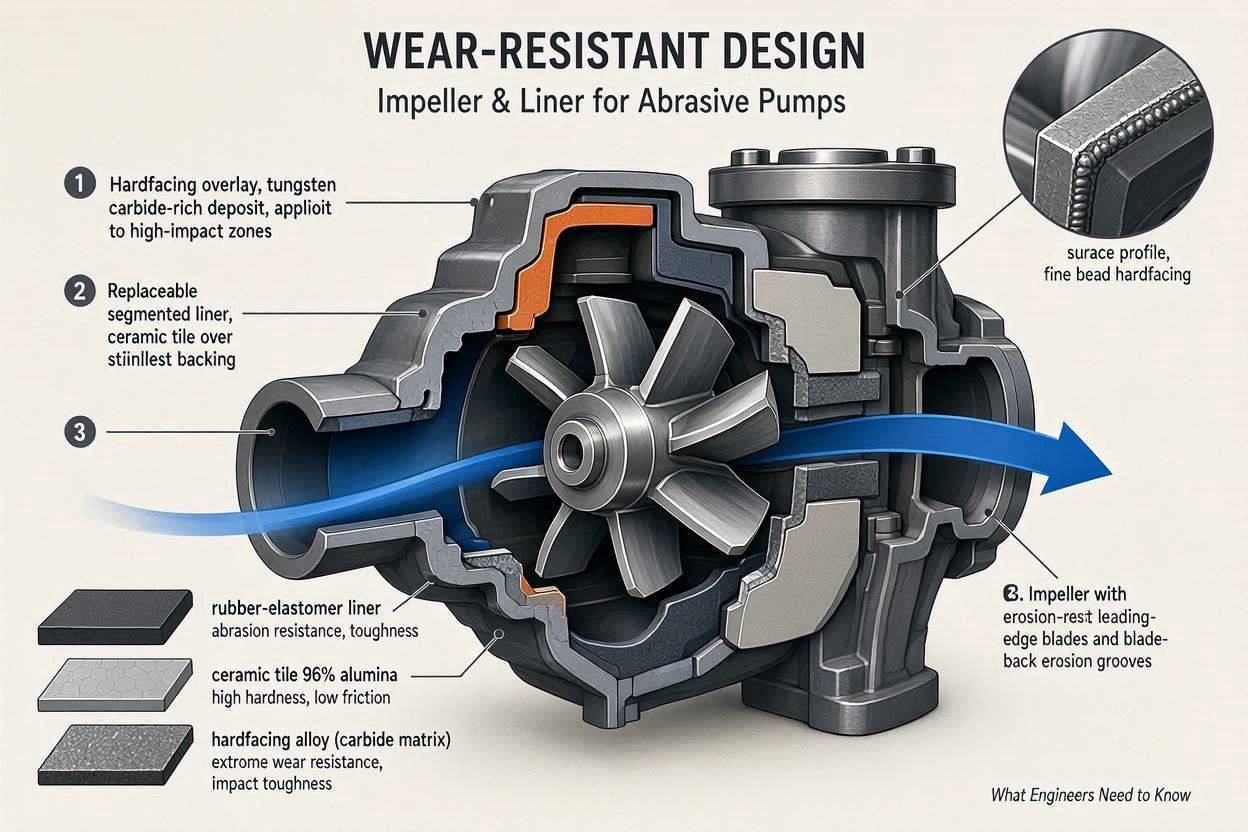
Silicon carbide’s extreme hardness is a double-edged property: it cuts substrates efficiently, but it also aggressively wears blasting equipment that is not rated for hard abrasive service. Operators switching from softer media (glass bead, garnet) to SiC without upgrading equipment components will experience dramatically accelerated nozzle, hose, and valve wear.
| 成分 | Material for SiC Service | Expected Life (SiC) | Avoid Using |
|---|---|---|---|
| Blast Nozzle | Boron carbide (preferred) or tungsten carbide | 750–1,500 hrs (BC) / 300–500 hrs (TC) | Ceramic, hardened steel, cast iron |
| Blast Hose | Heavy-wall rubber, ≥ 12 mm wall thickness | 300–600 hrs depending on ID | Lightweight suction hose |
| Media Valve / Metering | Tungsten carbide or polyurethane-lined | 500–1,000 hrs | Standard rubber pinch valves |
| Blast Pot Liner | Rubber-lined or polyurethane | Check annually | Bare steel pot interior |
| Deadman Handle | Standard heavy-duty | Standard service life | N/A |
Critical note: Boron carbide (Mohs ~9.5) is the only nozzle material that closely matches SiC’s hardness and provides the longest nozzle life. Never use standard aluminum oxide or ceramic nozzles with SiC media — they will fail within hours at operational pressures.
SECTION 08When SiC Hardness Works Against You
There are specific situations where silicon carbide’s high hardness is a liability rather than an asset:
- Soft substrate damage: On aluminum (Mohs ~2.5), copper, brass, or zinc, SiC’s hardness causes excessive material removal, particle embedding, and surface waviness. Use glass bead or plastic media instead.
- Thin-walled components: The aggressive cutting action can cause dimensional loss on precision components with tight tolerances. Measure substrate thickness and calculate maximum allowable profile depth before specifying SiC.
- Heat-sensitive substrates: While SiC itself is thermally stable, its high-speed cutting generates local heat at the impact point. On temperature-sensitive polymer composites or adhesive-bonded assemblies, this can cause delamination or resin degradation.
- Equipment not rated for hard abrasive: As discussed in Section 07, under-specified equipment will fail rapidly and create safety hazards. Do not use SiC in equipment designed for glass bead, plastic, or soft organic media.
For a complete guide to scenarios where SiC is the wrong choice and which alternatives to specify instead, see: When NOT to Use SiC Blasting Media
SECTION 09FAQ
SECTION 10Related Guides
Source Silicon Carbide Blasting Media Direct from Manufacturer
Jiangsu Henglihong Technology Co., Ltd. supplies SiC blasting media — Black and Green grades, Mohs 9.0–9.5, full grit range — with factory-direct pricing and complete QC documentation.
Get a Quote →过滤器