Sandblasting Abrasives for Automotive Restoration
From full frame strip-downs to delicate carburettor cleaning, choosing the wrong blasting media on automotive components is expensive and often irreversible. Complete media selection guide for chassis, body panels, engine parts, and alloy wheels — updated April 2026.
Why Media Choice Matters in Automotive Restoration
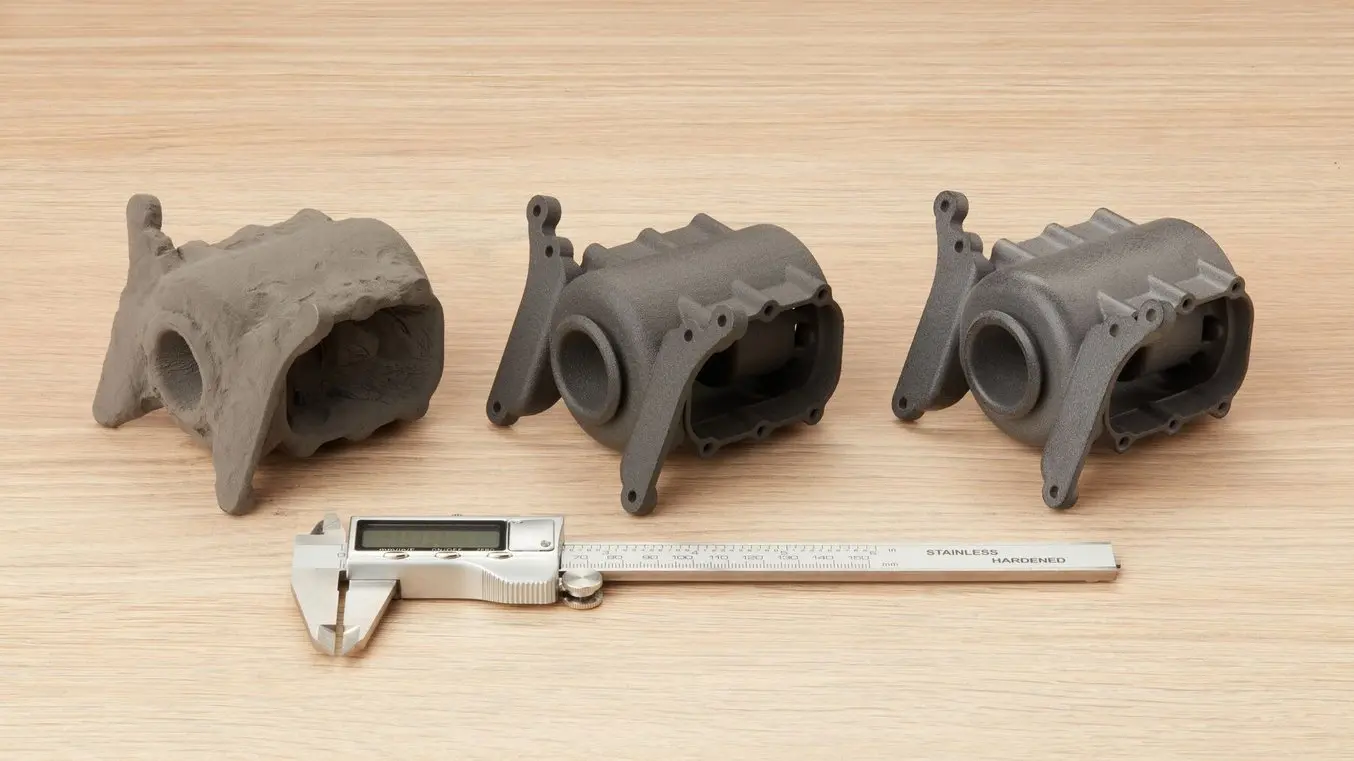
Automotive restoration involves a wider range of substrate materials, thicknesses, and sensitivity levels than almost any other blasting application. A single restoration project may require stripping paint from thin sheet steel body panels (where warping from aggressive blasting is irreversible), cleaning rust from heavy cast iron engine blocks (which can absorb far more blasting energy), decoating alloy wheels (which must not be dimensionally altered), and removing carbon from aluminium cylinder heads (where embedded abrasive contamination would damage engine internals).
Using a single media type across all these components is a common mistake — typically resulting in warped panels, embedded media in soft alloy, or inadequately cleaned iron components. The correct approach is to match the abrasive to each component type, using aggressive media where the substrate can handle it and gentle media where it cannot.
Media Selection by Automotive Component
| 成分 | Substrate | Recommended Media | Grit / Size | Max Pressure |
|---|---|---|---|---|
| Chassis / Frame | Heavy carbon steel | Aluminum oxide or garnet | 36–60 grit | 90–100 psi |
| Body panels (outer) | Thin sheet steel (0.8–1.2mm) | Garnet or fine aluminum oxide | 60–80 grit | 50–70 psi |
| Engine block | Cast iron | 氧化铝 | 36–60 grit | 80–100 psi |
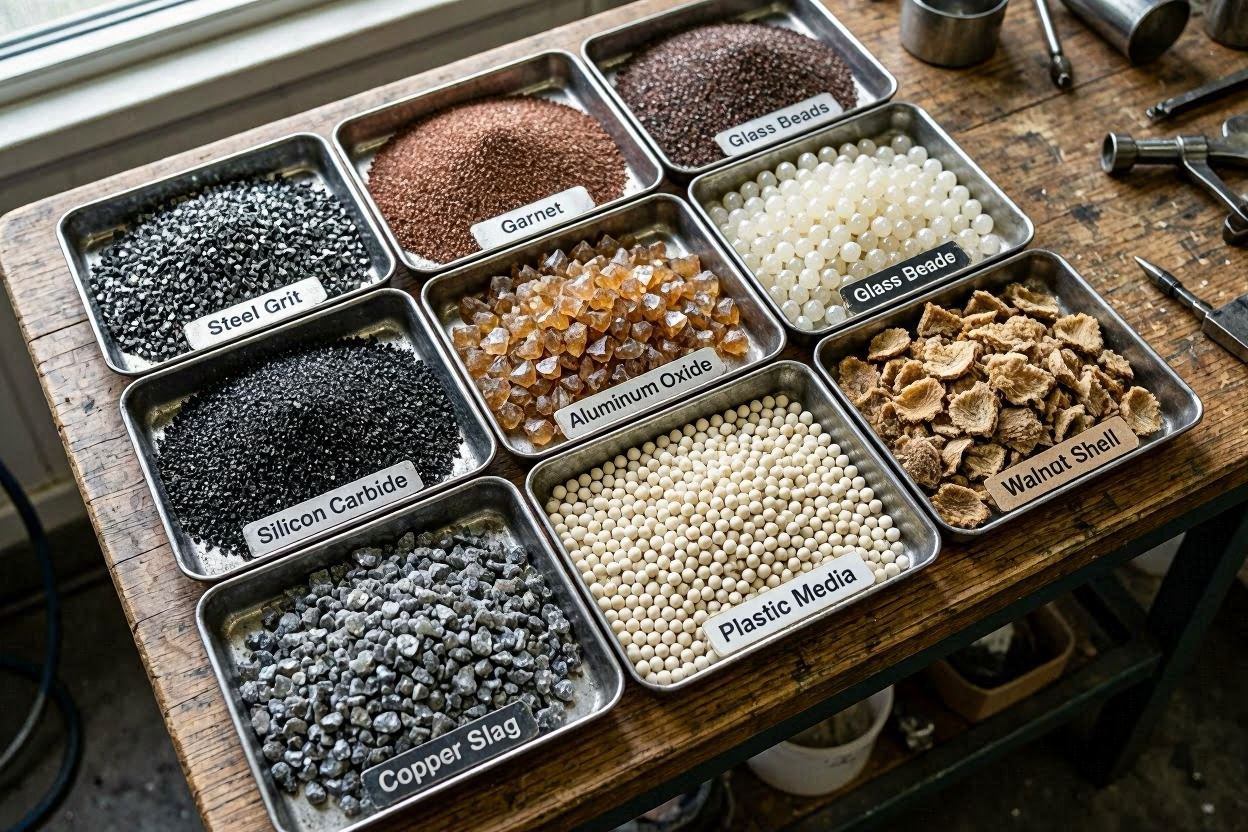
| Cylinder head | Aluminium alloy | Glass beads or walnut shell | 80–120 grit / medium | 40–60 psi |
| Alloy wheels | Aluminium alloy | 玻璃珠 | 80–120 grit | 40–60 psi |
| Carburettor / valve body | Aluminium / zinc alloy | Glass beads or walnut shell | 120–180 grit / fine | 30–50 psi |
| Brake drums / rotors | Cast iron | Aluminum oxide or glass beads | 60–100 grit | 60–80 psi |
| Fibreglass body panels | Fibreglass / GRP | Walnut shell or plastic media | Medium / Type III | 40–60 psi |
Chassis & Frame Blasting
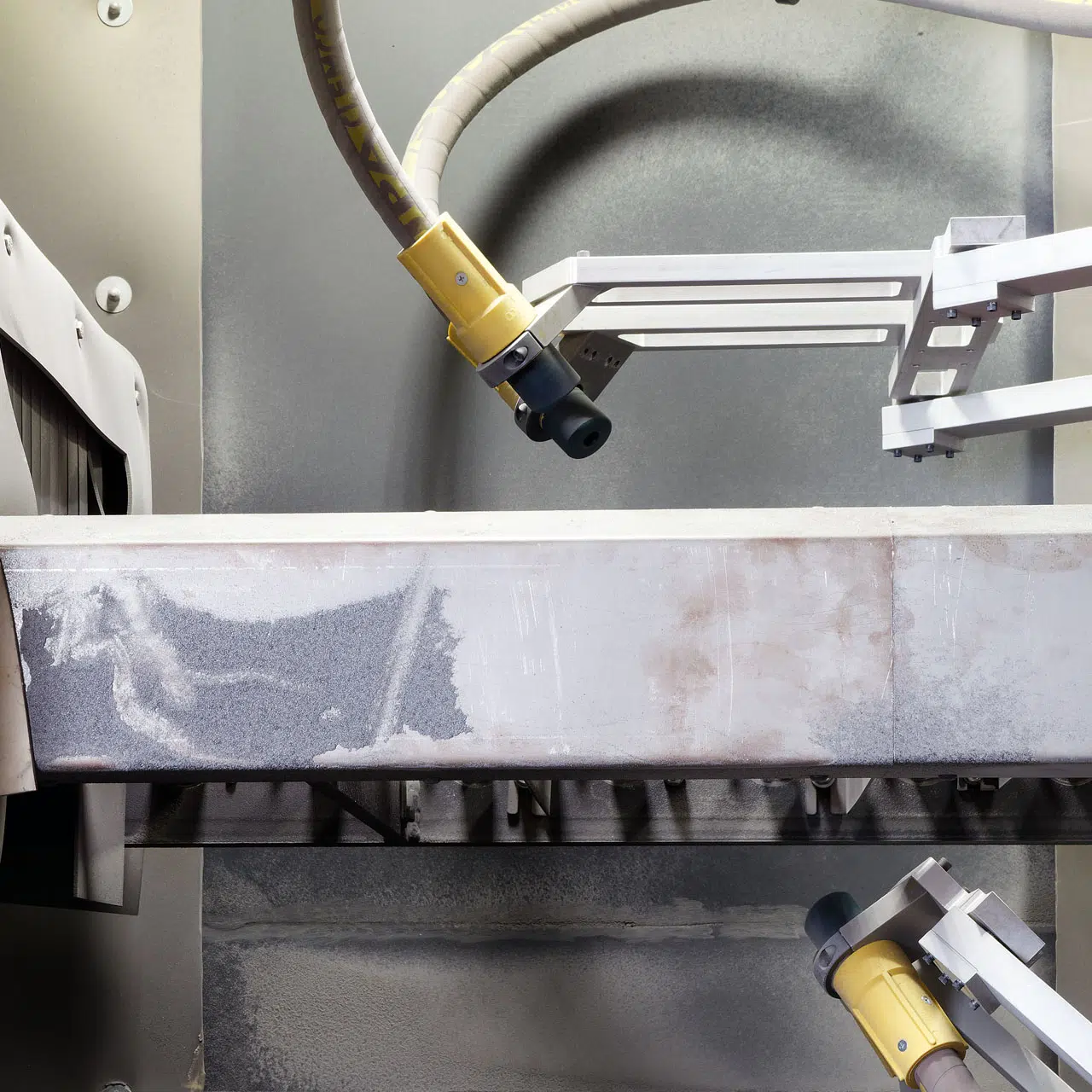
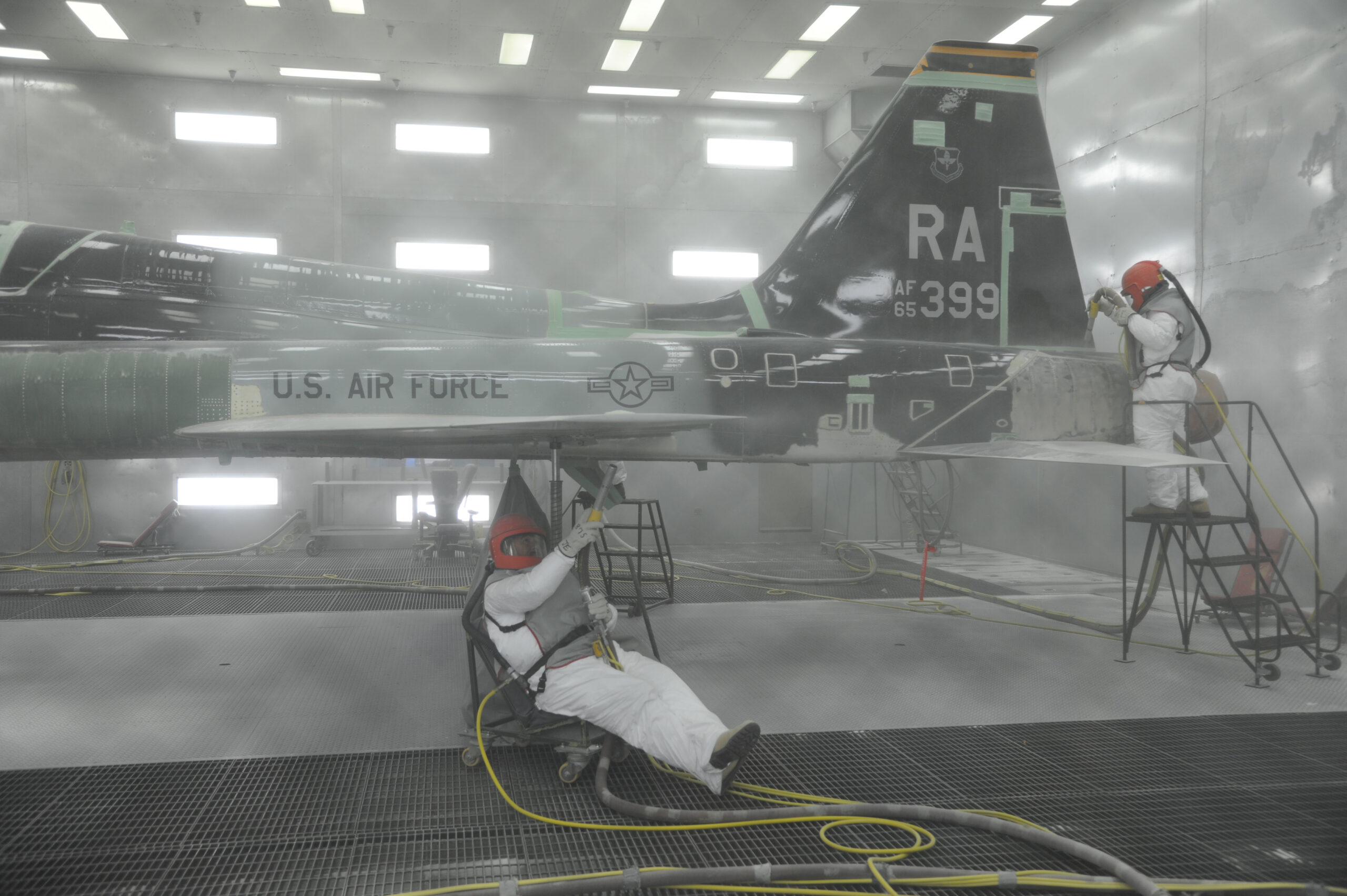
Vehicle chassis and frames are the most forgiving automotive blasting application — heavy-gauge steel construction, structural welds, and complex geometry that is not dimensionally critical. The goal is complete rust, scale, and coating removal to bare metal (effectively Sa 2.5 equivalent) before anti-corrosion priming with epoxy or zinc-rich primer. Brown aluminum oxide 36–46 grit at 80–100 psi delivers fast, effective cleaning and produces a 1.5–2.5 mil surface profile suitable for direct-to-metal epoxy primer adhesion. Garnet 20–30 mesh is a good alternative where dust control is a workshop concern.
Pay particular attention to enclosed box sections — door sills, cross members, and floor channels — where blasting nozzle access is limited. Small-diameter nozzles (3/8″ bore) and flexible hose sections aid access. Trapped abrasive in enclosed sections must be completely removed before priming; compressed air blow-out followed by vacuum cleaning is essential.
Body Panel Blasting: The Highest-Risk Application
Thin outer body panels (0.7–1.2 mm typical) are the most sensitive automotive blasting application. Excessive pressure, too-coarse media, or nozzle-to-panel distance that is too close will cause panel warping — a form of heat distortion caused by the rapid, localised temperature rise from abrasive impact energy. Warped body panels require skilled hammer-and-dolly correction or panel replacement — both expensive outcomes.
Best practice for body panels: use garnet 60–80 mesh or fine aluminum oxide at 50–70 psi maximum, maintain a minimum 12-inch nozzle-to-panel distance, use a sweeping motion to distribute heat, and never dwell on one spot. Work in sections, allow the panel to cool if it becomes warm to touch, and inspect frequently. Light surface rust and sound paint may be better removed by chemical stripping than blasting on particularly thin or complex-shaped panels.
Engine Component Cleaning
Cast iron engine blocks and cylinder heads benefit from abrasive blasting to remove old gasket material, rust, carbon deposits, and paint before machining and rebuild. Cast iron can withstand more aggressive blasting than aluminium components: aluminum oxide 36–60 grit at 80–100 psi produces thorough cleaning without dimensional concern on iron blocks. However, all oil galleries, water passages, and bearing journals must be completely masked or plugged before blasting — embedded abrasive in oil passages will destroy rebuilt bearings within minutes of engine startup.
Aluminium cylinder heads, intake manifolds, and timing covers require gentler treatment. Glass beads 80–120 grit at 40–60 psi cleans carbon deposits and oxidation without the risk of aluminium removal or media embedding. Walnut shell medium grade is excellent for carbon deposits specifically, as its organic fracture behaviour produces thorough cleaning with negligible risk of substrate damage. After blasting any engine component, a thorough pressure wash and compressed-air blow-out of all internal passages is mandatory before reassembly.
Alloy Wheels & Brake Components
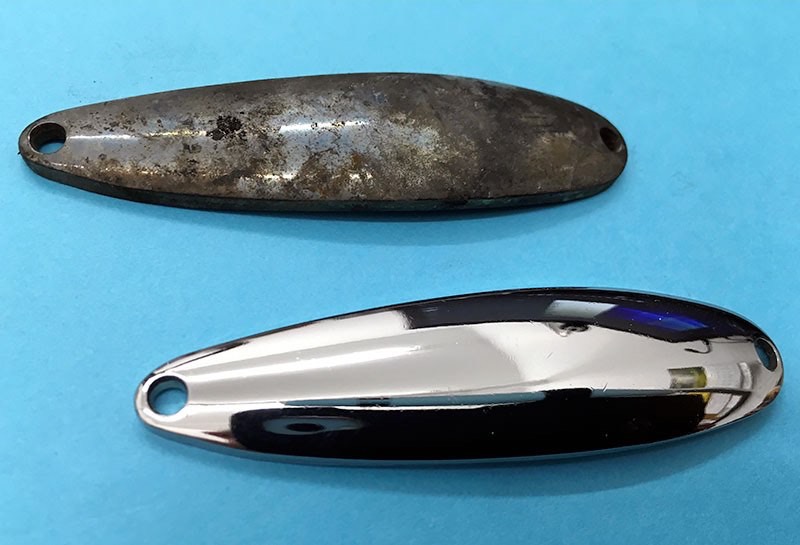
Alloy wheels present the same challenge as other precision aluminium components: the finish and dimensions must be preserved while removing old paint, clearcoat, and surface oxidation. Glass beads 80–120 grit at 40–60 psi is the standard recommendation — producing a clean, uniform satin finish that accepts powder coat or paint directly without additional surface treatment. The round particle shape of glass beads ensures no dimensional change to the wheel rim profile or brake seating surfaces.
Never use steel shot or steel grit on alloy wheels — ferrous media embeds in the aluminium, creating galvanic corrosion points beneath the new coating that will cause finish failure within months. Similarly, aggressive mineral abrasives at high pressure will alter the wheel’s dimensional profile at bead seating areas, potentially causing tyre seating problems and air leakage.
Blast Pressure & Technique Guide
| Application | Pressure Range | 喷嘴距离 | Angle | Motion |
|---|---|---|---|---|
| Chassis / frame | 80–100 psi | 6–12 inches | 45–90° | Slow sweep |
| Body panels | 50–70 psi | 10–16 inches | 30–60° | Continuous sweep |
| Cast iron engine parts | 80–100 psi | 6–10 inches | 45–90° | Slow sweep |
| Aluminium engine parts | 40–60 psi | 8–12 inches | 30–60° | Continuous sweep |
| Alloy wheels | 40–60 psi | 8–12 inches | 30–60° | Continuous sweep |
| Fibreglass panels | 40–60 psi | 10–14 inches | 20–45° | Fast, continuous |
FAQ
Panel warping is a real risk if the wrong media, excessive pressure, or improper technique is used. It occurs when rapid, localised heating from abrasive impact energy causes differential thermal expansion in the thin sheet metal. Preventing it requires: correct media selection (garnet or fine aluminum oxide, not coarse grit), appropriate pressure (50–70 psi maximum), maintaining nozzle distance (minimum 10–12 inches), and continuous sweeping motion without dwelling. Panels already compromised by rust perforation are particularly vulnerable — consider chemical stripping for severely rusted panels.
Not ideally. A full restoration typically benefits from at least two media types: an aggressive mineral abrasive (aluminum oxide 36–60 or garnet 20–30) for chassis, frame, and iron engine parts; and a gentler media (glass beads 80–120 or walnut shell) for aluminium components, alloy wheels, and delicate parts. Using the aggressive media on everything risks damaging sensitive components; using the gentle media on everything means slow, inadequate cleaning of heavy rust and scale on the structural components.
Source Automotive Blasting Media from Jiangsu Henglihong Technology
Aluminum oxide, garnet, glass bead, and walnut shell in the grit sizes used by professional automotive restoration workshops worldwide. B2B wholesale pricing available.
过滤器