Sandblasting Abrasives for Concrete Surface Preparation
Achieving the right Concrete Surface Profile (CSP) is the foundation of every successful industrial floor coating, epoxy lining, and waterproof membrane system. Comprehensive guide to abrasive selection, CSP targets, and coating system matching for concrete blasting applications.
Understanding Concrete Surface Profile (CSP)
The International Concrete Repair Institute (ICRI) defines Concrete Surface Profile (CSP) on a scale of 1 to 9, where CSP 1 is a nearly smooth surface and CSP 9 is extremely rough, with exposed large aggregate and deep valleys. Abrasive blasting is the most versatile method for achieving profiles across the full CSP range, from CSP 2–3 (light etching for thin-film coatings) to CSP 6–8 (aggressive profiling for thick membrane systems and overlay mortars).
Unlike steel blasting, concrete surface preparation involves an additional variable: the concrete substrate’s compressive strength, aggregate type, and existing condition (laitance layer, contamination, previous coatings) all significantly affect the achieved CSP for a given abrasive and pressure. Pre-blast assessment and test panels are always recommended before committing to production blasting on new concrete.
| CSP Level | Profile Description | Typical Coating System | Blasting Method |
|---|---|---|---|
| CSP 2–3 | Fine texture, slight aggregate exposure | Thin-film epoxy, polyurethane sealers | Light shot blast or fine abrasive blast |
| CSP 3–5 | Moderate texture, aggregate visible | Medium-build epoxy, urethane mortar | Shot blast or abrasive blast (medium) |
| CSP 5–7 | Coarse texture, significant aggregate exposure | High-build epoxy, broadcast quartz systems | Abrasive blast (coarse) or scarify then blast |
| CSP 7–9 | Very coarse, deep valleys, full aggregate exposure | Polymer concrete overlay, waterproof membrane | Heavy abrasive blast, scabbling, or milling |
Media Selection for Concrete Blasting
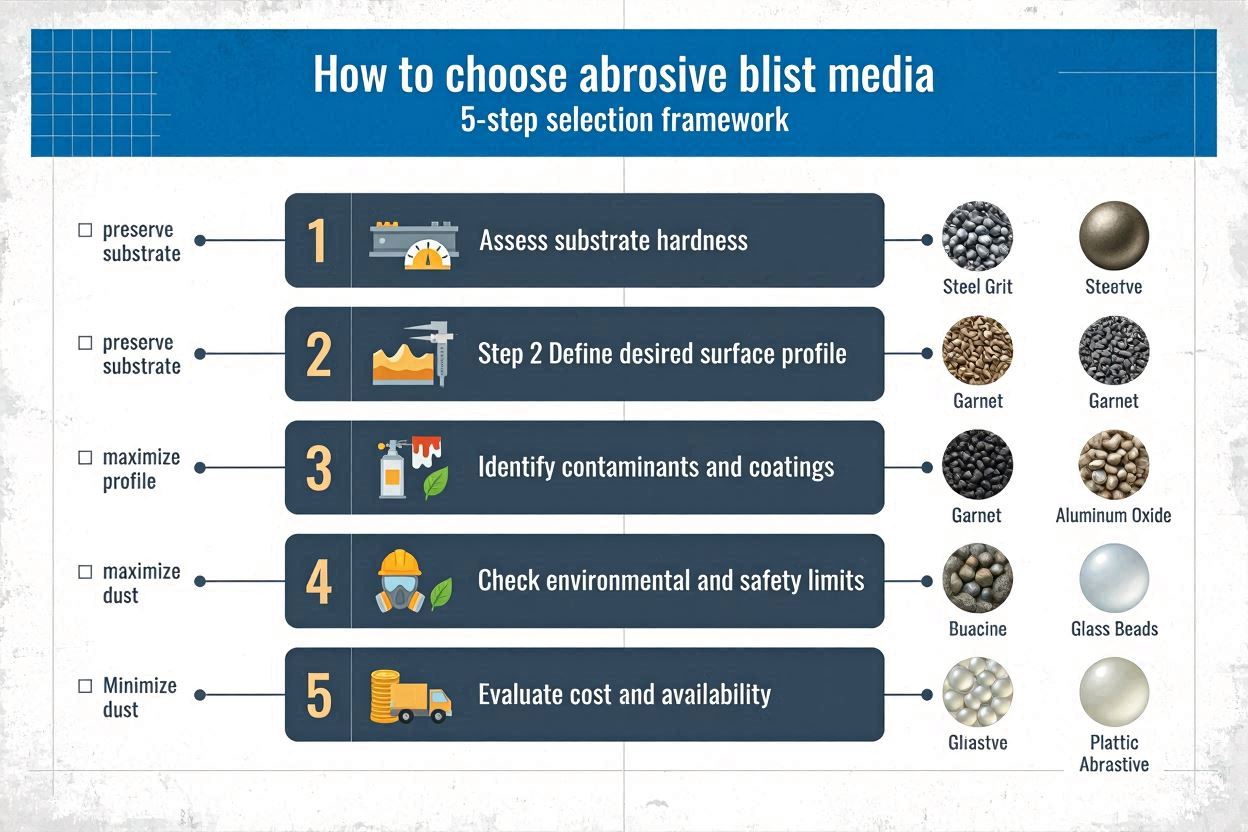
Concrete blasting media selection differs from steel blasting because concrete is a composite material — cement paste, fine and coarse aggregate — with non-uniform hardness. The goal is to remove the weak laitance (surface cement paste) layer and expose the underlying aggregate without crushing or fracturing the aggregate itself, which would leave a powdery, weakened surface unsuitable for coating adhesion.
| Media | CSP Achievable | Best For | Notes |
|---|---|---|---|
| Steel shot (wheel blast) | CSP 2–5 | Large flat floor areas | Most efficient for large horizontal surfaces; leaves rounded dimple profile |
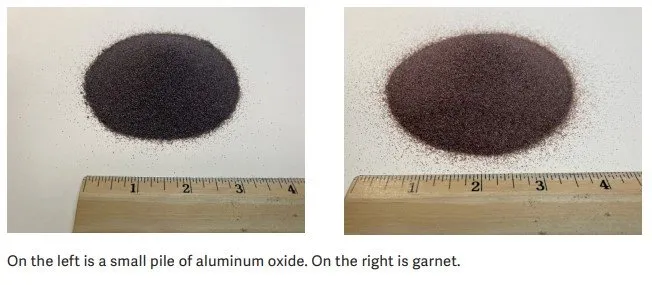
| Aluminum oxide (36–60) | CSP 3–6 | Walls, vertical surfaces, complex shapes | Air blast; good profile with air-blast equipment on any surface orientation |
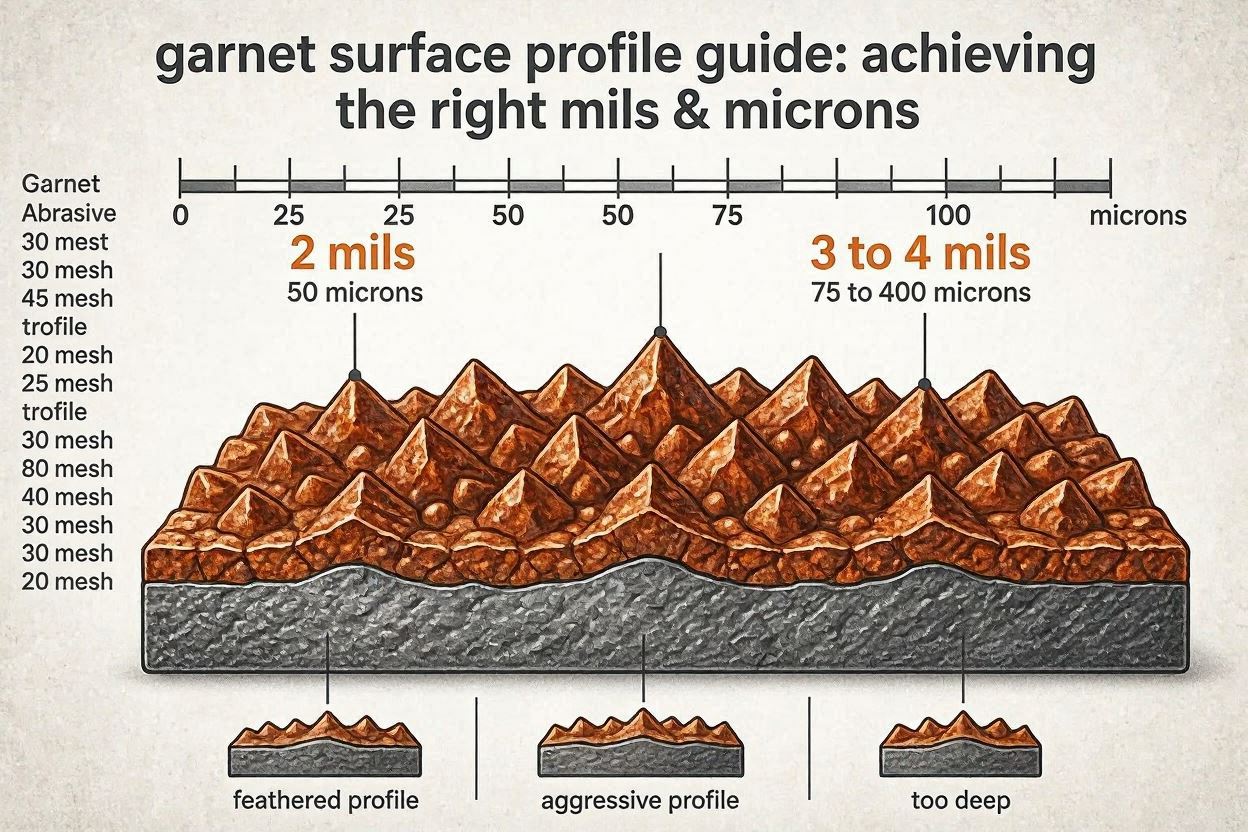
| Garnet (16–30 mesh) | CSP 2–5 | Low-dust sites, sensitive locations | Lower dust; good for occupied building interior floor prep |
| Crushed glass (16–30) | CSP 3–6 | General concrete prep | Angular, recyclable, silica-free alternative to coal slag |
| Coal slag (coarse) | CSP 4–7 | Exterior infrastructure, bridges | Low cost for large outdoor areas; higher dust |
Industrial Floor Coating Preparation
Industrial floor coatings — epoxy, polyurethane, methyl methacrylate (MMA), and cementitious urethane systems — represent the largest volume application of concrete surface preparation blasting. The CSP target depends on coating DFT: thin-film epoxy sealers (100–200 µm DFT) typically require CSP 2–3; medium-build broadcast epoxy systems (500 µm–2 mm) require CSP 3–5; heavy-duty urethane mortar and polymer concrete systems (3–10 mm) require CSP 5–7 or higher.
Shot blasting (centrifugal wheel blast on a self-propelled floor machine) is the most efficient method for large horizontal floor areas. For areas inaccessible to shot blast machines — perimeters, columns, pits, ramps — abrasive blast with aluminum oxide or garnet provides equivalent profile results with air-blast equipment. Ensure all existing coating, grease, oil, and curing compound is removed before measuring CSP, as these contaminants can mask laitance and give a false profile reading.
Bridge Decks & Infrastructure
Concrete bridge deck blasting for overlay bonding or waterproof membrane installation requires aggressive surface profiles (CSP 5–8) to ensure mechanical interlocking between the existing deck surface and new overlay material. Coal slag coarse grade or aluminum oxide 24–36 grit at high pressure (90–110 psi) is used for aggressive surface profiling. Environmental containment requirements for blasting over waterways or traffic must be addressed in the project planning — vacuum shroud equipment may be required to comply with particulate discharge regulations.
Tank Linings & Secondary Containment
Chemical storage tank linings and secondary containment coatings for hazardous materials require Sa 2.5 equivalent cleanliness and CSP 4–7 profiles to achieve the adhesion required by thick-film glass flake vinyl ester or epoxy novolac systems. Garnet is frequently specified for tank lining preparation in potable water tanks, food processing tanks, and pharmaceutical environments where media cleanliness and absence of heavy-metal contamination are specification requirements. For the full pipeline and tank preparation guide, see Pipeline Coating Preparation.
Technique Tips for Concrete Blasting
- Always perform a pull-off adhesion test on blasted concrete before committing to the coating system — substrate tensile strength below 1.5 N/mm² may indicate the need for concrete repair before coating
- Measure surface profile with ICRI CSP comparison chips, not metal replica tape — the two scales are not equivalent on concrete
- Allow freshly blasted concrete to fully dry before coating — moisture content above 4% typically causes epoxy adhesion failure
- Check for rising damp (hydrostatic pressure) with a polythene sheet test before specifying coating type — unvented moisture requires breathable or moisture-tolerant primer systems
- Vacuum blast equipment significantly reduces dust and spent media disposal volume on concrete — worth considering for large-area indoor projects
FAQ
CSP requirements depend on coating DFT and system type. Thin epoxy sealers (100–200 µm) typically specify CSP 2–3; medium-build broadcast systems (500 µm–2 mm) require CSP 3–5; heavy-duty systems require CSP 5+. Always confirm with the specific coating manufacturer’s technical data sheet, which will specify both the CSP range and the surface preparation method required to achieve valid coating warranty coverage.
Acid etching (muriatic acid or phosphoric acid) can achieve approximately CSP 1–2, adequate only for penetrating sealers and very light surface treatments. For most industrial epoxy and urethane floor systems, acid etching does not produce adequate profile depth or remove sufficient laitance for reliable coating adhesion. Abrasive blasting or shot blasting is required for CSP 3 and above. Additionally, acid etching leaves surface residue that must be thoroughly neutralised and washed before coating — adding process complexity that blasting avoids.
Source Concrete Surface Prep Abrasives from Jiangsu Henglihong Technology
Aluminum oxide, garnet, and steel grit in the grit sizes used by industrial flooring contractors and infrastructure maintenance teams worldwide. Bulk FCL pricing available.
过滤器