Abrasive Blast Media Chart: The Complete Comparison and Selection Reference
Choosing the wrong abrasive blast media is an expensive mistake. It can ruin a substrate, cause coatings to fail prematurely, generate unacceptable levels of hazardous dust, or quietly drain profitability through excessive media consumption and rework. This reference page gives engineers, purchasing managers, and blasting contractors a single authoritative source for every selection decision.
What follows is a complete abrasive blast media chart covering ten of the most widely used industrial and commercial media types — aluminum oxide, silicon carbide, glass beads, steel shot, steel grit, garnet, crushed glass, copper slag, walnut shell, and plastic abrasive grit. Each media type is compared across eight critical parameters: hardness, particle shape, grit size range, surface profile depth, reuse cycles, dust generation level, purchase cost tier, and primary applications.
Beyond the comparison chart itself, this guide explains how to read and use each parameter correctly, provides a quick-selection matrix by substrate and job type, includes a grit size-to-mesh-to-micron conversion reference, outlines surface profile requirements for common industrial coating systems, and covers the health and regulatory requirements every blasting operation must satisfy.
Published and maintained by 江苏恒利宏科技股份有限公司, a direct-source manufacturer of aluminum oxide, silicon carbide, glass beads, steel shot, and steel grit. All technical data reflect current industry standards and supplier specifications as of July 2026.
What Is Abrasive Blast Media?
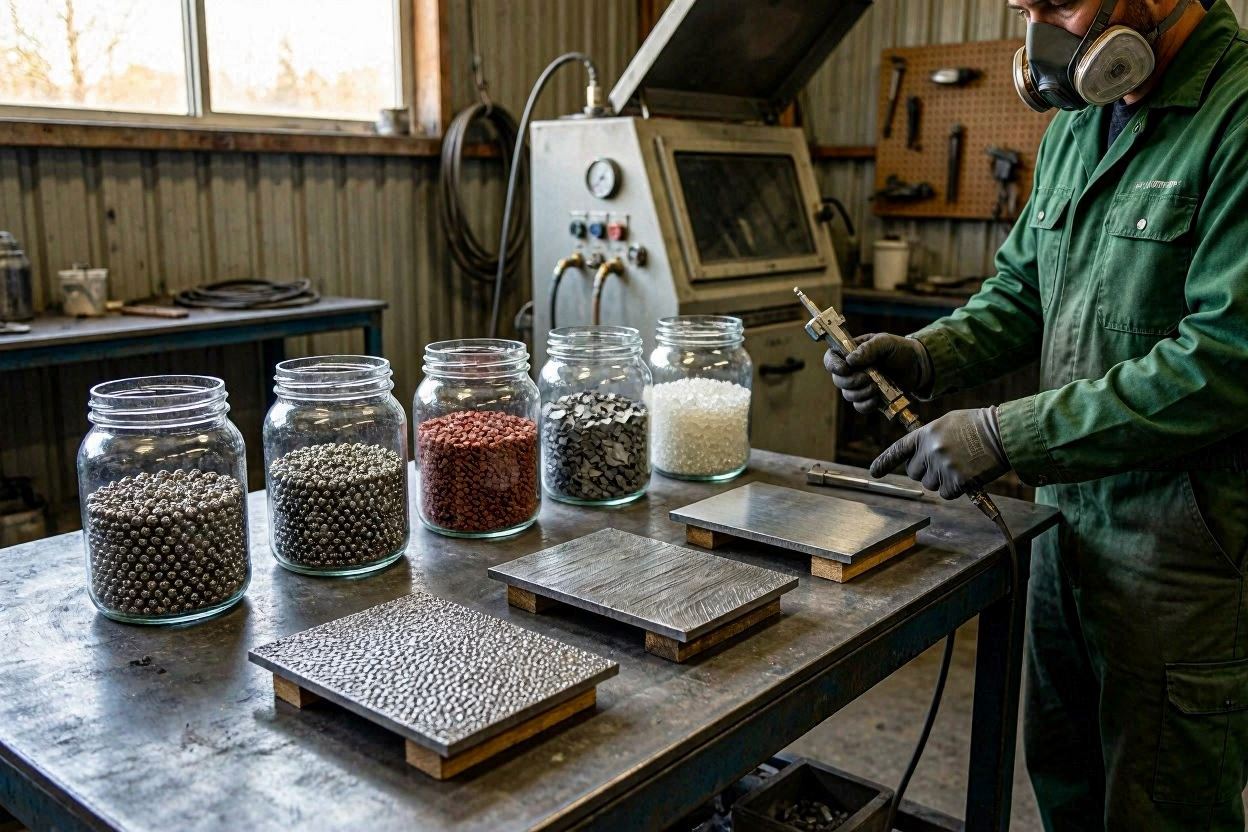
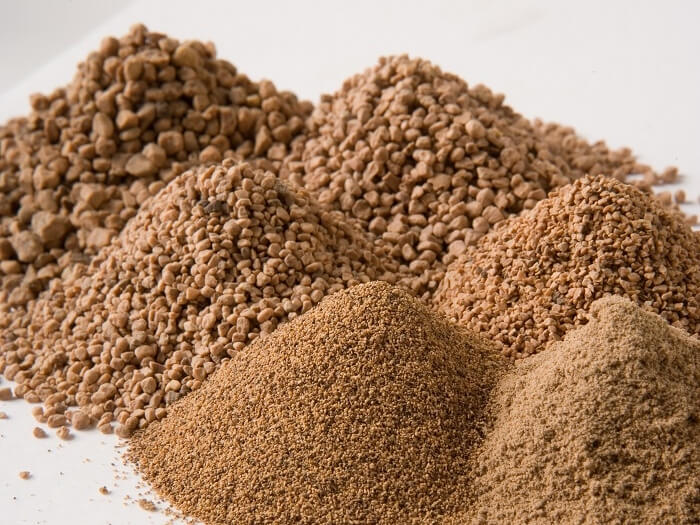
Abrasive blast media — also called blasting abrasives, grit, or sandblasting media — are the solid particles propelled at high velocity against a workpiece surface during an abrasive blasting operation. The kinetic energy of those particles performs two distinct functions simultaneously: it removes unwanted material from the surface (rust, mill scale, old coatings, contamination, foundry sand, weld spatter), and it textures the clean surface to create a microscopic anchor profile that gives protective coatings a mechanical key to grip onto.
The blasting process can be driven by several different mechanisms. In pressure blasting, compressed air forces media from a pressurized pot through a blast hose and nozzle — the workhorse method for field work on bridges, pipelines, and structural steel. In suction (siphon) blasting, air flow creates a vacuum that draws media up from a hopper — common in smaller cabinet systems. In wheel blasting, motor-driven centrifugal turbines fling media at extremely high velocity against parts moving through an enclosed chamber — the standard for high-volume foundry, automotive, and rail applications. In wet or vapor blasting, media is mixed with water before delivery to suppress airborne dust — increasingly used for environmental compliance and surface precision work.
The media itself is the critical variable in all of these systems. Four fundamental physical properties govern how a blast media behaves:
- 硬度 — how resistant the particle is to being crushed on impact, which determines how aggressively it cuts into the substrate surface.
- Shape — whether the particle is angular with sharp cutting edges, round with a smooth peening profile, or sub-angular somewhere in between.
- Size (grit/mesh) — the particle diameter, which controls the depth, frequency, and texture of impact marks left on the surface.
- 密度 — heavier particles carry more kinetic energy per particle at the same velocity, producing deeper impact marks on the substrate.
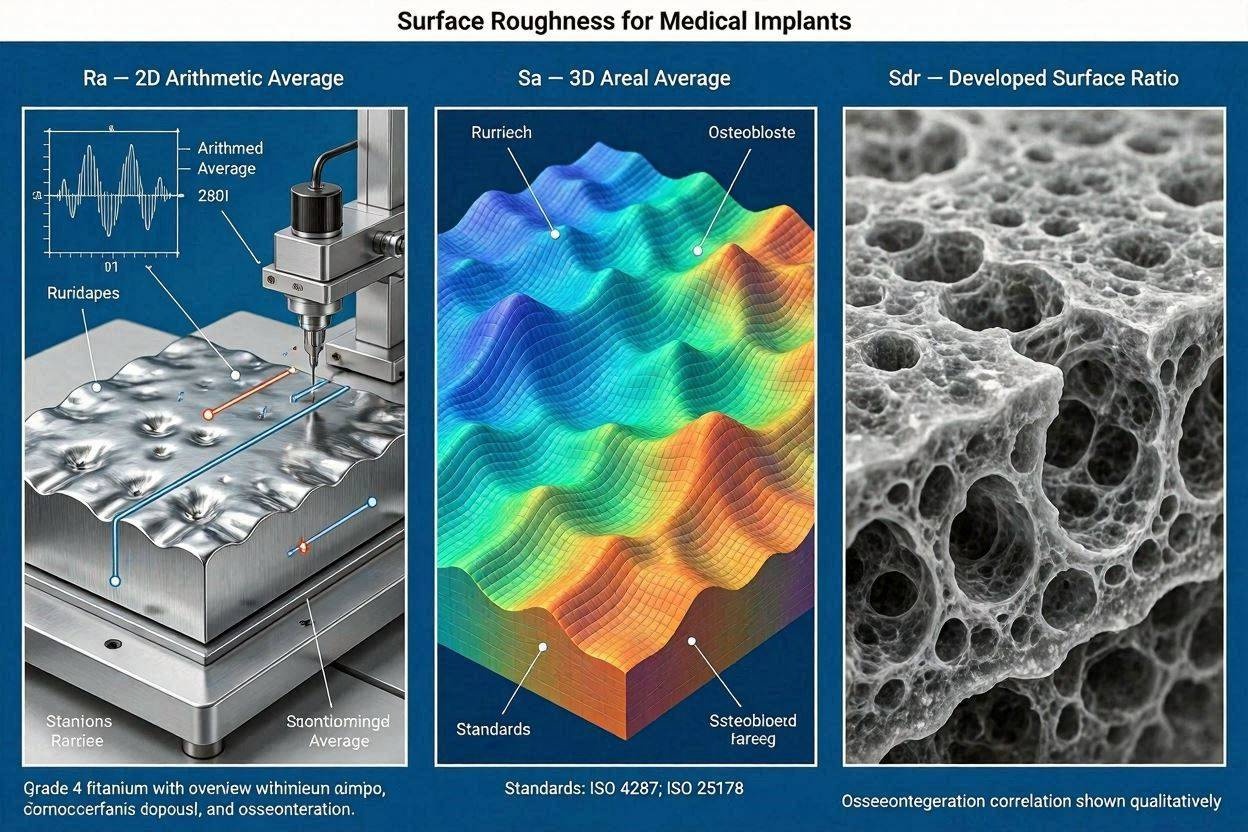
These four properties combine to determine the resulting surface profile — also called the anchor pattern or anchor profile — that the blasting process creates. That microscopic texture of peaks and valleys is the mechanical foundation on which every protective coating depends. An insufficient profile results in poor adhesion and premature delamination. An excessively deep profile creates metal peaks that protrude through thin coating layers, allowing rust to initiate at the exposed tips.
For a deeper look at media classifications and sub-types, including organic, inorganic, and metallic categories with full property listings, see our guide to all types of abrasive blasting media with properties chart.
The Complete Abrasive Blast Media Comparison Chart
The table below presents ten industrial blast media types side by side across eight key parameters. It is designed as a fast-scan decision tool: find the performance characteristic that matters most for your job, read down the column to identify which media types meet your requirement, then use the sections below the table to refine your selection based on application context, equipment type, and cost structure.
How to use this chart: Profile depth values assume standard dry pressure-blast conditions at 90–100 psi (6.2–6.9 bar). Actual profiles vary with blast pressure, standoff distance, nozzle angle, and media condition. Reuse cycles are approximate and depend on system design, operating conditions, and media recovery efficiency. Cost tier reflects typical purchase price per ton, not cost per cycle — see the Recyclability section below for per-cycle economics.
| 媒体类型 | 硬度 | 粒子形状 | Grit / Size Range | Profile Depth (mils) | Reuse Cycles | Dust Level | Unit Cost | Primary Applications |
|---|---|---|---|---|---|---|---|---|
| 氧化铝 | 9 Mohs | Angular, blocky | 12 – 1,200 grit | 1.5 – 4.0 | 3 – 7 | Moderate | Moderate | Steel, hard metals, ceramics, glass etching |
| 碳化硅 | 9 – 9.5 Mohs | Angular, sharp-edged | 16 – 240 grit | 2.0 – 5.0 | 3 – 5 | Moderate | High | Hard substrates, glass engraving, stone etching, lapping |
| 玻璃珠 | 5.5 – 6 Mohs | Round, spherical | 50 – 325 mesh | 0.5 – 1.5 | 20 – 30 | Low | Low – Moderate | Stainless steel, deburring, shot peening, decorative finishing |
| 钢丸 | 40 – 51 HRC | Round, spherical | S-110 – S-780 (SAE) | 0.5 – 2.0 | 100 – 300+ | Very Low | Moderate ★ Very low per cycle | Mill scale removal, shot peening, foundry castings |
| 钢砂 | 40 – 65 HRC | Angular, crushed | G-10 – G-120 (SAE) | 2.5 – 5.0 | 100 – 300+ | Very Low | Moderate ★ Very low per cycle | Heavy rust removal, structural steel, deep profile generation |
| 石榴石 | 7 – 8 Mohs | Sub-angular | 16 – 200 grit | 1.0 – 3.5 | 3 – 6 | Very Low | Moderate | Marine, bridge, pipeline, waterjet cutting |
| Crushed Glass | 5 – 6 Mohs | Angular, irregular | 8 – 80 mesh | 1.0 – 3.0 | 1 – 3 | Moderate | Very Low | Outdoor blasting, paint and coating removal, recycled-content projects |
| Copper Slag | 6 – 7 Mohs | Angular, glassy | 8 – 80 mesh | 1.5 – 3.5 | 1 – 2 | Moderate – High | Very Low | Large-scale outdoor structural steel preparation |
| Walnut Shell | 4.5 – 5 Mohs | Angular, granular | 8 – 100 mesh | < 0.5 | 3 – 5 | Low | Low | Aircraft stripping, wood, delicate metals, soft substrates |
| Plastic Abrasive Grit | 2.5 – 4 Mohs | Angular, faceted | 12 – 60 mesh | < 0.5 | 3 – 8 | Low | High | Aerospace composites, CFRP panels, automotive plastics |
★ Steel shot and steel grit carry a moderate purchase cost per metric ton, but their exceptional recyclability (100–300+ cycles in closed-loop wheel-blast systems) makes them by far the lowest-cost option on a per-cycle basis in high-volume production environments.
Understanding the Key Parameters
Each column in the comparison chart above measures a specific property that affects a different aspect of blasting performance. Reading the chart correctly — and knowing which parameter to prioritize for a given job — is what separates a well-specified blast operation from one that struggles with poor results, high media consumption, or rework. The following subsections explain each parameter in detail.
Hardness: Mohs Scale and Rockwell HRC
Hardness is the most fundamental property of any blast media because it determines how effectively the particle cuts into the substrate surface on impact. A harder particle will bite into steel, concrete, or ceramic more aggressively than a softer one, creating a deeper anchor profile per strike. A particle softer than the substrate will deform on impact rather than cutting — producing minimal profile and generating fine powder rather than useful abrasive action.
Mineral and synthetic abrasives are rated on the Mohs scale, a qualitative 1–10 scale (talc = 1, diamond = 10). The key reference point for surface preparation work is structural steel, which rates approximately 5.5–6 on the Mohs scale. Any media rated below 5.5 Mohs will struggle to produce meaningful profiles on steel. Aluminum oxide at Mohs 9 is hard enough to cut through even hardened tool steels. Silicon carbide at 9–9.5 Mohs is the hardest blasting abrasive commercially available, capable of cutting glass, stone, and advanced ceramics.
Metallic abrasives such as steel shot and steel grit are measured on the Rockwell C scale (HRC) rather than Mohs, because the Mohs scale loses resolution at the high end. Steel grit is classified into three hardness grades: GL (low, 40–50 HRC), GM (medium, 47–56 HRC), and GH (high, 60–66 HRC). Higher hardness within steel grit delivers a more aggressive, deeper-cutting action and produces finer, more angular fragments as the grit breaks down in use. Harder steel grit also tends to work-harden the substrate surface surface slightly during blasting, which is a benefit for fatigue life in some applications.
One important nuance: extreme hardness is not always better. Silicon carbide at Mohs 9.5 would scratch and erode the nozzles and equipment far more aggressively than garnet at Mohs 7–8, increasing equipment maintenance costs. Match the hardness of the media to what the job actually requires.
Particle Shape: Angular, Sub-Angular, and Round
Particle shape is the second most important variable in predicting the surface profile a blast media will create. Shape works in combination with hardness: a hard, round particle (such as steel shot) will create a very different surface than a hard, angular particle (such as steel grit) — even at the same size and velocity.
Angular media (aluminum oxide, silicon carbide, steel grit, garnet, crushed glass, copper slag, walnut shell, plastic grit) has irregular, faceted geometry with sharp edges and corners. When these particles strike the substrate, the sharp edges act like tiny cutting tools, digging into the surface and throwing up sharp peaks. The result is a high, jagged anchor profile with significant surface area — exactly what coating adhesion systems require. The roughness and peak height achieved by angular media cannot be replicated by round media of the same size and hardness.
Round media (glass beads, steel shot) has a spherical or near-spherical geometry with no edges. On impact, round particles indent the surface with a smooth, compressive dimple rather than cutting into it. The resulting surface texture is a series of uniform smooth craters — bright, clean, and with very low roughness. This “peened” surface is ideal for stainless steel finishing, deburring, and shot peening operations where compressive surface stresses are deliberately introduced to improve fatigue resistance. It is not appropriate where a high anchor profile for coating adhesion is required.
Sub-angular media (garnet, some grades of crushed glass) falls between these extremes. Garnet particles are irregular but not as sharply edged as aluminum oxide or steel grit. They produce anchor profiles intermediate between full-angular and round media — deeper and rougher than glass beads, but smoother than aluminum oxide at the same grit size. This makes garnet a good middle-ground choice when a moderate profile is needed without the aggressive substrate cutting action of harder angular media.
When reviewing the comparison chart, always consider shape alongside hardness. A media that appears adequate based on hardness alone may be entirely wrong for the job if its shape does not match the profile requirement.
Grit Size and Mesh Size
Grit size and mesh size are standardized designations that describe the particle diameter of abrasive media. They are the most commonly misunderstood parameters in blast media specification — and misreading them leads directly to surfaces that fail inspection or require costly re-blasting.
The core rule is counterintuitive: lower grit/mesh numbers mean larger, coarser particles. Higher numbers mean smaller, finer particles. This convention derives from the number of openings per linear inch in the classification sieve: a coarse sieve with large openings has a low mesh count; a fine sieve with small openings has a high mesh count. A particle classified as 20-grit aluminum oxide has a median diameter of approximately 850 µm (0.033 inches), while 220-grit aluminum oxide measures just 65 µm (0.0026 inches) — roughly 13 times smaller.
In practical surface preparation terms: coarser media (lower numbers) cut faster, create deeper profiles, and leave more visible surface texture. Finer media (higher numbers) produce smoother surfaces, shallower profiles, and finer peak structures. For most industrial coating applications calling for an anchor profile of 1.5–3.5 mils, aluminum oxide in the 16–60 grit range or garnet in the 16–36 range is appropriate. For fine finishing and decorative work, 80–220 grit is more typical.
Steel abrasives use a different SAE designation system. Shot is classified as S-110 through S-780 (higher S-number = larger particle); grit is classified as G-10 through G-120 (higher G-number = smaller particle — note the opposite convention to S-numbers). This inconsistency trips up many buyers, so always confirm the size specification directly with the manufacturer.
Full Grit Size and Mesh Conversion Chart For a complete Grit → Mesh → Microns → Inches conversion table covering all common abrasive sizes, including micro-grit designations for sizes above 240, see our dedicated reference: Blasting Media Grit Size Chart — Grit, Mesh, Microns and Inches Conversion
Surface Profile Depth
Surface profile depth — also called the anchor pattern depth or anchor profile — is the vertical distance between the highest peaks and the lowest valleys on a blast-cleaned surface, measured in mils (thousandths of an inch) or microns. It is one of the two most important quality parameters in surface preparation (the other being cleanliness grade), and it is the primary output variable controlled through media selection and blast parameters.
Profile depth in the comparison chart is expressed as a range in mils achievable under typical pressure-blast conditions at 90–100 psi. Steel grit G-18 at high blast pressure, for example, can routinely achieve 4.0–5.0 mils on structural steel — a profile suitable for heavy-duty anti-corrosion coatings, thermal spray systems, and marine immersion service. Glass beads, by contrast, top out around 1.0–1.5 mils regardless of blast pressure because their round shape physically limits how deeply they can penetrate the surface.
The profile depth required for any specific job is specified by the coating manufacturer in the technical data sheet (TDS) and enforced by the surface preparation standard being applied (SSPC, NACE, ISO 8501). Using media that cannot achieve the specified minimum profile will result in coating adhesion failure — one of the most common and costly defects in industrial coating work. Using media that produces a profile deeper than the specified maximum can cause coating peaks to corrode through thin film thicknesses.
Profile depth is measured in the field using surface profile gauges — either replica tape (Testex Press-O-Film, read with a micrometer) or digital profilometers (Elcometer 224, Mitutoyo). These measurements are made after blasting and before coating application, and must fall within the specified range before coating proceeds.
Surface Profile Charts and Anchor Pattern Reference For detailed profile depth data by media type and grit size, including matching charts for common coating systems and SSPC/ISO standards, see: Abrasive Blasting Surface Profile Chart — Anchor Pattern Depth Guide
Recyclability and True Cost per Cycle
The reuse cycle count in the comparison chart represents the number of times a given batch of media can be put through a blasting system before degradation renders it ineffective. This number has a direct and often decisive impact on the true economics of any blasting operation — yet many buyers focus only on the purchase price per ton and overlook it entirely.
Consider the math: steel shot costs approximately USD 600–900 per metric ton and lasts 200 cycles in a well-maintained wheel-blast system, giving a media cost of roughly USD 3–5 per ton-cycle. Crushed glass costs USD 80–150 per metric ton but lasts only one cycle, giving a media cost of USD 80–150 per ton-cycle. Steel shot delivers media cost savings of 20–50× on a per-cycle basis compared to single-use alternatives — even though its purchase price per ton appears higher at the outset.
For operations that cannot recycle media — such as large open-air blasting projects where media recovery is impractical — single-use economics apply and the purchase price per ton becomes the primary cost driver. Copper slag and crushed glass are the clear winners in this scenario. For closed-loop cabinet systems or automated wheel-blast lines, recyclability is the dominant cost variable, and steel or high-cycle media like glass beads are almost always more economical over time.
The reuse cycle figures in the table assume proper media maintenance: regular classification and screening to remove oversized and undersized fines, correct blast pressure settings to avoid excessive particle breakdown, and clean, dry storage to prevent media degradation between uses. Poor maintenance practices can cut actual cycle life by 50% or more, eliminating much of the economic advantage of high-cycle media.
Dust Generation
Dust generation — the quantity of fine airborne particles produced during blasting — is a critical factor that affects worker health, environmental compliance, visibility during blasting operations, and post-blast surface cleanliness. Media that generates high dust levels reduces visibility inside blast cabinets and containment structures, slowing production and making it harder to inspect the surface during the blast cycle. It also creates greater demands on dust collection equipment, increases filter change frequency and maintenance costs, and — most importantly — increases the respiratory hazard for blasting personnel.
Very low dust producers: Steel shot and steel grit generate minimal dust because they are dense metallic particles that fracture slowly and cleanly. In automated wheel-blast systems, visible dust production is negligible. This is one of their significant environmental and health advantages over mineral abrasives in enclosed facilities.
Low dust producers: Glass beads, walnut shell, plastic grit, and garnet generate less dust than standard mineral abrasives due to their density, particle integrity, or controlled fracture behavior. Garnet in particular is noted for very low free silica content and low dust output relative to its blasting effectiveness — a key reason it is preferred for environmentally sensitive work.
Moderate to high dust producers: Aluminum oxide, silicon carbide, crushed glass, and especially copper slag generate significant dust during blasting. Copper slag is the most problematic in this respect — its dust may contain trace heavy metals (arsenic, lead, chromium) that require careful environmental management. All operations using these media must use appropriately rated respiratory protection and adequate dust extraction.
All 10 Abrasive Blast Media Types: Properties and Best Uses
The ten media types in the comparison chart above represent the vast majority of abrasive blasting operations conducted worldwide. Each has a distinct combination of physical properties, operating economics, and application strengths. The mini-profiles below provide the deeper context needed to make a confident final selection after reviewing the comparison chart.
1. Aluminum Oxide (Al₂O₃)
- 硬度9 Mohs
- ShapeAngular, blocky
- Grit Range12 – 1,200
- Profile (mils)1.5 – 4.0
- Reuse Cycles3 – 7
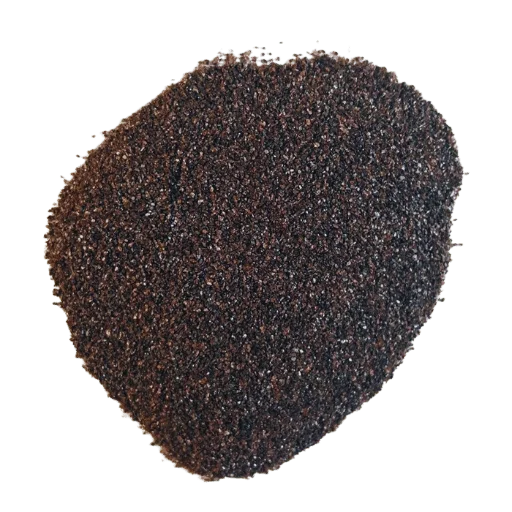
The workhorse of industrial blasting. Available in brown (standard, 95%+ Al₂O₃) and white (99.5%+ purity for sensitive applications). Aluminum oxide’s Mohs 9 hardness and sharply angular blocky shape deliver excellent anchor profiles on steel, stainless steel, non-ferrous metals, ceramics, and glass. Its fracturing behavior is described as “friable” — particles break along fracture planes during use, continuously exposing fresh sharp edges that maintain cutting efficiency over multiple cycles. Use brown aluminum oxide for general structural and industrial surface preparation; white aluminum oxide where iron contamination from brown grades must be avoided, such as on electronics substrates or precision components. Avoid on very soft substrates like aluminum sheet or thin-walled fiberglass where dimensional tolerance is critical.
2. Silicon Carbide (SiC)
- 硬度9 – 9.5 Mohs
- ShapeAngular, very sharp edges
- Grit Range16 – 240
- Profile (mils)2.0 – 5.0
- Reuse Cycles3 – 5
The hardest blast media commercially available, and the only one capable of cutting efficiently through glass, natural stone (granite, marble, limestone), advanced technical ceramics, and tungsten carbide coatings. Silicon carbide’s extreme hardness combined with very sharp angular facets allows it to etch these ultra-hard substrates with precision that no softer media can replicate. In artistic glass etching, monument engraving, and semiconductor substrate processing, silicon carbide is often the only viable option. Its higher purchase cost relative to aluminum oxide limits its use to applications genuinely requiring its extreme hardness; for steel surface preparation, aluminum oxide delivers equivalent or superior results at lower cost. Silicon carbide is also used in advanced lapping and polishing operations, and as a bonded abrasive in grinding wheels and cutting tools.
3. Glass Beads
- 硬度5.5 – 6 Mohs
- ShapeRound, spherical
- Grit Range50 – 325 mesh
- Profile (mils)0.5 – 1.5
- Reuse Cycles20 – 30
The only spherical inorganic media in widespread industrial use, and the standard choice wherever a smooth, bright, non-aggressive surface finish is the goal. Glass beads peen the surface rather than cutting it — delivering a uniform satin finish that brightens stainless steel and aluminum without creating a high anchor profile. Their very high recyclability (20–30 cycles, far above any other mineral media) makes them economical per cycle despite a moderate purchase price. Glass beads are the standard in pharmaceutical and food processing equipment finishing, precision deburring of machined components, and decorative treatment of consumer products. Lead-free borosilicate glass formulations are available for applications requiring strict chemical purity. Not suitable for applications requiring coating adhesion profiles above 1.5 mils.
4. Steel Shot
- 硬度40 – 51 HRC
- ShapeRound, spherical
- Size RangeS-110 – S-780 (SAE)
- Profile (mils)0.5 – 2.0
- Reuse Cycles100 – 300+
The industry standard for high-volume wheel-blast operations across automotive, foundry, rail, and heavy machinery manufacturing. Steel shot is manufactured by atomizing molten steel and quenching the droplets, producing near-perfect spheres with consistent hardness throughout. Its round shape creates a peened surface with induced compressive residual stresses that measurably improve the fatigue life of springs, gears, connecting rods, and structural castings — a process specifically called shot peening, standardized under AMS 2430 and SAE J443. In wheel-blast lines running continuously at volume, steel shot achieves media costs well under USD 0.01 per kilogram per cycle, making it the most economical media available at production scale. Not appropriate where aggressive anchor profiles above 2.0 mils are required; steel grit is specified instead in those cases.
5. Steel Grit
- 硬度40 – 65 HRC
- ShapeAngular, crushed facets
- Size RangeG-10 – G-120 (SAE)
- Profile (mils)2.5 – 5.0
- Reuse Cycles100 – 300+
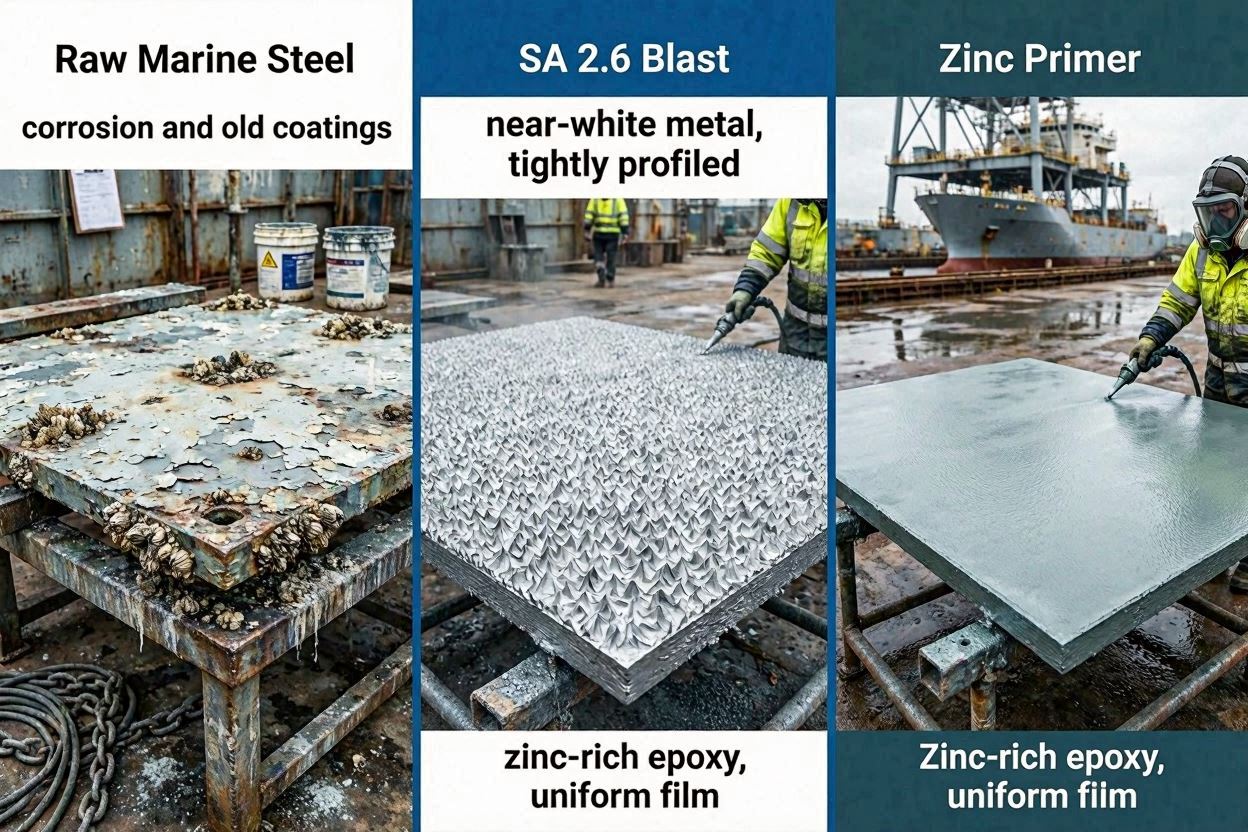
Produced by crushing steel shot, steel grit inherits the exceptional durability of metallic media while gaining the aggressive angular geometry needed to produce deep, high-profile anchor patterns. Steel grit G-25 (GH grade, 60–66 HRC) routinely produces anchor profiles of 3.5–5.0 mils on structural carbon steel — deeper than any mineral-based alternative can achieve at comparable throughput rates. These deep profiles are mandatory for heavy anti-corrosion coating systems in marine immersion service, thermal spray applications, and Sa 2.5 Near-White Metal surface preparation to SSPC-SP 10 / ISO 8501. Steel grit is the dominant media in shipyard, bridge, and large structural fabrication wheel-blast facilities worldwide. Available in three SAE hardness grades: GL (low hardness, most ductile), GM (medium), and GH (high hardness, most aggressive profile).
6. Garnet
- 硬度7 – 8 Mohs
- ShapeSub-angular, irregular
- Grit Range16 – 200
- Profile (mils)1.0 – 3.5
- Reuse Cycles3 – 6
A naturally mined mineral abrasive (almandine iron-aluminum silicate variety for blasting grade) that occupies a unique position in the market: harder and more aggressive than glass beads or crushed glass, yet producing dramatically less dust than slag-based abrasives or silica sand alternatives. Garnet’s combination of very low free silica content, very low heavy metal leachability, and low dust generation makes it the preferred choice for environmentally sensitive blasting environments — bridge maintenance over navigable waterways, pipeline work near groundwater sources, and enclosed spaces with limited ventilation. It is also the universal abrasive in waterjet cutting systems, where its hardness and density provide excellent cutting speed without causing excessive waterjet nozzle wear. High-purity garnet (>98% almandine) produces a very clean surface with minimal embedded media residue. Australian and Indian garnet grades are the most widely traded internationally.
7. Crushed Glass
- 硬度5 – 6 Mohs
- ShapeAngular, irregular
- Grit Range8 – 80 mesh
- Profile (mils)1.0 – 3.0
- Reuse Cycles1 – 3
Manufactured from 100% post-consumer recycled glass — primarily green and amber container glass — crushed glass is one of the most cost-effective and environmentally responsible blast media options for large-scale one-pass outdoor blasting. Its angular shards create a respectable anchor profile on steel (1.0–3.0 mils depending on grit size), and it contains no free crystalline silica (glass-state amorphous silica carries no silicosis risk). This makes it a legally safe and practical replacement for silica sand in jurisdictions where sand is restricted or banned. The very low purchase cost per ton makes crushed glass economical even at one-use-only consumption rates. Limitations include a moderate dust level (fine glass particulate is an irritant to eyes and mucous membranes), rapid breakdown, and unsuitability for very demanding profile requirements above 3.0 mils. Proper respiratory protection is still required during use.
8. Copper Slag
- 硬度6 – 7 Mohs
- ShapeAngular, glassy fracture
- Grit Range8 – 80 mesh
- Profile (mils)1.5 – 3.5
- Reuse Cycles1 – 2
A byproduct of copper smelting operations, copper slag is produced in large quantities and sold at very low cost per ton. Its angular, glassy morphology delivers a moderate anchor profile on structural steel, and its density gives it good kinetic energy per particle for effective cleaning. Copper slag was historically one of the most widely used abrasives for large outdoor blasting jobs — ship hulls, storage tanks, and industrial infrastructure — precisely because its cost made it economical to use even as a single-pass media with no recovery. However, its use has declined significantly in many markets due to regulatory concerns about trace heavy metals in the dust and residue. Some grades contain measurable arsenic, lead, beryllium, or chromium that may require waste classification and special disposal under local environmental regulations. Always consult applicable environmental regulations and request a full material safety data sheet (MSDS/SDS) from the supplier before specifying copper slag, particularly for near-water or ecologically sensitive locations.
9. Walnut Shell
- 硬度4.5 – 5 Mohs
- ShapeAngular, granular
- Grit Range8 – 100 mesh
- Profile (mils)< 0.5
- Reuse Cycles3 – 5
Ground from the shells of black walnuts (Juglans nigra), walnut shell grit is an organic, biodegradable blast media whose defining characteristic is controlled softness: at Mohs 4.5–5, it is harder than many soft substrates (wood, aluminum, GRP) but not hard enough to damage them. This makes it invaluable for stripping old coatings and contamination from aircraft aluminum panels, classic automotive bodywork, wooden architectural elements, delicate military equipment, and museum artifacts — applications where preserving the substrate geometry and surface is as important as removing the coating. Walnut shell generates low dust, is non-toxic, requires no special waste disposal, and is biodegradable. Its organic nature means it must be stored dry and used promptly to prevent moisture absorption and mold growth. Alternatives with similar softness include corn cob grit, which offers slightly different particle geometry and is softer (Mohs 4–4.5).
10. Plastic Abrasive Grit
- 硬度2.5 – 4 Mohs
- ShapeAngular, faceted pellets
- Grit Range12 – 60 mesh
- Profile (mils)< 0.5
- Reuse Cycles3 – 8
The softest industrial blast media available with angular geometry, plastic grit is specifically engineered for applications where coating removal is required without any measurable substrate material removal. Available in urea (Mohs ~3.5), melamine (Mohs ~4), and polyester formulations — each with slightly different hardness and brittleness — plastic grit is the standard choice in aerospace MRO (maintenance, repair, and overhaul) for stripping paint from carbon fiber reinforced polymer (CFRP) composite airframe panels, where even a slight erosion of the carbon fiber surface would constitute structural damage. In automotive refinishing, it strips factory coatings from body panels without warping thin-gauge steel. The relatively high purchase cost per ton reflects the specialized manufacturing process, but is easily justified by the precision and substrate protection it provides. Plastic grit is non-sparking, non-conductive, and low-dust, making it suitable for intrinsically safe (IS) environments and electrical component cleaning.
Detailed Profiles for All Media Types For expanded technical data on each media type including sub-types, specific grade designations, international supplier availability, and specialty applications not covered here, see our full reference guide: 10 Types of Abrasive Blasting Media — Full Guide with Properties Chart
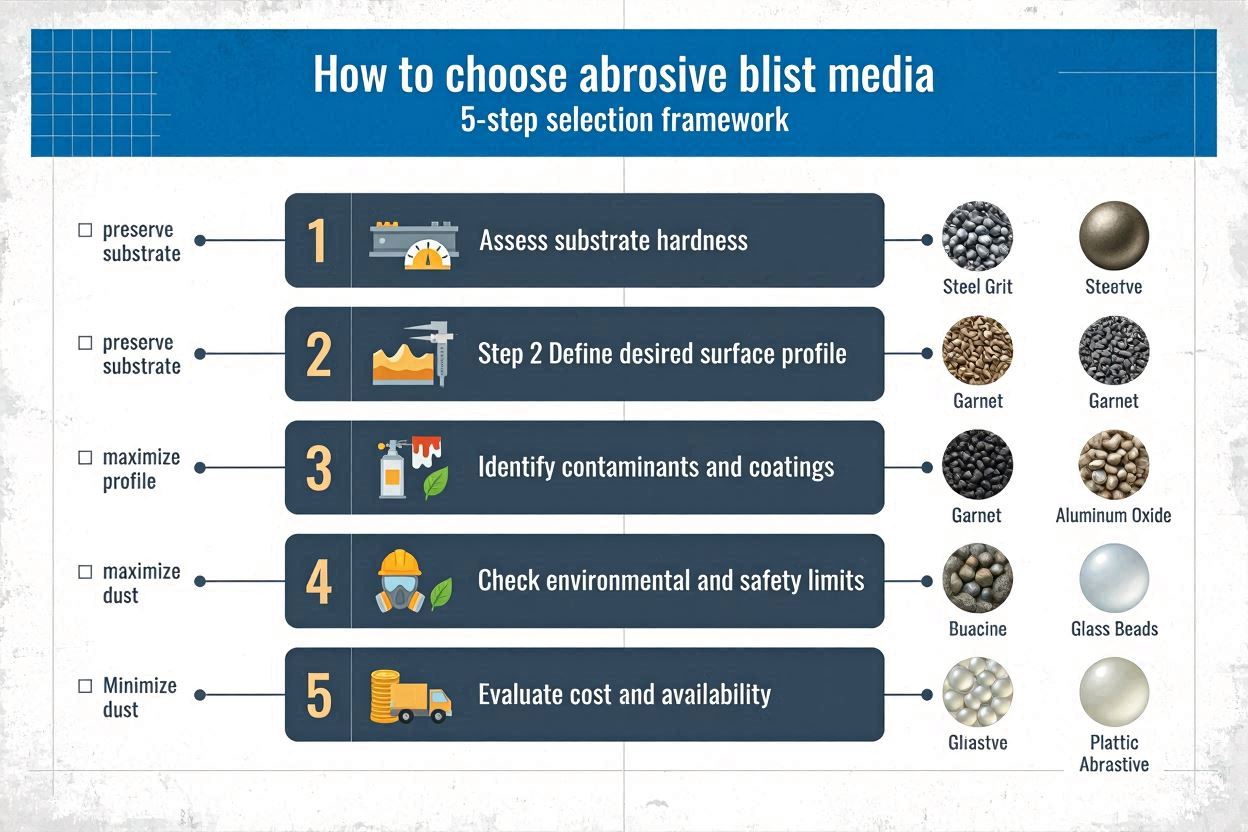
How to Choose the Right Blast Media for Your Application
The comparison chart and media profiles above give you the data. This section translates that data into practical decisions. The table below maps common substrate and task combinations to the recommended primary media choice, along with a brief rationale for the selection. Use it as a rapid starting point — then refine based on your equipment type, production volume, and any site-specific environmental or health restrictions.
| Substrate | Blasting Goal | Recommended Media | Key Rationale |
|---|---|---|---|
| Structural carbon steel | Heavy rust and mill scale removal | Steel grit G-25 (wheel-blast); Aluminum oxide 24–36 grit (pressure-blast) | Deep profile (2.5–5.0 mils) required for Sa 2.5 standard; highest throughput |
| Structural steel — near water or confined space | Coating prep with minimal dust | Garnet 20–30 grit | Very low dust, very low heavy metal leachability, compliant for sensitive sites |
| 不锈钢 | Clean satin finish, no iron contamination | Glass beads (80–120 mesh) | Spherical, no iron, brightens surface without roughening or profiling |
| Aluminum panels or extrusions | Paint stripping — substrate must not be damaged | Plastic grit (melamine or urea) | Hardness below aluminum; strips coating without eroding base material |
| Foundry castings (cast iron, cast steel) | Descaling after pour, scale and sand removal | Steel shot S-230 to S-460 (wheel-blast) | High throughput, maximum recyclability, peens casting surface beneficially |
| Concrete floors | Surface prep for epoxy coating adhesion | Aluminum oxide 16–24 grit | Hard enough to open concrete pores; creates CSP 3–5 profile for epoxy |
| Glass or natural stone | Artistic etching or precision engraving | Silicon carbide 60–120 grit | Hardest media available; only option for reliable, precise glass and stone cutting |
| CFRP composite airframe panels | Paint stripping — fiber integrity critical | Plastic grit (urea or polyester grade) | Removes coating without disturbing carbon fiber structure beneath |
| Marine steel hull | Sa 2.5 blast, near-water environmental compliance | Garnet 16–30 grit | Effective profile, very low leachable toxicity, meets port and IMO requirements |
| Wood or timber | Old paint or coating removal | Walnut shell (12–40 mesh) or corn cob grit | Organic, biodegradable, soft enough to avoid wood fiber damage |
Three additional factors should always be verified before finalizing a media specification:
- Equipment compatibility: Not all media types work in all equipment types. Heavy steel grit requires heavy-duty wheel-blast equipment; it will destroy the impeller of a light-duty unit. Plastic grit and walnut shell must only be used in purpose-designed closed-loop systems — they cannot be reclaimed in standard metal-grit recovery units.
- Post-blast cleanliness requirements: Some media leave embedded particles that must be removed before coating. Copper slag residue, for example, must be thoroughly removed from blast-cleaned steel before coating in marine environments. Glass bead residue on stainless steel must be cleared to prevent contamination of downstream processes.
- Local waste disposal regulations: Spent media classified as hazardous waste (copper slag, some slag abrasives) carries disposal costs that may eliminate the purchase-price advantage of the cheapest options.
Full Media Selection Matrix by Substrate and Application For a more detailed selection guide with expanded substrate categories, coating system compatibility notes, and environmental compliance factors, see: Abrasive Blast Media Selection Chart by Material and Application
Grit Size and Mesh Conversion: Quick Reference
The table below provides a quick reference for converting between the grit size designations used in abrasive blast media specifications, the equivalent USS (United States Standard) mesh number, the approximate median particle diameter in microns and inches, and the typical anchor profile range in mils that size produces on structural steel under standard pressure-blast conditions.
This table covers the mineral and synthetic abrasive range (aluminum oxide, silicon carbide, garnet) from coarsest to finest. Steel shot and steel grit use the separate SAE sizing system (S-numbers and G-numbers) which is not shown here but is covered in the dedicated grit size conversion guide linked below.
| Grit Size | USS Mesh Equiv. | Median Size (µm) | Median Size (inches) | Typical Profile on Steel (mils) |
|---|---|---|---|---|
| 12 | — | ~1,680 | ~0.066″ | 3.5 – 5.0 |
| 16 | 16 | ~1,190 | ~0.047″ | 3.0 – 4.5 |
| 20 | 20 | ~850 | ~0.033″ | 2.5 – 4.0 |
| 24 | 25 | ~710 | ~0.028″ | 2.5 – 3.5 |
| 36 | 40 | ~425 | ~0.017″ | 2.0 – 3.0 |
| 46 | 45 | ~355 | ~0.014″ | 1.5 – 2.5 |
| 60 | 50 | ~300 | ~0.012″ | 1.5 – 2.5 |
| 80 | 80 | ~180 | ~0.007″ | 1.0 – 1.8 |
| 120 | 100 | ~125 | ~0.005″ | 0.5 – 1.2 |
| 180 | 140 | ~90 | ~0.0035″ | 0.3 – 0.8 |
| 220 | 230 | ~65 | ~0.0025″ | < 0.5 |
Profile values in the table represent ranges for angular mineral media (primarily aluminum oxide) on structural carbon steel at standard operating pressure. Garnet of the same nominal grit size will produce profiles approximately 15–25% shallower than aluminum oxide due to its sub-angular shape. Silicon carbide of the same grit size will produce profiles 10–20% deeper than aluminum oxide due to its greater hardness and sharper cutting edges.
For critical applications where a specific profile depth must be met to a tight tolerance, always conduct a trial blast on representative substrate material and measure with calibrated surface profile gauges (NACE SP0287 / ASTM D4417) before committing to a media specification for the full project.
Complete Grit-to-Mesh-to-Micron Conversion Reference For the full conversion table including micro-grit designations (P240 through P2500), SAE steel shot and grit size systems, and FEPA/ANSI standard cross-references, see our dedicated reference page: Blasting Media Grit Size Chart — Grit, Mesh, Microns and Inches Conversion
Surface Profile Requirements for Industrial Coatings
Every protective coating system has a profile requirement — a minimum and maximum anchor profile depth within which the coating will adhere and perform as specified. Meeting this requirement is not optional: it is the mechanical basis of coating adhesion on metal substrates, and it is a contractually enforceable criterion in virtually every industrial painting specification and standard.
Profile specifications are defined either by the coating manufacturer (in the product’s Technical Data Sheet), by the project specification engineer, or by the applicable industry standard. The most commonly referenced standards for surface profile in industrial coating work are SSPC-SP 6 (Commercial Blast), SSPC-SP 10 (Near-White Metal Blast), and SSPC-SP 5 (White Metal Blast) in North America, and ISO 8501-1 grades Sa 2, Sa 2.5, and Sa 3 internationally.
The table below maps common coating systems to their typical profile requirements and the blast media most suitable for achieving those profiles:
| Coating System | Min Profile (mils) | Max Profile (mils) | Recommended Media | Standard Ref. |
|---|---|---|---|---|
| Thin-film polyurethane topcoat | 0.5 | 1.5 | Glass beads 80 / Garnet 60–80 | Per TDS |
| Light-duty alkyd primer | 0.8 | 2.0 | Garnet 30–60 / AO 80 | SSPC-SP 3 |
| Standard epoxy primer | 1.5 | 3.0 | Garnet 16–30 / AO 36–60 | SSPC-SP 6 |
| Heavy-duty marine epoxy | 2.0 | 3.5 | Garnet 16 / AO 24–36 / Steel grit G-40 | SSPC-SP 10 |
| Zinc-rich primer (inorganic/organic) | 2.0 | 4.0 | Steel grit G-25 / AO 16–24 | SSPC-PS 12 |
| Anti-corrosion immersion coating | 2.5 | 4.5 | Steel grit G-18 / AO 16 | SSPC-SP 10 / ISO Sa 2.5 |
| Thermal spray (HVOF, arc wire) | 3.0 | 6.0 | Steel grit G-12 / AO 12–16 | AWS C2.18 / NACE No. 5 |
| Epoxy floor coating (concrete) | CSP 3 | CSP 5 | Aluminum oxide 16–24 grit | ICRI 310.2 |
Critical compliance note: Profile values in this table represent typical industry practice and should not be used as a substitute for the specific requirements stated in your coating product’s Technical Data Sheet. Profile requirements vary significantly between coating manufacturers, product formulations, and service environments. Always obtain and follow the TDS requirements for the specific product being applied. Coating failures attributed to incorrect surface profile are typically not covered under product warranties.
One frequently overlooked aspect of profile specification is the maximum profile limit. Exceeding it causes the same adhesion failure risk as falling short: when profile peaks are taller than the coating dry film thickness (DFT), bare metal peaks protrude through the coating, creating initiation points for rust underfilm and premature delamination. For thin-film topcoat systems (DFT below 75 µm / 3 mils), ensure the blast media selected cannot generate profile depths that exceed the specified maximum.
Detailed Surface Profile Reference by Media and Coating Type For expanded surface profile data tables including Rz, Ra, and Rmax values, profilometer measurement methods, and coating compatibility guidance across all major systems, see: Abrasive Blasting Surface Profile Chart — Anchor Pattern Depth Guide
Safety, Health, and Regulatory Compliance
Abrasive blasting is among the most hazardous industrial operations from a respiratory health perspective. The combination of high-velocity particle generation, airborne dust, and confined working spaces creates exposure risks that have led to strict regulatory controls in most industrialized countries. Every operator using any media in the abrasive blast media chart above must understand and comply with the relevant safety requirements for their jurisdiction.
The Silica Sand Ban
The most important regulatory fact in abrasive blasting is that silica sand (quartz sand) is banned or severely restricted for abrasive blasting in a growing number of countries. In the United States, OSHA’s Silica Standard (29 CFR 1926.1153 for construction, 29 CFR 1910.1053 for general industry) enforces a permissible exposure limit (PEL) of 50 µg/m³ as an 8-hour time-weighted average for respirable crystalline silica — a limit that is essentially impossible to meet using silica sand as blast media without fully enclosed and self-contained blasting rigs. The European Union’s Chemical Agents Directive and associated OSHA regulations, the UK’s Control of Substances Hazardous to Health (COSHH) framework, and Australia’s Safe Work Australia guidance all effectively prohibit the use of silica sand for blasting. Prolonged inhalation of crystalline silica dust at elevated concentrations causes silicosis, an irreversible progressive fibrotic lung disease for which there is no cure, and which is strongly associated with secondary tuberculosis and lung cancer.
Silica sand must not be used as abrasive blast media in any jurisdiction where it is restricted or banned. The health consequences of silicosis are severe and permanent. All media types in the comparison chart above — aluminum oxide, silicon carbide, glass beads, steel shot, steel grit, garnet, crushed glass, walnut shell, copper slag, and plastic grit — are safer alternatives to silica sand for blast cleaning purposes and deliver equal or superior performance.
Respiratory Protection Requirements
Even with safer media alternatives, respiratory protection is mandatory in all dry abrasive blasting operations. The minimum standard for blast operators is a supplied-air respirator (SAR) or self-contained breathing apparatus (SCBA) — not a half-mask dust respirator, which provides insufficient protection against the fine particle fractions generated during blasting. The applicable standard in the United States is OSHA 29 CFR 1910.134; equivalent standards apply in other jurisdictions. For wet and vapor blasting, dust suppression significantly reduces airborne particle concentration, but supplied air is still recommended when enclosed blasting structures prevent adequate ventilation.
Copper Slag and Heavy Metal Considerations
Copper slag, coal slag, and some other metallurgical slag abrasives may contain trace quantities of arsenic, lead, beryllium, nickel, and chromium in their dust and spent-media residue. These constitute potential hazardous waste requiring classification, handling, and disposal in compliance with local environmental regulations (RCRA in the United States; Hazardous Waste Regulations in the EU). Before specifying any slag abrasive, request a complete SDS and elemental analysis from the supplier, and verify whether the spent media will require testing for hazardous waste classification under the applicable regulatory framework in the project location.
Full Silica Sand Safety Guide and Safe Alternatives Chart For a detailed review of silica sand regulatory restrictions by country, a comprehensive comparison of safe alternative media by application, and a practical guide to respiratory protection requirements in blasting operations, see: Silica Sand in Abrasive Blasting — Health Risks, OSHA Rules and Safe Alternatives Chart
Frequently Asked Questions
Silicon carbide is the hardest commercially available blast media, rating 9–9.5 on the Mohs scale. Aluminum oxide is a close second at Mohs 9. Both significantly outperform garnet (7–8 Mohs), glass beads (5.5–6 Mohs), and all slag-based alternatives. Silicon carbide’s extreme hardness makes it the preferred — and often only — viable choice for precision etching of glass, stone, and advanced ceramics, and for the most demanding profiling tasks on very hard substrate materials. For general steel surface preparation, aluminum oxide delivers equivalent or superior results at lower cost and is a more practical choice.
For heavy rust and mill scale removal from structural steel, steel grit (G-grade, angular) is the most efficient choice in wheel-blast operations, delivering profiles of 2.5–5.0 mils and very high throughput at low per-cycle cost. Aluminum oxide in 16–36 grit performs equally well in pressure-blast and cabinet systems. Garnet in 16–30 grit is the preferred choice when dust generation must be minimized — for example, in enclosed structures, near waterways, or in populated areas where dust dispersion is a concern. The optimal selection in every case depends on equipment type, production volume, the required surface cleanliness grade (SSPC-SP 6, SP 10, SP 5), and site environmental restrictions.
Grit size and mesh size are particle size designations where lower numbers indicate coarser, larger particles and higher numbers indicate finer, smaller particles. 12-grit aluminum oxide has a median diameter of approximately 1,680 µm; 220-grit measures roughly 65 µm — about 26 times smaller. Mesh size follows the same convention: it represents the number of wire openings per linear inch in the classification sieve. For steel abrasives, SAE S-numbers (shot) and G-numbers (grit) use related but distinct conventions — S-numbers increase with larger particle size, while G-numbers increase with smaller particle size. A complete conversion table covering grit, mesh, microns, and profile depth is available in our dedicated grit size chart.
Angular blast media — aluminum oxide, steel grit, garnet, crushed glass, silicon carbide — has sharp, faceted edges that cut into the substrate on impact, producing a rough anchor profile of peaks and valleys essential for coating adhesion. The profile is uneven but has high average surface area. Round or spherical media — glass beads, steel shot — strikes the surface with a smooth compressive impact, producing uniform dimples without sharp peaks. This peened texture is ideal for shot peening (to improve fatigue resistance), achieving bright satin finishes on stainless steel, and deburring precision components, but it is not suitable for applications requiring a high anchor profile for coating adhesion. Sub-angular media like garnet falls between these extremes and is a practical compromise when moderate profile and low dust are both needed.
Recyclability varies enormously by media type. Steel shot and steel grit are the most durable, lasting 100–300+ cycles in well-maintained closed-loop wheel-blast systems. Glass beads withstand approximately 20–30 cycles in cabinet systems. Aluminum oxide and silicon carbide recycle 3–7 times. Garnet achieves 3–6 cycles. Single-use media — copper slag, coal slag, and most crushed glass in open outdoor blasting — are designed for one or two passes before disposal. Actual cycle life depends heavily on operating conditions: excessively high blast pressure, inadequate media classification, or moisture in the system all accelerate breakdown and dramatically reduce effective cycle life. The reuse cycle count is the single most important factor in calculating the true economics of any blasting operation.
Most heavy-duty epoxy primer systems specify a minimum anchor profile of 1.5–3.5 mils (38–89 µm Rz) on steel. Marine-grade epoxy systems commonly require 2.0–3.0 mils. Zinc-rich inorganic primers often call for 2.0–4.0 mils. Thermal spray bond coats may need profiles as deep as 4.0–6.0 mils. For thin-film epoxy systems, the maximum profile is as critical as the minimum — profile peaks taller than the dry film thickness will corrode through the coating. Always verify the exact profile specification in the coating manufacturer’s Technical Data Sheet and cross-reference it against the applicable surface preparation standard (SSPC-SP 10, ISO Sa 2.5, etc.) before finalizing media selection.
Silica sand is banned or heavily restricted for abrasive blasting in the United States (OSHA 29 CFR 1926.1153 and 29 CFR 1910.1053), the European Union, the United Kingdom, Australia, and a growing number of other jurisdictions. The reason is clear and unambiguous: prolonged inhalation of respirable crystalline silica dust causes silicosis, an irreversible and potentially fatal fibrotic lung disease for which there is no treatment or cure. All media types in this comparison chart — including garnet, aluminum oxide, glass beads, crushed glass, steel grit, and plastic grit — are safe and effective alternatives that can match or exceed silica sand performance. There is no application scenario in modern industrial or commercial blasting where silica sand is the only viable option. For a full regulatory summary by country and a side-by-side alternatives comparison, see our silica sand safety guide.
For high-volume wheel-blast production lines, steel shot and steel grit consistently deliver the lowest cost per blast cycle — typically USD 0.004–0.007 per kilogram per cycle — because their exceptional recyclability (100–300+ cycles) amortizes the purchase price across a very large number of operations. At full production scale in automotive, rail, or foundry wheel-blast facilities, steel media can run for months between replenishment. For pressure-blast and cabinet operations at lower volumes, aluminum oxide provides the best performance-to-cost ratio, with a per-cycle cost roughly 5–10 times lower than silicon carbide. For large-scale one-pass outdoor blasting where media recovery is impractical, copper slag and crushed glass offer the lowest upfront purchase cost per metric ton and are the economical choice when total project economics are calculated on a per-surface-area basis.
About Jiangsu Henglihong Technology Co., Ltd.
Jiangsu Henglihong Technology Co., Ltd. is a direct-source Chinese manufacturer of industrial abrasive blasting media, supplying aluminum oxide (brown and white fused alumina), silicon carbide, glass beads, steel shot, and steel grit to B2B buyers across manufacturing, surface treatment, shipbuilding, and infrastructure sectors worldwide. Our products are manufactured to international grading standards including FEPA, ANSI, and SAE, and are exported to Europe, North America, Southeast Asia, the Middle East, and Africa.
Our technical team has published this abrasive blast media chart and the supporting reference guides across this content system as part of our commitment to helping buyers make well-informed purchasing decisions. We believe that buyers who understand what they need are better customers, and better customers build longer business relationships. If you have a specification question that this guide does not answer, our technical support team is available to assist directly.
Request Samples or a Custom Quote
Jiangsu Henglihong Technology supplies aluminum oxide, silicon carbide, glass beads, steel shot, and steel grit direct from our Jiangsu facilities. Competitive FOB pricing, flexible MOQ for new customers, SGS-certified product quality, and responsive technical support.
Request a Quote Browse Products过滤器