Zirconia Beads for 喷丸强化: Process Parameters, Standards & Industry Applications
A technical deep-dive into using YSZ zirconia beads as shot peening media — from the physics of compressive stress induction to Almen intensity certification, equipment setup, and aerospace-grade process control.
1. What Is Shot Peening and How Does It Work?
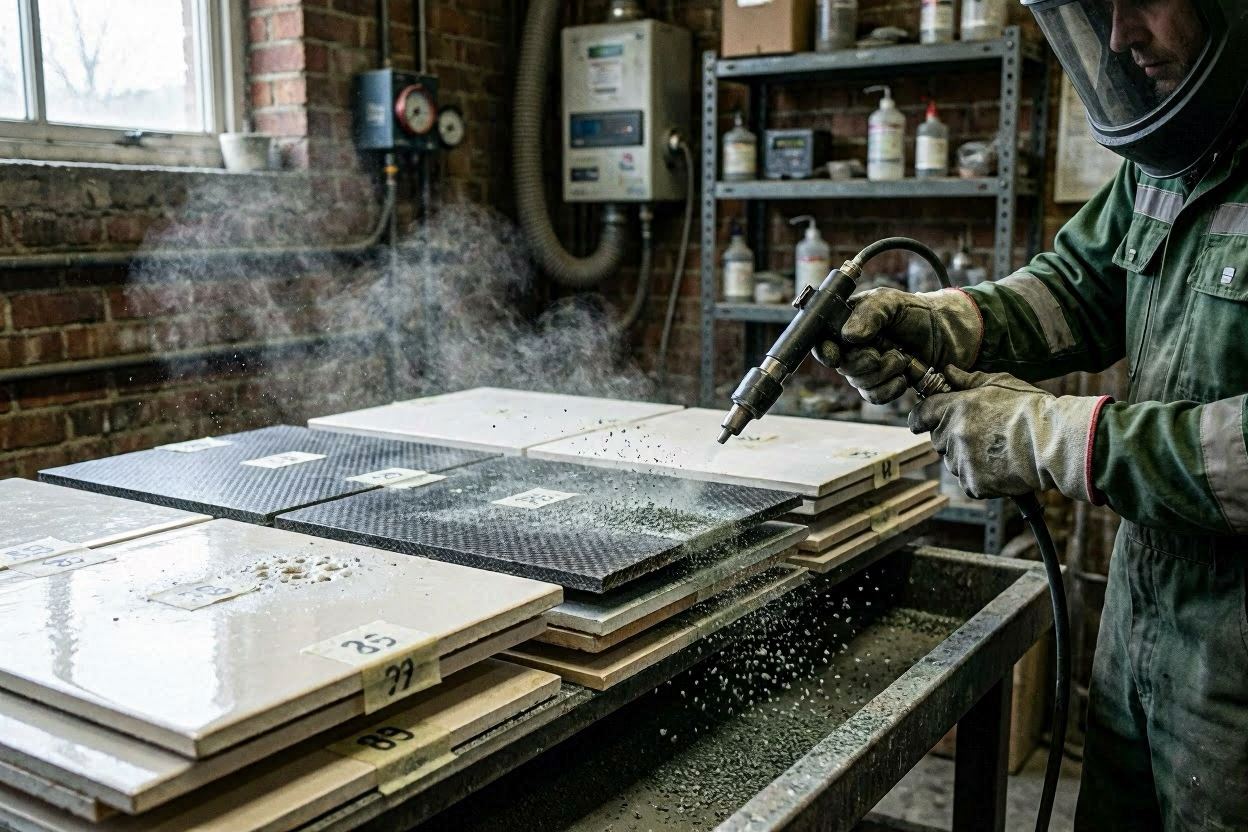
Shot peening is a cold-working surface treatment in which a controlled stream of spherical media — the “shot” — is propelled at a metallic workpiece surface at high velocity. Each spherical projectile creates a small plastic indentation. The surrounding elastic material tries to restore its original shape but is constrained by the plastically deformed zone beneath, leaving a layer of compressive residual stress extending from the surface to a depth of 0.1–0.8 mm depending on media size, density, and impact energy.
This compressive stress layer is the entire point of the process. Metal fatigue and stress corrosion cracking almost always initiate from the surface, driven by tensile stresses introduced by machining, grinding, or service loading. By superimposing a compressive stress on top of these tensile drivers, shot peening effectively raises the threshold at which crack initiation can occur — extending fatigue life by 50–500% depending on the application and alloy system.
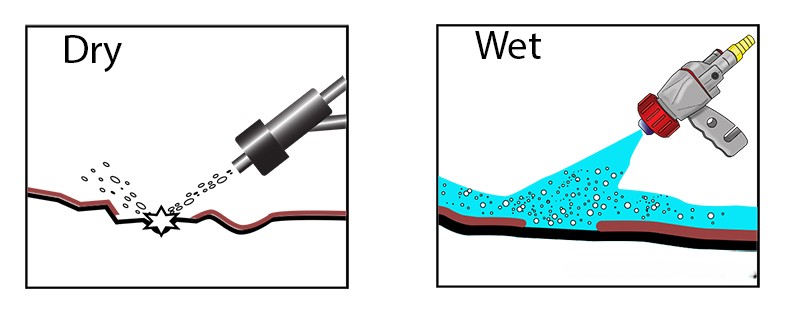
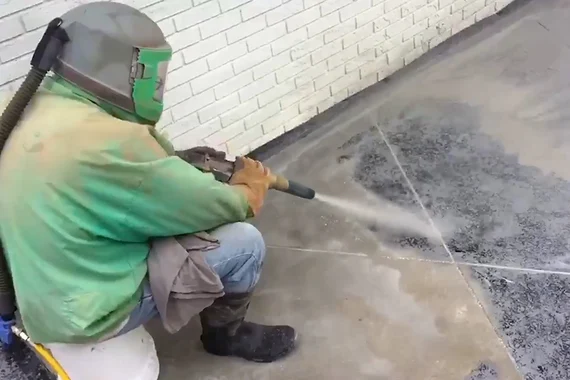
It is important to distinguish shot peening from abrasive blasting. In abrasive blasting, the goal is material removal — cleaning, texturing, or profiling a surface by cutting with angular particles. In shot peening, the goal is stress modification with minimal material removal, using spherical media specifically to avoid cutting. Using angular or broken media in a peening process introduces micro-notches that act as fatigue crack initiators — the exact opposite of the intended effect.
2. Why YSZ Zirconia Beads Excel as Shot Peening Media
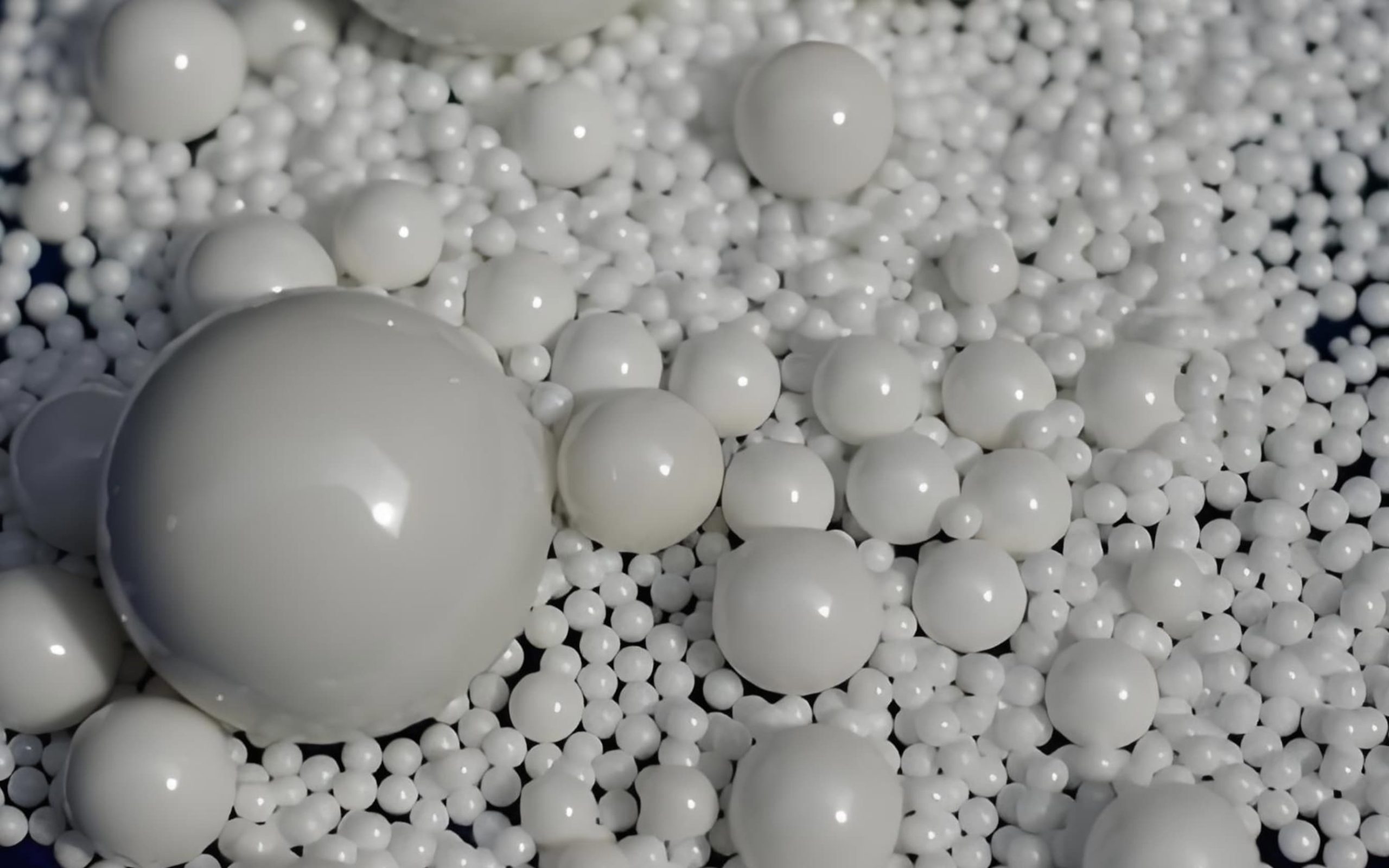
Not all spherical media are equal for shot peening. The effectiveness of a peening medium is determined by four properties: density, hardness, sphericity, and durability. YSZ zirconia beads deliver best-in-class performance across all four — a combination that no single alternative medium fully matches.
2.4× denser than glass
Harder than hardened steel
Consistent Hertzian contact
Before significant attrition
Density and Kinetic Energy
Kinetic energy is proportional to mass (E = ½mv²). At equal velocity and diameter, a YSZ bead at 6.0 g/cm³ delivers 2.4× the kinetic energy of a glass bead at 2.5 g/cm³. In practical terms, this means deeper compressive stress profiles — or the same stress profile at lower air pressure, reducing equipment wear and energy consumption. For thick-section components like aircraft landing gear or compressor disks, where stress depths of 0.3–0.6 mm are required, the density advantage of YSZ is often decisive.
Sphericity and Almen Consistency
Shot peening intensity is certified using Almen strips — thin spring steel plates exposed to the peening stream, whose arc height after exposure is correlated with the compressive stress induced. To achieve repeatable Almen readings from lot to lot and over the bead charge’s service life, the impacting geometry must remain consistent. With >98% sphericity, every YSZ bead produces a near-identical Hertzian contact footprint. Compare this to steel shot (70–90% sphericity) or degraded glass beads (which fracture into irregular fragments), where Almen strip scatter increases as the charge ages.
Durability and Process Stability
A degrading media charge is the most common source of shot peening process drift. As glass beads fracture, the mean bead size decreases, Almen intensity drops, and coverage uniformity degrades — all without obvious visual warning. YSZ beads, owing to their transformation toughening mechanism, wear down gradually by surface rounding rather than fracturing. The particle size distribution remains stable far longer, enabling predictable process conditions between media top-up intervals and reducing the frequency of Almen recertification checks.
Chemical Cleanliness
On titanium alloys, nickel superalloys, and stainless steel — the dominant materials in aerospace and medical applications — any iron contamination from steel shot creates galvanic couples that initiate pitting corrosion and, ultimately, fatigue crack sites. YSZ beads introduce zero iron, zero silica, and zero chloride. This chemical neutrality is not merely convenient; for many aerospace prime and sub-tier suppliers, it is a contractual requirement specified in their material and process specifications.
3. Almen Intensity: Measurement, Standards & YSZ Performance
Almen intensity is the universally accepted quantitative measure of shot peening intensity, standardised in SAE J443 and referenced in AMS 2430 (aerospace shot peening), AMS 2432 (automated peening), and MIL-S-13165. Understanding how YSZ beads interact with the Almen measurement system is essential for process qualification and production control.
The Almen Strip System
Three strip types are used: N (thin, 0.79 mm), A (standard, 1.29 mm), and C (thick, 2.39 mm). The appropriate strip is chosen based on the expected intensity range. After peening to full coverage (defined as ≥98% dimpled area), the strip is released from its fixture and its arc height is measured with an Almen gauge. The intensity is expressed as, for example, “0.20A” — meaning 0.20 mm arc height on a Type A strip.
Saturation and the Almen Curve
A saturation curve is constructed by peening multiple strips for different exposure times at fixed parameters. The saturation point is defined as the exposure time at which doubling the exposure increases arc height by no more than 10%. Operating at saturation ensures that the compressive stress profile has reached its maximum depth and is stable against minor variation in media flow rate. For YSZ bead processes, saturation curves are typically tighter and more reproducible than glass bead processes due to the higher density of impacts per unit area at equivalent media flow rates.
4. Process Parameters for YSZ Shot Peening
Successful shot peening with YSZ beads requires correct specification of five interdependent process variables. Changing any one of them shifts the Almen intensity and stress profile, requiring re-qualification if the change falls outside the approved process window.
| 参数 | Typical Range (Pneumatic) | Effect on Intensity | Key Consideration |
|---|---|---|---|
| Blast pressure | 1.5 – 4.5 bar | ↑ pressure → ↑ intensity | Higher pressure accelerates bead attrition; do not exceed 5.0 bar with fine beads |
| Nozzle-to-part distance | 100 – 250 mm | ↓ distance → ↑ intensity | Must be held constant; robotic systems recommended for complex geometries |
| Nozzle angle | 75° – 90° to surface | ↓ angle → ↓ intensity, ↑ coverage time | 90° maximises compressive depth; angled approach for internal bores |
| Media flow rate | 2 – 12 kg/min (per nozzle) | ↑ flow → ↑ coverage rate | Monitored by load cell or timed collection; drifting flow is most common process upset |
| Coverage | 100% – 200% | ↑ coverage → minimal additional intensity gain beyond saturation | 200% coverage used for safety-critical components; verify with fluorescent dye if required |
| Bead size (diameter) | 0.1 – 2.0 mm | ↑ size → ↑ intensity, ↑ Ra | Size is the primary lever for adjusting depth; select before adjusting pressure |
5. Equipment Types and Compatibility
YSZ beads are compatible with both major categories of shot peening equipment — pneumatic (air-blast) systems and mechanical (wheel/centrifugal) systems — but each has specific compatibility considerations.
6. Bead Size Selection for Shot Peening
Bead size is the most powerful lever available to the process engineer for adjusting compressive stress depth and surface roughness. The following selection guide is based on empirical data from YSZ peening operations across multiple industry sectors.
| Bead Diameter | Almen Type | Compressive Depth | Surface Ra After Peening | Typical Application |
|---|---|---|---|---|
| 0.05 – 0.10 mm | N strip | 0.03 – 0.07 mm | Ra 0.1 – 0.2 µm | Dental implants, micro-turbine blades, watch springs |
| 0.10 – 0.20 mm | N strip | 0.05 – 0.12 mm | Ra 0.2 – 0.4 µm | Compressor blades (fan section), medical bone screws, precision gears |
| 0.20 – 0.40 mm | A strip | 0.10 – 0.22 mm | Ra 0.4 – 0.7 µm | Turbine disk fir-trees, aerospace fasteners, connecting rods |
| 0.40 – 0.80 mm | A strip | 0.18 – 0.35 mm | Ra 0.7 – 1.2 µm | Coil springs, crankshafts, gear teeth, landing gear components |
| 0.80 – 1.50 mm | A / C strip | 0.30 – 0.50 mm | Ra 1.2 – 2.0 µm | Leaf springs, heavy structural welds, ship propeller shafts |
| 1.50 – 3.00 mm | C strip | 0.45 – 0.65 mm | Ra 2.0 – 3.5 µm | Thick-walled pressure vessels, railway axles, large casting fatigue life extension |
When a process requires high compressive depth 和 low surface roughness — for example, aerospace compressor disks where both fatigue life and aerodynamic surface finish are specified — a two-stage peening process is used: a coarser bead establishes the required depth, followed by a finer bead that smooths the surface texture without significantly reducing the compressive layer.
7. Industry Applications
航空航天
Aerospace is the founding industry for shot peening standards and remains the most demanding application environment. Key peening applications include turbine blade and vane leading/trailing edge fatigue life enhancement, compressor disk fir-tree slot peening to AMS 2430 and NADCAP requirements, landing gear component fatigue life certification, and titanium structural bracket peening for primary structure. The combination of contamination-free chemistry, consistent Almen performance, and documentation support makes YSZ beads the standard specification for many aerospace prime and sub-tier suppliers.
Automotive
Automotive shot peening is primarily focused on suspension and powertrain components subject to high-cycle fatigue: coil springs, leaf springs, torsion bars, connecting rods, crankshafts, and transmission gears. YSZ beads are particularly valued in automotive applications where post-peen surface finish affects sealing or lubrication — for example, crankshaft bearing surfaces, where the dimple pattern from peening must be controlled to retain lubricant without disrupting oil film formation.
医疗设备
Orthopaedic implants — hip stems, tibial trays, spinal cages — are peened to extend fatigue life and improve osteointegration surface texture. The absolute prohibition on iron contamination in this application eliminates steel shot and many ceramic alternatives. YSZ beads, with their chemical inertness and ISO 10993-compatible composition, are the preferred media. Peening also closes surface porosity on additive-manufactured (3D printed) titanium implants, improving corrosion resistance and reducing bacterial adhesion sites.
Power Generation
Steam and gas turbine components — rotor disks, blade roots, bolted flange connections — are peened during manufacture and as part of life-extension refurbishment programmes. The high operating temperatures of these components mean that the shot peening specification must account for stress relaxation at elevated temperature; deeper compressive layers achieved with larger YSZ beads provide better retention of beneficial stress after thermal cycling.
8. YSZ vs Glass Bead vs Steel Shot for Peening
Each major shot peening medium has a defined cost-performance niche. The table below provides a direct comparison focused specifically on peening performance — for a comprehensive total cost analysis across all surface treatment applications, see our guide: Zirconia Beads vs Glass Beads vs Steel Shot — Which Surface Treatment Media Should You Choose?
| Criterion | YSZ Zirconia | 玻璃珠 | Steel Shot (cast) |
|---|---|---|---|
| Compressive stress depth | Deep | Shallow | Moderate–Deep |
| Almen intensity consistency over charge life | Excellent | Poor (rapid fracture) | Moderate |
| Surface finish (Ra) after peening | Smooth | Smooth | Rougher |
| Fe / silica contamination | 无 | Silica (health hazard) | High Fe contamination |
| Suitable for Ti / Ni alloys | Yes | With precautions | Not recommended |
| NADCAP / AMS 2430 traceability | Full documentation | Available | Available |
| Occupational health risk | Low | Silicosis risk | Low–Medium |
| Unit cost | Higher | Lowest | Low |
| Cost per Almen cycle achieved | Lowest | High | Medium |
9. Quality Control and Process Certification
Shot peening for safety-critical applications — aerospace, medical, power generation — requires documented process qualification and ongoing production control. The key elements are:
Related Guides in This Series
10. Frequently Asked Questions
Qualify YSZ Beads for Your Shot Peening Process
Request a sample pack with certification documentation — including sieve analysis, sphericity report, and density certificate — to begin your process qualification.
Request Sample & Datasheet View YSZ Product Range过滤器