How to Choose Abrasive Blasting Media: 7 Key Factors Explained
A structured, practical framework for selecting the right abrasive blasting media — from defining your substrate and surface requirement through to safety compliance and total cost of use.
- The 7-Factor Selection Framework
- Factor 1: Substrate Material & Sensitivity
- Factor 2: Required Surface Finish or Profile
- Factor 3: Hardness Compatibility
- Factor 4: Particle Shape — Angular or Round?
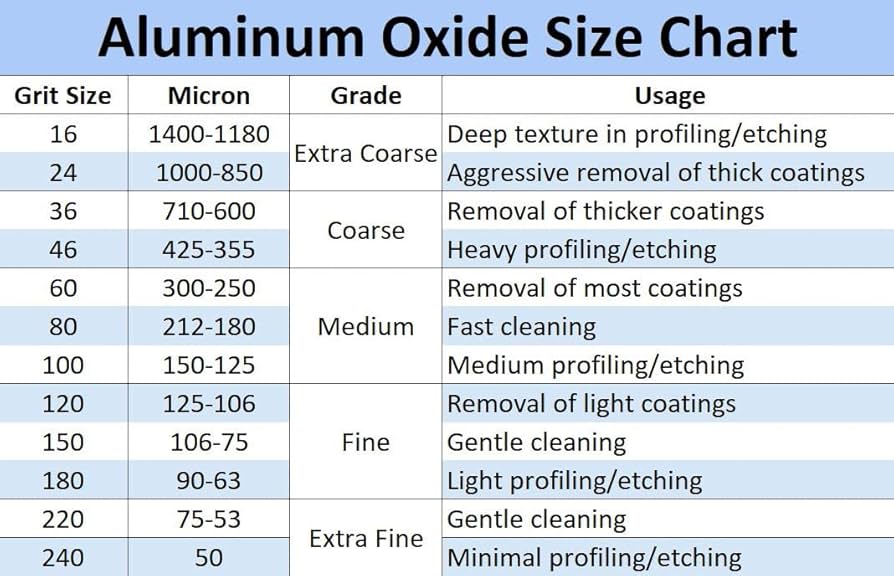
- Factor 5: Grit Size
- Factor 6: Recyclability & Total Cost
- Factor 7: Safety, Regulations & Environment
- Quick-Reference Substrate Guide
- Common Selection Mistakes
- Questions fréquemment posées
The 7-Factor Selection Framework
Abrasive blasting media selection is not a single-variable decision. Seven interdependent factors must be evaluated together — and a mistake in any one of them can result in damaged substrates, failed coating adhesion, regulatory violations, or dramatically inflated operating costs.
The framework below presents these seven factors in priority order. Work through them sequentially: each factor narrows the field of viable media options, and by Factor 7 you should have a clear, defensible specification. For a side-by-side reference of all major media types across all dimensions, see the Abrasive Blasting Media Comparison Chart.
Factor 1: Substrate Material & Sensitivity
The substrate material is the single most important constraint on media selection. It determines three critical parameters simultaneously: the maximum acceptable media hardness (to avoid substrate damage), whether iron contamination is permissible, and whether dimensional integrity must be preserved.
Key questions to answer before selecting media:
- What material is the substrate made of — carbon steel, stainless steel, aluminum alloy, titanium, CFRP, glass, ceramic, wood, or plastic?
- What is the substrate’s hardness — is it harder or softer than the contamination being removed?
- Are there dimensional tolerances that blasting must not violate — precision-machined surfaces, thin walls, critical fit surfaces?
- Is iron contamination acceptable — or will ferrous particles in the surface cause problems for the downstream process (corrosion, adhesion failure, galvanic coupling)?
- Is the substrate sensitive to compressive stress, deformation, or thermal effects from blasting?
Factor 2: Required Surface Finish or Profile
The required surface condition after blasting determines whether you need angular profiling media, spherical peening media, or soft cleaning media. This is a fundamentally different question from which specific media type — and must be answered first.
Three distinct surface outcomes drive different media families:
- Anchor profile for coating adhesion: Requires angular media (steel grit, aluminum oxide, garnet, silicon carbide) in a grit size calibrated to the specified profile depth (Ra or Rz in µm). The coating system TDS (technical data sheet) defines the minimum required profile. Most industrial epoxy coatings require 40–75 µm Rz at Sa 2.5 cleanliness.
- Peened surface for fatigue life: Requires spherical media (steel shot or glass beads) at a controlled intensity (Almen intensity per SAE AMS 2430). The peening specification defines bead size, velocity, and coverage — not just media type.
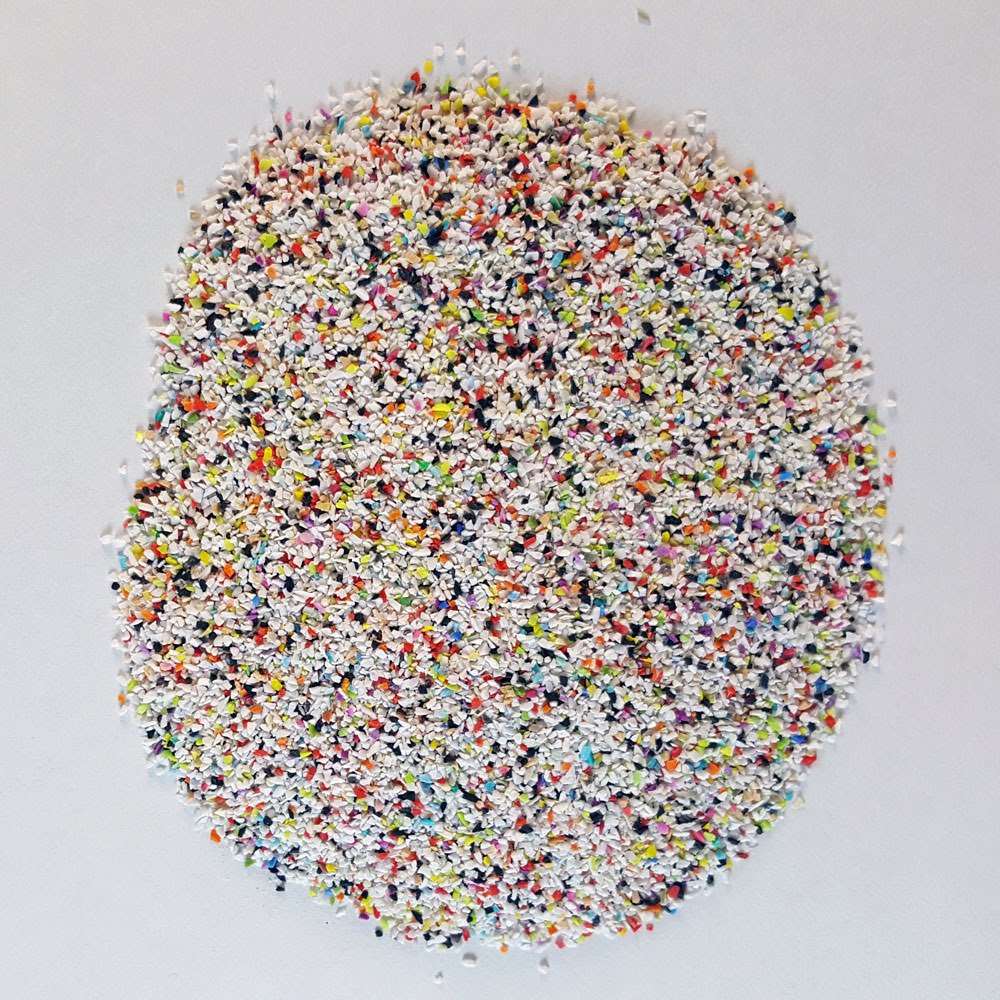
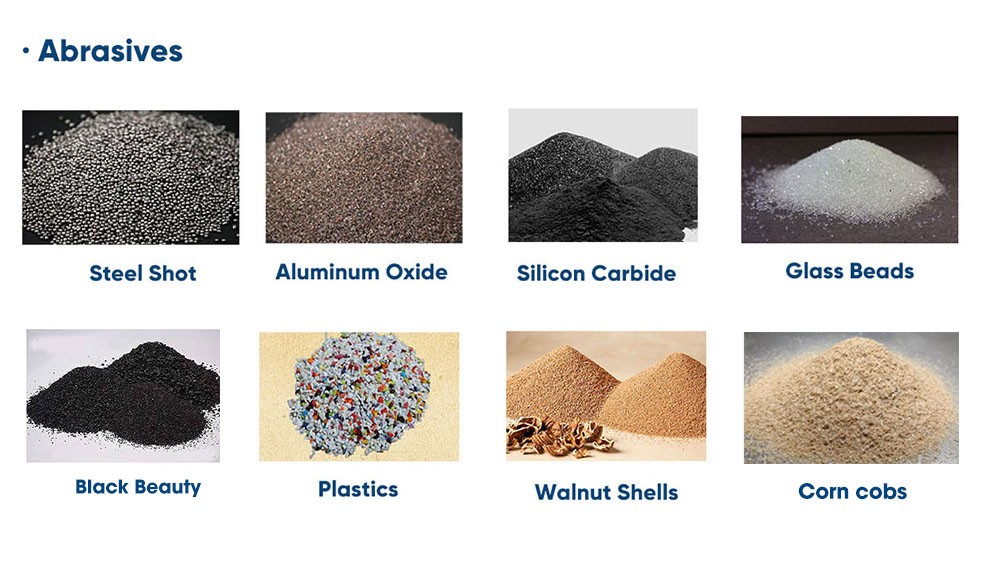
- Cleaning without surface alteration: Requires soft media (plastic grit, walnut shell, corn cob, soda) at low pressure. The goal is contamination removal with zero substrate profile change — used for precision components, sensitive substrates, and food-contact surfaces.
Factor 3: Hardness Compatibility
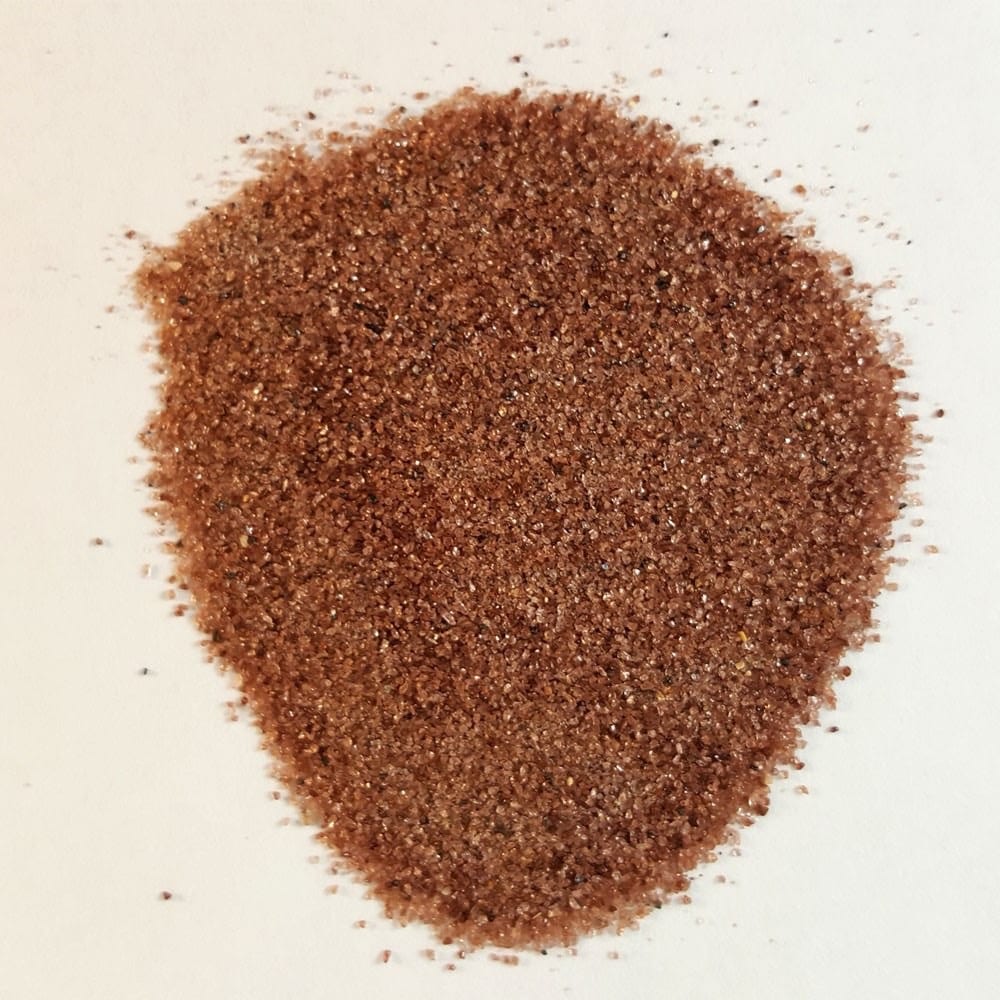
Once the substrate and required surface condition are defined, hardness selection becomes a question of efficiency and safety. The hardness hierarchy for the most common industrial abrasives is: silicon carbide (9–9.5 Mohs) > aluminum oxide (9) > steel grit/garnet (7–8) > glass bead (5.5–6) > plastic/organic (2.5–4).
For most carbon steel blasting applications, the Mohs 7–8 range (steel grit, garnet) is entirely adequate. Stepping up to aluminum oxide is justified when: the substrate is harder than Mohs 7–8 (tool steels, ceramics), a deeper anchor profile is required than garnet or steel grit achieves at a given pressure, or a tighter grit size distribution is needed than natural minerals provide. Silicon carbide is reserved for the extreme end — ceramics, tungsten carbide, hardened dies — where nothing softer achieves acceptable processing rates.
- Carbon steel (standard grade): Steel grit GL/GH or aluminum oxide F36–F60 — both adequate
- Stainless steel: White aluminum oxide or glass bead — no iron contamination
- Aluminum alloy: Glass bead, white aluminum oxide, or plastic grit — avoid steel media
- Technical ceramics / carbides: Silicon carbide — the only effective option
- CFRP / composites: Plastic grit at low pressure — protect fiber reinforcement
- Hardened tool steel (HRC 58+): Silicon carbide or aluminum oxide
Factor 4: Particle Shape — Angular or Round?
Particle shape is the primary driver of whether blasting creates a rough anchor profile or a smooth peened surface. This is not a matter of degree — it is a fundamental difference in mechanism, and the wrong shape cannot be compensated for by adjusting pressure, distance, or grit size.
Angular media (steel grit, aluminum oxide, silicon carbide, garnet, crushed glass, plastic grit) cuts into the surface on impact, creating sharp peaks and valleys — the “anchor profile” that coating systems require for mechanical adhesion. Each impact removes a small amount of material and leaves behind a sharply defined micro-texture.
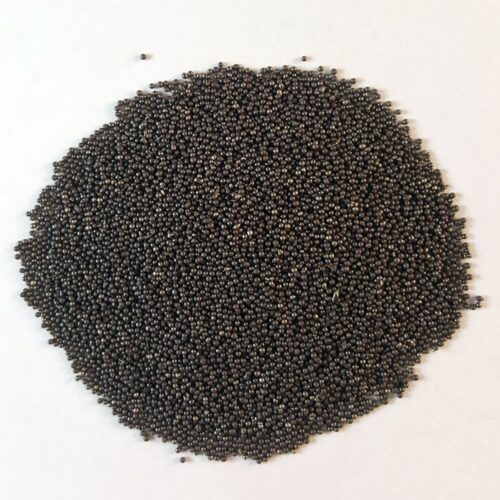
Spherical media (steel shot, glass beads) impacts the surface and bounces, compressing the surface layer without cutting into it. Each impact creates a shallow rounded dimple. The cumulative effect is a smooth, uniformly compressive surface with improved fatigue resistance but no meaningful coating anchor profile.
Factor 5: Grit Size
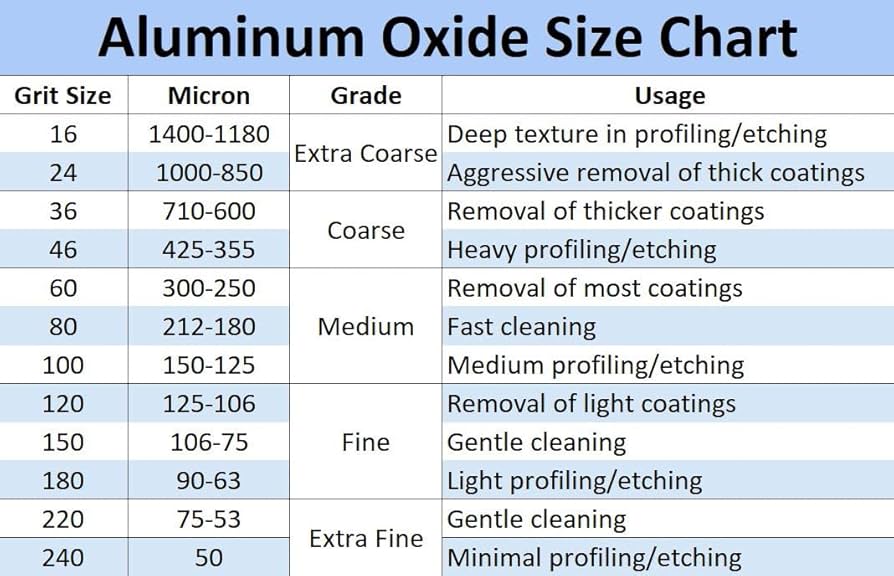
Once media type and shape are selected, grit size is the tuning parameter that calibrates surface profile depth and blasting throughput within the selected media type. Coarser grits produce deeper profiles and faster material removal; finer grits produce shallower profiles and more uniform, smoother finishes at lower throughput rates.
The relationship between grit size and profile is not linear — going from F60 to F36 (one coarsening step) approximately doubles the profile depth, while going from F60 to F120 (one fining step) approximately halves it. This makes grit size an effective lever for fine-tuning profiles within a given media type.
Practical grit size selection guidelines for common scenarios:
- Heavy mill scale and severe rust removal: Coarse (F16–F36 Al₂O₃; G-18–G-25 steel grit)
- Standard coating prep (Sa 2.5, 40–75 µm Rz): Medium (F36–F80 Al₂O₃; G-25–G-50 steel grit; 30/60 garnet)
- Precision deburring and pre-plate conditioning: Fine (F80–F180 Al₂O₃; US 100–170 glass bead)
- Shot peening (structural peening): S-230 to S-460 steel shot (per Almen intensity spec)
- Shot peening (precision aerospace): US 70–200 glass bead (AMS 2431)
- Ultra-fine surface conditioning: F220+ Al₂O₃; US 200–400 glass bead
Factor 6: Recyclability & Total Cost of Use
The purchase price per kilogram of blast media is not a meaningful economic metric for media selection. What matters is the total cost per blasting cycle — which includes purchase price, reuse cycles, reclaim system cost, media disposal cost, and operator time per kilogram of effective media consumed.
The formula for cost per effective cycle:
Cost per cycle = (Purchase price per kg) ÷ (Number of reuse cycles)
This formula alone makes clear why steel shot and grit — at 200–300 cycles — are economically dominant for high-volume operations despite higher unit purchase prices. At $1.50/kg ÷ 250 cycles = $0.006/cycle, steel grit is 15–20× cheaper per cycle than single-use garnet slag at $0.12/kg ÷ 1 cycle.
However, cost per cycle is not the only economic variable. Also consider:
- Capital cost of reclaim system: Steel media requires substantial closed-loop reclaim infrastructure. For operations below a certain throughput threshold, this capital cost does not pay back.
- Media disposal cost: Hazardous waste disposal (required for some spent media depending on substrate contaminants) can exceed media purchase cost.
- Equipment wear rate: Hard angular media (SiC, Al₂O₃) wears nozzles, valves, and hoses faster than softer alternatives — a hidden operating cost.
Factor 7: Safety, Regulations & Environmental Requirements
Safety and regulatory requirements can eliminate certain media options from consideration entirely, regardless of their technical or economic merits. In April 2026, the regulatory environment for abrasive blasting media is substantially more stringent than it was a decade ago, with continuing tightening of silica exposure limits, heavy metal leaching standards, and waste disposal classifications.
Key regulatory considerations by media type:
- Sable de silice : Banned or severely restricted in the EU, UK, Australia, and many other jurisdictions. OSHA PEL for crystalline silica is 50 µg/m³ TWA (2016 standard). Where still legal, engineering controls, respiratory protection, and medical surveillance are mandatory. See: Silica Sand in Abrasive Blasting: Health Risks, OSHA Rules & Safe Alternatives.
- Coal and copper slag: May fail TCLP (Toxicity Characteristic Leaching Procedure) tests for heavy metals in some supply sources, requiring disposal as hazardous waste. Always request TCLP data from suppliers.
- All media — spent waste classification: Spent blasting media may be classified as hazardous based on the substrate’s coating chemistry (lead paint, chromate primer, cadmium), not the media itself. Test spent media before disposal classification.
- Marine and waterway blasting: Containment, waste water treatment, and media disposal requirements are particularly stringent near water. Garnet’s non-hazardous classification is a significant advantage in these settings.
Quick-Reference Substrate Guide
The table below consolidates the 7-factor analysis into direct media recommendations for the most common substrate types encountered in industrial blasting operations.
| Substrate | Recommended Media | Avoid | Key Constraint |
|---|---|---|---|
| Carbon steel — heavy coating/rust removal | Steel Grit GL/GH or Al₂O₃ F36–F60 | Silica sand; glass bead | Achieve Sa 2.5, Rz 40–75 µm |
| Carbon steel — high volume (structural, shipbuilding) | Steel Grit (closed-loop reclaim) | Single-use slag (cost) | Cost per cycle drives selection |
| Stainless steel — decorative finish | Glass Bead (US 100–170 mesh) | All steel media (iron contamination) | Zero iron contamination |
| Stainless steel — coating prep | White Aluminum Oxide F60–F80 | Brown Al₂O₃; steel media | Zero iron contamination |
| Aluminum alloy — general cleaning | Glass Bead or White Al₂O₃ | Steel shot/grit (galvanic corrosion) | No iron contamination; avoid over-profiling |
| Aluminum alloy — paint stripping (aerospace) | Melamine Plastic Grit | All mineral/metallic media | Preserve anodize/alodine layer |
| Titanium / nickel superalloy | White Al₂O₃ or Glass Bead | Steel media (iron); SiC (reactivity) | No iron contamination; no embedding |
| CFRP / composite | Melamine Plastic Grit (low pressure) | All hard mineral media | Protect fiber reinforcement from cutting |
| Technical ceramics / carbides | Carbure de silicium | Al₂O₃ (insufficient hardness) | Only SiC hard enough for effective processing |
| Wood — paint/coating removal | Walnut Shell or Corn Cob | All mineral and metallic media | Preserve wood grain |
| Concrete / masonry | Steel Grit or Garnet | Silica sand; organic media | Achieve required surface profile for coating |
| Precision machined steel parts | Fine Al₂O₃ (F100–F220) or Glass Bead | Coarse angular media | Preserve dimensional tolerances |
Common Selection Mistakes and How to Avoid Them
The cheapest media per kilogram is rarely the cheapest media per effective blasting cycle. Single-use slag at $0.12/kg sounds cheaper than steel grit at $1.50/kg — until you account for 250 reuse cycles making the steel grit $0.006 per effective cycle versus $0.12 for the slag. Always calculate cost per cycle, not cost per kilogram.
Steel shot and steel grit must never be used on stainless steel, aluminum, copper, or other non-ferrous metals. Embedded ferrous particles cause rust staining, galvanic corrosion, and destruction of the passivation layer. This mistake is irreversible — the embedded particles cannot be fully removed after blasting. Always use iron-free media on non-ferrous substrates.
Blasting to “standard” conditions without confirming the actual profile depth against the specific coating system’s technical data sheet frequently results in either over-blasting (profile too deep, wasting abrasive and creating coating thickness variation) or under-blasting (profile too shallow, causing premature adhesion failure). Always specify profile in µm Rz, measure with a surface profilometer or replica tape, and compare to the coating TDS before starting production.
Selecting media without first checking local regulations for crystalline silica, heavy metal content, and waste disposal requirements can result in significant compliance remediation costs after the fact. Check OSHA, EPA, or equivalent standards for your jurisdiction before finalizing any media specification, particularly if the operation involves portable blasting, outdoor work near water, or any substrates with lead or chromate coatings.
Let Our Technical Team Help You Select the Right Media
Jiangsu Henglihong Technology manufactures aluminum oxide, silicon carbide, glass beads, and steel shot/grit — covering the full range of high-performance industrial blasting media. Our technical team can review your application requirements and recommend the optimal media type, grade, and grit size specification.
Request a Technical ConsultationQuestions fréquemment posées
Filtres