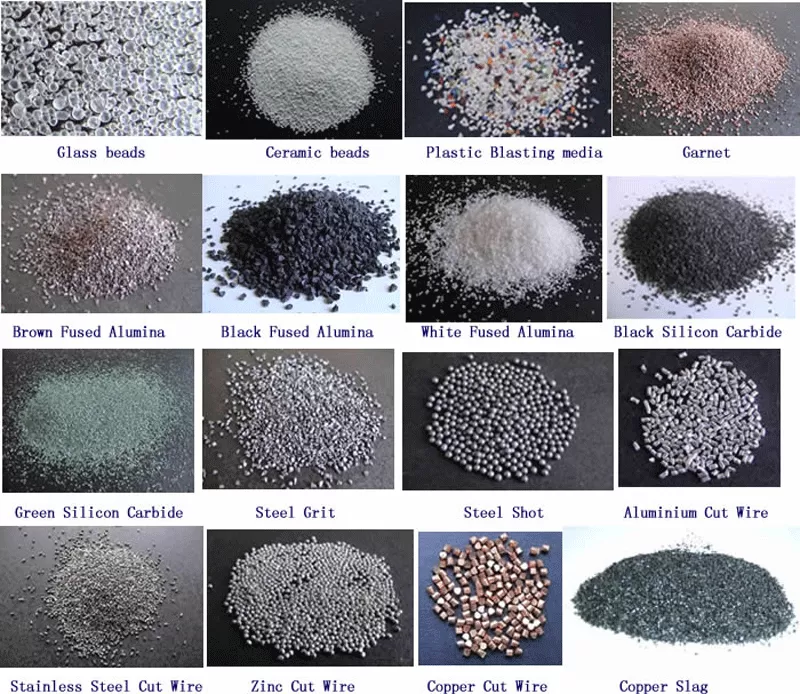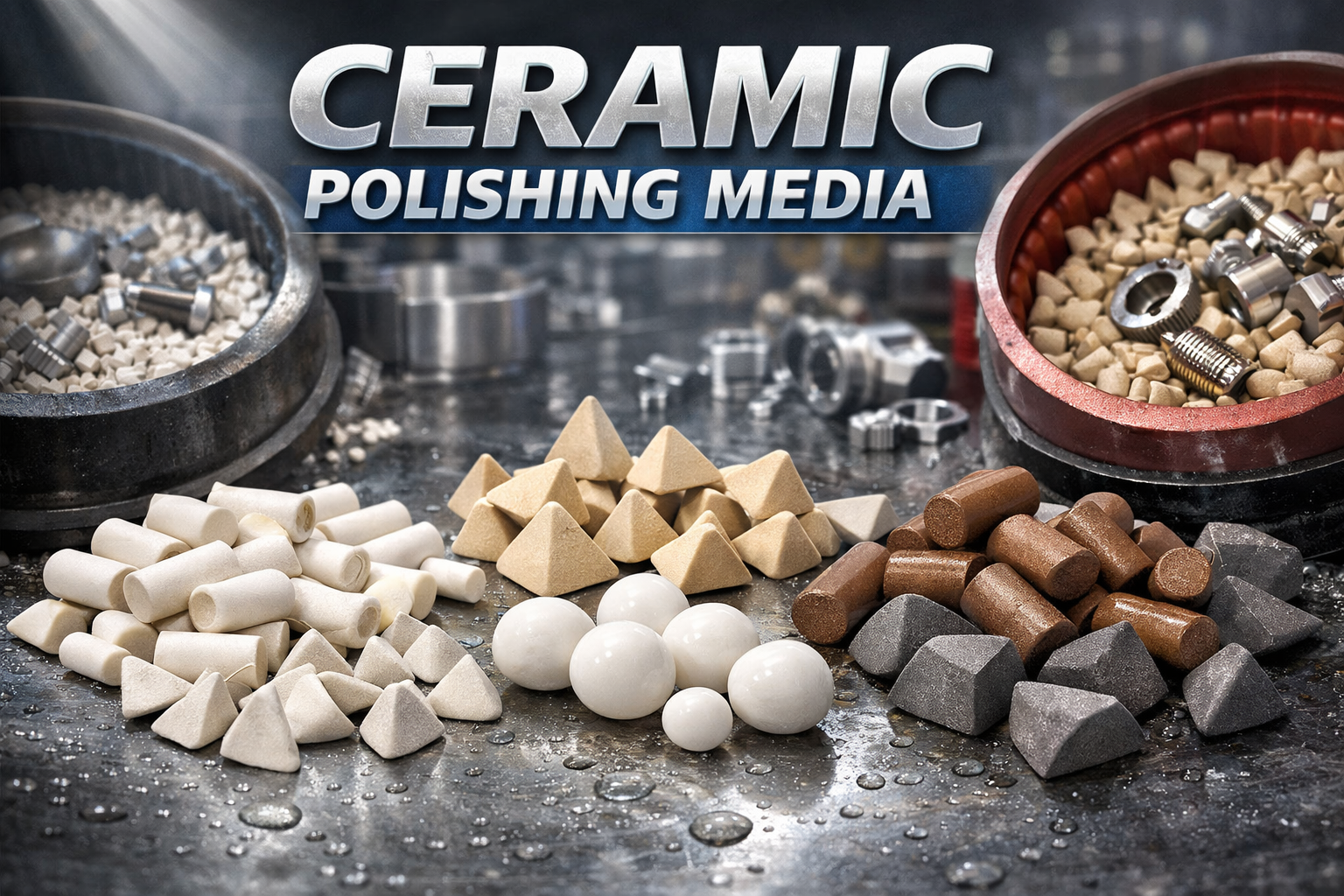
Sandblasting Abrasives Grit Size Chart
The definitive reference for matching abrasive grit size to surface profile depth, substrate type, and coating specification. Mesh-to-micron conversion tables, profile depth ranges, and application recommendations for all major blasting media — from Jiangsu Henglihong Technology Co., Ltd.
How Grit Size Works
Grit size designates the particle size of abrasive media by reference to the mesh screen used to classify the particles. A “36 grit” abrasive passes through a screen with 36 openings per linear inch (approximately 500 µm opening size) but is retained on the next finer screen. Critically, higher grit numbers mean finer particles — a fact that regularly confuses buyers new to abrasive specification.
Three grit numbering systems are in common use across the abrasives industry, and confusion between them is a frequent source of procurement errors: the FEPA (Federation of European Producers of Abrasives) system used for mineral abrasives, the US ANSI mesh system, and the SAE system used for metallic abrasives (steel shot and grit). This guide provides conversion references across all three systems for the most commonly used abrasive types.
Key rule: Always specify abrasive grit size using the numbering system explicitly — “36 grit FEPA,” “20 mesh,” or “G25 SAE” — to avoid ambiguity. Specifying only “36 grit” without the system designation can result in delivery of a different particle size than intended when ordering from international suppliers.
Standard Mesh-to-Micron Conversion Table
| FEPA Grit | US Mesh | Opening (µm) | Opening (mm) | General Classification |
|---|---|---|---|---|
| P12 | 16 | 1,680 | 1.68 | Very Coarse |
| P16 | 18 | 1,190 | 1.19 | Very Coarse |
| P20 | 20 | 850 | 0.85 | Coarse |
| P24 | 25 | 710 | 0.71 | Coarse |
| P30 | 30 | 595 | 0.595 | Coarse |
| P36 | 40 | 500 | 0.50 | Medium-Coarse |
| P46 | 45 | 355 | 0.355 | Medium |
| P60 | 60 | 250 | 0.25 | Medium |
| P80 | 80 | 180 | 0.18 | Medium-Fine |
| P100 | 100 | 150 | 0.15 | Fine |
| P120 | 120 | 125 | 0.125 | Fine |
| P150 | 150 | 106 | 0.106 | Fine |
| P180 | 180 | 90 | 0.090 | Very Fine |
| P220 | 220 | 63 | 0.063 | Very Fine |
| P320 | 320 | 46 | 0.046 | Ultra Fine |
Aluminum Oxide Grit Size & Profile Chart
| Grit | Particle Size (µm) | Profile on Steel (mil) | Ra (µm) | Primary Application |
|---|---|---|---|---|
| 16–20 | 1,180–850 | 3.5–5.0 | 8–12 | Maximum profiling, heavy mill scale |
| 24–30 | 710–595 | 2.5–4.0 | 6–10 | Heavy structural steel, offshore prep |
| 36–46 | 500–355 | 1.5–3.0 | 4–7 | General industrial coating prep (most common) |
| 60–80 | 250–180 | 1.0–2.0 | 2–5 | Aluminium, non-ferrous, powder coat prep |
| 100–120 | 150–125 | 0.5–1.2 | 1.5–3 | Fine finishing, delicate steel, glass etching |
| 180–220 | 90–63 | 0.3–0.7 | 0.8–1.8 | Decorative glass, precision components |
| 240–320 | 53–40 | <0.3 | <0.8 | Ultra-fine etching, optical glass |
For full aluminum oxide specifications and grade selection, see the Aluminum Oxide Abrasive guide.
Steel Grit SAE Size Chart
| SAE Size | Nominal Diameter (mm) | Profile (mil) — GH Grade | Aplicación |
|---|---|---|---|
| G10 | 2.0 | 3.5–5.0 | Maximum profile, glass flake systems |
| G14 | 1.7 | 3.0–4.5 | Offshore, high-build epoxy |
| G18 | 1.4 | 2.5–4.0 | Structural steel Sa 2.5 standard |
| G25 | 1.0 | 2.0–3.5 | General heavy industrial, hull prep |
| G40 | 0.6 | 1.5–2.5 | Moderate profile, maintenance blasting |
| G50 | 0.5 | 1.0–2.0 | Light profiling, thin coating systems |
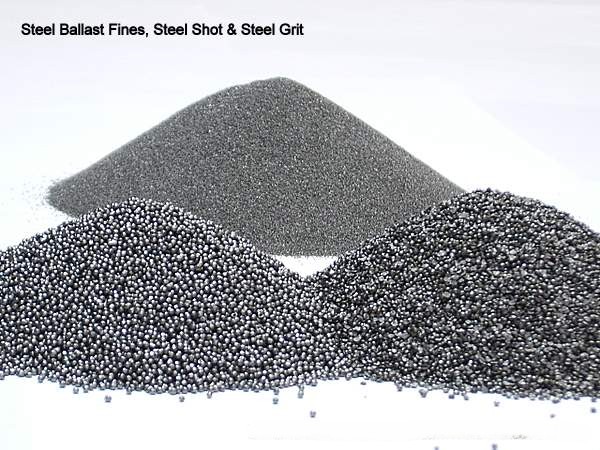
For full steel grit specifications and grade selection, see the Steel Grit Abrasives guide.
Garnet Mesh Size Chart
| Mesh Size | Particle Range (µm) | Profile (mil) | Aplicación |
|---|---|---|---|
| 8–12 | 2,380–1,680 | 2.5–3.5 | Heavy structural steel, aggressive field blasting |
| 16–20 | 1,190–850 | 2.0–3.0 | Ship hull, tank exterior, general marine |
| 20–30 | 850–595 | 1.5–2.5 | Standard marine & industrial coating prep |
| 30–60 | 595–250 | 1.0–2.0 | Lighter contamination, maintenance painting |
| 80 | 180–150 | 0.5–1.0 | Waterjet cutting (dual-use grade) |
For full garnet specifications, see the Garnet Abrasive guide.
Glass Bead Size Chart
| Bead Size | Diameter (µm) | Finish | Aplicación |
|---|---|---|---|
| #40–60 | 400–250 | Matte | Deburring, aggressive cleaning, mould texturing |
| #80–100 | 180–150 | Satin | Automotive parts, general metal finishing |
| #120–150 | 125–106 | Bright satin | Stainless steel, food equipment |
| #170–200 | 90–75 | Smooth satin | Medical instruments, architectural hardware |
| #230–325 | 63–45 | Near-polish | Optical elements, precision electronics |
For full glass bead specifications and peening guidance, see the Glass Bead Abrasive guide.
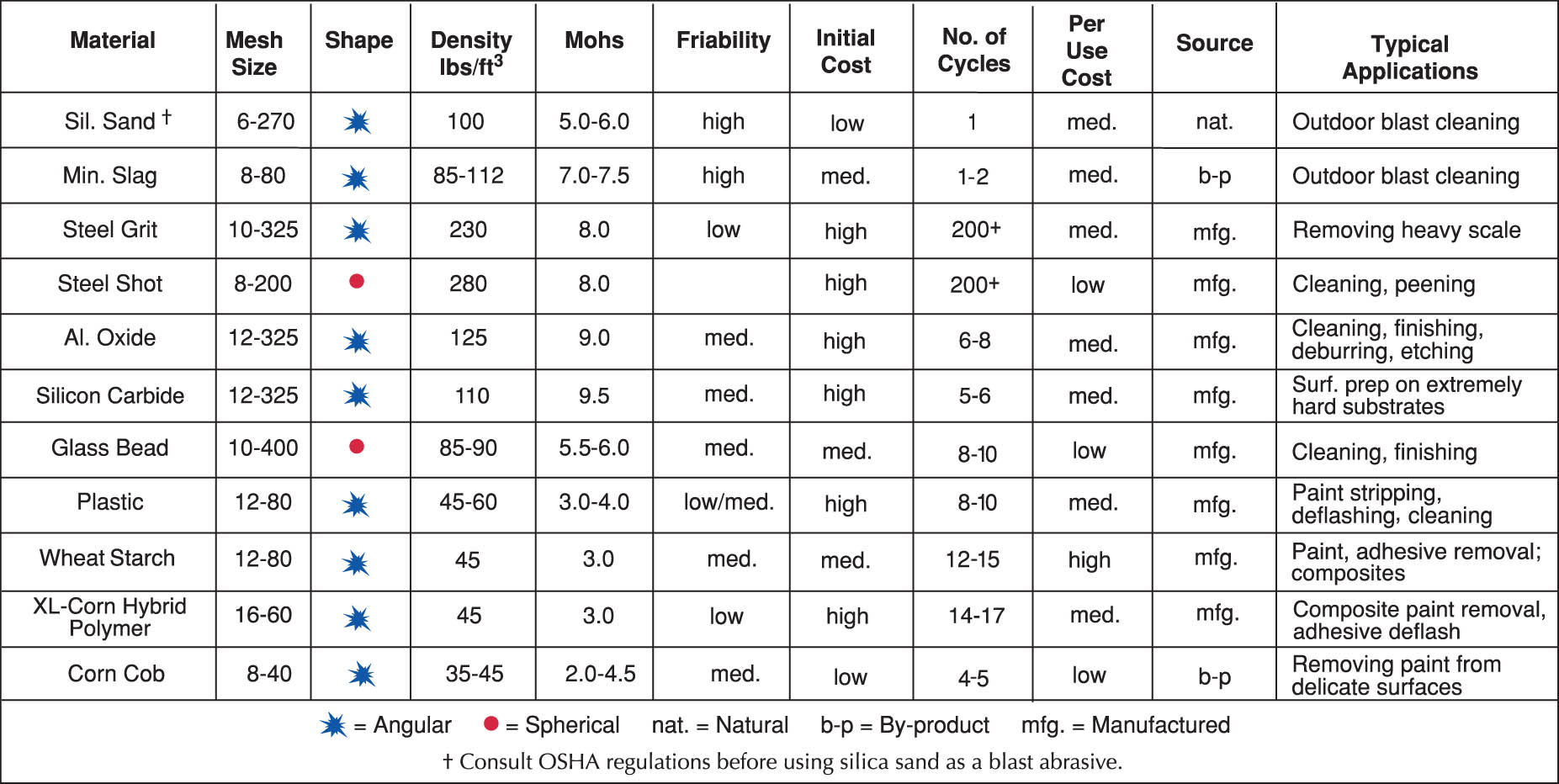
Cross-Media Profile Depth Summary
| Abrasive | Max Profile (mil) | Typical Range (mid grit) | Shape |
|---|---|---|---|
| Steel Grit GH G18 | 5.0 | 2.5–4.0 | Angular |
| Aluminum Oxide 24# | 4.5 | 1.5–3.0 | Angular |
| Silicon Carbide 24# | 4.5 | 2.0–3.5 | Angular |
| Coal Slag Coarse | 3.5 | 1.5–2.5 | Angular |
| Garnet 16 mesh | 3.0 | 1.5–2.5 | Sub-angular |
| Copper Slag Coarse | 4.0 | 2.0–3.0 | Angular |
| Glass Beads #80 | 1.0 | 0.5–0.8 | Round |
| Walnut Shell Medium | 0.3 | <0.2 | Sub-angular |
Coating System Cross-Reference
| Coating System | DFT Range | Required Profile | Recommended Media & Grit |
|---|---|---|---|
| Zinc-rich primer | 60–100 µm | 1.5–2.5 mil | Al₂O₃ 36–46, Garnet 20–30 |
| Epoxy (standard build) | 100–300 µm | 1.5–3.0 mil | Al₂O₃ 24–46, Garnet 16–30 |
| High-build epoxy | 300–600 µm | 2.0–4.0 mil | Al₂O₃ 16–36, Steel Grit G25–G40 |
| Glass flake epoxy | 500–1,000 µm | 3.0–4.5 mil | Steel Grit G14–G25 GH |
| Thermal spray zinc | 150–300 µm | 3.0–4.5 mil | Steel Grit G14–G18 GH |
| FBE pipeline | 350–500 µm | 2.0–3.5 mil | Steel Grit G25–G40, Al₂O₃ 24–36 |
| Polyurethane (thin film) | 50–100 µm | 1.0–2.0 mil | Al₂O₃ 60–80, Garnet 30–60 |
| Powder coat | 60–120 µm | 0.5–1.5 mil | Al₂O₃ 80–120, Glass Bead #80–100 |
Need Abrasive in the Right Grit for Your Specification?
Jiangsu Henglihong Technology Co., Ltd. supplies aluminum oxide, garnet, glass bead, and other blasting media in the full commercial grit range. Request a specification sheet and quotation for your exact requirement.
Filtros