Sand Blasted Titanium for Medical Implants: Sa Roughness for Osseointegration
Titanium implants — dental, orthopedic, cranial — rely on a precisely controlled sand blasted, large-grit, acid-etched (SLA) surface to promote bone integration. This guide covers Sa roughness targets, media selection, and the regulatory landscape governing implant surface specifications.
Why Surface Roughness Matters for Implants
The success of a titanium implant depends on how well the surrounding bone bonds to it — a process called osteointegración, first described by Per-Ingvar Brånemark in the 1960s. Smooth machined titanium achieves only weak bone contact; deeply textured surfaces promote osteoblast attachment, proliferation, and matrix deposition that fuse the implant to living bone.
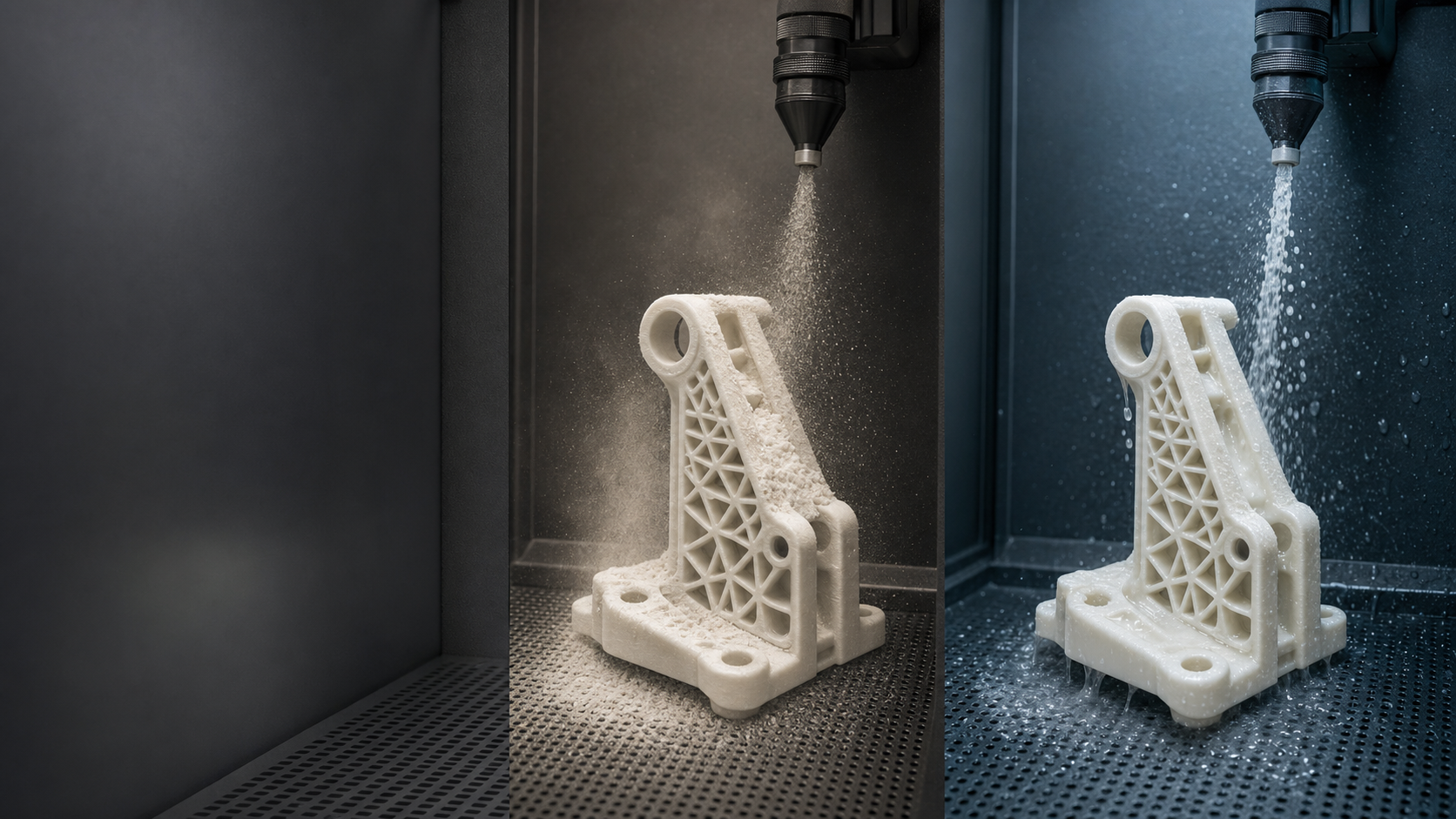
Sand blasting is the primary mechanical surface treatment used to develop this texture. For the general framework around sand blasted surfaces, see the pillar guide on sand blasted surface. This article focuses on the implant-specific requirements.
The SLA Surface Concept
The SLA (Sandblasted, Large-grit, Acid-etched) surface was pioneered in the 1990s and remains the dominant implant surface technology. The process has two sequential stages:
Stage 1: Sandblasting
Coarse alumina (250–500 µm particle size) produces a macro-scale roughness of approximately Sa 2 µm. This stage creates the primary topography.
Stage 2: Acid Etching
Hot HCl/H₂SO₄ solution etches micro-pits within the blasted texture, adding a second-scale roughness in the 1–3 µm range that promotes cellular attachment.
The two-scale topography (macro from blasting, micro from etching) is what distinguishes SLA from simple sandblasted surfaces. Cells respond to both length scales — macro features guide initial attachment, micro features stimulate differentiation toward bone-forming activity.
Optimal Sa Roughness Window
Research over three decades has converged on an optimal Sa window for implant osseointegration:
| Sa Range (µm) | Biological Response | Risk |
|---|---|---|
| < 0.5 | Minimal bone attachment | Implant loosening |
| 0.5 – 1.0 | Moderate, slow integration | Extended healing |
| 1.5 – 2.5 | Optimal osseointegration | Industry standard window |
| 2.5 – 3.5 | Good integration but fatigue concerns | Reduced implant life |
| > 3.5 | Bacterial harboring risk | Peri-implantitis |
The 1.5–2.5 µm Sa target balances biological response against the fatigue strength penalty that deep surface texturing imposes on titanium. Excessive roughness creates stress concentrators that can initiate fatigue cracks under cyclic loading.
Media Selection for Titanium Implants
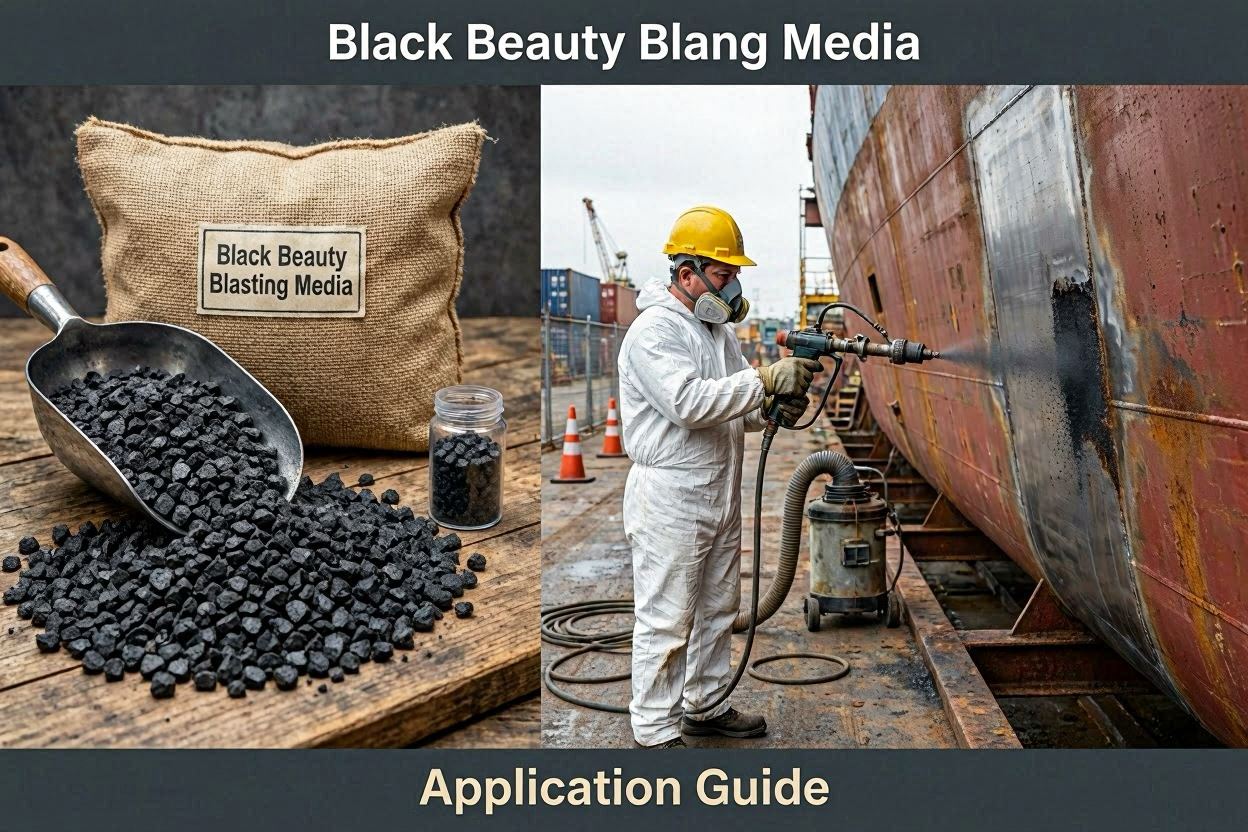
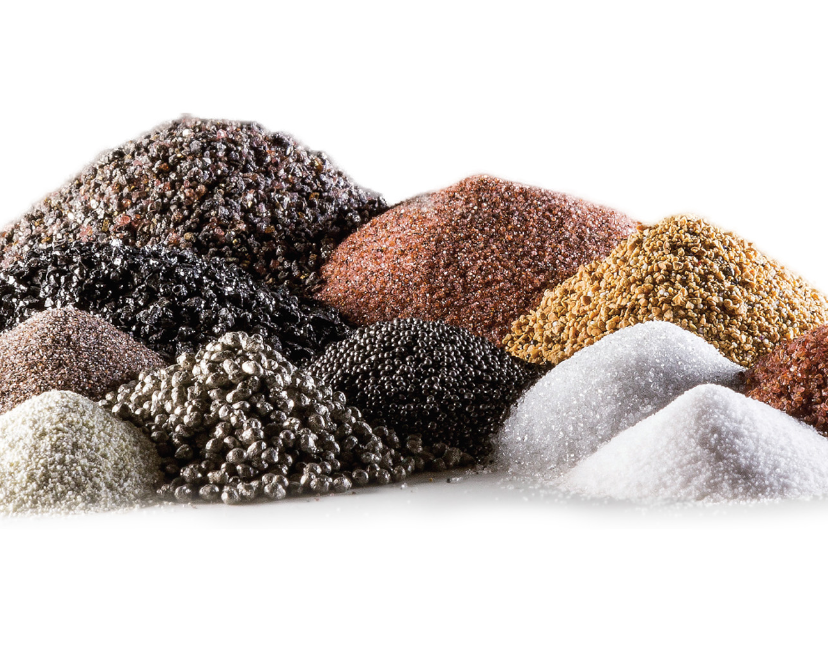
Three media types dominate medical implant blasting:
- Aluminum oxide (alumina) — historical standard. Reliable Ra/Sa control. Concern: alumina particle embedment may persist in the surface, though acid etching removes most embedded particles. ISO 13485-certified high-purity alumina is the production grade.
- Calcium phosphate (resorbable) — newer alternative. Any embedded particles resorb into bone matrix, eliminating residual contamination concerns. Tends to produce slightly lower Sa than alumina at equivalent parameters.
- Titanium oxide — premium option offering complete biocompatibility. Higher cost but eliminates the alumina embedment question entirely.
All implant-grade media must come with full batch traceability, particle size distribution certification, and biocompatibility documentation per the implant manufacturer’s quality system.
Regulatory Framework
Implant surface specifications are governed by a stack of standards and regulations:
- ISO 13485 — Quality management system requirements for medical devices. The blasting facility’s QMS must conform.
- ISO 10993 — Biological evaluation of medical devices. Tests the finished implant surface for cytotoxicity, sensitization, and genotoxicity.
- FDA 21 CFR 820 — US Quality System Regulation. Applies to manufacturers selling into the US.
- FDA 510(k) clearance — Premarket notification for substantially equivalent devices. Surface specifications are part of the submission.
- EU MDR 2017/745 — European Medical Device Regulation. Comprehensive premarket and post-market requirements.
- ASTM F86 — Standard practice for surface preparation of metallic implants.
Surface specification changes — including media supplier changes — typically require regulatory re-validation, which is why implant manufacturers prefer long-term supplier relationships with stable batch documentation.
Quality Control for Implant Surfaces
Implant surface QC differs from industrial sand blasting QC in several respects:
- 100% inspection is typical, not sampling. Each implant is individually verified.
- Areal Sa measurement using confocal or interferometric profilometry is standard, not line-trace Ra.
- Cleanliness verification includes SEM-EDX analysis for residual particles.
- Batch traceability follows the media from supplier mill test report through to individual implant serial numbers.
For broader inspection methodology, see our reference on how to measure sand blasted surface profile.
Preguntas frecuentes
What is SLA surface treatment?
SLA stands for Sandblasted, Large-grit, Acid-etched. It is the dominant implant surface technology, combining macro-scale roughness from coarse alumina blasting with micro-scale roughness from acid etching, producing a two-scale topography optimized for osseointegration.
What is the optimal Sa for titanium dental implants?
The industry-standard window is 1.5–2.5 µm Sa. This range balances biological response (strong osseointegration) against fatigue strength preservation. Below 0.5 µm, integration is poor; above 3.5 µm, bacterial harboring risk and fatigue concerns dominate.
Can alumina particles remain embedded in implant surfaces?
Some embedded alumina is essentially unavoidable with alumina blasting, but standard acid etching removes the majority. Persistent embedment at clinically significant levels can be detected by SEM-EDX. Alternative media (calcium phosphate, titanium oxide) eliminate this concern.
Is bead blasting used for implants?
Less commonly than angular media. Glass bead produces a softer dimpled surface (Sa typically 0.5–1.0 µm) that is below the optimal osseointegration range. Some specialty implants combine bead blasting for fatigue surfaces with SLA for bone-contact surfaces.
What standards govern medical implant sandblasting?
ISO 13485 (QMS), ISO 10993 (biological evaluation), ASTM F86 (surface preparation), and regional regulations (FDA 21 CFR 820 in the US, EU MDR 2017/745 in Europe). Specific implant types follow additional product standards.
Request an Abrasive Blasting Media Sample
Jiangsu Henglihong Technology Co., Ltd. supplies certified aluminum oxide, garnet, glass bead, steel grit, and steel shot to global industrial buyers. Request a sample with full batch documentation for technical evaluation.
Request a Sample →Filtros