How to Use a Sandblaster: A Complete Beginner-to-Expert Guide
Using a sandblaster looks simple from the outside — point the gun at a surface and blast the abrasive out.
But in real industrial environments, sandblasting is a controlled engineering process involving pressure management, abrasive flow rate, nozzle angle, standoff distance, media hardness, substrate compatibility, airflow CFM requirements, and strict safety standards.
This comprehensive guide will take you from a complete beginner to someone who can confidently operate a sandblaster in real-world conditions.
Whether you are polishing aluminum parts, removing rust from steel, surface-prepping before coating, or cleaning old tools, this guide covers everything: equipment setup, step-by-step blasting procedure, PSI settings, abrasive selection, nozzle types, safety procedures, troubleshooting, and professional blasting techniques used in workshops and factories.
Table of Contents
- What You Need Before Using a Sandblaster
- Types of Sandblasters and How They Operate
- Choosing the Right Abrasive Media
- Preparing the Work Area
- Step-by-Step Guide: How to Use a Sandblaster
- Pressure Settings, Nozzle Distance, and Angles
- Safety Requirements and PPE
- Blasting Different Materials
- How to Avoid Common Sandblasting Problems
- Professional Tips for High-Quality Blasting
- Maintenance Checklist
- Conclusión
1. What You Need Before Using a Sandblaster
Before using a sandblaster, you must prepare the correct equipment. Many beginners overlook crucial items like moisture separators, high-CFM compressors, or appropriate blasting nozzles. Missing any essential component can cause clogging, weak blasting force, uneven patterns, or abrasive contamination.
1.1 Core Equipment You Must Have
- Air compressor (with enough CFM)
- Sandblasting gun or blast pot
- Abrasive blasting media (aluminum oxide, glass beads, garnet, etc.)
- Moisture separator and air regulator
- Hoses (air + media hose for pressure pots)
- Nozzles (ceramic, tungsten carbide, or boron carbide)
- Personal protective equipment (respirator, gloves, hood, suit)
1.2 Air Compressor Requirements
The most common beginner mistake is using an air compressor that cannot supply enough CFM (cubic feet per minute).
Minimum recommended CFM based on nozzle size:
| Nozzle Size | Required CFM |
|---|---|
| 3 mm (1/8″) | 9–15 CFM |
| 4.8 mm (3/16″) | 18–30 CFM |
| 6.4 mm (1/4″) | 40–70 CFM |
| 7.9 mm (5/16″) | 70–100 CFM |
In simple terms: Bigger nozzle = more air needed.
If the compressor is too small, the blaster will sputter, pressure drops, and blasting becomes inconsistent.
1.3 Moisture Control
Moisture is the enemy of sandblasting. Wet abrasive clumps together and causes:
- Media jamming
- Uneven flow
- Reduced blasting efficiency
Always use:
- A moisture trap
- An inline air dryer
- Drain your compressor tank dail
2. Types of Sandblasters and How They Operate
To operate a sandblaster correctly, you must understand the differences between each system.
2.1 Gravity-Feed Sandblaster
A gravity-feed blaster has a hopper on top. Abrasive flows downward into the gun.
- Best for small DIY jobs
- Less aggressive
- Cheapest design
2.2 Siphon-Feed Sandblaster
A siphon blaster uses vacuum suction to pull media from a bucket.
- Common in workshops
- Continuous blasting
- Requires moderate air pressure
2.3 Pressure Pot Sandblaster
This is the most efficient and professional system used in industrial blasting shops.
- Media is pressurized inside a sealed tank
- Delivers the highest blasting power
- Required for coating removal or heavy rust
3. Choosing the Right Abrasive Media
Abrasive choice directly affects surface roughness (Ra value), cleaning speed, part damage risk, and final finish.
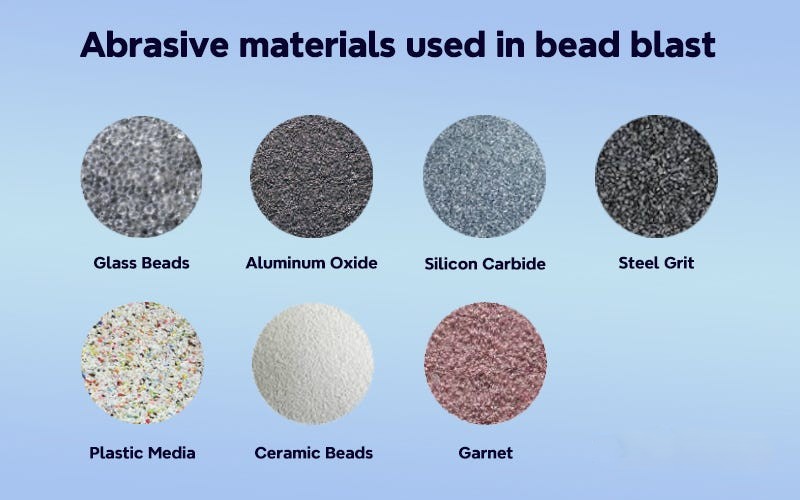
3.1 Common Abrasives and Their Applications
| Tipo de abrasivo | Hardness (Mohs) | Best Use |
|---|---|---|
| Óxido de aluminio | 9 | Rust removal, steel prep, aggressive cutting |
| Granate | 7.5–8 | General-purpose blasting, eco-friendly |
| Cuentas de vidrio | 5–6 | Finishing, polishing, uniform matte surface |
| Granalla de acero | 7 | Heavy rust removal, ships, machinery |
| Walnut Shell | 2.5 | Soft materials, delicate surfaces |
| Baking Soda | 2–2.5 | Automotive paint stripping without damaging metal |
Rule of thumb:
Harder abrasive = more aggressive cutting.
4. Preparing the Work Area
A proper setup prevents contamination, media loss, and safety hazards.
4.1 Indoor Blasting Booth
- Dust extraction system
- Lighting
- Rubber-lined walls
- Media recycling system
4.2 Outdoor Blasting
- Contain the work area with tarps
- Avoid windy conditions
- Ensure neighbors aren’t affected
5. Step-by-Step Guide: How to Use a Sandblaster
This section shows the exact blasting workflow.
Step 1 — Fill the Abrasive
- Use clean, dry abrasive
- Use a mesh screen to prevent clogging particles
Step 2 — Connect Air Lines
Ensure all fittings are tight to avoid leaks.
Step 3 — Set Compressor Pressure
Typical ranges:
- Delicate surfaces: 40–60 PSI
- General cleaning: 70–90 PSI
- Heavy rust or coatings: 100–120 PSI
Step 4 — Begin Blasting
Hold the nozzle firmly, press the trigger, and adjust your distance.
Always start with low pressure and increase gradually.
Step 5 — Move in Smooth, Overlapping Patterns
Your motion should look like mowing the lawn — consistent, overlapping lines.
6. Pressure Settings, Nozzle Distance, and Angles
6.1 Ideal Nozzle Distance
- 4–8 inches (10–20 cm) for most surfaces
- 12+ inches for delicate materials
- 2–3 inches only for heavy rust removal
6.2 Best Nozzle Angles
A 45° angle removes coatings faster.
A 90° angle increases surface roughness.
7. Safety Requirements and PPE
Sandblasting generates high-speed particles and harmful dust. You must use:
- Full blasting hood
- Positive-pressure respirator
- Leather gloves
- Heavy protective suit
- Steel-toe boots
Never blast without respiratory protection. Even “dustless blasting” produces fine particles that damage your lungs.
8. Blasting Different Materials
8.1 Steel
Use aluminum oxide or steel grit at 80–120 PSI.
8.2 Aluminum
Use glass beads or fine garnet at 40–60 PSI to avoid warping.
8.3 Wood
Use walnut shell or soda to avoid fiber tearing.
8.4 Plastic
Use the lowest pressure possible (30–40 PSI).
9. How to Avoid Common Sandblasting Problems
9.1 Abrasive Not Flowing
- Check moisture levels
- Ensure the media is not too fine
- Clean or replace the nozzle
9.2 Uneven Finish
- Maintain consistent nozzle distance
- Avoid staying too long in one spot
9.3 Weak Blasting Power
- Increase PSI
- Check compressor CFM
- Inspect hoses for leaks
10. Professional Tips for High-Quality Blasting
- Use Boron Carbide nozzles for long lifespan
- Use narrow-angle nozzles for deep rust
- Use wide-angle nozzles for large surfaces
- Keep the gun moving to avoid digging holes
- Record PSI settings for repeat jobs
11. Maintenance Checklist
- Drain compressor tank daily
- Replace nozzle when inner diameter widens
- Inspect hoses for wear
- Store abrasive in airtight containers
Conclusión
Learning how to use a sandblaster is not just about pointing the gun and firing. Real sandblasting involves understanding air pressure, abrasive science, nozzle geometry, surface hardness, dust control, and safety engineering.
With the knowledge in this guide, you can confidently setup, operate, troubleshoot, and maintain a sandblasting system whether you’re working on metal restoration, automotive parts, industrial equipment, or precision finishing.
Filtros