How Does Sandblasting Work? A Complete Technical Breakdown
Sandblasting, or abrasive blasting, works by accelerating abrasive particles using compressed air, water, or centrifugal force and directing them toward a surface at high velocity. The kinetic energy of these particles removes rust, paint, scale, and other contaminants through micro-cutting, impact erosion, and abrasion. Although simple in concept, the working principles behind sandblasting involve complex physics, material science, airflow engineering, and process control.
This article provides a deep, engineering-grade explanation of how sandblasting works. It covers the physics of particle acceleration, the mechanics of erosion, nozzle design, pressure and flow dynamics, abrasive-material behavior, system components, blast patterns, and real-world industrial process parameters.
Unlike superficial online articles, the following content dives into fundamental scientific principles and practical engineering data, suitable for professionals in metal finishing, coating technology, and surface preparation industries.
Table of Contents
- 1. Fundamental Principle of Sandblasting
- 2. Physics Behind Abrasive Acceleration
- 3. Mechanisms of Surface Erosion and Material Removal
- 4. Air Pressure, CFM, and Velocity Dynamics
- 5. Nozzle Technology and Velocity Amplification
- 6. Abrasive Media Behavior During Impact
- 7. Equipment System Architecture
- 8. Detailed Step-By-Step Blasting Workflow
- 9. Surface Cleanliness and Profile Standards
- 10. Types of Blasting Methods and How Each Works
- 11. Key Control Variables
- 12. Engineering Parameter Examples
- 13. Real Industrial Use Cases
- 14. FAQ
1. Fundamental Principle of Sandblasting
The core principle of sandblasting is energy transfer. Abrasive particles are given kinetic energy through high-speed airflow or mechanical force. When these particles strike a surface, they transfer their energy and cause material removal through cutting, chipping, or abrasion.
The interaction depends on factors such as abrasive hardness, velocity, shape, mass, and the angle of impact.
The general formula governing abrasive kinetic energy is:
KE = ½ × m × v²
Where:
- m = mass of a single abrasive particle
- v = particle velocity, typically 50–250 m/s
Velocity has overwhelming influence because kinetic energy increases with the square of velocity.
Increasing pressure from 60 PSI to 90 PSI does not merely increase cleaning speed by 50%—it increases particle velocity significantly and energy by an even larger factor.
2. Physics Behind Abrasive Acceleration
Most sandblasting systems rely on compressed air. Air is forced through a hose and nozzle, creating a low-pressure region where abrasive is entrained and accelerated.
The Venturi effect and Bernoulli’s principle govern this acceleration.
2.1 Bernoulli’s Principle in Blasting
As the air flows through a constricted nozzle, velocity increases and pressure drops. The pressure drop draws abrasive particles into the stream.
2.2 Venturi Effect
Venturi nozzles expand at the exit, creating negative pressure that pulls abrasives in and increases particle velocity by 40–80% over straight nozzles.
2.3 Air–Abrasive Mixing Mechanisms
There are 3 common mixing modes:
- Suction blasting – Venturi suction draws abrasive; lowest velocity.
- Pressure blasting – Abrasive is pressurized; most powerful and efficient.
- Direct wheel blasting – Centrifugal wheels accelerate steel grit at extremely high speeds; used for shipyards and foundries.
3. Mechanisms of Surface Erosion and Material Removal
The impact of abrasive particles results in multiple simultaneous erosion mechanisms:
3.1 Micro-cutting
Occurs when using angular abrasives like aluminum oxide or garnet. Sharp edges cut into the substrate, removing material cleanly and producing high anchor profile.
3.2 Chipping and brittle fracture
Occurs on paint, rust, scale, brittle ceramics, or thick epoxy coatings.
3.3 Plastic deformation
Occurs when rounded abrasives (glass beads or steel shot) peen the surface, improving fatigue strength.
3.4 Shear deformation
At shallow impact angles (30–45°), abrasive slides and shears material away.
3.5 Compressive impact
At steep impact angles (75–90°), abrasive delivers maximum hammering force for scale removal.
4. Air Pressure, CFM, and Velocity Dynamics
Sandblasting performance depends heavily on:
- PSI (pressure)
- CFM (airflow volume)
- Hose length and diameter
- Nozzle size
4.1 PSI → Particle Velocity Relationship
| PSI | Approx. Particle Velocity |
|---|---|
| 40 PSI | 40–60 m/s |
| 60 PSI | 70–110 m/s |
| 90 PSI | 120–180 m/s |
| 120 PSI | 150–250 m/s |
4.2 Importance of CFM
CFM determines how much abrasive can be carried by the airflow. Insufficient CFM causes:
- Weak blasting
- Pulsing at the nozzle
- Poor surface profile
4.3 Hose and Nozzle Restrictions
Every meter of hose reduces pressure. Sharp bends reduce velocity dramatically.
Industrial practice recommends:
- Use short hoses
- Use the largest possible diameter
- Avoid elbows and 90° bends
5. Nozzle Technology and Velocity Amplification
Nozzles determine blast pattern, velocity, and efficiency.
5.1 Straight-bore Nozzles
Used for precision work; lower velocity but high accuracy.
5.2 Venturi Nozzles
Most common industrial nozzle. They accelerate air through a narrow throat and expand it rapidly at the exit.
Can increase velocity by up to 80%.
5.3 Double Venturi Nozzles
Add an additional air jacket to reduce turbulence and widen blast pattern.
5.4 Nozzle Materials
- Ceramic – cheap but wears quickly
- Tungsten carbide – durable for aggressive media
- Boron carbide – light and extremely wear-resistant
6. Abrasive Media Behavior During Impact
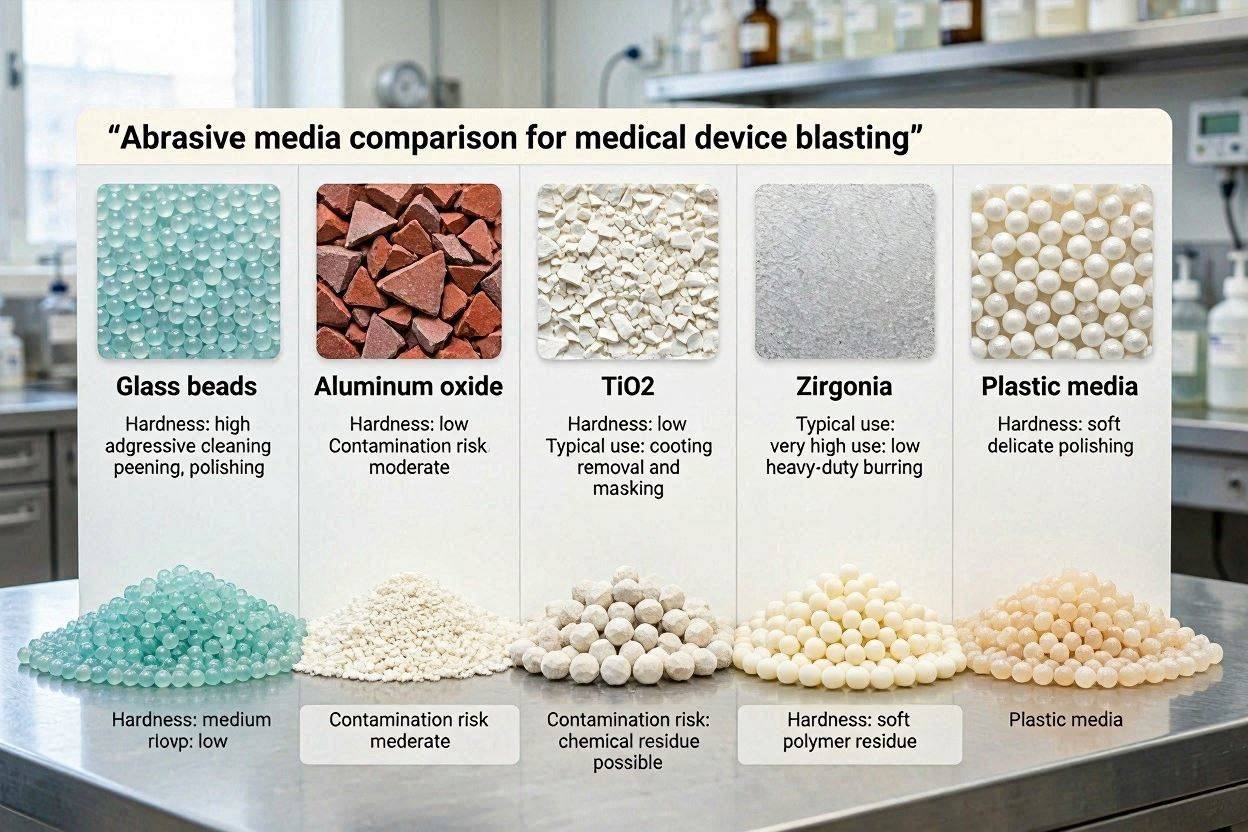
Abrasives differ by hardness, density, shape, and fracturing behavior.
6.1 Particle Hardness
Abrasives must be harder than the material being blasted.
Mohs hardness examples:
- Aluminum oxide – 9
- Garnet – 7.5–8
- Crushed glass – 6
- Glass bead – 6
- Walnut shell – 3
6.2 Abrasive Shape
- Angular abrasives cut aggressively
- Rounded abrasives peen gently
- Blocky abrasives fracture to reveal new cutting edges
6.3 Particle Density
Heavier abrasives carry more kinetic energy even at same speed.
7. Equipment System Architecture
A standard sandblasting system includes:
- Air compressor
- Moisture trap and air dryer
- Blast pot (pressure vessel)
- Abrasive metering valve
- Blast hose
- Boquilla
- Operator protective equipment
7.1 Blast Pot Operation
The pot is pressurized to match the airline pressure. A metering valve regulates abrasive feed rate, typically:
0.5–7 lbs/min depending on nozzle size and application.
8. Detailed Step-By-Step Blasting Workflow
- Air compressor builds pressure
- Air enters moisture separator and dryer
- Air pressurizes blast pot
- Metering valve feeds abrasive into air stream
- Abrasive accelerates through the hose
- Venturi nozzle increases particle velocity
- High-speed abrasive impacts the surface
- Material is removed
- Debris and dust are extracted or fall away
9. Surface Cleanliness and Profile Standards
9.1 ISO 8501 Sa Standards
- Sa 2 – Commercial blast
- Sa 2.5 – Near-white metal blast
- Sa 3 – White metal blast
9.2 Surface Profile Ranges
- Light profile: 20–40 μm
- Medium profile: 40–75 μm
- Heavy profile: 75–125 μm
10. Types of Blasting Methods and How Each Works
10.1 Dry Sandblasting
Compressed air and dry abrasive. High aggression, high dust.
10.2 Wet Sandblasting
Abrasive mixed with water reduces dust. Lower friction, smoother finish.
10.3 Vapor Blasting
Uses pressurized water mist; provides extremely fine finishing.
10.4 Wheel Blasting
Centrifugal wheels accelerate steel abrasives at high velocity.
10.5 Micro Abrasive Blasting
Used in electronics and semiconductor industries for precision cleaning.
11. Key Control Variables
- Pressure (PSI)
- Abrasive type
- Nozzle size
- Hose length and diameter
- Impact angle
- Stand-off distance
12. Engineering Parameter Examples
Steel Rust Removal
- Pressure: 90 PSI
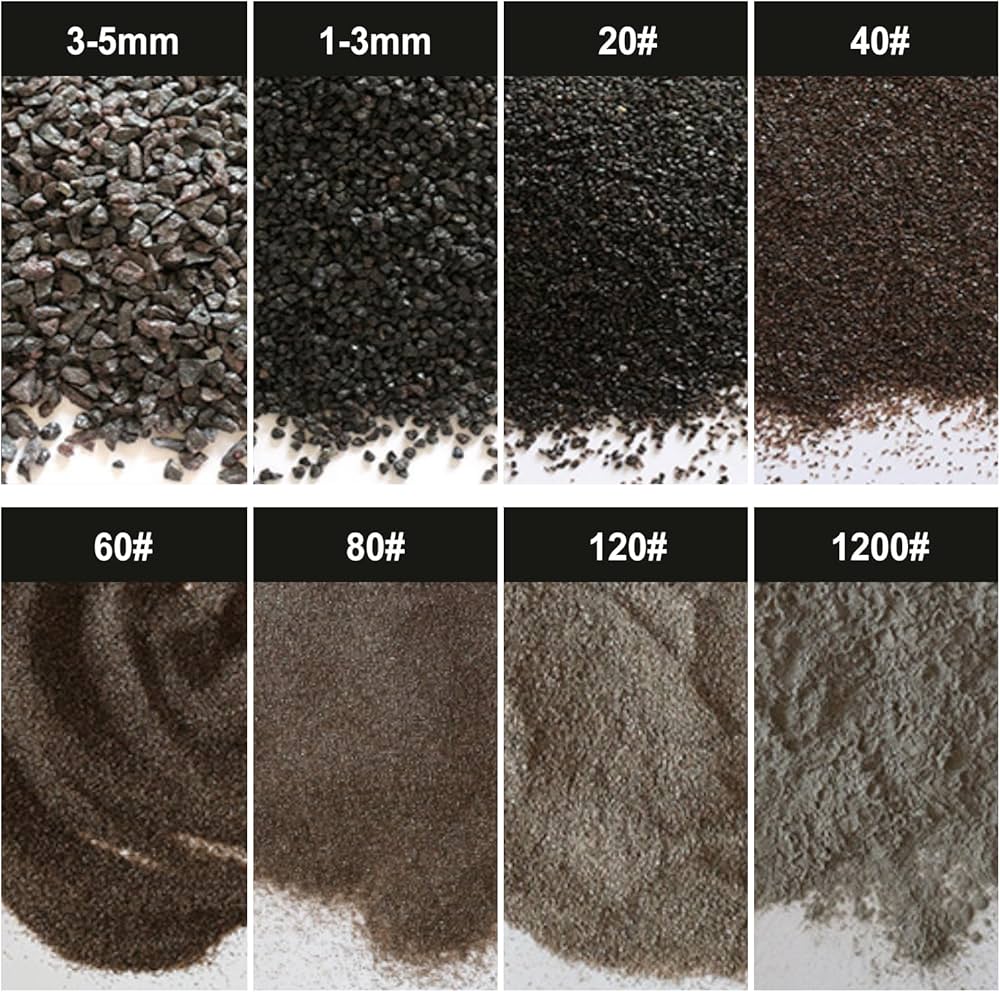
- Abrasive: Garnet 30/60 mesh
- Nozzle: #6 Venturi
- Profile: 50–75 μm
Aluminum Surface Prep
- Pressure: 30–40 PSI
- Abrasive: Glass bead
- Nozzle: #4 straight bore
Glass Etching
- Pressure: 20 PSI
- Abrasive: 180–220 mesh aluminum oxide
13. Real Industrial Use Cases
- Shipbuilding: heavy rust and scale removal
- Pipeline maintenance: coating removal and surface prep
- Aerospace: delicate cleaning with plastic media
- Automotive: frame restoration
- Stone carving and art: micro-controlled blasting
- Foundry: wheel blasting for descaling castings
14. FAQ
Does higher pressure always improve blasting?
No. Too much pressure can damage soft metals.
Is sand still used?
No—silica sand is banned in most countries due to silicosis risk.
Why does my blasting machine lose pressure?
Leaks, worn nozzles, long hoses, clogged metering valves, or insufficient CFM.
How fast do abrasive particles travel?
Typically 100–250 m/s depending on PSI and nozzle type.
Conclusión
Sandblasting works by accelerating abrasive particles to high velocity and directing them toward a surface. The process is controlled by the interaction between pressure, airflow, nozzle geometry, and abrasive characteristics. Understanding these mechanisms allows engineers to optimize surface preparation, achieve consistent coating adhesion, and deliver predictable industrial results.
Whether preparing steel for protective coatings, restoring automotive parts, cleaning stone structures, or performing micro-etching on glass, the principles explained above govern the performance and efficiency of every sandblasting operation.
Filtros