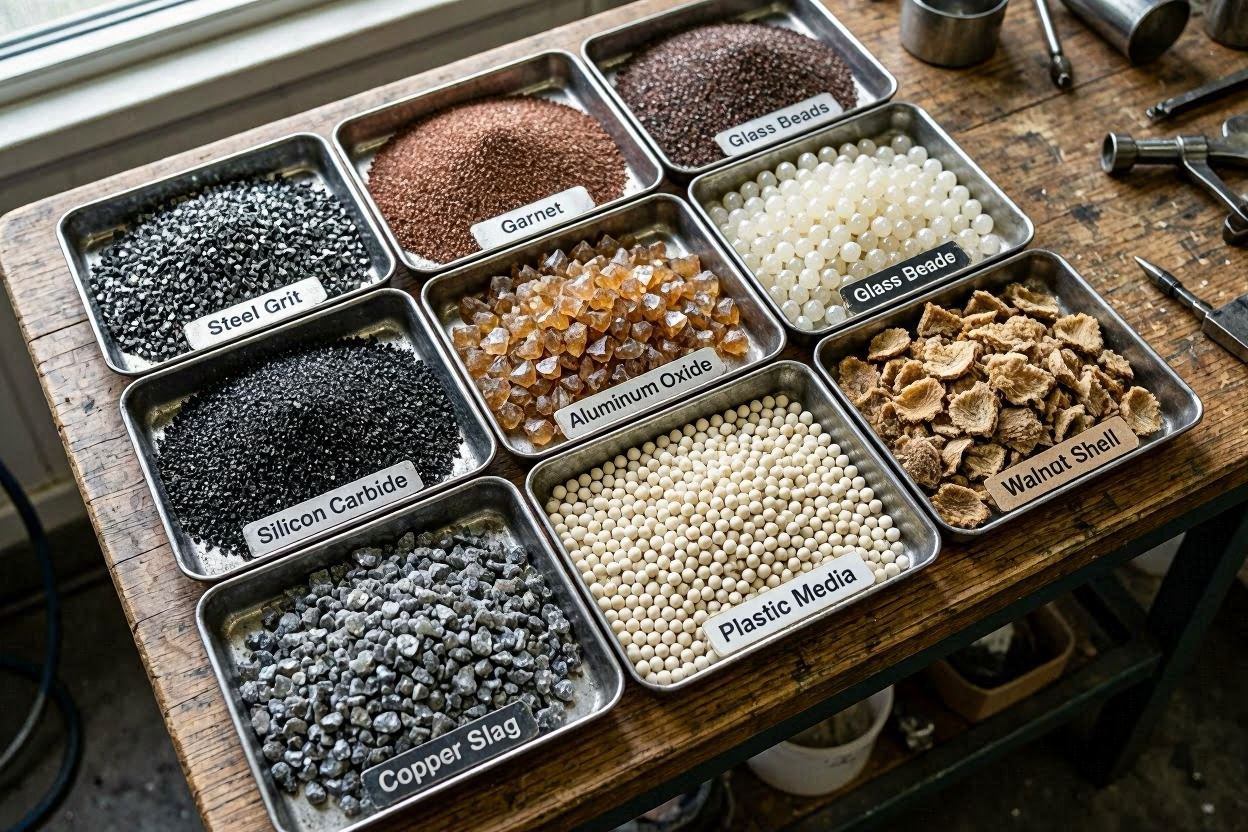
Blasting Media Comparison Chart: All Types Ranked by Key Properties
The definitive single-page reference for industrial blasting media selection — all major abrasive types compared across hardness, particle shape, surface profile, recyclability, silica compliance, cost, dust generation, and substrate compatibility. Updated March 2026.
1. How to Use This Comparison Guide
This page is designed as a working reference tool, not just an informational article. It contains four distinct comparison resources that serve different decision-making needs:
- The Master Comparison Table (Section 2) covers all major technical and commercial parameters for every blasting media type in a single scrollable table — use this for a complete side-by-side view.
- The Property Rankings (Sections 3–6) rank each media type on a single critical dimension — use these when one factor (hardness, recyclability, dust, cost) is the primary decision driver.
- The Substrate Compatibility Matrix (Section 7) shows at a glance which media types are approved, acceptable, or prohibited for each major substrate material — use this to immediately eliminate non-compatible options.
- The Decision Guide (Section 8) maps the most common application scenarios to the correct media specification — use this when you have a specific situation and need the recommendation directly.
2. Master Comparison Table — All Media Types
The table below compares all commercially significant blasting media types across ten key parameters. Scroll horizontally on mobile to view all columns. For detailed technical data and application guidance on any individual media type, follow the links in the deep-dive guides listed at the end of this article.
| Medienart | Mohs-Härte | Partikelform | Profile Depth | Recycle Life | Silica-Free? | Dust Level | Price /MT (USD) | Cost/m² Rank | Kategorie |
|---|---|---|---|---|---|---|---|---|---|
| Aluminum Oxide (BFA) | Eckig | High (50–120 µm) |
|
Yes <0.1% | Low–Med | $600–900 | ⭐⭐⭐⭐⭐ (cabinets) | Mineral | |
| Aluminum Oxide (WFA) | Eckig | High (45–110 µm) |
|
Yes <0.05% | Low–Med | $900–1,400 | ⭐⭐⭐⭐ (SS / Ti) | Mineral | |
| Siliziumkarbid | Angular / splintery | Very High |
|
Yes <0.1% | Medium | $1,400–2,200 | ⭐⭐ (specialist) | Mineral | |
| Garnet (almandine) | Sub-angular | High (40–90 µm) |
|
Yes <1% | Sehr niedrig | $400–700 | ⭐⭐⭐⭐ (open blast) | Mineral | |
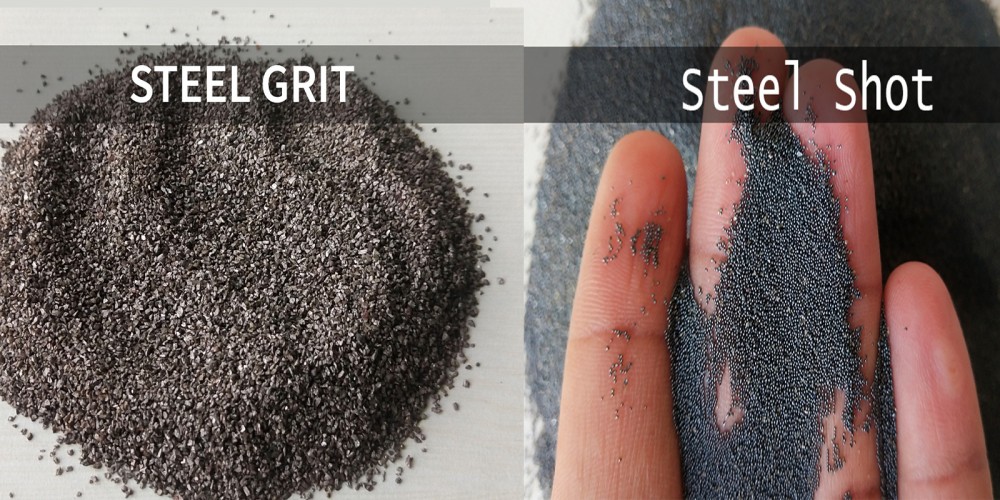
| Stahlkies | Eckig | Very High (75–150 µm) |
|
No (iron) | Low (closed) | $700–1,100 | ⭐⭐⭐⭐⭐ (blast rooms) | Metallic | |
| Stahlkugel | Spherical | Low–Med (peened) |
|
No (iron) | Low (closed) | $700–1,100 | ⭐⭐⭐⭐⭐ (blast rooms) | Metallic | |
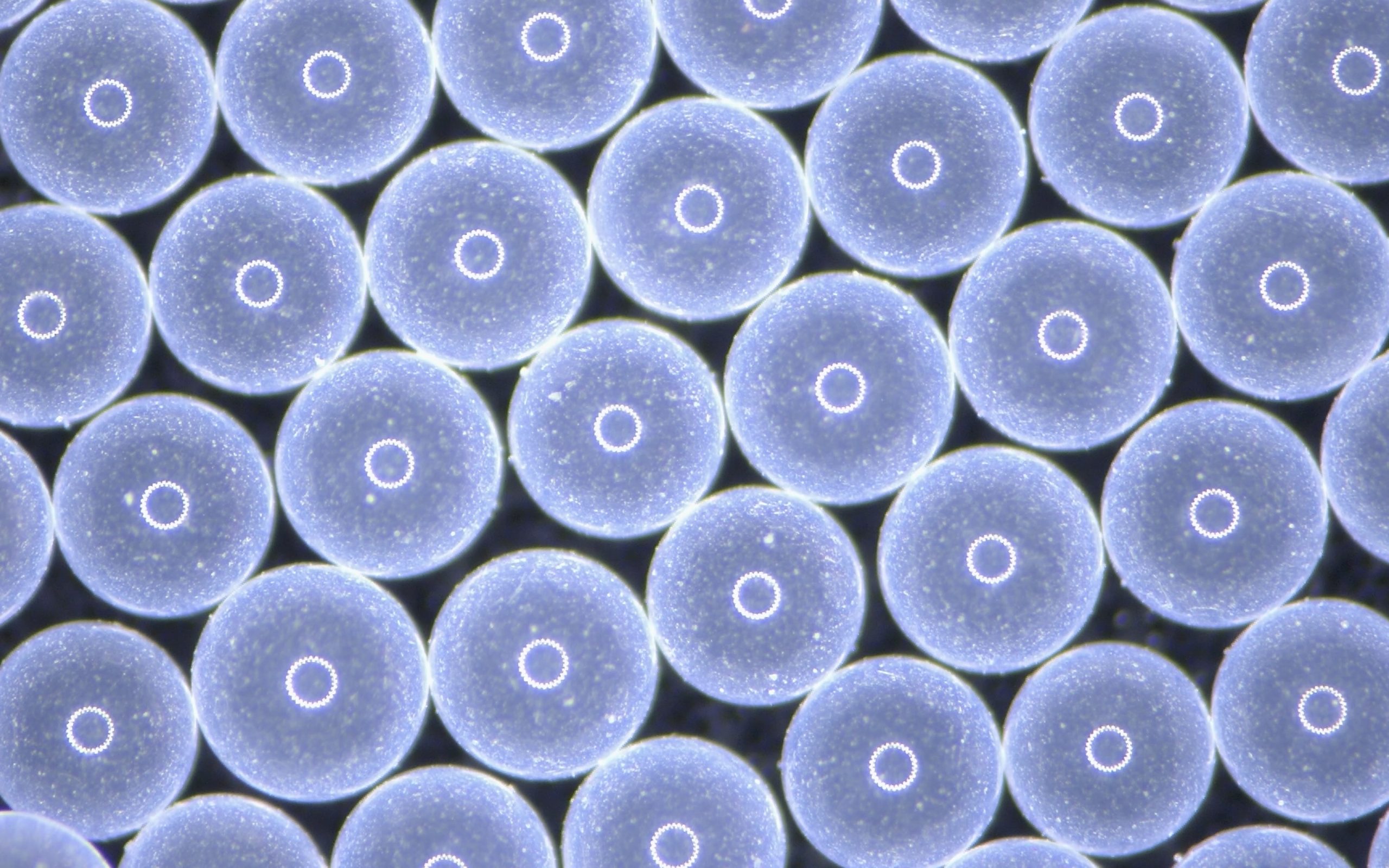
| Glass Bead | Spherical | Low (smooth, 10–35 µm) |
|
Yes 0% | Low–Med | $500–900 | ⭐⭐⭐⭐ (finishing) | Synthetic | |
| Plastic Media (melamine) | Angular / blocky | Minimal (<5 µm) |
|
Yes 0% | Niedrig | $1,200–2,000 | ⭐⭐⭐ (specialist) | Synthetic | |
| Walnut Shell | Irregular | Negligible |
|
Yes 0% | Sehr niedrig | $300–600 | ⭐⭐ (light clean) | Organic | |
| Copper Slag | Eckig | Hoch |
|
Yes | Hoch | $100–200 | ⭐ (high disposal cost) | By-product | |
| Coal Slag | Eckig | Med–High |
|
Verify | Very High | $80–180 | ⭐ (high disposal cost) | By-product |
Prices indicative FOB China, March 2026. Recycle dots: ●●●●● = 500+ cycles · ●●●●○ = 100–200 · ●●●○○ = 30–50 · ●●○○○ = 3–10 · ●○○○○ = 1–3 · ○○○○○ = single-use. Cost/m² rankings apply in appropriate equipment context.
3. Hardness Ranking (Mohs Scale)
Hardness determines cutting speed and the range of substrates a media type can effectively treat. Higher hardness means faster material removal on hard substrates and a deeper anchor profile at equivalent grit size and blast pressure — but also greater risk of substrate damage if the media is too hard for the workpiece material. For detailed guidance on hardness implications for substrate selection, see the complete blasting media types guide.
4. Recyclability Ranking
Recyclability determines cost-per-m² in recirculating systems and total waste volume generated over a production run. For the full economic analysis of recyclability's impact on operating cost, see the Blasting Media Cost Guide & ROI Analysis.
5. Dust Generation Ranking
Dust generation is a critical environmental and health parameter for open blasting operations. Lower dust means better worker visibility, lower exposure risk, reduced containment infrastructure requirements, and easier permit compliance. For full guidance on dust control and regulatory compliance, see the eco-friendly and silica-free blasting media guide.
6. Cost-per-m² Ranking
This ranking reflects total cost per m² of surface treated in the most appropriate equipment context for each media type — not unit purchase price per kg. Rankings invert significantly from raw price rankings once recyclability and disposal costs are factored in. Full methodology and worked examples are in the Blasting Media Cost Guide & ROI Analysis.
Cost/m² estimates are indicative for standard production conditions in appropriate equipment, including amortized media cost and typical non-hazardous disposal. Hazardous waste disposal rates multiply slag costs significantly. March 2026 pricing basis.
7. Substrate Compatibility Matrix
The matrix below provides an at-a-glance view of which media types are suitable, acceptable with conditions, or prohibited for each major substrate category. For the full substrate-to-media decision framework, see the complete blasting media selection guide.
| Substrate | Al₂O₃ BFA | Al₂O₃ WFA | SiC | Granat | Stahlkies | Stahlkugel | Glass Bead | Kunststoff | Walnut Shell |
|---|---|---|---|---|---|---|---|---|---|
| Carbon / structural steel | ✅ | ✅ | ⚠️ | ✅ | ✅ | ✅ | ⚠️ | ❌ | ❌ |
| Rostfreier Stahl | ⚠️ | ✅ | ⚠️ | ✅ | ❌ | ❌ | ✅ | ❌ | ❌ |
| Aluminum alloys | ⚠️ | ⚠️ | ❌ | ⚠️ | ❌ | ❌ | ✅ | ✅ | ⚠️ |
| Titanium / Ni superalloys | ⚠️ | ✅ | ⚠️ | ✅ | ❌ | ❌ | ✅ | ⚠️ | ❌ |
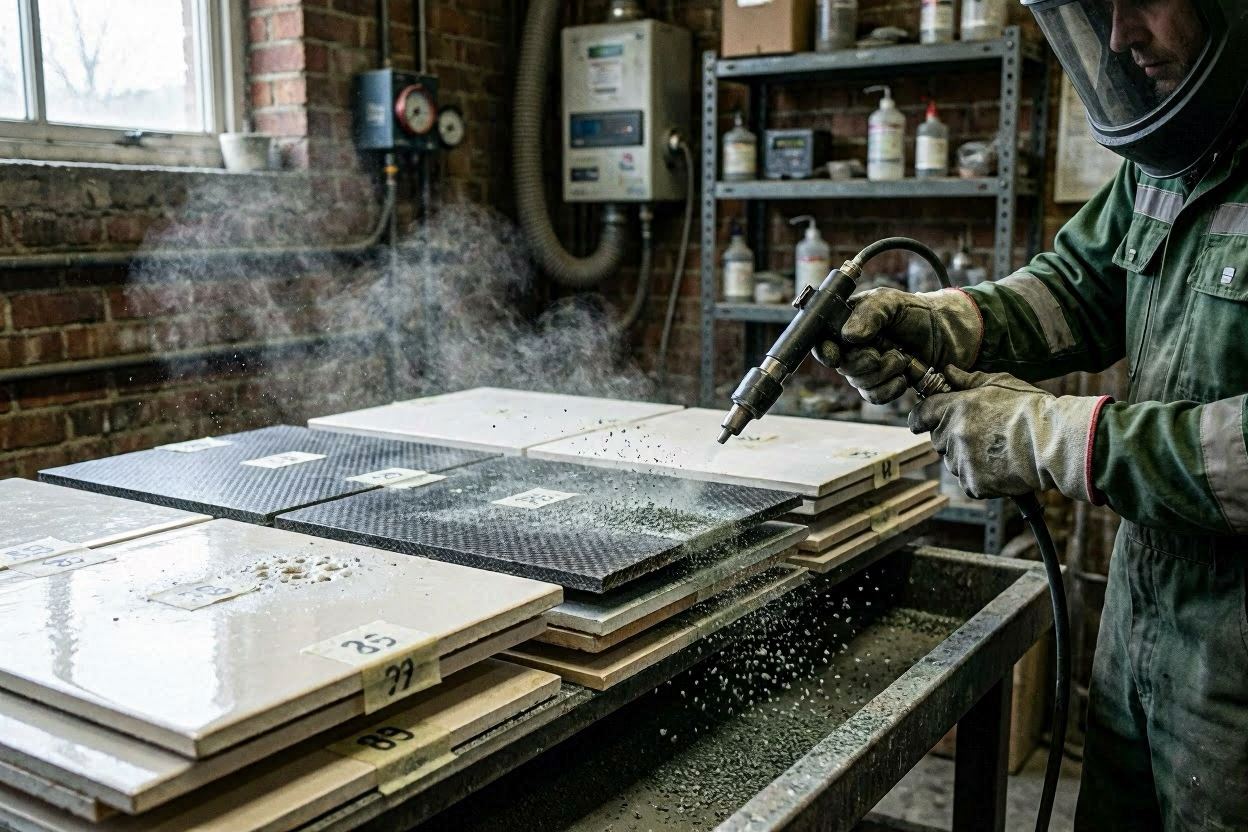
| CFRP / Composites | ❌ | ❌ | ❌ | ❌ | ❌ | ❌ | ❌ | ✅ | ⚠️ |
| Fiberglass (GRP) | ❌ | ❌ | ❌ | ❌ | ❌ | ❌ | ⚠️ | ✅ | ⚠️ |
| Cast iron | ✅ | ✅ | ⚠️ | ✅ | ✅ | ✅ | ⚠️ | ❌ | ❌ |
| Glass / ceramics | ⚠️ | ⚠️ | ✅ | ⚠️ | ❌ | ❌ | ⚠️ | ❌ | ❌ |
| Stone / masonry | ✅ | ⚠️ | ⚠️ | ✅ | ❌ | ❌ | ❌ | ❌ | ✅ |
| Zinc / magnesium alloys | ❌ | ⚠️ | ❌ | ❌ | ❌ | ❌ | ✅ | ✅ | ⚠️ |
✅ Suitable · ⚠️ Acceptable with conditions (see individual media guides for constraints) · ❌ Not suitable
8. Decision Guide — Best Media by Scenario
The following quick-reference guide maps the most common industrial blasting scenarios to the correct media specification. Each recommendation reflects the optimal choice considering performance, cost, and regulatory compliance as of March 2026.
If your situation is... → Specify this media
9. Frequently Asked Questions
In-Depth Guides for Each Media Type
Use the links below to access complete technical specifications, grit size tables, application guidance, and sourcing information for each individual blasting media type:
- Blasting Media: Complete Industry Guide — full pillar page covering all topics
- How to Choose the Right Blasting Media — structured selection framework
- Types of Blasting Media: Complete Guide — all types in one guide
- Aluminum Oxide Blast Media — grit sizes, BFA vs WFA, applications
- Silicon Carbide Blast Media — hardest abrasive, glass and ceramic applications
- Garnet Blasting Media — low-dust, pipeline, waterjet cutting
- Steel Grit vs Steel Shot — metallic abrasives, grades, blending
- Glass Bead Blasting Media — grades, finish types, stainless and aluminum
- Plastic Blast Media for Aerospace & Automotive
- Blasting Media Cost Guide & ROI Analysis
- Eco-Friendly Blasting Media: Low-Dust & Silica-Free Options
- Blasting Media Safety Guide: Silica Risks & PPE
- Industrial Surface Prep: Best Blasting Media for Metal
- Blasting Media for Automotive Restoration
Ready to Source the Right Blasting Media?
Jiangsu Henglihong Technology supplies aluminum oxide, garnet, glass bead, silicon carbide, and specialty abrasives to industrial buyers worldwide — with full QC documentation, competitive pricing, and reliable sea freight logistics.
Request a Quote or Technical ConsultationFilter