Abrasive Blasting for Cardiovascular Medical Devices: Stents, Heart Valves, and VAD Components
Cardiovascular medical devices operate in the most demanding biological environment imaginable: direct, continuous contact with flowing blood, under cyclic mechanical stress measured in billions of cycles over a device lifetime. The surface of every blood-contacting component determines whether that component remains thromboresistant, biocompatible, and mechanically durable for the duration of its service life. Abrasive blasting plays a precisely defined role in cardiovascular device manufacturing — not as a blood-contact surface finish, but as a critical intermediate process that enables the downstream treatments that achieve blood compatibility: electropolishing, anodizing, and precision coating. Understanding where blasting fits in cardiovascular device production, and what it must not do, is essential for any manufacturer in this space.
1. Surface Requirements in Cardiovascular Devices
Blood compatibility is the overriding surface requirement for cardiovascular implants. When a foreign material surface contacts flowing blood, the sequence of biological events determines whether the device functions safely or triggers pathological clotting. Within seconds of blood contact, plasma proteins adsorb onto the surface. Platelet adhesion and activation follow within minutes. If unchecked, this can lead to thrombus formation on the device surface — a potentially life-threatening complication for patients with coronary stents (in-stent thrombosis), mechanical heart valves (thromboembolism), or ventricular assist devices (pump thrombosis).
Surface smoothness is the primary engineering variable for thromboresistance on metallic cardiovascular surfaces. Smooth surfaces minimize the area and topographic complexity available for platelet adhesion and entrapment. This is why blood-contacting metallic cardiovascular surfaces — stent struts, heart valve occluders, VAD blood-pump internals — are electropolished to Ra values below 0.1 μm, and why abrasive blasting is emphatically not the final surface treatment on these surfaces. Blasting’s role is upstream of this: it is the deburring and surface preparation step that makes the electropolishing or other downstream treatment effective and reliable.
2. Vascular Stents: Laser Cutting, Deburring, and the Path to Electropolishing
Modern coronary and peripheral vascular stents are manufactured by laser cutting complex strut patterns from thin-walled metallic tubing — 316L stainless steel, cobalt-chromium alloys (L-605, MP35N), platinum-chromium alloys, or nitinol (nickel-titanium). Laser cutting is precise and capable of producing the intricate geometries required for modern stent designs, but it leaves the cut surfaces with a recast layer — a zone of re-solidified material with altered microstructure, elevated surface roughness, and debris particles fused to the strut edges. This recast layer must be removed completely before the stent can be electropolished to blood-contact specifications.
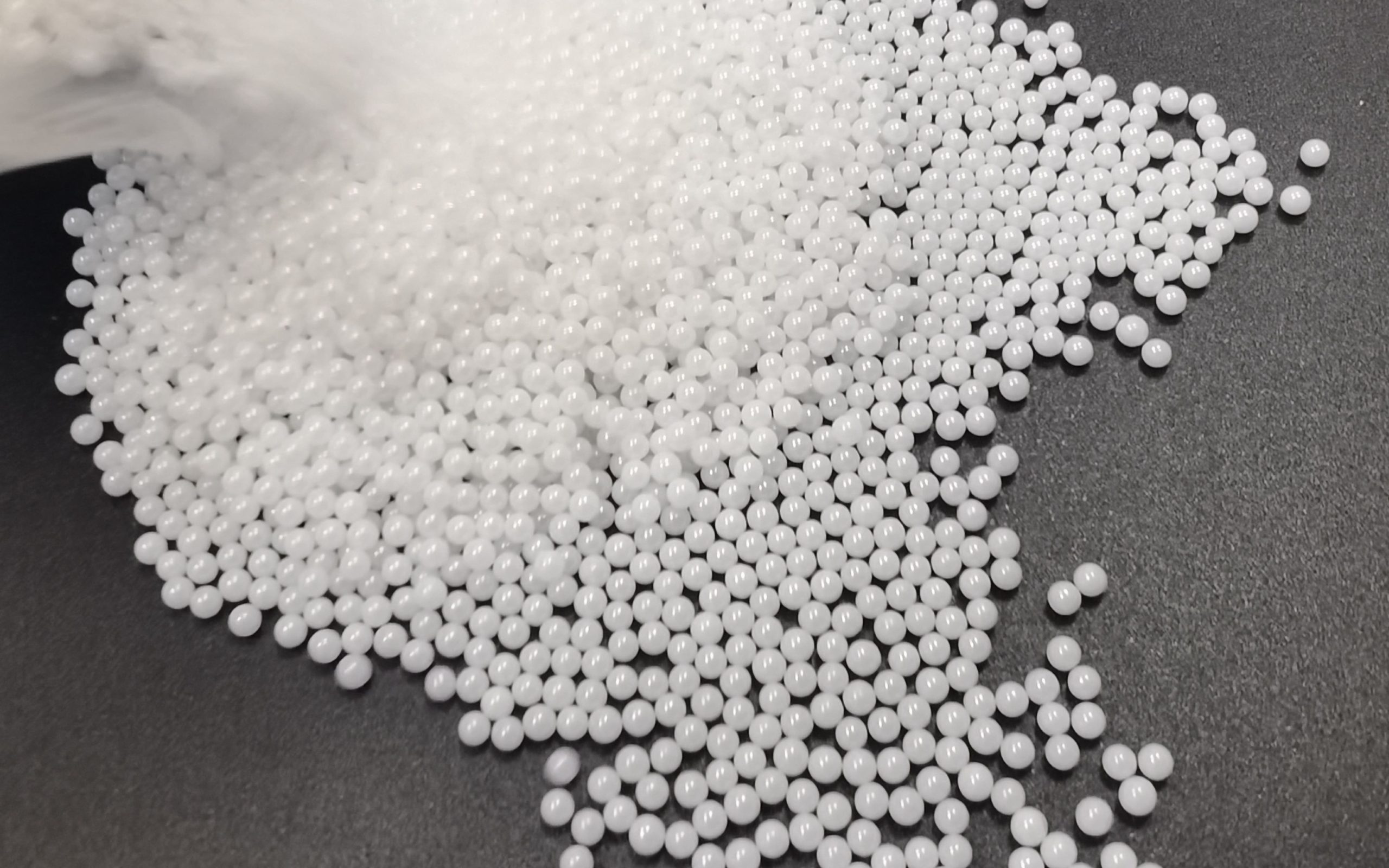
Mechanical deburring methods — tumbling, brushing, waterjet — struggle with the complex three-dimensional geometry of modern stent struts, which have features too fine and interconnected for mechanical tools to access uniformly. This is where fine abrasive blasting plays its role: plastic media blasting or fine glass bead blasting at low pressure (1–2 bar) can access the laser-cut strut edges and surfaces uniformly, even in complex curvatures and intersections, dislodging the recast layer debris and reducing the burr height before electropolishing.
| Stent Manufacturing Step | Surface Effect | Abrasive Blasting Role |
|---|---|---|
| Laser tube cutting | Creates recast layer, HAZ, burrs on strut edges; Ra 2–8 μm | None at this step |
| Initial cleaning | Removes loose debris and cutting assist gas residues | Keine |
| Abrasive blasting (optional) | Dislodges recast layer debris, reduces burr height; Ra improvement to 1–3 μm | Fine plastic media or glass beads, 1–2 bar, 50–100 μm media; intermediate deburring only |
| Electropolishing | Removes material from surface peaks; produces Ra < 0.1 μm blood-contact finish | None; blasting must be complete before this step |
| Passivation / final clean | Builds passive layer; final cleaning for packaging | Keine |
Not all stent manufacturers use abrasive blasting in this sequence. Some rely entirely on electropolishing to remove the recast layer, which requires longer electropolishing times and more material removal. Where blasting is used, it reduces electropolishing time and material removal, improving dimensional consistency of the final stent strut geometry. The decision to include or exclude blasting is made during process development and validated as part of the overall manufacturing process validation.
3. Mechanical Heart Valves and Structural Components
Mechanical heart valves consist of a titanium or stainless steel valve housing (the orifice ring and sewing ring carrier), pyrolytic carbon or CoCr occluder elements (tilting discs or bileaflet hinged flaps), and a PTFE or polyester sewing ring for suture attachment. The pyrolytic carbon occluder surfaces are precision-fabricated with mirror-smooth surfaces that do not undergo blasting. The titanium and stainless steel structural components, however, are treated with abrasive blasting at appropriate stages.
Titanium valve housings are glass bead blasted on external (non-blood-contacting) surfaces before anodizing, providing a clean, controlled titanium oxide condition for consistent anodize layer quality. Internal blood-contacting titanium surfaces are electropolished. Stainless steel sewing ring carriers are glass bead blasted and passivated before textile attachment. The blasting creates a consistent, clean metal surface for reliable adhesion of the polymer sewing ring to the metallic carrier ring.
4. Ventricular Assist Devices (VADs)
Ventricular assist devices are blood pumps implanted in patients with end-stage heart failure to supplement or replace the pumping function of the failing ventricle. Modern continuous-flow VADs (axial-flow and centrifugal-flow pumps) consist of a titanium pump housing, impeller, bearing system, and motor. The internal blood-contacting surfaces of the pump housing and impeller are polished to the smoothest achievable finish to minimize thrombosis risk — these surfaces are not blasted.
External titanium housing surfaces are glass bead blasted before anodizing. This serves two functions: producing a consistent surface for uniform anodize layer quality, and creating a slightly rougher external housing surface that promotes tissue ingrowth around the percutaneous driveline exit site and the pump pocket — locations where tissue integration improves patient outcomes by reducing infection risk. The titanium driveline connector surfaces are also blasted and anodized. All blasting on VAD components is performed under documented, validated conditions with full traceability to device history records.
5. Pacemaker and ICD Titanium Enclosures
Pacemaker and implantable cardioverter-defibrillator (ICD) titanium cans are among the most precisely manufactured and rigorously quality-controlled titanium components in medical device production. The hermetic seal between the titanium housing halves — achieved by laser welding — must be flawless: any defect allows body fluid ingress that destroys the electronics and can cause device failure with potentially fatal consequences.
Glass bead blasting of the titanium can exterior serves several functions in this context. Before laser welding, the weld zone surface condition is critical for achieving consistent weld penetration depth and bead geometry. Blasting the weld zone to a defined Ra (typically 0.5–1.5 μm) removes the native oxide layer variation that accumulates during storage and handling, presenting a consistent metallic surface to the laser. The uniformity of titanium oxide layer thickness in the weld zone directly affects laser energy absorption and therefore weld quality consistency. Post-weld, the exterior of the can is sometimes anodized in different colors (using voltage-controlled titanium anodize, which produces interference colors from TiO₂ layer thickness) for product identification. Blasting before anodizing ensures a consistent surface for uniform color anodize quality.
Pacemaker Cans
Ti exterior: glass bead blast → anodize or laser weld prep. Internal electronics: no blasting. Hermetic laser weld zone: controlled oxide condition.
ICD Enclosures
Same as pacemaker but larger. High-voltage capacitor chamber components: glass bead blasting for cleaning and surface preparation before assembly.
Lead Connectors (IS-1, DF-4)
Ti or PtIr connector pins: precision geometry critical; masking of connector contact surfaces before blasting of housing areas.
Neurostimulator Cans
Similar to pacemaker process. Ti or Ti alloy. Exterior blasted and anodized. Internal surfaces and electrode contact points not blasted.
6. Media Selection for Cardiovascular Device Components
| Komponente | Material | Blasting Application | Media | Pressure |
|---|---|---|---|---|
| Stent (intermediate deburr) | 316L SS, CoCr, nitinol | Recast layer dislodging before electropolish | Fine plastic media or fine glass beads (50–100 μm) | 1–2 bar |
| Heart valve housing (exterior) | Titan | Pre-anodize surface preparation | Glass beads #12–#13 | 1.5–2.0 bar |
| Sewing ring carrier | 316L SS | Pre-textile-attachment cleaning and surface prep | Glass beads #10–#12 | 2.0–2.5 bar |
| VAD pump housing (exterior) | Titan | Pre-anodize; tissue integration surface | Glass beads #12 | 1.5–2.0 bar |
| Pacemaker / ICD can | Titan | Weld zone prep; pre-anodize exterior | Glass beads #12–#13 | 1.5–2.0 bar |
7. Biocompatibility and ISO 10993 Requirements
All cardiovascular medical devices implanted in blood-contacting applications are subject to biocompatibility evaluation per ISO 10993, with specific requirements for blood interaction governed by ISO 10993-4 (Selection of Tests for Interactions with Blood). The surface treatment process — including any blasting steps and the final surface condition they produce — directly affects the outcome of biocompatibility testing.
Because cardiovascular devices have blood-contact surfaces that must meet thromboresistance criteria, the device is tested as manufactured — meaning after all surface treatment steps including blasting, electropolishing, passivation, and any coating. Any change in the blasting process (media type, parameters) or the downstream surface treatment (electropolish chemistry, passivation method) could alter the surface chemistry and topography enough to require re-testing per ISO 10993-4. This makes process control and change management particularly critical in cardiovascular device manufacturing.
8. Frequently Asked Questions
Yes, as an intermediate step. Laser-cut stents require removal of the recast layer and burrs before electropolishing. Fine plastic media or glass bead blasting at 1–2 bar is used for intermediate deburring on complex strut geometries. Blood-contact stent surfaces then proceed to electropolishing, which achieves Ra below 0.1 μm required for thromboresistance. Abrasive blasting is never the final treatment on blood-contacting stent surfaces.
Blood-contacting metallic cardiovascular surfaces require Ra below 0.1 μm, typically achieved by electropolishing. Smooth surfaces minimize platelet adhesion and thrombosis risk. Abrasive blasting is used on non-blood-contacting structural components and housings, but never as the final treatment on blood-contacting surfaces governed by ISO 10993-4.
Glass bead blasting is applied to the titanium can exterior to provide a consistent oxide layer condition before laser welding (ensuring uniform weld penetration) and before anodizing (ensuring uniform color anodize quality). Internal electronic surfaces are not blasted. Blood is not in contact with the can exterior; ISO 10993 biocompatibility testing covers the full device including external tissue-contacting surfaces.
Glass beads are the most widely used for cardiovascular device components — non-contaminating, controlled finish, no metallic residues. Fine plastic media (75–150 μm polyester/melamine) is used for delicate thin-walled components. Silica sand, coal slag, and abrasives with heavy metal impurities are prohibited. All media must be characterizable for purity and fully removable by the qualified cleaning process.
They are complementary, not alternatives. Blasting performs mechanical deburring and surface preparation for downstream operations. Electropolishing produces the ultra-smooth blood-contact finish by electrochemical material removal from surface peaks. The typical sequence for stents is: laser cut → clean → blast (deburr) → clean → electropolish → passivate → package. Blasting precedes electropolishing; it does not replace it for blood-contacting surfaces.
Source Blasting Media for Cardiovascular Device Manufacturing
Jiangsu Henglihong Technology supplies glass beads and plastic media for cardiovascular device manufacturing with full documentation for ISO 13485 supplier qualification and ISO 10993 biocompatibility support.
Request Technical Data & QuoteFilter