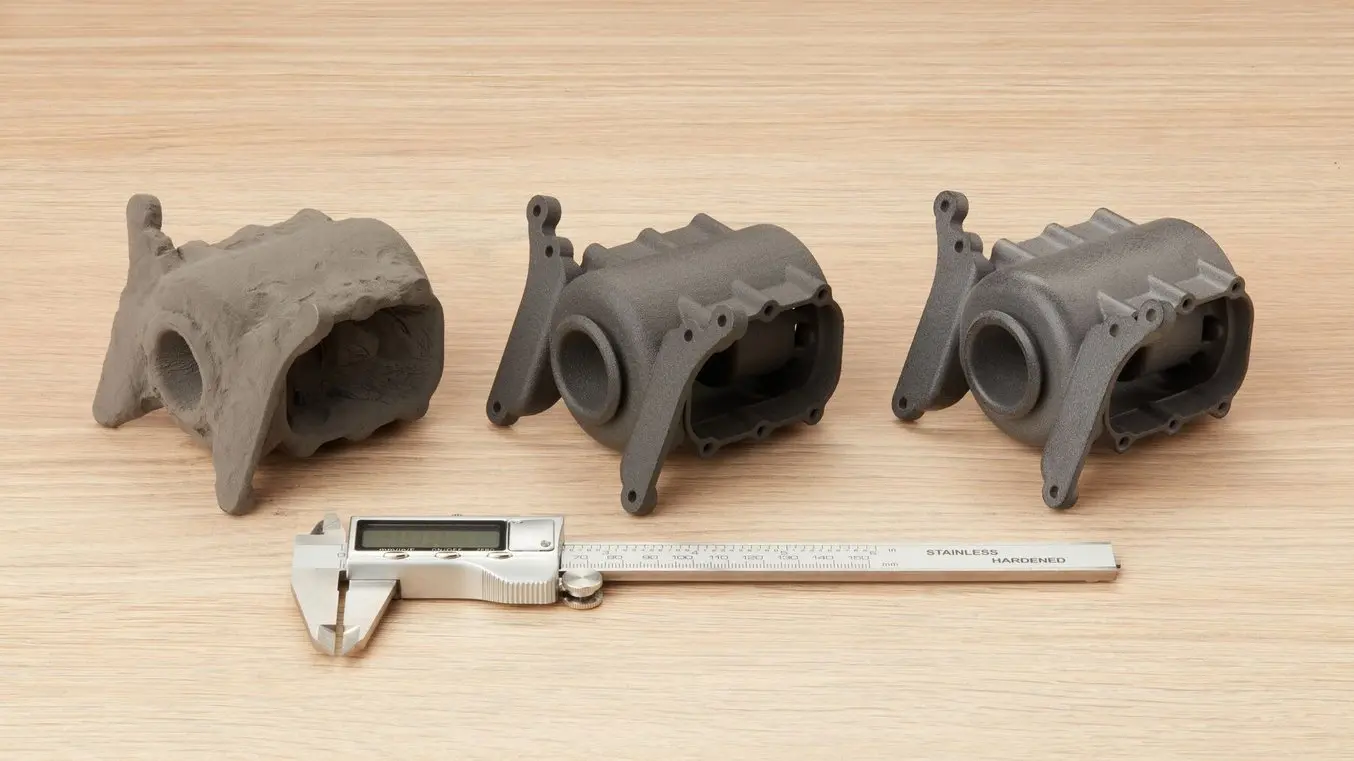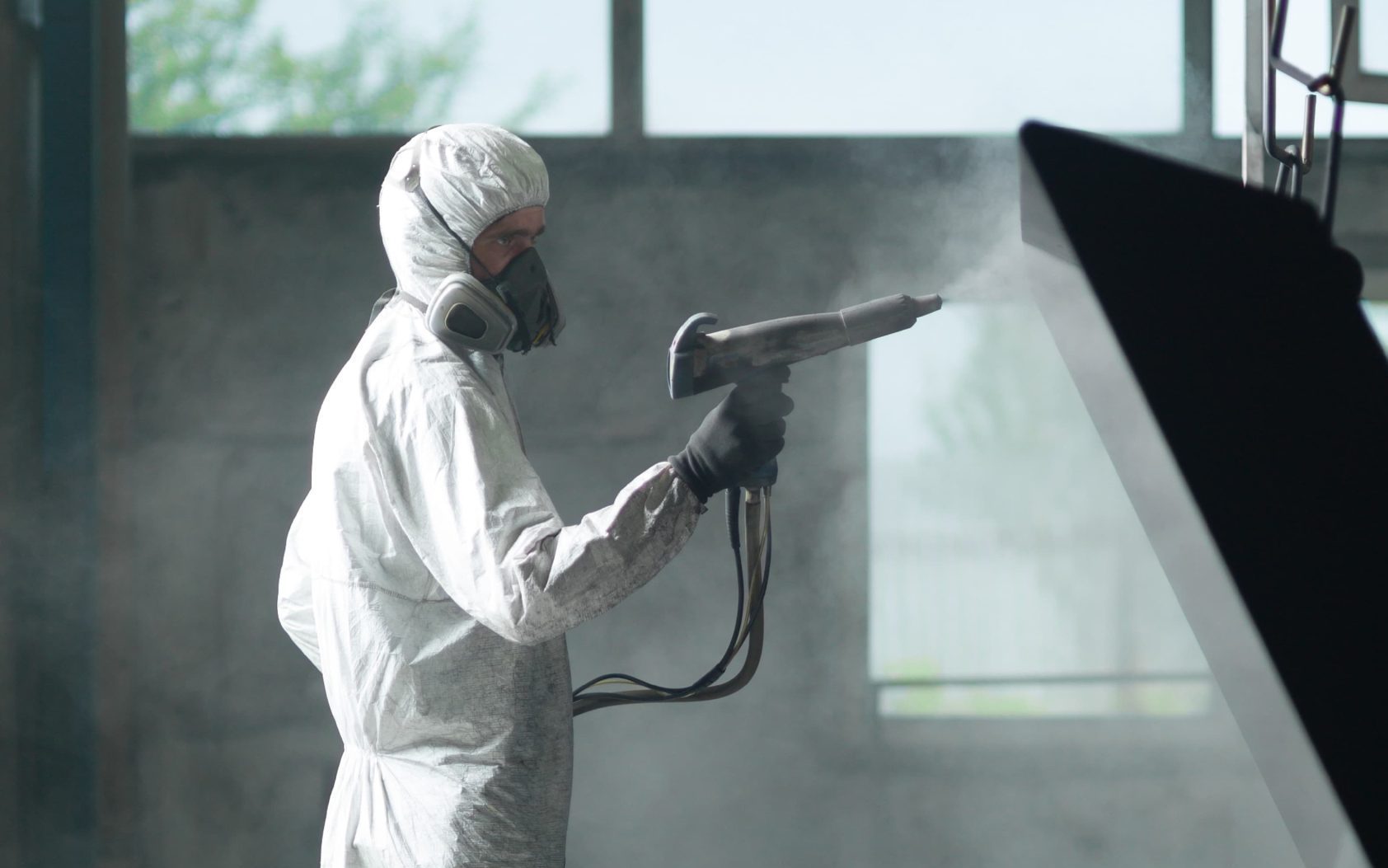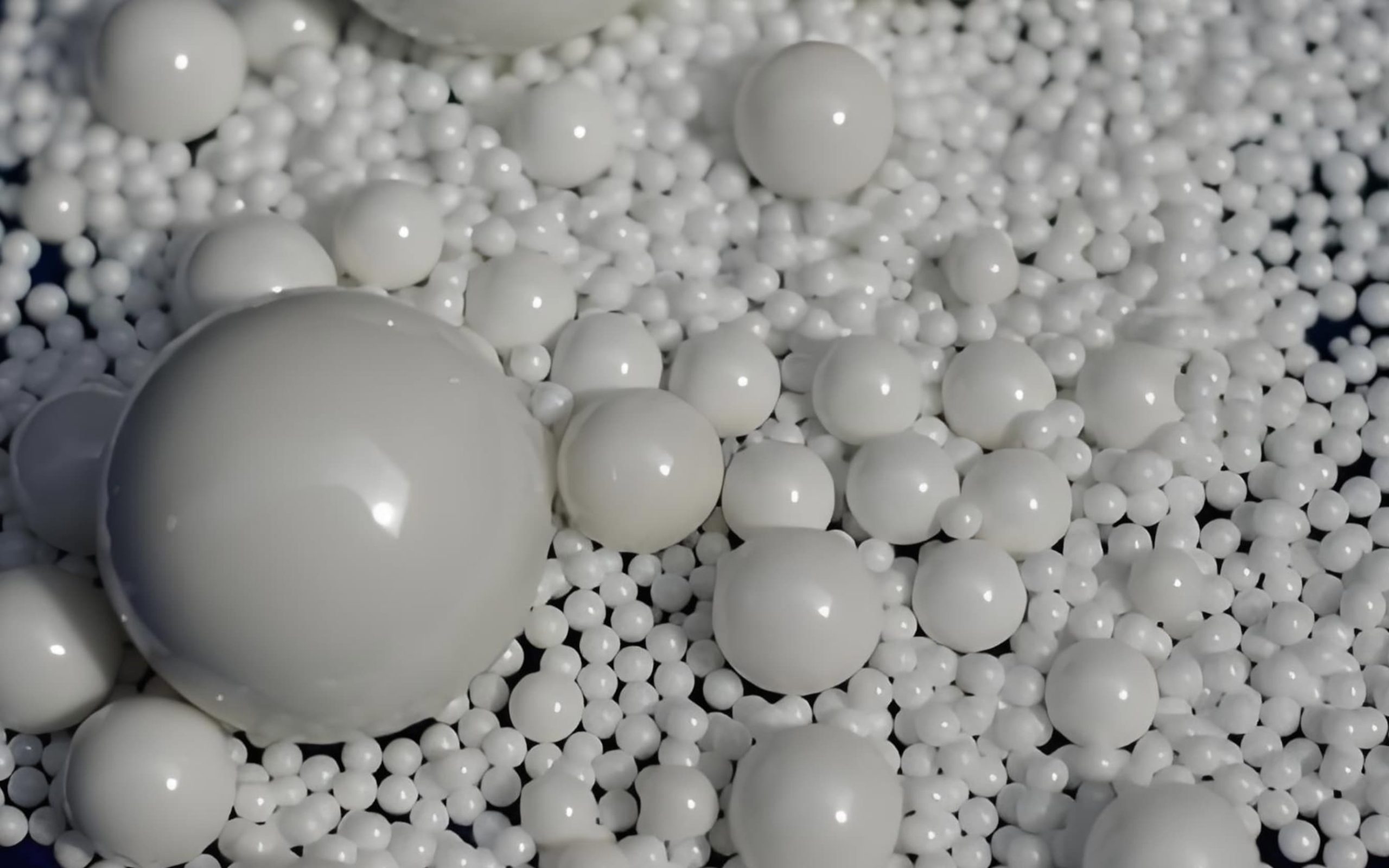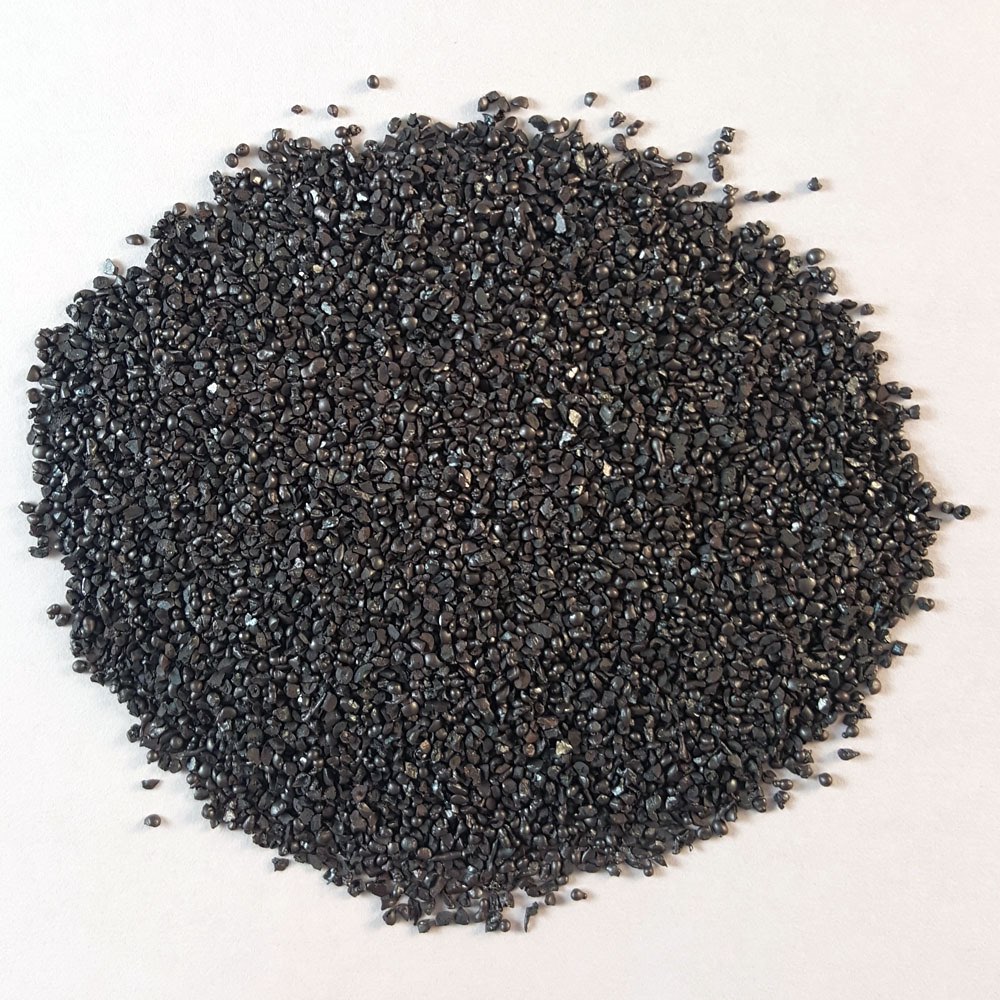
Abrasive Blast Media Selection Chart by Material and Application
The most common and expensive blasting mistake is not a wrong technique — it is choosing a media type without first anchoring that choice to the substrate material and the specific objective the blasting must achieve. Ten media types exist because ten different combinations of hardness, shape, and size are needed to handle ten fundamentally different classes of substrate and job. This chart maps those combinations directly.
The selection matrix below covers twelve substrate categories — from heavy structural carbon steel to CFRP composite aircraft panels — and maps each to the correct primary media, the appropriate grit or size specification, suitable equipment types, and the key constraints that govern each choice. Following the matrix, substrate-by-substrate guidance expands on the most critical selection factors for each material category. Equipment type and environmental site constraints are addressed in dedicated sections before the FAQ.
This article is part of the complete abrasive blast media comparison and selection reference where all ten media types are compared across hardness, grit size, surface profile, recyclability, cost, and dust level. If you need to understand the parameters used in the selection chart below before making your choice, start there.
How to Use This Selection Chart
Media selection in abrasive blasting is determined by three inputs: the substrate material, the blasting objective, and the operating constraints. The selection matrix below addresses all three. To use it correctly:
- Identify your substrate — what material is being blasted. The substrate governs the maximum hardness and aggressiveness of media that can be used without causing unacceptable surface damage or dimensional change.
- Define your objective — what the blasting must achieve. Objectives include rust and mill scale removal, paint stripping, surface profiling for coating adhesion, deburring, shot peening for fatigue improvement, or decorative etching. A single substrate may require different media depending on which objective applies.
- Check equipment and site constraints — wheel-blast, pressure-blast, and blast cabinet systems are not all compatible with every media type. Environmental restrictions (near-water sites, enclosed spaces, occupied buildings) may eliminate certain media on dust or toxicity grounds even when they are technically ideal for the substrate and objective.
The “Recommended Media” column gives the primary selection. Where multiple options are listed, the first is the preferred choice and subsequent options are alternatives suited to different equipment types or operating conditions. Grit or size specifications are given as FEPA F-grade designations for mineral abrasives and SAE designations for steel abrasives. For full conversion between these systems and equivalent micron sizes, refer to our grit size and mesh conversion chart.
The Complete Selection Matrix
| Substrate | Blasting Objective | Recommended Media | Grit / Size | Equipment | Key Notes |
|---|---|---|---|---|---|
| CARBON AND MILD STEEL | |||||
| Structural carbon steel | Heavy rust & mill scale removal | Stahlkies | G-18 – G-40 | Wheel-blast | Best throughput and cost per cycle at production volume; Sa 2.5 achievable |
| Structural carbon steel | Rust removal, field blasting | Aluminium-Oxid Granat | F20 – F36 / 20–30 | Pressure blast | AO for speed; garnet where very low dust is needed |
| Carbon steel pipe / vessel | Coating prep — zinc primer or epoxy | Stahlkies Aluminium-Oxid | G-25 / F24 – F36 | Wheel or pressure | Profile 2.5–4.0 mils required; confirm TDS spec |
| Carbon steel — thin gauge | Paint stripping, light clean | Granat Aluminium-Oxid | F46 – F80 / 36–60 | Pressure blast / cabinet | Finer grit to avoid distortion of thin sections |
| STAINLESS STEEL | |||||
| Stainless steel (304, 316) | Bright satin finish — no profile needed | Glasperlen | 80 – 120 mesh | Pressure blast / cabinet | No iron contamination; brightens surface; no ferrous media ever |
| Rostfreier Stahl | Profile for coating or bonding | Granat White AO | F30 – F60 / F36 | Pressure blast / cabinet | Garnet: very low iron; White AO: zero iron contamination |
| ALUMINUM AND NON-FERROUS | |||||
| Aluminum panels / sheet | Paint or coating removal | Plastic Grit (Melamine) | 12 – 30 mesh | Pressure blast / cabinet | No substrate erosion; no dimensional change; use virgin media only |
| Aluminum extrusions / castings | Clean surface, light deburr | Walnut Shell Glasperlen | 20 – 40 mesh / 80–120 | Cabinet | Walnut: removes contamination; Glass beads: brightening and peening |
| Aluminum — aerospace MRO | Paint stripping — fatigue-critical parts | Plastic Grit (Urea / Polyester) | 16 – 40 mesh | Pressure blast (controlled) | AMS 2430 and Boeing / Airbus process specs apply; validate with trial |
| CAST IRON AND FOUNDRY | |||||
| Gray / ductile iron castings | Descaling after pour — high volume | Stahlkugel | S-230 – S-460 | Wheel-blast (tumble or hanger) | Standard foundry practice; max reuse cycles; minimal dust |
| Cast iron machine parts | Cleaning before inspection or machining | Stahlkugel Stahlkies | S-110 – S-280 / G-50 | Wheel-blast / cabinet | Shot for smooth finish; grit if profile for painting is required |
| CONCRETE AND MASONRY | |||||
| Concrete floor slabs | Epoxy / polyurethane coating prep (CSP 3–5) | Aluminium-Oxid Stahlkugel | F16 – F24 / S-280–S-390 | Shot-blast machine / pressure blast | AO: pressure or scarifier; Steel shot: floor shot-blast machine (highest throughput) |
| Concrete walls / facades | Surface cleaning and texture | Granat Aluminium-Oxid | F16 – F36 / 20–30 | Pressure blast | Garnet for cleaner environment; adjust grit for desired surface texture |
| WOOD AND TIMBER | |||||
| Softwood (pine, spruce) | Paint / stain removal | Walnut Shell Corn Cob | 12 – 20 mesh | Pressure blast (40–60 psi) | Low pressure critical; higher pressure frays wood grain |
| Hardwood / architectural timber | Historic building restoration | Corn Cob Walnut Shell | 20 – 40 mesh | Pressure blast (35–55 psi) | Test on inconspicuous area first; biodegradable waste |
| GLASS AND NATURAL STONE | |||||
| Flat glass / architectural glass | Artistic etching / frosting | Siliziumkarbid Aluminium-Oxid | F60 – F120 / F80 – F150 | Cabinet (pressure blast) | SiC: sharpest cut, deepest etch; AO: economical for frosting |
| Granite / marble monuments | Lettering and deep relief engraving | Siliziumkarbid | F36 – F80 | Pressure blast (cabinet or handheld) | Only medium hard enough for reliable stone cutting; use rubber stencil |
| CFRP COMPOSITES AND AEROSPACE | |||||
| CFRP aircraft panels | Paint stripping — fiber integrity critical | Plastic Grit (Urea / Polyester) | 16 – 30 mesh | Pressure blast (40–70 psi) | Softest angular media; removes coating without disturbing carbon fibers |
| GRP / fiberglass | Paint removal, surface adhesion prep | Plastic Grit (Melamine) Walnut Shell | 20 – 40 mesh | Pressure blast (low) / cabinet | Hard mineral abrasives will erode GRP surface; soft media essential |
| GALVANIZED AND PRE-COATED STEEL | |||||
| Hot-dip galvanized steel | Light clean — preserve zinc coating | Glasperlen Plastic Grit | 80 – 120 mesh / 20–40 mesh | Cabinet / light pressure (50–70 psi) | Hard abrasives remove zinc; soft media only for light activation |
| MARINE AND OFFSHORE | |||||
| Marine steel hull (drydock) | Sa 2.5 prep — near-water compliance | Granat | 16 – 30 grit | Pressure blast | Very low leachable heavy metals; meets IMO/port environmental requirements |
| Offshore platform — topsides | Deep profile for thermal spray / epoxy | Stahlkies Granat | G-18 – G-25 / Garnet 16 | Pressure blast (enclosed containment) | Steel grit for deepest profile; garnet where containment is limited |
Substrate-by-Substrate Selection Guide
The matrix above gives the primary recommendation. The substrate profiles below explain the reasoning behind each selection, flag the most common mistakes, and identify the constraints that change the recommendation under specific conditions.
1. Carbon Steel — Structural and Industrial
Carbon steel is the most common blasting substrate worldwide and the one for which the widest range of media options exists. The selection decision is driven primarily by equipment type and production volume. For automated wheel-blast facilities — shipyards, structural fabricators, rail car manufacturers — steel grit in the G-25 to G-40 range is the near-universal standard. It delivers profiles of 2.5–4.0 mils to meet SSPC-SP 10 specifications, recycles 100–300+ times in closed-loop systems, and generates minimal dust inside enclosed blast rooms.
For field blasting — bridges, pipelines, storage tanks — pressure blast with aluminum oxide F20–F36 or garnet 16–30 is standard. The choice between them depends on dust tolerance at the site: AO blasts faster and costs less per ton; garnet generates significantly less dust and is preferred in populated areas, over waterways, or where containment of blast debris is difficult.
The surface profile required for carbon steel is determined by the coating system. Confirm requirements from the coating TDS before selecting grit size. For detailed profile-to-media mapping, see our surface profile chart and anchor pattern guide.
2. Stainless Steel
The defining constraint for stainless steel blasting is iron contamination. Any media that contains metallic iron — steel shot, steel grit, recycled blended media, or even contaminated mineral abrasives previously used on carbon steel — will embed iron particles in the stainless surface. These embedded particles will rust and bleed through any subsequent coating, destroying the aesthetic appearance and potentially compromising the corrosion performance of the stainless substrate.
Glass beads are the standard for stainless steel applications requiring a clean, bright satin finish — pharmaceutical equipment, food processing vessels, architectural panels, and decorative fittings. They create a uniform peened finish without a high anchor profile and carry no iron contamination risk. For stainless that requires a surface profile for coating adhesion — such as stainless pipe being painted in a chemical plant — garnet (very low iron mineral) or white fused aluminum oxide (99.5%+ Al₂O₃, zero iron) are the correct choices. Never use brown fused aluminum oxide, which contains trace iron oxide that can contaminate stainless surfaces.
3. Aluminum and Non-Ferrous Metals
Aluminum presents two critical constraints that eliminate most media types used on steel: first, its relatively low hardness (Brinell 15–100 depending on alloy and temper) means that hard angular mineral media will erode the aluminum surface, changing dimensions and potentially initiating stress cracks in fatigue-sensitive components. Second, contamination with iron particles from steel-derived media will cause galvanic corrosion under any subsequent coating.
Plastic abrasive grit — in melamine (Mohs ~4), urea (Mohs ~3.5), or polyester formulations — is the solution for stripping coatings from aluminum without these problems. Its hardness is below aluminum at most tempers, making it physically incapable of eroding the base metal while still being hard enough to strip organic coatings efficiently. For aerospace applications involving fatigue-critical aluminum components, the specific plastic grit type, grit size, blast pressure, and exposure time must be validated against the relevant aircraft maintenance manual (AMM) and process specification (Boeing BAC 5748, Airbus AITM 4.0016, etc.). Media must be virgin — never recycled or previously used on steel — to prevent cross-contamination.
4. Cast Iron and Foundry Parts
Cast iron foundry work represents one of the highest-volume blasting applications globally. Freshly poured castings carry foundry sand, oxide scale, and metallurgical surface irregularities that must be removed before inspection, machining, or coating. Wheel-blast systems using steel shot in the S-230–S-460 range are the industry standard for this application — they clean castings at very high throughput rates, peen the cast surface to improve its fatigue characteristics, and achieve 100–300+ reuse cycles in automated equipment.
When cast iron parts require painting or coating, steel grit G-40–G-50 provides the angular anchor profile needed for coating adhesion while maintaining the high recyclability advantage of metallic media. For smaller runs in cabinet systems, aluminum oxide F36–F60 is effective. Cast iron’s graphite microstructure makes it more brittle than steel and more susceptible to chipping under very aggressive blast conditions — use the coarser end of the recommended range only when the casting geometry and wall thickness support it.
5. Concrete and Masonry
Concrete surface preparation for industrial coatings — epoxy floors, polyurethane overlays, cementitious waterproofing — requires achieving a specific Concrete Surface Profile (CSP) as defined by ICRI Guideline 310.2. Most heavy-duty coating systems specify CSP 3–5, which corresponds to a moderately to aggressively textured surface with visible pores open and laitance removed. CSP 3 is achievable with F24 aluminum oxide at moderate pressure; CSP 4–5 requires F16–F20 or, for high-throughput floor areas, a dedicated floor shot-blast machine using steel shot S-330–S-390.
Floor shot-blast machines are the most efficient option for large horizontal concrete surfaces — they are self-contained, contain all blast debris internally, and can prepare 300–600 m² per hour at production settings. Garnet 16–24 is used when the environment is occupied or near food production areas where mineral dust must be minimized, trading some speed for lower airborne particle levels.
6. Wood and Timber
Abrasive blasting of wood is a specialist application that requires organic, biodegradable media soft enough to remove coatings and surface contamination without damaging the underlying wood fiber structure. Walnut shell grit (Mohs 4.5–5) and corn cob grit (Mohs 4–4.5) are the established choices. Both are available in a range of mesh sizes — coarser grades for faster coating removal, finer grades for delicate or decorative timber where surface quality is paramount.
Blast pressure is the most critical variable when blasting wood. Standard mineral media pressures (80–100 psi) will fray, furrow, and permanently damage wood grain even with the softest media. Effective wood blasting uses pressures of 35–60 psi with walnut shell or corn cob. At these pressures, old paint and weathered wood fiber are removed while sound wood below remains intact. This technique is used widely in historic building preservation, log home restoration, and removal of lead-based paint from wooden architectural elements. Both media generate biodegradable waste that can typically be composted or disposed of without hazardous waste classification.
7. Glass and Natural Stone
Glass and natural stone (granite, marble, limestone, sandstone) are among the hardest materials blasted in non-industrial applications. Both require media harder than the substrate itself to produce a controlled cutting action. Silicon carbide at Mohs 9–9.5 is the only commercially available blast media hard enough to cut glass cleanly and engrave granite efficiently. Its extremely sharp cutting edges produce crisp, well-defined edges on etched patterns — critical for monument lettering, architectural signage, and artistic glasswork.
Aluminum oxide F80–F120 provides a more economical alternative for applications where etching precision is less critical — large-area glass frosting, texture work on softer stones (limestone, sandstone), and volume production of frosted glass panels. AO produces slightly less crisp edge definition than silicon carbide on glass but costs significantly less per ton. Blast cabinet systems with precision pressure regulators and stencil-compatible blast guns are the standard equipment for both glass and stone etching work. Dedicated ventilation systems and full respiratory protection are essential — fine glass and stone dust is a serious respiratory hazard.
8. CFRP Composites and Aerospace Materials
Carbon fiber reinforced polymer (CFRP) composite panels used in aerospace, automotive motorsport, and defense applications present the most demanding media selection challenge in industrial blasting. The carbon fiber reinforcement within the composite laminate is structurally critical and cannot be touched by the blasting process. Even minor erosion of the surface resin layer can expose fiber, alter fiber orientation, or initiate delamination — all of which constitute structural damage requiring panel replacement or complex repair.
Plastic abrasive grit — specifically urea formaldehyde (Mohs ~3.5) or polyester types — is the only media capable of removing aircraft topcoat and primer without eroding the underlying CFRP. At the relatively low blast pressures used (40–70 psi), plastic grit fragments progressively on impact, transferring its energy to the coating above the composite surface while generating insufficient force to disturb the harder, denser carbon fiber below. The specific validated media type, size, blast pressure, nozzle distance, and pass count for any given aircraft type must be drawn from the aircraft manufacturer’s Structural Repair Manual (SRM) or the appropriate MRO process specification — never selected generically. For glass-fiber reinforced plastic (GRP), walnut shell is also effective and offers a lower-cost alternative where the fiber preservation tolerance is less tight.
9. Galvanized and Pre-Coated Steel
Hot-dip galvanized steel presents a specific challenge: the zinc coating that provides its corrosion protection is itself relatively soft (Mohs 2.5) and will be rapidly removed by any media harder and more aggressive than glass beads or plastic grit. The goal in most galvanized steel blasting scenarios is to lightly activate or clean the zinc surface — removing white rust (zinc carbonate), contamination, or excessive zinc spangle — while retaining the galvanic protection the zinc layer provides.
Glass beads at 80–120 mesh applied at reduced pressure (50–70 psi) achieve this by peening the zinc surface gently, removing superficial contamination and improving coating adhesion without significant zinc removal. When the galvanized steel is being completely repainted and the residual zinc will be supplemented by a zinc-rich primer in the new coating system, a light scuff with plastic grit at 20–40 mesh provides an adequate adhesion surface without compromising the remaining zinc thickness. Hard mineral media or any form of steel abrasive will strip zinc entirely and must not be used when zinc preservation is required.
10. Marine and Offshore Steel
Marine and offshore blasting imposes a specific combination of requirements that makes media selection more constrained than most industrial applications. Hulls and offshore structure sections must be prepared to Sa 2.5 (SSPC-SP 10 Near-White Metal) or better for anti-corrosion coating systems designed for seawater immersion service — demanding profiles of 2.5–4.0 mils and complete removal of all rust, mill scale, and old coating. At the same time, the near-water location creates strict requirements on media dust levels, heavy metal leachability in residue, and waste classification.
Garnet has become the predominant choice for marine pressure-blast work outside enclosed facilities precisely because it meets both requirements simultaneously: its sub-angular geometry achieves profiles of 2.5–3.5 mils on structural steel, its very low free silica content minimizes health risk, and its low leachable heavy metal levels (typically below detection limits for arsenic, lead, beryllium) make spent media disposal straightforward in most port jurisdictions. Steel grit G-18–G-25 remains the preferred media inside enclosed shipyard blast halls with full media recovery systems, where the cost advantage of metallic media’s recyclability outweighs the logistical simplicity of garnet in open settings.
Equipment Type Considerations
The blasting equipment type is not a free variable in media selection — each equipment category has physical and operational compatibility requirements that eliminate certain media outright and favor others. The table below summarizes the key equipment-media compatibility constraints.
| Equipment Type | Compatible Media | Incompatible Media | Key Selection Notes |
|---|---|---|---|
| Wheel-blast (centrifugal turbine) | Steel shot, steel grit | Organic media (walnut, corn cob), plastic grit, soft mineral media | Designed for dense metallic media; soft media disintegrates in impeller; mineral media causes rapid impeller wear at high speeds |
| Pressure blast (pot and nozzle) | All media types — widest compatibility | Very fine micro-grit (>F180) practical limitations only | Most flexible system; media must be dry; dense media (steel) requires heavy-duty hose and nozzle; very fine media creates excessive dust |
| Suction (siphon) blast cabinet | Aluminum oxide, silicon carbide, glass beads, garnet, plastic grit, walnut shell | Dense steel media (poor pickup in suction systems), very coarse media (> F24) | Suction systems work poorly with heavy media; optimal for fine to medium mineral abrasives and light organic media; closed-loop recycling viable |
| Pressure blast cabinet | All mineral media, plastic grit, walnut shell, corn cob, glass beads | None (media-specific cabinets can handle almost anything) | Purpose-built cabinets for organic or plastic media have dedicated recovery systems; mixing media types in one cabinet causes cross-contamination |
| Wet / vapor blast | Aluminum oxide, garnet, glass beads, silicon carbide | Steel shot/grit (corrosion in wet system), organic media (swells and clogs) | Water suspension eliminates dust; reduces profile depth vs dry blast at same pressure; media must be chemically stable in water; corrosion inhibitor required in recirculating systems |
| Floor shot-blast machine | Steel shot, steel grit | Mineral media, organic media | Self-contained, self-recovering; designed for metallic media; the standard for large concrete and steel floor preparation |
Cross-contamination warning: Never mix media types in a shared recovery system without thorough cleaning between media changes. Steel media residue in a cabinet subsequently used for stainless steel work will contaminate the stainless surface with iron. Mineral media fines in a steel grit wheel-blast system accelerate impeller wear. Organic media (walnut shell) swells in wet blast systems and clogs recovery lines. Dedicated systems per media type are the operational standard in professional blasting facilities.
Environmental and Site Constraints
Several media types that are technically suitable for a substrate and objective are operationally excluded by the environmental conditions at the blasting site. Identifying these constraints before specifying media prevents costly changes mid-project.
Near-Water and Ecologically Sensitive Sites
Blasting over or adjacent to navigable waterways, harbors, wetlands, or groundwater-sensitive areas imposes strict limits on the leachable heavy metal content of both media and blast residue. Copper slag — which may contain trace arsenic, lead, and chromium — is effectively excluded from these sites in most jurisdictions without extensive containment and monitoring. Coal slag is similarly restricted. Garnet (almandine grade) and crushed glass are the preferred alternatives: garnet has very low leachable metal content; crushed glass contains no heavy metals and generates only inert silicate residue. Before specifying any media for near-water work, request a full elemental leachate analysis from the supplier and verify compliance with local environmental regulations and permit conditions.
Enclosed and Confined Spaces
Blasting in enclosed spaces — ship ballast tanks, pressure vessels, tunnels, enclosed bridges — requires media with low dust generation to maintain operator visibility and reduce the respiratory burden even with supplied-air equipment. Garnet and steel media both generate significantly less respirable dust than crushed glass, copper slag, or aluminum oxide under the same blasting conditions. Where enclosed-space blasting is anticipated at the project design stage, media selection should weight dust generation as heavily as profile depth capability.
Silica Sand Restrictions
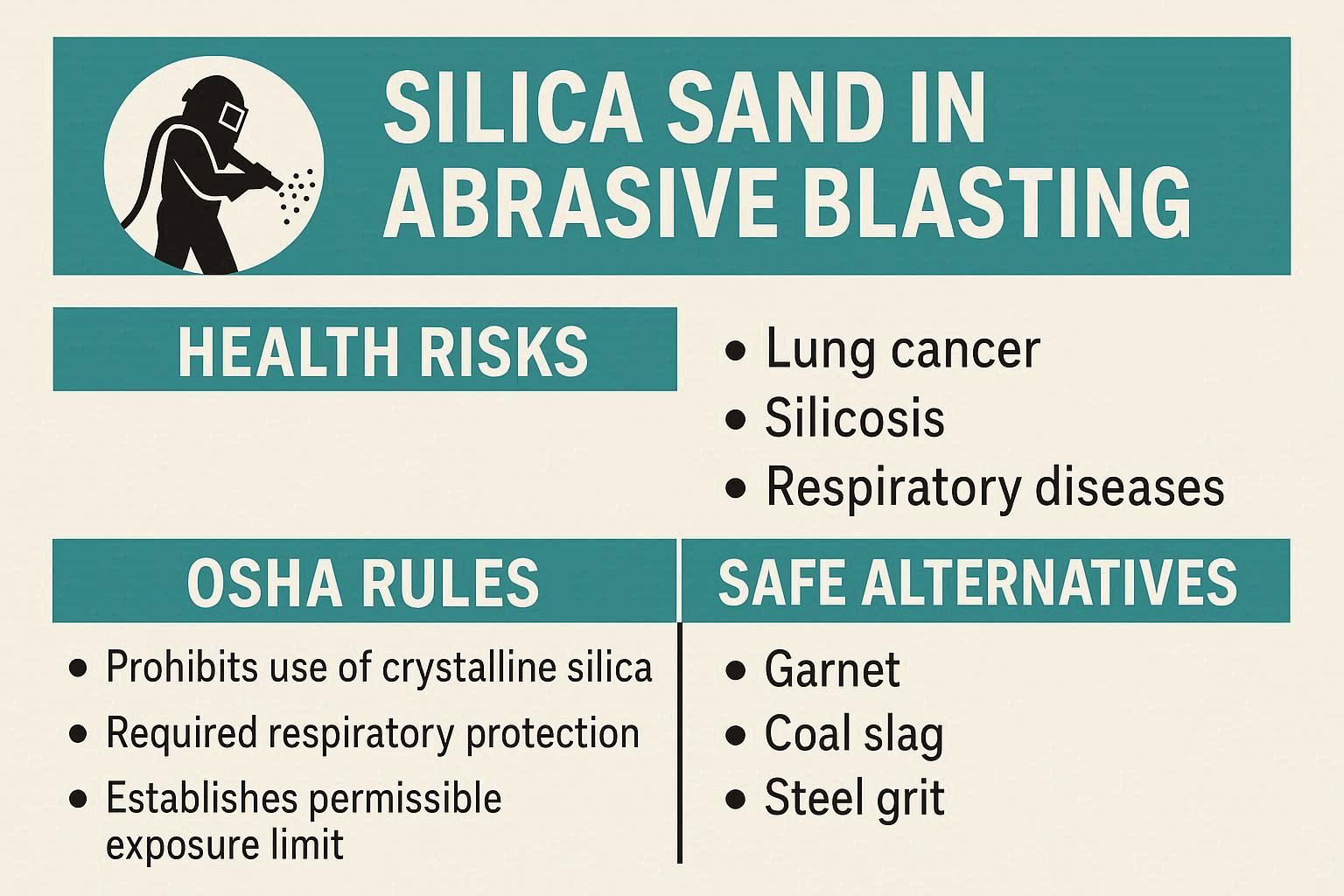
Silica sand remains banned or effectively prohibited for abrasive blasting in an increasing number of countries. Where local regulations restrict silica sand, all media types in the selection matrix above are legally compliant alternatives — none contain free crystalline silica in the quantities that trigger silicosis risk. For a full country-by-country regulatory summary and safe alternatives comparison, see our dedicated guide to silica sand restrictions and safe alternatives.
Occupied Buildings and Public Areas
Blasting near occupied buildings or in public areas where media drift or dust exposure to bystanders is possible requires the lowest-dust options available. Garnet, glass beads, and steel media all outperform mineral slag and crushed glass in this respect. Full containment structures with negative-pressure air filtration are a mandatory engineering control in most jurisdictions for blasting in proximity to the public, regardless of media type.
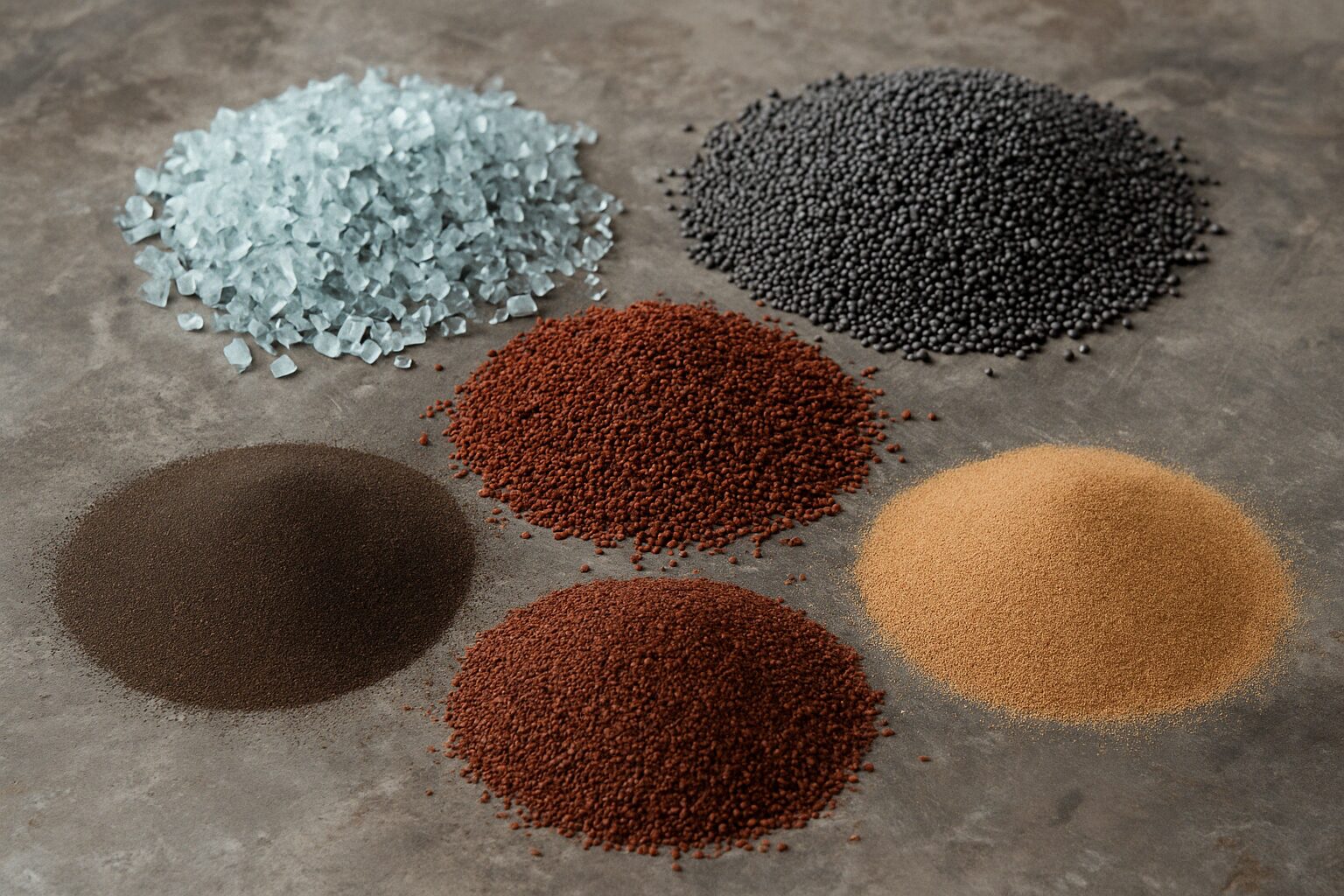
Media Types in Detail For full technical profiles of all ten media types covered in this selection chart — including hardness, recyclability, cost analysis, and specialty applications — see: 10 Types of Abrasive Blasting Media — Full Guide with Properties Chart
Häufig gestellte Fragen
Only under very specific conditions. Soft organic media — walnut shell, corn cob, and plastic abrasive grit — can be used on both steel and aluminum because they are too soft to erode either substrate meaningfully. However, the hard angular media used routinely on carbon steel — aluminum oxide, steel grit, garnet — will erode aluminum surfaces, alter critical dimensions, and can initiate stress cracking in thin-walled or fatigue-loaded aluminum parts. For aluminum, plastic grit (melamine or urea formulation) is the standard choice for coating removal. Additionally, never use recycled media previously used on steel to blast aluminum — metallic iron contamination embedded in the recycled media will transfer to the aluminum surface and initiate galvanic corrosion under subsequent coatings.
Glass beads are the standard choice for stainless steel that needs a clean, bright satin finish with no iron contamination risk. They contain no iron and produce a uniform peened surface without aggressive profiling. For stainless steel requiring a surface profile for coating adhesion, garnet (low-iron mineral) or white fused aluminum oxide (99.5%+ purity, negligible iron content) are the correct options. Steel shot, steel grit, brown fused aluminum oxide, and any recycled blended media are all excluded from stainless steel work because even trace ferrous contamination embedded in the surface will produce rust staining and undermine the stainless steel’s corrosion performance.
Media selection for paint stripping depends primarily on the substrate material beneath the coating, not on the coating itself. For carbon steel being repainted: aluminum oxide, steel grit, or garnet strip the paint while simultaneously creating a fresh anchor profile for the new coating — one operation achieves both surface cleaning and profile generation. For aluminum, CFRP composites, and any substrate that must not be dimensionally altered: plastic abrasive grit (melamine or urea type) strips the coating without measurable substrate erosion. For wood: walnut shell or corn cob removes paint without damaging wood fiber. For galvanized steel where zinc preservation is required: glass beads or light plastic grit at reduced pressure cleans the surface without stripping the zinc layer. The coating type itself (thickness, adhesion, chemistry) affects blasting time but rarely changes the media type selection.
Brown fused aluminum oxide in the F16–F24 grit range is the most effective media for preparing concrete floors and walls for epoxy or polyurethane coatings. At Mohs 9, it is hard enough to open concrete surface pores, remove laitance and carbonation, and achieve a Concrete Surface Profile (CSP) of 3–5 — the range required by most high-build epoxy flooring systems per ICRI 310.2 guidelines. For large industrial floor areas, a dedicated floor shot-blast machine using steel shot S-280–S-390 achieves the same CSP level at significantly higher throughput rates — 300–600 m² per hour versus 50–100 m² per hour for handheld pressure-blast equipment. Garnet 16–24 is used in occupied or food-grade buildings where reduced dust is needed.
Yes — with the correct media and pressure settings. Walnut shell grit (Mohs 4.5–5) and corn cob grit (Mohs 4–4.5) are designed for exactly this purpose. At hardness levels below most wood species, they remove old paint, stain, and weathered wood fiber without cutting into sound wood grain. The critical variable is blast pressure: standard mineral abrasive pressures of 80–100 psi will damage even hardwood surfaces with soft media. Effective wood blasting uses 35–60 psi with walnut shell or corn cob. This technique is used for historical building restoration, log home cleaning, furniture stripping, and lead paint removal from wooden architectural elements. Both media produce biodegradable waste that can typically be disposed of without hazardous waste classification, subject to local regulations on the paint or coating residue content.
Source Abrasive Blast Media Direct from Manufacturer
Jiangsu Henglihong Technology Co., Ltd. supplies aluminum oxide, silicon carbide, glass beads, steel shot, and steel grit directly from our Jiangsu facilities — in all grit sizes and grades required for the applications covered in this selection guide. Competitive FOB pricing, SGS-certified quality, and technical support from our blasting specialists.
Request a Quote ← Complete Media Comparison ChartFilter