Is Blasting Sand Safe? Silicosis Risks & What to Use Instead
Silica sandblasting is one of the most hazardous occupational activities in industrial work — but the risks are manageable with the right controls, and entirely avoidable by switching to safer abrasive alternatives. This guide explains what the risk actually is, what regulations require, and what to use instead.
What Is the Risk?
⚠️ This Is a Documented, Serious Health Risk
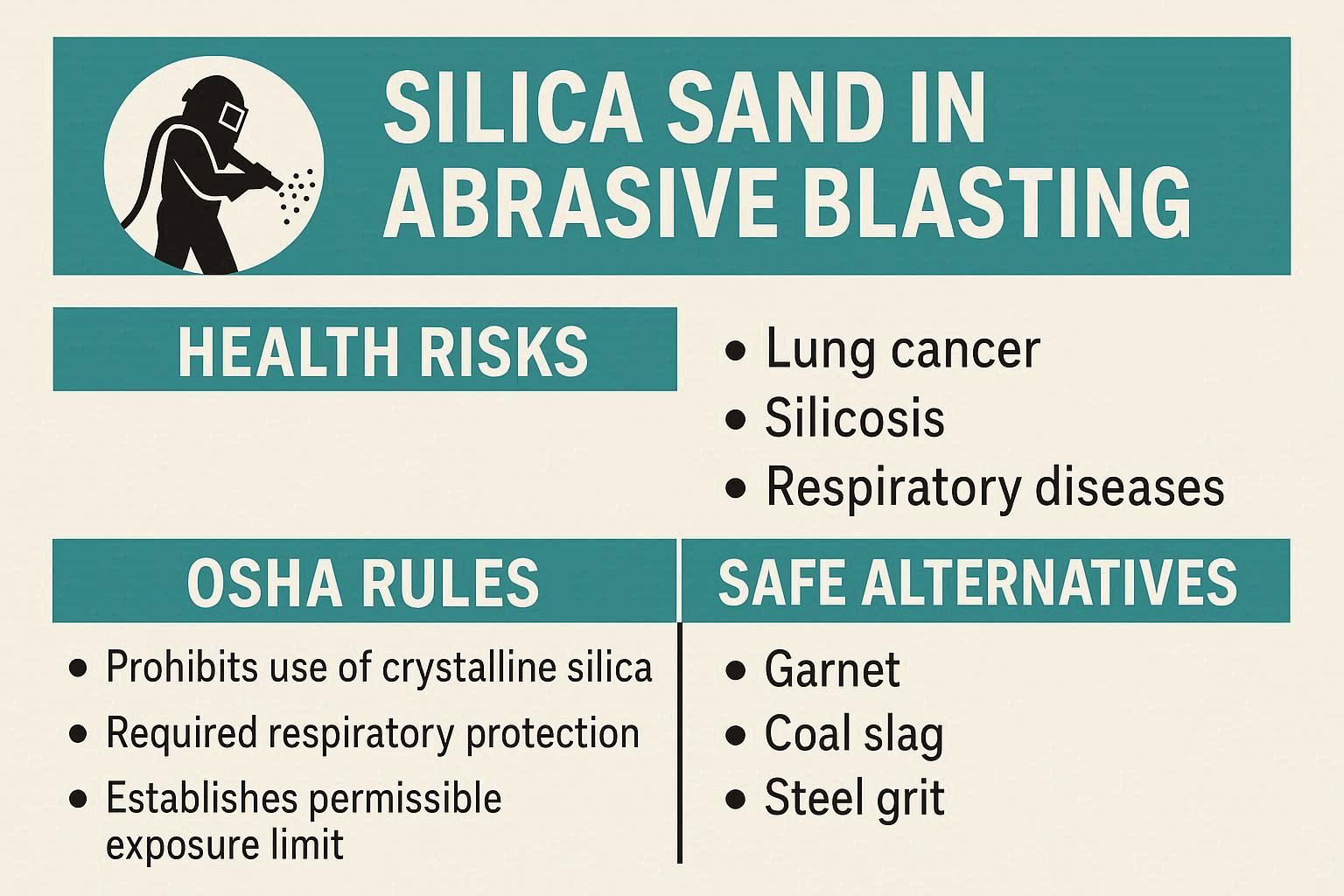
Crystalline silica sandblasting has caused thousands of documented silicosis deaths worldwide. It is banned or heavily restricted in the United Kingdom, Germany, Australia, and many other countries. The U.S. has not enacted an outright federal ban, but OSHA enforces strict permissible exposure limits. This is not a theoretical risk — it is a well-documented occupational disease with real fatality statistics. Read this section fully before purchasing or using silica blasting sand.
When silica sand particles are fractured at high velocity during blasting, they generate a cloud of very fine dust — including particles under 10 microns in diameter known as “respirable crystalline silica” (RCS). These particles are small enough to bypass the nose and throat’s natural filtration systems and penetrate deep into the lung’s alveoli.
Unlike larger dust particles that the body can clear, respirable crystalline silica particles trigger an irreversible inflammatory response. The lung tissue progressively scars — a process that continues even after exposure stops. There is no treatment that reverses or halts established silicosis. Prevention is the only effective intervention.
For guidance on sourcing safer alternative media, see the main buying guide: Where to Buy Blasting Sand: The Complete Buyer’s Guide.
Understanding Silicosis
Silicosis is a progressive, fibrotic lung disease caused by inhalation of crystalline silica dust. It takes three primary clinical forms, distinguished by the intensity and duration of exposure.
Chronic Silicosis
The most common form. Develops after 10 or more years of exposure to relatively low concentrations of respirable silica. Symptoms — progressive breathlessness, reduced exercise tolerance, and eventually severe respiratory impairment — may not appear until decades after the initial exposure. Many affected workers are unaware of the disease until it is advanced.
Accelerated Silicosis
Develops within 5–10 years of moderate-to-heavy silica exposure. Clinically similar to chronic silicosis but progresses more rapidly. Associated with silica blasting in confined or poorly ventilated spaces and with high-silica media such as quartz sand.
Acute Silicosis
The most severe and rapid form. Results from short-term, very high-intensity exposure — the kind produced by unprotected open blasting with silica sand in enclosed spaces. Onset can occur within months and can be rapidly fatal. Acute silicosis has been documented in workers with as little as a few months of intense exposure.
Silicosis also significantly increases the risk of tuberculosis (TB), lung cancer, kidney disease, and autoimmune disorders. Workers with established silicosis face a substantially shortened life expectancy even after exposure ceases.
Regulatory Framework
United States (OSHA)
OSHA’s final silica rule (29 CFR 1910.1053 for general industry, 29 CFR 1926.1153 for construction) sets a Permissible Exposure Limit (PEL) of 50 µg/m³ as an 8-hour time-weighted average for respirable crystalline silica. There is also an Action Level of 25 µg/m³ at which medical surveillance and additional controls are triggered. Open silica sandblasting can generate concentrations hundreds of times above the PEL without controls — meaning compliance requires engineering controls, not just respirators.
United Kingdom & European Union
Unconfined dry abrasive blasting with silica sand has been effectively prohibited in the UK since 1949 under the Abrasive Wheels Regulations. The EU’s REACH regulation restricts the use of respirable crystalline silica in abrasive blasting media, and most EU member states have implemented outright bans or strict containment requirements. Workers in these jurisdictions must use non-silica alternatives.
Australia
Australia banned engineered stone (high-silica) work in 2024 and has significantly tightened silica exposure standards across surface preparation industries. Several states have effectively prohibited open silica sandblasting through WorkSafe regulations.
Who Is Most at Risk?
Occupational silica exposure from blasting affects workers across several industries. The highest-risk scenarios involve silica blasting in enclosed or poorly ventilated spaces — blast rooms, inside tanks and vessels, and in buildings — where dust concentrations can reach extreme levels quickly.
Workers at highest risk include: abrasive blast operators (direct exposure during blasting), helpers and bystanders within the blast zone, workers in adjacent areas without adequate engineering isolation, and supervisors who spend time near active blasting operations without appropriate PPE.
DIY users are also at risk — and arguably at greater risk than professional operators, because they are less likely to have formal training, adequate respiratory protection, or engineering controls in place. A homeowner blasting rust off a frame in a garage with a basic dust mask is in a genuinely dangerous situation if using silica sand.
Required PPE for Silica Blasting
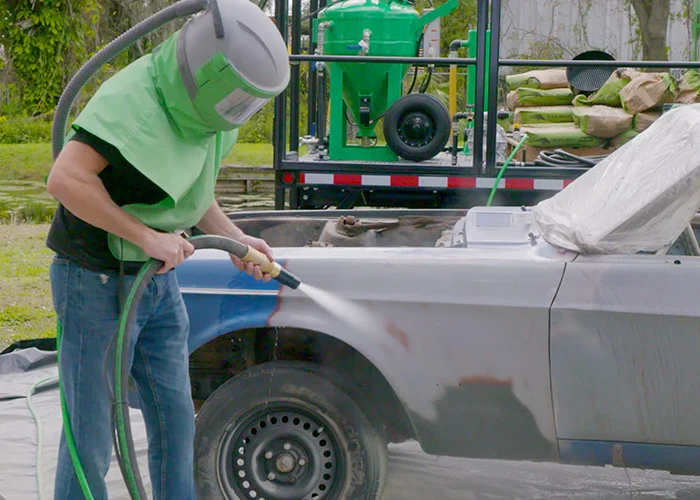
Minimum PPE for Compliant Silica Sandblasting
For DIY operators without access to a supplied-air system, the practical safety recommendation is simple: do not use silica sand for open blasting. Switch to a low-silica alternative like coal slag or garnet, which dramatically reduces respiratory risk even without supplied-air protection (though a P100 respirator is still recommended for any dusty blasting work).
Engineering Controls
PPE is the last line of defense — engineering controls that reduce or eliminate silica dust generation are the primary compliance mechanism under OSHA’s hierarchy of controls.
Wet blasting: Adding water at the nozzle suppresses dust by wetting particles before they can become airborne. Wet blasting reduces airborne silica concentrations by 90% or more and is effective for outdoor open blasting where containment is impractical. The tradeoff is reduced cutting speed and equipment that must be corrosion-resistant.
Vacuum blasting (HEPA VAC): Vacuum blast systems capture spent media and dust at the point of generation, preventing airborne exposure. More expensive equipment than standard pressure blast, but achieves near-zero ambient silica concentrations and allows blasting in confined spaces without a supplied-air system for nearby workers (though the operator still requires respiratory protection).
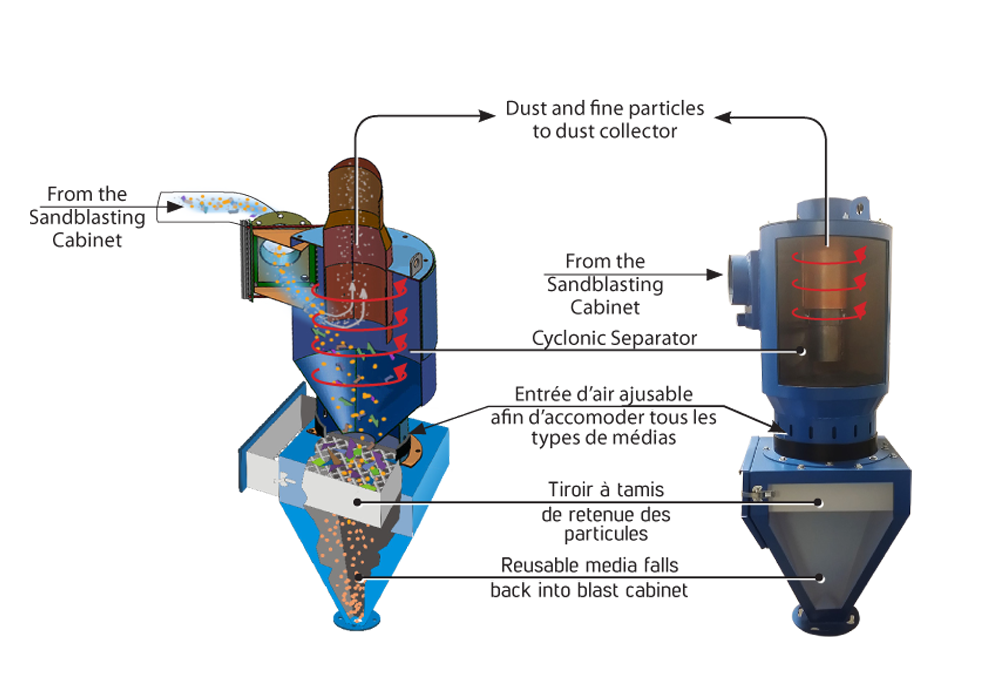
Blast enclosures with filtered exhaust: Blast rooms and blast cabinets create physical containment around the work area, with HEPA-filtered exhaust systems maintaining negative pressure and capturing respirable dust before it can escape to the surrounding environment.
Safer Alternatives to Silica Sand
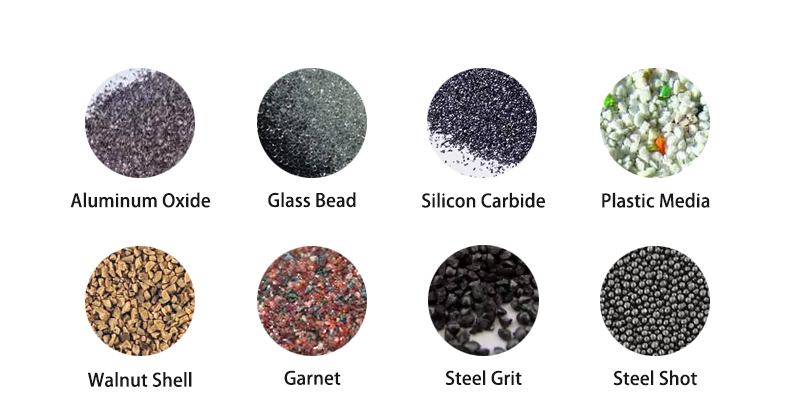
The most effective way to manage silica risk is to eliminate silica entirely. Modern non-silica abrasives match or exceed silica sand’s performance in every application, without the associated health liability. For a detailed head-to-head comparison of all alternatives with performance data, see: Best Alternatives to Blasting Sand: Garnet, Glass Beads, Aluminum Oxide Compared.
Coal slag (Black Diamond) is the most accessible low-silica alternative — available at Tractor Supply nationwide, priced similarly to silica sand, and compatible with all standard blasting equipment. Its free silica content of 0.1–0.5% means it presents a fraction of the respiratory risk of quartz sand.
Granat is the professional’s choice for steel surface preparation. Free silica content is effectively zero, cutting performance exceeds silica sand, and recyclability makes total-project cost competitive. Jiangsu Henglihong supplies industrial-grade garnet blasting media in a full range of mesh sizes.
Glasperlen are chemically inert, contain no crystalline silica, and are ideal for finishing and peening applications. Henglihong’s Glasperlen meet MIL-PRF-9954 and AMS 2431 standards for both blasting and peening applications.
Steel grit and steel shot are silica-free and represent the lowest cost-per-use option for industrial blast room operations. Henglihong manufactures steel shot and grit to SAE J444 standards for heavy-duty industrial applications.
Silica Content by Media Type
| Medienart | Free Crystalline Silica | Relative Health Risk | Regulatory Status |
|---|---|---|---|
| Silica Sand (quartz) | ~99% | Extreme | Banned/restricted in many countries |
| Coal Slag (Black Diamond) | 0.1–0.5% | Niedrig | Permitted with standard PPE in most jurisdictions |
| Granat | <1% (non-crystalline) | Sehr niedrig | Permitted globally — preferred alternative |
| Glasperlen | None (amorphous silica) | Sehr niedrig | Permitted globally |
| Aluminium-Oxid | Keine | Minimal | Permitted globally |
| Steel Grit / Shot | Keine | Minimal | Permitted globally |
| Walnussschalen | Keine | Minimal | Permitted globally |
Note: “amorphous silica” in glass beads is chemically distinct from crystalline silica and does not carry the same fibrosis risk. The health risk of crystalline silica is specifically related to its crystalline structure, which creates reactive surfaces that trigger the inflammatory response in lung tissue.
Häufig gestellte Fragen
Bottom Line
Blasting sand — specifically silica sand — carries a well-documented, serious occupational health risk that cannot be managed with a basic dust mask. For professional workplace use, OSHA compliance requires supplied-air respiratory protection and engineering controls that add significant cost to any blasting operation. For most users, the simplest and most effective risk management is to switch to a low- or zero-silica alternative: coal slag for budget-conscious open blasting, garnet for professional coating prep, glass beads for finishing work, or steel media for industrial blast rooms.
For guidance on which alternative is right for your application: Best Alternatives to Blasting Sand: Garnet, Glass Beads, Aluminum Oxide Compared.
Filter