Wet Blasting vs Dry Blasting Titanium SLM Parts: Process Comparison and Surface Outcomes
The choice between wet blasting and dry blasting for titanium SLM finishing is not simply a matter of preference — it has measurable consequences for surface roughness, media embedment, contamination risk, and part quality. Wet blasting (hydroblasting) slows the impact mechanics enough to unlock surface quality levels that conventional dry blast equipment cannot reach, while dry blasting provides the throughput and media flexibility needed for high-volume or aggressive-removal applications. This guide compares both processes on every dimension relevant to titanium SLM finishing.
1. Impact Mechanics: What the Water Film Changes
In conventional dry blasting, abrasive particles are propelled by a high-velocity air stream and impact the workpiece at velocities of 40–120 m/s, depending on pressure (PSI) and nozzle design. Each particle carries its full kinetic energy into the impact event — the particle either cuts the surface (angular media) or deforms it plastically (spherical media) based on the impact geometry and the relative hardness of the particle and substrate.
In wet blasting, media particles are suspended in a water-media slurry at concentrations of 10–30% by volume and propelled by compressed air through a specialized nozzle designed to mix the slurry with the air stream. The water film that surrounds each media particle at the point of impact serves three engineering functions that change the mechanics of surface treatment entirely. First, it dampens the peak impact load by absorbing kinetic energy through viscous deformation of the water film, reducing the maximum stress at the particle–surface contact. Second, it provides a lubricating boundary layer that prevents the particle from cutting into the surface at high angles — reducing the tendency of angular media to gouge rather than abrade. Third, the water continuously flushes dislodged debris away from the surface during blasting, preventing re-impact of broken media fragments or removed surface material that would otherwise re-roughen the surface.
The net mechanical consequence is that wet blasting with a given media size and type achieves a finer, more uniform surface finish than dry blasting at equivalent air pressure, because the peak contact stress per particle impact is lower and the surface is continuously cleaned during processing. This is the fundamental technical justification for wet blasting in precision titanium SLM applications. This guide is part of the series on abrasive finishing for titanium SLM parts.
2. Ra Outcomes: What Each Process Can and Cannot Achieve
| Media (mesh) | 过程 | PSI | Ra on Ti-6Al-4V SLM | Notes |
|---|---|---|---|---|
| Al₂O₃ 60 | Dry | 70 | 6–10 μm | Alpha-case removal / heavy roughness |
| Al₂O₃ 120 | Dry | 55 | 2.5–5 μm | Stage 2 roughness normalization |
| Glass 120 | Dry | 45 | 0.8–1.4 μm | Industrial final finish |
| Glass 120 | Wet | 40 | 0.4–0.8 μm | Precision finish — 30–50% finer vs. dry |
| Zirconia 150 | Dry | 40 | 0.6–1.2 μm | Medical/aerospace final |
| Zirconia 150 | Wet | 35 | 0.3–0.7 μm | Highest-precision finish |
| Glass 220 | Wet | 30 | 0.2–0.5 μm | DLC / PVD prep, implant Ra target |
The Ra advantage of wet over dry blasting is consistent: approximately 30–50% finer Ra at equivalent media size and pressure. For applications with Ra targets below 1.0 μm on all surface types — medical implants, PVD coating substrates, some high-precision aerospace surfaces — wet blasting opens up the achievable Ra range that dry blasting cannot reliably reach. For applications with Ra targets above 1.5 μm, the difference becomes less practically significant and dry blasting’s throughput and simplicity advantages typically favor dry processes.
The one area where dry blasting is irreplaceable is aggressive anchor profile creation for HVOF thermal spray (Ra 6–12 μm), where the goal is to maximize surface relief rather than minimize it. The high kinetic energy and cutting action of coarse angular Al₂OΆ at high PSI in dry blast is not effectively replicated by wet blasting, which inherently dampens the impact energy needed to create deep anchor profiles.
3. Media Embedment: Why It Matters for Titanium
Media embedment occurs when blast particles fracture on impact and drive sub-surface fragments into the workpiece surface. On hard substrates such as hardened steel (HRC 55+), embedment is minimal because the surface hardness exceeds the fragment penetration force. On titanium (Ti-6Al-4V surface hardness approximately 350 HV, significantly lower than hard steel), angular media — particularly Al₂OΆ — can embed fragments at higher blast pressures.
In dry blasting, embedment risk is significant at PSI above 60 for angular media on titanium. Embedded Al₂OΆ fragments are detectable by SEM-EDS as sub-surface inclusions and are reportable as alumina contamination by XRF surface analysis. For medical implant surfaces, embedded alumina may affect biocompatibility evaluation under ISO 10993 testing. For aerospace components, embedded fragments create stress concentration sites that can initiate fatigue cracks under cyclic loading.
In wet blasting, the water film at the particle–surface interface prevents high-velocity embedding by cushioning the final stage of impact. Even angular media in wet blast systems at 40–60 PSI shows substantially lower embedment rates than the same media in dry blast at equivalent air pressure, because the water dampens the peak contact stress below the threshold for fragment penetration. This is why wet blasting is specifically recommended for medical-grade titanium implant finishing even when using Al₂OΆ for initial roughness stages: the embedment risk is materially reduced without sacrificing process effectiveness.
4. Equipment, Investment, and Operating Cost
Dry blast cabinets are the standard industrial blasting equipment: a pressurized media pot or suction gun feeds media into a blast gun, and the cabinet recirculates media through a separator. Capital cost for a production dry blast cabinet with recirculation: approximately $8,000–$30,000 depending on size and automation level. Media separation and recycling is straightforward. Throughput is limited primarily by operator dwell time and cabinet access.
Wet blast machines (also called hydroblast or vapour blast machines) are more complex: a slurry tank holds the water-media mixture, a pump or agitator maintains suspension, and the slurry is metered into the blast gun by a compressed air venturi. Capital cost for a production wet blast machine: approximately $20,000–$80,000, with the higher end representing automated carousel systems. Media recycling requires slurry management (maintaining concentration, monitoring pH, preventing biological growth in the water). Operating costs include water treatment, slurry maintenance, and longer cycle times: wet blasting is typically 40–60% slower than dry blasting for the same surface area at equivalent Ra target.
For a shop deciding whether to invest in wet blast capability for titanium SLM work, the break-even calculation depends on part mix. If more than 30–40% of titanium SLM volume requires Ra below 1.0 μm (medical, precision aerospace), the quality and yield improvement from wet blasting typically justifies the capital investment within 12–24 months. If the majority of volume is industrial with Ra targets above 1.5 μm, dry blasting with fine spherical media may be sufficient.
5. Application Decision Guide
Use wet blasting for: medical implants with Ra 1–4 μm osseointegration targets, precision aerospace surfaces with Ra tolerance ±0.5 μm or tighter, PVD coating preparation (Ra 0.4–1.6 μm), DLC preparation (Ra 0.2–0.8 μm), any application where media embedment in titanium is a documented concern, and titanium lattice structures where internal channel blasting is needed (slurry flow through channels).
Use dry blasting for: alpha-case removal with coarse Al₂OΆ (wet blast at equivalent energy is impractical), HVOF anchor profile creation (Ra 6–12 μm, Rz 50–120 μm), high-volume industrial titanium finishing with Ra targets above 1.5 μm, and any application where throughput is critical and Ra targets are achievable with fine spherical dry blast media.
6. Hybrid Strategies: Using Both Processes
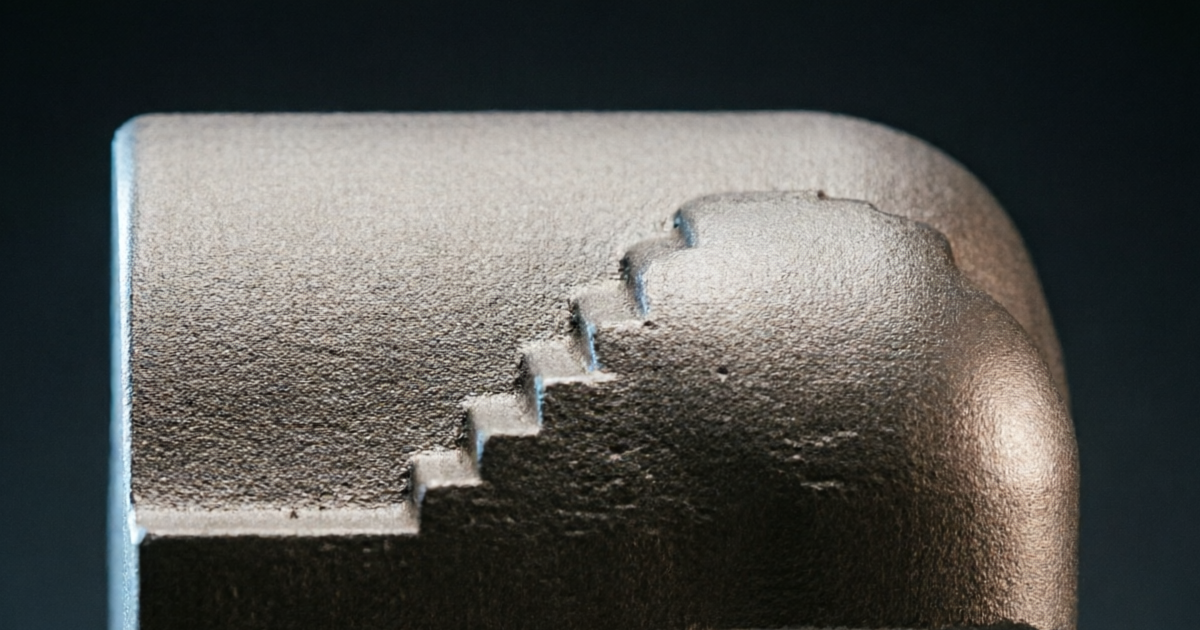
Many mature titanium SLM finishing operations run both a dry blast cabinet and a wet blast machine, using each for the appropriate stage of the finishing sequence. A representative hybrid workflow for a precision aerospace titanium SLM component: Stage 1 dry blast with Al₂OΆ grit 80 at 65 PSI for alpha-case removal and staircase normalization; Stage 2 wet blast with glass beads mesh 150 at 40 PSI for surface quality improvement to Ra 0.8–1.5 μm. This combination achieves results that neither process could deliver alone: the material removal efficiency of dry blasting at Stage 1 and the surface quality precision of wet blasting at Stage 2.
Wet blasting is the preferred process for medical implant finishing. For the specific Ra targets, process validation requirements, and contamination protocols for titanium SLM implants, see our guide on abrasive finishing titanium SLM orthopedic implants.
Frequently Asked Questions
Full conversion of a dry blast cabinet to a wet blast machine is generally not feasible — wet blast machines have fundamentally different slurry management systems, specialized nozzles designed for water-media mixtures, and drainage systems that dry blast cabinets lack. However, some manufacturers offer wet blast conversion kits for specific cabinet models. A more practical approach is to purchase a dedicated wet blast machine alongside the existing dry cabinet and use each for the appropriate application. Alternatively, some suction-gun dry blast setups can be used with very lightly water-dampened media (not full slurry) to achieve partial embedment reduction at minimal capital cost, though this is not a true wet blast process.
Not if the post-blast rinsing and drying sequence is executed correctly. After wet blasting, titanium parts should be rinsed immediately with deionized (DI) water to remove slurry residue, then dried with clean filtered nitrogen or in a clean oven at 60–80°C. If the wet blast machine uses tap water in the slurry, calcium and magnesium mineral deposits from the water can dry on the titanium surface and leave white spots detectable by visual inspection or XRF. Using DI water in the slurry tank (resistivity ≥1 MΩ·cm) prevents mineral deposition. For medical implant applications, DI water for the slurry is a process requirement, not a recommendation.
Yes, wet blasting is typically 40–60% slower than dry blasting for the same part and surface area at a given Ra target, for two reasons. First, wet blast operating pressures are lower than dry blast (the water in the slurry dampens impact energy, so you need more dwell time to achieve equivalent surface treatment). Second, the post-blast rinsing and drying sequence adds process time that has no equivalent in dry blasting. A part that takes 10 minutes in a dry blast cabinet might take 15–20 minutes in a wet blast system including rinse and dry. This throughput reduction is the primary operational disadvantage of wet blasting and must be factored into production scheduling when transitioning from dry to wet blast for titanium SLM work.
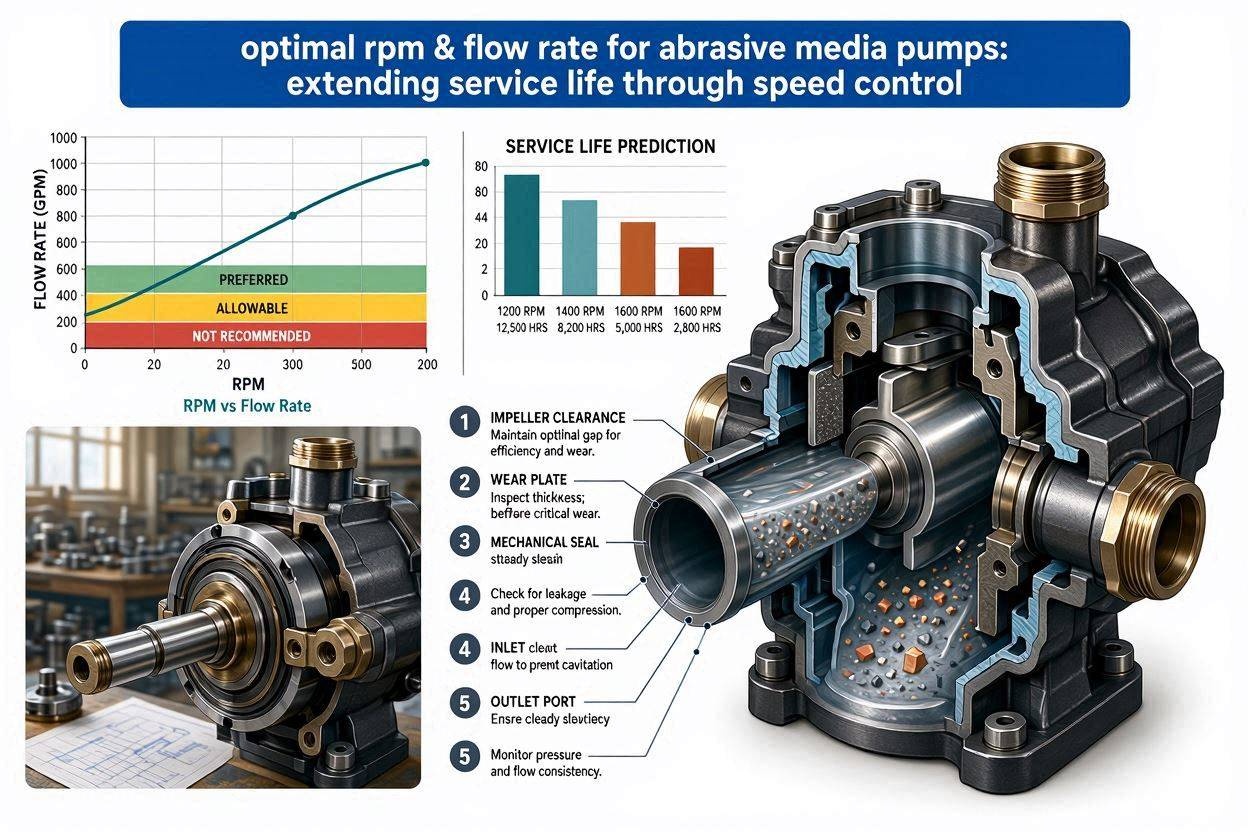
Yes, coarse Al₂O₃ (grit 60–80) can be used in wet blast machines designed for abrasive slurries. However, coarse angular media accelerates wear on slurry pumps, hoses, and nozzles compared to fine spherical media, increasing maintenance requirements. More importantly, the Ra reduction benefit of wet blasting — the finer, more uniform finish — applies most distinctively at fine media sizes. At grit 60–80, the staircase-removal Ra achieved by dry and wet blasting is similar because the dominant mechanism is mechanical cutting rather than the precision impact dampening that wet blasting provides. For aggressive removal work with coarse Al₂O₃, dry blasting is typically more practical; wet blasting adds value primarily at the fine finishing stages (mesh 120 and finer).
Need Specialist Abrasive Media for Titanium SLM Finishing?
Jiangsu Henglihong Technology Co., Ltd. supplies abrasive media suitable for both wet and dry blast processes — including certified glass beads and zirconia beads in the mesh 120–280 range for wet blast titanium SLM finishing, and angular Al₂O₃ in grit 60–150 for dry blast applications. Contact our team for process-specific media recommendations.
Contact Our Technical Team过滤器