Ceramic Bead Depowdering PA11 Nylon SLS Parts: Bio-Based Material Processing
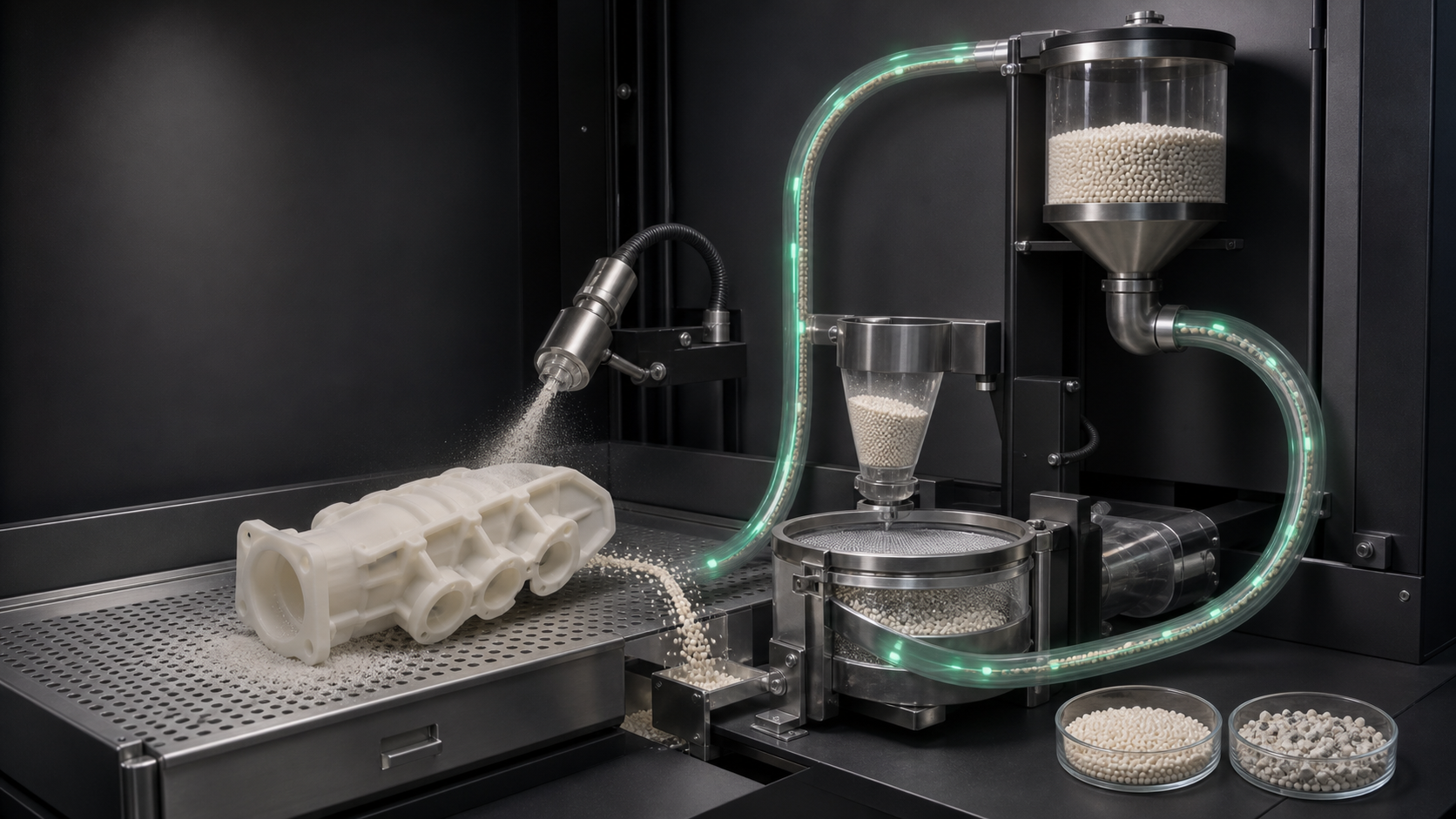
PA11 is the bio-based SLS alternative that brings 100% renewable carbon content and exceptional impact toughness to applications where PA12 falls short. Depowdering it requires the same ceramic bead approach as PA12 — with one critical addition: fixture discipline for flexible features, and careful moisture management during post-blast handling. This guide provides the complete PA11-specific ceramic bead depowdering protocol.
1. PA11 in SLS Manufacturing: Material Profile and Sustainability Value
Polyamide 11 (PA11) is produced from 11-aminoundecanoic acid, derived from castor oil — a renewable agricultural feedstock that gives PA11 approximately 100% bio-based carbon content. This origin story has made PA11 increasingly attractive to manufacturers in automotive, consumer goods, and industrial equipment sectors where sustainability credentials now carry real commercial weight. Unlike PA12, which is derived from petroleum, PA11 can be specified in supply chains that require bio-based material documentation or recycled/bio-content percentage targets.
Beyond its sustainability profile, PA11 brings genuine mechanical advantages. Its higher elongation at break (30–50% vs. 15–25% for PA12) and superior notched Charpy impact resistance make it the preferred SLS material for applications requiring repeated flex or impact loading: ski boot components, cable conduit, fluid line connectors, protective covers, and wearable device housings. As of July 2026, PA11 accounts for approximately 8–12% of commercial SLS production volume globally, with growth driven primarily by the automotive and outdoor equipment sectors.
2. PA11 vs PA12: Key Differences That Affect the Blast Protocol
Understanding where PA11 and PA12 differ — and where they are similar — prevents operators from over-complicating the PA11 protocol. Most process parameters carry over directly; the key adjustments are targeted and specific.
| Property | PA11 | PA12 | Protocol Impact |
|---|---|---|---|
| Bio-based origin | ~100% (castor oil) | Petroleum-derived | Documentation/CoC, no blast impact |
| Melting point | ~185–188°C | ~178–182°C | No blast impact |
| Shore D hardness | ~73–78 | ~75–80 | Marginally lower; use same bead grades |
| Elongation at break | 30–50% | 15–25% | Key: flexible features need fixturing |
| Notched impact | ~6–10 kJ/m² | ~3–5 kJ/m² | More tolerant of over-blasting |
| Moisture absorption | ~1.0–1.2% (sat.) | ~0.25% (sat.) | Key: post-blast handling critical |
| As-built Ra (horiz.) | 12–18 µm | 12–17 µm | Essentially identical starting point |
| Powder d₅₀ | ~60–70 µm | ~50–60 µm | Slightly coarser; no protocol change needed |
Three differences drive the PA11-specific protocol adjustments:
- Higher elongation → PA11 assemblies with flexible sections, living hinges, or thin-walled snap fits flex under blast impact → inconsistent coverage without fixturing
- Higher impact toughness → PA11 is more tolerant of accidental over-blasting than PA12; less risk of surface damage from a slightly extended cycle
- Higher moisture absorption → no impact on dry blasting, but critical for wet blasting (risk of dimensional change) and for post-blast storage before dyeing
3. PA11 SLS Surface Characteristics and Powder Behavior
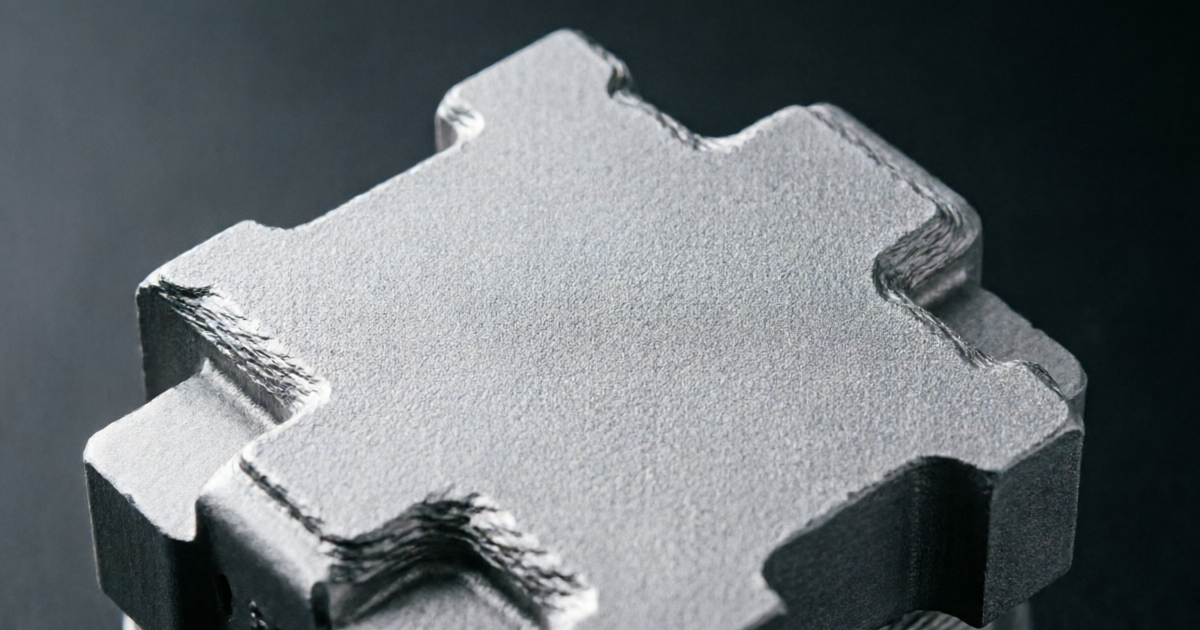
PA11 SLS builds emerge with the same three-category powder situation as PA12: loose unsintered powder in channels and recesses, caked powder in compressed geometry, and a semi-sintered skin bonded to all external surfaces. The adhesion behavior of the PA11 semi-sintered skin is comparable to PA12 — both require mechanical impact to remove, and both respond equivalently to ceramic bead blast energy at standard SLS process parameters.
The as-built surface roughness of PA11 SLS parts is virtually identical to PA12 across all build orientations. Horizontal faces show Ra 12–18 µm; angled side surfaces show Ra 19–26 µm; downward-facing surfaces show Ra 15–22 µm. The staircase anisotropy between build orientations is equally visible on PA11 as on PA12 parts. Post-blast, PA11 and PA12 achieve comparable Ra reduction and equivalent uniformity improvement.
PA11’s slightly coarser powder particle size (d₅₀ ~60–70 µm vs. ~50–60 µm for PA12) does not meaningfully change the semi-sintered skin properties or the blast protocol required to remove it.
4. Ceramic Bead Grade and Size Selection for PA11
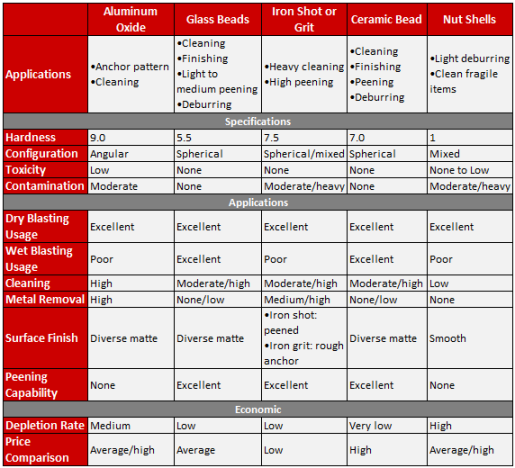
The same ceramic bead grades used for PA12 are appropriate for PA11. No PA11-specific media is needed.
- Zirconia-silicate (ZS) beads: the standard recommendation for PA11 production. Density 3.8–4.0 g/cm³, Mohs 7–7.5, recycling life 1,500–2,500 cycles. Handles all standard PA11 geometries effectively.
- Zirconia (ZrO₂) beads: appropriate for high-volume PA11 lines where recycling life justifies the higher unit cost. Marginally better Ra consistency over media life.
- Alumina-silicate: not recommended for PA11 flexible assemblies — lower density limits cleaning effectiveness at the reduced pressures required for flexible features.
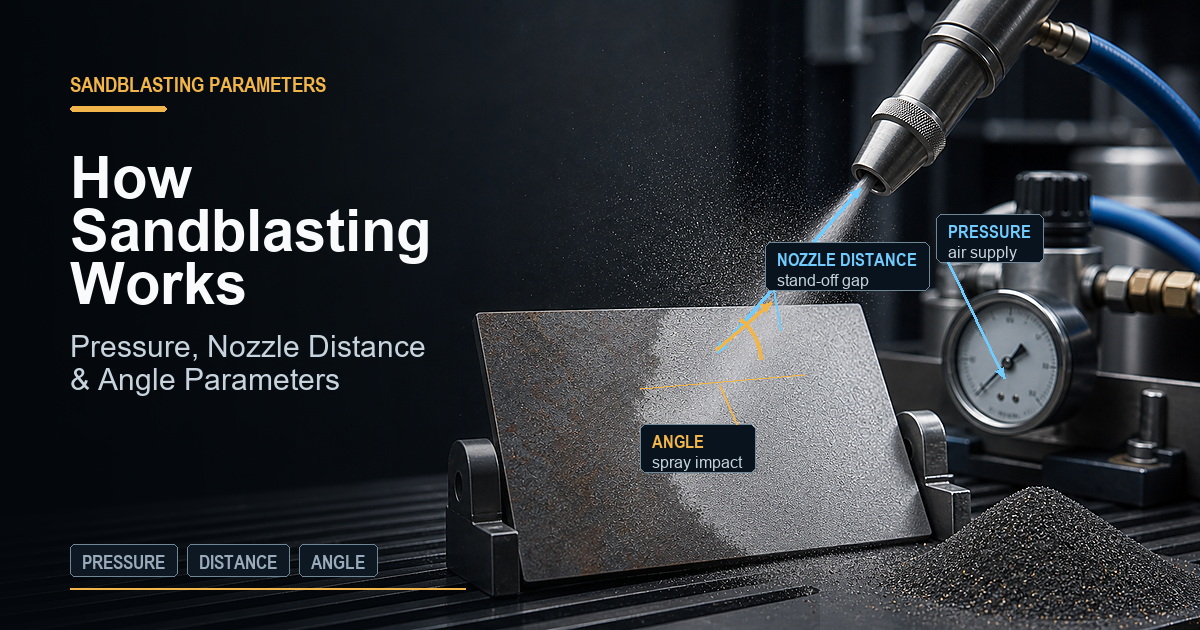
Bead size selection follows the same geometry rules as PA12: 0.15–0.25 mm for standard geometry, 0.10–0.15 mm for complex features and fine channels, 0.05–0.10 mm for sub-millimetre channels and fine lattice. The internal channel sizing rule (bead diameter ≤ 1/4 of channel diameter) applies identically.
Complete size selection table across all SLS materials and geometry types, with internal channel sizing rules and multi-geometry build strategy.
5. Blast Pressure and Cycle Time Protocol for PA11
Blast pressure for PA11 parallels PA12. PA11’s higher impact toughness provides a marginally wider safe process window — a slightly extended cycle time carries less risk of surface damage than with PA12 — but the protocol values are essentially the same.
| PA11 Part Type | Min Wall / Feature | Blast Pressure | Cycle Time | Notes |
|---|---|---|---|---|
| Standard rigid PA11 | Wall ≥ 2.5 mm | 60–72 PSI | 5–9 min | Same as PA12 standard protocol |
| Complex geometry | Wall 1.5–2.5 mm | 50–63 PSI | 7–14 min | Fixture flexible features |
| Flexible assemblies | Flexible sections any thickness | 45–58 PSI | 7–13 min | Rigid fixture mandatory; inspect mid-cycle |
| Fine channels < 1 mm | Body ≥ 1.5 mm | 40–55 PSI | 12–20 min | Fine beads; channel exit inspection |
For first-article qualification of PA11 flexible parts, run the blast in 2-minute increments. Inspect between increments for flexing artifacts: if flexible sections show surface texture variation between supported and unsupported areas, the fixture design needs improvement before continuing.
Full process optimization methodology including nozzle selection, standoff distance, cycle time calculation, and first-article qualification protocol.
6. Fixturing PA11 Parts for Consistent Blast Coverage
Fixturing is the most important PA11-specific consideration in ceramic bead depowdering. For rigid PA12 parts without especially thin walls, adequate results can often be achieved without formal fixtures — the part holds position under blast impact. For PA11 parts with flexible sections, living hinges, or thin-walled snap fits, fixturing is not optional: unsupported flexible sections flex away from the blast plume during the cycle, leaving those areas under-blasted while adjacent rigid areas may be over-blasted from proximity concentration.
Fixture design principles for PA11
- Support flexible sections in their intended service geometry: a snap-arm fixture that holds a clip in its closed position ensures the blast reaches the actual service surface, not a flexed-away variant of it
- Use locating features: pins or slots that register the part repeatably, so every blast cycle processes the same surfaces consistently
- Allow blast access to all required surfaces: a fixture that supports a PA11 hinge at both ends but blocks media access to the hinge mid-point defeats the purpose; open-frame or skeleton fixtures are preferred over solid cradles
- Consider multi-position blasting: for complex PA11 assemblies, a first blast cycle in Position A covers one set of surfaces; re-fixture to Position B covers the remaining surfaces
Fixture material: nylon (PA12 or PA11 SLS parts themselves can serve as sacrificial fixtures in low-volume operations), aluminium, or 3D-printed PA12 frames. Metal fixtures provide the most dimensional stability; SLS-printed fixtures offer the fastest prototyping of custom shapes.
7. Surface Finish Results on PA11 SLS Parts
| Surface Orientation | As-Built Ra (µm) | ZS 0.15–0.25 mm / 62 PSI / 7 min | ZS 0.10–0.15 mm / 52 PSI / 10 min |
|---|---|---|---|
| Horizontal (top) | 12-18 | 5–9 | 4–7 |
| Side / angled | 19–26 | 7–13 | 5–10 |
| Downward-facing | 15–22 | 6–11 | 5–8 |
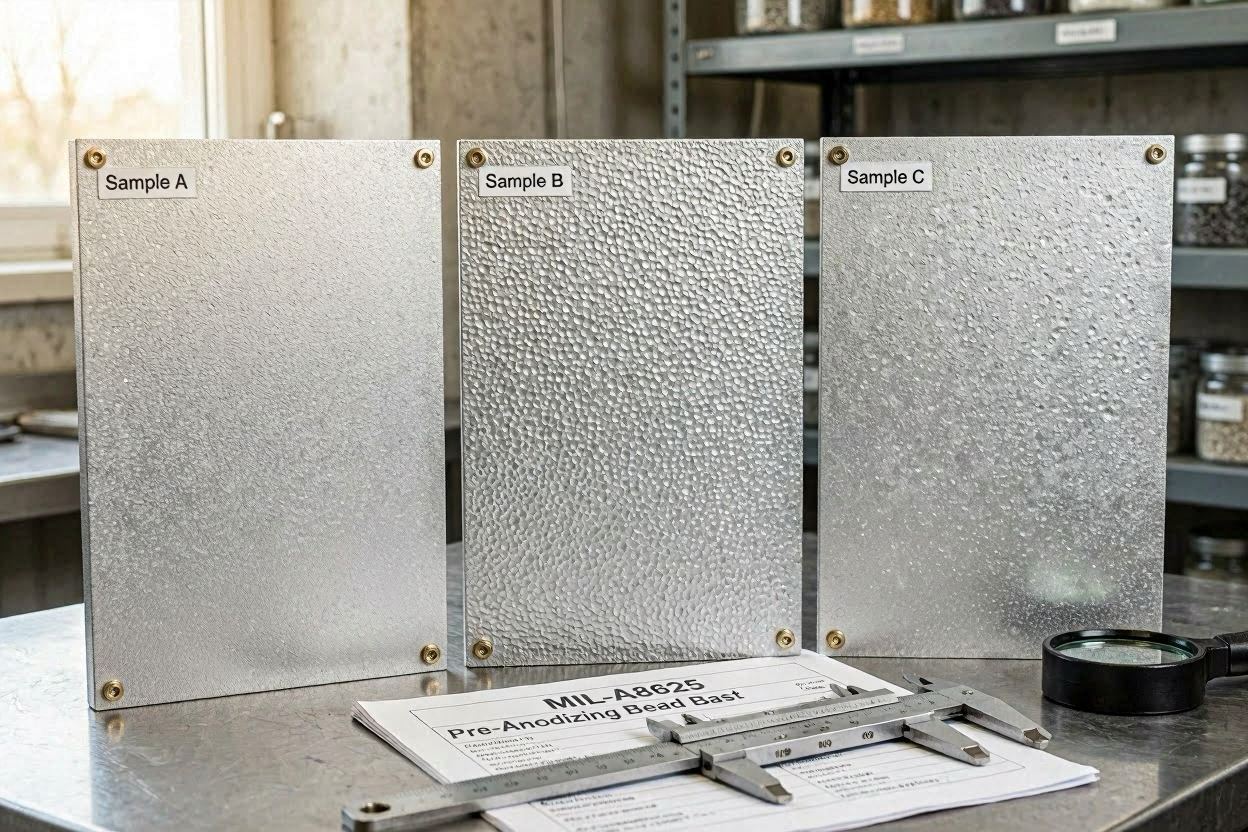
Ra values on PA11 are marginally higher than PA12 equivalents — typically 0.5 to 1.5 µm higher across all orientations — due to PA11’s slightly greater surface compliance under bead impact. In practice this difference is imperceptible to the eye and touch; for appearance-grade production the two materials are visually equivalent after blasting.
Surface uniformity improvement after blasting is equally pronounced on PA11 as on PA12: the orientation-related anisotropy (Ra difference between horizontal and angled faces) reduces from 7–10 µm as-built to 2–4 µm post-blast, producing the characteristic uniform matte appearance that professional SLS output requires.
Comprehensive Ra and Rz dataset across all bead grades, sizes, and process conditions — with measurement protocol and QC templates.
8. Post-Blast Handling: Moisture, Drying, and Secondary Operations
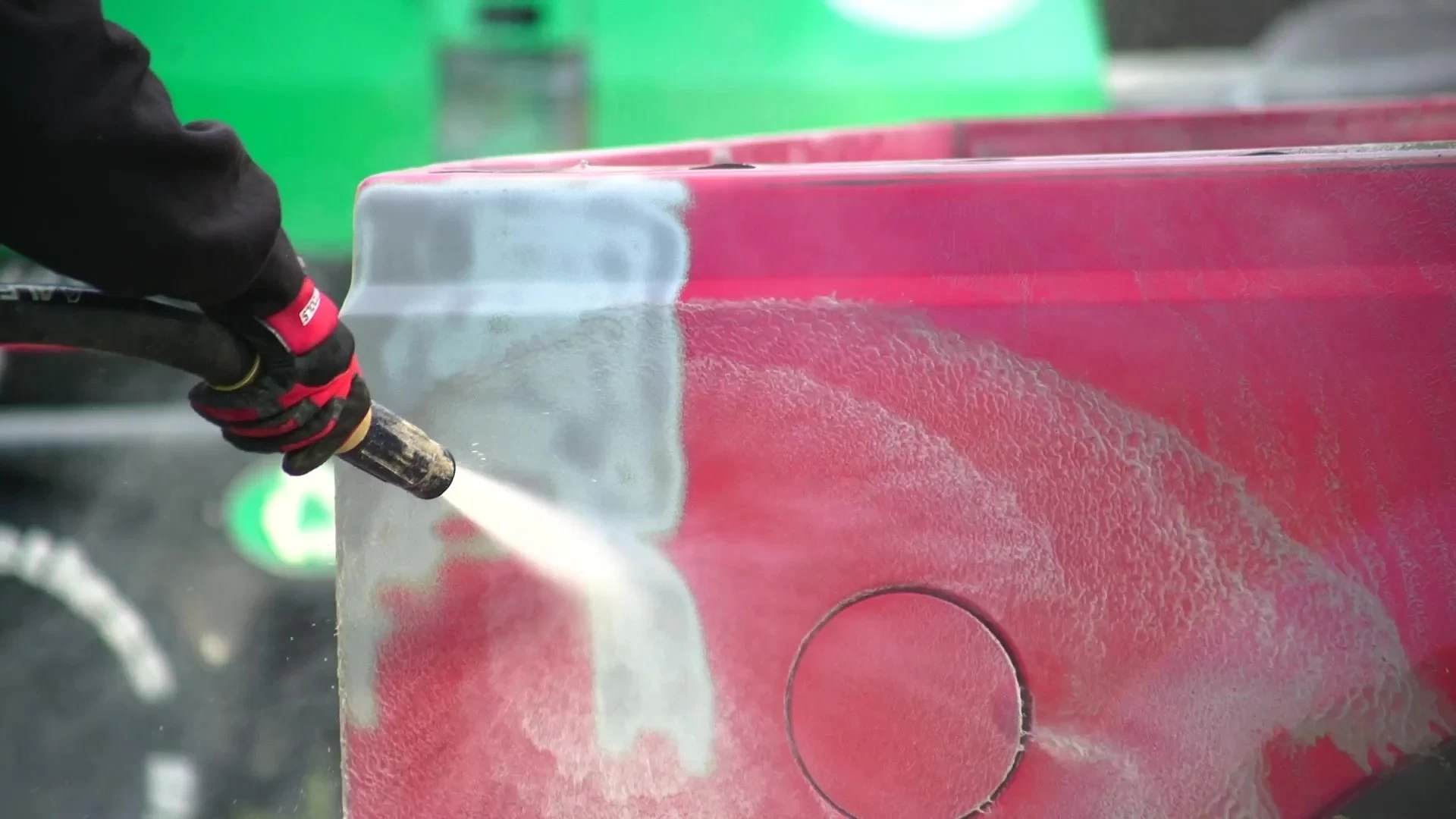
Dry-blasted PA11
After dry ceramic bead blasting, PA11 parts are ready for immediate downstream processing. No drying step is required. Store in a sealed bag or low-humidity environment if dyeing will not occur within 4–6 hours, as PA11 absorbs atmospheric moisture faster than PA12 and prolonged storage in humid conditions before dyeing can lighten and variegate colour uptake.
Wet-blasted PA11
PA11’s moisture absorption at saturation (approximately 1.0–1.2%) is four to five times higher than PA12 (0.25%). After wet ceramic bead blasting, this hygroscopicity creates meaningful dimensional and dye-uptake risk if drying is delayed. Apply the following protocol immediately after wet blasting:
- Remove parts from wet blast cabinet and blow off surface water with clean compressed air
- Place in forced-air oven at 70–80°C for 3–6 hours (longer than the 2–4 hours appropriate for PA12)
- Verify dimensional return by measuring reference features before and after drying cycle
- Transfer to dye bath within 1 hour of removing from oven
PA11 dyeing after ceramic bead blasting
PA11 dyes well with standard acid or reactive dye formulations designed for nylon. The pre-blast ceramic bead protocol is the same as for PA12: ZS 0.10–0.20 mm, 48–60 PSI, Ra target 5–9 µm. PA11 requires slightly longer dye bath exposure time or slightly higher bath temperature to achieve equivalent colour depth to PA12 — typically 10–20% longer dwell time — due to PA11’s different crystallinity and molecular chain arrangement.
Pre-dyeing blast protocol, bead size to colour depth relationship, batch consistency improvement data, and timing guide from blast to dye bath.
9. PA11 vs PA12 Protocol Quick Reference
What stays the same: PA11 = PA12
- Ceramic bead grades: ZS or ZrO₂, same grades apply
- Bead size ranges: 0.05–0.35 mm, same size-to-geometry selection rules
- Blast pressure range: similar values (52–72 PSI for standard geometry)
- As-built surface condition: same semi-sintered skin, similar Ra starting point
- Equipment: same blast cabinet, same media, no changeover needed
What changes: PA11-specific adjustments
- Fixturing: mandatory for flexible sections, living hinges, and thin-walled snap fits
- Post-blast drying (wet blast only): 70–80°C for 3–6 hours (vs. 60–70°C / 2–4 h for PA12)
- Pre-dye storage: seal within 4–6 hours if not dyeing immediately (PA11 absorbs moisture faster)
- Dyeing dwell time: 10–20% longer bath exposure to match PA12 colour depth
- Process tolerance: PA11’s higher impact toughness gives marginally wider over-blast tolerance
Frequently Asked Questions
The blast protocol for PA11 is largely similar to PA12 — same bead grades (ZS or ZrO₂), similar size ranges (0.10–0.25 mm for standard geometry), and overlapping pressure ranges (52–68 PSI). The primary difference is that PA11’s higher elongation at break means flexible PA11 assemblies and thin-walled features must be fixtured securely to prevent movement during blasting. Without fixturing, unsupported sections flex away from the blast plume mid-cycle, producing uneven powder removal that requires additional corrective cycles.
For dry ceramic bead blasting, PA11’s higher moisture absorption (approximately 1.0–1.2% at equilibrium vs. 0.25% for PA12) has no impact on the blast process itself. The risk arises after blasting: if parts are wet-blasted or stored in humid conditions before dyeing, PA11 absorbs moisture faster than PA12, causing dimensional change and lighter, less saturated dye results. For dry blasting operations, simply transfer parts to sealed packaging within 4–6 hours of blasting if dyeing is not immediate.
Yes — no dedicated equipment is needed for PA11. The same blast cabinet, same bead charge (ZS or ZrO₂), and essentially the same process parameters cover both materials. There is no media contamination concern between PA11 and PA12 — both are nylon, and their powder residues in the media charge behave identically. Simply adjust the blast pressure and cycle time per the PA11 protocol and ensure fixtures are in place for any flexible PA11 features.
PA11 and PA12 achieve very similar Ra values after ceramic bead blasting under equivalent conditions. Typical post-blast Ra for ZS 0.15–0.25 mm at 60–65 PSI: PA12 Ra 6–11 µm, PA11 Ra 6–12 µm. The slight PA11 upward drift is due to its higher elongation producing marginally more surface compliance under bead impact, slightly broadening the Ra range on thin-walled features. For appearance-grade parts, the visual result is essentially identical between PA11 and PA12 after blasting.
Related Articles in This Series
Part of the complete series on ceramic bead SLS depowdering. Return to the Ceramic Beads for SLS Powder Removal — Complete Guide for the full overview.
Full PA12 depowdering protocol — bead selection, pressure tables, Ra data, and dyeing prep.
Low-pressure protocol for the most challenging flexible SLS materials.
Process parameters guide across all SLS materials — qualification methodology.
Comprehensive Ra data across bead grades, orientations, and process conditions.
How blast protocol controls dye uptake and colour uniformity on PA11 and PA12.
Mesh-to-geometry selection reference for all SLS materials.
Specify Ceramic Beads for Your PA11 SLS Depowdering Operation
Jiangsu Henglihong Technology Co., Ltd. supplies ZS and ZrO₂ ceramic blasting beads in ISO-classified sizes from 0.05 mm to 0.60 mm. Tell us your PA11 part geometry and Ra target — we will recommend the right grade and provide samples for first-article qualification.
Request Samples & Technical Support过滤器