Abrasive Blasting Media Safety: PPE, Ventilation & Dust Control
A practical guide to PPE selection, ventilation design, dust monitoring, and safe work procedures for abrasive blasting operations — covering respiratory protection, blast helmets, hearing conservation, and OSHA compliance requirements.
Key Hazards in Abrasive Blasting Operations
Abrasive blasting is one of the most hazardous industrial processes from an occupational health standpoint. Multiple simultaneous hazards — airborne dust, noise, ricocheting media, high-pressure compressed air, and potential substrate contamination — must all be addressed through a combination of engineering controls, administrative controls, and personal protective equipment (PPE) to protect workers effectively.
The primary hazards in order of severity are:
- Respirable dust: The most serious long-term hazard. Depending on the media type and substrate, dust may contain crystalline silica (silicosis risk), metal dust from the substrate (lead paint, cadmium, chromate), or nuisance dust that causes respiratory irritation with prolonged exposure. See the complete silica risk guide: Silica Sand in Abrasive Blasting: Health Risks, OSHA Rules & Safe Alternatives.
- Noise: Blasting operations typically generate 90–115 dB at the operator position. Unprotected exposure causes permanent hearing loss. OSHA Action Level for noise is 85 dB (8h TWA); PEL is 90 dB.
- Ricocheting media and debris: High-velocity abrasive particles and substrate debris represent a serious impact hazard to all persons within and around the blasting zone.
- High-pressure compressed air: Blast hose failures, accidental disconnection, and dead-man switch failures can cause fatal injuries from high-pressure air injection or uncontrolled hose whip.
- Substrate contamination: Blasting of painted surfaces may release toxic heavy metals (lead, cadmium, chromium) into the blasting environment, requiring specialized controls beyond standard dust management.
Respiratory Protection
Respiratory protection is the most critical PPE element for blasting operations. The correct respirator type depends on the media being used, the substrate being blasted, and whether the operation is in an enclosed or open environment.
| Blasting Scenario | Minimum Required Respirator | NIOSH Approval Factor (APF) | Notes |
|---|---|---|---|
| Non-silica media, open site, well ventilated | Half-face APR with P100 filters | APF 10 | Suitable for nuisance dust only — confirm no silica or heavy metals |
| Non-silica media, enclosed blasting room | Full-face APR with P100 filters | APF 50 | Provides eye protection; better seal than half-face |
| Any media, enclosed blasting room, general industrial | Supplied-air respirator (SAR), continuous flow | APF 25 (CF); APF 1000 (PD) | OSHA 29 CFR 1910.94 requires SAR for blasting rooms |
| Silica sand blasting (where still legal) | Type CE abrasive blasting SAR with blasting helmet | APF 25 minimum | Pressure-demand SAR (APF 1000) strongly recommended for enclosed spaces |
| Lead paint removal blasting | Supplied-air respirator (SAR), pressure-demand | APF 1000 | Lead OSHA standard 29 CFR 1926.62 requires SAR for blasting lead paint |
The dust concentrations generated during silica sand blasting in any enclosed or semi-enclosed environment exceed the capacity of air-purifying respirators (APR) — even P100 filter-equipped full-face units — to reduce exposure to the OSHA PEL. Only supplied-air respirators (SAR) providing completely clean breathing air independent of the ambient environment provide adequate protection for silica sand blasting. OSHA 29 CFR 1910.94(a)(5)(ii) specifically requires airline respirators or equivalent for all enclosed abrasive blasting operations.
Respirator Fit Testing and Maintenance
All tight-fitting respirators (half-face and full-face APR, half-mask SAR) require annual qualitative or quantitative fit testing per OSHA 29 CFR 1910.134 to confirm an adequate face seal. A poorly fitting respirator — even a high-quality one — provides essentially no protection. Fit testing must be performed with the same model, size, and configuration that will be worn in service.
Respirator maintenance includes: cleaning after each use, inspection of valves and seals for damage, filter replacement per manufacturer’s schedule (P100 filters when they become difficult to breathe through, or after any heavy dust exposure), and proper storage in a sealed bag away from contamination and UV light.
Blasting Helmets & Head Protection
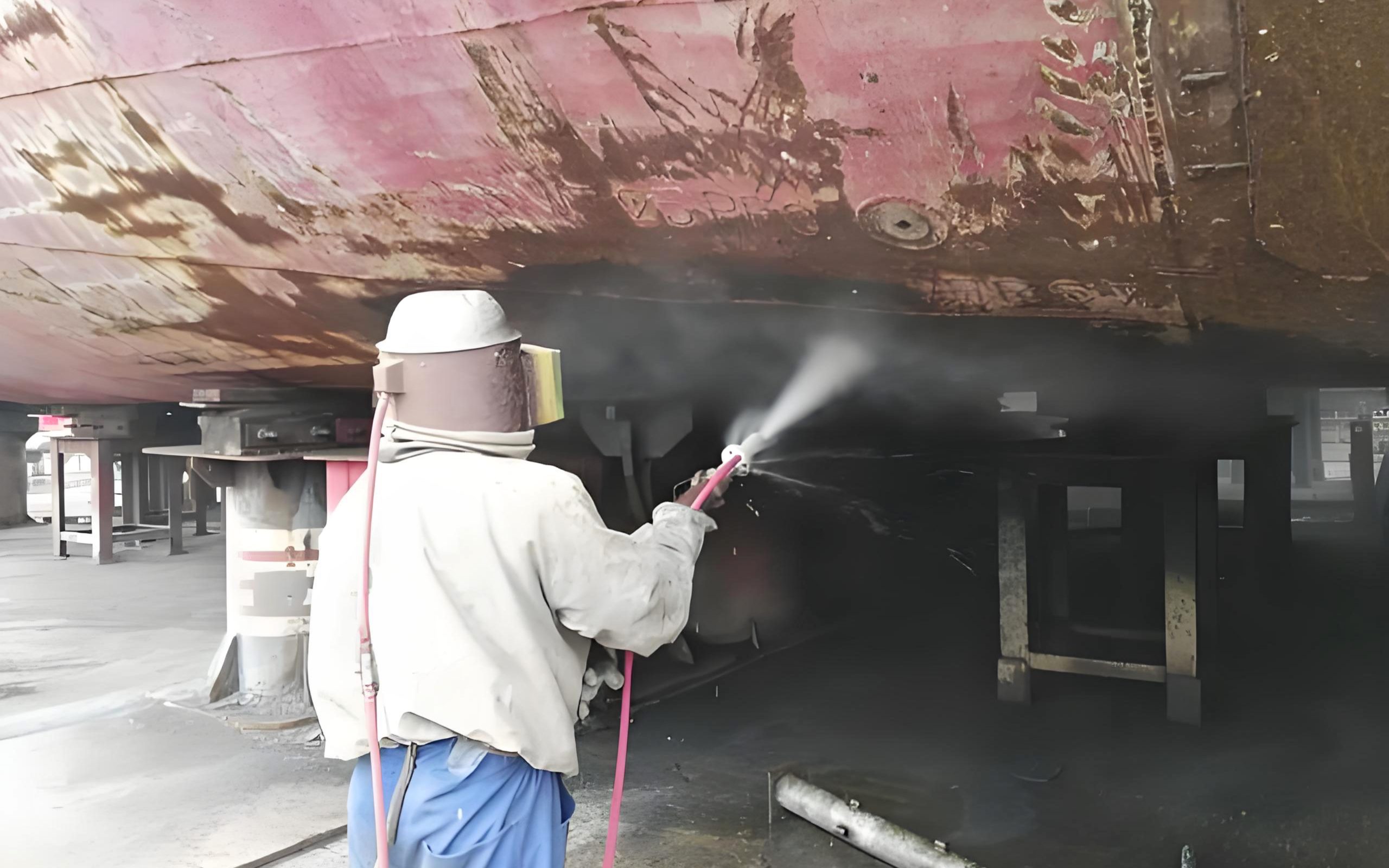
Blasting helmets serve multiple protection functions simultaneously: they shield the operator’s head, face, and neck from ricocheting media and substrate debris; they integrate the airline supply connection for supplied-air respirators; they provide a wide viewing window to maintain visibility during blasting; and the exterior shell is abrasion-resistant to withstand media impact.
Key selection criteria for blasting helmets:
- Lens type: Standard glass or polycarbonate lenses require regular replacement as abrasion reduces visibility. Safety-rated lenses must be replaced when scratching impairs vision or when lens thickness falls below minimum safe specification. Lenses are a consumable component — budget for regular replacement.
- Cape design: The cape (the fabric shroud that covers the neck and shoulders) must be made of abrasion-resistant material rated for the media being used. Lightweight fabric capes are unsuitable for high-pressure blasting with hard abrasives.
- Airflow rate: For supplied-air helmets, the continuous flow rate must meet NIOSH requirements (minimum 6 cfm for continuous flow supplied-air respirators per 29 CFR 1910.134).
- Weight and comfort: Blasting is a physically demanding task; heavy or poorly balanced helmets accelerate operator fatigue and reduce safety through reduced alertness and postural errors.
Hearing Conservation
Abrasive blasting generates noise levels of 90–115 dB at the operator position — above the OSHA PEL of 90 dB (8-hour TWA). Wheel blast machines in enclosed rooms typically operate at 95–105 dB. Portable pneumatic blasting at the nozzle can reach 110–115 dB. Unprotected exposure at these levels causes progressive, permanent sensorineural hearing loss.
OSHA 29 CFR 1910.95 requires hearing conservation programs for workers exposed at or above 85 dB TWA (8h), including: annual audiometric testing, provision of hearing protectors, training, and recordkeeping. Required minimum noise reduction rating (NRR) of hearing protectors depends on the exposure level — at 110 dB, a hearing protector with NRR 25 reduces effective exposure to approximately 97.5 dB, which may still require dual protection (both earplugs and earmuffs).
Body, Hand & Foot Protection
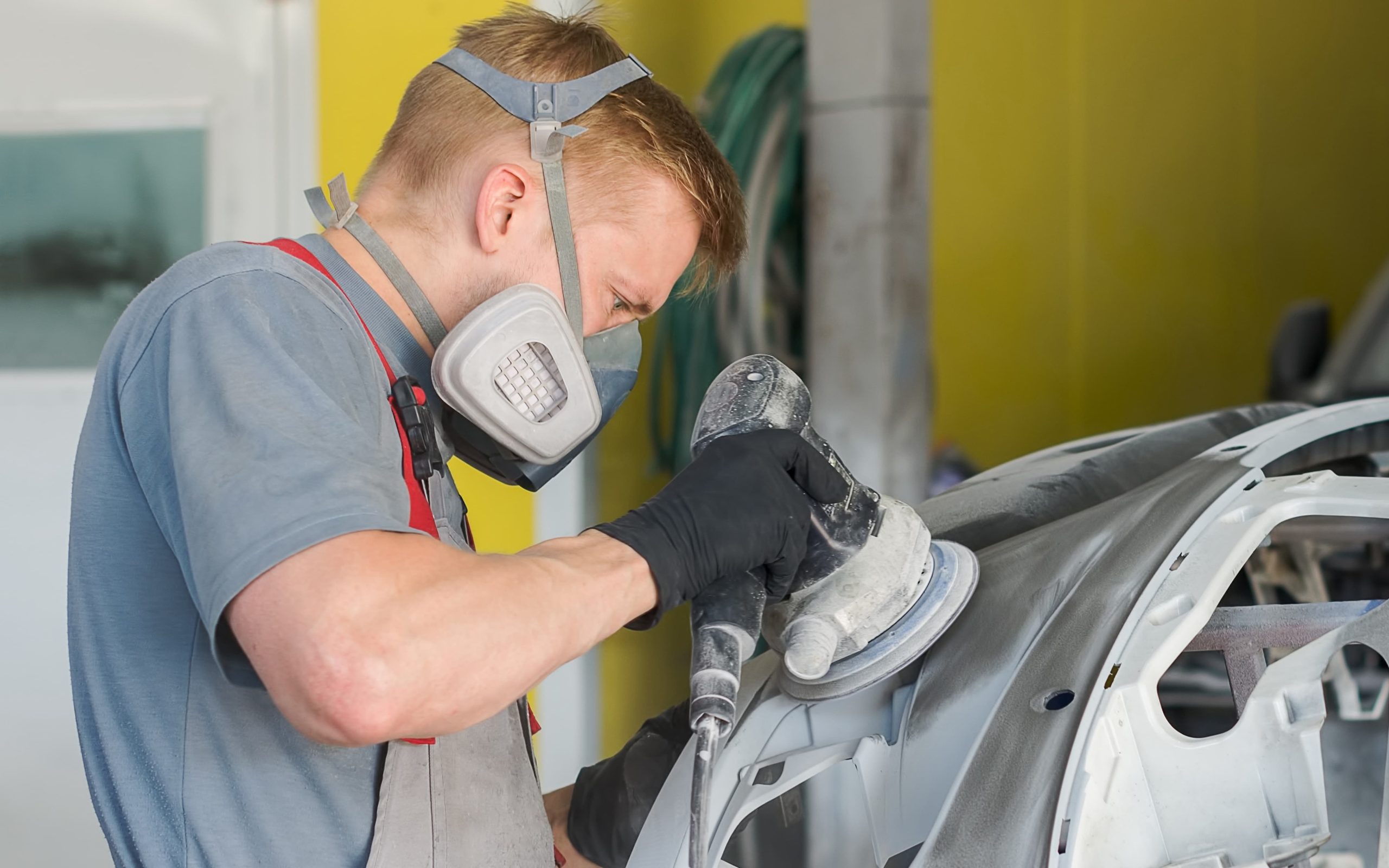
- Blast suit: Full-body coverage with abrasion-resistant material — typically heavy canvas, leather, or purpose-made blast suit fabric. The suit must cover all exposed skin and integrate with the blasting helmet cape to provide complete coverage.
- Gloves: Heavy leather gloves resistant to abrasion from media impact. Standard work gloves are rapidly destroyed by even low-intensity blasting — use purpose-made blasting gloves or heavy leather welding gloves as a minimum.
- Safety boots: Steel-toed boots with abrasion-resistant uppers. The nozzle end of a blast hose or ricocheting media can cause serious foot injuries if footwear is inadequate.
- Dead-man switch (safety valve): OSHA 29 CFR 1910.94(a)(6)(ii) requires that blast nozzles be equipped with a control device that shuts off airflow when the operator releases the handle. This prevents hose whip injuries if the operator loses grip of the nozzle. Never bypass or defeat the dead-man switch.
Ventilation Design for Blasting Rooms
Enclosed blasting rooms (blast cabinets, blast rooms, walk-in blast enclosures) must be ventilated to maintain dust concentrations below occupational exposure limits for all workers in and adjacent to the blasting area. OSHA 29 CFR 1910.94(a) specifies ventilation requirements including:
- Exhaust ventilation sufficient to maintain a downward flow of clean air through the blasting zone at a minimum velocity of 1 m/s (200 ft/min)
- Air volume calculation based on the enclosure cross-section area perpendicular to airflow direction
- Filtration of exhaust air before discharge — HEPA filtration (99.97% efficiency at 0.3 µm) for operations involving silica or heavy metals; high-efficiency dust collector for general blasting
- Replacement air supply to maintain enclosure pressure slightly negative relative to adjacent occupied areas
- Interlocking of ventilation with blasting system — ventilation must be verified running before blasting can commence
Dust Monitoring & Air Sampling
Under the OSHA crystalline silica standard (1910.1053 / 1926.1153), employers must either: (a) use objective data demonstrating employee exposure below the action level (25 µg/m³), or (b) conduct initial air monitoring and periodic monitoring as specified. For operations using silica-free media where crystalline silica exposure is not a concern, nuisance dust monitoring may still be required under general industry standards if exposures could exceed the OSHA nuisance dust PEL (15 mg/m³ inhalable; 5 mg/m³ respirable).
Personal air sampling is conducted by attaching a calibrated sampling pump and filter cassette to the worker’s lapel (within the breathing zone) for the full shift duration. The filter is then analyzed by gravimetric analysis (for total/respirable mass) or X-ray diffraction (XRD) analysis for crystalline silica content. Results are compared against the relevant PEL or action level to determine compliance status and inform control measures.
Confined Space Blasting Safety
Blasting inside tanks, vessel interiors, ballast tanks, cargo holds, and other confined spaces introduces additional hazards beyond standard blasting safety requirements:
- Oxygen depletion: Compressed air entering from the blast hose can displace oxygen if the space is insufficiently ventilated. Monitor oxygen concentration continuously — minimum 19.5% O₂ per OSHA confined space standard.
- Explosive dust concentrations: Some organic dusts (from organic media like walnut shell or corn cob) can reach explosive concentrations in confined spaces. Most inorganic abrasives do not pose this risk, but substrate coatings may generate combustible debris.
- Permit-Required Confined Space: Most blasting inside vessels and tanks qualifies as permit-required confined space work under OSHA 29 CFR 1910.146, requiring a written permit system, attendant, rescue plan, and atmospheric monitoring before and during entry.
- Communication: The blasting operator must maintain continuous communication with a safety attendant outside the confined space. A predetermined signal system for emergency stop must be established before work begins.
Choose Safer Blasting Media — Reduce Your Safety Compliance Burden
Switching to low-dust, silica-free media (aluminum oxide, garnet, or glass bead) significantly reduces the engineering controls and monitoring burden of OSHA compliance. Jiangsu Henglihong Technology supplies all four major industrial blasting media types with full Safety Data Sheets and chemical analysis documentation.
Request Safety DocumentationFrequently Asked Questions
过滤器